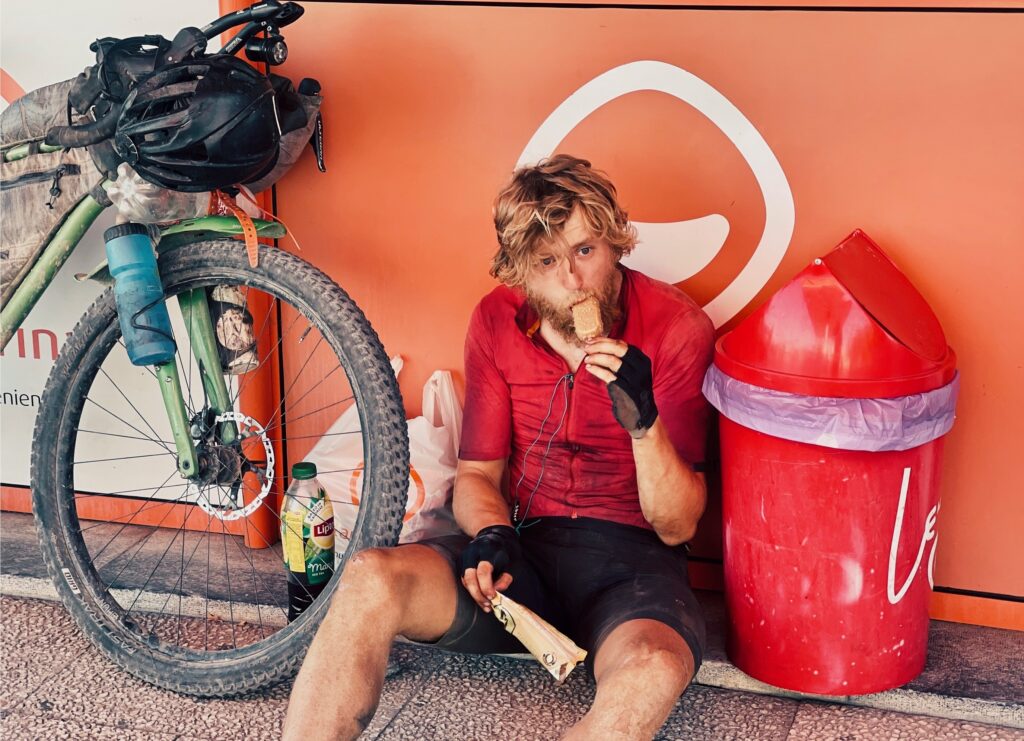

Revered by his peers and dot watchers alike for his relentless long-distance endurance and speed on a bike, British ultra cyclist Angus Young is one of the best in the game when it comes to insanely challenging off-road epics.
The big-bearded southerner may seem like a gentle giant off the bike, but when you put two wheels and trail beneath him, he turns into a fearsome and seemingly tireless mile-munching monster of speed.
Surprisingly, Angus only got into ultra riding and racing a few years back, and despite working full time as a teacher over the past few years, he’s won some of the biggest off-road ultra races around (including the Pan-Celtic, Dales Divide and Highland Trail 500) and holds FKTs on the 9,575km Eastern Divide and the 7,600km European Divide amongst others. This year, Angus has taken a huge leap of faith in joining the very select band of full-time ultra cyclists.
Following a winter of bike touring, bikepacking, and racing in South America and New Zealand, we caught up with Angus to learn more.
In the beginning
ORCC: You were working for Mason Cycles when you left university – how did that and your cycling interest come together?
Angus Young: Going through school, I was a reasonably good cross-country runner and track and field athlete, but nothing special. I’d always done a bit of touring and mountain biking, but wouldn’t call myself a cyclist. I did one long bike tour after I finished my A levels, along the French coast to Spain. When I went to university, I thought I’d try my hand at triathlon, because I’d always been a pretty strong swimmer too, and I did that for a few years.
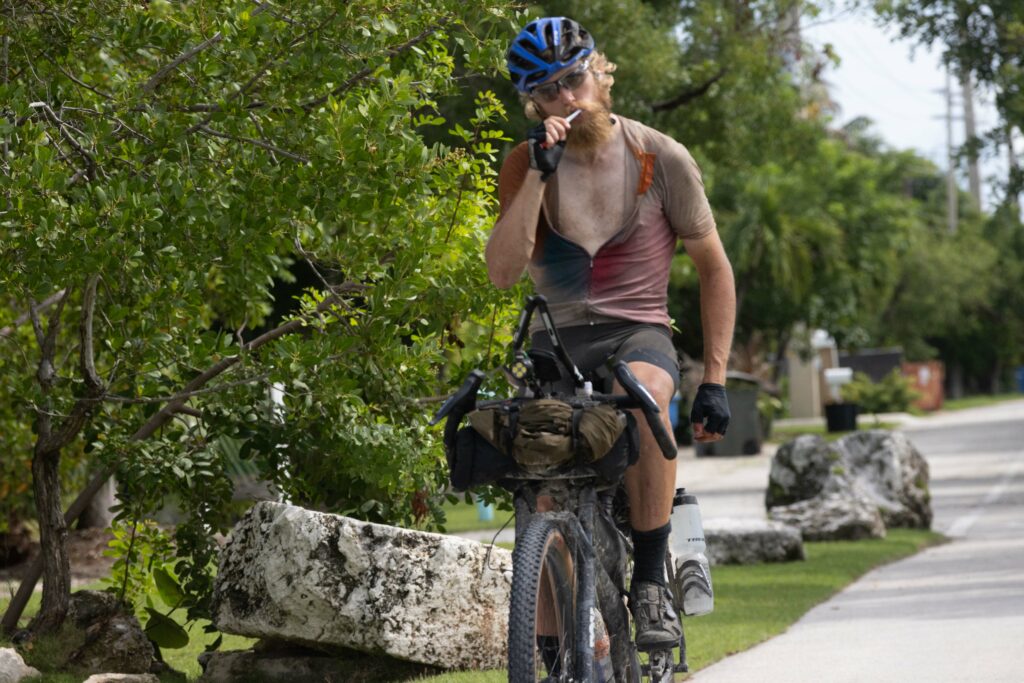
I also picked up cross-country skiing, so I was a bit of an all-around endurance athlete (winning major winter triathlon titles). During my master’s, I needed a bit more money, and thought I’d see if I could work for a bike company – something a bit more interesting than working at Tesco. I went around the local Sussex bike companies, and Dom Mason got back to me. I started in 2019 and spent three summers there packing boxes and frames.
In 2019, I also raced GBDURO, my first ultra cycling event. I didn’t quite know what to think going into that, but I’d done quite a lot of ultra running, and was a pretty strong cyclist then too, and did quite well (finishing second to Lachlan Morton). I also did Further and finished second, and off the back of that, Mason started supporting me.
At first, they just gave me an old frame. I don’t think they were expecting much from me, and I was going to work to pay off the groupset, but they paid for it and bought me on as a supported rider. Over the next few years, that grew and grew.
Sleepless in Scotland
ORCC: That first GBDURO, how did you figure out a strategy?
AY: That’s a unique event; essentially, it’s a stage race, but each stage is about 36-hours or so. In the build-up, I did a couple of audaxes too, and the key one was 600km, which was the first time I’d ridden non-stop through the night, so I knew I’d be able to ride through the first night.
From there, I was just seeing how it went. The first day took me 41 hours. Sleep deprivation isn’t something you can train, but it’s something you can kind of get used to a bit. You start to learn the signs of what you can and can’t carry on with, and back then, I hadn’t quite clocked on to that.
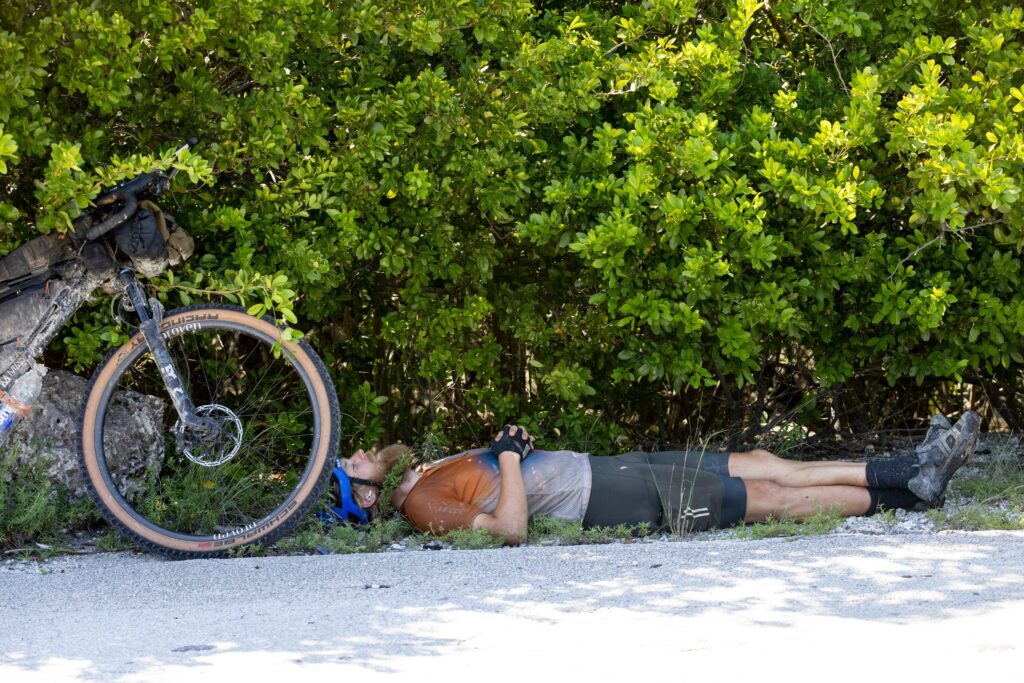
I was a real zombie that day and convinced myself that the whole thing was a joke, in the sense that there were two climbs near the finish, and I convinced myself that someone would jump out at the bottom and say don’t worry about them – it was just a joke. I was pretty nuts on that one.
My go-to hallucination is that I’m riding in a peloton of imaginary friends, which probably says something dark about my psyche. I know I’m crazy at the time, and have gotten quite used to it now. I try not to let it get that far, but sometimes it’s the fastest way to the finish. You know you’re crazy, but you still have these conversations in your mind, or sometimes I have all these different voices in my head; you know you’re bonkers at the time, but it doesn’t really matter; it keeps me entertained.
Usually, by the time you’ve got that far, it would have been faster to stop. But if you’ve only got a few hours left of the race, then it’s often best to carry on. That only happens in the shorter races. Bizarrely, these are where more sleep deprivation occurs, because it’s a reasonably long race like Silk Road Mountain Race, you want to make sure you’re getting around four hours of sleep on average to recover properly, which is pretty sustainable for a week without going loopy.
I find the two-to four-day races the worst; you can just about ride through two nights. One night is easy for most people with the will power can do that, but two nights are where it gets really swirly. I’ve only done that a couple of times, and that’s when it gets really bonkers, and it’s faster to get a couple of 15-minute naps.
Something like the Highland Trail 550 is essentially three nights. The year I won, I slept 45 minutes, then one and a half hours, and I didn’t lose it. The year prior, I rode through the first night, and by the second afternoon, I was already going bonkers and went downhill from there.
Full-gas to full-time
ORCC: You were a full-time school chemistry teacher. Have you changed direction now?
AY: I decided to take a couple of years’ break from teaching. I’ve got myself into a bit of a position where I’m earning just enough money from sponsorship (not enough to live on) that I can try and supplement it with a bit of tutoring on the side, and am also running my own event In May; that’s not at break-even stages yet, but there are bits here and there (of income potential).
I’ve been coaching people for about five years, but I am launching that properly too now as I have more capacity to take on more people.
The main driving factor for this is that there are so many events that I want to do that just aren’t compatible with a school timetable. This year, I’m going to do the Tour Divide, which I’ve wanted to do for a decade, but it’s in June, which is in the middle of exam season, which you can’t really take off. Now is as good a time as any (to do it).
ORCC: Do you see it turning into a full-time and viable long-term profession?
AY: Ultra cycling is getting to that point where it’s growing enough to support some people. There are probably about a dozen full-time ultra cyclists, though lots of people also have other income streams too; but most of their income will come from sponsorship, certainly enough to support them through it.
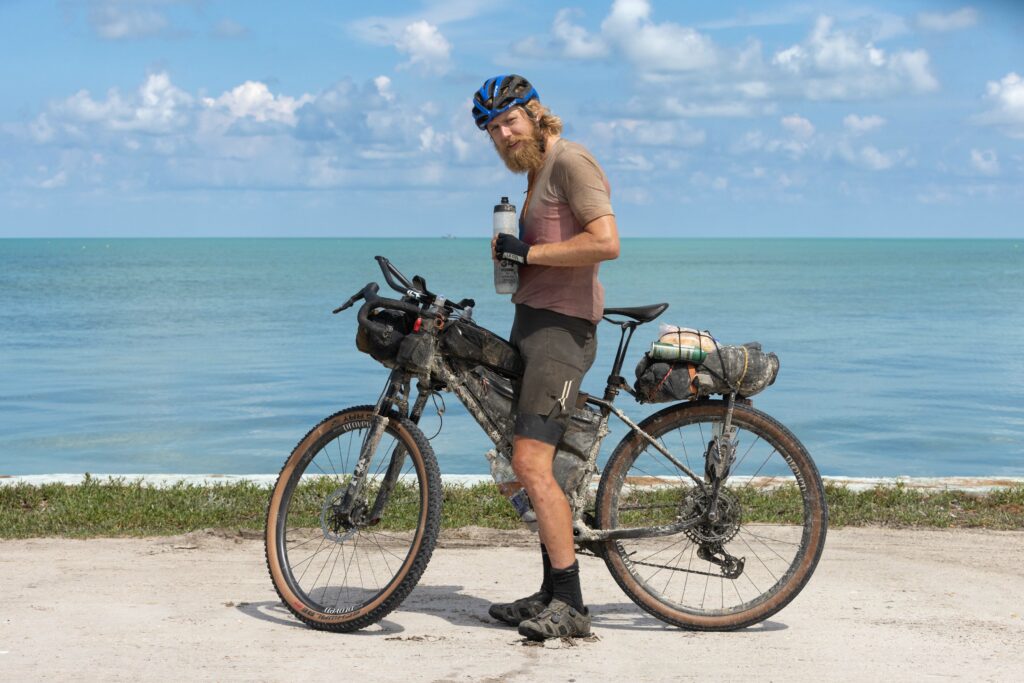
Then a whole swathe of other people (which is where I now place myself) who get a little bit of money from sponsorship, but not enough to live on, so they have to do other things and self-finance it. The money I get from sponsorship is enough to cover the costs of doing the sport, which is fantastic. But it would be nice if I could live and pay my mortgage with it too. I think it’s growing, though it’s difficult to tell if we’re in a bubble that’s going to pop at some point.
I have lots of good friends in the sport, like Justinas Leveika, and he’s got a whole heap of sponsors, which allows him (newly) to be able to train full-time. He also has his event in Norway (Bright Midnight), which brings in 300 people a year, which brings in a little bit. He lives quite frugally, but he’s making it work.
We’re seeing more people making it work, like Alex McCormac – he’s now on a full professional racing outfit with Canyon. There’s money out there, but brands want to know they’re getting a good investment. From my point as an athlete, it takes quite a lot of work to convince a brand that you’re worth giving up a decent amount of cash for, which is fair enough.
The cycling industry isn’t especially strong at the moment, but I think certain sectors are doing reasonably well. I think the bike packing market is pretty strong and growing.
Solo one
ORCC: Does this mean that we will see more of a shift away from the FKTs you’ve been doing to racing?
AY: I think so; one of the reasons I’ve done more FKTs is that you can do them whenever you want. But to be honest, I prefer it as a proper race; then you’ve got people to compete against, and you can bump into a competitor in the middle of the night, which cheers you up a bit. It’s more fun in a race.
There’s also something special in being out there on your own (as in an FKT), when nobody really knows what you’re doing. I have no long FKT events over 24-hours or so planned for the foreseeable. I have a couple of things on the back burner that I might have a crack at, but not for the foreseeable; it’s mostly going to be racing for the next two years.
In late May, Angus is also organising his own 600km off-road Aethelred Ultra race in southern England, which is firmly pitched towards those looking for a friendly and less daunting intro to the wild world of ultra bike packing racing. Be sure to check out www.aethelredultra.com