


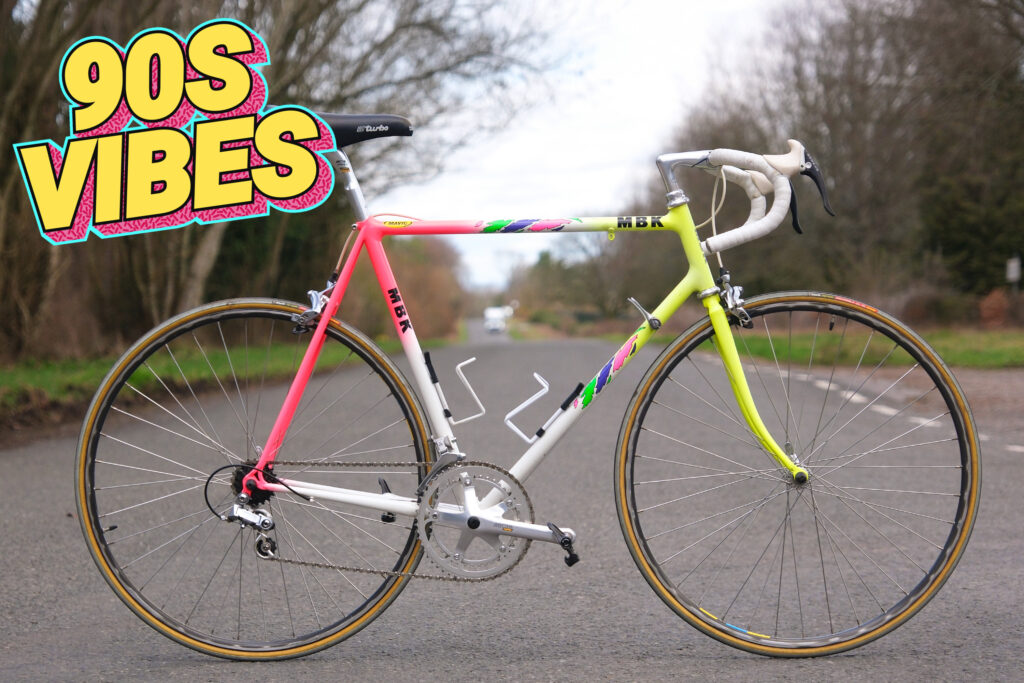

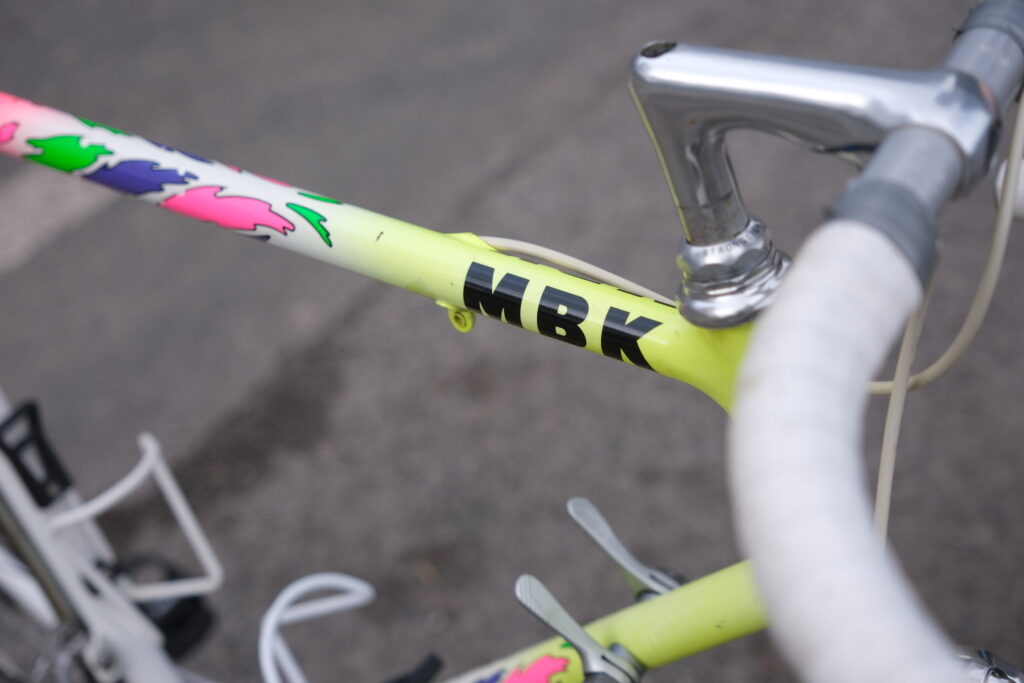
It would be a huge understatement to say that road bikes have come a long way since the 1990s. Wheels are wider, tyres have gone tubeless, bars are narrower, gears are electronic, and braking has moved from rims to discs. But does all that actually make them so much faster and nicer to ride? To compare speed and braking performance, we put a 1993 MBK road bike up against Liam’s Specialized Aethos.

To introduce the bikes, we’re comparing a 1993 MBK with 22mm tyres, box-section wheels, downtube shifters, rim brakes and a Columbus steel frame, weighing 9.77kg.
> Review: Specialized Aethos Pro Ultegra Di2
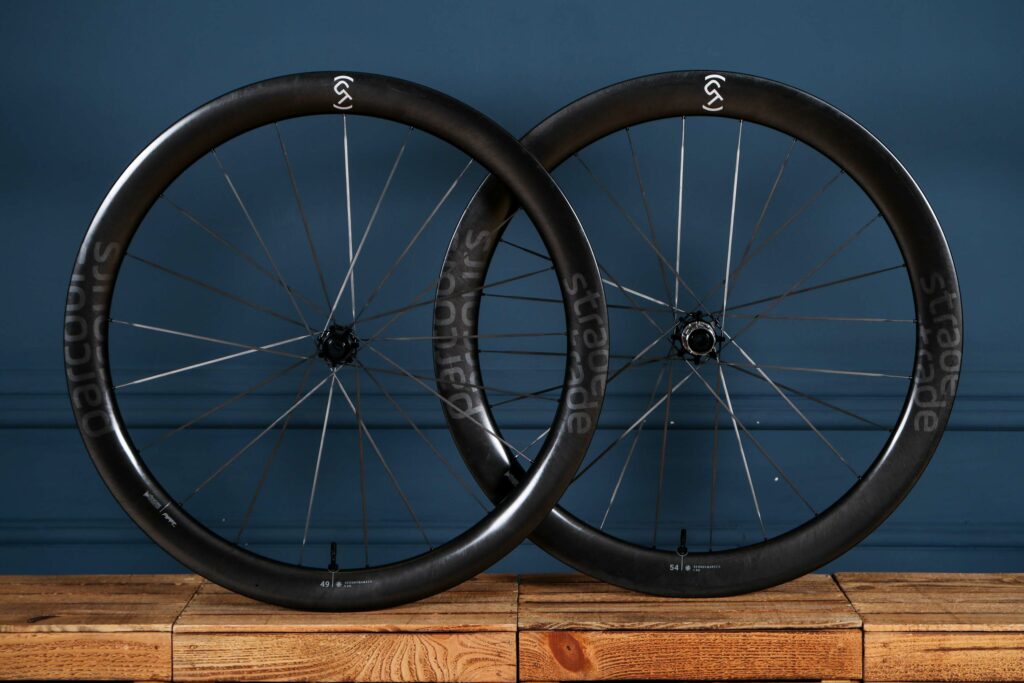
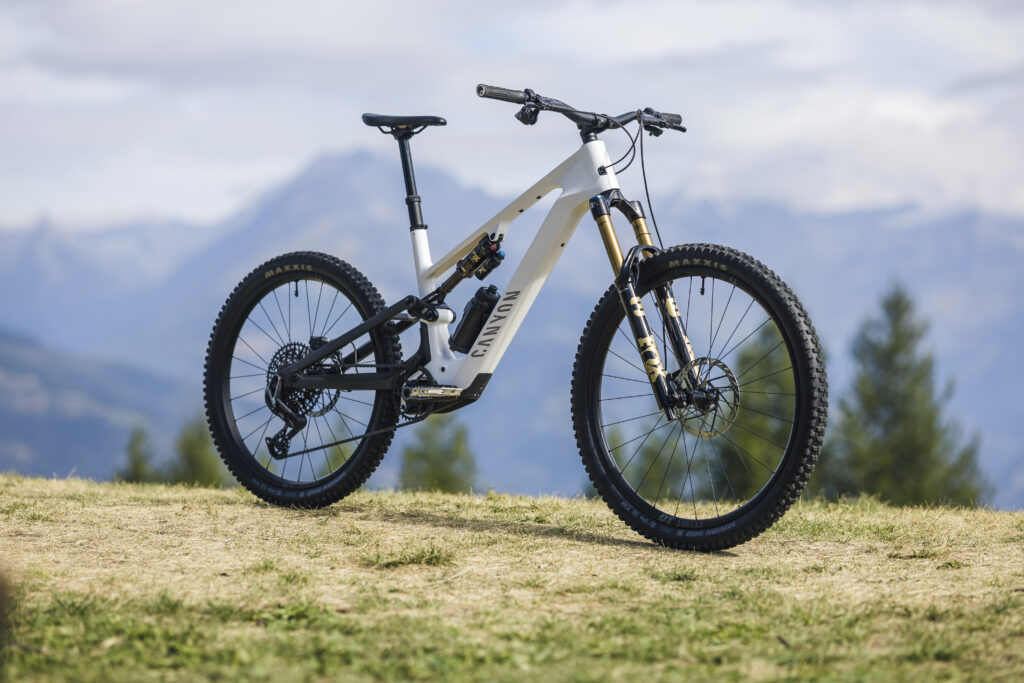
The modern superbike, meanwhile, is a Specialized Aethos, equipped with Shimano Ultegra Di2, Enve 4.5 wheels with Chris King hubs, TPU inner tubes, Vittoria Corsa Pro 30mm tyres, Favero power pedals and a 36cm Enve SES aero handlebar (measured at the hoods).
Aero
The aerodynamic performance of road bikes has come a long way since the ’90s, and it’s not just about deeper frame tubing. Advances in wheels, handlebars and even tyres have all played a role.

Perhaps the biggest gains, though, come from the rider, with more efficient riding positions, alongside faster clothing and helmets, making a significant difference.
For this test, Liam rode a 3km flat circuit on both bikes. The modern bike completed the effort in 5:50, while the ’90s bike took 6:18 – making the modern setup around 7% quicker over the same distance.
Stopping power
Disc brakes are another major development in modern cycling, so we put both bikes to the test for stopping performance. Liam approached a line at 30kph and braked as hard as possible – with the shortest stopping distance taking the win.
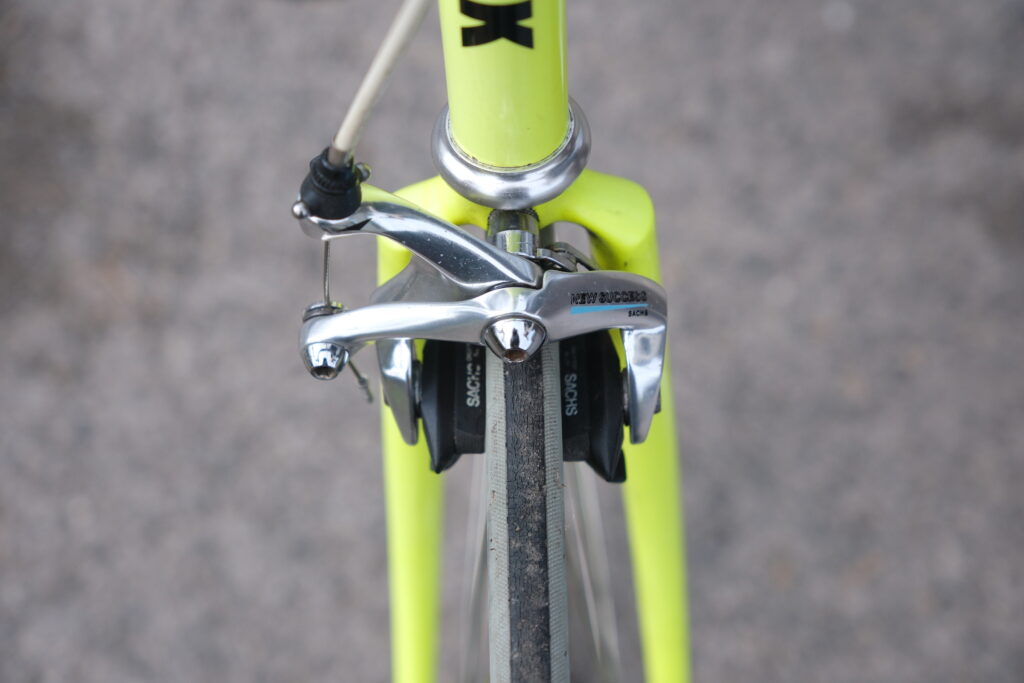
The modern bike came to a stop in 11.5 yards (10.5 metres), while the ’90s bike took nearly double that, stopping in 21 yards (19 metres).
Gears
There are some significant differences in gearing between the two bikes, most notably the move from downtube shifters to controls integrated into the brake levers.
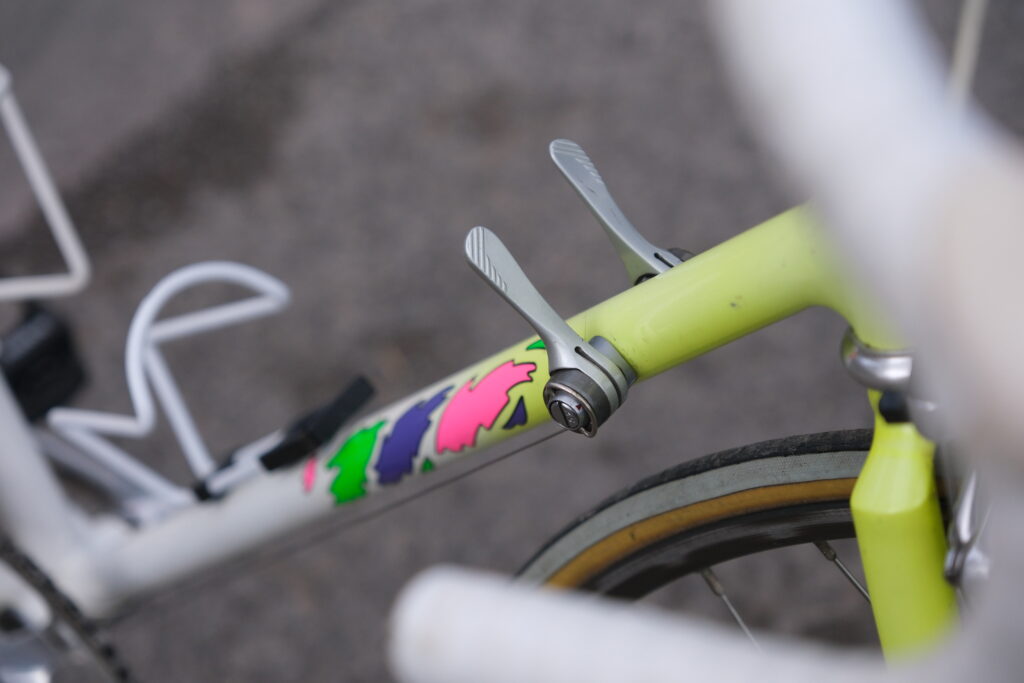
Modern bikes use indexed shifting, meaning each click of the lever – whether mechanical or electronic – moves the derailleur a set distance. That wasn’t always the case. Earlier systems often relied on friction shifting, where the rider had to manually position the lever just right to achieve a clean gear change, particularly on the front derailleur. In the early 1990s, many bikes still relied on friction shifting – although Shimano’s first commercially successful indexed shifting system was available from the mid-80s, and the brand’s STI lever (with both braking and gear shifting performed at the levers) launched in 1990.
Early version of indexed shifting were far from perfect, namely the indexing worked for all of about five minutes… today, however, shifting performance has reached a level of refinement that would have been hard to imagine back then. Even entry-level groupsets like Shimano Cues is better than the top end stuff from the late ’90s.

At the higher end, modern electronic shifting systems take things even further, offering fast, accurate and consistent gear changes with minimal effort. They come at a premium, but in terms of performance, there’s little doubt that today’s technology has the edge, but we know a lot of people, Liam included still have a soft spot for these old friction shifters.
Tech has come a long way since the ’90s. Liam notes that his first bike computer could only tell him how fast he was going – if it was working at all. Today’s devices, like Hammerhead’s Karoo, offer far more functionality.
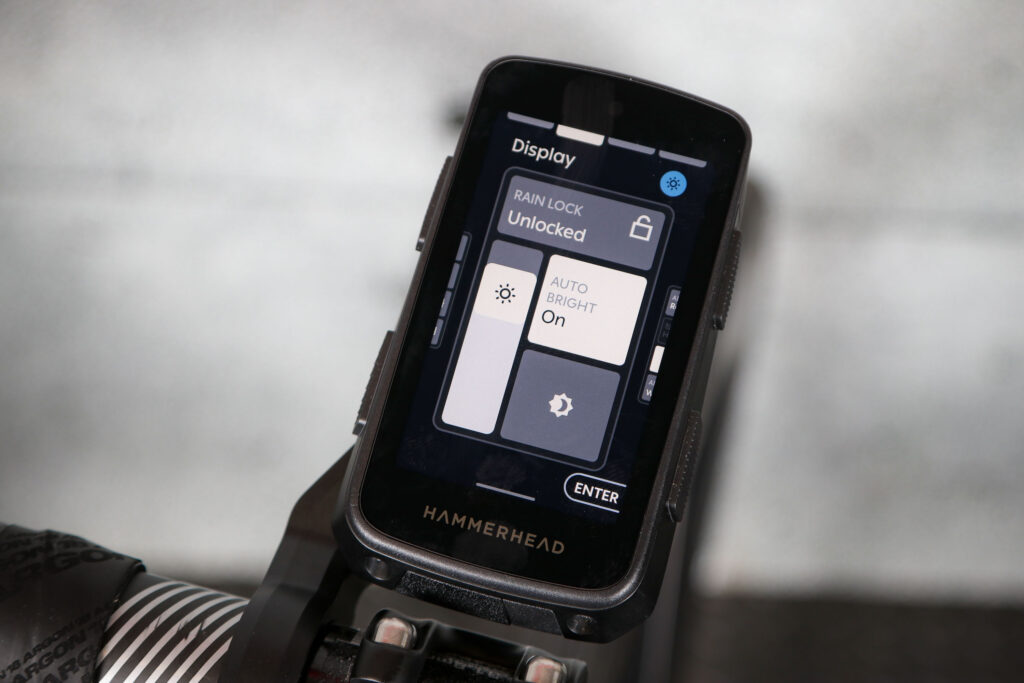
Along with countless customisable data fields, riders can control music directly from the head unit, meaning there’s no need to pull out a phone to skip tracks. The extensions library, essentially an app store, allows for additional features, such as custom data when using sensors like aero meters.
Liam highlights one simple but highly useful feature: setting custom alerts to remind riders to eat and drink. Many forget to fuel properly, he says, and using this feature can help maintain performance and ride faster.
So, with all of the testing done, unsurprisingly the modern bike was both faster and had a considerably shorter stopping distance. It was Liam’s favourite too, but there’s no denying the beauty of the ’90s bike.
Which one would you have? Let us know in the comments section below.









43 thoughts on “1990s Tour de France bike vs modern superbike: Are the latest bikes really so much faster and more comfortable?”
I get the overall point of the article, but it is well wide of the mark! That’s a very old 1993 bike. I definitely had Ergo levers and Shamal wheels by 1993. Also, whoever told you that indexed gears on down tube shifters did not work well and were unreliable does not have a clue. Finally, we had dual pivot brakes, which were much better than those pictured. There is no need for exaggeration and hyperbole in technical articles; research properly and state the facts!
I agree, some years ago I was given an early 90s British Eagle with indexed down tube shifters. It had been left outside and the chain and brake cables were rusted solid but after freeing the chain the gears indexed perfectly. Many modern systems are far less reliable requiring such fine tolerances that the slightest wear/dirt/knock makes them misshift and impossible to adjust correctly. I’m not a luddite and love riding 12s and hydraulics but I know which I’d rather work on.
Agreed, 90s downtube shifters worked fine – there really wasn’t much reason why they wouldn’t! And DP brakes were a big advance over those used here: still not as good as today’s best hydraulic systems – but I’d say closer to those in terms of performance than single pivoters.
Conversely, I think that MBK looks hideous – but each to their own!
100% in agreement with all you wrote.
Absolutely, my first top-end road bike in 1986 had Shimano 600 (precursor of Ultegra) SiS downtube shifters and they remain one of the loveliest bits of engineering I’ve seen on a bike, perfect shifting every time and with nothing more than occasional new cables and a drop of lubricant now and again they were still working perfectly in 2003 when some bastard nicked it.
My condolences.
Thank you, a quarter of a century on I’m almost over it, though if anyone comes across a Road Ace with a KT4 postcode stamped in the bottom bracket do let me know…
I believe the point being made was that early versions didn’t work very well, Liam got on with the shifters on the MBK fine. Accept that this could have been better clarified, plus that this bike didn’t have the latest tech on it by 1993.
FFS! I can’t believe someone thought this article was worth the effort of typing out.
Another example of people writing about older bikes that don’t know what they are talking about. I had the very first Shimano indexed down tube shifting and it was reliable and worked great. Check with people who actually rode these bikes back then before publishing a sensationalist article like this. I don’t think anyone would have raced down tube shifters in 1993. The Avocet 20 bike computer I used in the 80s had speed, total distance, a timer, and trip distance. By the 90s they did much more. This entire thing should be retracted and rewritten.
1993 Tour de France, Indurain vs Romiger: Mig has brifters but you can clearly see Romiger’s downtube shifters, so they were still being used at the highest level in that year.
you can clearly see Romiger’s downtube shifters
Single pivot brakes, too!
Both seem to be using cycling computers and Romiger seems to be wearing a pretty advanced sports watch, most likely the latest Garmin?
I also seem to recall a now discredited cyclist used a downtube shifter for his front derailleur on mountain stages as late as 2003.
Garmin didn’t introduce wearables until the early years of this century, from the shape maybe a Polar heart rate monitor watch?
[Humour]
We’ve heard of it…
It wouldn’t have been hard to find a better example of a 1990s roadbike. The MBK isn’t bad but there were better performing bikes at the time.
For example Miguel Indurain’s 1995 Pinarello – the last steel road bike to win the Tour de France. The MBK isn’t much different to bikes that were winning the TdF in the 1970s.
1994 was the last steel bike, in 1995 Mig switched to aluminium for his final victory.
.
A lot of sources say it was steel:
https://www.retrobike.co.uk/threads/miguel-indurain-oficial-1995-france-tour-bike.501620/
https://www.paulfrasercollectibles.com/blogs/sports-memorabilia/indurains-1995-tour-bicycle-to-make-30-000-at-auction
https://velo.outsideonline.com/road/road-racing/tour-de-france/vn-archives-the-gear-raced-by-each-team-of-the-1995-tour-de-france/
– see gear for Banesto team – tubing Columbus.
A lot of sources say it was steel e.g.
https://www.retrobike.co.uk/threads/miguel-indurain-oficial-1995-france-tour-bike.501620/
There does seem to be a bit of a split on the issue. Just to throw something else into the mix (literally), this claims it was actually a metal matrix composite.
https://felixwong.com/2010/11/tour-de-france-bicycles-historical-bike-weights/
Yes, the Keral Lite, which some sources say Indurain rode in ’95 and Riis definitely won on in ’96, was (apparently) some sort of aluminium alloy/ceramic composite.
I was interested/nerdy enough in this to drop a line to Pinarello to ask them for a definitive answer, and they replied within twelve hours, thanks guys if you’re reading this. I am happy to admit I was 90% wrong, Indurain did ride a steel bike in the 1995 Tour, only switching to aluminium in his final tour in 1996. However 1995 did see the road debut of his carbon fibre Espada TT bike which he used in the Tour, so 1994 was the last year that the winner rode only steel bikes.
Rendel Harris wrote: “1994 was the last steel bike [to win the Tour de France]., in 1995 Mig switched to aluminium for his final victory.”
Good work contacting Pinarello and well done for almost conceding.
But…”1994 was the last steel bike,” – wrong. It was still steel than won alongside 1 stage out of 21 carbon fibre in 1995 and not aluminium.
“1995 Mig switched to aluminium for his final victory” – wrong
That would seem to be closer to 100% wrong not 90%.
Call Pinarello again?
On March 26, 2026 at 5:07 pm mdavidford wrote “There does seem to be a bit of a split on the issue. Just to throw something else into the mix (literally), this claims it was actually a metal matrix composite.”
This site https://premium-cycling.com/product/pinarello-banesto-m-indurain-replica-made-by-dario-pegoretti-1994-95/ says “From 1993, their frames were TIG welded, made of Dedacciai 18MCDV6HT or Oria ML34 steel tubing and build with Campagnolo Record groupsets.”
The Pinarello wikipedia page states “As noted above, the Banesto Line introduced in 1993 exclusively utilized Oria tubing: Oria Cromovan, Oria ML34, and Oria ML25. ” without citing a source however.
Google AI says “Material: Dedacciai or Oria high-end steel tubing (Dyna Lite or similar high-performance alloy).”
Your link would seem to be the only mention of metal matrix composites against a lot of other sources mentioning TIG-welded Oria or Dedacciai steel alloys.
Goodness me, you seem to care a little too much about this for it to be healthy. I admitted I was wrong about the bike being used, but as I explained it still remains the fact that 1994 was the last time the winner accomplished their victory using only steel bikes.
Shurely if everyone just says “alloy” then we’re all right?
On March 26, 2026 at 5:07 pm mdavidford wrote “There does seem to be a bit of a split on the issue. Just to throw something else into the mix (literally), this claims it was actually a metal matrix composite.”
There are some pictures of a Kera-Lite bike here
https://flic.kr/s/aHsjDHEZyJ from its owner who says “Here is my Pinarello, rare frame set only offered in ’96 and used by Bjarne Riis in his TdF win.
tempted to restore to Team Telekom colors but the decor finish is so cool…”
On March 26, 2026 at 5:07 pm mdavidford wrote “There does seem to be a bit of a split on the issue. Just to throw something else into the mix (literally), this claims it was actually a metal matrix composite.”
Another one here from ’96:
https://www.pedalroom.com/bike/pinarello-banesto-1996-keral-lite-53036
Another one here from ’96:
https://www.pedalroom.com/bike/pinarello-banesto-1996-keral-lite-53036
Is this some kind of tic?
The website said the post was rejected so I adjusted and reposted, but it had posted the original supposedly rejected comment anyway. Hence the two separate duplicate posts here.
That MBK is beautiful though, the late 80s and early 90s was peak road bike cool.
The Aethos is described as having Enve 4.5 wheels, but in the photos has Roval Alpinist 🤔
I assume the photos were from a separate photoshoot – in the embedded video, the Aethos is equipped with Enves.
I race on a 1980s 753 bike. I have actually won stuff on it in my age category. It’s not as aero as my carbon bike but goes up hill quicker despite a pound or two weight disadvantage and is pretty good on rough roads.
I race the same courses so can compare the performance and its clearly faster up hills but slower down and on flat bits .
Obviously I have stuck sti levers on it but the wheels are not very deep due to the frame not being able to cope with it.. seriously scary snaking with deep rims and 1″ steerers and spindly forks… 25mm tyres are as wide as it’ll take. Brakes are a bit rubbish… running 8sp as it’s perfectly acceptable and cheap.
Vintage bikes can be fun to ride and some are still just brilliant for their original purpose such as touring and club rides in winter.
I’ll be racing my bright pink 753 at Little Mountain this year, maybe the Wattshop 2 day and probably Welland. See you there 😀
I ride a Raleigh Elan from ~1990.
As others have said, down-tube indexing was (and still is, in spite of my Dad’s forecast) spot on.
Where it does fall down is tyre width (I have squeezed 28s on), and cassette range – I can’t get a 1:1 ratio without drastic (expensive) changes, so really steep and long hills get the better of me.
Disc brakes would be nice, but I’ve got a modern computer, and SPD pedals (even though the originals are gorgeous).
Why use an unfair pair of bikes for the comparison ?
The Aethos is a mega expensive 5.9kg sub UCI limit unicorn and the MBK at 9.77kg is a porker.
Why not use a lightweight 90’s bike ?
Many come in well under 9kg – my own Columbus SL Tecnotrat with select components hits 8.4kg.
The result would have been fairer and likely closer except in braking where discs are almost too powerful.
The points made are of course valid, but it does appear that you’ve chosen the worst bike being ridden at the top level in 1993 for comparison, and chosen the year to be the inflection point just before the industry finally moved away from steel and started thinking about aerodynamics other than for TT stages.
By 1993, Shimano STI (so many jokes) and Campag Ergopower were well established, albeit with riders riding with the old levers to save a bit of weight on mountain stages. I remember someone rocking up to a RR with deep rims that year and being laughed at.
Looking back, the odd thing is how long it took the teams to switch to skin suit-like clothing. Look at the sleeves on the Rominger / Indurain photo!
“For this test, Liam rode a 3km flat circuit on both bikes. The modern bike completed the effort in 5:50, while the ’90s bike took 6:18 – making the modern setup around 7% quicker over the same distance.”
Which one went first?