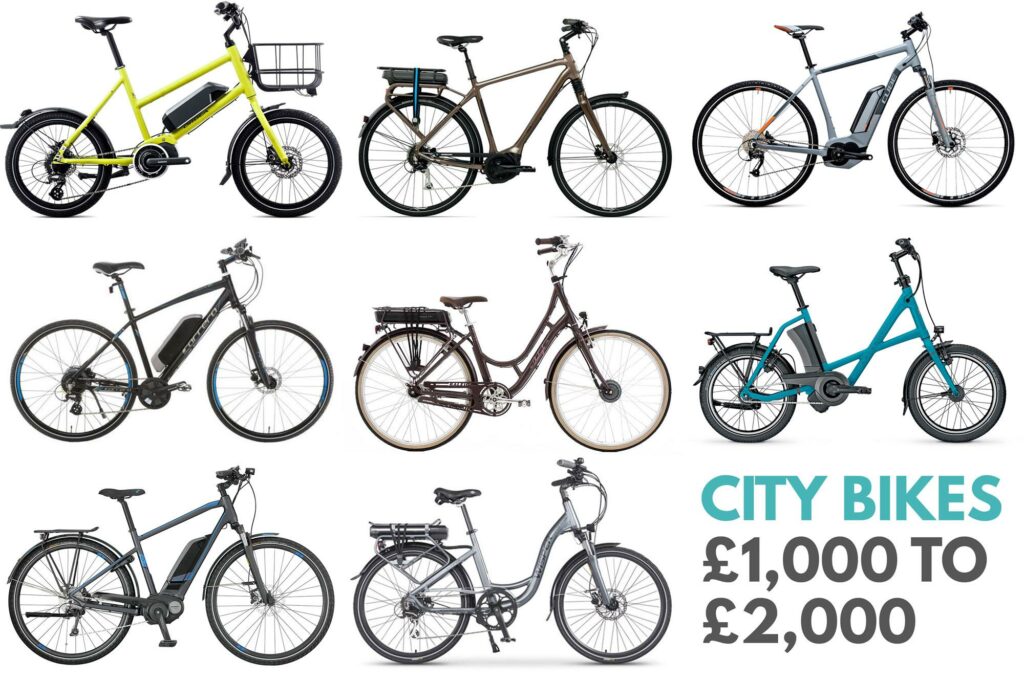

The £1,000 to £2,000 price bracket offers a great deal of choice when it comes to city bikes. At the lower end you’re getting a good-quality machine with a decent hub motor system; further up you can make the switch to a mid motor or increase your range with a bigger battery, and the componentry gets better the more you spend. Whatever your budget within this price range, you can get a reliable and well-built bike.
Hub motor or mid motor?
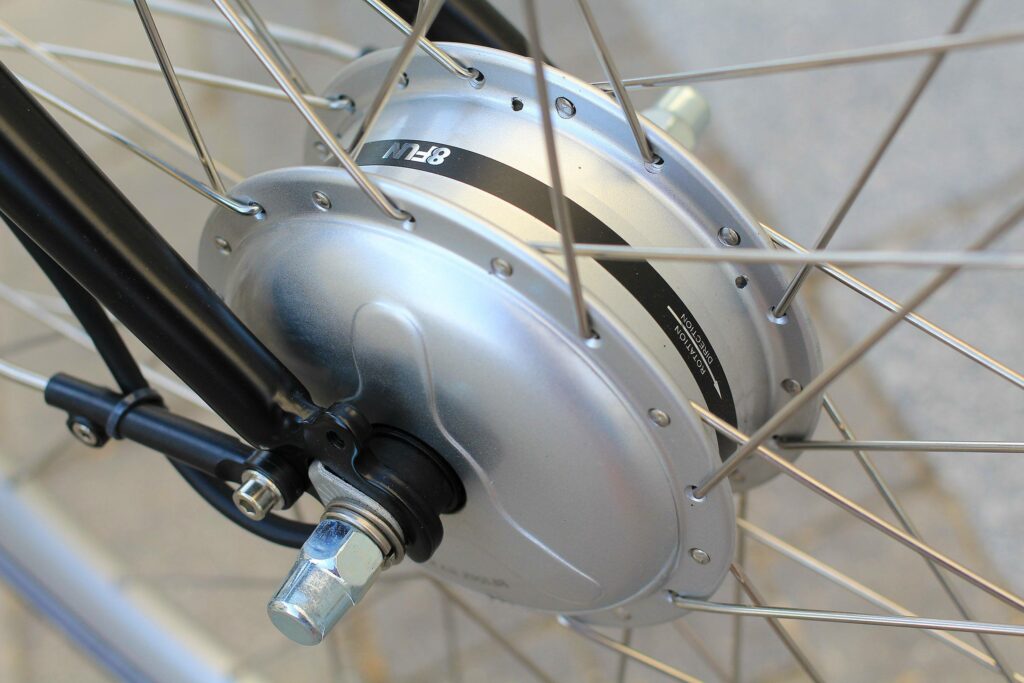
Hub motors dominate the sub-£1,500 market because they’re cheaper to produce. They’re cheaper to fit, too, because you don’t need to make any special modifications to the frame. The fact that the bikes are cheaper doesn’t mean they’re necessarily inferior for a certain application, and in some cases hub motors have advantages over mid motors. The main advantage is the level of noise: Where a mid motor is usually noticeable, good hub motors these days are near silent.
Hub motors aren’t generally as powerful as mid motors. They’re all 250W, of course, but that doesn’t make it a level playing field. The maximum torque a motor can generate can be anything between 30Nm and 100Nm; higher torque motor systems tend to be more expensive. If you live somewhere hilly or you’re a heavy rider then the maximum torque will certainly make a difference, so it’s a good thing to compare if you’re looking at a range of bikes.
Torque vs cadence
Cheaper motor systems use a cadence sensor: it checks to see whether you’re turning the pedals and adds power if you are. Changing the assistance level simply increases or decreases the assistance.
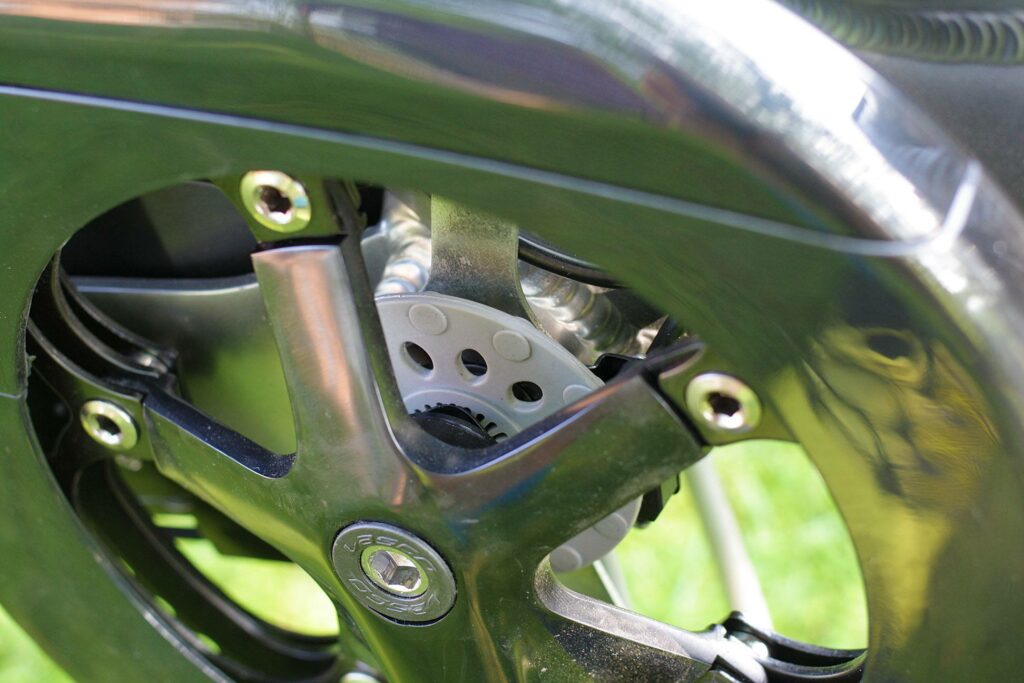
Torque sensors use a strain gauge (normally on the axle between the pedals) to measure how hard you’re pushing, and add power accordingly. They tend to feel more natural than cadence systems. Most torque-sensing bikes also take your cadence into account as well, and different bikes will give more weight to one or the other, so bikes can have quite different ride characteristics.
Frame design
Frames can be a standard diamond frame, with a high top tube, or they can be a low step through, with either no top tube at all (just a single main tube) or a dropped top tube to make it easier to get on and off the bike.
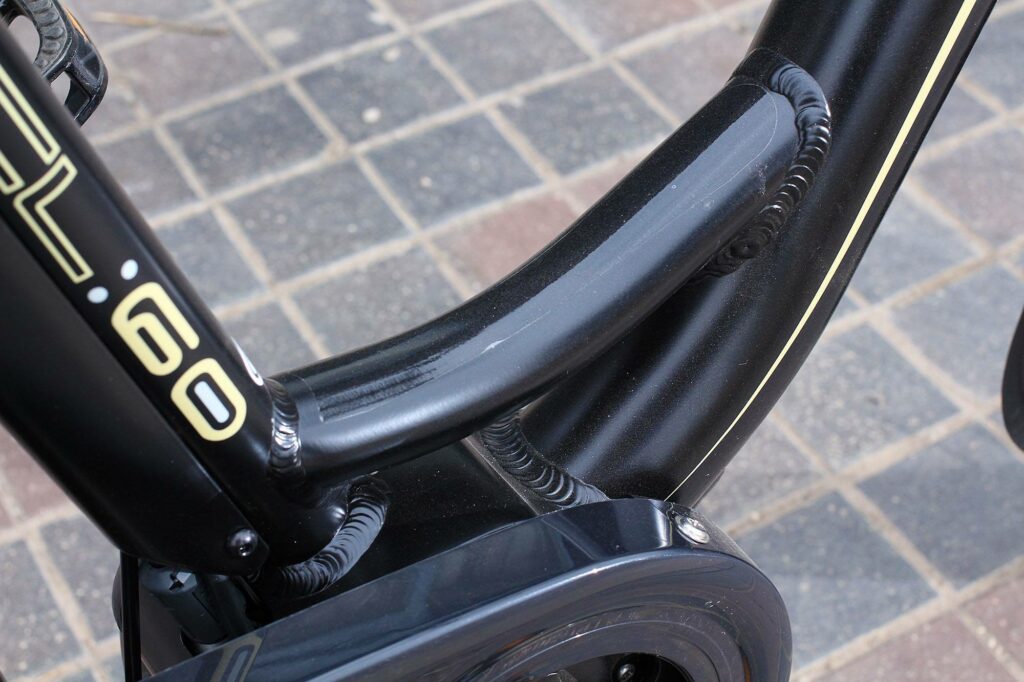
Low step through bikes have traditionally been aimed at people with restricted flexibility, and women, because they’re more skirt-friendly. There’s no real practical advantage to having a high top tube on a city bike, though. The top tube helps to brace the frame and make it stiffer, but unless you’re a powerful or really heavy rider you’re unlikely to notice. All other things being equal, we’d generally go with a step-through design: easier to get on and off, more accommodating of different sizes of rider. Many of the bikes below offer two or even three frame designs.
Suspension
Nearly all city bikes will come with a suspension front fork. It’s something that bike manufacturers say that they’re asked for, and it doesn’t add much to the cost, but most of the time it’s more or less redundant. Your position on a city bike is upright, with the majority of your weight on the rear wheel, and city bikes normally have reasonably large tyres. Those two things combined mean that a suspension fork is generally surplus to requirements: the front end is unweighted, and the big air chamber of the tyre can cope with most road imperfections.
A telescopic suspension fork (especially a cheap one) is more flexible than a rigid fork, which can sometimes make steering a bit vague and lead to the bike diving at the front under braking, as the fork flexes backwards and the suspension compresses; this is exacerbated by a front hub motor. Forks which use rigid blades and a single suspension unit between the top of the fork crown and the head tube of the frame are generally better behaved.
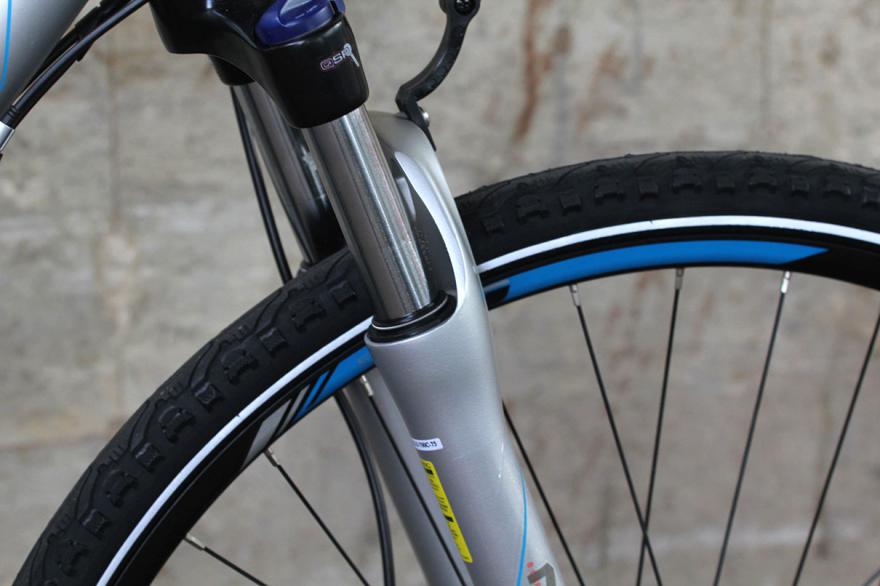
Because your weight is mostly supported by your bottom, and not your hands, a decent suspension seatpost is often a better investment than a suspension fork. Many bikes have both. Most are telescopic, with one part of the seatpost sliding into the other. Some use a linkage, with an elastomer inside controlling the suspension travel.
Gearing
You can choose between hub gears and derailleur gears for your city bike. Hub gears are housed inside the rear hub, so front hub motors and mid motors are the options for assistance. Because they’re internal they’re protected from the elements, and the bike will have a single chainring and drive sprocket so it’s easier to enclose the chain in a chain case to keep your work clothes clean.
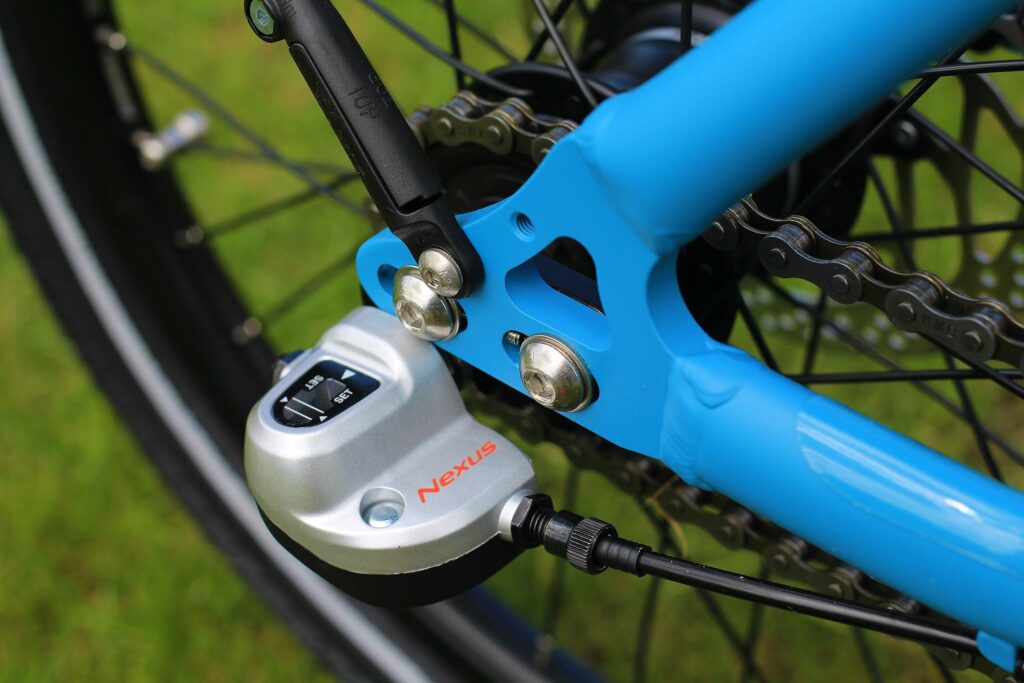
Hub gears don’t require the chain to move, so you can change gear when the bike is stationary. That’s helpful if you find yourself stuck at traffic lights in the wrong gear. The flip side is that hub gears aren’t good at shifting from one ratio to another under power, so you generally need to ease off the pedals to change gear. On a hill, that means you can lose a bit of momentum.
Derailleur gears are easy to use and straightforward to maintain. The majority of e-bikes sold in the UK use them, and they’ll usually give you many years of service and very little trouble. They’re a bit more susceptible to damage and harder to enclose, though.
Braking
The choice for brakes is mostly between disc brakes and rim brakes. Rim brakes are cheaper, and pretty effective. Because they act upon the soft alloy of the rim they’ll eventually wear your rims down, and they can create a fair bit of mess in wet or dirty conditions.
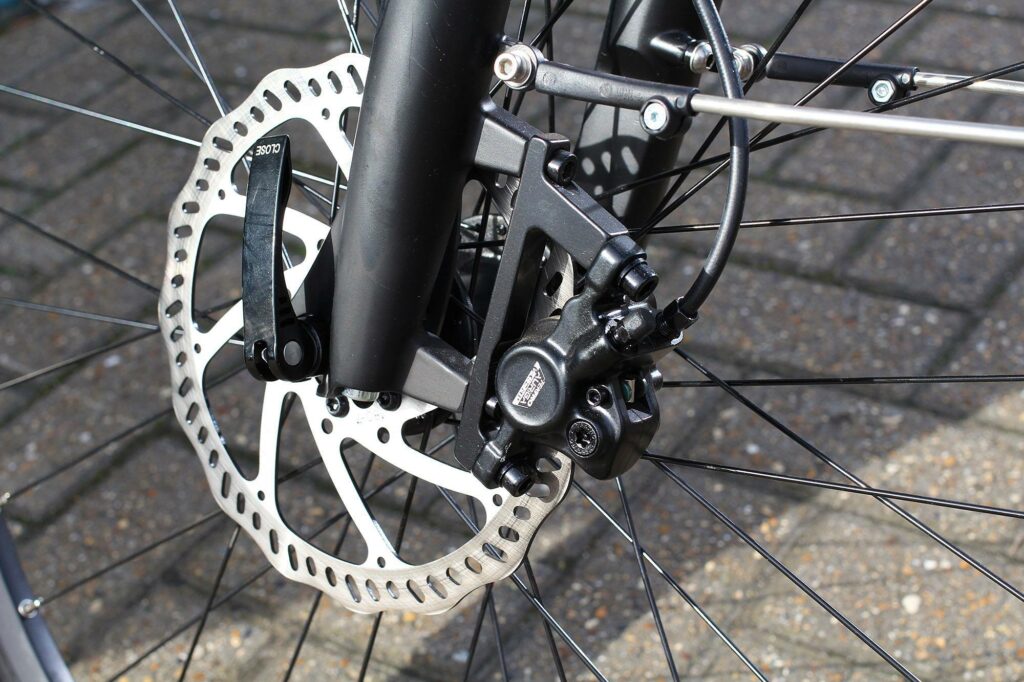
Disc brakes are better: They don’t wear your rims out, they’re less affected by the weather and they run cleaner. Hydraulic disc brakes (that use hydraulic fluid in a hose) are better than cable discs (that use a cable like rim brakes) – they require less maintenance and they’re more powerful. Hydraulic rim brakes are also available; they’re very popular on the continent. A few bikes use drum brakes, which are very low on maintenance but lack power, which isn’t good for a heavy e-bike.
Wheel size
There’s a broad range here. Small-wheeled city bikes are quite popular, using the 20” wheel size. They’re more compact but still offer a full-sized ride. A couple of bike brands use 24” wheels, and above that there are the two most popular wheel sizes. 26” wheels are the mountain bike standard (although many new MTBs are moving away from them towards bigger wheels), and the last standard is metric: 700c is the road bike standard, which equates to either 28” or 29” in imperial, depending on what you’re measuring. Each wheel size has slightly different ride characteristics but we wouldn’t say any one was better than the others.
Ten top picks from £1,000 to £2,000
With all that in mind let’s dive into some bikes, starting at the lower end of the price range and working our way up.
Carrera Crossfire E — £1,100
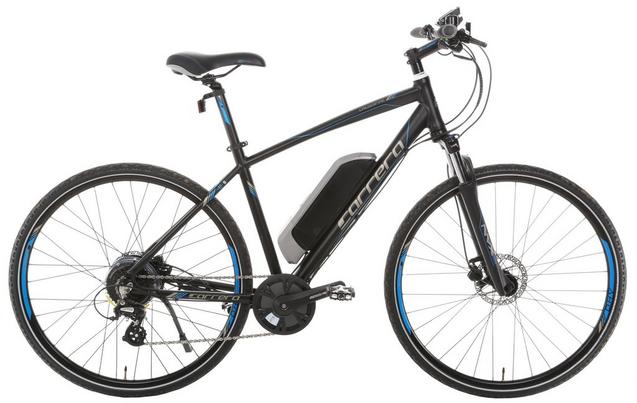
The fall of the pound has bumped this bike up a category; it used to be £999 but now it’s over a grand at RRP, though as at January 2018 it’s on sale fr £960. Even so, it’s punching well above its weight in terms of spec for price. The Carrera uses a Suntour HESC motor system that is torque-sensing, and you get hydraulic disc brakes and a better-than-average suspension fork for the money. The 324Wh battery isn’t huge but we’ve tried the Crossfire E and found the range to be very good. It’s an excellent value bike even with the small price rise. The bike is available in either diamond frame or mid step configurations, with the same equipment on both.
> Read our review of the Carrera Crossfire E
EBCO UCL-30 — £1,250
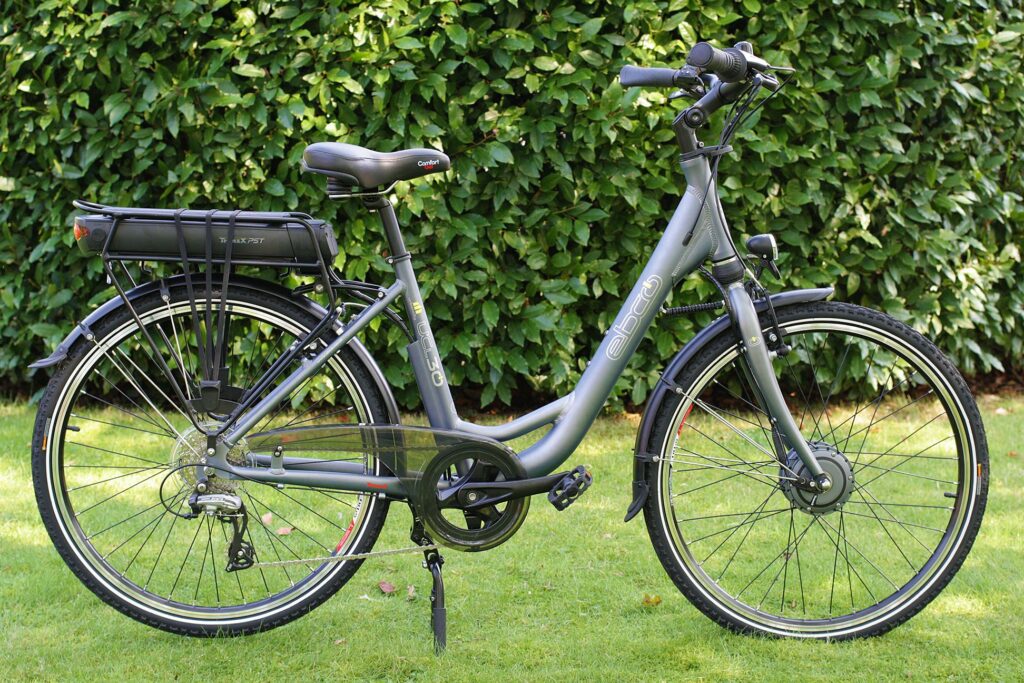
EBCO’s range starts with this bike. It’s available as a diamond frame (UCR-30) or a step-through, both with the same spec. The motor is a TranzX F15 front hub; EBCO have used a rigid-blade suspension fork design so that the motor doesn’t cause too much fork flex under braking.
The bike uses a TranzX LogixLine controller which gives EBCO dealers access to on-board diagnostics for the bike; you can charge your phone from it too. Mudguards and integrated lighting are included, as is a chain case.
Juicy Bike Roller — £1,585
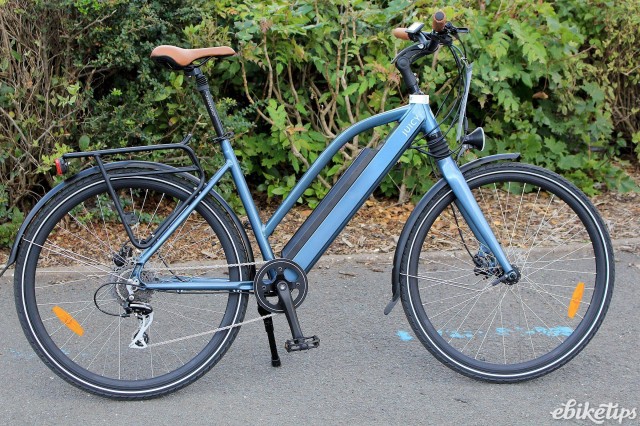


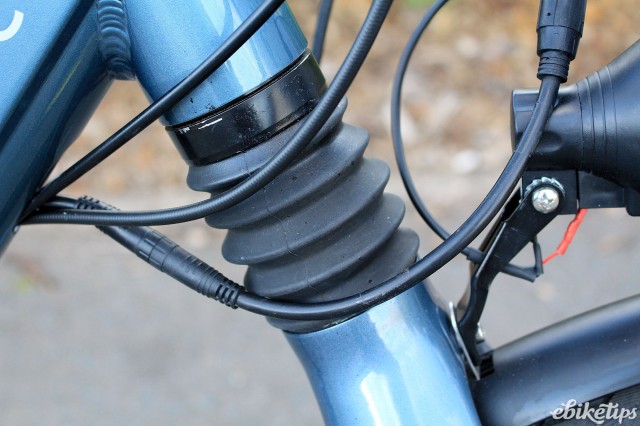
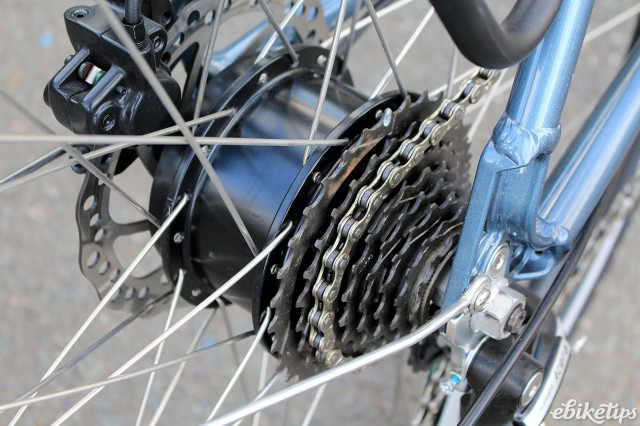
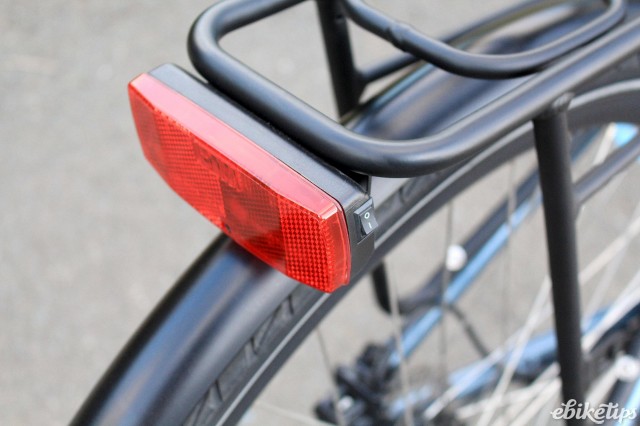

This is a new bike from Juicy and they’ve done a lot of work to make it a clean-looking and appealing machine. It uses a mid-step frame and an integrated battery in the down tube. 374Wh is the standard capacity, with a 468Wh battery available for £150 extra.
The bike uses an Aikema hub motor with 40Nm of torque. It’s one of the quietest hubs we’ve experienced, really nothing more than a whisper coming out of it even on high assist modes. The Roller uses a torque sensor and the motor assistance feels very natural, with five levels of assistance. You get 8-speed Shimano Acera derailleur gears and Tektro hydraulic disc brakes. The front suspension fork is a rigid-blade design which gives a more precise ride.
> Read our first ride review of the Juicy Bike Roller
> Find a Juicy Bike dealer
Raleigh Spirit E — £1,295
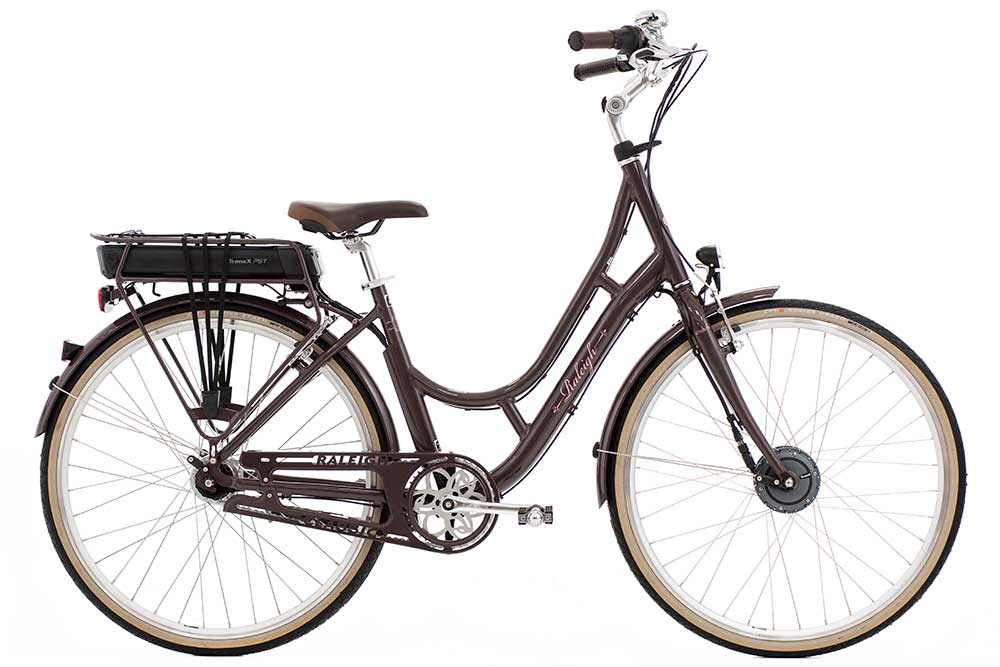
If you’re after a classic city bike look but with the added bonus of electric assistance then they don’t come much more classic than the Spirit E. The alloy frame and steel fork ape the lines of a traditional Dutch bike, and you get a smart metal chaincase enclosing the Nexus 7-speed hub gear transmission. Motor power comes from a TranzX F15 motor in the front hub, and a 400Wh battery should keep you moving for a good while. Colour-coded mudguards are included and so are integrated lights. You even get classic KMC pedals and a big shiny bell.
Orbea Katu-E 40LR — £1,699
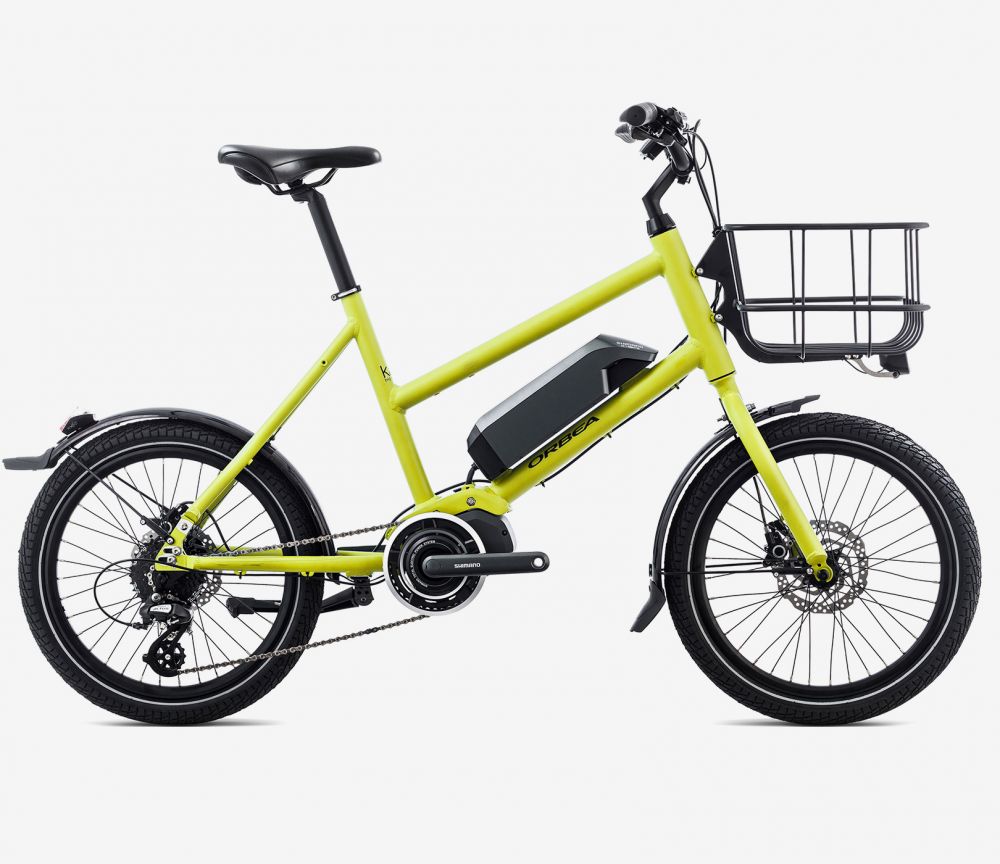
Orbea’s small-wheeled city bike is great: it’s fun to ride and easy to store, and it comes with a big basket you can chuck stuff in. At £1,699 this is about as cheap as you’ll get the excellent Shimano STEPS mid motor system. It comes with a 400Wh battery and here it’s mated to an 8-speed Shimano Altus derailleur transmission. Shimano hydraulic disc brakes take care of stopping. There’s no suspension but you get big Kenda tyres on the 20” wheels to soak up the hits.
Wisper 705 Torque — £1,699
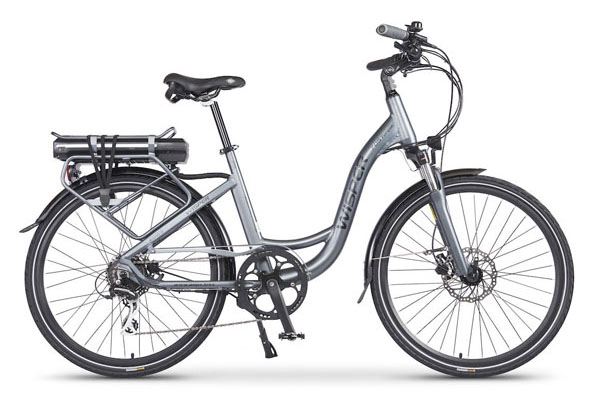
Wisper’s step-through 705 Torque is £1,599 with a 375Wh battery; this price is for the higher capacity Samsung 575Wh battery which should take away your range anxiety. A 50Nm rear hub motor provides assistance; the bike uses a torque sensor and there’s five levels of assistance on offer. You get a Shimano 8-speed derailleur transmission, Tektro Auriga hydraulic disc brakes and a Suntour NEX fork with lockout. A semi-integrated rack, mudguards, chainguard and lighting are all part of the package.
Cube Cross Pro 400 — £1,999
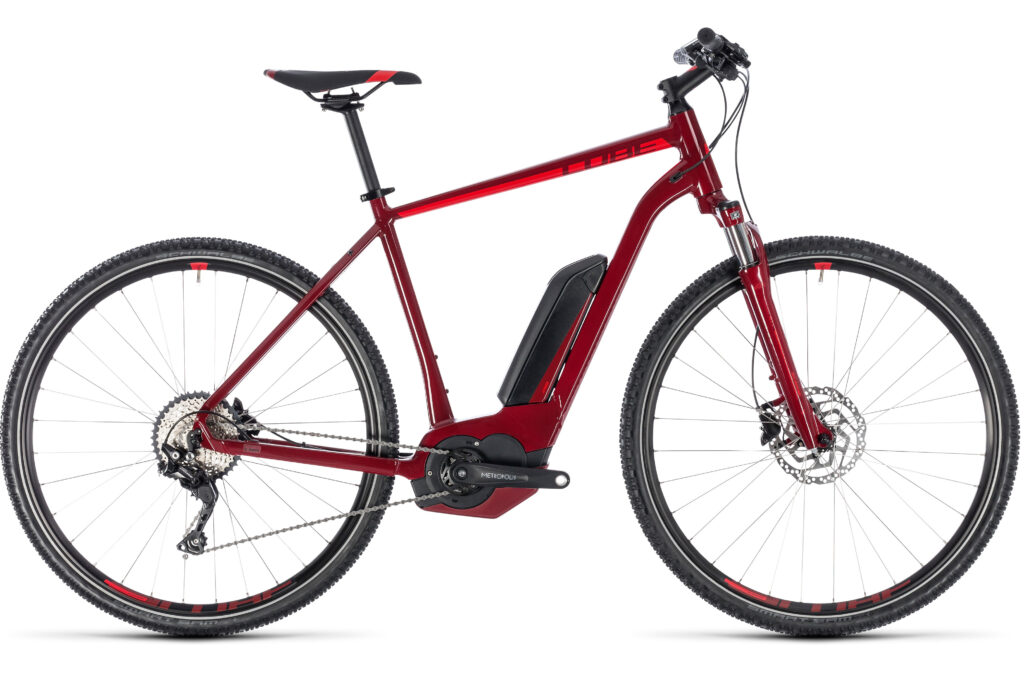
Another bike punching well above its weight in terms of spec for the money, the Cube Cross Hybrid One manages to shoehorn in a top-tier Bosch Performance Line CX motor, 400Wh powerpack, Shimano Deore 9-speed derailleur gears, a decent SR Suntour NEX suspension fork and hydraulic discs for £1,899. Impressive stuff. The Cross Pro 400 (a 500Wh version is available for £200 more) is designed as a multi-purpose bike and as such it’s not fitted with a chaincase, mudguards or lights but it would still make a very capable urban companion and it’d be up to a bit of off-roading too. Diamond and mid-step frame options are available. www.cube.eu
Kalkhoff Sahel Compact I8 — £1,999
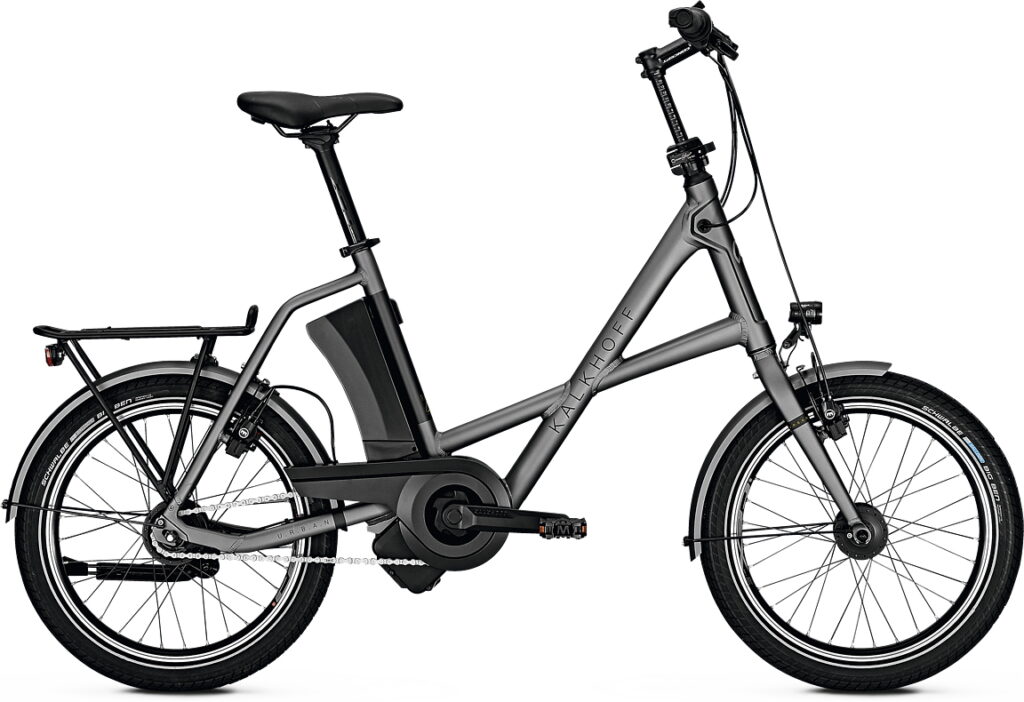
Another small-wheeler, the Sahel Compact is available with either a 396Wh or a massive 612Wh battery; with the smaller battery it’s just under the £2,000 mark. Kalkhoff have their own mid motor system, Impulse, and it’s a very good unit: quiet and plenty powerful. The Sahel Compact has a Shimano Nexus 8-speed hub gear and Kalkhoff use a sensor that backs the motor off when you change gear, to make shifts easier and avoid damage to the hub’s internals.
The cruciform frame design gives a low step through and the rigid fork gives precise steering, with the big Schwalbe tyres taking the edge off bumps and potholes. Kalkhoff use Magura’s HS-11 hydraulic rim brakes, which offer powerful and predictable braking in all conditions.
> Read our review of the Kalkhoff Sahel Compact
> Find a Kalkhoff dealer
Trek Verve Plus — £1,999
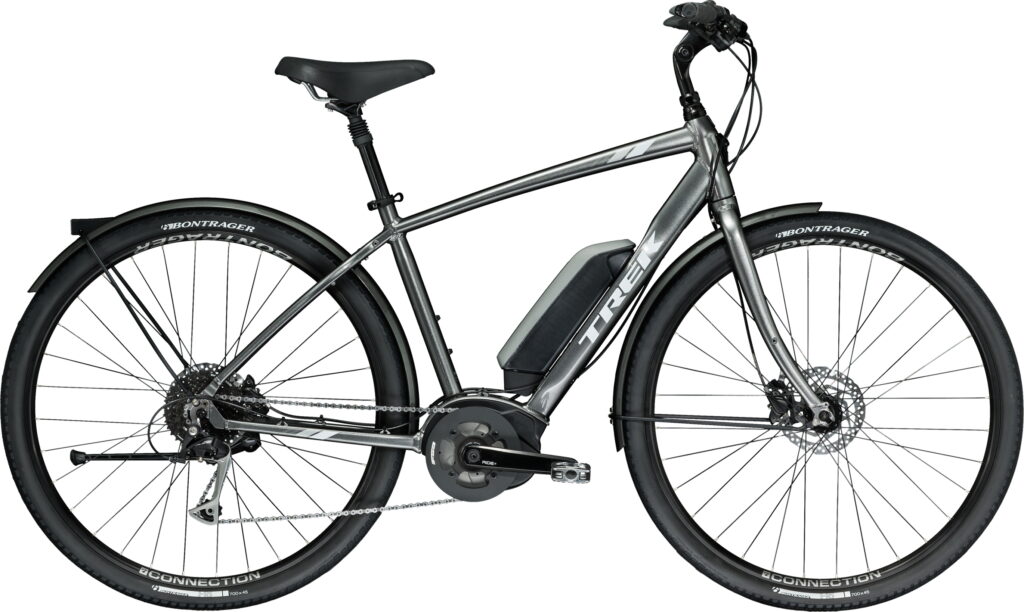
With lights, a kickstand and mudguards the Verve Plus isn’t quite fully-loaded for city use but the essential practicalities are handled and a rack isn’t an expensive addition. The Bosch Active Line mid-drive system has a 400Wh battery, which helps keep the price under two grand, but you get Shimano hydraulic disc brakes and Alivio 9-speed gears.
The 45mm tyres are a very welcome feature for bashing round town; they allow you to point and laugh at potholes and are arguably a better solution to the problem of poor road surfaces than a short-travel suspension fork.
Focus Aventura2 Elite — £1,999
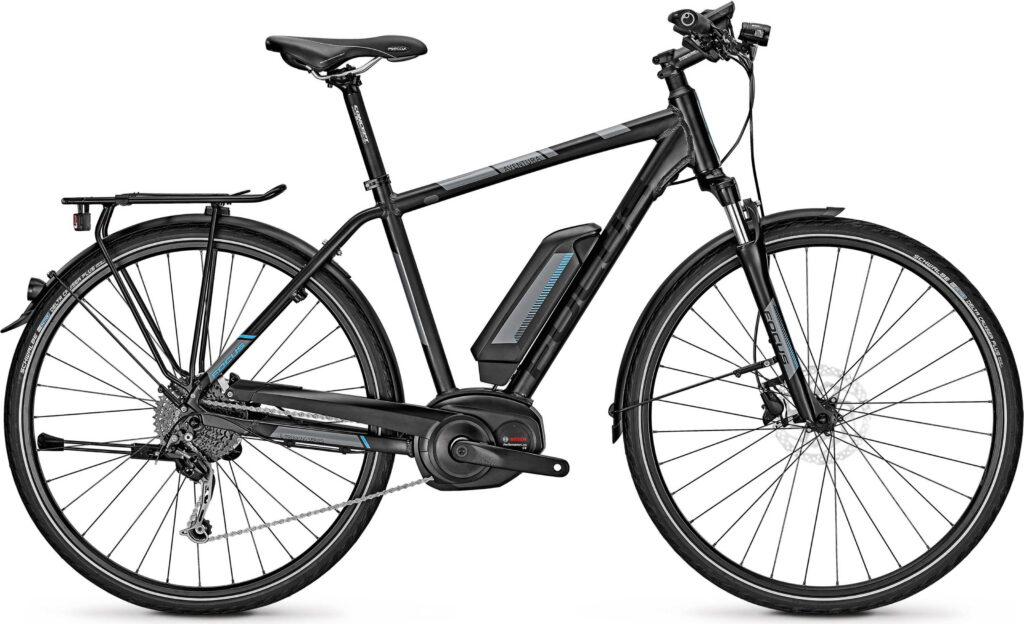
If you look up ‘typical £2,000 e-bike’ in the dictionary, there’ll be a picture of the Focus Aventura2 Elite, or something very very like it. It’s powered by the Bosch Performance CX motor and has a 400Wh battery. There’s an SR Suntour NEX suspension fork to take the sting out of cratered urban streets and dirt tracks, Shimano hydraulic brakes, and 9-speed gears.
There’s a full set of extras too: lights, rack, mudguard and kickstand, so it’s ready for the streets straight out of the shop.