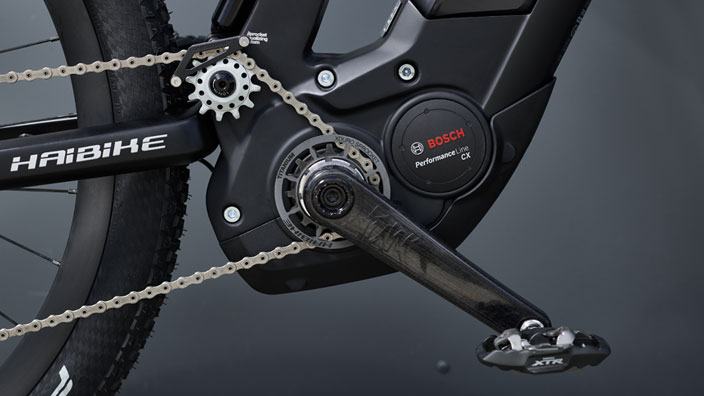

The combination of battery, motor, and control system, sometimes known as the e-group, is the heart and soul of any e-bike. The E-group determines the bike’s riding characteristics, potential range, electrical and electronic features, and much more. Let’s take a look at your options.
Early e-bike makers had to do everything themselves: source batteries, design motors, cook up the control electronics to make it all work, and more. Life is much easier for them now as a range of manufacturers offer complete sets of components that make the job much easier.
Those manufacturers mostly have backgrounds in electronics and appliances, which initially sounds odd if you think of e-bikes as bikes. But an e-group involves a combination of electric motors, sensors and control electronics that’s very similar in some ways to, say, a tumble drier or a fridge. That’s why names like Bosch, Panasonic and Yamaha are prominent.
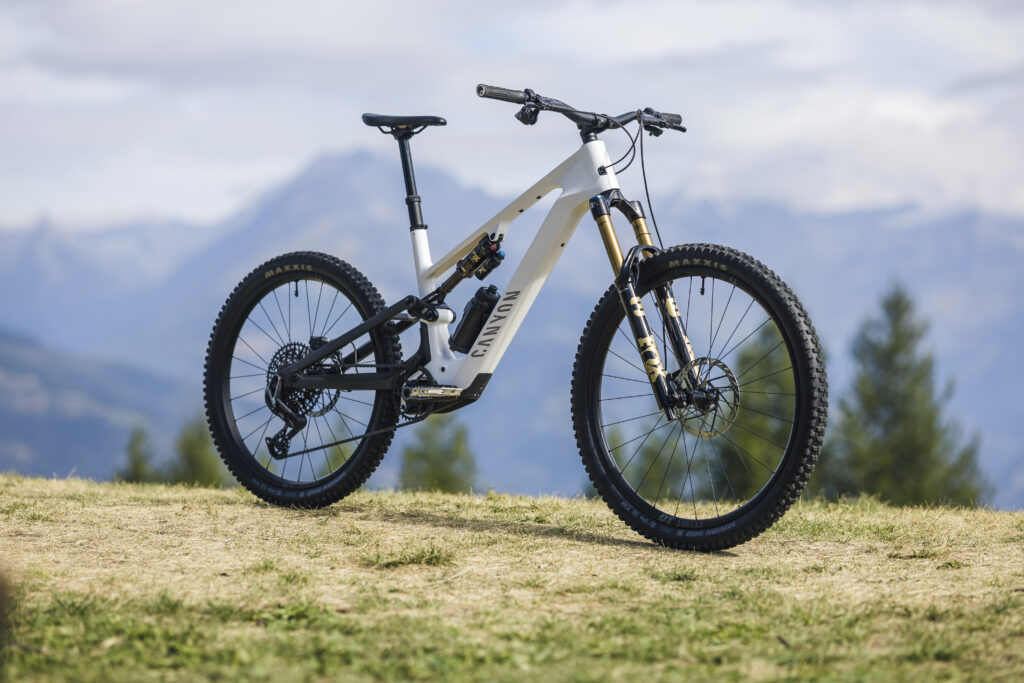
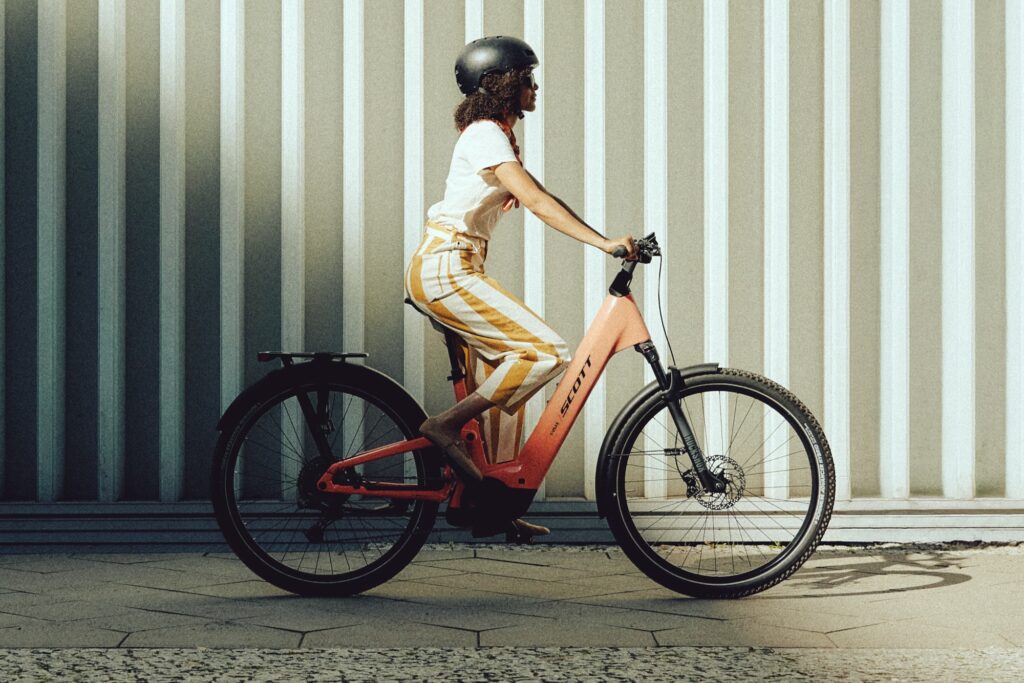
High-end e-groups, of the sort you’ll find from bikes at about £1,500 and above, almost all put the motor in the middle of the bikes, so it can drive the cranks directly.
This placement isn’t inherently mechanically superior to powering one of the hubs, but it makes for a more reliable system. The sensing and motor equipment are in the same place on a mid-bike system, and because none of the control equipment and wiring needs to cope with rotating as well as working, there’s generally less to go wrong. Everything’s in one place.
> Six new drive systems from Eurobike
If you’re shopping for a good-quality e-bike, then, mid motor drive systems are what you’re likely to find. Let’s take a look at your options.
Bosch
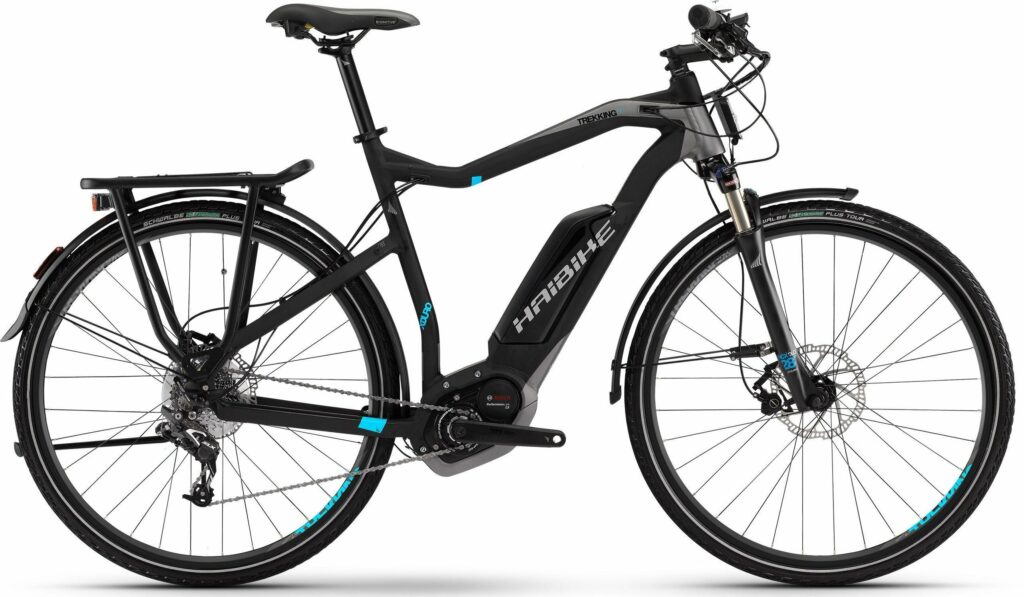
Bosch makes three e-groups for different applications, all based around a frame-mounted motor at the crank. They differ in the size and features of the motor and in particular the maximum torque the motor puts out. Bosch offers 300, 400 and 500Wh batteries for these systems. The wide range of options and excellent reputation for reliability and usability explains why you’ll find Bosch e-groups on a vast range if bikes; at the moment it’s the dominant mid motor system.
Features common to all three include integrated gear shifting and compatibility with Bosch’s Nyon computer, an optional upgrade from the stock Intuvia device. The system eases off the power when you shift gear, and with some gear systems can select a low gear as you slow down so you’re ready to set off again. The Intuvia computer provides GPS navigation, measures your calorie consumption and connects with your phone using Bluetooth to alert you of texts.
The three e-groups are:
Active Line, aimed at hybrids and other recreational bikes. It meets the standard pedelec rules with a maximum speed of 25km/h and 48Nm of torque. (There are higher-speed versions of the other Bosch systems for European S-Pedelecs.)
Performance Line puts out 60Nm for faster acceleration for e-mountain bikes, European trekking-style bikes and a general sportier feel. Performance Line and Active Line look very similar but for the graphics on the casings
Performance Line CX is for mountain bikes with a maximum torque of 75Nm, and power coming in at a pedalling rate of just 20rpm. The motor is smaller than the Active Line’s too. That reduces the distance between the pedals so a Performance Line CX e-bike feels more like a regular bike.
Prominent manufacturers using the Bosch systems include Trek, Giant, KTM, Raleigh, Haibike and many more.
Shimano Steps E6000 / E8000
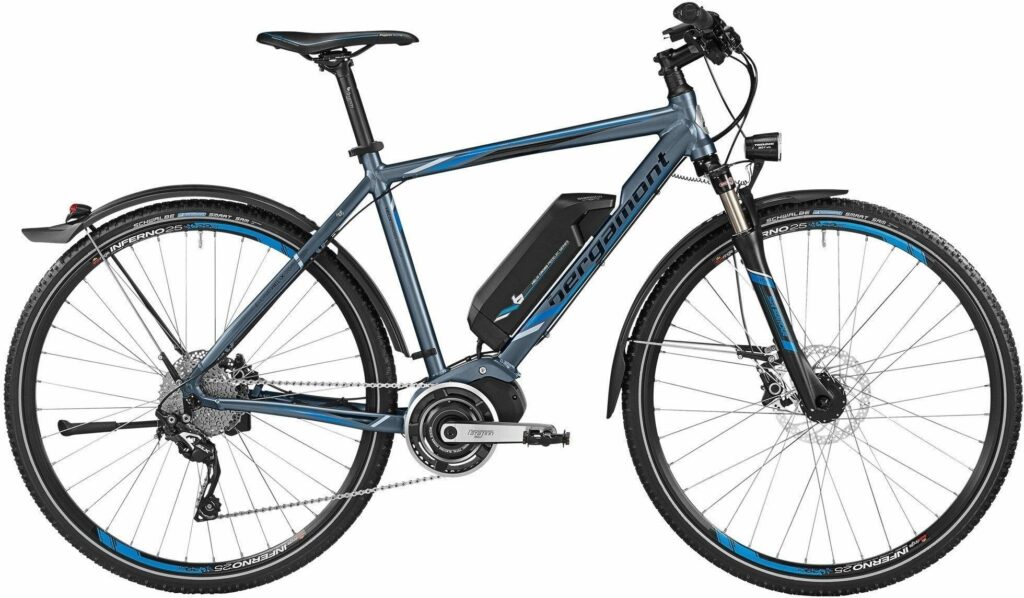
Shimano STePs launched in 2013 with a crank motor and the ability to work with Shimano’s electronically-controlled Di2 hub gears to provide automatic shifting.
The Steps E6000 system is designed for urban use. It has a 418Whr battery and the motor puts out 50Nm of torque. The electronic gears still work even when the battery doesn’t have enough charge to power the motor. Prominent manufacturers using Shimano Steps include Scott and its subsidiary Bergamont, Trek, and Cannondale.
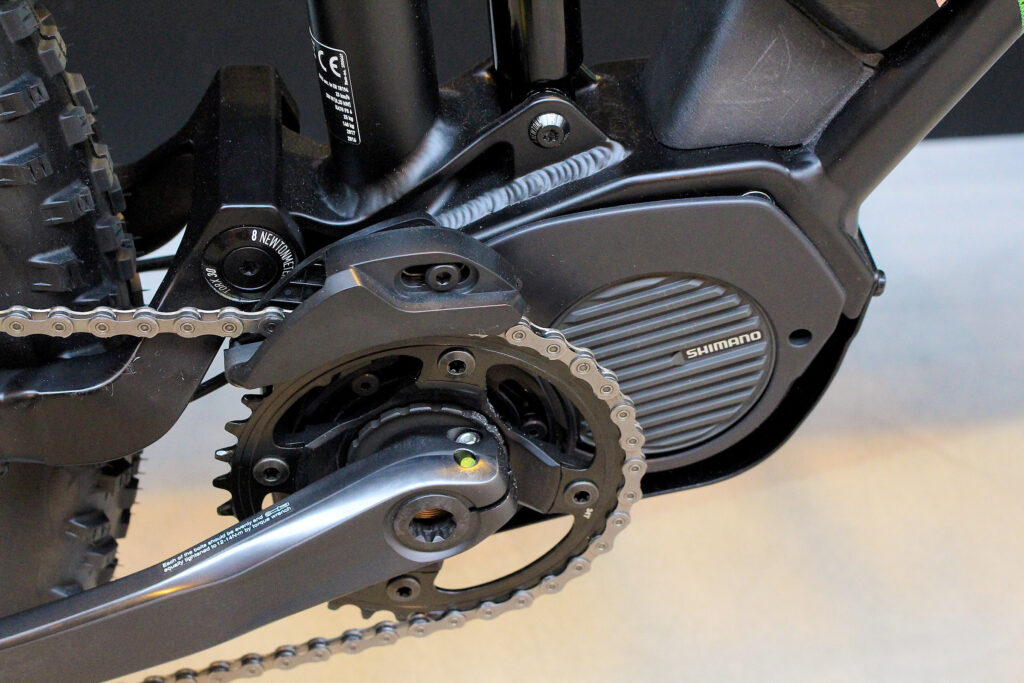
The Shimano STEPS E8000 motor is Shimano’s new kid on the block, designed for mountain bike use and a direct competitor to the Bosch Performance Line CX motor.
The system is a complete redesign over the urban STEPS, with a smaller, more powerful motor capable of 70Nm of torque. The small OLED display sits behind the bars so it’s protected, and the E8000 mode shifter is a paddle shifter that’s the same as the one Shimano use for their off-road electronic Di2 groupsets. The battery is bigger, at 504Wh, so you get longer on the trails.
> Read our review of the Shimano E8000 STEPS motor
Bafang/8Fun
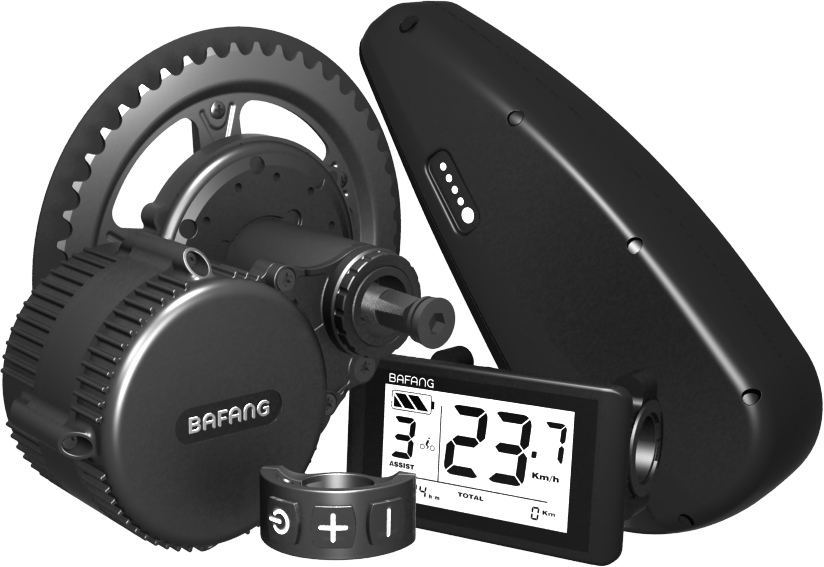
Chinese company Bafang makes various drive units for e-bikes, but perhaps its most interesting products are a range of retrofittable motors that you can use to convert any bike into an e-bike. The motor, chainring and bottom bracket replace your bike’s stock parts so you can rustle up your own e-bike with a mid motor. Bafang kits are available with 250W, 350W, 500W and 750W motors, though of course only the first of those is street legal in the UK. Batteries for the 250W motor are available with capacities of 300, 450 and 500Whr.
Dillenger UK also offers several models with this motor ready-fitted if you don’t fancy tackling the job yourself.
Brose
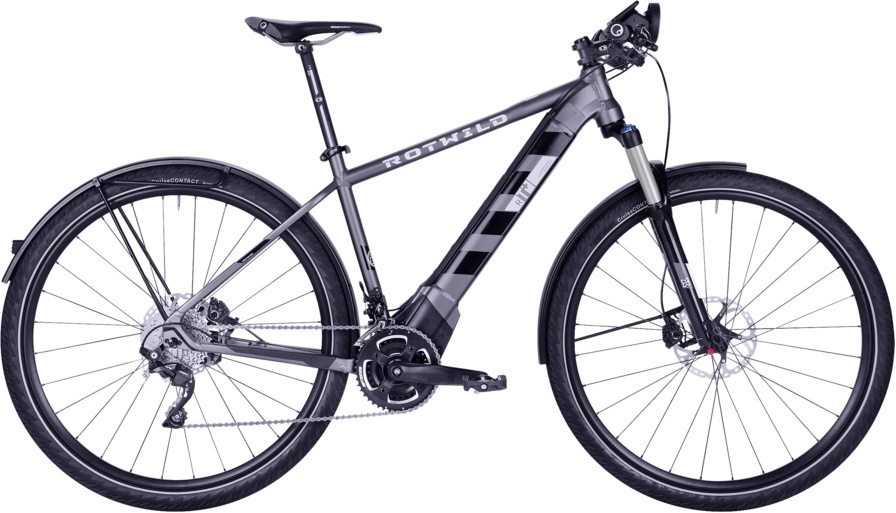
A new entry from German car component maker Brose, this system isn’t strictly an e-group as Brose offers a 90 Nm motor and display unit, but bike makers are expected to sort out their own batteries. The motor uses an internal belt drive rather than a reduction gear, and the upshot of that is that it’s a lot quieter than its direct competitors.
An advantage of that approach is that the battery can be very tidily integrated into the frame, rather than the frame having to be built around the battery housing. Manufacturers are taking advantage of the extra leeway this affords to build batteries up to almost 600Whr.
You’ll find the Brose motor in bikes from Rotwild, Specialized and BH.
Continental
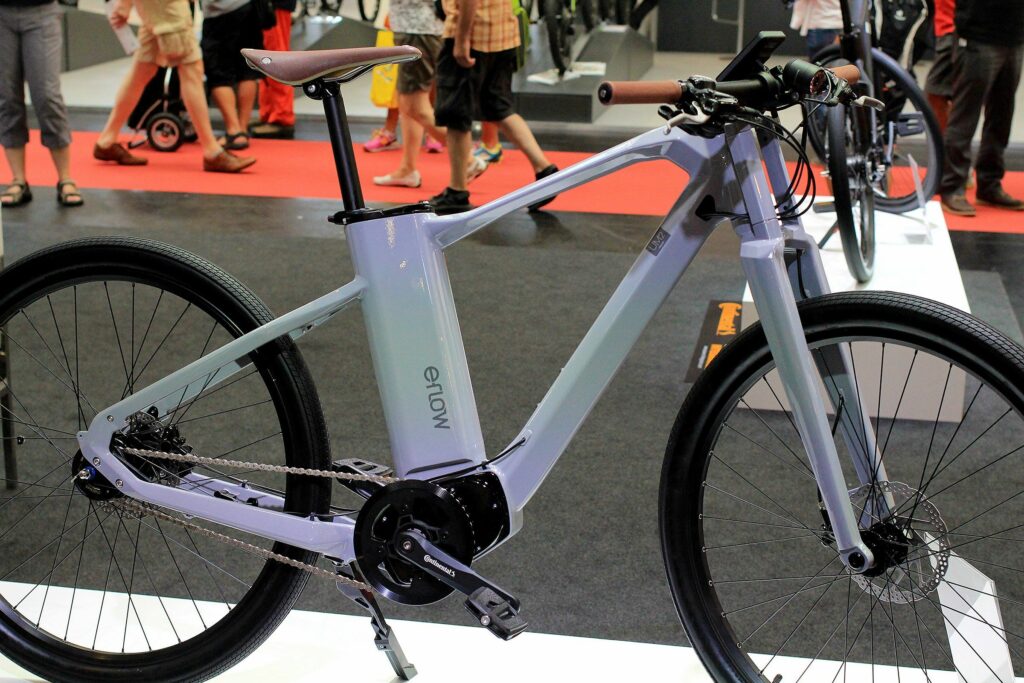
Continental’s mid drive has a smaller following than the likes of Bosch, Shimano and Brose but it’s a well-regarded system that’s growing in popularity. At only 3.4kg the motor is at the lighter end of the spectrum but it’s powerful: you get a nominal 250W as always but the peak torque is 100Nm. There are a couple ofdisplay options, including a Bluetooth-enabled display that can sync with your smartphone, and Continental offer both extrenal and internal batteries with capacities up to 612Wh.
You’ll find the Continental drive in A2B, Rose and eFlow bikes, among others
Kalkhoff Impulse 2.0 and Impulse Evo
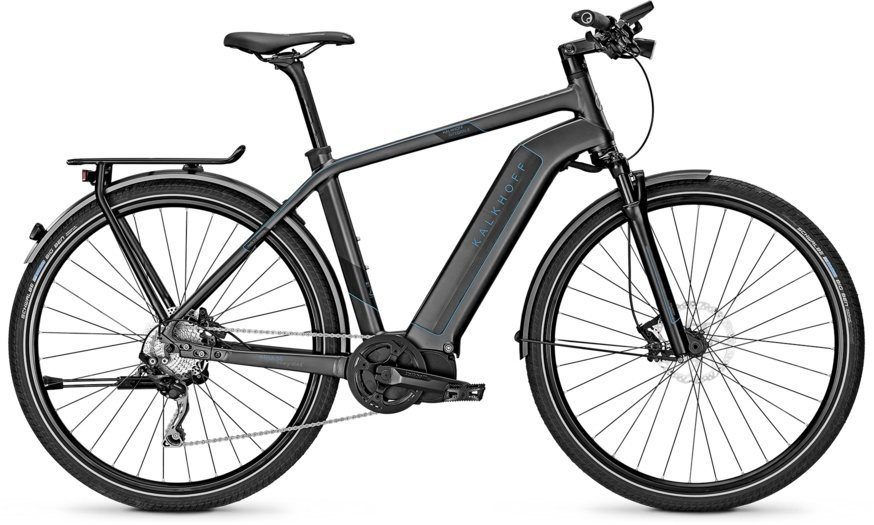
Despite the wide range of off-the-peg options, Germany’s Kalkhoff continues to develop and use its own highly-specced mid motor system as well as drive units from Bosch. The Impulse 2.0 and Impulse Evo systems are designed and developed in-house and made in Germany, which Kalkhoff says is as if it were “made from one piece”.
The Evo boasts a smaller, quieter motor than the Impulse 2.0, with a maximum torque of 80Nm. Both systems use a 612Whr battery. Kalkhoff offers some unusual features such as Ergo mode, which tailors the level of assistance to your heart rate.
> Six new mid motor systems from Eurobike 2016
MPF Drive
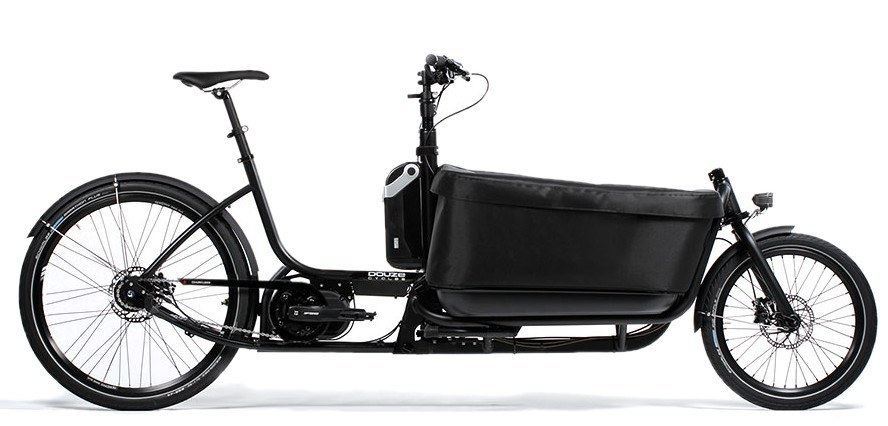
A collaboration between an Austrian and a Taiwanese company, MPF Drive made its first torque-sensing mid-drive motor in 2003, the MPF Drive 4.0 and now offers the model 5.0.
It comes with 360Whr or 396Whr batteries using Panasonic cells and can be used with double or triple chainsets. The motor develops 60-75Nm of torque.
MPF Drive power units aren’t common and tend to be used by smaller companies such as French cargo-bike specialist Douze.
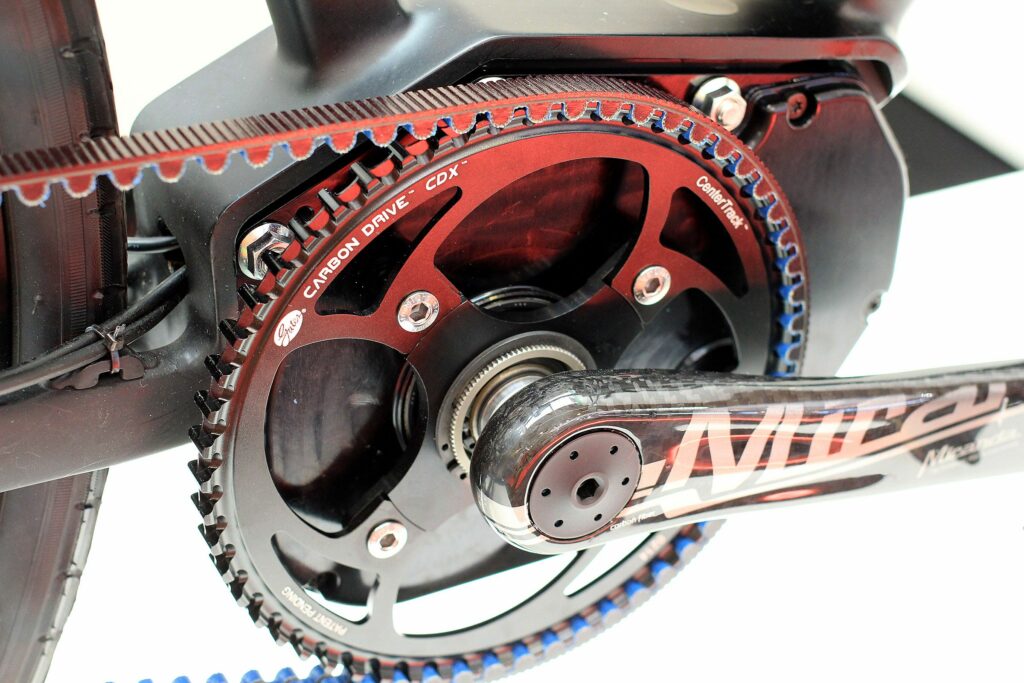
Nidec
Nidec aren’t a household name but they are one of the biggest manufacturers of electric motors in the world: everything from camera lenses to power station generators. So they’ve got plenty of expertise in powering stuff. The motor can out out 100Nm of torque for its 250W nominal; that’s about as high as anything available right now.
Nidec just make the motor, so the display is a generic unit that we’ve seen on other systems and manufacturers will need to find their own batteries, as they do with Brose. UK brand Momentum are the first manufacturer we’ve seen to use the motor, although it will also be appearing on some e-MTBs this year
Panasonic
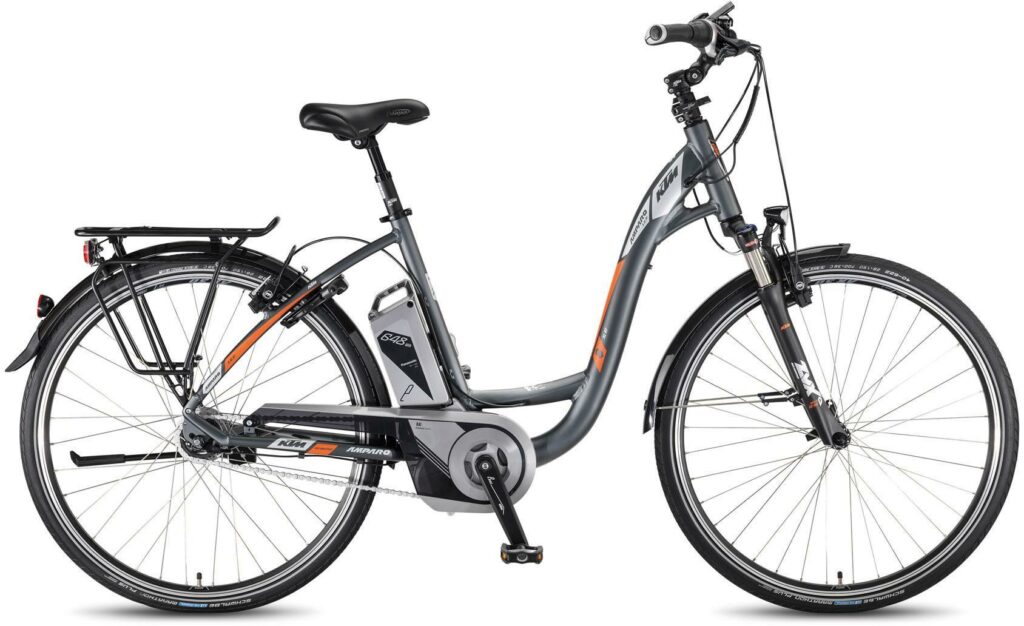
Panasonic has been making mid motor units since 1996. The Japanese electronics giant makes several systems that manufacturers can incorporate into e-bikes, with different motor positioning for hybrids and sportier bikes.
Both orientations mount at the bottom bracket, but the hybrid version puts the motor behind the axle so there’s room behind the seat tube for the battery. On bikes with the front mount motor unit the battery sits inside the frame. That makes for a tidier look and the short rear ends preferred for off-road cycling but limits the size of the battery.
Panasonic also makes a motor with a built-in two speed gearbox, giving a 41.5% increase to high gear, roughly equivalent to a conventional bike’s double chainring system.
A range of batteries is available for the rear mount motors, with capacities of 432, 540 and 648Wh. The triangular battery for the front mount motor is only available in a 432Ah version, while batteries that integrate into the frame come in 432 and 288Whr capacities.
KTM and BH are among the companies building e-bikes around Panasonic drive systems.
TranzX
The new TranzX Integra system debuted at Eurobike 2016. It’s a 250W, 58Nm motor and it uses the CANBus protocol to talk to controllers and displays, which means it should be easy to integrate into other systems.
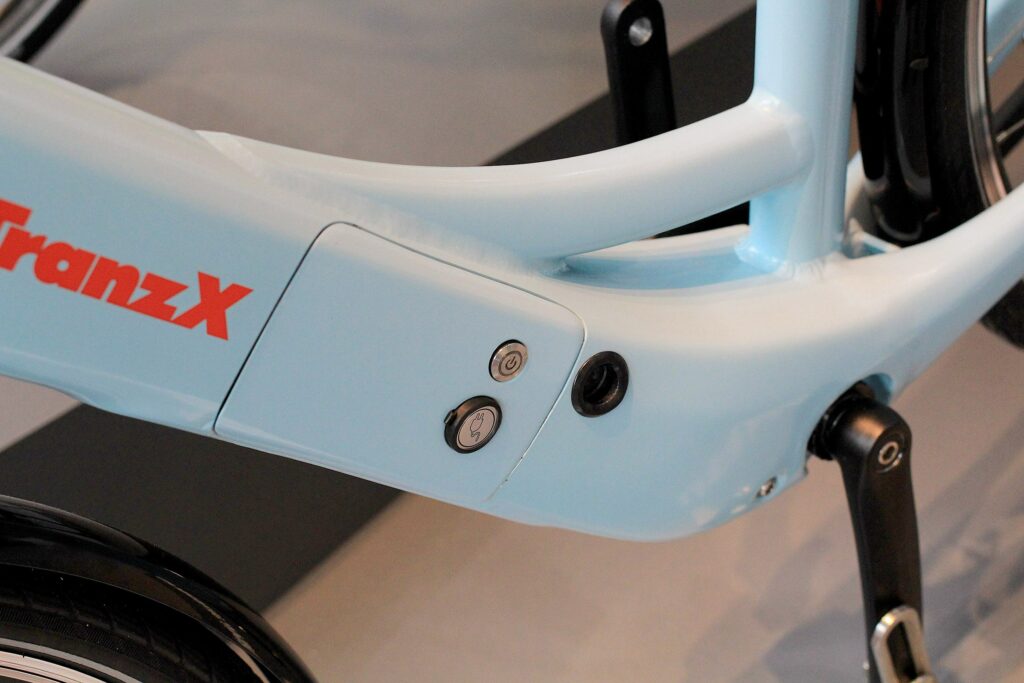
The main talking point of the TranzX system is its battery, called the FlexPack. It’s not flexible, exactly, but segmented, with hinges. That means it can be slid inside a frame using a much smaller access port than a rigid battery. It’s available in 272Wh, 348Wh, 384Wh and 408Wh capacities. Kalkhoff are using the Integra system on some of their 2017 bikes and we expect to see it fairly widely used in the mid-price city bike market.
Yamaha
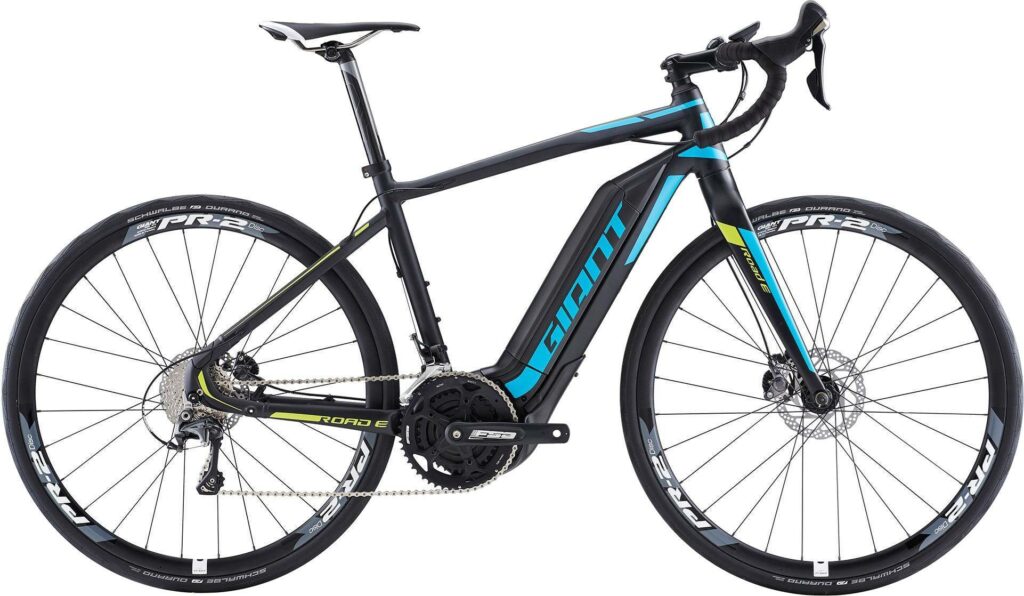
Yamaha claims to have marketed the first e-bike system, way back in 1993. The latest version of Yamaha’s battery and motor system includes an option of an 80Nm motor and a 500Wh battery, specifications that make it ideal for electric mountain bikes.
You’ll find Yamaha systems on bikes from Haibike and Giant.