


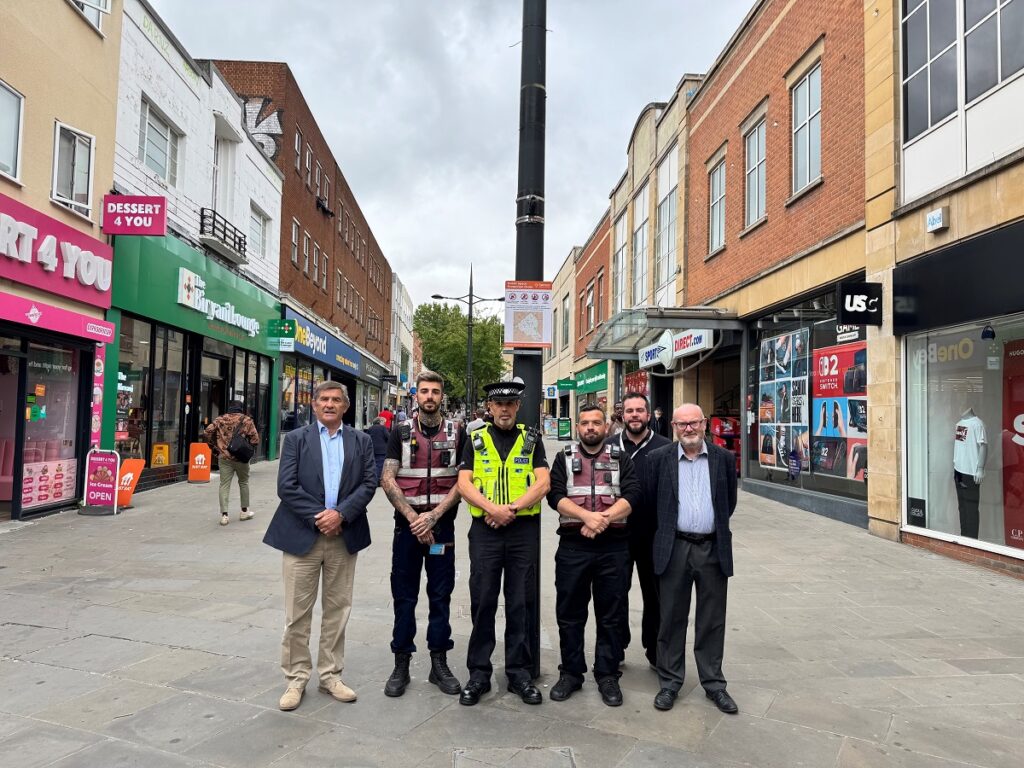

Swindon is the latest town to impose restrictions on cycling, the council launching a crackdown on “reckless” cyclists who it says are endangering pedestrians, with repeat offenders warned they could face prosecution and fines of up to £1,000. However, the communication of the rules to the public has also seen the town’s local authority tell residents that e-bikes are banned, a ban that the council’s own documents appears to suggest only applies to illegal vehicles which do not comply with existing laws.
Swindon Borough Council stated the action will “make the town centre more pleasant for all”, a new Public Spaces Protection Order (PSPO) having been introduced to give council officers the legal authority to stop and fine anyone riding a bicycle in a “reckless” manner. The crackdown on “anti-social behaviour” also includes action on street drinking and public urination.
As with other towns and cities that we’ve reported on, so-called “Community Safety Wardens” will be able to issue on-the-spot Fixed Penalty Notices (FPNs) of up to £100, with the council warning that repeat offenders could face prosecution and fines of up to £1,000.
Swindon’s council says 730 residents responded to a consultation on the order, with 90 per cent in favour of its introduction. While some other PSPOs have tended to cover a small section of a town or city, generally just its main shopping street and a bit of the surrounding area, the Swindon one (which will run until 2028) covers a large area 1.3 miles-long from north to south and roughly one-mile wide across most of the town centre and some surrounding areas.
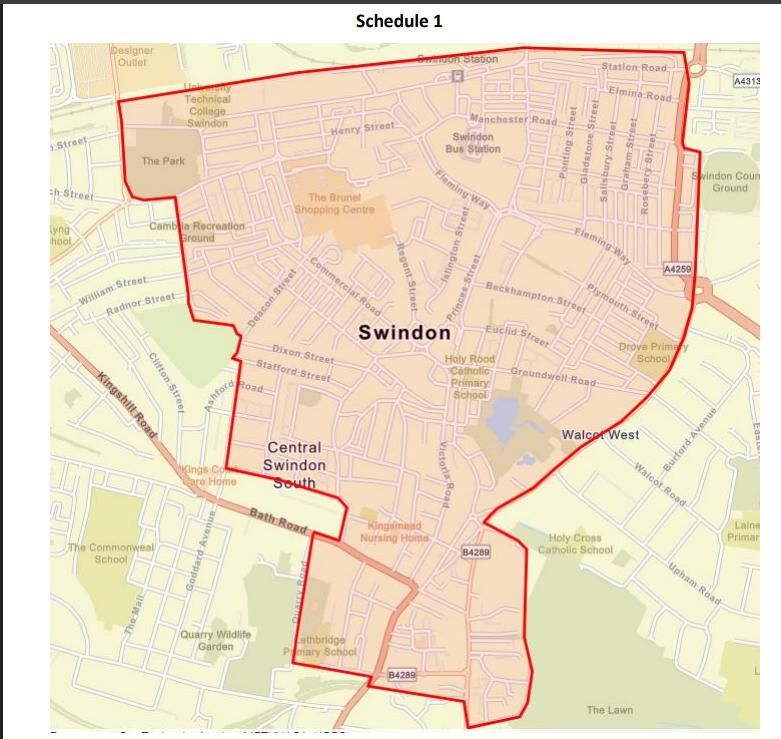
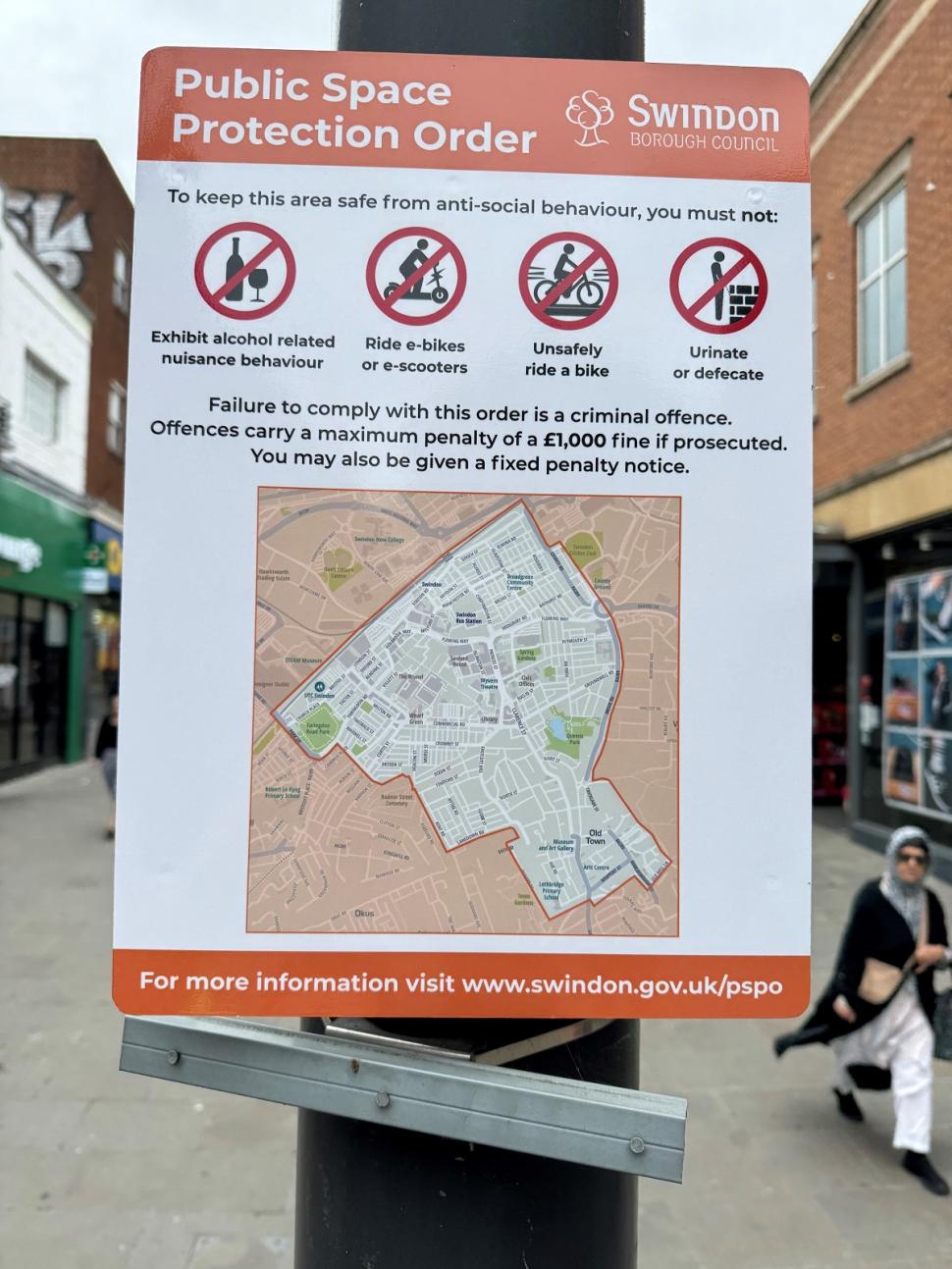
In the council’s communication to the public it has stated the PSPO “includes a ban on riding e-bikes”, something that has been widely reported as fact by the local press and appears on signs in the town centre.
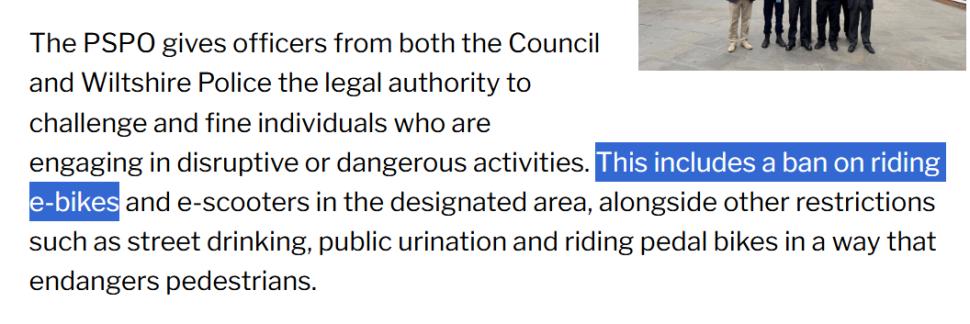
The reports in the local press are based on the press release [below] from Swindon Borough Council.
The PSPO documents state that “no person shall ride/cycle/use an E-scooter or E-bike, or use other motorised vehicles listed in Schedule 3 on pedestrian areas within the restricted area”.
Schedule 3 then states the definition is: “E-bikes (any bicycle equipped with an electric motor save for any bicycle that meets the EAPC 2015 regulations), e-scooters (any scooter equipped with an electric motor), segways, quad bikes, hoverboards”.
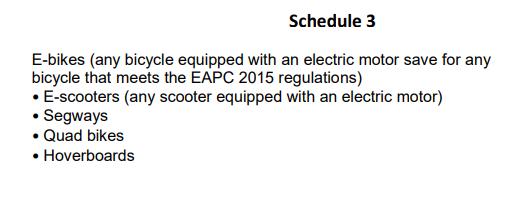
So, that suggests that any e-bike that meets EAPC 2015 regulations is not subject to the ban and can continue to be ridden in Swindon. To be classified as an EAPC bikes must be fitted with pedals that can propel it, have an electric motor with a maximum continuous rated power not exceeding 250 watts, and which cuts off electrical assistance when it reaches 15.5 miles per hour.
We’ve contacted Swindon Borough Council to ask why its ‘e-bike ban’ statement appears to go against the contents of its own PSPO documents, but did not receive a reply. We also intend to ask the council, if this is the case, will its “Community Safety Wardens” be aware of the definition of the PSPO to ensure legal e-bike users are not wrongly fined, especially considering signage in the town centre appears to also state all e-bikes are banned.
It would make more sense that the vehicles which the PSPO applies to are illegal e-bikes or electric mopeds which are already banned on UK roads and are regularly seized by police who catch riders using them. As they are legally classed as mopeds they require registration, tax, insurance, helmet use and a driving licence to use.
The PSPO also states: “No person shall recklessly ride a pedal bike in such a way that jeopardises safety within the restricted area.”
While Swindon Borough Council did not respond to our questions about its e-bike wording, councillor Jim Grant, Swindon Borough Council’s Cabinet Member for Communities and Partnerships hailed the PSPO’s introduction as evidence “we’re committed to creating a town centre where people feel safe and want to spend time in.”
“The PSPO is an important step in supporting our police partners to take action against a number of individuals whose behaviour has a negative impact on the area,” he added.
The situation in Swindon is just the latest update to the ongoing PSPO controversy up and down the country, numerous councils introducing bike bans in the name of clamping down on anti-social behaviour.
Cycling campaigners have long criticised the bans, arguing that they simply discourage people cycling into town, while also failing to deter the sort of anti-social behaviour they ostensibly set out to combat.
Active travel charity Cycling UK has also been a prominent critic of PSPOs, which it claims have the effect of “criminalising” cycling. During a debate on the issue last year, the charity’s head of campaigns Duncan Dollimore argued that “banning a whole class” of transport “is not how you address a problem”.
The most famous of these cycling PSPOs is in Grimsby where numerous riders have been ordered to pay eye-watering sums in excess of £1,000 after failing to pay a £100 FPN.
North East Lincolnshire Council recently told us enforcement officers would “have the correct figures to hand” in future, that after a cyclist was wrongly told by an officer enforcing Grimsby’s controversial town centre cycling ban that a death had been caused by another rider.
The local authority also admitted to us that a sign banning cycling has been placed in the wrong part of the town centre and would be moved “as soon as possible”.
Other areas have reported issues with the, often externally contracted, wardens who enforce such bans.
Last year, wardens in Colchester were accused of “running amok”, “lying in wait” for rule breakers, and even mistakenly fining cyclists riding legally in Colchester.
Likewise in Grimsby, residents accused the wardens of targeting older and slower riders while ignoring youths.
















37 thoughts on “Council claims e-bikes are banned and gives “Community Safety Wardens” powers to fine “reckless” cyclists up to £1,000”
What a nonsense situation, a
What a nonsense situation, a council raising local legislation to ban vehicles from the area when these vehicles are already outlawed nationally
road.cc wrote:
Schedule 3 doesn’t just suggest it, it states it clearly, in black and white. I was reasonably happy when I read the detail of the PSPO, but the council then putting up incorrect signs and mis-briefing the press are a recipe for disaster.
Take your pick from the range
Take your pick from the range of complaints forms here would be my suggestion:
https://www.swindon.gov.uk/info/20022/contact_us/463/complaints_compliments_and_feedback
I suppose it’s a good thing really that the hobby Bobby enforcers of the PSPO cant touch people in cars.
lesterama wrote:
So what is you have and older, but still perfectly legal e-bike which pre-dates EAPC 2015?
Swindon has joined Grimsby on
Swindon has joined Grimsby on my list of places not to visit.
Clearly the misleading notices are to give the law enforcement contractors scope for trying to fine cyclists on legal ebikes. Also the vague description of “reckless cycling” is open to flexible interpretation allowing the threshold to be lowered when income from fines is behind budget.
TBH, it doesn’t feel like I’m cutting my nose off to spite my face. Instead, my life will be enriched.
TBF, even if one could cycle
TBF, even if one could cycle as wonton as one wished, I wouldn’t visit either Grimsby or Swindon.
Rome73 wrote:
Is that wonton with the dumplings or chips?
TBF, even if one could cycle
TBF, even if one could cycle as wonton as one wished, I wouldn’t visit either Grimsby or Swindon.
Wonton.cycling laws only
Wonton cycling laws only apply to Chinese restaurant delivery riders.
Loving the muppet with the
Loving the muppet with the paramilitary trouser/boot choice and badass tattoos. Reminds one of Private Pike in Dad’s Army, would have joined up honest but mum wouldn’t let him because of his asthma…
There must be a collective
There must be a collective noun for a group of cycling infringement penalty enforcers.
A ” tossage” ?
A “wankment” ?
Mr Blackbird wrote:
I’d suggest a ‘delusion’.
I’d rrecommend somebody local
I’d rrecommend somebody local who knows their stuff to go via the Monitoring Officer, who is the one responsible for making sure the Council complies with the law in their administration.
This is the Hammersmith & Fulham Thames Path cockup.
It also looks like a threat to disabled people, if the harassment officers are as ignorant as the signs, and will require some barrack room lawyering.
eg Monitoring Officer
https://lgiu.org/blog-article/what-is-a-monitoring-officer-and-what-do-they-do-here-are-the-answers/
A classic case for Mr
A classic case for Mr Loophole here, I’d have thought. Anyway, person who knows their stuff here. I’d say it needs a formal complaint about the signage, which is misleading in that it appears to include a lawful activity i.e. riding an e-bike on a road, which is out of line with the Order and the law of of the land. Another question is how are they briefing the enforcement staff about e bikes.
If they don’t act, it can go to the Local Government Ombudsman.
I guess the Monitoring Officer route is also worth a try – they’d probably be hacked off that the signs are wrong in relation to the Order and that they will get legal aggro from legitimate e bike riders.
https://www.swindon.gov.uk/info/20021/councillors_democracy_and_elections/460/councillors_complaints_procedures
What training do these so
What training do these so called officers have a perfectly valid question do not submit unless they can provide accreditation of their knowledge and or training is to be produced, often they breach public order with the misinformation of their in the right.
Swindo and Grimbsy, 2 places
Swindle and Grim, 2 places I wouldnt visit anyway unless I had somehow gotten lost. There seems to be a UK directive to suppress e-bike takeup. Politicians instructing ebay to restrict sales of used ebikes will reduce the purchase of new ebikes. Already some big online retailers have stopped selling new ebikes (e.g. Planetx). This pressure is no doubt coming from Automobile Alliance lobbying because ebike takeup across the globe is faster than EV takeup and threatening their business.
Muddy Ford wrote:
While the malign machinations of the motoring businesses are real and should not be underestimated, and many outside the direct trade have been completely convinced that this is “the only way” …
… I must have missed that “work against ebikes” directive. Unless it’s a machiavellian “let’s push electric motorbikes and other things that are not legal. Let’s ensure that in poplar consciousness they are lumped together with ‘cycling’ and EAPCs. Let’s turn a blind eye (maybe even suggest to some legit motorbike companies this is the future) while they take (perhaps a larger chunk of) market share from legal ebikes. Then finally – when everyone realises that unregulated motorbike use on roads and footways is a problem, fan the flame of outrage, remove any kind of wheeled vehicle use except on roads and push people back to cars…
… but AFAICS it’s mostly indifference, even to those selling electric unapproved motorbikes to those (eg kids) who are likely not going to be only using them on private land and certainly not jumping through all the hoops required to use them legally elsewhere!
I stand to be corrected but the article’s statement:
“the vehicles which the PSPO applies to are illegal e-bikes or electric mopeds which are already banned on UK roads and are regularly seized by police who catch riders using them.”
… also prompts questions as I am not aware of police paying any attention to this here in Edinburgh.
Of course maybe it’s true in the sense of “police regularly arrest motorists for breaking the law on the roads”? As in – it certainly happens, maybe even every day, but the vast majority of law-breaking (speeding, driving on footway/ cycle path, driving without sure care…) attracts no police attention at all, never mind sanction.
I would cut and paste links,
I would cut and paste links, however easier to point to google.
Ebikes are outselling EVs around the world
Automotive alliance and Oil industry are the top 10 lobbyists against directives for reducing oil consumption and moving to greener transport (obviously) but their lobbying is the primary reason why these initiatives are being delayed. Rishi approved offshore oil and gas permits on the pretext of protecting UK supplies, moved the goalpost on adoption of EVs, “were are on the side of motorists” , and cut the budget significantly for Active Travel.
Politicians forced ebay to put restrictions on sales of used ebikes so that since October 2024 only professional sellers can list them for sale. This will mean people who buy new ebikes (from manufacturers who continue to supply them, whilst others are getting out of that market, e.g. Planetx) will not be able to sell them when they want to upgrade, reducing demand for new ebikes. When Halfords quietly slip out of the ebike market, you’ll know I was right.
The media constantly hype up the ‘ebike problem’ to create a public hatred towards them. The ‘accidental’ conflating illegal motorbikes with ordinary ebikes is not accidental. “ebikes catch fire”..but there are more electric vehicle fires than electric bike fires last year but we dont hear about those.
All coincidences, I’m sure…
Muddy Ford wrote:
Didn’t know that, but actually that *EDIT* shouldn’t be surprising. Mostly: they’re far cheaper and (people think) you need no licence (see “kids” and a large proportion of population), tax, registration etc and can use them anywhere including cycle infra.
Also I don’t think EVs are a requirement (or if not now later) everywhere either.
Again I need not deny the motor trade and pals might be doing something shady – there are so many examples of dreadful things done in the name of profit there…
While accepting actual EAPCs are fine I’m still on the side of “but most people don’t *need* them”.
Of course, *that* battle was probably lost as soon as EAPCs became remotely practical, because humans will reliably choose “less effort” (and usually want to display that they’re “not as poor” as others also).
And before we tout EAPCs as a realistic part of reducing motor dependence (in the UK at least) we need to do *far* more by way of providing alternatives to driving. That is both in the form of public transport but particularly better “mobility infra”. Without the networks of good enough-quality cycle routes (AND a reduction in motoring convenience) *any* non-car transport “solutions” will be at best a very minor sideshow. And generate rapidly increasing volumes of complaints from people on foot.
I wonder about how it will go in NL eg. see David Hembrow’s musings here.
https://www.aviewfromthecyclepath.com/2022/03/the-challenge-of-declining-bicycle.html
I wonder if counterintuitively the reality of bike theft there is actually one of the few things slowing the decline in share of non-assisted bicycles with respect to “ebikes”?
Looking at the map, this is a
Looking at the map, this is a huge area that must include a lot of roads open to motor vehicles. Why does the PSPO not just ban “reckless” use of ALL vehicles? (Probably because its banned already! Just like non-EAPC bikes.)
And what is their definition of reckless?
Performative anti-cycling nonsense.
Given the stupidity of
Given the stupidity of outsourced enforcement in Colchester – fines for using the road without paying road tax, for ignoring a no motor vehicles sign, it won’t take long before a eapc rider is fined.
On the plus side they have banned defecating in public !
Hirsute wrote:
About time too! It’s easy to imagine a foreigner visiting (actually it’s not easy to imagine a foreigner visiting Swindon but never mind), or even a native, and looking at that and thinking, “Right…so is it allowed outside the area?”
By the way just looking at
By the way just looking at the poster again I’ve realised it is not terribly specific. Presumably public lavatories count as public spaces so is urinating or defecating in them now illegal? Back to good old Constable Savage: “Savage, maybe you’re not aware of this, but it is not illegal to use a pedestrian crossing, neither is ‘smelling of foreign food’ an offence.”
“Are you sure, sir?”
“Also, there’s no law against ‘Urinating in a public convenience.'”
Yeah, public/private purposes
Yeah, public/private purposes. As parodied by one of Steven Fry’s characters in “The Liar” attempting to defend someone against accusations of cottaging IIRC – something like “so if a lavatory is not a public place for the purposes of defecation, how is it one for fellatio?”
Rendel Harris wrote:
Probably solved that problem by now by closing them all.
Does this fall foul of DDA
Does this fall foul of DDA legislation re those with bowel or bladder problems? Just asking for a friend.
So the geniuses at the
So the geniuses at the council have banned illegal ebikes? Could they not have saved the windbag effort and just had the existing laws re illegal bikes enforced? And we wonder why government costs so much – likley due to oxygen thieves like these.
Does the restricted area
Does the restricted area include the mountain bike trails round the back of Nationwide building society?
Glad speeding through swindon
Glad speeding through swindon on a petrol powered MX bike is still ok
I think this is massive
I think this is massive overreach and the council haven’t thought this through. I think most people would agree that, in principal, reporting crime is both a civic and moral duty even though for most of us reporting crime is not mandatory and down to conscience. However, if a civic official stops a person riding an illegal motor vehicle, without insurance, PPE, MOT etc etc, and think that their civic responsibility is to hand out a fine rather than call the police.
Imagine that they do give that person and fine and then allow them to continue with their illegal vehicle and that person is later involved in an incident that has serious consequences. That would imply a massive failure in the councils duty of care and the back lash and claims would be massive. Certainly heads would have to roll.
I’m guessing that the
I’m guessing that the consultation about this which got 90 per cent in favour of its introduction, lumped cycling in with drinking, smoking, begging, shouting, urinating etc. The actual percentage of people against cycling is probably only just in double figures, but if you’re anti-cycling, you don’t want to know that.
I’m beginning to wonder if labour in Swindon don’t think they’re unpopular enough yet, and are trying to get down to tory levels.
You’re probably right, but
You’re probably right, but even so councils have no idea how to do consultations. 657 were pro these proposals. Swindon has a population of 230K. That’s less than 0.3%. That cannot be considered meaningful.
My local council love to use Facebook. Ignore the fact that many people don’t use Facebook or any of the other Platforms. Additionally, Facebook’s algorithms still make it unlikely that you’ll see posts from people you follow unless they pay. I don’t think I ever get an email from them, even though I subscribe to the services offered. I suspect this is all very deliberate. If they did the job properly then it would consume resources they don’t have.
Imagine punishing an entire
Imagine punishing an entire residential area by outlawing chosen method of transport 🤷♂️
Note to self… Add Swindon to list of towns that are cycle-phobic
Does the sign mean that all
Does the sign mean that all bathrooms must be removed within the area? Seems a bit extreme?
Does this mean that I am
Does this mean that I am prohibited from riding my entirely legal registered, insured, MOTed 47kiloWatt ZERO electric motorcycle along the roads within this area? But can drive my equally legal Toyota hot hatch?
However my larger concern is whether the private enforcement goons will have the foggiest idea/interest in the differences between my legal BOOST/Specialized Sirrus EAPC, some duct taped two wheeled Ebomination and Surrons etc.
Does the clowncil actually know that they are effectively banning motor vehicles that are already completely illegal?
This is almost certainly
This is almost certainly driven by the vast number of Deliveroo / Just Eat delivery riders bombing around the centre on illegal electric motorbikes. The council could have forced the police to deal with the problem, but instead decided to ban everyone, riding legally or not.
The only consolation is that your average council goon probably isn’t interested in a normal e-bike; they’ll be looking for the lethal kind which are obviously extremely distinctive.
In my opinion this reflects a larger problem in any respect, as the genuinely shit and dangerous driving from delivery riders is directly giving safe and legitimate cyclists a bad name. And if you want to push further, you can, since although Deliveroo is a registered company their lax procedures encourage the black market of illegal working.
Fursty Ferret wrote:
I do! Unfortunately the gig economy companies appear to a) have got in fast with the good lawyers, and already have some wins b) have
got together enough cash so they can start to afford a few politiciansspent sums on lobbying. No optimistic, unless the whole “but some of the definitely-not-employees they clearly legally have no responsibility for choosing to work long hours for pennies officially … may not be working legally, we never guessed!” blows up in the current “migrant-sensitive” climate.I personally regard the entire business model of these firms as essentially “gaming the system” while delivering no social benefits but some definite harms (exploiting workers, outsourcing risk and costs on the public…). However there are some consumers who disagree – some perhaps for good reasons like they are unable or not easily able to get food deliveries?
Hindsight but the best time to think about the implications and if necessary legislate would have been before these got big, but I guess that was possible quickly because “venture capital” having its way again?
Anyway … for those interested there’s a look at this from NotJustBikes in NL – where in fact there has been some successful governmental push-back to mitigate some of the negatives of this business model.
FWIW regardless of the delivery riders I think people get irritated by cyclists and will continue to do so while they’re “in the way” on the roads / streets and “in our space” on shared-use footways…