



Avon and Somerset Police says the local community is “speaking really loudly” about dangerous behaviour on the roads, as video submissions of alleged driving offences to the Operation SNAP third-party reporting portal continue to rise.
In 2024, Avon and Somerset Police received 8,595 video reports from both cyclists and motorists of alleged road safety incidents, such as close passes, phone driving, and road rage, just over 300 more than the previous year.
2,539 of those resulted in notices of intended prosecution being sent to the drivers responsible, while 5,158 were dealt with through warning letters, meaning almost 90 per cent of all submissions led to “some form of action” being taken.
As we reported in October, Avon and Somerset receives more third-party video reports of dangerous driving than any other police force in England and Wales. Between 2021 and 2024, the force was sent just shy of 20,000 submissions (19,949 in total), with 12,154 of those (61 per cent) coming from cyclists.
4,662 of those led to a Notice of Intended Prosecution being served, with 85 per cent of the reports made by cyclists leading to action being taken, compared to the quarter of submissions from motorists that were dismissed. Almost a third of the force’s reports came from Bristol.
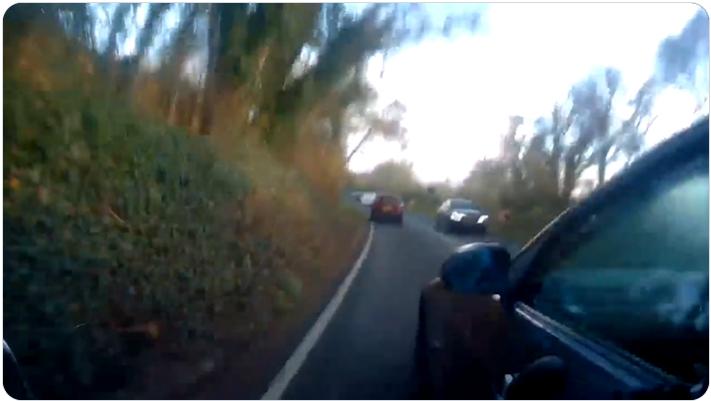
And speaking to the BBC this week, Avon and Somerset’s chief inspector Rob Cheeseman said the force is being sent more footage from cyclists and motorists than ever before.
“I think that’s due to just how more popular certain camera use is, particularly with dashcams in vehicles,” Cheeseman said.
“So more potential offences are being identified by other road users, which are then being submitted to us.”
However, due to the ever-increasing volume of clips being submitted through Operation SNAP, Avon and Somerset Police has admitted that it is forced to focus on the “most urgent cases first” – while noting that the third-party reporting tool is not a means to “target drivers unnecessary”.
“It’s certainly something which we’ve had to adapt to,” Cheeseman said of the recent rise in third-party video reporting.
“It’s certainly a more relatively new version of reporting crime to the police. The community is speaking really loudly that these are dangers on the road.
“The goal is not to be targeting drivers unnecessarily – the ultimate goal is making the roads safer for everyone in Avon and Somerset.”

> Bus driver pleads guilty to careless driving after cyclist pushed into hedge
While Avon and Somerset Police has received around 20,000 video submissions of driving offences over the past five years, one local camera cyclist – Guy Buckland – has been responsible for 1,300 of them.
“People have to realise the impact that bad driving has on peoples’ lives and communities,” Buckland, who says 90 per cent of his submissions have resulted in warning letters, fixed penalties, and court action, told the BBC.
The cyclist says some close passes he’s submitted to the portal involved drivers overtaking with six inches of him, although he noted this was quite rare.
“More typical are people pulling out without looking, people overtaking in the face of oncoming cars, the sort of general close passes, and occasionally mobile phone use,” he said.
As noted above, research undertaken by Accident Claims Advice last year suggested that video reports of alleged road offences to police were up 90 per cent in 2023/24, compared with two years earlier in 2021/22.
The research saw data from 30 police forces collected, showing that 201,630 Operation SNAP cases were logged between January 2021 and April 2024.
A combined 44,791 were logged in 2021/22, followed by 66,515 in 2022/23, the number rising again to 85,114 in 2023/24, with Avon and Somerset topping the table with 19,949 submissions. Of the 30 forces, all saw an increase in the number of reports over the three-year period, while just two (Norfolk and Suffolk’s police forces) saw a decrease between 2022/23 and 2023/24.
However, despite the clear popularity of third-party reporting, some parts of the UK, such as Scotland, are still lagging behind when it comes to introducing an online portal for submissions.
Meanwhile, even forces who have implemented the system have come in for criticism for a perceived lack of action – often blamed on the large volume of clips submitted and a lack of resources – or their definition of what constitutes a road safety ‘offence’.
In September, we reported that Gloucestershire Police would be joining in the adoption of Operation SNAP, although the force’s non-crime unit head attracted criticism by claiming “a close pass isn’t an offence and a lot of cyclists don’t realise that”.
We were also contacted last year by a reader who told us Thames Valley Police had instructed her to stop reporting close passes unless there is evidence of careless driving, creating some confusion about whether the act of close passing a cyclist itself is not actually sufficient evidence of careless or dangerous driving.
The Metropolitan Police have, in recent times, issued advice to road users submitting footage, the latest comments suggesting the force is “unable to deal” with motorists driving in bike lanes or the wrong way down one-way streets.
It was also revealed last year that from almost 4,000 submissions of alleged driving offences to Surrey Police, just 10 led to prosecutions.
Likewise, West Midlands Police, it emerged, had prosecuted just one driver from 286 close pass reports, the force admitting it needed to review how reports are managed. Last February, we reported that the force was now taking action of some kind in 97 per cent of cyclist submissions.
Thames Valley Police recently admitted, too, that there are “very valid concerns” about its handling of cyclists’ reports, the force recruiting to fill a “shortage in resources” and staff that has meant “Notice of Intended Prosecutions are not able to be sent to the offending driver within the legal timeframe of 14 days”.
Of course, the rise in third-party reporting in the UK has also coincided with growing criticism of camera cyclists, especially well-known social media figures such as Cycling Mikey.
In October, after covering the rapid growth in third-party road safety reporting in a news article and in a BBC Breakfast segment, the BBC was criticised by cyclists for referring to both Cycling Mikey (real name Mike van Erp) and fellow social media camera cyclist Tim on Two Wheels as “vigilantes”, with Van Erp arguing that cyclists who submit footage to the police are, in fact, the “opposite of vigilantes”.
Following a number of complaints, including from Tim himself, who described the “vigilante” reference as “disappointing”, the broadcaster admitted to road.cc that the initial language used in their story, later amended, was “inappropriate”.














38 thoughts on “Police sent more footage of dangerous driving than ever before – as officers warn “goal is to make roads safer, not target drivers””
Quote:
That’s a rather cheeky manipulation of numbers worthy of the pro-motoring lobby there, “85% of reports made by cyclists leading to action being taken compared to 75% of reports made by motorists leading to action” would be less dramatic but also rather less disingenuous.
Those figures are also just
Those figures are also just percentages OF the number of reports by both road users.
It doesn’t indicate who actually submits more…
Given cyclists who report drivers get a lot of flack, it would be good to know if (as has been stated by CyclingMikey, and possibly others) that the majority of dangerous driving reports are submitted BY OTHER DRIVERS.
Ive never seen the figures
Ive never seen the figures broken down by who reports them, you can kind of infer things from stats, like Ive seen them break it down as careless,close pass, traffic light, etc etc. Youd presume all close passes come from cyclists, whereas the rest you probably assume more likely drivers, maybe ?
Ive always assumed the majority of reports are drivers since, theres endless videos from drivers cams on youtube, whilst NMOTD is the only cyclist equiv and that feels like its peaked in volumes.
Theee are figures out there
Theee are figures out there on splits – I’ve seen them on road.cc before.
As I recall more drivers submit cam footage than cyclists but cyclists get more positive actions taken which suggests they are better judges of what warrants unsafe behaviours.
From just a raw numbers stand
From just a raw numbers stand point, I would >expect< more reporting from drivers, as there are many more drives than cyclists. But what >percentage< of cyclists and drivers report? And of those, what >percentage< get acted upon?
“Upride” has regular posting
“Upride” has regular posting of close passes etc. it does seem to have a very Australian bias (in its comments, at least) and appears to reflect a direct correlation between hours of sunshine and excess hatred of cyclists
Quote:
Tough on crime, completely oblivious to the causes of crime.
Yup.
Yup.
Luckily there is another way which has (on several occasions now) helped a car-dependent population make the first leap to “nicer places, safer streets” without getting bogged down in “but … I’m not a bad driver, nor are my friends – and we have to drive some places”.
It’s Sustainable Safety (or Systematic Safety) [1] [2]. Other countries have versions of this as e.g. “safe system”.
Even a parliamentary group has looked at this… Although as always I wonder whether the UK will get the “look and feel” version and miss the deep implications *?
* Perhaps … mass motoring at volumes and as we know it in the UK is just incompatible with much better health, safety, resilience etc.? It’s an attractive, apparently convenient mode. But also dangerous, expensive and extremely resource- and space- inefficient – so perhaps we have to make a choice – motornormativity or deliberately limiting this?
Even a parliamentary group
Even a parliamentary group has looked at this… Although as always I wonder whether the UK will get the “look and feel” version and miss the deep implications *?
Another parliamentary group is preparing yet another report describing (the complete lack of…) progress on active travel (
and why nothing will change in the UK while a load of sniggering coppers do their best to sabotage any attempt to improve safety for active travellers)Or… the goal is to make the
Or… the goal is to make the roads safer not target decent drivers.
This was clearly implied by the context. Lose the chip on your shoulder.
Lose the chip on your
Lose the chip on your shoulder
a mostly positive article showing some police forces are
claiming to bepulling their weightSome of us are surviving so far, despite living in areas with really malevolent police who are hostile to cyclists and whose only contribution is the routine issue of the ‘Thoughts and Prayers‘ after yet another cyclist has been killed. We are entitled to those chips on our shoulders
Secret_squirrel wrote:
Hmm… well if police are stepping up that’s good (but of course without more declared funding presumably something else is being let slide). The quote is:
So they’re already saying they’re making a selection of the ones the public take the time and effort to report – no, it definitely sounds like they’re reassuring (bad) drivers!
On the “chip on shoulder” – it’s evident there’s massive variation on what police consider eg. “urgent cases” between forces. So in eg. Lancs or Scotland (the latter still doesn’t have a portal at all as police keep saying no) making the roads safer seems to have a very low target.
The context was the increased
The context was the increased number of reports of confirmed dangerous driving. What would decent drivers be getting reported to the police for?
Why do we have speed cameras?
Why do we have speed cameras? Why do we have breathalysers?
surely the answer to the above mentioned as well as acting on close passing drivers is the same – To ensure the safety of ALL other road users.
The speeding or drinking dangerous enough to warrant immediate criminal proceeding being brought by the police. Then surely driving in a way that endangers another road user should be equally reinforced.
The police will always say ‘speed cameras are there to save lives’ and and they say preventing anyone getting behind the wheel while drunk will ‘save lives’. Yet solid evidence of driving which risks the lives of vulnerable road users? Nah. Can’t be arsed with that one.
Smoggysteve wrote:
Cyclists aren’t people, remember.
Way to take a negative view
Way to take a negative view of a mostly positive article showing some police forces are pulling their weight.
The glass isn’t always half empty you know.
Where is the positive? They
Where is the positive? They are being sent more footage then ever. That doesn’t translate into safer roads or fewer deaths.
One would suggest the rise in footage being submitted means things are getting worse. I’d rather see better behaviour and fewer deaths than more drivers being fined.
Smoggysteve wrote:
It might just reflect a greater preponderance of cameras.
mdavidford wrote:
Although a rise in the number of people who feel the need to carry a camera may reflect at least a perception that things are getting worse.
Possibly. But it might also
Possibly. But it might also just be that the technology is getting better and cheaper, or the natural tendency to go ‘they’re doing it – I will too’. Most likely a bit of all of the above.
Plus, of course, a perception that things are getting worse is not necessarily the same as things getting worse in reality (cf. wider perception of crime surveys and their disconnect with actual recorded crime).
mdavidford wrote:
Exactly – “war on the motorist” when it’s probably never been better (in terms of cost, safety, sometimes convenience although the presence of ever greater numbers of motor vehicles reels that back)
For cycling though – it’s simply the numbers of motor vehicles in the road that are ultimately the deciding factor. (Popular attitudes and driving behaviours affect things also, but increasing traffic and parked cars equals misery for all).
Unlike some other posters I don’t belive “police it better” will fix that – because that won’t turn drivers into non-drivers (and indeed into cyclists – which is ultimately the way to less driving, cycling being the most efficient *private* transport mode).
but does that reflect a less
but does that reflect a less preponderance of cameras in Norfolk/Suffolk (who are effectively just one force not two when it comes to road policing) where the submission numbers went down ?
or something else ? and its not because the drivers are safer thats for sure.
stonojnr wrote:
Not being familiar with the area, I can’t hazard a guess at what local factors might be at play there. But if that’s the case, it does rather underline my point that quantity of footage submitted is a pretty poor proxy for the amount of poor driving behaviour.
If you lived in Scotland, you
If you lived in Scotland, you might not say that.
Funnily enough, I do and
Funnily enough, I do and police Scotland are useless.
Time for me to start using my
Time for me to start using my helmet cam again. I’ve had so many close passes whether on my bike or my motorbike.
Suffolk police apparently
Suffolk police apparently have so little to do policing the roads, allegedly, theyre happy to stop recumbent cyclists just for a look see
https://www.ipswichstar.co.uk/news/24936427.unique-velomobile-snapped-norwich-road-ipswich/
This is a common phenomenon –
This is a known phenomenon – at least in US and UK. I’ve never been stopped by police myself on (mostly unfaired) recumbents but have had the odd driver get dangerously distracted.
I wonder if they’re as interested in electric motorbikes being used illegally?
Article quotes a chap saying “It’s a nice change from them nicking speeders.”
I wonder if they do much of that either?
Given the frequency of
Given the frequency of electric motorbikes, and speeding, I see in the town, they don’t do much with either of those.
Do you use the flag on a pole
Do you use the flag on a pole method to attract the attention of the looking straight ahead motorist?
Surely conspicuity is key…
I had considered getting this
I had considered getting this as part of my “signing up to the Dark Side” kit (non-padded cycle shorts, high-viz vest with mesh back / pockets on the front rather that back or sides etc).
I have not bothered yet as a) I generally only ride them in daylight / good conditions (they live pampered lives, unlike my town hack). b) I’ve found that motorists are if anything almost too interested *. I think it’s a “what the …????” factor as people’s brains suddenly alert them to something they have never seen on the roads before. (You’d think this would work with cyclists on upright machines also as even those are not very common, but it doesn’t always…)
Also – my recumbents to date have been reasonably tall (almost eye-level with some drivers – although cars have been getting taller…)
Two scenarios I can think of would be an issue and flags might only help for one:
– junctions with limited visibility – my feet get there first. Although if you think about it in most motor vehicles the driver’s head is easily more than a meter from the front of the vehicle, and they manage… in practice I take these cautiously and I can sit up (head moves forward) if really needed.
– night – you lose the benefit of moving reflectives visible from behind (on feet / legs / pedal reflectors). The flags solution – you’d need a reflective one, plus the common ones are actually not great in low-light conditions and at speed (as they stream straight back). A spinning flag / streamer (there are some cool designs – these ones are minimal) might help. These all come with the cost of a bit of drag…
* Have had a few folks driving a bit close alongside while passengers filmed… I really hope the drivers were focussing on their task but…
Nice try to dress up the
Nice try to dress up the stats but 60% of cases get warning letters which are useless and might as well jsut be filed in the bin
60% of cases get ‘advice’
60% of cases get ‘advice’ letters which are useless and might as well just be filed in the bin
The figures, of course, depend on the area police force. In Lancashire, they have now efficiently cut out the ‘advice’ stage.
wtjs wrote:
Where the crime reporting and enforcement route is proven ineffective a different approach is justified. Road danger Avoidance has the advantages of improved safety and reduced cost, effort & risk compared to third party reporting.
Specifically cost of expensive cameras, effort of reviewing and reporting, risk that reports are ignored or that offenders don’t change their behaviour.
By Road Danger Avoidance I mean close passing Avoidance as clearly there are other forms of Road Danger that would be critical for cyclists e.g. deisel spills.
Because the Highway Code is specific that vehicles must pass 1.5m wide of a cyclist below 30mph and more above 30mph, its clear that 1.5m is the minimum. So our observed experience (NMOD) is that many drivers are specially challenged and cannot determine what 1.5m wide looks like.
Thus a visual aid is effective in helping them to determine 1.5m wide successfully.
That visual aid is cheap and light so available to all cyclists with basic mechanical skills to fit parts to their bike.
Hardware stores can supply 15mm white plastic pipe and fitting brackets because they are standard for plumbing use.
It’s not difficult to bolt two brackets back to back so that bicycle tubes (rear A frame) and 15mm pipe can be connected perpendicular to the top tube on the right or left hand side, depending on the local driving side.
Brackets can be three quarters or fully enclosed according to your preference. 15mm pipe will slide into enclosed brackets or push into three quarters brackets.
Thus the 1.5m wide minimum safe passing distance is visually apparent to the specially challenged and close passes Avoided.
Yes, it’s meant to be noticeable and it does prevent filtering between vehicles, but that’s a small price to pay for improved safety from a ton of fast moving metal. If you really must filter, you could slide out the pipe and carry it.
Of course other road users may query this equipment but once explained and understood most can see why it’s needed.
Avoidance is better than Enforcement, then there’s the death and injury to consider..
Other versions of this idea
Other versions of this idea are available, but I’m not sure I would…
https://www.theguardian.com/cities/2014/oct/17/bikes-cars-cyclists-clever-protest-riga-latvia
Ha ha, yes, Road space of a
Ha ha, yes, Road space of a motor vehicle because bicycles are vehicles…
What do you mean, inefficient use of space, just like transporting a three seat sofa?
I find that one white pipe is enough nudge wide to be effective..
Our roads would be lovely a
Our roads would be lovely a peaceful if bad and dangerous drivers were actually caught more than once in a blue moon. On the 1km or so to my nursery the other day I came across a woman doing at least 35, probably 40 down a 20 residential street with cars either side and on a completely blind corner. Only the fact I was doing under 20 and we both slammed on our brakes avoided a crash. She had kids in the back.
On that same journey I reckon 30% of people are doing more than the speed limit. Every road junction I come to has a very good chance of anyone turning in completely cutting the corner and by completely I mean if I was placed to cross the road in a car they would hit me well behind my front headlight on the side they are coming from.
Standards of driving are awful and drivers should thank their lucky stars they aren’t pulled up for it even 1% of the time.
Before the pandemic, in 40
Before the pandemic, in 40 years, I’d probably seen 2 drivers driving the wrong way on the roads.
I’m the last 6 months it’s about 5.
The roads have become a free for all because everybody knows there are no consequences for being an idiot. I don’t know if it’s because there are so many cloned plates, or a lack of police or what. But if you provide evidence to the police and they go out of their way to ignore it, what is the point of the law.