


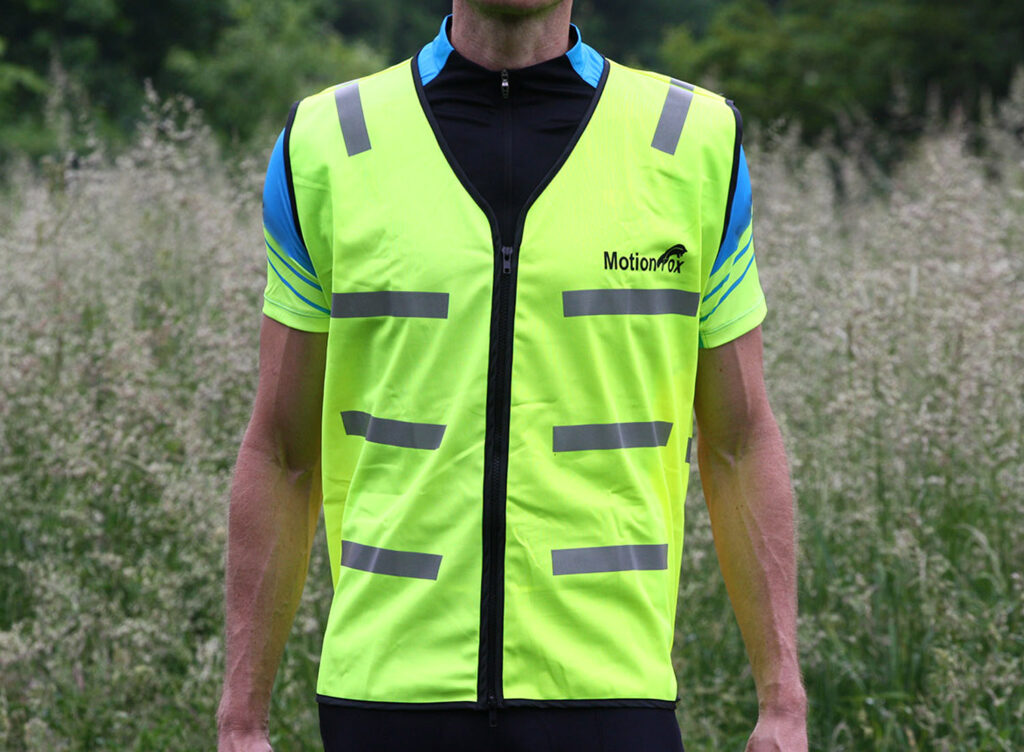

Police Scotland is at the centre of a “victim blaming” row after a chief inspector urged pedestrians to wear “reflective or fluorescent” clothing after six people walking were killed after being hit by other road users in just 13 days.
Ch Insp Lorraine Napier argued that in light of the incidents, officers should encourage all road users to keep safe, first asking pedestrians to stay visible. And in response to a request for comment from road.cc, Police Scotland confirmed the force had “nothing to add”.
“Pedestrians are considered vulnerable road users and, in winter, particularly when it is dark, pedestrians should wear reflective or fluorescent clothing,” she said.
“I would also urge pedestrians to be mindful of their surroundings and to ensure they are not putting themselves at risk.”
The comments also asked motorists to “drive with particular care in areas where people may be on foot or crossing roads and ensure the correct vehicle lights are in operation”.
Ch Insp Napier insisted Police Scotland is “committed to improving the safety of all road users and particularly vulnerable road users across the country” but received accusations of victim blaming for her assertion that pedestrians should help themselves by wearing hi-vis clothing.
Maybe Police Scotland can stop victim shaming pedestrians and cyclists?
Hi-vis doesn’t help at 1:30pm.https://t.co/M9M3yyzQ4G
— Stuart Barrett (@two_truths) February 10, 2023
@PoliceScotland victim blaming. Saying if you don’t wear high viz, even in well lit environments then it’s your own fault.
DRIVERS KILL PEOPLE. You need to address this and stop this obsession with victim blaming and high viz @kfullermusic
— G61_YPLAC (@G61_YPLAC) February 9, 2023
How have we got to a point where pedestrians are being advised to wear reflective or fluorescent clothes, in case they need to cross a road? motorists are simply asked to ensure their headlights are working and clean, I think driving to the speed limit would also be good advice
— Philippa Cochrane (@philippac72) February 10, 2023
In a tragic timeline of events, 42-year-old John Stanley Lewis was killed when hit by a driver on the A9 in Perth on 25 January, the first of a series of six pedestrian fatalities between then and February 6.
An 89-year-old man died in hospital four days after a collision with a cyclist in Linlithgow on 29 January, while a 75-year-old man was killed after being hit by a driver in Hamilton on February 1.
The next day, student Chinenye Vera Okonkwo, 33, died after a two-car crash in Glasgow city centre, with a 79-year-old man and a 64-year-old man killed in Edinburgh on February 4 and Glasgow on February 6 after being hit by the driver of a bus and a car driver respectively.
Ch Insp Napier, who is also a commander of road policing, confirmed that specialist officers were investigating each of the six incidents to fully establish the circumstances.
On average, 37 pedestrians died annually on Scotland’s roads between 2017 and 2021, according to Transport Scotland statistics, meaning 16 per cent of the yearly average was suffered in just under two weeks.
Concerns about the police asking pedestrians to protect themselves with hi-vis clothing mirrors the treatment cyclists often receive — with requests for riders to make sure they have lights, bright clothing and helmets a regular feature of roads policing, especially on social media.
In 2020, the Metropolitan Police denied that an operation handing out hi-vis vests to bicycle riders in the English capital constituted victim blaming. Meanwhile in November 2021 Northern Ireland’s road policing unit said that “nobody wants to play spot the cyclist” and recommended hi-vis clothing, prompting the following reply including one of their Surrey counterparts’ tweets.
How have you turned this into a discussion about high viz?
We have cars covered in it and big flashy lights and drivers STILL don’t see us. pic.twitter.com/e4PF8v7uqu
— Roads Policing – Surrey Police – UK (@SurreyRoadCops) June 26, 2020
In May of last year, broadcaster and pedalling presenter Jeremy Vine shared a video of a police officer riding alongside him in full hi-vis being close passed by a lorry driver.
The clip prompted Detective Chief Superintendent Andy Cox, head of crime at Lincolnshire Police and national lead for fatal collision investigations, to remind motorists that they have “a responsibility to protect vulnerable road users”.
And wearing hi-vis did little to protect the road.cc reader who submitted yesterday’s Near Miss of the Day video, in which an oncoming driver veered across the centre of the road, only pulling away from the rider at the last second — despite the cyclist having lights, reflectors and fluorescent clothing.
“Lights, reflectors and hi-vis — if they ain’t looking they won’t see you,” our reader concluded.
It is not the first time Police Scotland’s communication to vulnerable road users has been questioned either. Just a few months ago the force was accused of victim blaming after advising cyclists – but not drivers – to “pay attention to road signs, markings and particularly red lights”.








117 thoughts on “Police ask pedestrians to wear hi-vis following spate of road deaths in Scotland”
…and so it begins
…and so it begins
It was only a matter of time,
It was only a matter of time, but, and I’ll get shot down for this…. they might have a bit of a point.
I nearly plowed straight into two guys walking along (and taking up the full width) of a shared use path because I didn’t see them until they were right in front of me. My eyes had adjusted to dealing with the headlights of the cars coming the other way, so the two guys were invisible until they were suddenly silouetted by those car headlights (and yes, I had a decent ‘see where I’m going’ front headlight). The two guys were in dark clothing with no reflective elements at all.
High vis, no, don’t be stupid, but something other than black in the day and something with at least some reflectiveness at night would be sensible.
It’s too easy to victim blame, but it’s also too easy to use the victim-blaming put down to overlook the fact that people should take at least a little bit of personal responsibility. After all, do you lock your front door when you leave the house?
joules1975 wrote:
Considering that one of the victims was killed at 1:30pm, then it most definitely is victim blaming to be looking at hi-viz instead of dealing with the dangerous drivers.
Ultimately, you were able to see the peds and avoided them – that’s how it’s supposed to work. If you can’t see clearly, then you need to slow down, though I do get the whole blinded by headlights thing.
I got shouted at on Friday
I got shouted at on Friday night by some bloke walking toward me on a shared-use path who said my bike’s headlight was too bright (Cateye AMPP800, the setting that’s a mid brightness but pulses a bit brighter every couple of seconds).
I’d seen him ahead of me – fifteen metres, maybe more – and had slowed right down. Then had to stop because a bike was coming up behind him so I waited until they went past before moving around Mr Grumpy.
He said my light was too bright, what did I think I was doing, etc etc.
Thing is, if I had used a dimmer headlight then I certainly wouldn’t have seen him until I was right on top of him due to the headlights on all the oncoming cars, and to be frank I wouldn’t have been able to safely see where I was going (again, due to the headlights on all the oncoming cars).
(I did try using the brighter steady setting once, but then had cars flashing their headlights at me…).
I ended up pointing my light
I ended up pointing my light down more after various comments on here about how some lights can be too dazzling.
I point mine down – didn’t
I point mine down – didn’t stop the comments.
I point mine down – doesn’t
I point mine down – doesn’t seem to make that much difference.
hirsute wrote:
I do that, but blinded a bloke on a recumbent one time.
As a recumbent rider I find
As a recumbent rider I find people are always looking down on us, especially upright cyclists.
chrisonatrike wrote:
It’s a fancy recumbent with a full fairing over it too. Two wheeler, from what I can remember.
I’m fair weather only on mine
I’m fair weather only on mine but one major issue without fairing is your middle is where all the precipitation drains to. A velomobile would be ace for wet / cold weather but then you’d simply saturate yourself dragging your featherlight 28kg sporty model up the hills.
Mine is angled so it points
Mine is angled so it points down focused about 8 feet (ish) in front of me.
(Which is better than many cars’ dipped headlights…).
In that case you need a
In that case you need a German StVZO standard light. But due to Brexit, you will have to travel abroad to buy one.
Tredz and Cyclestore are
Tredz and Cyclestore are selling Lezyne lights with StVZO compliance and Balfe’s have a sale on with some at decent discounts so I hope that helps you find a suitable light from a UK retailer.
I don’t think Exposure are
I don’t think Exposure are ever going to release their STVZO range that they dangled in front of me since before lockdown. Proper power for when you need it, but road friendly (and cycle path) for when you don’t.
I had to upgrade my Hope R4 to the R4+ (angled down, what an engineering marvel that bracket is), as they no longer support the R4. Got to keep the system going. The cables die with unfortunate regularity. I did get a little more power, and a little sharper, with power output changing colour LEDs too.
Quite happily to mount it below the handlebars as an accessory light if Exposure ever do release it though. Peak gravel, though perfect for the riding I do.
I have exactly the same light
I have exactly the same light and it sends drivers mental in the dark. I have even had one stop in the road to shout at me. Would they prefer that I just turn all the lights off and ride around invisible?
Always makes me laugh how
Always makes me laugh how drivers put up with all the stupidly bright, high up led lights that all the usual SUV’s have blinding them but get really pissed off with cyclists. I’ve had some one slow down, hanging out the driver’s side window shouting abuse about how distracting my light was…because not paying attention to what’s in front of you whilst shouting at me is not your main distraction…
…
Was also told by pedestrian I
Was also told by pedestrian I didn’t need a light that bright. This with a dynamo powered “Continental- style” light eg. designed not to dazzle and pointed down (Supernova). It *is* very bright (has a lens in it) – if you were lying on the pavement so you could see into it directly.
I guess it’s just that motor vehicle lights have light emerging from a much wider area, plus people see them from further away – and normally behind a screen…
I find it’s the pedestrians
I find it’s the pedestrians dressed in the darkest of clothing on shared routes (particularly signposted parts of the NCN) who complain loudest about my lights being too bright.
The lights that enable me to have seen them with plenty of distance be aware of their presence and slow. I always go to low power on shared cycle paths too, and very low on the helmet light. Flashing on that is reserved for trying to make motorists aware of me, though I have, for a while, gone to steady on the unlit dark country roads.
Context is important.
Context is important.
If someone is killed because a driver is speeding through a built up area in the middle of the day, then it doesn’t make much sense to recommend hi viz.
If I’m walking along an unlit country road at night, I’d have to be mad not to wear something reflective and/or have some lights.
.
.
Yes, yes, OF COURSE context is important.
.
But in the land of the Bike Fascist, only one truth is allowed. Nuance is strictly verboten.
.
Oh, you saw comments on the
Oh, you saw comments on the other thread about the nazis and the bicycles then?
Are Police Scotland going to
Are Police Scotland going to be calling for all motor vehicles to be painted in retro fluoro yellow? You know, just to be safe…
Pedestrians need to be taxed
Pedestrians need to be taxed and have license plates……………
One nearly killed me the
One nearly killed me the other day, he was *that* close… whooshing by me and on his phone. I shouted at him but I just got a dirty look – and they don’t pay road tax…
Dbloke wrote:
and wear helmets… and have MoT and insurance.
Dbloke wrote:
TABARDS!
hawkinspeter wrote:
Nasty case of dyslexia you have there.
Pedestrians need to be taxed
Pedestrians need to be taxed and have license plates……………
So do drivers- this HY66 ZZB Highway Maintenance lorry coming up to his glorious 4th tax-free anniversary was reported to the Lancashire Indolence Method of Policing in March and April 2021. Naturally, nothing was done
“committed to improving the
“committed to improving the safety of all road users”
If that was true wouldn’t you be telling us what you are doing to protect vulnerable road users. Even someone with the most basic understanding of risk assesment knows that PPE is the last and least effective measure. They’re effectively saying “it’s the wild west out there make sure you do everything to look after yourselves”.
Pedestrians should wear
Pedestrians should wear helmets.
Two cents.
Two cents.
It isn’t objectively wrong to expect pedestrians to be dressed visibly on the road.Oh but Yes it is because hi-vis clothing, signals and crossings needn’t exist if not for motor vehicles, their ridiculously high mass and the vast speed differential between them and other road users.
I was about to argue that the police were partially right, before I realised that no they’re really not.
I’m on the both-and view of
I’m on the both-and view of this one.
In my hardly lit lane with loadsa dog-walkers into the evenings and a several paths and streets coming in, I find that reflective really helps in the evenings whether I am cycling or driving home. Ninja pedestrians jumping out from the side can be difficult, or ninja unlit cyclists coming the other way at speed – even though my habit is about 10-12mph.
Though the other day I had one with some headband walking-pattern striplights on his dogs and I thought it was cyclists with spoke decorations.
When I’m walking I tend to have a bag with reflective patches on it.
Currently seeing if reflective snoods exists that don’t make me look like a lollipop man.
“I would also urge
“I would also urge pedestrians to be mindful of their surroundings and to ensure they are not putting themselves at risk.”
Pedestrians almost never put themselves at risk, as the risk comes almost entirely from drivers going too fast for the conditions. If you hit a pedestrian on a dark road, then it’s your fault for going too fast to see them before you had time to stop; it is not the pedestrian’s fault that you were driving too fast.
This is just the latest iteration of the “everything must be done for drivers” mantra so common today. Never mind the war on motorists, they won’t be killed by pedestrians or cyclists, so this is just victim blaming, and Ch Insp Napier should have been emphasising most strongly the responsibility of the driver not to kill vulnerable road users.
I’m sorry but as a cyclist or
I’m sorry but as a cyclist or a pedestrian you’ve got to have SOME responsibility for your own safety. Reflective’s make such a difference when it’s a very dark environment. Obviously a law abiding cyclist will give other road users a heads up that they’re there with their lights, pedestrians not so. But with wearing any kind of reflectives, if that makes other road users aware at the earliest possible chance for them to know that you’re there it gives them more chance to drive appropriately to the conditions. It’s not about everything being done for drivers, it’s about common sense and keeping people safe.
Do if you’re outside at night
So, if you’re outside at night near a road of any kind you’re a pedestrian. You could be walking the dog, getting off a bus or just putting the bins out. Where do you draw the line? I do hope you attempt to use the words common sense at some point if you reply. Because it’s not being applied one bit in this situation by the police
Apologies if I didn’t make it
Apologies if I didn’t make it clear, I meant more walking on unlit roads as in country lanes etc. if you’re near a road and you get struck that’s a totally different situation completely.
Do I get told off for not using the words common sense? Doh!
NotNigel wrote:
You can’t argue with the logic of some of the commenters on here – because there isn’t any.
Some genuinely do believe that if a person goes for a walk in the dark while wearing dark clothing and gets hit but a car, it is entirely the car driver’s fault. Despite common sense and the Highway Code (esp rule 3).
Some will even tell you that a proportion of cycle helmets kill their owners.
https://www.bbc.co.uk/news/uk
https://www.bbc.co.uk/news/uk-england-oxfordshire-51139789
That’s a very sad series of
That’s a very sad series of events. Is that an example of a killer helmet?
ShutTheFrontDawes wrote:
https://www.cyclehelmets.org/1227.html
swldxer wrote:
https://www.cyclehelmets.org/1227.html
— ShutTheFrontDawes From that article “A doctor in Sweden lamented, with regard to strangulations in that country and its child helmet law, “We know we have killed, but we can’t show we have saved anyone”
eburtthebike wrote:
Dear lord, you really are doubling down on your ‘helmets kill people’ nonsense aren’t you. I would ask whether you’re that stupid, but we both already know the answer.
swldxer wrote:
https://www.cyclehelmets.org/1227.html— ShutTheFrontDawes
That doesn’t answer my question. Are these examples of killer helmets? Inanimate and unthinking, but also somehow murderous, objects?
Ah, philosophy. What about a
Ah, philosophy. What about a killer storm? Killer roads?
Helmets are inert and only do something in the right environment? A killer virus? OK – viruses are arguable – they have (micro)purpose I suppose?
From the opposite direction – killer bees? Killer MRSA? Too clever AND animate!
Maybe we can only say “killer” in retrospect? In which case… yes, killer helmets as they have killed people as described, or no, though some people (children) have died from the effects of helmets, helmets don’t kill people because they have no intention to do so, any more than killer storms, or many killer drivers when they set out for a drive… hmm… It’s a poser, I guess we’ll have to ask perce.
Personally I think a good bit
Personally I think awareness of risk of death adds some savour to life – we’re all mortal – but playing with *that* should be a personal choice and it shouldn’t increase danger to others. I don’t think we should accept that going outside, cycling, walking, crossing a road should add to everyone’s risk entirely for the convenience of a particular group – and that’s just fine.
So like most people I’ll apply a bit of PPE – hey, I *can*, it gives me a feeling of agency, or apotropaic power. But I want those in responsible positions like the police, or who can influence the more effective levels of public safety like councils / road authorities / government – to spend their energies at those levels, not just reminding us that we might want to avoid being in a collision. Teach kids to tie up their shoe-laces, yes – don’t let some people dig holes in the pavements then tell everyone else “mind you don’t trip”!
chrisonatrike wrote:
Funny you mention this, as I seem to remember an article on here about poor infrastructure causing road deaths, and multiple commenters called out a very similar thing. HP included if I remember correctly.
And of course, as soon as the media reports on a vehicle KSI’ing someone (and not a driver), that gets called out pretty quick, and rightly so.
It’s an interesting double standard, don’t you think? It’s almost like certain people consider inanimate and unthinking objects an active stakeholder in an incident only when it suits their own agenda. Funny that.
ShutTheFrontDawes wrote:
It’s quite simple really. Inanimate objects can have an influence on incidents, but when there’s an active participant involved, then it’s more usual to cite them as the main cause. e.g. if someone gets stabbed, then you could bang on about killer knives, but it’s more usual to focus blame on the person doing the stabbing.
With roads, there are poorly designed junctions that deserve the moniker ‘killer’, but most of the time, the poor standard of driving should be considered the major cause. That doesn’t mean that roads/junctions shouldn’t be investigated for poor designs after incidents, but the more important point is to examine the poor driving as often that’s the thing that most people have control over i.e. it costs a lot to redesign junctions and it’s remarkably simple for drivers to not use a phone or to pay attention.
With vehicles, there has been a sustained media campaign since the 1930s or so to remove the agency of drivers from incident reports and to use words such as ‘accident’. We still see it today with reporters mentioning the car, but not the driver. That’s why it’s important to call out such use of language as it’s been designed to protect the car industry and doesn’t help to address the causes of collisions.
hawkinspeter wrote:
Well that does rather underline my point, quite nicely, thank you.
When a vehicle is involved in a death, you seem to be of the opinion that the vehicle is not the ‘main cause’. But when a helmet is involved in a death, you (and especially eburt) seem to be of the opinion that the helmet is the main cause, and therefore come out with absolute clangers about helmets causing deaths, including the links provided above.
ShutTheFrontDawes wrote:
You’re misrepresenting our opinions yet again.
Look, you’re trying to see things in a purely black/white view and that’s simply not how the world works. I know you’ve got a major issue about helmets, but that doesn’t mean that you have to keep banging on about them all the time and try to twist everything into some kind of helmet/anti-helmet argument.
There’s a specific reason that we should push back against all the poor reporting of “car hit pedestrian” as that should be reported as “car driven into pedestrian” due to the bias that has been in place for so long. It’s still fine to consider “deaths by car” though. Similarly with helmets, it makes far more sense to consider the causes and active participants of collisions, but it’s also fine to examine cases where a helmet may have contributed to fatalities in the same way that they can prevent fatalities.
There’s usually multiple causes for incidents, so if you go around blaming everyone for “double standards” for examining more than one cause, you’re going to look foolish.
Quoting you verbatim is not
Quoting you verbatim is not ‘misrepresenting’ anything. If you don’t mean what you say, then don’t say it.
For example, when you say “but it’s also fine to examine cases where a helmet may have contributed to fatalities” you mean something different to when eburt talked about helmets causing deaths.
But I’m going to call out, again, the suggestion that a helmet can be a ’cause’ of an incident. A helmet is an inanimate and unthinking objects and can cause an incident no more than a knife can cause a stabbing.
ShutTheFrontDawes wrote:
How about a dishwasher/knife combo?
https://archive.ph/VhSor
https://www.scotsman.com/news/woman-31-dies-after-falling-dishwasher-2470684
hawkinspeter wrote:
How about a dishwasher/knife combo?
https://archive.ph/VhSor
https://www.scotsman.com/news/woman-31-dies-after-falling-dishwasher-2470684— ShutTheFrontDawes
Are you serious? Still no! The cause of death would not be ‘presence of knives’. The cause would be someone falling onto knives. The falling is the cause, not the knives existing.
Yup – someone wears a helmet
Yup – someone wears a helmet which explodes on impact – or rather with straps which are a strangling hazard for children, or fits a car with spikes on the wing mirror, or designs a cycle path which takes you at a shallow angle across some tram tracks, or which has a confusing layout and also blocks sight of interacting road users from each other… I think treating these artifacts as a given and simply saying it’s up to people to deal with the effects is a bit foolish. We can do both – but the source is the creator / designer.
I think the problem here is assuming that the current situation is fixed. Maybe the police should be advising us “there are always violent / criminal people *and we can’t really help* so best not to look at anyone funny. Be safe, don’t be seen! Don’t stand out from the crowd! “?
In the case of protective effects not being very protective for a given level of threat eg. making yourself “more visible”: to work out where to start on this one you just have to ask “will this help if a driver doesn’t look?” Or “would many people be killed at night if a driver was going at 8mph?”. I think helps pinpoint the source of the danger. Then just apply the hierarchy of hazard controls in order!
So which would you say is
So which would you say is more reasonable:
A) firearms should only be used in a safe and controlled manner.
B) everyone else should take ‘personal responsibility’ and wear body armour all the time.
Of course that’s a false equivalence: body armour actually stops bullets
I’d say that firearms should
I’d say that firearms should only be used in a safe and controlled manner, but that people should be aware of areas where there is increased risk and take appropriate precautions; e.g. not taking a stroll across restricted sections of Salisbury plains.
Is that really such a hard thing to ask?
Or are you going to come back with “but it’s my RIGHT to walk across a live fire training area!”
False equivalence! Riding on
False equivalence! Riding on roads is decidedly *not* the same as walking across the Salisbury plains during firing, seeing as bullets are designed as implements of damage and always used for that purpose, whereas cars are……oh, wait
Not only that, but roads are
Not only that, but roads are not a restricted area for cyclists (with a few noted exceptions). No red flags flying to warn of cars in operation, no access times published in the local papers, no use of machines designed to kill and maim. The difference is clear.
If someone set up a shooting
If someone set up a shooting range on my doorstep and every street I absolutely would.
And I would insist that the burden of responsibility is on the person shooting.
I’ve just read the individual
I’ve just read the individual stories of all the incidents and I do now get the frustrations over the comments made by Scottish Police. It’s easy to associate situations with what one’s used to personally, I actually avoid built up areas and main roads when commuting and often ride country roads when dark. But these incidents come across as being in situations were any kind of hi vis or reflective clothing should not have been expected to be worn.
Avoid places with no witness,
Avoid places with no witness, it can be more dangerous, I have had “incidents” in those places.
You could be roaring drunk,
You could be roaring drunk, lying prostrate in the road, butt naked and covered in coal dust. If I drive over you, that’s my fault. My failure to observe, to be alert, to drive at an appropriate speed that I can see to be clear. If it’s not you, then it could be someone’s cat, a pothole that could damage my car or any number of highly anticipatable hazards. The mitigating circumstances might see me avoid prosecution, but it’s my fault.
Edited: Not to say that a strobe beacon clenched between your cheeks wouldn’t be appreciated, as I’d far sooner see you at the earliest opportunity rather than at the minimum distance for a safe stop.
That’s fair enough, I’m not
That’s fair enough, I’m not saying the drivers aren’t at any fault. We all want this ideal world where drivers are fully 100% on the ball, textbook driving but we are all aware that that isn’t the case, so I don’t see the problem in wanting to keep myself safe by making myself visible to drivers and other road users and why suggesting that rubs people up the wrong way. Im doing this for myself not off the back of advice from Scottish police.
Mungecrundle wrote:
Have you ever heard the phrase “it takes two to tango”?
It’s an interesting definition of ‘fault’. If both parties have a list of things that they could reasonably have done, or perhaps should have done, are they not both at fault?
NotNigel wrote:
You mean in some circumstances it might give them time to slow back down to the speed limit? ?
Ch Insp Napier insisted
Ch Insp Napier insisted Police Scotland is “committed to improving the safety of all road users and particularly vulnerable road users across the country”
This statement is completely at odds with their strenuous (and so far successful) efforts to avoid providing an online portal for reporting bad road behaviour. Despite other large organisations using near miss data to improve H&S performance this is lost on them.
Safety wrote:
People are offering to do part of their job for them for no money and provide what is possibly the best evidence of traffic offences – video evidence. It’s about time that rotten police forces are sacked if they’re not prepared to deal with road crime in a sensible fashion. People are dying and then this idiot bangs on about hi-viz – that’s insulting to the victims and their families.
I’m on the ‘meet me half way
I’m on the ‘meet me half way here camp’ on this. As with cyclist, pedestrians don’t need to be lit up like a Christmas tree, but neither should they be Ninja’s. Pedestians & cyclists need to make a reaonable effort to not be invisible in the dark, motorists and cyclist need to be able to stop in the distance they can see in the dark. Either party fails and someone gets hurt.
The worst “colours” are not
The worst “colours” are not black but lighter Grey’s which blend into the road. A solid black cyclist, while not ideal, is more visible than the guy in grey, or the one in 10 year old lycra who insists on “winking” at you.
Why they are allowed to sell those matt grey German jobbies bemuses me, especially as from the rear they aren’t obliged to have lighting except in that legal grey area of poor visibility.
So, if you’re driving at
So, if you’re driving at night during a storm, and you hit a fallen tree, who’s fault is it? You (the driver) for not driving within the limits of the conditions, or the tree for not being painted in hi-viz and having lights on it?
Ah – that’s an unavoidable
Ah – that’s an unavoidable accident. Because the only logical alternative would be that the tree was entitled. Like people walking round without making themselves sufficiently visible.
Nuance – currently there is some responsibility on the person getting hit sadly, simply because everyone knows much of the environment’s dominated by vehicles driven by humans who’re more or less in control. Although that responsibility’s limited because:
a) the amount you can reduce the risk yourself by is likely pretty limited (without significant effort e.g. don’t go out)
b) society considers (and teaches) that driving is rather mundane. That there are only “freak accidents” and the odd “dangerous driver”. (Rather than the actual business of driving always being more or less of a risk.)
However mass motoring is a fairly recent development. It and how we provide for it doesn’t have to stay that way.
Can we do better? That obviously needs a defined goal. If we could change the goal of the transport system from “the maximum throughput of motor vehicles consistent with safety” to “the safe and efficient movement of humans” different possibilities start to emerge.
Is such a system possible? That’s exactly the goal in NL. Is the system stable / self-sustaining? Early to say but the Dutch are apparently still going in the direction of more cycling rather than less after 40+ years. Can we in the UK get there from here? Several other places have managed to make progress in that direction, but … answers on a postcard.
During the daytime all road
During the daytime all road users should be able to see one another without dressing up in special clothing. Note that I say should. Sadly it is not always, for a host of reasons, the case. At night though it’s a different story. If I cross the road at night, typically wearing : black jeans, black coat, black hat, then I take extra care because I know that the otherwise law abiding motorist is not, yes not, going to see me until, either, they have to slam on or run me over. Of course if I’m walking on the path I expect that no motor vehicle will bother me ; sadly my expectations are not always met. Same logic for cycling.
Until we live in this perfect
Until we live in this perfect Utopia of total segregation of all forms of transport and zero misjudgement on anyone’s part I think I’ll carry on minimising my risks of being in a collision. If this means helping other road users seeing and avoiding hitting me, so be it.
Living in Norway, pedestrians
Living in Norway, pedestrians are ‘asked’ to wear reflective elements on their clothing (often just an armband or a dangly keyring-ish thing) during the dark months (lots of them in Norway). Nobody talks about victim blaming here. As a driver, I am so grateful that pedestrians follow this advice. All you need is some reflective element – full hi-viz is not necessary. It’s mostly a culture thing – Norwegians take responsibility for their own safety and do what is necessary (within reason). A combined culture of looking after others but balanced with a level of responsibility for oneself seems to work. At least there doesn’t seem to be a polarised debate where you are either a victim blamer or you believe all drivers are reckless.
Mosstyn wrote:
I think in this country it’s the first part of this sentence which is the problem for a significant number of road users. The probem is that the selfishness of these individuals is not being disincentivised so more responsibility is being put on vulnerable road users. I do not feel we have got the balance right.
I came to say exactly this
I came to say exactly this too! not that I live in Norway anylonger, but I am always on the lookout for the reflex keyring, we used to get a new one every autumn at school, over here they are extortionatly expensive for somereason. but I would have them on each membe of the household at all times through the dark months if I could.
The main issue is the police
The main issue is the police has a go to response of people falling back on PPE for their own protection rather than castigating the motorist for their shoddy roadcraft. I have no issue in wearing reflectives. I do have issue with motorists not paying attention. The other week while on holiday I was out walking. I was wearing a light coloured jacket and the weather was clear and dry. Due to there being no footpath I was walking against traffic. As I was passing a group of cars parked up on the other side some individual approaching from behind opted to squeeze past me and the parked vehicles missing me by scant inches. I just had to stumble and I would have been under their wheels. All they needed to do was scrub their speed. I had taken responsibility. They hadn’t.
Mosstyn wrote:
Does the wildlife also utilise this? Drive assuming there might be a deer, badger, fox, wolf, boar or elk that will be hard to see and pedestrians should not be much different.
Finland did spray reindeer
Finland did spray reindeer antlers with a reflective coating for a while
https://www.bbc.com/news/blogs-news-from-elsewhere-26244339
Road users! Is it dark, or
Road users! Is it dark, or you think you can’t see very well? Help save lives by going slower and looking more carefully. Or consider a different mode of transport – or not going at all!
Scottish police! Consider making everyone safer by publishing this helpful advice!
It’s well foggy this morning.
It’s well foggy this morning. Should I light up accordingly or assume that every driver is going to be driving responsibly enough to see me without..?
I feel like the hi-vis
I feel like the hi-vis argument falters a lot when riding a bike, because we are equipped with bright lights (or should be, anyway) that, surely, are more conspicuous than some fluoro shiny jacket?
Happy to be shown correct research if I’m wrong.
Aye, I’ve never felt the need
Aye, I’ve never felt the need for hi-vis as I feel reflective gear works a lot better when dark, but run one blinking front and both a blinking back and static bright back light during the day and add a static 400 lumens at the front for night riding.
vthejk wrote:
The increased effectiveness of lights+hi-vis over lights-only is probably in the ‘no sh*t sherlock’ category of science.
ShutTheFrontDawes wrote:
Dunno, I find that just a belt is usually enough to hold my trousers up most days….
ShutTheFrontDawes wrote:
Or it might be “common sense” but not actually true. I don’t know, just saying that an apparently obvious conclusion does not always stand scrutiny.
quiff wrote:
Sounds like you think it’s worth a study. Sounds interesting; do let us know the results.
Ok sherlock. My study is
Ok sherlock. My study is going to be at night.
NotNigel wrote:
Definitely the latter. Good luck and godspeed. I hope I don’t see you in the news section of Road.cc later today (after your next of kin are informed of course).
Made it with no problems,
Made it with no problems, absolutely beautiful ride.
Also went out – it was lovely
Also went out – it was lovely! As it happens had no lights no high vis AND no helmet, on a very upright bike, on local roads at only slightly slower than the speed of the traffic. Didn’t die, didn’t run into anyone. I just went a bit slower when needed and didn’t rush to overtake eg. the road sweeping vehicle as I couldn’t be sure I could see far enough past it or what its movements would be.
Slowed to a crawl past some folks out with boisterous dogs.
Not difficult really. Oh – but it wasn’t a “purposeful journey”, and I wasn’t doing it in part to maintain or enhance my status. As you were!
Nice one, not sure what the
Nice one, not sure what the purpose of the personal dig at the end was for, but happy for you.
Not personal at all, I don’t
Not personal at all, I don’t know you! You’re quite right – as the latter part wasn’t directly to you but a general point I should have made that its own post on the thread, my bad!
Yeah, personal may have been
Yeah, personal may have been the wrong choice of word…’little’ is maybe better.
chrisonatrike wrote:
Could be wrong, but I think the misunderstanding is that chris used the phrase “as you were”, as in, “carry on as you were”, and you read it as “I wasn’t doing it in part to maintain or enhance my status, as you were.”
Yeah, possibly a case of me
Yeah, possibly a case of me interpreting it how I wanted to interpret it at the time.
Yup. I should write less,
Yup. I should write less, more carefully.
As for “status” – I could be wrong but it would seem that the entire sales history of the motor car is predicated on that. Bigger cars of course are partly because “look – more room inside” … partly.
Correct. Of course I made
Correct. Of course I made the mistake of assuming that no-one reads what I write…
The snark at the end was just a note – to no-one specifically – that of course we see driving particularly as a high-status activity. So all trips by car are purposeful (a “journey”) and often required – as opposed to those by other modes (“I had to drive to the park… I need the car to get to my my tiddlywinks club meetings…”). Plus the most “important” people drive and indeed the bigger the car the more important.
Police Scotland make the
Police Scotland make the Keystone cops look professional.
Nothing but hired thugs of the Scottish government.
Motorists: not driving
Motorists: not driving wherever you want whenever you want is basically fascism.
Also Motorists: you can’t leave the house without a hi-vis permission slip, otherwise you deserve to die
Shurely”not driving wherever
Shurely”not driving wherever you want whenever you want *as fast as the law allows or a bit more according to common practice* is basically fascism.”
It’s interesting that our pro
It’s interesting that our pro-car anti-cyclist bridge dweller has previously stated on this forum that any collision between a cyclist and a pedestrian is 100% the cyclist’s fault, even if the pedestrian is drunk out of their mind and falls into the road in front of the cyclist, yet apparently that doesn’t apply to drivers and it’s definitely the pedestrian’s fault if they get hit whilst wearing dark clothes at night. One wonders what he’d say if a cyclist dressed in impeccable hi vis and with a full complement of lights and reflectors hit and killed a pedestrian wearing dark clothes and walking in the road?
Reverse red flag act needed!
Reverse red flag act needed!
I propose all vulnerable road users should be preceeded (and followed) by a person waving a red flag, to protect vulnerable motorists from the trauma of innocently killing someone.
If it saves one life…
Are there any official stats
Are there any official stats on how many motorists have been KSI by a cyclist riding into them?
brooksby wrote:
see page 22
https://www.pacts.org.uk/wp-content/uploads/PACTS-What-kills-most-on-the-roads-Report-15.0.pdf
I’d love to know the
I’d love to know the circumstances where a car driver/passenger was KSI’d in an incident where a pedal cycle was involved.
If this was really a thing I
If this was really a thing I’m pretty sure it would be newsworthy so you should be able to find it with a search. Even in our “don’t care about road death” news environment. Like “cyclist kills pedestrian” it would have a “man bites dog” appeal to the journalist?
Alternatively this may be due to how this information is coded – possibly it might be “driver hit cyclist with their car and also died as a result”? Could be “driver swerved to avoid cyclist and ran off the road and died?” I have no idea and would encourage anyone who could provide more context to these numbers to do so as a valuable public service!
“Involved” does not imply any
“Involved” does not imply any causal relationship and nor does it preclude the cyclist also being injured. So an incident like this one from yesterday could fit into that statistic if the driver/passenger of the car was also KSI (in that particular case there is no suggestion the driver was injured, but they easily could have been).
Well, this morning was
Well, this morning was instructive. In two minds as to whether to go out in heavy fog, definitely of the below 100 metre visibility variety but it seemed that motorists were generally ok, aside from when passing, as they couldn’t see well, they took risks.
Didn’t have any problems being seen in my yellow gilet (bright but not technically hi-viz in my book), and dhb orange top, two lights on the rear and bright forward light, but I would say 50% of the car drivers had unlawful lighting.
Either:
– daylight running lights, no rear lighting.
– Side lights only.
– No lights.
There clearly is a problem with automatic lighting where people don’t know to check whether it has activated, and they don’t understand that it is less likely to activate in fog. People also clearly don’t think about that they have no rear lighting either. Automation has actually made drivers more dangerous.
There were a few occasions where our group felt that the lack of lighting reduced our ability to respond to oncoming cars.
What’s really annoying it’s knowing we are going to spend the next month being dazzled at night by those drivers who don’t switch off their dog lights again.
IanMSpencer wrote:
Or deafened by the barking…
Grrrr.
Grrrr.
IanMSpencer wrote:
I’ve found the trend for dog lights to be very useful on shared use paths in the evenings.
OK – for anyone who wants
OK – for anyone who wants context (who am I kidding?):
25th January “A9 in Perth”
13:30
Dual carriageway de-restricted ring road. Should be zero pedestrians here except maybe using crossings at the roundabout at the north end.
https://www.scotland.police.uk/what-s-happening/news/2023/january/man-dies-after-crash-on-a9-at-perth/
29 January Blackness Road, Linlithgow
10:20
20mph at one end, 30mph mostly – urban road, but next to park / not next to houses the whole way.
An 89-year-old man died in hospital four days after a collision with a cyclist
https://www.scotland.police.uk/what-s-happening/news/2023/february/witness-appeal-following-fatal-crash-in-linlithgow/
1 Feb Bothwell Road, Hamilton
08:50
Busy 4-lane “urban road” – albeit with some 20mph limits for schools (!)
A 75-year-old man was killed after being hit by a driver in Hamilton.
https://www.scotland.police.uk/what-s-happening/news/2023/february/appeal-for-information-following-fatal-crash-on-bothwell-road-in-hamilton/
2 Feb St. Vincent Street, Glasgow
19:40
City centre street (20 mph?)
33 year old woman (pedestrian) died after a two-car crash in Glasgow city centre
https://www.scotland.police.uk/what-s-happening/news/2023/february/appeal-for-information-following-fatal-road-crash-st-vincent-street-glasgow/
4 Feb Haymarket Terrace
17:35
City centre street (very busy area – transport hub with bars etc.) 20mph
79-year-old man died after being hit by a bus driver.
https://www.scotland.police.uk/what-s-happening/news/2023/february/appeal-after-pedestrian-dies-in-fatal-crash-on-haymarket-terrace-edinburgh/
6 Feb Bartiebeith Road, Glasgow
20:30
Urban – appears to be something of a “connector road”, 30mph
64-year-old man who was walking a dog – hit and run
https://www.scotland.police.uk/what-s-happening/news/2023/february/appeal-for-information-following-fatal-crash-on-bartiebeith-road-glasgow/
So that’s 3 “dark” and 3 “light” – albeit one at 08:50.
Different places, rather different circumstances. The first one seems really odd e.g. no reason at all for pedestrian to be there. We’ve got a collision with a cycle, a bus, a hit and run, a multi-car collision. We’ve got mostly “urban” situations.
But Police Scotland choose this moment to say “hi-vis and reflectives though”.
Each one of those needs even
Each one of those needs even more context before anyone can identify a cause for each victim, however, it does appear that visibility of the victim is not a common factor.
Being visible is appropriate in context. Walking on a country lane will have me assessing road position, who is wearing what (I’ll walk behind Mrs S in her bright pink that she has a penchant for if I think my ancient but serviceable brown ski jacket is a problem.i think the mis-step, assuming that the reporting is accurate is that any advice should be biased to those who can make the most difference, which should mean at least 90% car advice and 10% other road users. Unfortunately, drivers are pretty immune to advice on their driving.
I do think that the psychological dynamics of driver behaviour need leveraging. I can tell that if I drive at 20mph in a 20, other drivers are accepting, and I like to believe that it makes them consider it appropriate whereas if they follow someone at 30, they are also likely to consider it a demonstration of it also being acceptable (or possibly a demonstration of locals knowledge on the likelihood of getting caught). Just telling people to drive properly is not an effective strategy and these days you are just as likely to trigger our wartime logistical compatriots to justify loudly and publicly why it is wrong to submit to the jackboot that is the Highway Code.
IanMSpencer wrote:
Hear hear. (We miss things like Beyond the Kerb’s casebook – unless you know of other efforts like that?) Of course more detail requires not just money but more importantly a culture of seeking facts and an acceptance of complexity and nuance. Sadly this often appears incompatible with politics! Small p – just getting your ideas heard / changes made over all the competing distractions and interests.
Yes. On the plus side – decades of road building and motor car promotion show that a) people certainly *do* respond to the “infra” (the environment) and designers understand that – albeit they are tasked currently with “make driving (fast) attractive”. b) We know that some pretty potent psychological levers exist to be pulled – we’re humans, not econs and our selfish behaviour is moderated in a huge range of ways.
Nice turn of phrase. It also leads to some paradoxical ideas (which may have merit – not sure) like “we can only promote active travel by not being negative about driving and NOT mentioning cycling…”
I guess it’s like visibility – all depends on the context.
It is certainly the case that
It is certainly the case that cycle lanes are seen as for the benefit of cyclists, but actually they are more likely, if properly implemented, to benefit motorists, with reduced stress of having to deal with the blighters and being able to join their queues without interruptions.
To many people willing to jump on a conspiracy bandwagon to be able to do nice things for everyone seems to be the big problem, and all those councils who are convinced that cyclists are to be dealt with like living statues and crusty jugglers.