



Newcastle City Council has agreed to modify barriers on a popular cycle path after a cyclist questioned their lawfulness in a legal letter, however, he mentioned that he still bears a “nagging suspicion” about whether the council will really act on its word unless taken to court.
61-year-old Alastair Fulcher has Parkinson’s Disease which affects his balance, core strength and ability to walk, but is able to continue to enjoy cycling thanks to his recumbent tricycle.
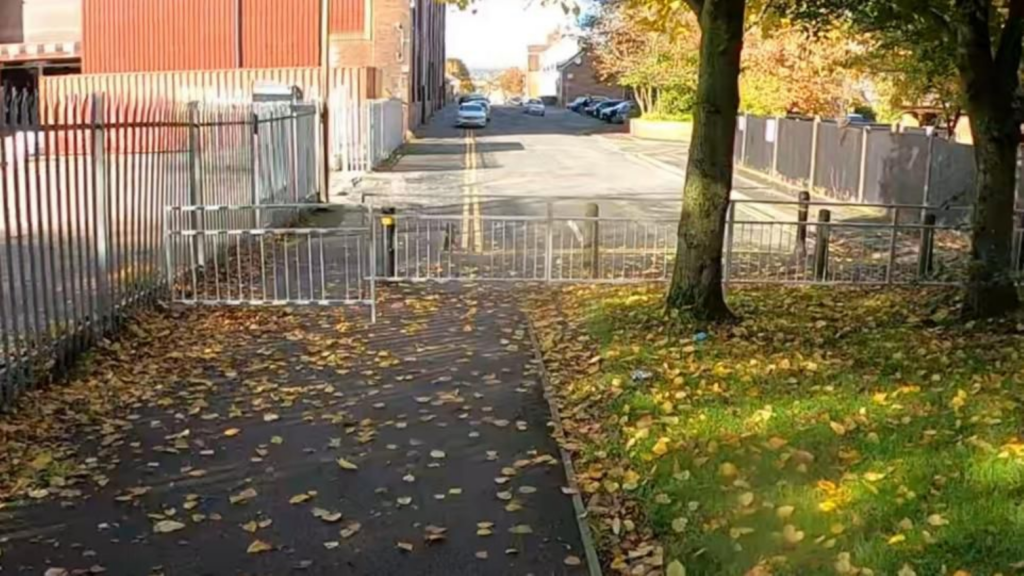
He said that he, along with many others using mobility aids or non-standard bicycles, was faced with a challenge when the council installed the barriers on the National Cycle Route 72 past Pottery Bank, Newcastle to prevent motor vehicles from accessing the route.
In September, he sent a legal letter to the council pointing out that the barriers were in breach of the European Convention on Human Rights (ECHR) and Human Rights Act 1998, the Equality Act 2010 and planning guidance of local authorities, and challenge their lawfulness.
road.cc can report that today, the council has agreed to modify the barriers in consultation with Alastair, subject to a review by accessibility specialists.
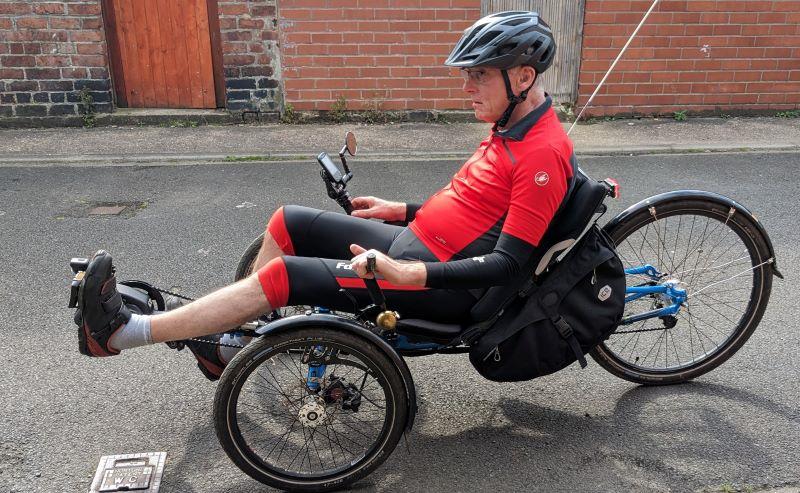
Alastair said: “It’s a fact that the UK’s cycling infrastructure is awful compared to the continent. Certainly around Newcastle barriers such as this one are common. I have focused on this barrier because it is on NCN Route 72, the supposed premier route from sea to sea. I can’t imagine what continental visitors think of this cycleway.
“Various arguments in favour of barriers to control illegal motorcycle use don’t stand up to scrutiny, indeed a recent article on the Sustrans website points to the opposite being the case.
“I have mixed feelings about agreeing to an out-of-court settlement, I have a nagging suspicion that local authorities will not improve their behaviour around this issue until such time one of them is taken to court and loses with the award of a substantial cash settlement. My focus for the moment is getting NCN Route 72 west of Pottery Bank accessible to all legitimate users.”
Last year, Urban Green Newcastle installed the barriers at the East and West side of the cycle path at Pottery Bank. A second barrier was installed despite a complaint by Alastair, represented by human rights solicitor Ryan Bradshaw of Leigh Day, regarding the first.
The move was widely condemned, with disabled people’s cycling organisation Wheels for Wellbeing also supporting Alastair’s case, and saying that “we are finding time and again that disabled people are denied access to spaces that other people can access”.
After the council’s announcement to modify the barriers, a spokesperson from the organisation said: “It’s fantastic that these discriminatory barriers which are preventing use of a National Cycle Network route by Disabled people will be modified.
“Congratulations to Alastair and to Ryan [Bradshaw] for their success in this campaign. We hope that councils across the UK will begin to recognise that barriers which prevent legitimate users from accessing public spaces and public rights of way are unlawful, and that we’ll see more routes opened to Disabled people over the course of 2024.”
Bradshaw also congratulated Alastair, saying that he hopes this case marks a turning point for others who also face discrimination due to physical barriers and inspires them to speak up against it. He said: “I am delighted that Alastair has achieved his aim of getting the barriers removed and highlighting the indirect discrimination that was caused.
“Institutions responsible for transport infrastructure need to do more to ensure that the rights of disabled people are respected and that planning decisions are not made without fully consulting with members of the disabled community. I hope that Alastair’s example will inspire others to take action where they feel discrimination has occurred.”
Last month, Bolton Council also admitted that no equality impact assessment was carried out before the installation of barriers, once again, aimed at preventing anti-social behaviour.
The council argued that their installation was a necessary reaction to criminality and people using the route to evade the police, also adding that it believed it had still acted in accordance with design guidance.
However, Hamish Belding, Project Officer at cycling, walking and wheeling charity Sustrans, criticised the “fear-mongering” amongst locals by councils of increased motorbike usage as a result of the removal of barriers.
Speaking to road.cc after an A-frame barrier was removed near his home town in Tonteg, Wales, he also called out the barriers on cycle paths for not being inclusive and being discriminatory towards people with mobility issues or adapted bicycles.
He said: “Illegal motorbike use is a perception, there’s a lot of fear-mongering around it which may not actually reflect reality. Often the barriers are put in as an automatic sort of thing when paths are built and not in recognition of whether there’s a problem or not. I know this area very well. I know that we don’t have a motorbike problem here and the benefit of removing the barrier far outweighs any risk of antisocial motorbike behaviour.”




















15 thoughts on “Disabled cyclist wins battle to remove “discriminatory” barriers after council agrees for out-of-court settlement to modify National Cycle Network path”
Well done that man! Coconut
Well done that man! Coconut in the post.
If the council now accept that their barriers are discriminatory, why didn’t they know that in the first place? It’s not as if there isn’t plenty of guidance out there.
Well done that man (also –
Well done that man (also – nice trike)!
Sadly this will likely require “fight them one-by-one” for a while. The legal position on this appears to be increasingly settled (I am not a lawyer though – and how that actually plays out in practice in a court may be less certain). It does seem that councils either think this isn’t a done deal or still worth trying to fob people off.
From the perspective of a (supportive) tax-payers’ point of view this is an utter waste of money though. It’s money (mostly to lawyers) just to defer what seems to be inevitable.
The legal position has been
The legal position has been pretty much settled since DDA in 1995 – reasonable adjustments. Though LTN 1/20 and Inclusive Mobility helpd determine what is the reasonable meaning of reasonable adjustments.
It is about practical implementation, culture change and compliance.
And abolishing Shrodinger’s Mototcyclist from the minds of officialdom.
That is some great news for
That is some great news for all disabled cyclists.
It’s good news for everyone.
It’s good news for everyone.
We have a huge networks of useable paths which are unusable due to 100s of k of barriers.
Unfortunately this is not precedent setting, just anther straw in the wind.
Common sense at last
Common sense at last
You think you have it bad try
You think you have it bad try being in a wheelchair , on a shop day I was blocked by 32cars parked on the pavement ,trying get home a further 2 were parked over the lowered access points ,I was forced to to go down the road center for over 200mts before i could regain the pavement in both ways . Further the local town has put in cobbled road in the center to look quaint but a nightmare for wheelchairs but the pavements are also blocked with cars including parking in the disabled spaces by food deliveries guys and Karen’s whose importance allows them to park in disabled spaces due to the difficulty of walking in 6inch heels and police cars going into greggs to get emergency doughnuts ,cafe tables put outside ,aboards of all size and type market stalls blocking the crossing points and pavements and bikes ridden on the pavement at speed and even inside the shopping mall scattering people and often hitting my chair as contrary to bikers beliefs wheelchairs do not move sideways or fly . And shops which after all the legeslation still have no access to wheelchairs . This includes the police station which i found blocked off by 5 police cars on 100%of the pavement. What a shambles and total absence of organisational skills ,ps can’t miss out all the srtatigicly placed potholes and missing covers for access points as water pipes and drains . It’s a wonderful life
Wheelywheelygood wrote:
Yeah, f*cking cyclists…
I keep meaning to ask what
I keep meaning to ask what kind of bike you ride, wheelywheelygood – do you have an (adapted?) two wheeler or do you ride a trike?
Saddened to see you use Karen
Saddened to see you use Karen pejoratively. Being arbitrarily teased for a name you didn’t choose for yourself is crap. Really support the sentiment of the rest of what you’re written. Colchester council cracked down on shop A-boards which obstructed pavements and there was outrage in the local press and social media.
They are just a troll and I
They are just a troll and I doubt anything they say. They have a history of describing 99% of cyclists as stupid, reckless, having no brains etc etc
I’m guessing you post on the standard website too !
Gosh, tell me about it – only
Gosh, tell me about it – only a few weeks ago, a Tuesday I think it was, they started putting cobbled streets in our town. Now people think it’s ok to hang their washing out in the middle of the street. There are blankets and bedsheets and pillowcases everywhere, it’s absolute chaos. And we don’t even live in a LTN. And it’s been raining every day- what’s the point? It’s a bit worrying these police cars going into Greggs for their emergency doughnuts – it’s a shame they don’t run on petrol like ordinary cars. You couldn’t make it up.
I’d love to see Sustrans or
I’d love to see Sustrans or Cycling UK and a disabled advocacy group like the Wheelchair Alliance join forces to take a council to court and set precedent.
Meanwhile, a different
Meanwhile, a different council justifies its discriminatory barriers by saying “we were just replacing what was already there, no need for any thinking.”
https://www.whatdotheyknow.com/request/barriers_recently_installed_on_o
This particular case was mentioned on this site a couple of weeks ago.
Tech Noir wrote:
The good ol’ “we’ve always done it like that”.