



Attention OnleyFans subscribers: There’s some new and exclusive content coming your way…
If you’ve been suffering from Oscar Onley withdrawal symptoms over the past few weeks, don’t worry.
Because Picnic PostNL have just released a behind-the-scenes documentary, ‘Expect the Unexpected’ (a title strikingly similar to Movistar’s ‘Lease Expected Day’ Netflix series, if you ask me), chronicling the young Scottish rider’s brilliant fourth place finish at last month’s Tour de France:
And if you look closely, you might be able to spot your favourite cycling live blogger shivering on top of a foggy Pyrenean mountain…
Now that’s what I call proper bonus content.
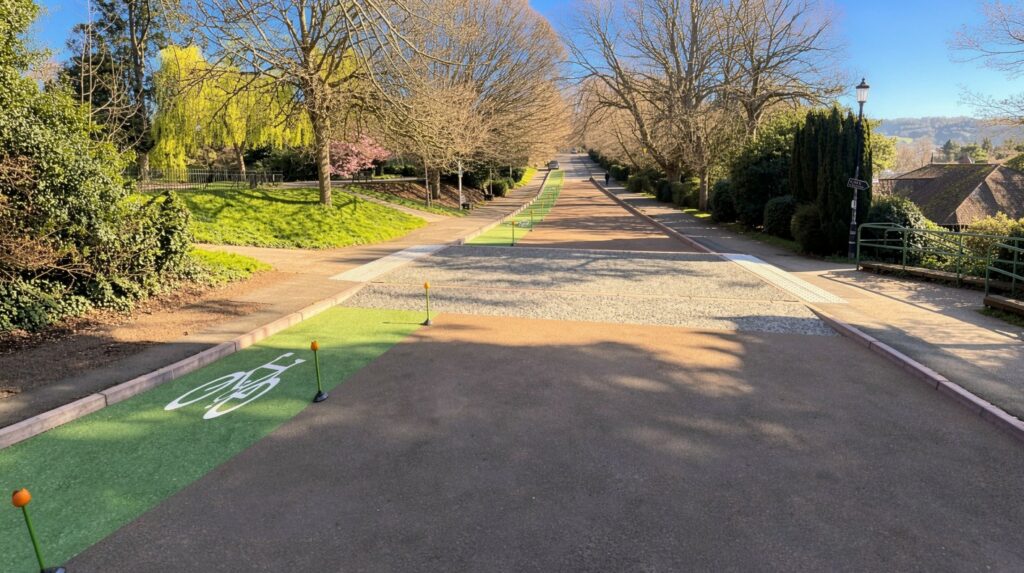
Why don’t cyclists use the cycle lane? #203,674: Because it’s a parking lane, obviously
Few things make me angrier than this “cycle lane”
— Jack Fifield (@jackfifield.uk) August 11, 2025 at 5:43 PM
I can see a councillor now, fuming that ‘we gave them a cycle lane after all their moaning and they don’t even use it’,” wrote Simon, in response to this classic of the ‘paint is not protection’ genre.
The worst bit is he’s almost certainly correct…
Middlesbrough’s controversial Linthorpe Road cycle lane finally bids adieu… with one last big compensation bill

> Council pays out £85,000 to cyclists and pedestrians injured by crashes and trips caused by “hated” cycle lane
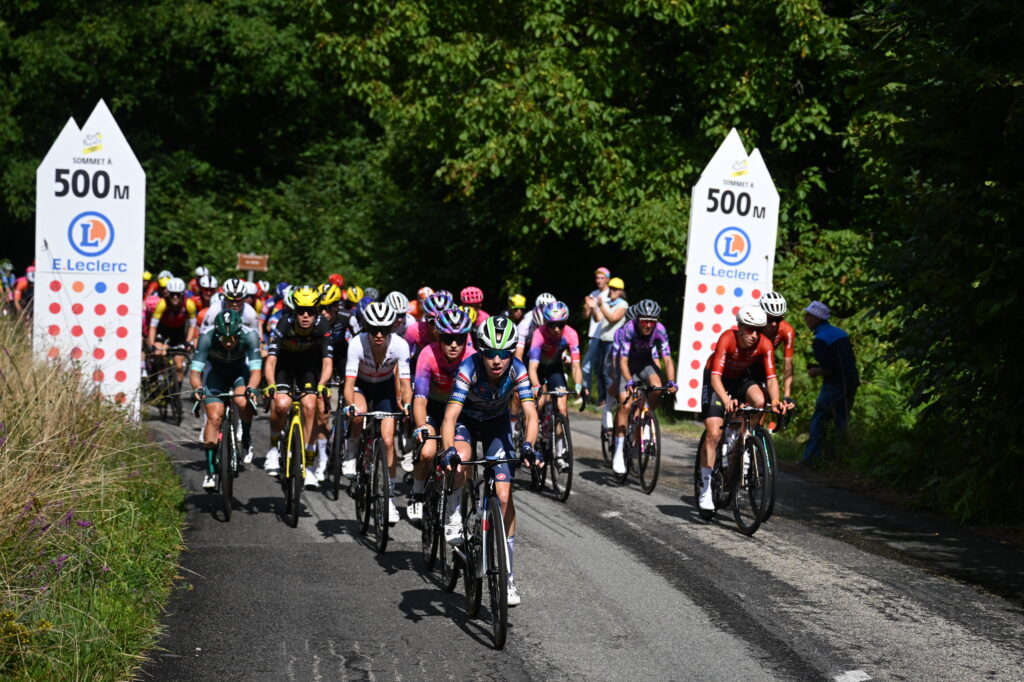
“We hope for a future where women’s bodies are not so heavily scrutinised, whether in a bike race or in life”: The Cyclists Alliance renews call for mandatory REDS and bone density tests, arguing “current system is not set up to protect female health”
After debates surrounding weight, health, and diet dominated the aftermath of this year’s Tour de France Femmes, the Cyclists’ Alliance has renewed it calls for the UCI to update its medial programme to ensure that riders undergo a mandatory screening for REDS (Relative Energy Deficiency in Sport) and bone mineral density testing every year.
The appeal for mandatory health tests by the Cyclists’ Alliance, the body representing women’s professional cycling, marks a response to the issues raised during this month’s Tour, where the relationship between weight and performance was heavily scrutinised.
After Kim Le Court revealed that she regained the yellow jersey on stage five while on her period, former pro Marijn de Vries admitted that during her career she was encouraged to become “so thin” that she didn’t menstruate.
Meanwhile, the topic of weight loss also cropped up during post-Tour interviews with winner Pauline Ferrand-Prévot and runner-up Demi Vollering, with Ferrand-Prévot noting that she had received complaints about her pre-race weight loss, which she admitted was “not 100 per cent healthy”.

ASO/Pauline Ballet
In a statement issued this week, the Cyclists’ Alliance called on the UCI to support riders’ health by introducing a mandatory screening for REDS and bone mineral density for all Women’s WorldTour teams, after the Alliance put forward a proposal to include these tests in the governing body’s medical programme last September.
“In light of the recent widespread discussions in the news and amongst riders about rider health, The Cyclists’ Alliance today affirms its commitment to rider health,” the statement said.
“Rider health and wellbeing is a top priority for us and for our members. We are concerned by practices and cultures in sport which put rider health at risk.
“Rider health and elite performance must go hand in hand. The sport today has more than enough scientific knowledge, insight and human experience to create sustainable, ethical, performances which do not compromise rider health.
“We today invite the UCI to reconsider our proposal, and we offer our support and expertise. While we appreciate that this may require some work to ensure appropriate implementation, we believe that it is more than worth the effort to introduce some form of protocol for both female and male cyclists racing professionally under the UCI.”

ASO/Pauline Ballet
The group also criticised the “disproportionate” amount of scrutiny about the weight of leading female riders, compared to their male counterparts, who have also struggled with well-documented health and weight issues in the past.
“We are disappointed that women in sport receive a disproportionate amount of scrutiny about their bodies compared to their male counterparts,” the group said.
“We encourage all of the voices in cycling to be leaders rather than followers, and to help to change the dialogue in elite sport when it comes to weight and women’s bodies.
“We hope for a future where women’s bodies are not so heavily scrutinised, whether in a bike race or in life.”
“We are constantly working towards making professional cycling a sustainable and fulfilling career for women,” TCA president and Olympic time trial champion Grace Brown said in the statement.
“Rider health and wellbeing are vital for career longevity. The current system is not set up to protect female health, so I believe it’s our duty to continue educating and advocating for better standards that allow women to perform with well-fuelled, strong, and happy bodies.
“Stop. Think. Assess. No Excuses” – Apart from when you’re driving through a ‘No Entry’ sign, of course
CyclingMikey’s new west London haunt has turned out to be an eventful one, to say the least.
The famous camera cyclist attracted national headlines – and the ire of ‘Mr Loophole’ Nick Freeman and about a million angry motorists on Twitter – after he shared footage of a driver who ignored a road closure and ran over his bike, before fleeing the scene.
And Mike was back at that seemingly useless ‘No Entry’ sign on Paddenswick Road this morning, where he spotted a lorry driver casually making his way through the road closure, despite the cyclist’s finger wag of disapproval:
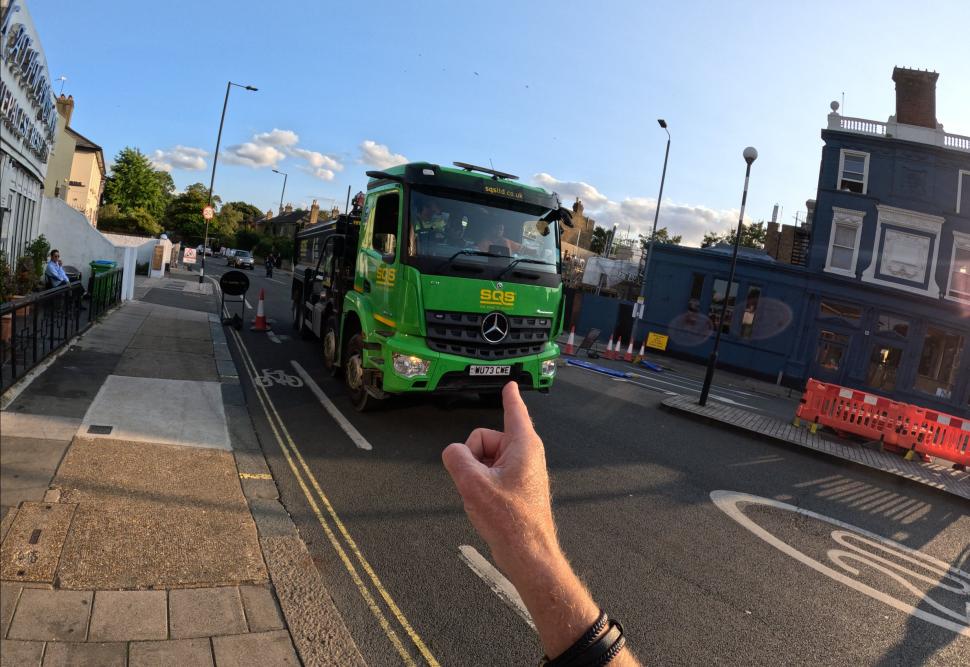
[Credit: CyclingMikey]
“He did not have anything to do with the roadworks, he was dangerously driving through,” Mike tweeted this morning.
And to add insult to injury, the side of the driver’s lorry was emblazoned with the road safety message: “Stop. Think. Assess. No Excuses.”
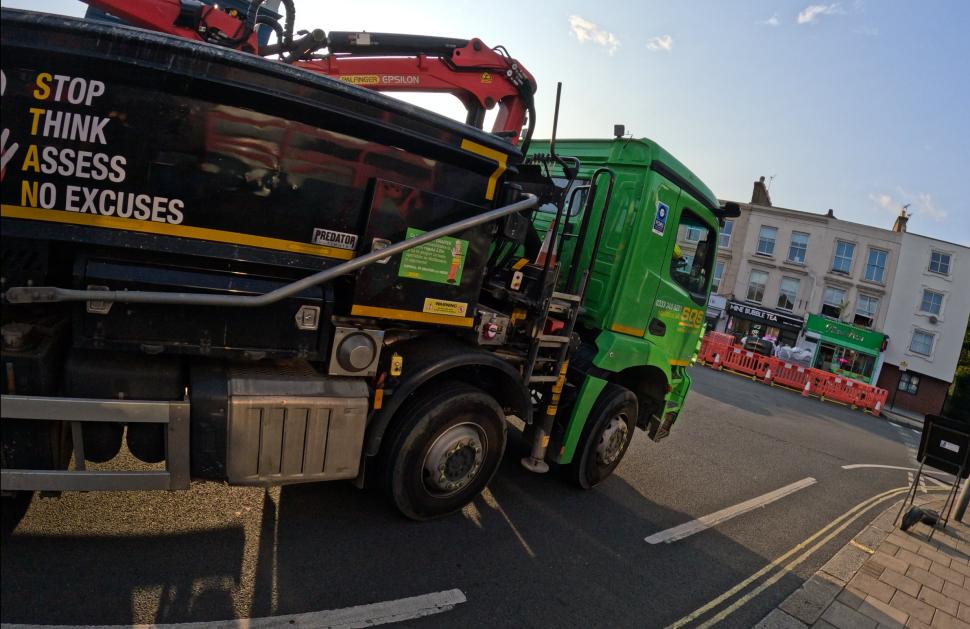
[Credit: CyclingMikey]
Oh, the irony. Not sure there was much stopping, thinking, or assessing going on there. But probably plenty of excuses.
“What do we think the driver’s excuse will be?” asked Mikey. “That’s a 32 tonne HGV. Inexcusable.”
One more day until the Hour…
This time tomorrow, Charlie Tanfield will be preparing for his crack at cycling immortality, as he takes on the Hour Record, the sport’s most famous – and feared – record.
The 28-year-old landed in Konya, Turkey, on Monday, and is currently getting used to the track’s stiflingly hot conditions before tomorrow’s big effort:
Go on Charlie.
And Tanfield won’t be the only British rider aiming for the record books in Konya, of course. Para-cycling star William Bjergfelt has his sights set on the C5 Hour Record, while sprint supremo Matthew Richardson is bidding to become the fastest rider in the world by smashing the nine second barrier for the flying 200m.
Tomorrow’s going to be fun.
“He can’t say: ‘The car shouldn’t be there, so I’m entitled to do it.’ CyclingMikey may not realise that by pushing the bike he is in fact cycling because he is in control of it”
CyclingMikey’s latest controversy continues to rumble on, thanks to a belated but completely inevitable intervention from Mr Loophole himself…
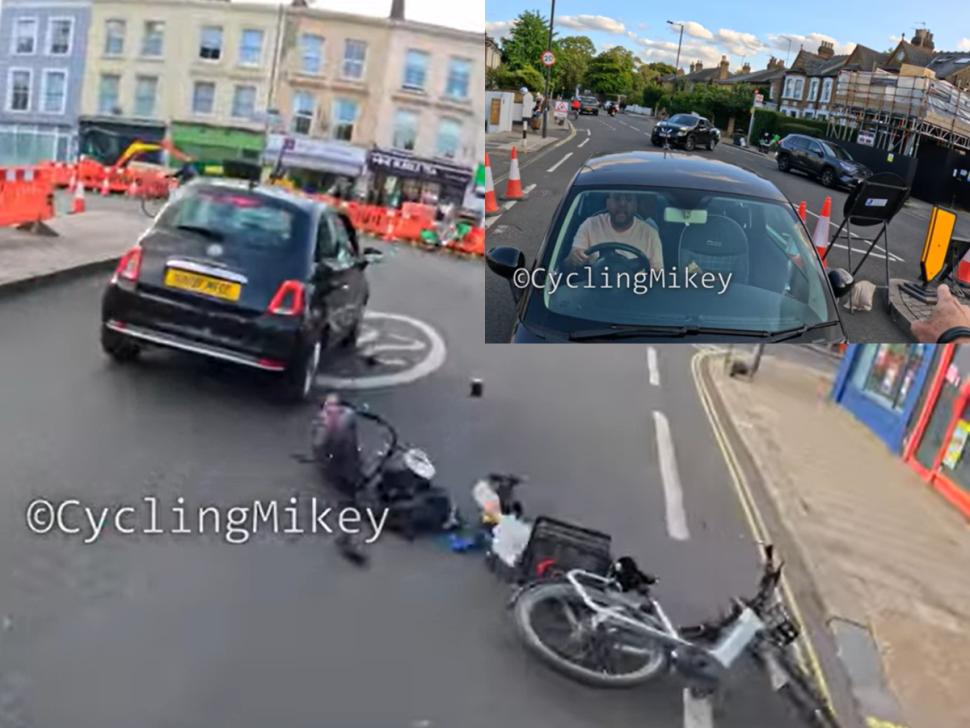
> Mr Loophole accuses CyclingMikey of “using his bike as a weapon” after safety campaigner’s bike run over by motorist
Have you always wanted to see some moody black and white photographs of Bradley Wiggins walking around Los Angeles contemplatively in a pair of very short shorts? Well, today’s your lucky day
Alright everyone, I reckon it’s time for a caption competition! Let’s see what you can come up with…
‘I’ve heard Charlie’s putting out better numbers than I did before my Hour. Nah, he couldn’t, could he? Oi Lance! How far is it to this bloody gym?’
Filippo Conca joins Jayco-AlUla with immediate effect after taking surprise Italian championships win for club team
Two months after shocking the cycling world by winning the Italian road race championship for a club team, Filippo Conca is back in the pro peloton, after agreeing a deal to join Jayco-AlUla with immediate effect.
Conca – who had previously spent two seasons apiece at Lotto and Q36.5, finishing fifth on a Vuelta stage in 2022 – had stepped down from the pro ranks this season to race for the amateur Swatt Club outfit, after injuries, illness, and misfortune marred his fledgling career.
The 26-year-old originally planned to target the gravel scene in 2025, but instead focused on the Italian nationals, where he pulled off a surprise victory, beating UAE Team Emirates’ Alessandro Covi in Gorizia, kicking off a period of introspection for the beleaguered racing scene in Italy.
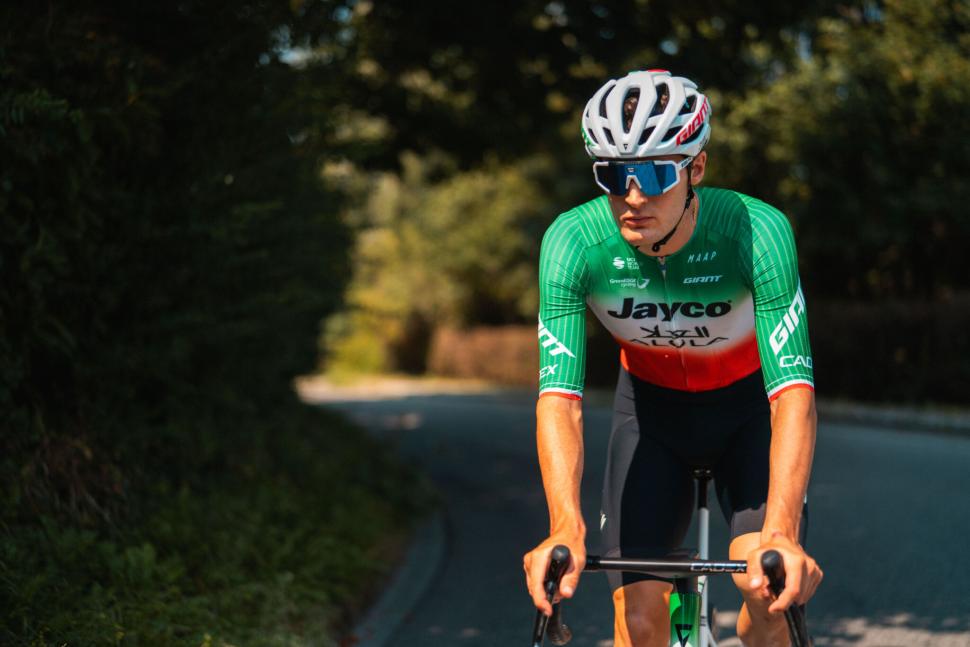
Conca’s win also reignited interest in his stalled career, with Jayco-AlUla – who share equipment sponsors with Swatt – now pouncing to sign the Italian champion, in a deal that will start immediately and run until 2027.
Conca will make his debut for the Australian team at the Circuit Franco-Belge on Friday, and is aiming to make his Giro d’Italia debut in the Italian colours next May.
“I’m really happy to join Team Jayco AlUla, I chose this team because I’m confident that I’ll find the ideal environment to work hard,” Conca said in a statement today.
“Before making my decision, I consulted my colleagues and the staff, and they all told me that at Jayco AlUla, I would find a family that can support me personally and on a sporting level.
“Another thing that is important to me is that I’ll continue to use the same equipment as I have been using this year – Giant and Cadex. I’ve had a great experience with both and so I’m happy to be able to continue with the same bike and wheels.
“My dream is to race in the Giro d’Italia, and to do so wearing the Italian national jersey. I think it’s a once-in-a-lifetime opportunity. I want to thank Team Jayco AlUla for the trust they’ve placed in me; I’m sure it will be repaid.”
Cycle lanes in the sun
The Embankment cycle lane was looking good
— Timothy (@westcountrytim.bsky.social) August 12, 2025 at 6:18 PM
Racing round-up: Søren Wærenskjold powers to emphatic Tour of Denmark stage win after chaotic finale, as Linda Zanetti blasts over the cobbles at the Tour of Poland in perfect day for Uno-X
It was a good day for fans of chaotic sprint finishes and Uno-X Mobility.
At the men’s Tour of Denmark, the Norwegian squad’s Søren Wærenskjold emerged victorious following a hectic finale in Gladsaxe, keeping calm as a late attack by Nils Eekhoff was snuffed out to power clear in the final 150m for a convincing victory, his third of the season.
Lotto’s 20-year-old Belgian sprinter Steffen De Schuyteneer grabbed the best result of his young career by taking a hugely impressive second, as Axel Zingle and Jasper Philipsen, returning to form after his Tour de France-ending crash last month, finished third and fourth.
Mads Pedersen, whose lead-out man Ryan Gibbons crashed with 2km to go, only managed ninth but hangs on to the leader’s jersey after yesterday’s emphatic stage win.
Meanwhile, over at the women’s Tour of Poland, Uno-X made it two from two, as Linda Zanetti blasted up the tough cobbled rise to the line in Chełm for her second win of the season.
The 23-year-old Swiss rider launched early through the corners on the cobbled climb and had more than enough in the tank to hold off the fast-finishing French champion Marie Le Net for an impressive victory, which moves her up to second overall behind Chiara Consonni.
Not a bad day for Uno-X at all.
“People using this cycle track every day are not extremist rebels – they just want to get to town safely”
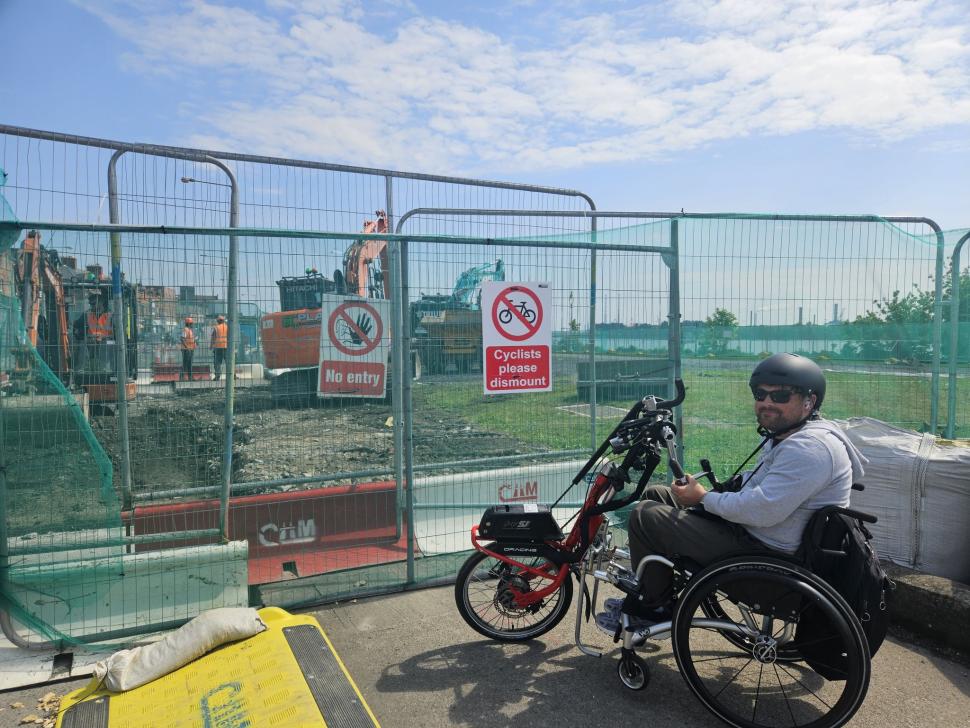
> “This is pure gaslighting”: Councillor claims bikes are being treated “like children’s toys” after decision to turn popular bike route into “anti-cycling death trap”

“I know what it’s like to win a one-day race, but a Grand Tour? Phew, that’s a different story”: Tom Pidcock aiming for top ten GC finish at Vuelta, but admits it’s a “shame” to miss out on mountain bike worlds clash with Mathieu van der Poel
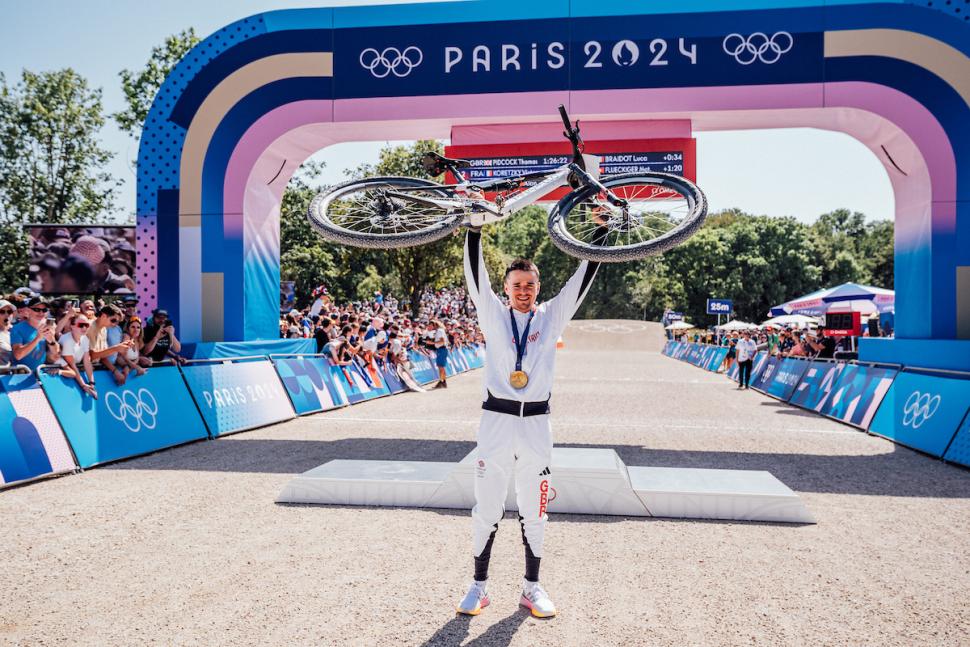
Tom Pidcock says he is targeting a top ten overall finish at the Vuelta a España, which starts next weekend in Turin, despite describing attempting to win a grand tour as the “hardest thing in the world for me”.
After a successful summer on his mountain bike, during which he secured his second European cross-country title, the 26-year-old returned to racing on the road at last week’s Arctic Race of Norway, where he won the third stage and finished second on GC.
Pidcock’s next race will be the Vuelta, where he made his grand tour debut back in 2021, thanks to his Q36.5 team securing an invite to the Spanish race.
Despite hitting the ground running in Q36.5 colours following his highly publicised transfer from Ineos, the British star’s first grand tour of the season, the Giro d’Italia, was characterised by near misses, as he failed to win a stage and suffered in the Alps, ultimately finishing 16th overall.

Zac Williams/SWpix.com
However, Pidcock told De Telegraaf this week that he’s aiming to build upon his Giro performance with a stronger GC bid at the Vuelta.
“In Spain, I want to try to finish close to the general classification. My time trial still needs to improve a lot, but maybe I can aim for a top ten,” he suggested.
However, Q36.5’s Vuelta invite means that Pidcock will be forced to miss this year’s world mountain bike championships in Crans Montana, which will take place during the race’s final week, especially considering the rumours that Mathieu van der Poel will be taking part, as the Dutch superstar aims for the first mountain bike rainbow jersey of his career.
“It’s a shame, because I would have loved to participate, especially to battle Mathieu,” the double Olympic mountain bike champion said.
“But I want to focus more on the road, and our team is in a state of rebuilding. So it makes sense for me to ride the Vuelta.”
Zac Williams/SWpix.com
When asked about his potential to win a three-week race one day, Pidcock said: “That would be fantastic, but winning a grand tour is the hardest thing in the world for me. I know what it’s like to win a one-day race, but a grand tour? Phew, that’s a different story.”
Nevertheless, the former Amstel Gold and Strade Bianche winner – who’s still only 26 – believes he still has plenty of room to improve as he enters his late 20s, pointing to the success of Van der Poel and Wout van Aert, whose biggest wins on the road all came after the age of 26.
“I already feel old at this age. As a child, you dream of achieving things, and suddenly you’re 26,” he said.
“But hey, riders like Mathieu and Wout van Aert have achieved so many great victories after this age. Now I’m entering that phase of my life, and hopefully, like them, I can reap the rewards in the big races.”
“The previous owner said it needs a new chain”: Understatement of the year?
A textbook example of ‘Your Bikes Hates You’ here, courtesy of the hopefully jokingly named mechanic ‘Crashbikes4living’ on Reddit:
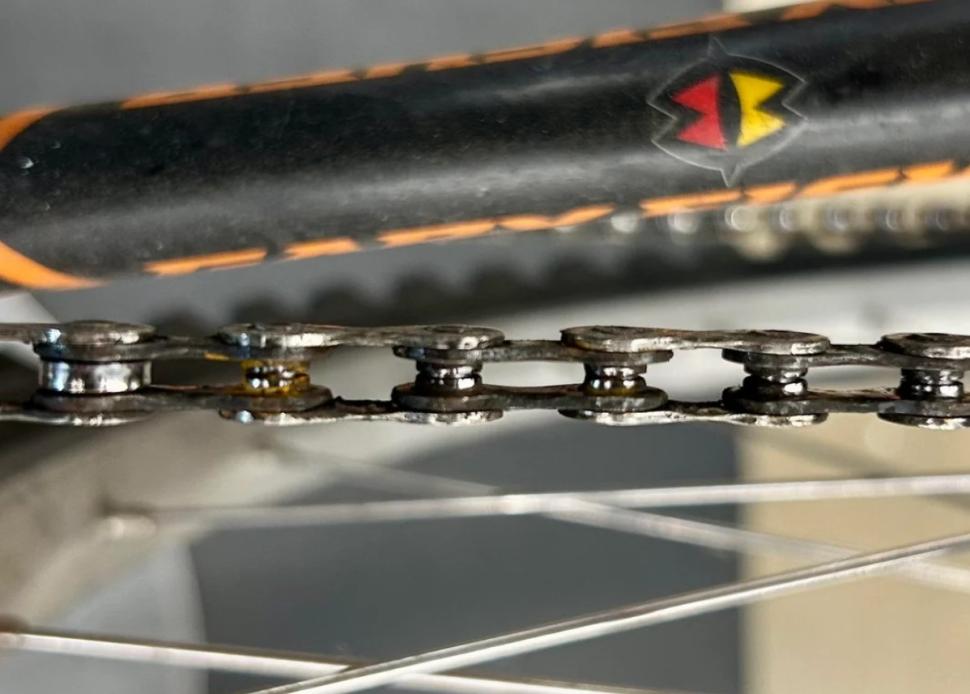
Yikes. Apparently, the customer told the mechanic that the “previous owner said it needs a new chain”.
You reckon?!

“Accurate statement dear customer,” Crashbikes4living said. “It was a Facebook Marketplace find for $50 allegedly. First time seeing multiple rollers just gone from a chain.
“Your next question of how fucked was the cassette? Yes. Tis quite f***ed. Along with the tyres.”
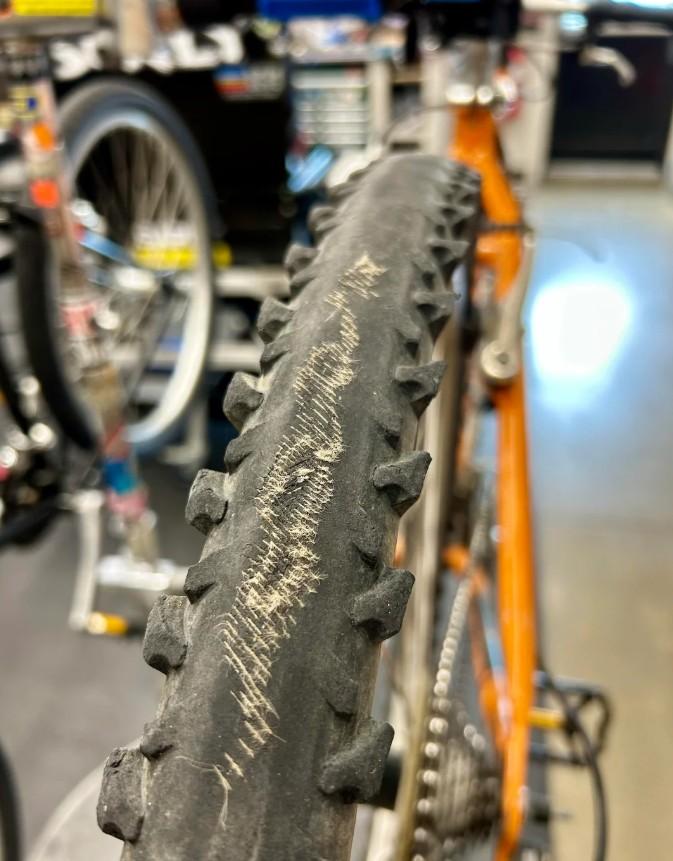
He wasn’t lying.
“But I’m sure there will be that one person saying the chain and tyres are fine and have another 500 miles in them,” the mechanic said.
Ach sure, you’ll still get a good winter out of them, no problem.

“When we talk about how we make our roads safer, it’s easy to get distracted by bluff and bluster,” says Sadiq Khan, as London mayor calls for more 20mph zones that save lives and don’t slow traffic
Despite recent evidence clearly indicating that fewer people are killed or injured on roads where new 20mph speed limits have been imposed, the UK’s 20mph debate, ironically enough, shows no signs of slowing down.
Back in February, we reported that around 100 fewer people were killed or seriously injured on 20 and 30mph roads in Wales in the first full year since the Welsh government’s controversial introduction of widespread 20mph speed limits, a figure Cycling UK said was “proof that slower speeds on our roads save lives”.
However, despite the promising statistics, the Conservative’s shadow transport secretary in Wales claimed the drop in casualties on Welsh roads doesn’t “tell the whole story”, and that the scheme continues to “frustrate and confuse” motorists.

And in May, a new active travel report co-commissioned by the Bikeability Trust and Living Streets charities urged the government to introduce default 20mph speed limits for motor vehicles in all urban areas.
In the same week, cyclists in Oxford called for the lowered limit to be implemented on every road in the city by 2029, as part of a list of proposed safety measures sent to councillors.
However, Cyclox’s desire to see Oxford covered by a blanket 20mph limit was criticised by the Oxford Bus Company, who argued implementing additional 20mph limits would lead to longer journey times, increase congestion, and make travelling to and from Oxford “less attractive”, without having a positive effect on road safety or environmental targets.
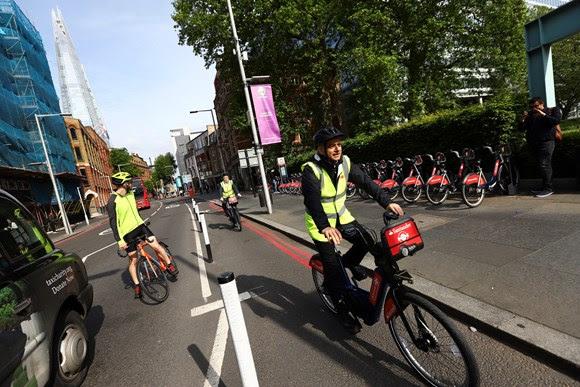
And it’s that divisive context which has prompted London mayor Sadiq Khan to urge the rest of Britain to implement 20mph zones, arguing they “save lives and don’t slow traffic”.
In a column published in the Guardian, Khan – noting that someone is killed or injured on the UK’s roads every 17 minutes – wrote: “When we talk about how we make our roads safer, it’s easy to get distracted by bluff and bluster. But, every time we do, we lose sight of the most important fact: traffic accidents took over 1,600 lives last year, and we have the power to reduce and prevent them.”
The Labour mayor then pointed to new research by Transport for London, which shows the number of people killed or seriously injured on London borough roads reduced by 34 per cent following the implementation of 20mph speed limits, with the number of children killed falling by 75 per cent.
“That means fewer grieving families and fewer people’s lives made a misery,” Khan said. “At the same time, the predicted downsides for drivers simply haven’t materialised.
“Despite what their detractors might claim, 20mph speed limits haven’t actually made journeys slower because journey times are largely dictated by junction delays, not vehicle speed.
“Roads where 20mph speed limits apply aren’t just safer; they are quieter, too, encouraging more people to walk or cycle. Those who do drive have fewer collisions and pay less for their insurance as a result.
“It’s no surprise that residents overwhelmingly back slower speed limits in their own communities; more than three out of four of them think that 20mph is the right speed for the area they live in.”

Focusing on the “ordinary people who just want safe streets”, Khan then criticised those politicians and councils who have fought against the implementation of 20mph streets in the capital.
“To those councils, my message is clear: it’s time to step up. Because there is nothing to be gained by playing politics with speed limits – only people to be injured and lives to be lost,” he said.
“Every day, I meet people who tell me they want to make even more progress to clean up our air and cut speeds on the capital’s streets. Some of them are campaigners who have dedicated their lives to making the way we travel safer and more sustainable.
“But the vast majority are ordinary citizens: children walking home from school; parents cycling to work; carers driving to see their relatives. What they want is simple: the freedom to go about their lives in the knowledge that they are safe from harm. For their sake, the fight for safer roads must continue.”
“Why can’t they use the roads?” Tory councillor questions why disabled cyclists can’t push their bikes and asks, “How common is this condition?” during bizarre ‘No No Cycling’ signs row – as critics say “access isn’t a numbers game”
A bizarre social media debate over the decision to place additional ‘No Cycling’ signs on a footbridge has resulted in one Conservative councillor questioning the commonness of people who use bikes as mobility aids and questioning why they can’t simply dismount or “use the roads”.
On Tuesday, Simon Fawthrop, a Conservative councillor in Orpington, Bromley, reminded locals that, thanks to refurbishment works that will be carried out until next March, Petts Wood Station bridge will be closed.
Pedestrians wishing to access the station are instead being asked to use the nearby footbridge between Queensway and Bluston Parade as an alternative.
And to ensure the safety, ostensibly anyway, of those detouring pedestrians, Bromley Council has installed new ‘No Cycling’ signs on the bridge – which Fawthrop hopes cyclists will “obey”.
“I’m just here to tell you about new stickers we’ve had put on to the footbridge,” the councillor, a self-proclaimed anti-ULEZ campaigner and “free speech advocate”, said in a video he shared from the bridge yesterday.
“They say ‘No Cycling’, and that is to stop cyclists from coming down here when the footbridge over the road, across the railway, is closed next week.
“Here we have the ‘No Cycling’ signs because, with the other footway closed, this will be the main route for pedestrians. So good luck, let’s hope that the cyclists obey the rules this time.”
Fawthrop also shared a photo of one of the stickers on X/Twitter, pointing out that the reminders are to ensure “safety for those walking over the bridge”.
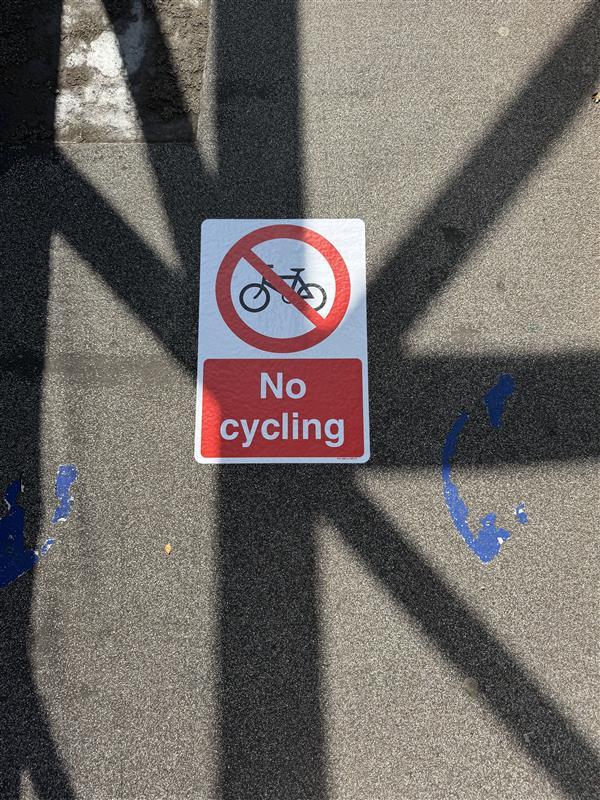
However, as all road sign enthusiasts will surely know, these new stickers don’t inform the bridge’s users that cycling isn’t permitted. Quite the opposite, in fact.
“I don’t recognise that sign. It’s not in the Highway Code,” pointed out one X user.
“Ah the infamous ‘No No Cycling’ sign. How many pedestrians have been prosecuted for not cycling over that bridge?” asked Amos.
“This is the sign you want, placed at either side of the route that you want to close to cyclists,” added Christopher, sharing an image of a proper ‘No Cycling’ sign, featuring a bicycle surrounded by a red circle.

“If I saw the one you’ve used I’d assume they were not enforceable.”
Fawthrop responded by noting that the Highway Code-approved version of the sign is stationed at either side of the bridge:
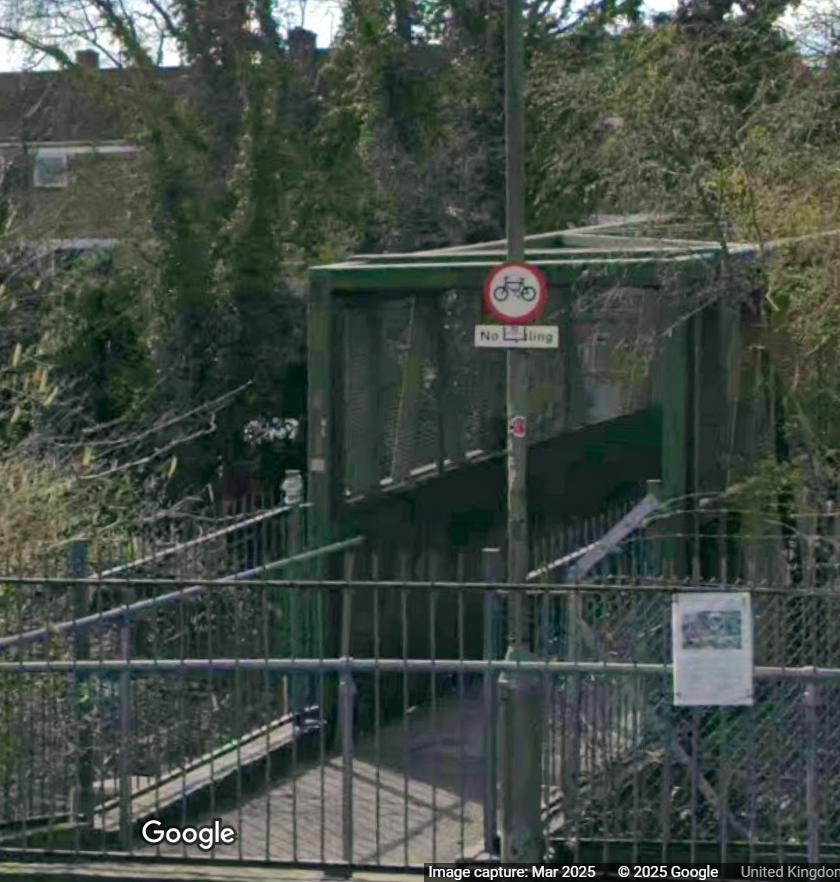
“I’d discourage the use of unofficial or nonstandard signage and certainly wouldn’t mix the two like this,” replied Christopher.
“The one you pictured on the original picture is often used in areas that don’t actually have lawful prohibition on cycling.”
Christopher then turned his attention away from the dodgy signage, asking: “Is there an alternative route for cyclists?”
And Fawthrop’s response?
“Yes. They can ride on the roads. Or they can dismount and wheel their bikes across the bridge.”
“So no signed alternative route?” asked Christopher. “You are aware that some people use their bicycle as a mobility aid (and may not be able to dismount/push their bicycle easily)?”
Strap yourself in for the councillor’s retort.
“I’m sure that is the case,” he wrote, “[But] given this is not a cycle route, it begs the questions of a) Why can’t they use the roads? b) How common is this condition? c) Do they use any roads at all?”
Yes, that’s really what he said.
At that point, a clearly baffled Christopher directed Fawthrop to inclusive cycling campaign group Wheels for Wellbeing’s site, in order to enlighten him on the use of cycles as mobility aids.
“As for frequency of these conditions I couldn’t say,” he continued. “I am minded that keeping access for disabled people isn’t a numbers game.”
Christopher then questioned why, if the route that is being closed was suitable for cyclists, why no diversion has been put in place for people on bikes, Fawthrop – following a confused conversation that, frankly, made my head hurt – insisted: “This is about protecting pedestrians. There is no cycle route over the railway. It is pedestrians that are diverted.
“The planned works will take seven months. This footbridge’s traffic will increase four or five times current levels. The council placed signs to enhance pedestrian rights. Why all the worry, it’s not a cycle route?
“It is those pedestrian residents who felt unsafe crossing the footbridge due to some cyclists ignoring the signs.”
Elsewhere, when asked about wheelchair users on the bridge, the councillor, doubling down on his stance that disabled cyclists apparently don’t exist, said: “I didn’t ask about wheelchair users who have their own set of problems, which is why we secured a step free access at Petts Wood Station.
“I’m interested in the incidence of those bike users that can’t dismount and why they can’t use roads.”
“Can you clarify? If cyclists dismount and walk their cycles, are they allowed across the bridge due to being legally considered as pedestrians?” another user asked.
“The root of conflict seems to be related to bikes becoming unstable at very low speeds. Wheelchairs and trikes remain stable at 0mph.”
> The barriers disabled cyclists face: Wheels for Wellbeing on the road.cc Podcast
Fawthrop replied: “I’ve seen many a good cyclist dismount and walk across the footbridge. I have also seen rude and abusive cyclists that disregard the rules and get angry when challenged as they seem to think they are entitled and the rules don’t apply to them. I prefer the former cyclists.
“The signs are clear: No Cycling. If the cycle is transported and not cycled, then common sense says that would be allowed.”
Except, of course, the signs aren’t clear. Common sense, eh?
In any case, Fawthrop’s apparent support for “good” cyclists – not those pesky ones who struggle to easily dismount thanks to their disability – was somewhat undermined last night, after he shared an AI-generated video posted by a far-right account, ‘showing’ a number of cyclists plunging into a giant pothole, captioned “Cycling Mikey and pal”:
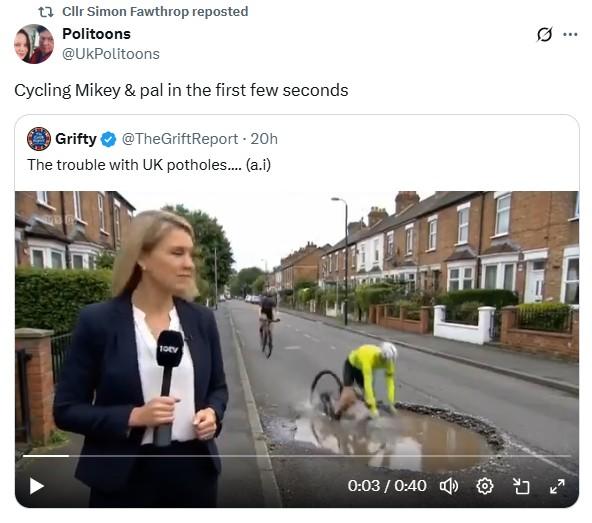
That’s some great common sense there…










46 thoughts on ““Why can’t they use the roads?” Tory councillor questions why disabled cyclists can’t push their bikes and asks, “How common is this condition?” during ‘No Cycling’ row; 20mph limits don’t slow cars; Chain trauma; Pidcock on Vuelta + more on the live blog”
There are still drivers who
There are still drivers who moan about the 20mph speed limits. Driving at 20mph does feel very slow, I admit. but as I’ve found out from experience, the lower speed limits make almost no difference to journey times. From a yclist’s perspective, they’re pretty good. Though there are those drivers who are even more impatient than usual.
It depends on the type of
It depends on the type of street I think. on many narrower residential streets with parked cars and kids around etc. 20 feels normal and the correct speed. I never understand when I see drivers, even when it is a 30 limit, speeding on streets like that. Even cycling fast on those roads feels off.
Absolutely. It’s a whole
Absolutely. It’s a whole range of things, and dependent on what drivers are socialised to do (given “one test per lifetime” we’re really all “trained on the job”).
So in NL their cue for “driving really slowly” both visual AND aural. “Streets” mostly have klinkers (brick surfaces) so you can feel and hear the surface – vibration/noise gets louder as you go faster!
To get to a “street” you’ve usually gone over some kind of “entrance construction” (normally including a hump, possibly driving over a footway, with a narrowing to a single lane at that point). There are likely to be horizontal diversions in the carriageway. The street is narrow because the minimum size is allocated to motor traffic (and may be one-way). There will almost certainly be greenery or trees, there will be marked parking spaces (counter to the UK’s “parking everywhere where not specifically marked with paint AND signs – in fact just anywhere in practice”, you’ll see people cycling in the middle of the lane…
Speed is relative. And we
Speed is relative. And we have set relatively high speed limits in many places (though in urban areas of course they’re far above the average speed over a distance…) I’d think it was pretty darn nippy if I was going round everywhere at 20mph on my city bike!
And that’s why pretty much
And that’s why pretty much every driver heading into Kingston in south west London totally ignores the 20mph speed limit (until they meet someone observing it and then they drive right up the rear of the ‘slow’ vehicle). That and there is no enforcement. So basically a waste of time.
My only issue with 20mph
My only issue with 20mph zones is that they never seem to be policed, or at least in Manchester, they don’t appear to be. I’ve seen the occasional speed check by the police on a road that leads to a 20mph zone, where there is a moor and not a lot of danger to pedestrians. But never once have I seen a speed check in the 20mph zones where they are generally implemented because the zone contains one or more schools.
This lack of enforcement
This lack of enforcement applies to all motoring offences most of the time.
Councils and governments are
Councils and governments are absurdly resistant (because “Big Brother war on motorists”) to average speed cameras in urban areas and they appear to be the only sensible solution to speeding (apart from GPS speed measurement chips linked to a government database and that’s just never going to happen). No police needed, no drivers slowing for cameras then back to the usual 10mph over the limit, if you go from A to B in less time than it would take at the speed limit, you get a ticket. In London at least it wouldn’t even cost that much, I’ve been told by someone who works for the GLA (no it wasn’t a bloke down the pub, it was a woman at party in fact…) that there are so many ULEZ, congestion charge, speed, bus lane, anti-terror etc ANPR cameras around that all they need is a database in to which to plug all the info gathered by them and a system could be in place tomorrow.
“… We have the technology.”
“… We have the technology.”
Can they include petrol station CCTV to that too?
That could, in theory, tag the vehicle to the payer of fuel (usually by card these days) and if the vehicle/driver is wanted or has expired MOT/VED then the police can locate them and if necessary get the card/criminal’s bank account frozen.
This would be especially usefull for drivers with cloned plates which the police may give up on.
I had one driver close pass me with a cloned plate.
The police gave up trying to trace them even though they then had two reasons for wanted to prosecute (the close pass AND the cloned plates).
Devil’s advocate – there are
Devil’s advocate – there are examples – even in “nicer places” – of a “slippery slope” of regulations (see usage of anti-terror laws). And certainly of data gathered by central authorities (or corporations) being misused / later used to coerce people. If not by state organisations themselves then by individual members. Or it leaking out and simply being used by crooks.
The nuttiness of some of the views lies in assuming that:
a) The additional proposed measures would do more that what has already happened (see the spy in your pocket / on your desktop you eagerly tell everything to for one. Or “having to drive”…)
b) The moderating factor that many authoritarian forces aren’t above cock-up and spending most of their time on other matters – such as squabbling with each other.
c) Corporate interests are merely neutral parties that solely aim to make money by delivering what we choose. (It’s complicated…)
Rendel Harris wrote:
I see so many people braking for average speed cameras on the motorway that I sometimes think it’s me that’s misunderstood how they work…
If Helsinki can do then many
If Helsinki can do then many UK cities can as well. Imagine the positive benefits of significantly reducing KSIs
https://www.roadsafetytrust.org.uk/news/helsinki-sees-zero-road-fatalities-across-whole-year
18.6mph limits on half the
18.6mph limits on half the roads? Are you quite mad?
Only 390 cars per 1000 inhabitants? We can’t all be like … er… London, you know.
(I suspect them having apparently good rail, metro and tram systems helps).
I actually did the experiment
I actually did the 20/30 mph experiment, albeit only with five repeat journeys over the same routes at the same weekday times. Each pair of journeys was identical except that in the first maximum speed was 20mph, in the second 30mph. Journeys were 4.5-9.3 miles in length and included residential roads, busy city areas and arterial roads. Result was little difference in journey times with improved fuel consumption.
I wrote it up as a press release for the Glasgow cycle campaign group GoBike https://www.gobike.org/wp-content/uploads/2015/03/GoBike-20mph-Press-Release.pdf
Even if the engine itself is
Even if the engine itself is more efficient at 30 mph, in stop-start motoring having to repeatedly accelerate a vehicle to a higher speed will likely use more fuel and cause more wear on brake parts, tyres etc.
Pretty much my observation
Pretty much my observation
“Cars in front that accelerated away were often caught at the next traffic lights or junction. Bob also noted that he
spent more time driving and less time stopping and starting, which eased the stresses on both himself and the car.”
The real question is how did
The real question is how did you:
A) Drive at 20mph because everyone knows modern cars aren’t geared for that speed so who knows what gear you should be in.
B) How did you not kill multiple pedestrians and cyclists because you were so worried about keeping to 20mph that you couldn’t focus on the roads.
Most people seem to have used their brains and just completely ignore the 20mph so they don’t murder and main every time they get behind the wheel in a 20 zone.
Perhaps you can explain how you personally deal with these impossible obstacles to driving at 20mph.
Good questions!
Good questions!
To answer question A, I replaced the car’s gear set with a 42T gravel cassette. A bit of a bodge but allowed me to keep my speed down to 20mph.
For question 2, not only did I not kill any pedestrians or cyclists, I statistically killed fewer of them. A big win all round!
Whilst 20mph zones have been
Whilst 20mph zones have been around for a while, their use has been increased in recent years.
With much media fanfare, both positive and negative.
The naysayers in the last few years had complained they would lead to traffic chaos and cause serious issues with emergency services.
Can they be requested to now admit that they were wrong?
mitsky wrote:
weren’t there going to be more crashes because drivers died of boredom at the wheel? Also, wasn’t everybody’s clutch/gears/engine going to disintegrate as the new limits meant driving at <20 mph literally for the first time ever?
With longer journey times its
With longer journey times its not just boredom, people could be dying of starvation or old age before they reached their destination! And won’t somebody think about all the people forced to drive without MOT, tax or insurance because they can’t get to the garage/post office/insurance broker before the old one runs out!
For me the reactions to what
For me the reactions to what on the face of it is a minor, boring, bureaucratic change * show up many of our unspoken beliefs and assumptions about travel.
It shows that “active travel” – and in practice “slightly safer roads, slightly more pleasant places” – is (implicitly) seen as being in opposition to “getting ahead” (literally and metaphorically). And some key political and economic “deliberables”:
The “whole story” is “we have sold mass motoring by making it a) the ‘horse replacement’ for social status and b) the most convenient thing to do and always trying to increase that”. Of course – the more popular driving gets the less convenient it is… But “Less driving, make alternatives to driving more attractive” stands largely square in opposition to that. Although in practice things may improve overall for drivers – but finding someone who might lose something is a key competence of politicians.
And not focussing on driving is definitely in contradiction to “get a car, feel you’ve not ‘failed in life’ ” or “be a ‘knight’ of the road (or at least part of the sturdy horse-riding yeomanry)”.
That aspiration is assumed by all major parties, though perhaps there’s slightly more focus by e.g. Conservatives or Reform (“ordinary people’s needs”, “our glorious heritage”…).
* Reminder – this idea is simply that we adjust the “blanket” default 30mph limit for motor traffic – which is applied on many but not all roads in urban/built-up areas – to 20mph. Noting that the *average* speed in many such places is quite a bit less than either.
road.cc wrote:
Well – they would say that. And they’re a bus company. I’m not sure there are many companies planning to do less business next year!
Faster is better right? We don’t even bother arguing – it’s self-evident, time is money. And obviously more people moving more and moving faster = more economic activity = “good”?
So if we say we want less motorised transport we appear to be in opposition to business, to economic growth. (Never mind more local travel – that’s “nutters wanting to drag us back to caves and mud huts” talk!)
Of course we could point out this is good for much local economic activity, never mind saving on all the cash we’re currently shovelling cash into holes in the road (metaphorically and literally) by keeping using motor transport more attractive (e.g. cheaper) for drivers. But that is a hard argument to make – people just know it’s the opposite way round!
mitsky wrote:
weren’t there going to be more crashes because drivers died of boredom at the wheel? Also, wasn’t everybody’s clutch/gears/engine going to disintegrate as the new limits meant driving at <20 mph literally for the first time ever?
Bless Sadiq Khan. Peoples
Bless Sadiq Khan. Peoples feelings don’t care about statistics. All they know is that 20mph is slower than more than 20mph and anyone who can fink straight knows that if the speed limit is higher then you get somewhere faster. Also, bloody cyclists.
The amount of traffic and
The amount of traffic and parked cars in London makes journeys in a cars a lot slower than the 20 MPH speed limit.
kingleo wrote:
It does indeed make most journeys slower but unfortunately that tends to increase speeding as when drivers get a clear stretch they seem to feel they have a right to speed to make up for the time that’s been “stolen” from them in traffic jams. See this all the time, drivers turning off main roads blocked by traffic and gunning it through narrow residential streets. One of the main reasons LTNs in London are so vital.
Bit of duck tape will see
Bit of duck tape will see that tyre right. And those chain links just need a few zip ties round them and they’ll be fine.
No idea of the answer but
No idea of the answer but would drivers be more willing to accept a 20mph limit enforced by cameras etc on residential and town centre streets if speed bumps and cushions were removed (thus saving money on wheel tracking, tyres, suspension etc.)? Around us the speed limiting infrastructure makes no difference to people driving above the 20mph limit.
The best speed-limiting
The best speed-limiting infrastructure is to redesign roads to give the impression that they ar for low speeds: natural chicanes, pinch points etc. Wider 20mph roads with speed bumps, presumably designed for 30-40mph originally, tend to frustrate drivers. They tend to drive to the perceived conditions other than the road humps.
” …would drivers be more
” …would drivers be more willing to accept a 20mph limit … ”
Always nice when laws are voluntary.
Petts Wood bridge – it’s
Petts Wood bridge – it’s already got clear no cycling signs, as the photo shows. The video and stickers are just performative nonsense by the councillor.
The anti 20mph arguments are
The anti 20mph arguments are illogical
In this old article Driver Georgie Bennett, 31, from Cardiff, seems confused.
https://www.bbc.co.uk/news/articles/ce92287x49go
“I get it outside schools, hospitals, where elderly people live, I get that.”. Where dies she think Old People live? I’m an old person* I live in a house. So we seem to be on the same page, where there are houses it should be 20mph.
“Ms Bennett said she had seen people going over the limit in 20mph zones and said there was no policing of the reduced speed.” She’s commenting on an article entitled “More than 100,000 speeding offences in 20mph zones”. Is she suggesting there should be more enforcement. Would that make her happy.
If you’re not looking at the data and just wheeling out the old tropes then nobody should be listening to you.
* UN definition.
IanMK wrote:
“… but I don’t see why they should be able to get there safely too.”
Up yours Lancs, Essex police
Up yours Lancs, Essex police
https://www.forbes.com/sites/carltonreid/2025/08/13/uk-judge-affirms-legality-of-public-submitted-road-crime-footage-in-landmark-ruling/
The judgment, handed down by a judge at Newcastle County Court, found that the cyclist’s actions did not breach data protection laws. The solicitor had argued that the footage was unlawfully obtained and that the cyclist—who submitted the video to police via the National Dash Cam Safety Portal—was acting as an unregistered “data controller.”
Had the claim succeeded, the judge warned, it could have required millions of motorists and cyclists to register with the U.K.’s Information Commissioner’s Office (ICO) and pay an annual fee, under threat of criminal sanction. The court’s decision, the judge said, avoids a “chilling” effect on the submission of road traffic evidence by members of the public.
Up yours Lancs, Essex police
Up yours Lancs, Essex police
Thanks, Hirsute. As you know, OpSnap Lancs forces people submitting videos to ‘agree’ to the following:
I confirm that I understand that dashcam footage falls under the Category of CCTV and as the footage is taken in the public domain, the Domestic Purposes Exemption under the Data Protection Act/UKGDPR does not apply and therefore all users are Data Controllers in their own right. As such you should be informing the public that they are being filmed and should have some form of notification on your mode of transport as you have responsibilities under the Data Protection Act /UKGDPR
I will be thinking about how this limited information about this non-precedent-setting judgment impinges on the ceaseless battle against the main enemies of cyclists and cycling
Thankfully, I’m not on
Thankfully, I’m not on Instagram or Shitter so both Bradley Wiggins in short shorts and the vitriol that is regularly vomited from SM platform users brain cell, successfully evades me.
… the councillor, a self
… the councillor, a self-proclaimed anti-ULEZ campaigner and “free speech advocate”
Ah. AKA ‘The Common Spotted (unt’
Re that chain – doesn’t look
Re that chain – doesn’t look too bad to me – bit of WD is all it needs.
Amused by The Guardian’s idea
Amused by The Guardian’s idea of “16 summer cycling essentials“: cheapest bib shorts £140, £80 helmet, £18 socks, £75 glasses, sunscreen at £22 for 200ml, £60 toolkit, £65 barbag and a £200 massage gun. No mention of a bike as presumably you couldn’t afford one after that lot.
https://www.theguardian.com/thefilter/2025/aug/10/summer-cycling-essentials
Sadly the “Cycle lines in the
Sadly the “Cycle lanes in the sun” clip, whilst it does show how magnificent the Embankment cycle lane is, also shows one of its biggest problems, the twat at the end with the panniers who thinks that because he’s going faster than other people he has the right to overtake three abreast right into the face of oncoming riders. Absolutely maddening that we have this fantastic facility and a small minority of egotistical pillocks make it dangerous because they can’t get rid of their carbrain mentality that they have to get to the next red light before anyone else. In case that person happens to be reading this, have a word with yourself, will you?
Not sure (s?)he is three
Not sure (s?)he is three abreast in the clip, but certainly on the wrong side into oncoming traffic. Really irritates me, but I find it hard not to get sucked into the rat race sometimes… (it wasn’t me!)
Well, sort of three abreast,
Well, sort of three abreast, two riders ahead and he moves into an overtaking position where he would be three abreast as he passed them then forced to move back due to oncoming riders. I’d be lying if I said I haven’t done that myself occasionally in the past as well but as I’ve (very belatedly) grown up a bit I’ve nagged myself out of it (and anyway I’ve got slower, I’d probably end up stuck on the outside looking a right Charlie).
Considering that the cyclists
Considering that the cyclists outnumber the motorists in that clip surely the cycleway could be widened using some of their underused space?
Backladder wrote:
I have often wondered, as it is a very wide road with very wide pavements, why we couldn’t have had a unidirectional one on each side – fabulous as it is it can be pretty hairy at rushhour when it’s much more crowded than in this video.
Rendel Harris wrote:
Humans gonna human. Hopefully enough other people from outside a few narrow “cyclist” cultures riding to the point where these types are always the outlier. And everyone else feels comfortable – or even entitled – enough (“it’s our cycle path!”) that they’re happy giving these idiots some chat about their behaviour. (Although… perhaps people are going to be nervous about doing that to strangers in big cities?)