



A cycling campaign group has spoken out against a council’s revised plan for a road in Bristol, accusing the local authority of “completely missing the opportunity to make the road safer, easier and more accessible for people of all ages and abilities”.
Bristol City Council has altered its plans for Muller Road in Lockleaze, the Bristol Post reported, meaning that initial proposals for cycling infrastructure on the “cycle-hostile road for only the brave and bold” is now being dropped and 12-hour bus lanes likely to be installed instead.
And while the local authority claims the bus lanes — plus a new pedestrian crossing, bollards limiting vehicle access between two roads, and a raised table junction — will “help encourage active travel users by providing a safe environment to walk and cycle, as well as reduce the likelihood of accidents”, Bristol Cycling Campaign disagrees.
Its chairman Ian Pond called the claims that active travel may in fact be boosted “misleading”.
A committee report suggests a significant reason for the council’s change of plan is that the original proposal, including cycling segregation, would have led to the loss of up to 53 trees and the need to purchase extra land.
However, dropping cycling and walking and simply putting in bus lanes has been rubbished as a solution by Mr Pond, the cycling campaign’s chairman calling the decision a “massive policy failure which is not consistent with the council’s transport, environment or health goals”.
“We consider the assessment that’s been prepared by officers to be factually misleading to the committee by the claims included suggesting the plan will increase walking and cycling despite these being dropped,” he said.
A written statement added the opinion that ditching bike lanes for bus lanes “completely misses the opportunity to make this road safer, easier and more accessible for people of all ages and abilities who want to make their journeys on a bike”.
“Muller Road is currently a cycle-hostile road for only the brave and bold cyclist,” he said. “We called for action to be taken to address this. We are extremely disappointed to read that following the consultation there have been no revisions to take advantage of the opportunity to change this.”
He also questioned the outline business case (OBC) which continued to suggest active travel would be boosted, saying it was “peppered with spurious claims suggesting the plan will increase cycle journeys stating it will increase ‘the use of public transport, walking, and cycling while reducing trips made by private vehicles’.”
“We contend that these claims are completely unrealistic and that references to increasing active travel in the document are misleading to committee members by their inclusion and repetition,” Mr Pond said.
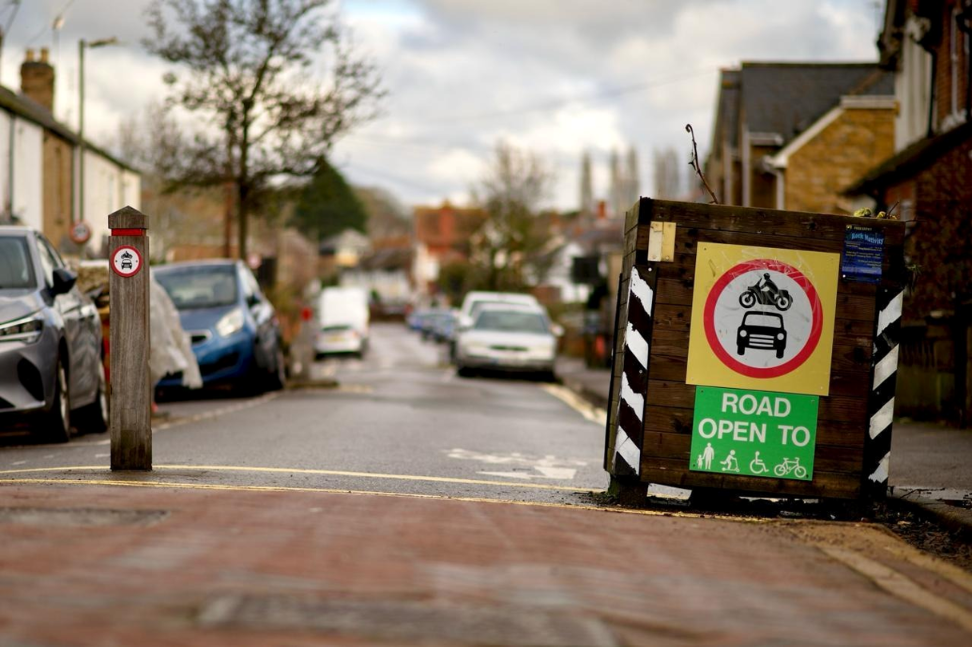
These plans refer to the southern half of Muller Road, the first phase on the northern half (pictured in the photo illustrating this article) seeing a 24-hour bus lane installed and bollards added to limit through-traffic on certain roads. If followed through, the new proposals for the southern half would see bus lanes in operation from 6am to 6pm throughout the week and Saturday.

Last year, the Bristol Cycling Campaign raised safety concerns after a diversion route was proposed, using the “unsafe” Muller Road, while a cycle route was closed for construction works on a new railway station. Following pressure, Bristol mayor Marvin Rees agreed to reassess the “risky” diversion.









9 thoughts on ““A cycle-hostile road for only the brave”: Cycling campaign slams council plan to introduce bus lanes instead of bike lanes, rubbishes “factually misleading” claim new proposal will still encourage cyclists”
Whoever at the council thinks
Whoever at the council thinks a bus lane will encourage active travel has clearly never ridden a bike in a bus lane…
(Ah, the joys of being tailgated by a double decker bus)
Bus lanes are a double – or
Bus lanes are a double – or even triple bonus for councils!
They get to score for both public transport and active travel (and even if they didn’t we’ve seen some “bending the definitions” which may allow monies to be used from AT pots. Sometimes so far that buses are declared “sustainable transport”)
But … they don’t actually (usually) do any physical barriers. And obviously taxis get to use the bus lanes. Then you’ve got flexibility to make them wink in and out of existence so suddenly everyone can drive in them. And in Edinburgh lots come with car parking spaces marked in them (they don’t exist 24×7).
So points to take to each “community” plus you can give something to “hard working motorists”. Bingo!
(Buses and cycles *really* don’t mix well. However given it’s often so bad in the rest of the traffic – and there may be few buses – some hardy UK cyclists are fans. )
brooksby wrote:
Bus up your back end making you very nervous, or a bus in front you can’t around so you’re inhaling clouds of diesel smoke.
Sometimes both.
Not a sandwich I care to be a part of.
You left out buses overtaking
You left out buses overtaking you and squeezing you against the kerb.
… and then, having
… and then, having extricated yourself, when you try to go out round the bus to overtake it * the driver pulls out on you.
Edinburgh fixed that though, with quantum-leap bike lane infra. First you’re definitely on the inside of the line, then suddenly you’re on the outside of the bus! Or just riding into its right side?
* Obviously having checked so you’re not going to another driver to change velocity – or risk them not seeing you.
Quantum leaping is not
Quantum leaping is not limited to bus stops – also comes in handy for other obstructions.
Anyway a bit OT, back to rubbish bus lanes which are rubbish bike lanes, rather than rubbish bike lanes which occasionally turn into bus stops.
I remember Hull were bus
I remember Hull were bus lanes were the only ‘bike’ lanes too. For brief moments traffic melted away. These still remain and other roads had cycle lanes added in the usual haphazard, not linked way. The council allowed motorbikes to use these lanes because ‘they are bikes’ despite what the highway code suggests.
Yip, a bus lane may make it
Yip, a bus lane may make it slightly better for the existing ” brave and bold cyclist” (I quite liked ones in Dublin and Edinburgh when I was young) but it’ll do feic all to encourage those who are not :-/
Although Muller Rd isn’t
Although Muller Rd isn’t great to cycle on (the north end, anyhow), it’s certainly not the worst. I’m definitely in the “brave and bold cyclist” at least in terms of navigating traffic and I usually choose Muller Rd if I’m going up towards Sadley Broke and to be fair, the A38 Gloucester Rd is probably worse.