


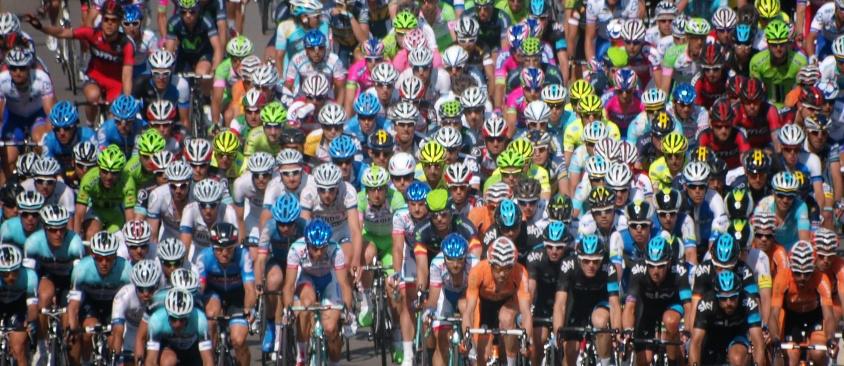

Cycling’s global governing body, the UCI, and Amaury Sport Organisation (ASO), owner of races including the Tour de France, have buried the hatchet over reform of the WorldTour calendar.
Last December, ASO threatened to pull the Tour, and other races such as Paris-Nice from cycling’s top flight, saying instead that it would apply for second-tier hors catégorie status.
But following a meeting in Geneva this week of the Professional Cycling Council (PCC), both organisations as well as other stakeholders in the sport reached agreement on next year’s calendar.
It will feature all existing WorldTour races, including those organised by ASO, which besides the Tour de France include the Vuelta a Espana and Paris-Roubaix.
Races will be given three-year licences, while UCI WorldTeams – those in the top tier of the sport – will have two-year licences for 2017 and 2018, with the number of teams reducing to 16 in the latter year.
2018 will also see a form of promotion and relegation between the lowest ranked team in the WorldTour and the top-ranked Professional Continental team, based on their respective performances.
Brian Cookson, UCI president, commented: “This marks another important step in the reform of men’s professional cycling, and I am very pleased that we now have our stakeholders behind what represents the future of our sport.
“I am delighted that we can build on the heritage and prestige of the UCI WorldTour, while also welcoming newer but already successful events taking place in and outside Europe. We are committed to continuing the consultation with all stakeholders on various details of the reform.”
PCC president David Lappartient said: “I am very pleased that the proposed reform has reached a large consensus.
“Our stakeholders have agreed on a vision that will reinforce the globalisation of cycling, ensure stability for teams and organisers, while preserving the principles of an open system that will allow access to UCI WorldTour level based on sporting results.
“It is a great step in making cycling a more attractive and global sport, while respecting its roots and history.”








4 thoughts on “UCI and ASO mend fences as 2017 WorldTour calendar agreed”
Perhaps ASO are getting back
Perhaps ASO are getting back into the UCI tent now because they are hoping that Brian Cookson will eventually be denied a working visa, leaving the way clear for someone from the Amaury family to take over.
handlebarcam wrote:
You are aware that he works in Switzerland, which is not part of the EU?
txortena wrote:
Perhaps ASO are getting back into the UCI tent now because they are hoping that Brian Cookson will eventually be denied a working visa
— txortena You are aware that he works in Switzerland, which is not part of the EU?— handlebarcam
Congratulations for demonstrating precisely the sort of ill-informed thinking that has made this referendum a catastrophic mistake from start to finish, sadly due to decades of ineffectual education. Go away and read up on what the EFTA and the EEA are, how they relate to free movement of labour in Switzerland, and which the UK is only a member of through its membership of the EU.
Of course, I was only joking about Brian Cookson. In the worse case scenario the UCI would be able to arrange for its president to get a work visa from the Swiss authorities. Other existing British workers and residents might be OK too, for the most part, if the right-wing wackos who will soon be in charge of the UK government manage not to be complete assholes to Swiss and EU citizens here. The not-so-funny side is that any young British person thinking of applying now for a new job as a lowly secretary or sysadmin, at UCI head office or any other organisation based on the mainland of Europe, is probably shit-out-of-luck, at least until the current period of uncertainty is resolved, maybe forever. But nobody seems to give two shits about such people, they’re too busy either crying or gloating about Cameron having to retire early to spend more time with his cock in a pig’s mouth.
did the propsed 8 man team
did the propsed 8 man team for grand tours survive the selection? (hoping not)