


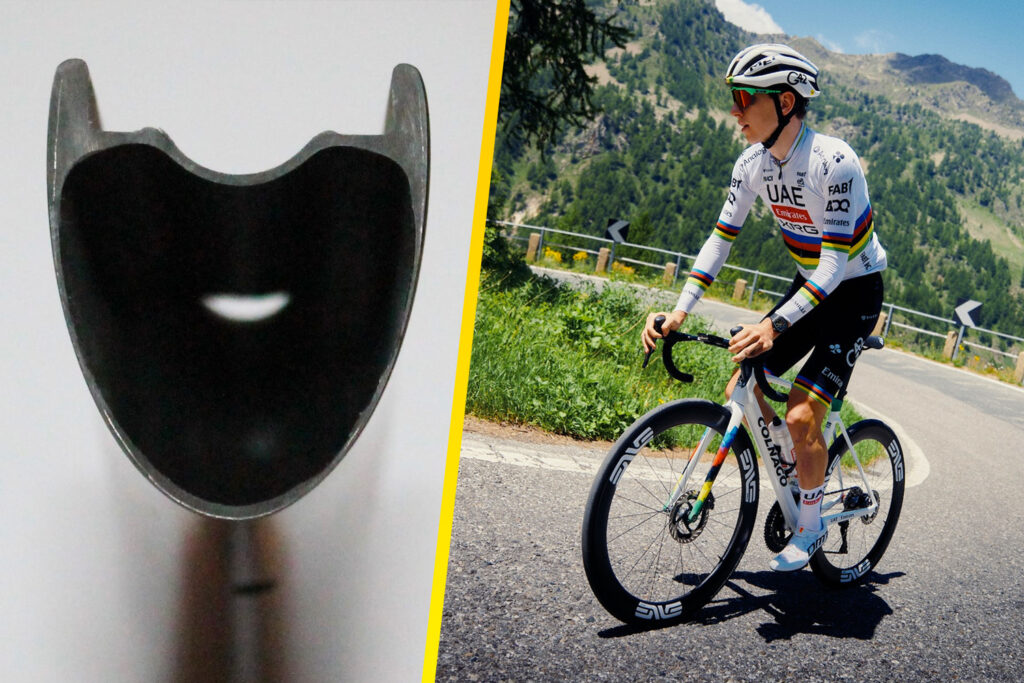

Despite dividing opinions in road cycling, hookless rims appear on many bikes in this year’s Tour de France – but they’re far from being the dominant trend in the pro peloton, with hooked rims still a far more common sight. Why is that? And where do we go from here?
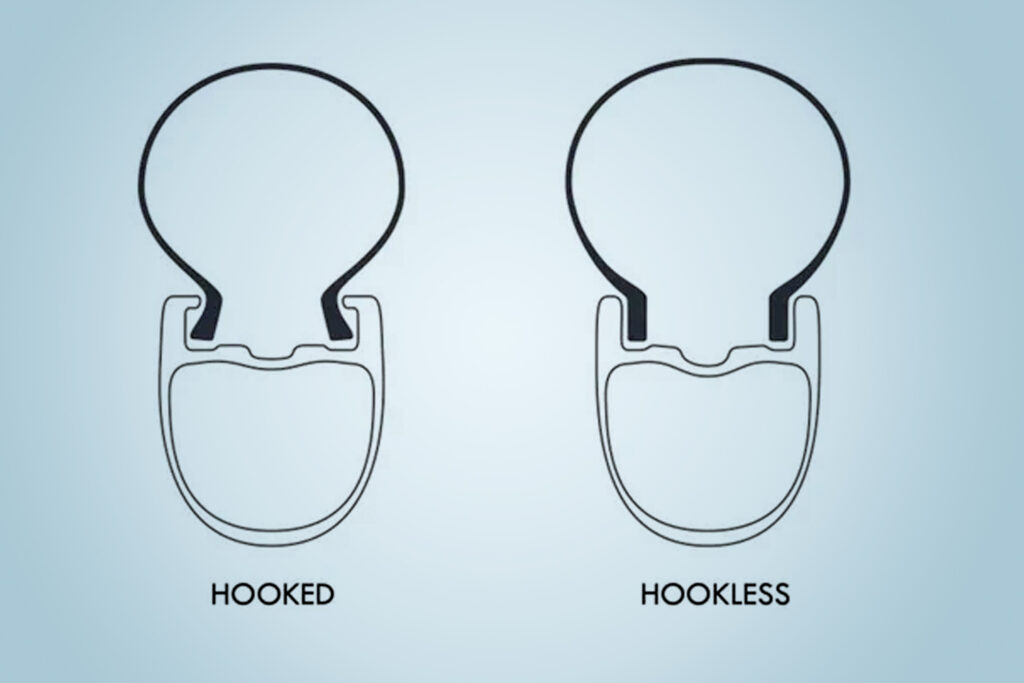
While hookless wheels – with a straight vertical edge that removes the rims’ bead hooks – are said to offer advantages in terms of weight savings and simpler manufacturing, concerns relating to safety and regulatory discrepancies continue to fuel debate about their use. Cadex released a statement earlier in the year, for example, saying that a tyre separating from the rim in the Omloop Het Nieuwsblad race wasn’t caused by the hookless design, and Zipp has reaffirmed the safety of its hookless rims in the past after race incidents.
We’ve taken a look at why the pro wheel manufacturers sponsoring pro teams use – or don’t use – this technology, and what it might mean for the future of racing and bike wheel safety.
Who’s riding hookless rims at the 2026 Tour de France?
Let’s start by looking at which men’s pro teams are riding on hookless wheels this year. Out of the 18 WorldTour pro men’s teams, only four are riding on hookless rims, while the rest of the peloton relies on the more traditional, hooked design:
- Team Jayco–AlUla: Cadex
- Movistar: Zipp
- NSN Cycling Team: Zipp
- UAE Team Emirates-XRG: Enve
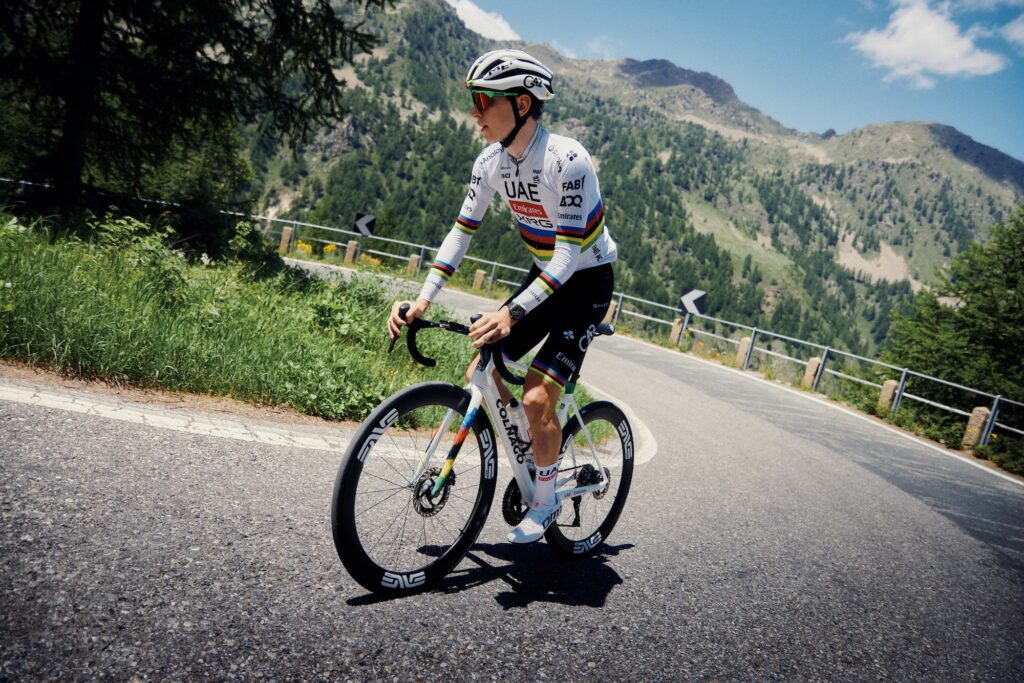
That said, although Enve has been producing hookless designs, the SES 4.5 Pro wheelset (above) – introduced last year and used by UAE Team Emirates – features a “micro-hook”. Enve says this allows it to save weight by removing material below the hook while improving impact performance and resistance to pinch flats.
Reserve is a bit of an in-betweener too, using a semi-hooked (or mini-hook) design rather than a fully hookless or fully traditional hooked rim for its road wheels.
It says on its website: “Currently, the limiting factor for hookless rims is tyre compatibility and a limit on tyre pressure. Full hooked rims on the other hand are typically heavier and harder to install tubeless tyres. Reserve road rims as a result are semi-hooked, which means there are reasonable limits on tyre pressure, no tyre incompatibility issues and tyres are easy to install.”
Reserve is getting ahead of us in referring to both the pros and cons of hookless wheels, but let’s first see how the other brands reason their rim design decisions.
Zipp and ‘hookless-gate’

A couple of years ago, there were some well-documented incidents involving Lotto Dstny and Movistar riders with Zipp’s hookless rims.
Perhaps undeservedly, Zipp ended up being a wheel brand in the eye of the hookless storm, following a Thomas De Gendt crash. We spoke with Zipp’s product engineers to ask them if hookless rims are here to stay – despite the negative press – and whether consumers should worry about compatibility issues following issues in the pro peloton. The overarching message was that there is no reason to worry.
“We have four years of history of riders using 28mm road bike tyres on our 25mm internal rims. While we see some tyre fitment issues there, it’s not a large number at all. And so we feel that if you’re using 28 on a 25 successfully, feel free to continue to use that,” Zipp said.
The compatibility conundrum
Much of the conversation following De Gendt’s tyre coming off at the UAE Tour in 2024 was about the ETRTO (European Tyre and Rim Technical Organisation) and ISO (International Organization for Standardization) standards. The newest standards state that a 28mm tyre is not compatible with a 25mm internal rim width (whether it is hookless or hooked) in UCI-sanctioned races. A 29/30mm tyre, however, is compatible with a 25mm internal rim width.

When it comes to tyre widths, though, it’s not quite as simple as looking at the sidewall of the tyre. A 28mm tyre will measure differently according to whether you’re using it on a 19mm internal width rim, for example, or on a 25mm wide rim. And though the pros are increasingly using wider tyres, they might not all still be wide enough on certain rims.
> Why wider tyres on road bikes are here to stay
ETRTO requires that 28mm (stated) tyres should measure 28mm on a 19mm internal rim width, and 30mm (stated) tyres should measure 30mm on a 21mm internal rim width. If you take these requirements to real life, you will find that the casing width on a 28mm tyre can be close to, if not identical to, a 30mm tyre of the same make/model. This begs the question: why is one safe and the other not?
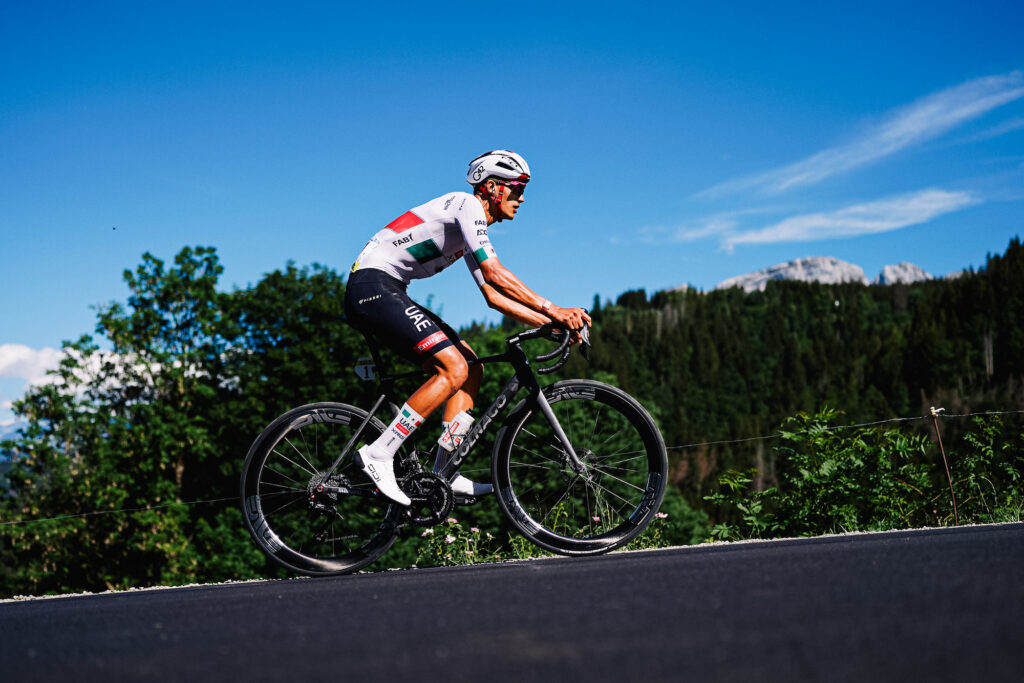
Following De Gendt’s controversial crash in 2024, the UCI released the following statement:
“In the short term, the UCI reminds teams and riders of the requirement set out in article 1.3.018 of the UCI Regulations, which imposes compliance with International Organisation for Standardisation (ISO) standards 5775-2:2021 and 5775-1:2023 in cycling competitions. These standards provide a framework for the compatibility of tyre and rim widths on bicycles. The UCI notes that the norms defined in these ISO standards have not always been respected and does not rule out the possibility that this may have been a contributing factor in some of the incidents encountered.”

If you think that all this sounds like a lot of jargon, the UCI admitted that there was room for improvement in forming a more cohesive rim and tyre compatibility standard:
“The UCI also recognises that compliance with the ISO standards by teams and riders is made more difficult by the fact that manufacturers base their recommendations for compatibility between tyres and rims on the recommendations provided by the European Tyre and Rim Technical Organisation (ETRTO), which have not always been aligned with ISO standards.”
The changing regulations and recommendations, and perhaps also a lack of communication about those to the teams, might be one of the reasons why most teams have decided to steer away from hookless wheels.
As you might have gathered, the standardisation of tyres and rims can seem convoluted… and that’s because it is. Though tyre manufacturers have to comply with regulations, those don’t include ensuring compatibility with all wheels. This means that a certified, approved tubeless tyre might not be safe with all hookless rims. This has then led brands to create compatibility charts on their websites, detailing which tyres they have found safe on their rims.
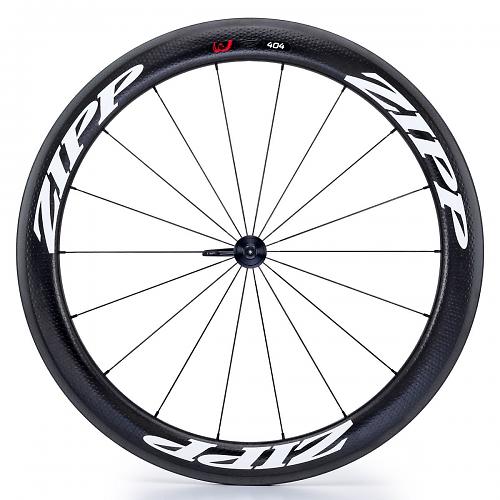
Zipp for example, still listed plenty of 28mm tyres – even 25mm – to be compatible with its 25mm hookless rims when we spoke to them in 2024. At the time, the brand said it would not alter its recommendations: “We want to make sure everything is correctly placed before we make a change or if we make a change,” Zipp said.
Since then, Zipp has made changes to its compatibility chart and effectively ruled out compatibility of 25mm internal width wheelsets with anything narrower than a 29mm tyre.
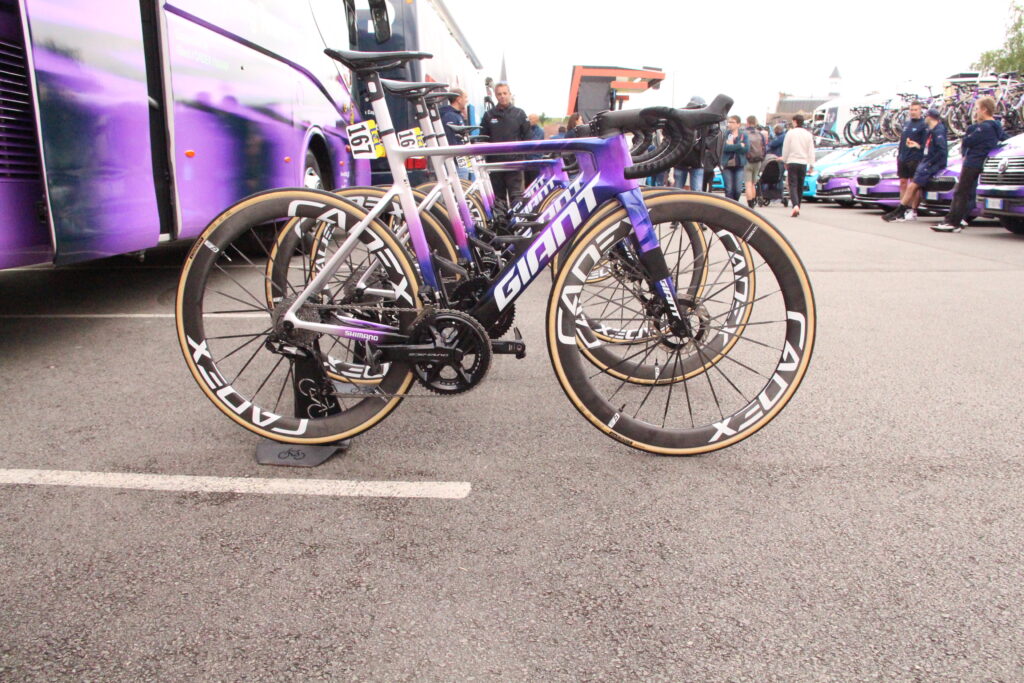
Similarly, Giant-owned Cadex has a compatibility chart based on in-house testing that rules out using Continental GP5000 TL in 25, 28, 30 and 32mm widths. It also says that the Vittoria Corsa TLR is incompatible in 25 and 28mm widths, although the Corsa Pro and Corsa Pro Control in 28-32mm widths are approved.
Unsurprisingly, the Giant-equipped Team Jayco–AlUla relies heavily on Cadex in all of its finishing kit, including tyres, to ensure full compatibility.
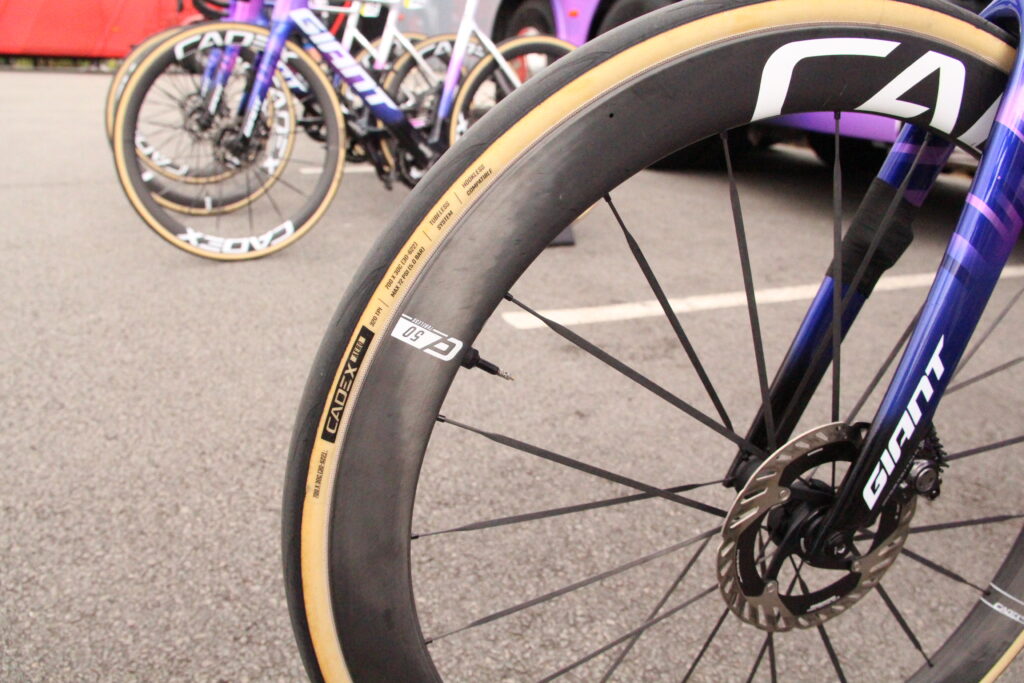
While it’s good that brands show the compatibility charts, it’s sometimes hard for a consumer to be sure that their tyres will be okay on hookless rims. You can’t simply buy a set of hookless wheels and be certain that whatever tubeless tyres you have kicking around will work.
And that, perhaps, is the reason why so many pro teams rely on hooked rims. Even if marginal gains matter, perhaps the risks of mechanical failures are deemed too high.
How did hookless rims become a thing?
Traditional hooked rims have long been a staple in cycling, featuring a small lip on the inner edge of the rim that secures the tyre bead in place. This design maintains tyre security at high pressures. However, the late 2000s and early 2010s saw the emergence of hookless rims.
> Have we witnessed the death of tubular tyres?
Similar to tubeless tyres, the hookless rim is a relatively new technology in the cycling world that has trickled into road cycling from mountain biking.
The concept is simple enough: without hooks, the rim design can be a touch lighter and more durable. Some manufacturers have suggested that a seamless tyre-to-rim transition also reduces drag.

“TSS [Tubeless Straight Side] rim designs… provide a cleaner aero transition between rim and tyre, improvements in rolling efficiency and handling, and a more effective use of carbon material to achieve lighter and stronger rims,” says Zipp.
Not everyone agrees on the aero point, though. Last year, Silca CEO Josh Poertner said, “There’s no increased aero benefit to hookless rims [as] has been postulated and theorised by brands making hookless rims. It’s just not true. It does not pan out in the real world. We’ve never once seen it to be true in an actual wind tunnel doing actual testing. I hate to say that, but that’s just the truth. In a lot of cases, actually, there’s probably an aero detriment, because it makes the tyre measure a little bit wider than it otherwise would.”

Hookless rims were initially embraced by mountain bikers. This adoption was partly due to the potential advantages hookless designs offered: a reduction in weight, a simplified manufacturing process, perceived aerodynamic benefits, and improved impact resistance.
Mountain biking, and later gravel cycling, with their lower pressures and wider tyres, were excellent for proving that this new tech could offer an advantage. The chunkier tyres and lower pressures helped alleviate concerns about tyre blow-offs, that are certainly more plausible in road cycling scenarios.
The advantages of hookless rims
One of the primary advantages of hookless rims is the potential for weight reduction. By eliminating the hook, manufacturers can produce slightly lighter rims, contributing to the overall reduction in bike weight. It’s marginal, of course, but races such as the Tour de France are all about marginal gains, and there every gram counts.
Hookless rims also offer manufacturing simplification. Without the need for the hooked lip, the production process can be more straightforward, which can lead to reduced costs and production times.
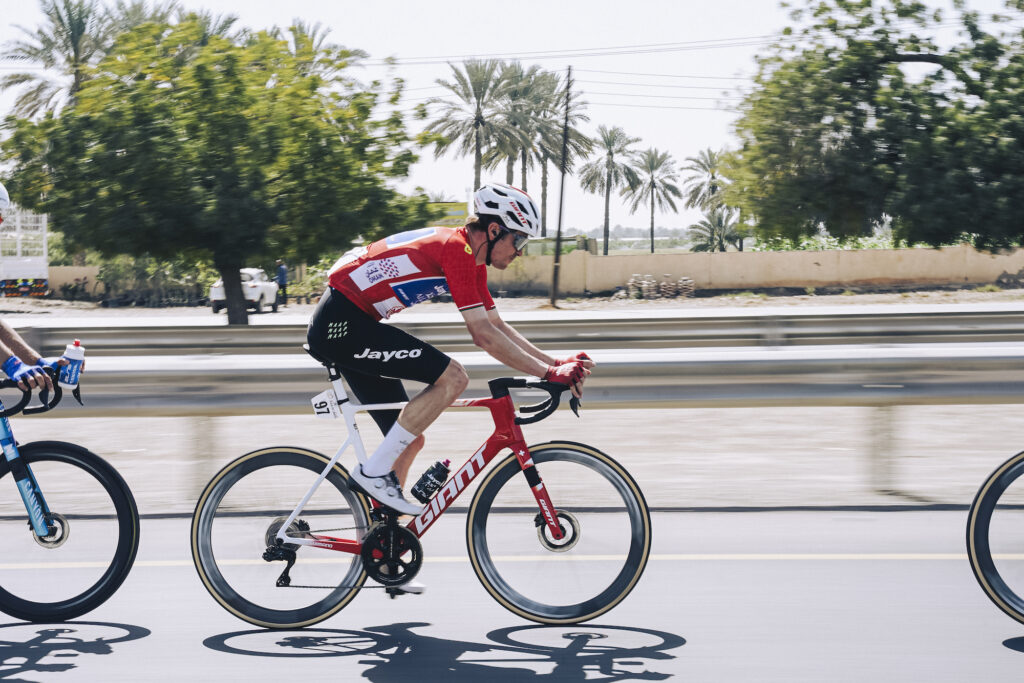
Additionally, some hookless rim designs claim aerodynamic benefits.
Hunt says, “Our work in the wind tunnel and using CFD software has indicated to us that a hookless bead may achieve a slightly more aerodynamic shape because of the way the tyre interacts with the rim.”
However, as we’ve seen above, the aero advantage is disputed.
This might not be a particular advantage to road cyclists, but added resistance to damage is another benefit of hookless rims. Because they lack the delicate hook edge, which can be broken, they can be more appealing for disciplines like mountain biking and gravel cycling, where rough terrain and impacts are common.
The cons of hookless rims
Despite all those benefits, hookless rims don’t come without their challenges. Without the hook on the rim to keep the tyre in place, ensuring the tyre fit and safety has been a critical issue for hookless rims.
Achieving reliable and safe tyre seating requires precise tolerances and compatibility between rim and tyre designs. This has necessitated the development of new standards and testing protocols to ensure safety and reliability, but there is still no unified, universal compatibility between all tubeless tyres and hookless rims.
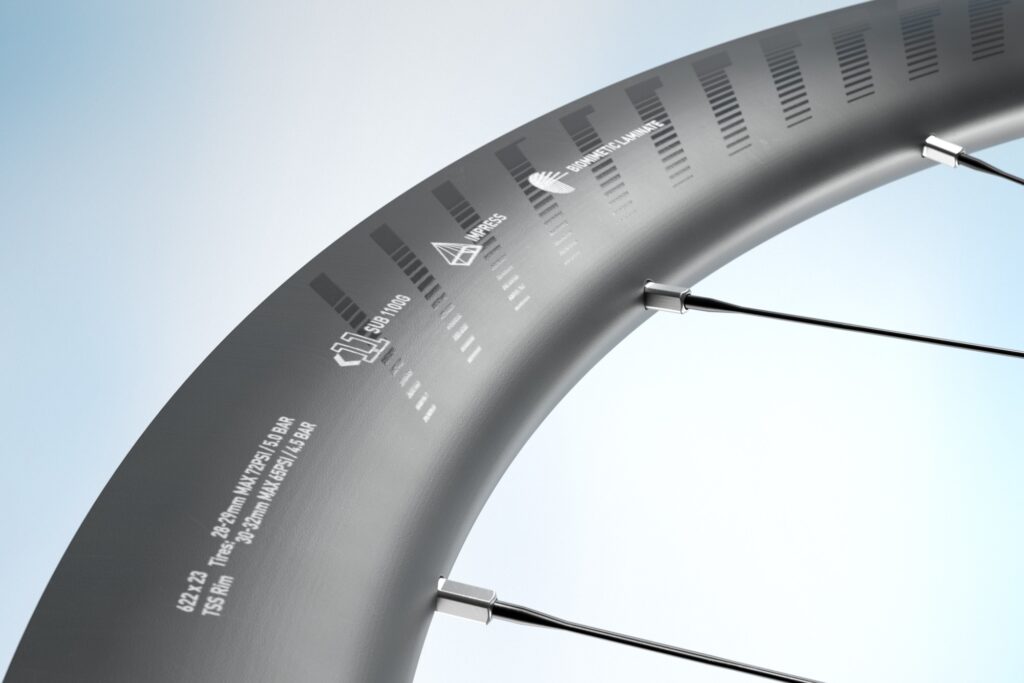
Couldn’t you just use tubes? Well, yes. Hookless rims require tubeless tyres and their maximum recommended pressure is 72.5psi (5.0 bar). This means you’ll want to run a tubeless setup. Tubeless tyres are a necessity for hookless rims because they have a stiffer bead, which allows them to stay on the rim even at these lower pressures – and though nothing stops you from putting a tube in, it’s diminishing some of the benefits of the setup.
Dov Tate, the founder of Parcours Wheels, told us: “One point that’s often overlooked is that imposing a blanket 72psi pressure limit is a limitation for heavier or more powerful riders who would naturally ride a higher pressure. It forces them to ride a wider tyre to maintain this pressure, which can reduce aero performance on a given rim.”
Why isn’t everyone using and making hookless wheels?
Although the benefits of hookless rims have been clearly set out by their supporters over the past few years, there are multiple reasons why certain wheel manufacturers won’t make hookless road bike wheels at all. Roval makes hookless mountain bike wheels, but it took a strong stance on the matter when it released its Rapide CLX II Team road wheels a couple of years ago, which continued to feature a hooked bead:

“We know that hookless wheels can’t perform under our demanding high-pressure testing standards, and any carbon wheel can crack under intense impact, but that’s no excuse for a tyre to blow off.”
Roval supplies wheels to the Red Bull-Bora-Hansgrohe and Soudal Quick-Step UCI WorldTeams (men’s teams), and as far as the above statement goes, it was a pretty obvious dig at Zipp, a brand that continues to say hookless wheels are perfectly safe.
The main reasons for wheel brands to steer away from hookless road rims are compatibility and safety issues. Although Parcours makes hookless gravel wheels, Dov Tate says it isn’t making hookless road wheels because there are no undeniable benefits for riders.
“As a wheel manufacturer, we only introduce a new technology when we can quantify a benefit for our riders”, he says.
“As far as I’m aware, we’re the only manufacturer to have openly published test data showing a back-to-back comparison of otherwise-identical hooked vs. hookless rims (where other brands have claimed a performance advantage, there have been other changes between models, eg rim depth or profile). For our test, we weren’t able to see any discernible performance benefit.”
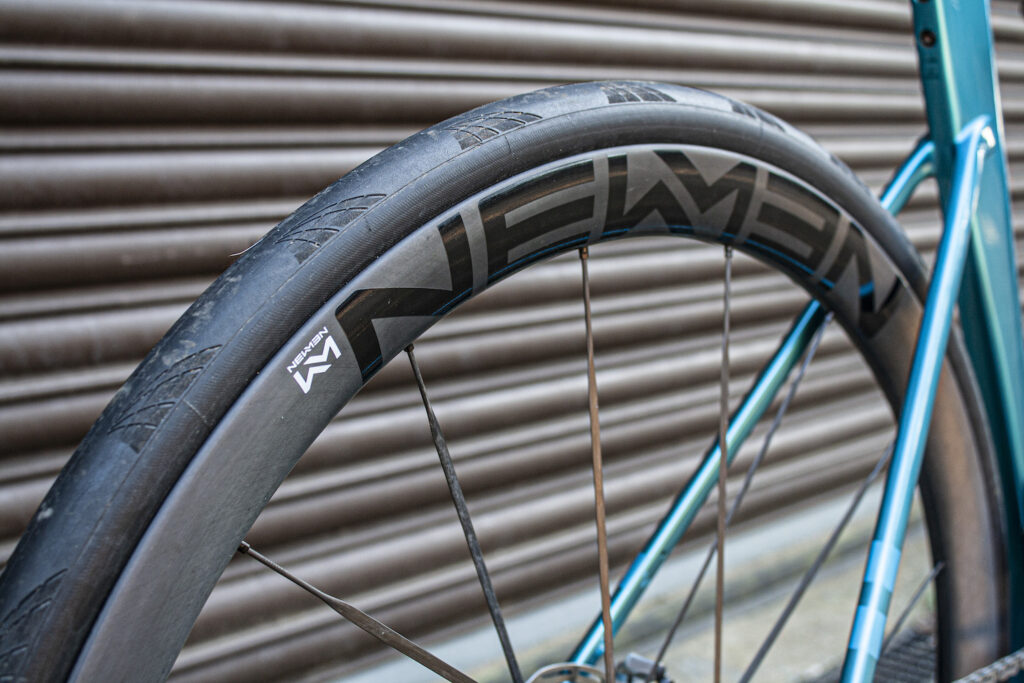
Quite a few brands think differently, though. German brand Newmen, which provides wheels for TotalEnergies, says: “Hookless rims don’t only have a lot of advantages for cars and motorcycles but also for bicycles: The rim flanges can be designed with less material and therefore less weight and increased durability.
“With tubeless easy/tubeless-ready tyres, the tyre bead stretches so little under normal tyre pressure that the tyre is safely secured on the rim even without a hook. So if you want to be extra safe, we recommend using tubeless ready/tubeless easy tyres.
“The diameter of our rims is at the upper limit of the ETRTO standard. This ensures a secure and safe connection between tyre and rim. All current rims went through our extensive in-house burst pressure testing. In combination with the maximum pressures in this table, a tubeless tyre blowing off one of our rims is close to impossible.”
Yet, although it offers hookless gravel wheels, none of Newmen’s road bike wheels are hookless due to real-world safety issues and a lack of aerodynamic benefits at road tyre pressures.
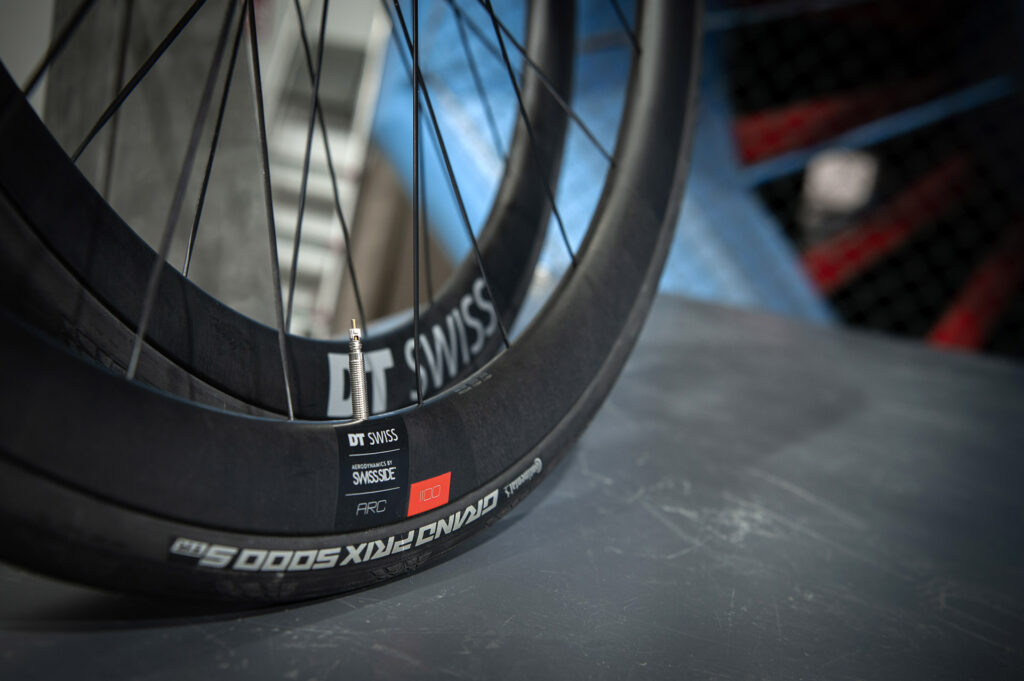
DT Swiss reserves hookless rims for mountain bikes, where tyre volumes are high and pressures relatively low; all of its road wheels are now constructed with hooks. Fulcrum also makes hookless mountain bike wheels (such as the Red Zone Carbon), but it sticks with hooked for the road.
It says, “We have chosen this option for two reasons. First of all we want to guarantee the utmost compatibility between our wheels and the tyres available… The second, and even more significant reason, is safety. Hookless rims are safe only within a specific pressure range. Many users are still unaware of this pressure range and tend to over-inflate their tyres. Hooked rims guarantee the maximum level of safety even if the inflation pressure is exceeded.
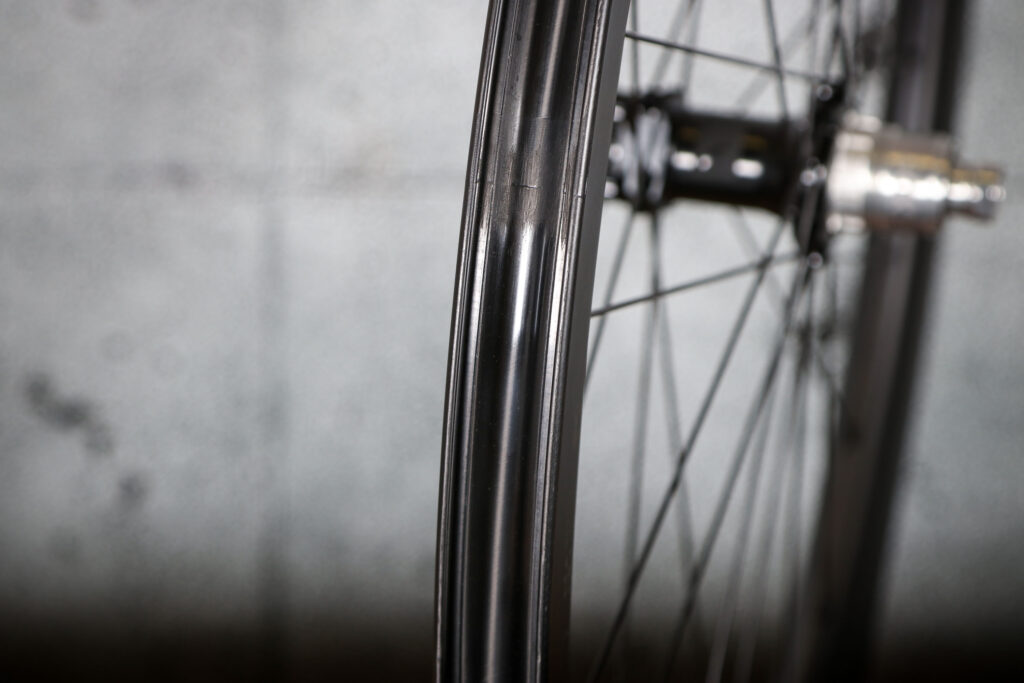
“Moreover we have tested the thesis that hookless rims provide higher performance levels because they provide a cleaner transition between rim and tyre and therefore ensure a better contact patch and improved aerodynamics. Our tests have revealed that, with the same-sized rim channel and tyre, the change in the profile of the tyre is so insignificant that it has no effect on aerodynamics, rolling resistance, reactivity and comfort.”
What do you think, have hookless rims had their day, or are they here to stay? Let us know your thoughts in the comments.









9 thoughts on “Hooked vs hookless wheels at the Tour de France — which rims are the pro peloton hooked on in 2026?”
“ETRTO requires that 28mm (stated) tyres should measure 28mm on a 19mm internal rim width, and 30mm (stated) tyres should measure 30mm on a 21mm internal rim width. If you take these requirements to real life, you will find that the casing width on a 28mm tyre can be close to, if not identical to, a 30mm tyre of the same make/model.”
This sounds like BS to me. The thickest part of the tyre is not at the bead, but more than halfway up the side of the tyre. Moving the bead 2 mm (or, 1 mm each side) should move the thickest part of the tyre less than 1 mm (0.5 mm each side). So a 30mm tyre would be at least 1mm wider before installation than a 28mm tire, probably more.
Just checked Continentals own data here: https://www.continental-tires.com/tire-knowledge/tire-rim-combinations-etrto-standards/#text-f52364d480)
As expected, a 28mm tire only becomes 28.8mm wide on a 21mm rim.
@Losd It’s definitely not BS – there are a lot of real-world measured examples where it has been shown to be true. Especially if you compare different makes/models – for the same model line, the size up does tend to be measurably bigger, but some brands/model lines run big, and others run small.
Hunt have measured some tyre/wheel combinations and we can see examples of a “28mm” tyre measuring as wide, or wider, than the same tyre in “30mm” e.g. Schwalbe Pro One on the 48 Limitless Aero Disc: https://help.huntbikewheels.com/en/support/solutions/articles/43000490174-how-wide-are-my-tyres-including-fitted-tyre-width-guide-
Bicycle Rolling Resistance (https://www.bicyclerollingresistance.com/) provides measured widths for all the tyres they test. On their standard 18mm rim, the GP5000 S TR 28mm comes out at 29mm. The Conti Aero 111 29mm comes out at 28mm. So the “29mm” tyre is narrower than the “28mm” tyre (albeit different model lines, but still the same brand). The GP5000 S TR 30mm comes out at 30mm. But then the GP5000 S TR 32mm also comes out at 30mm (on a slightly narrower rim and lower pressure, due to BRR classifying anything above 30mm as a CX/gravel tyre).
@Losd I use 25mm Continental 5000 S TR or TT TR tires on my Zipp 454NSW wheels. They measure 28.1mm at 55psi (I weight 82kg). So, actually slightly wider than the rim at 27.5mm.
I’m aware of the 105% rule that the tire should be narrower than the rim … but, 25mm tires are not even approved for this wheel and the approved 28mm tires would measure ~31mm which is then over 3mm wider than the rim. Anyway, this ‘rule’ is just a consideration.
I have tried and do not like the feel of 28mm tires in corners or braking. I tried playing with pressures with 28mm tires and ended up also at 55psi, so there is no benefit in actual contact patch size – it is just wider and shorter vs 25mm.
@Motivated There’s two things here: The 105% rule does not consider safety at all, and the external width of the rim does not directly correlate with the internal width. And I guess a hooked rim would be wider externally compared to internally, at least for the same material (a hooked alu rim would probably be narrower, since it’s easier to stamp out the hook), which would then be another data point in the hooked/hookless discussions.
I’ll never go back below 30mm, but I’m a bit of a chubby fellow (100+ kg), and the roads here aren’t exactly smooth.
@Losd fully agree … I’m tallish and riding a round-tubed bike, so not very aero and the 105% rule is just interesting, not guiding my decision for 25mm tires. My tires are not approved for my wheels, but with my tire pressures, I’m convinced it’s safe.
@Motivated That seems like a really low pressure. Are they the latest gen or at least the modernish ones with 23.5mm internal?
I’m on a wider ID rim with 30mm tyres and running 65psi on the rear with a very similar weight to you. Much less than that and it starts feeling bouncy and draggy and thats with a tyre/wheel combo that should be run at lower pressures.
Silcas tyre pressure calculator suggests you should be at ~80psi and the zipp one suggests ~65psi but thats with a wider tyre as they don’t allow any tyre less than 28mm to be selected for hookless.
@mctrials23 Yes, I use brand new GP5000’s and I don’t think the 454NSW has been updated since I bought mine new in February 2023 … according to ‘InTheKnow’ site – dimensions are 23.2mm / 27.8mm. I’m very happy w/ 55psi and do quite some steep downhills here in Austria and surrounds. I do use more like 60psi for the TT tires probably due to the lighter construction. I also use a bit more pressure in front than back. The pressure calculators don’t seem to work for me, I’m not sure why. My philosophy for tire pressure comes from MTB – start at zero and pump up until the tire is stable, then stop. I have tried 65psi and that’s more prone to skidding when braking into a corner. I actually prefer 50psi, but pump to 55-60psi to cover pressure loss as always happens over a day or 2 with tubeless. I also feel that wider tires are more jouncy, that’s why I’m staying with 25mm. My roads are OK and I almost always can avoid potholes, etc, so don’t need to protect against unsighted road damage. Maybe a part of it is the very vertical sidewall with 28.1mm actual and 27.8mm rim outer width. Wider tires get more bulbous and the more air volume is just more compressible. Also the shorter contact patch makes them less able to conform to stones and cracks in the road and therefore are actually less smooth (at the same pressure). On the MTB, it’s different as the rocks and trail surface is just total chaos in all directions, so quite wide tires work there …. but then there’s the 32″ wheel that also seems to support my idea that longer contact patch has benefits.
@Motivated Hey, if it works, it works. I had a set of 303 firecrests that I ran 28s on (25mm ID hookless) and never had any issues. I personally think the issues with hookless are almost entirely in peoples heads and I wouldn’t have issues buying hookless in future. I sold them because of the junk ZR1 hubs on them, not because of hookless fears.