
On Friday evening, after 24 hours of intense speculation and dozens of misty-eyed editorials, one of the most popular professional cyclists of the past decade confirmed that he was hanging up his bike for good.
“It is with a very particular emotion that I write these few words to announce the end of my sporting career,” Julian Alaphilippe, the swashbuckling, heroic, charming two-time world champion, posted on Instagram, an underwhelming, clinically modern platform for a rider consistently heralded as a throwback to more heroic times.
“After much reflection, I had the honour of closing this chapter of my life on the Champs-Élysées, by way of Montmartre in Paris, on the final stage of the Tour de France.
“I feel enormous gratitude for having been able to work with, meet, or simply cross paths with so many wonderful people throughout my career. And a great deal of luck, too, to have made some of my dreams come true, and to have lived through emotions that will stay with me forever.
“Pride at having contributed to so many successes for all my teams. And at having been able to let you live them too. You have always supported me so much, even in the hardest moments.”
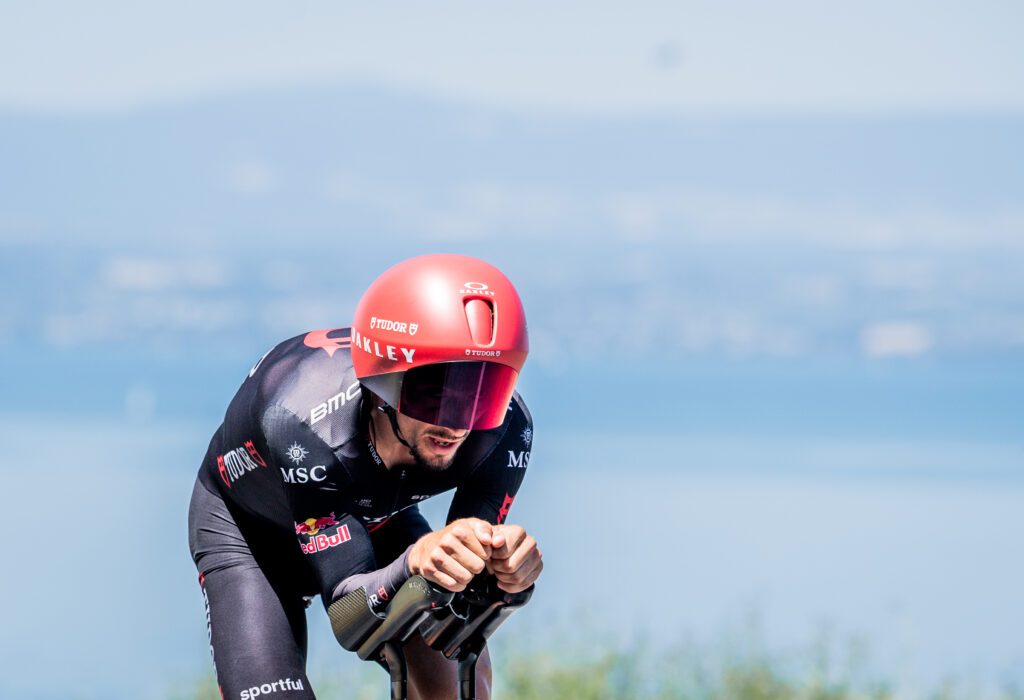
And that was that. One of the great, and most exciting, modern cycling careers was over. To be honest, it wasn’t much of a surprise. You don’t spend the final weekend of the Tour de France hugging your old sports directors and teammates at every opportunity if you aren’t planning on spending the following July in your slippers.
But still, Julian Alaphilippe has always been anything but predictable. In fact, he built a whole career on keeping us on our toes.
Over the past decade, there were countless standout moments that all contributed to the Loulou myth. His masterful attack to win the worlds in Leuven. That emotional Tour stage win in Nice. When he stupidly threw away his best chance ever to win Liège-Bastogne-Liège, or when he clipped the motorbike in Flanders. In victory or defeat, ‘Alain Philippe’ never disappointed.
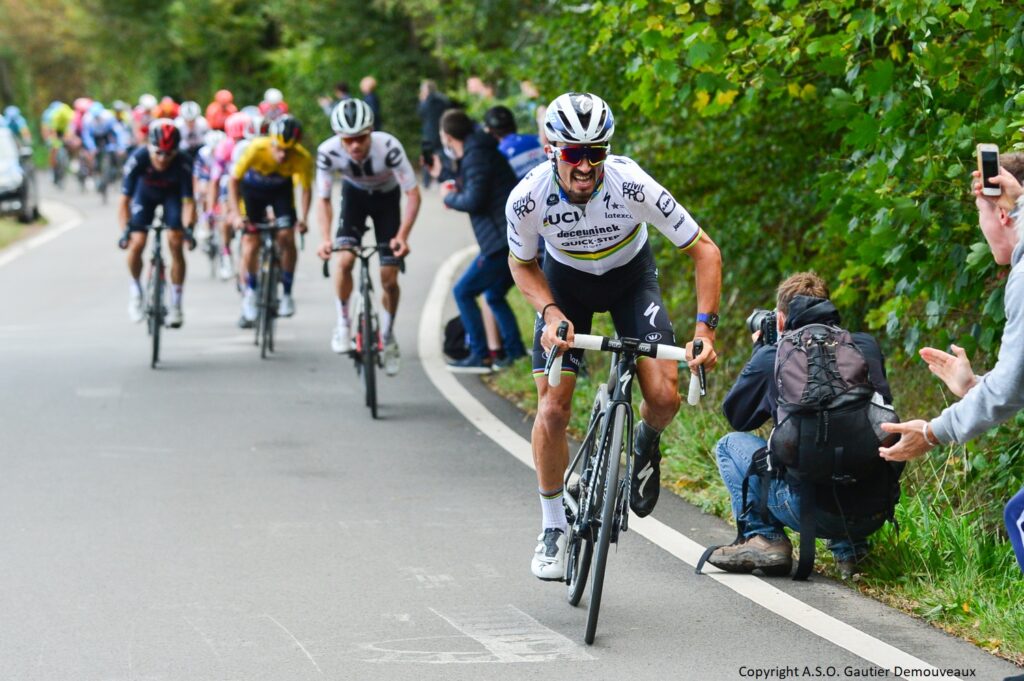
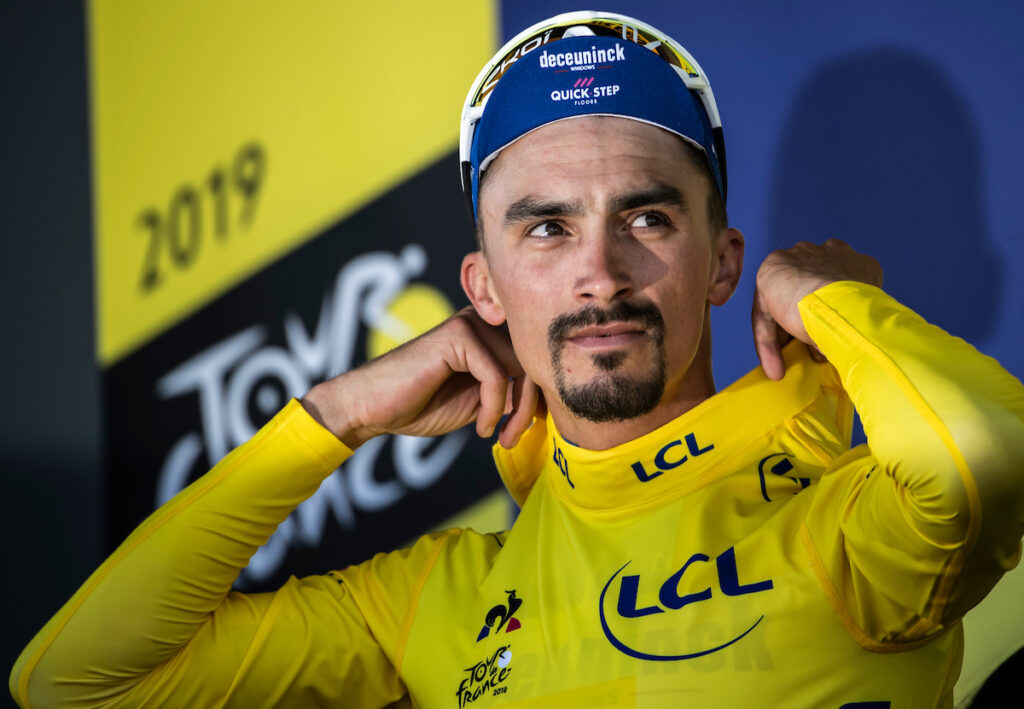
But it’s fair to say that 2019 will be remembered as the pinnacle of Julian Alaphilippe’s career. That was the year the swaggering Frenchman cemented his position as the most exciting – and arguably best – bike racer on the planet, just before the sport turned on its head.
Alaphilippe won 12 times in 2019, equalling his haul from the previous year. But the quality of those wins, and the way he influenced racing in general, was greater than ever before.
He took out big classics victories at Strade Bianche, Milan-Sanremo (incidentally, his only ever monument success), and a second consecutive win at Flèche Wallonne. The then-Quick-Step rider also won two stages at Tirreno-Adriatico, and a stage apiece at the Tour of the Basque Country and the Critérium du Dauphiné.
But it was at the Tour where his gunslinging reputation was cemented. After all, at some point during those 14 days Loulou in yellow at the 2019 race, it looked like he was actually going to win the whole damn thing. In the end, a landslide, the climbing legs of Egan Bernal, and the brutal reality of professional cycling snuffed out that dream (he ended up fifth).
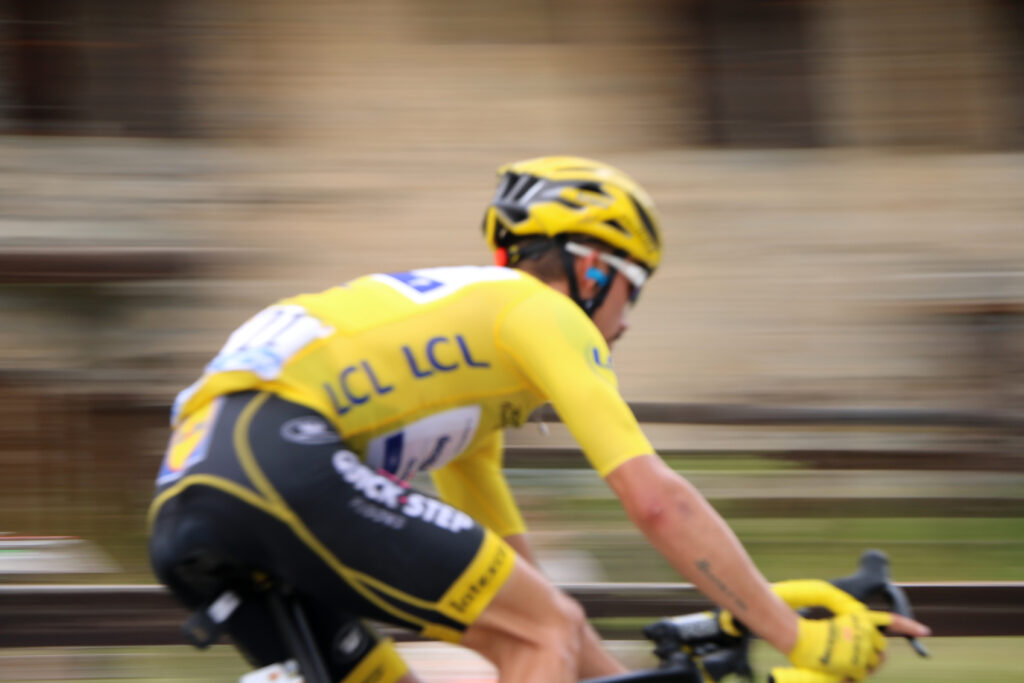
But there’s no denying he bent and shaped the 2019 Tour – unsurprisingly one of the most exciting of this century – to his will. That attack with Thibaut Pinot on the road to Saint-Étienne, when you could almost hear the entire French nation roaring them on. That stupendous, ridiculous time trial in Pau. The swaying, the gurning, the constant battle to hold on to yellow in the mountains. It was all pure drama, pure Alaphilippe.
Like Peter Sagan, Alaphilippe stood out from the 2010s crowd. His greatest successes came at the tail end of the Sky era, when conservatism and patience largely prevailed over theatrics and panache. He was a charming, goateed pyromaniac in an office of po-faced suits. An exhilarating throwback in a time of sterile modernity.
> Julian Alaphilippe: the man who made the world yearn
In many ways, Alaphilippe (and that 2019 Tour, the last notably to be won by an Ineos rider) acted as the bridge between eras, dragging cycling out from the gloom of the Froome epoch and paving the way for the all-out attacking of the Pogačar and Van der Poel generation.
Ironically, and perhaps inevitably, he was slightly left behind by that new generation and cycling’s post-Covid revolution. They had stolen his clothes and kicked him out onto the street.
He still won, and won big, at the dawn of the 2020s, but Alaphilippe soon became a bit-part player just as the style of racing shifted to his strengths. That was never more apparent than at this year’s Tour, where he was reduced, at best, to speculative early moves before being absorbed by the peloton, vanishing from trace, when the real attacks started.
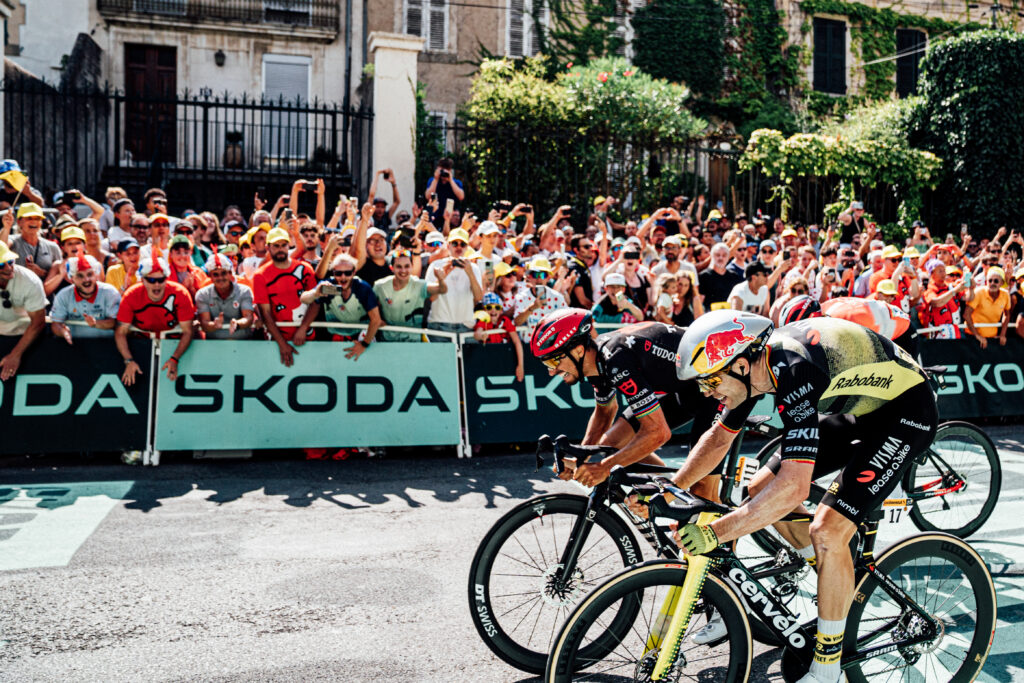
The swashbuckling romance was still there, still fighting, there was just no room for it anymore. Modern cycling, with its faster tech, better nutrition, and record-breaking climbing times, had left him behind, with the devastating impact of a classic Alpahilippe acceleration on a short, sharp hill.
If anything, the past few years proved that Julian Alaphilippe’s strength came from being different. What’s the fun in being Mr Panache if everyone’s attacking from the gun?
He was a rider born to fight against the rising tide of boredom, paint fireworks on a blank canvas. And giving us something to shout about.