


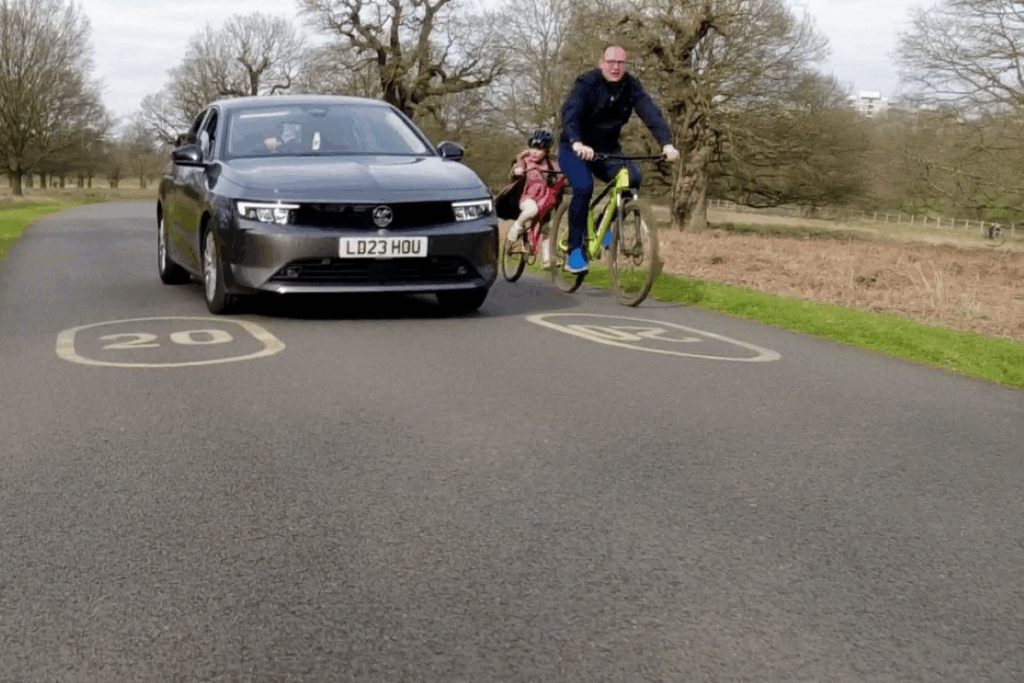

A London borough’s proposals for its long-term transport strategy have been heavily criticised by the council’s opposition for treating cycling and walking as an “afterthought”, despite strong support from residents for safe, protected cycle lanes and infrastructure.
The draft transport strategy, introduced this month by Richmond upon Thames Council, has also been panned by the borough’s Green Party for its focus on encouraging electric vehicle use as a “key strategic pillar”, which the opposition says will not address congestion or road safety.
This week, the south-west London council unveiled the key priorities that it will focus on as it develops the borough’s ‘Transport Strategy 2040’, which will be published next year and will aim to implement a “step-change in transport infrastructure and service”.
The Liberal Democrat-controlled council’s publication of its transport priorities comes after a web-based public consultation process between March and May, which saw 1,749 residents leave comments on a map of the borough, while 516 people also responded to a questionnaire.
When asked about what changes they wanted to see implemented over the next 15 years, cycling was the third most popular answer, after buses and trains. Cycling was also the topic mentioned the most when respondents were asked what they were unhappy about when it comes to the borough’s existing transport conditions.
Meanwhile, of the 414 locals who responded to the question, ‘What would make you cycle more?’, over 70 per cent highlighted the need for safe, protected cycle lanes. Over half also mentioned ‘reduced traffic’, while over 30 per cent called for increased cycle parking. Just under 30 per cent stated that ‘nothing’ would encourage them to ride a bike more often.
However, while cycling proved to be a popular topic during its public engagement exercise, it was not included as a ‘key pillar’ in the borough’s draft plans, with the council noting that it is “not possible to prioritise every issue raised during the consultation”.
Instead, the ‘key pillars’ published this month include improving public transport services, improving the “look and feel” of town centres, addressing the quality of interchange between travel modes, and ensuring that river, rail, and road crossings operate effectively.
The council also says it will work to ensure residents are “supported in transitioning to electric vehicles”, while recognising the benefits of “new and innovative means of transport”, such as improvements to communication and automation.

Cycling is mentioned, however, as part of three of the council’s key transport pillars. The first focuses on the role that “parks, open spaces, and the towpath currently play and could play in supporting walking and cycling in safe, car-free environments”.
The second involves sustained investment in roads to “ensure safety for all road users and to provide improved cycling, protected from motor traffic where possible”.
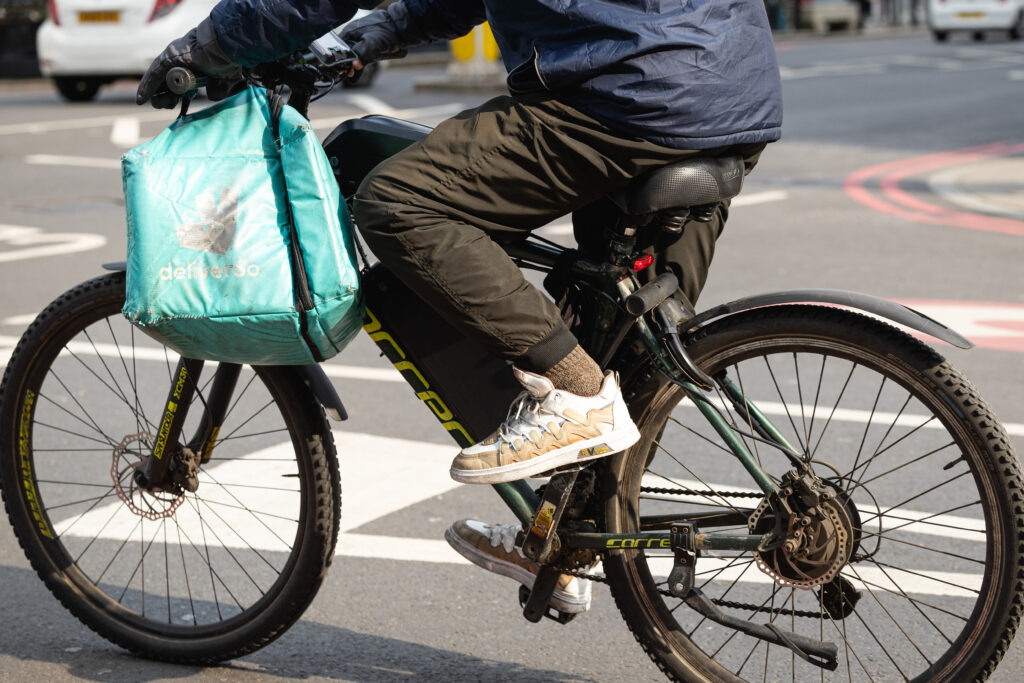
And finally, the local authority said it will support “sustainable and safer last mile deliveries, including by supporting better regulation of delivery riders, [and] support for freight consolidation and cargo bikes”.
The council also said it will prioritise funding for routes “providing most utility to pedestrians in terms of accessing town centres and transport hubs”.
In its latest update on its forthcoming transport strategy, Richmond Council acknowledges that “much of the key transport infrastructure in the borough is over 100 years old and much of it of Victorian age, which brings with it challenges of lack of capacity, resilience, accessibility and flexibility.
“A step-change in transport infrastructure and service is needed to address transport inequalities and the climate emergency, and to support thriving communities.
“Therefore, it was agreed to produce a transport strategy which would be an ambitious attempt to look further into the future than annualised programmes and budgets and beyond single administrations, to unlock big changes over time that will transform the lives of borough residents, support sustainable growth and ensure that the borough remains a great and inviting place to live, work and visit.”
> Kids threatened with fines for cycling in London park
However, despite the local authority’s stated aim to produce an “ambitious” transport strategy for the next 15 years, the plans have been criticised by Richmond’s Green Party leader Andrée Frieze, who claimed that their key, strategic pillars overlook the issues raised during the consultation and do not match residents’ priorities.
During a meeting of the council’s transport committee, Frieze, the leader of the opposition, argued that the strategy misses an opportunity to “deliver a bold vision for cycling”, Twickenham Nub News reports.
“Residents in every ward, bar one, highlighted the lack of safe cycling infrastructure. This is a borough-wide issue and it deserves a standalone pillar with clear commitments and funding,” Frieze told the meeting.
The opposition leader also questioned the practicality of relying on towpaths and parks for walking and cycling routes, arguing out such routes can become “unsafe or inaccessible” during winter or after dark.
Frieze also said walking has been treated as an “afterthought” in the strategy, criticising the lack of action on issues such as pavement parking, unsafe crossings, overhanging vehicles from driveways, and poorly placed street furniture.
“Most concerning is the near-total absence of any reference to disabled access. A truly inclusive transport strategy must prioritise accessibility for all residents, including those with mobility and sensory challenges,” she said.
Finally, the Green councillor questioned the decision to include electric vehicles as one of the strategy’s key pillars, despite them barely featuring in residents’ responses to the consultation.
“EVs are not a mode of transport, they are a type of vehicle,” she said. “They don’t address congestion, road safety, or the pedestrian experience. Their inclusion as a pillar is misplaced.”
Urging the Liberal Democrats to revise the strategy’s pillars, to make them more in line with local wishes, with the Greens sharing their own recommendations.
These include prioritising walking and accessibility, with targeted action on barriers; creating a dedicated cycling pillar with funding and clear targets; ensuring infrastructure is safe and usable at all times; and viewing EVs as part of wider car use, rather than a standalone priority.
“This Transport Strategy is described by the Lib Dem administration as a co-production with residents. Yet the pillars they have chosen ignore the overwhelming views of respondents,” Frieze said.
“I continue to push them to reassess the pillars to make them more reflective of residents’ wishes.”









11 thoughts on ““EVs don’t address congestion or road safety”: London borough criticised for prioritising electric cars and treating cycling and walking as an “afterthought” – despite widespread support for safe cycle lanes”
EV do not eliminate all
EV do not eliminate all pollutants as they still produce rubber and brake dust. Also, are not designed to save the planet (in my view) but to save the car industry.
“Emit elsewhere” innit? And
“Emit elsewhere” innit? And like digital money, electricity is a great abstraction…
TBF there can be some harm minimization (see below). Most importantly they allow governments to solve an almighty headache. That is how to do carbon emissions reduction / reduce oil dependency a bit after a century of instilling motornormativity. Plus it is essentially unheard of in human affairs that humans voluntarily use fewer resources.
So that otherwise logical route is a political (and probably human) impossibility!
They give the car industry a new product (and keep it viable if regulations do call time on ICE vehicles). They may be cheaper to run (?). They reduce some local pollution.
Aside from that, not much. They *can* allow us to leverage renewable energy, but a) plenty power is still coming from “elsewhere” b) much of the infrastucture to support renewables is dependent on fossil fuels (steels) or is carbon-emitting (concrete) or involves other dirty processes.
But conveniently that is all as far away / out of sight as the murky affairs of the oil industry back in the day!
They are not likely to lead to “use less”, they take up the same space, do as much damage in collisions and (once over about 20mph) sound as loud as the ICE ones. They may also add new parking woes – the fight for charging spaces (and people running cables from the road to their house).
chrisonabike wrote:
Never has the Jevons paradox been so relevant.
Well said Green Party leader
Well said Green Party leader Andrée Frieze. It’s hard to believe that when the residents want one thing, the Lib-Dems deliver another. As she points out, the only benefit of EVs is to reduce local pollution, but none of the other problems caused by mass car use, and they’ll make some worse, with people feeling that their car is environmentally friendly, so they’ll use it more.
One of the traps with EVs is
One of the traps with EVs is their high initial environmental cost which then needs to be justified with frequent use.
‘The second involves
‘The second involves sustained investment in roads to “ensure safety for all road users and to provide improved cycling, protected from motor traffic where possible”.
and there is your opt out; ‘where possible’ i.e. nowhere
Improved public transport/
Improved public transport/ active travel must be combined with forcing people out of motor vehicles- it is a basic weakness of democracy that is behind the reluctance of our government to initiate that ’forcing’
Considering the distance most
Considering the distance most people are travelling for the majority of their journeys, good and cheap public transport along with active travel infrastructure is the only way to do. Our towns are already overburdened with cars. We need more homes but we cannot expand the road networks in almost any sprawling towns. I live in Tunbridge Wells and it grinds to a halt as soon as any of a large number of roads have any interruptions. A badly parked car? Gridlock. Road works? Grid lock.
The solution is to make it easier not to get in your car. A huge number of people would ultimately be happier and healthier if they used active travel, they just don’t have the kick up the bum to do it or they don’t feel safe doing it. Sort that and things could change quickly.
Overall, three cheers! (And
Overall, three cheers! (And again for councils: “walking wheeling and cycling – your least shit transport choice”!)
Of course it is vastly easier to say than do. Even in the UK, despite the vast majority of the population being urban and the average journey being quite cycleable. (True even in Scotland. And still difficult here apparently when a sizeable fraction of those in Edinburgh and Glasgow don’t have access to a car…)
And of course the whatabout
And of course the whatabout is never far away (and there is truth in it). What about the countryside? (Transport there other than driving *is* a problem, we’ve *really* baked in motoring there – but again the great majority are urban).
What about the unions / private companies – if we depend more on public transport – they could hold us all to ransome? (Perhaps – but that isn’t limited to transport…)
What about our jobs – so many depend in some way on motoring or related industries (fuels, transport, construction…)? In fact – driving is intimately bound up with our current way of life…
And of course we can point to a handful of other places where they’ve begun to offer alternatives (though mass motoring still exists) and point out they haven’t fallen apart. But “that’s not *here* though”…
Just because you have an EV
Just because you have an EV car doesn’t mean you’re contributing to being green unless you have your own solar and/or wind set up. Laughable that the green party is behind this…. Took advantage of a solar installation scheme now I can charge my bike and even left an outlet so my neighbour can charge his mobility scooter