


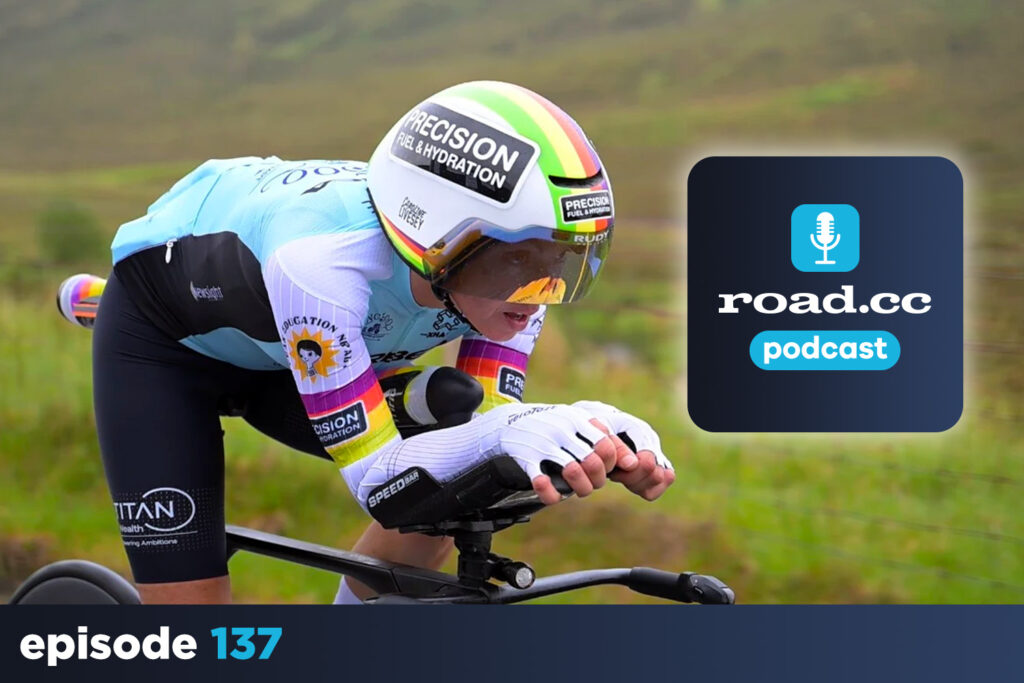

For five or so minutes, Caroline Livesey sat on a bridge, sheltered by her team’s van, staring out through the torrential, relentless Highland rain at Inverness Castle, the finish line of her North Coast 500 record attempt.
By this point, Livesey had been awake, and almost constantly riding her bike, for over 32 hours. She’d just spent the previous 15 minutes crawling through Inverness, a victim of seemingly every single red light in the Scottish city. When the rain eased slightly and she finally made it to the castle, there was no time to celebrate. Get inside, get warmed up was the message.
It may not have been the most conventional way to break one of ultra-cycling’s most prestigious records. But Caroline Livesey has never really done things the conventional way.
Listen to the road.cc Podcast on Apple Podcasts
Listen to the road.cc Podcast on Spotify
Listen to the road.cc Podcast on Amazon Music
A former Ironman competitor who’s spent the past few years racing – and winning – in the extreme triathlon and gravel scenes, the North Coast 500 was Livesey’s first real crack at a long-distance record. And she smashed it.
Setting off from Inverness Castle at 4am on Tuesday 2 June, the 46-year-old covered the 516-mile (860km) route, widely regarded as one of the most picturesque in the world, in 32 hours and 22 minutes, beating Christina Mackenzie’s previous women’s record by a staggering four hours and 17 minutes. And that was despite all those red light stoppages.
Livesey’s NC500 raid has kicked off a summer of record-hunting endeavours by female ultra-cyclists. Two weeks later, Dr Sarah Ruggins broke yet another outright endurance record by cycling from the very south of continental Europe to its northernmost point over three days quicker than the route’s previous record holder, Ian Walker, managed.
And four days after Livesey arrived back in Inverness, Lael Wilcox set off from Chicago, Illinois, with Mark Beaumont’s outright around-the-world record in her sights, an ambitious bid abruptly curtailed two weeks in by heat exhaustion in France.
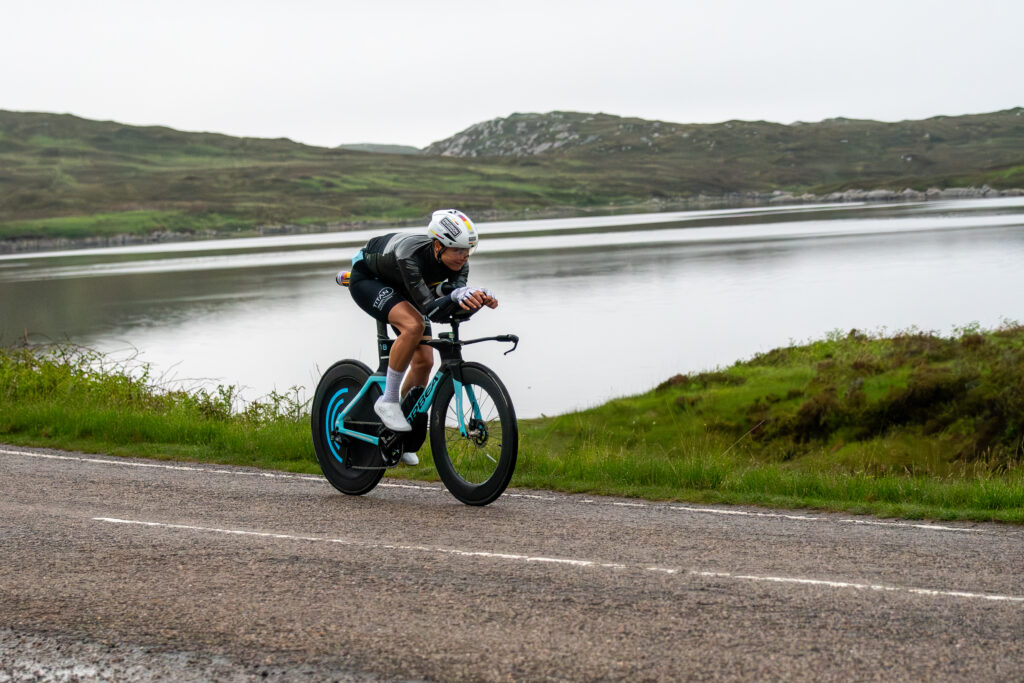
Now that she’s joined this elite club of ultra-cycling record breakers, Livesey admits that her biggest concern when preparing to tackle the iconic NC500 route wasn’t her form and fitness, or indeed the relentless up-and-down terrain and narrow lanes of the Highlands. It was the paperwork.
“I always knew physically I was capable of doing this sort of a ride,” Livesey tells the road.cc Podcast, a few weeks on from her record-breaking ride.
“I didn’t always know, of course, but I knew certainly going into it after I’d done the training rides. But my fear was always that I’d do the ride and then for whatever reason, it wasn’t ratified. Because there are so many things you have to do to meet the conditions for the world record.
“And I really wanted to be the first Guinness world record holder for the North Coast 500 because even the men haven’t got that yet.
“So I wasn’t stressing about my physical ability. I’ve done so many endurance events now, like the taper and the eating and the blah, blah, blah. All that stuff’s second nature. But this is the first time I’ve done an ultra record ride.
“And so the biggest stress I had was making sure that everything I had in my brain was all in the crew’s brains. I’ve got so much respect now for people who’ve done these record rides, because the main things that I’ve learned have been all related to what it takes to pull a project like this together.
“My ride was big, obviously, but not massive. I mean, it was only two days. What Sarah Ruggins did was 14 days or something. So in comparison, it’s quite a small project, but actually it was, for me, a massive thing to pull together to get all this, sponsorship and officials, and just all of the things that go behind it.”
The pressure of organising the logistics of a record attempt even had an impact on her health in the days leading up to the ride.
“I arrived on the Sunday night in Inverness and I thought I was getting sick,” she says. “I was so weighed down by all this stress of the logistics and everything that was going on around it that I needed to organise. It would have been better to have somebody else do that, but I didn’t have that luxury.
“I was asking friends to come and support me and I couldn’t pay them or anything like that. They were doing it out of the goodness of their heart. They did everything they could, and I’m not saying I didn’t get any help. But a lot of the stuff I had to do myself.”
“Don’t get me wrong, Ironman is hard. But the jeopardy had gone out of it”
While the task of piecing together an ultra-cycling record attempt may have proved daunting, Livesey is well used to challenging herself and stepping out of her comfort zone.
A stalwart in the Ironman scene from the early 2000s, the Scot admits she grew bored of that particular brand of racing about a decade ago, prompting her to make the switch to extreme triathlon (which is exactly what it says on the tin).
Inspired by the remote, untamed wildness of extreme triathlon, she then began to dabble in gravel racing, a discipline Livesey readily admits she was “terrible” at initially. Though when Livesey talks about dabbling, she actually admits racing some of gravel’s most iconic events, including Badlands, the Traka, and Transcordilleras, a 1,000km, eight-day off-road stage race in the Andes.
That “immersion experience” into both extreme triathlon and gravel has paid off spectacularly. In December 2024, Livesey became the first person to win the Patagonman XTRI, considered the world’s most extreme triathlon, twice. And in 2025, she followed that up with her first ever UCI Gravel World Series victory in Thailand, before securing the win at the inaugural Scottish gravel championships in August.
“Don’t get me wrong, Ironman is hard,” she says. “And that a real test for me at the time. But I think having raced 25 long distance triathlons now and maybe 15 Ironmans at that stage, I was just a bit like…
“They’re challenging. They’re never easy. You don’t stand on the start line of an Ironman and think, oh, it’s going to be a grand day out. You’ve got to run a marathon after riding for four or five hours.
“But I was always pretty sure I’d finish. The jeopardy had gone out of it. And so I asked myself, why am I doing this? What is it that I want from these events and experiences? Am I doing myself justice?
“Because I think you’re always capable of way more than you think. And it was spawned from that and I did my first extreme triathlon.”
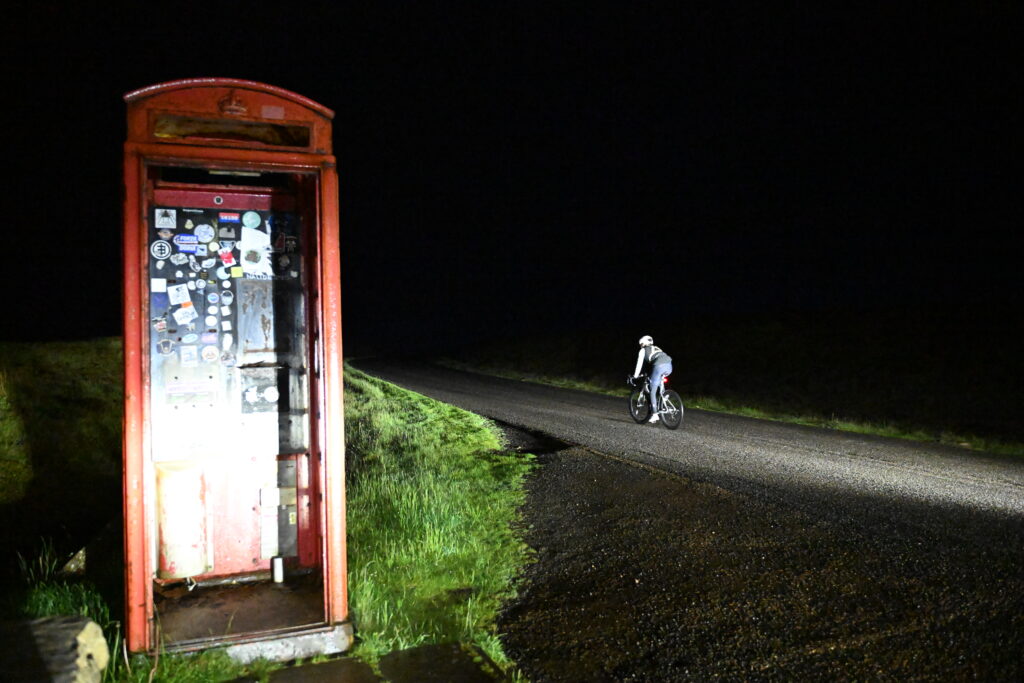
According to Livesey, the skills she learned off-road proved invaluable while riding on some narrow Scottish lanes in the middle of the night.
“It was actually when I was on the North Coast 500 at night, on a single track up on the north coast, descending in the dark, in the fog, with gravel everywhere on those roads, I was thinking, this is the culmination of everything that I’ve learned these last 10 years,” she says.
“The endurance, the gravel riding, the bike skills I’ve got now, all of that coming together for that ride.”
Rice pudding and caffeine to the rescue
While gravel and extreme triathlon laid the foundations for her record attempt, Livesey spent the months leading up to her ride trying to replicate the demands of the NC500 in training, at home in Mallorca, where she’s lived for much of the past decade (a move partly triggered by an unsavoury incident with a fuming van driver, later handed a suspended sentence for assault).
Long rides, climbs, and bike swaps – switching from road to time trial bike gave Livesey an essential “mental reset”, she says – were all part of the programme in the first half of 2026. But one essential ingredient of the NC500 couldn’t be replicated in Mallorca: the Scottish weather.
Arriving in Inverness, and waiting on the wind to blow (or not blow) in their favour, Livesey – a doer, not a ponderer – admits she felt like a “caged animal”.
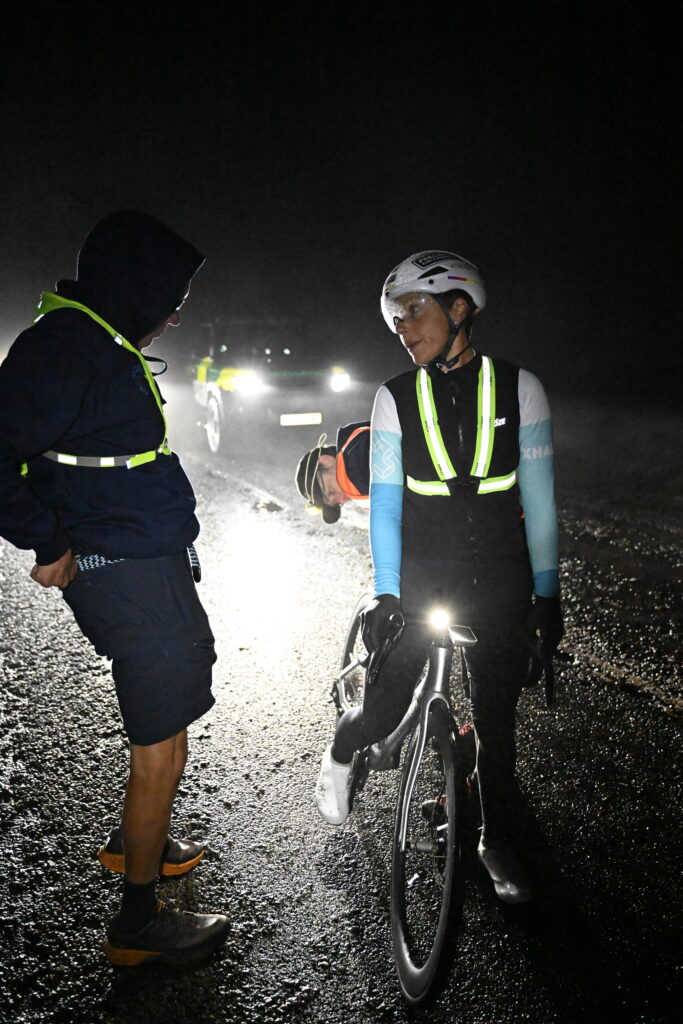
A favourable forecast gave Livesey and her team the green light for a Tuesday start, so favourable in fact that her 32-and-a-half hours on the road featured barely a breath of wind. They did, however, feature rain. Lots of it.
“In my memory, when I finished, I remember saying it rained 80 per cent of the time. And my husband said to me afterwards, no, that’s wrong. It was probably like 50 per cent,” she says.
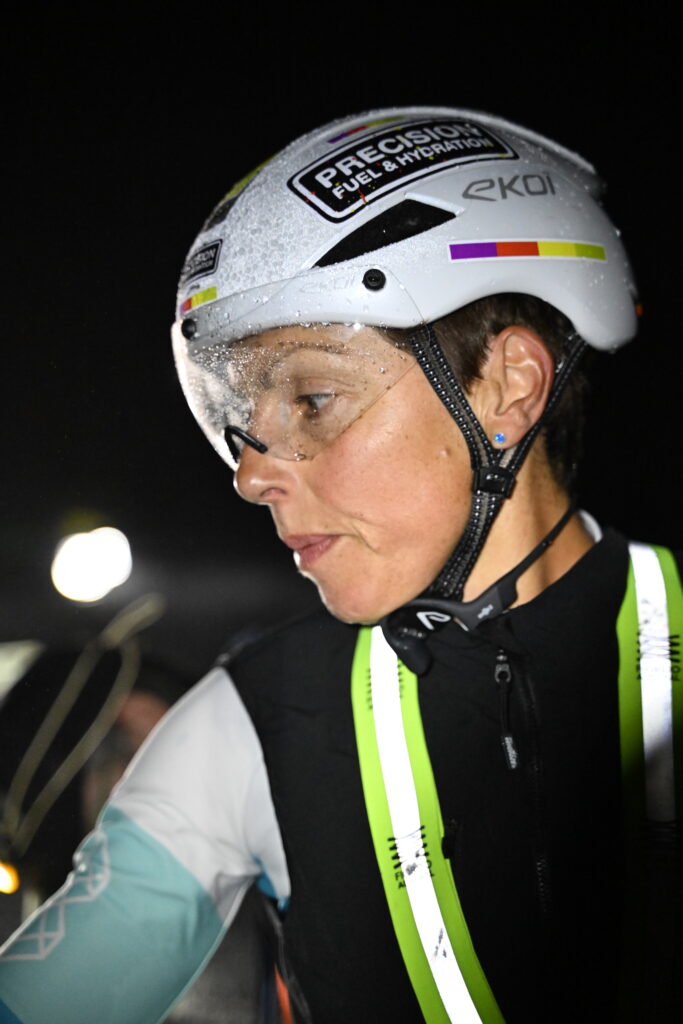
“But I never was in a position where I was thinking, ‘this is horrid, it’s rained, and I’m freezing and I just want to get out of it’. Under an aero helmet, you don’t really notice. It’s like an umbrella.
However, fog in the northern Highlands, and its effect on visibility at night, proved one of the sternest mental tests for the 46-year-old.
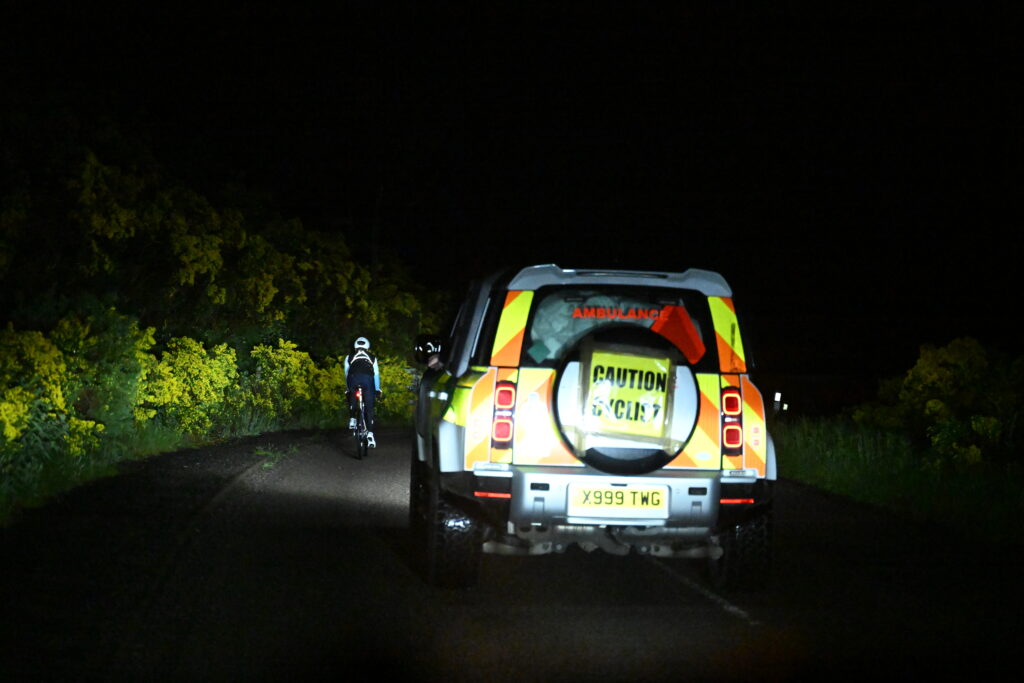
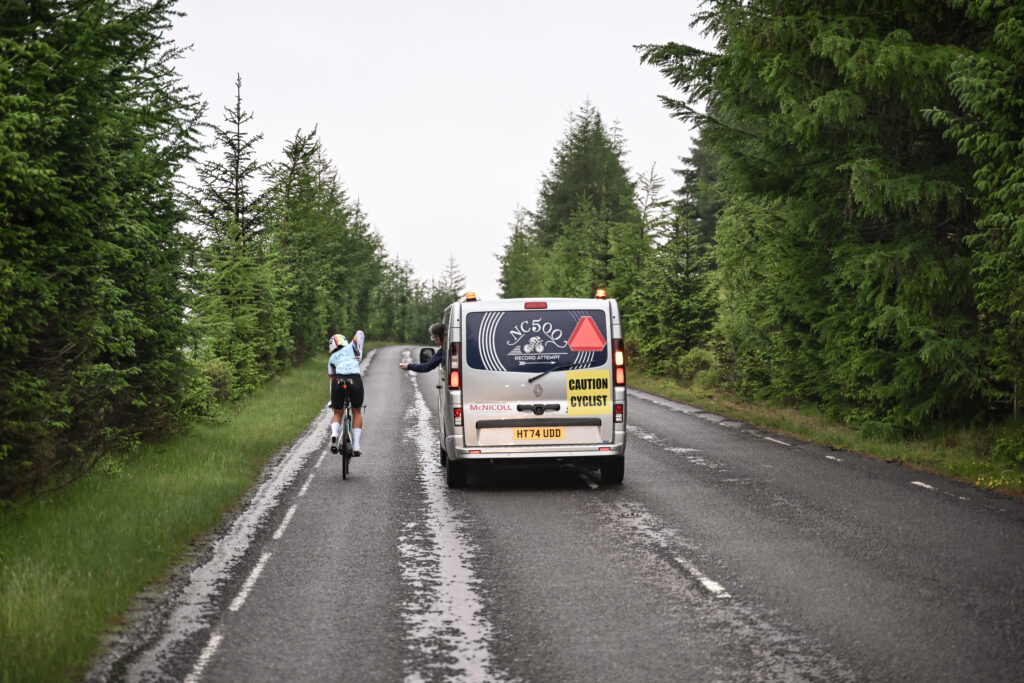
“You’re on these skinny Scottish roads with passing places. They’ve got no white lines. I had a vehicle behind me with head beams on, but in the fog that just bounces off the fog and you can’t see anyway,” she notes.
“So you kind of don’t know which way the road’s going to go, it’s got quite a bad surface on some of it and grit and all of these things. Definitely at night, my power profile was lower because you had to soft pedal some of that. It wasn’t massively lower, but I was being careful. It took a lot of courage to ride hard through the night.”
That courage, however, almost had catastrophic consequences once the sun came up, and necessitated the emergency intervention of a filling station rice pudding.
“The next morning we got to John O’Groats and turned, and I got back on the TT bike at some point along the North Coast and I was just flying again,” she says.
“But then I had a really horrid dip, where I was like, I don’t know what I’m going to do about this one. That was about 7am, 8am on the second morning. I started to get micro sleeps, my brain was just shutting down. I was getting quite bad nausea as well.
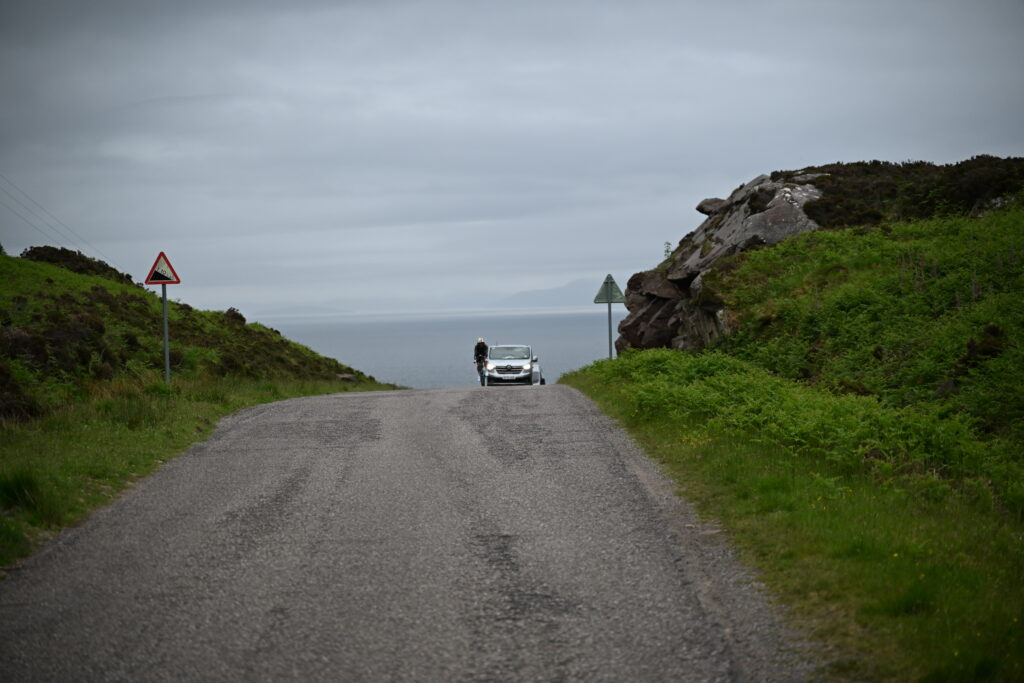
“And so I said to my crew, guys, I can’t solve this. I’m too tired. I don’t know what to do. You need to help me here. And that’s the amazing thing about having a crew that really understand me and understand ultra cycling.
“Tony, the team manager and Graham, his right hand man, were both in the vehicle. And they know me so well that they were able to talk to my husband on the radio, get him to go to a shop, which surprisingly was open at 7am, find me rice pudding, a tin of rice pudding.
“I needed like a replan. Protein shake and caffeine. And I stopped and we were just going into a section of which I could be on the road bike for where there were lots of climbs. And so I had that mental reset as well, getting off the TT bike, the monotony of being on the flat, same position, same cadence.
“So I got on the road bike, had this amazing hit of carbs and protein and caffeine, and actually that buoyed me up and kept me going for probably two hours then.
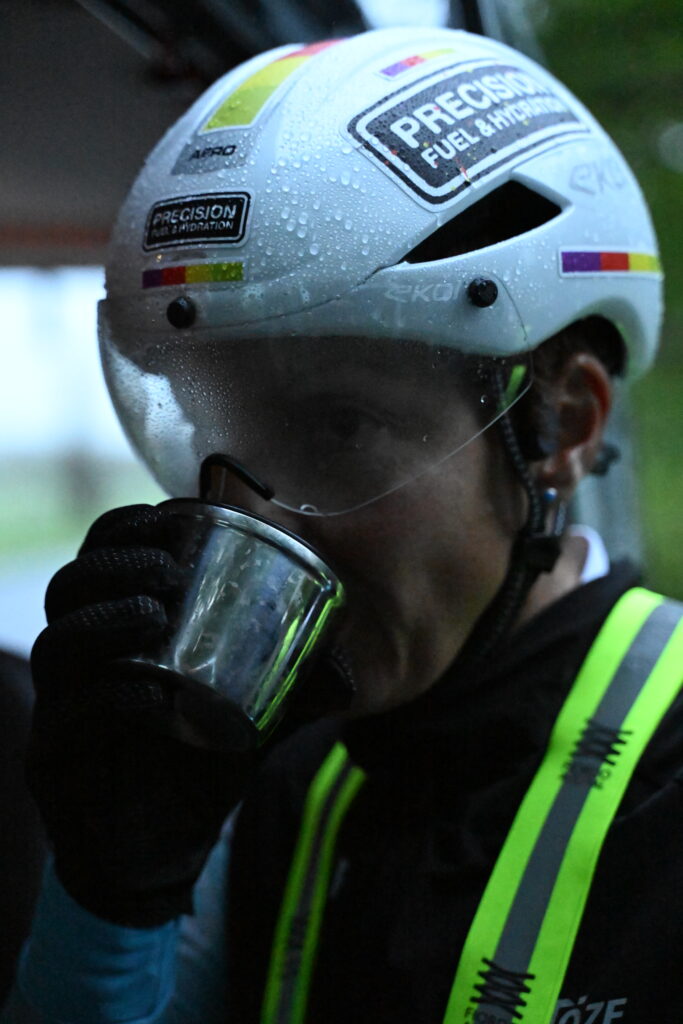
“And then I got hit again, but the sun had come out and I had to stop anyway to take some clothes off. I had some more rice pudding at that point. I was just in a jersey and shorts and it was sunny and warm.
“And I was thinking, this is great, I’m going to finish in the sun, it’s going to be brilliant, all these people are waiting for me at the finish, I’m going to nail it.”
Not so fast, Caroline.
“Then the heavens opened and Inverness delivered the most torrential finish you could have imagined. And I got all the red lights going into Inverness, probably 15 minutes’ worth of red lights going into Inverness.
“I literally sat on the bridge below the car, so I could see the finish line for six minutes in this absolute torrential rain. And I was like, really?
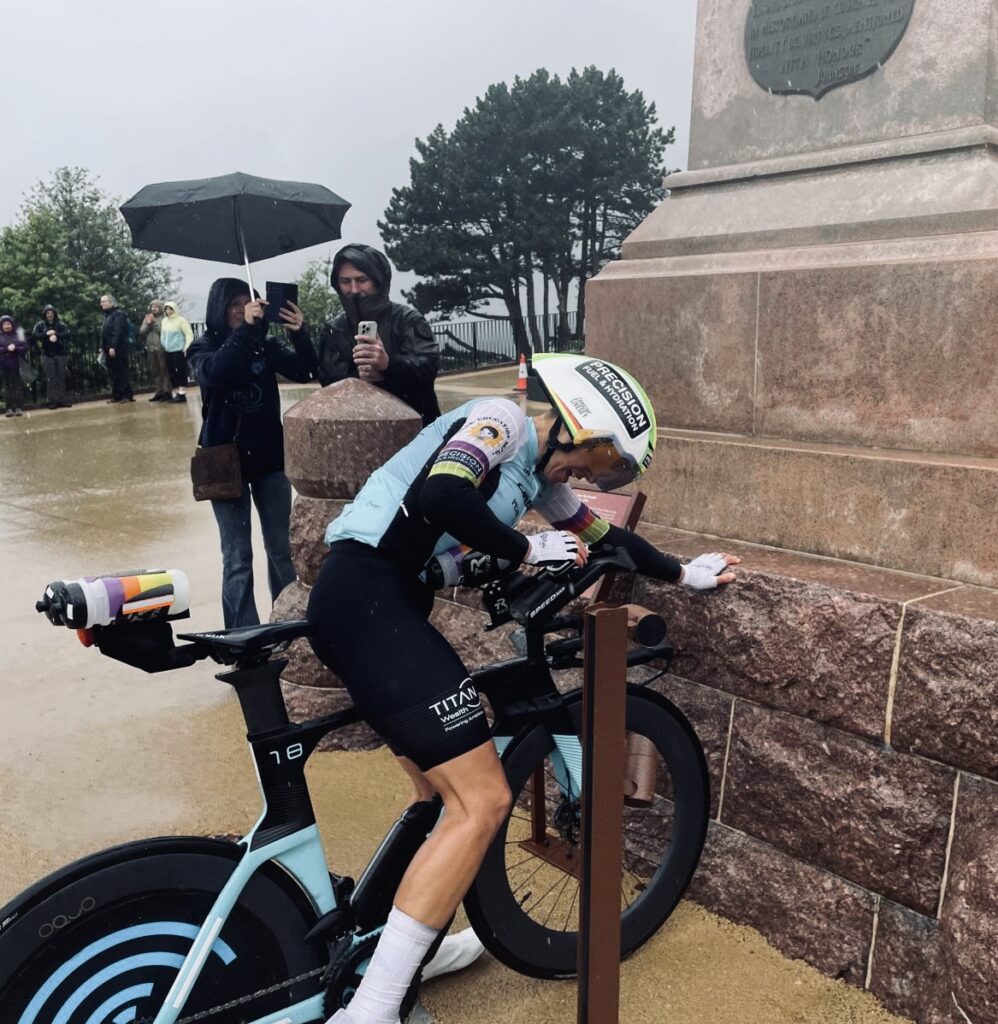
“Then when I finished, my crew were like, ‘I know you want to celebrate, but if you stay here for too long, you’re going to go down’. And I was starting to get cold and shivery and just, so we had to wrap up and get off the finish line fairly quickly.
“It would have been really nice to have pictures of the crew and talk to them and celebrate a bit. But I mean, we got to do a bit of that afterwards!”
“That’s the lovely thing about cycling”
Reflecting on the ride now, Livesey admits – despite some of the issues inherent in breaking an ultra-cycling record – that her overriding sensation was enjoyment, a feeling aided by her personal relationship with the Highlands, if not the route itself.
“It was weird because even though I’d not seen a lot of this route, it felt really familiar because I know the Highlands of Scotland so well. I know the West Coast really well,” she says,
“This route is like a combination of the best of those two things, all thrown on to this just glorious ride. And I got to do it with a team of seven people going, what do you need? Can we help? The whole way round.
“And it was just brilliant. My husband said to me afterwards about the documentary, ‘the problem is, Caroline, you made it look too easy’. And I was like, I was having a great time.
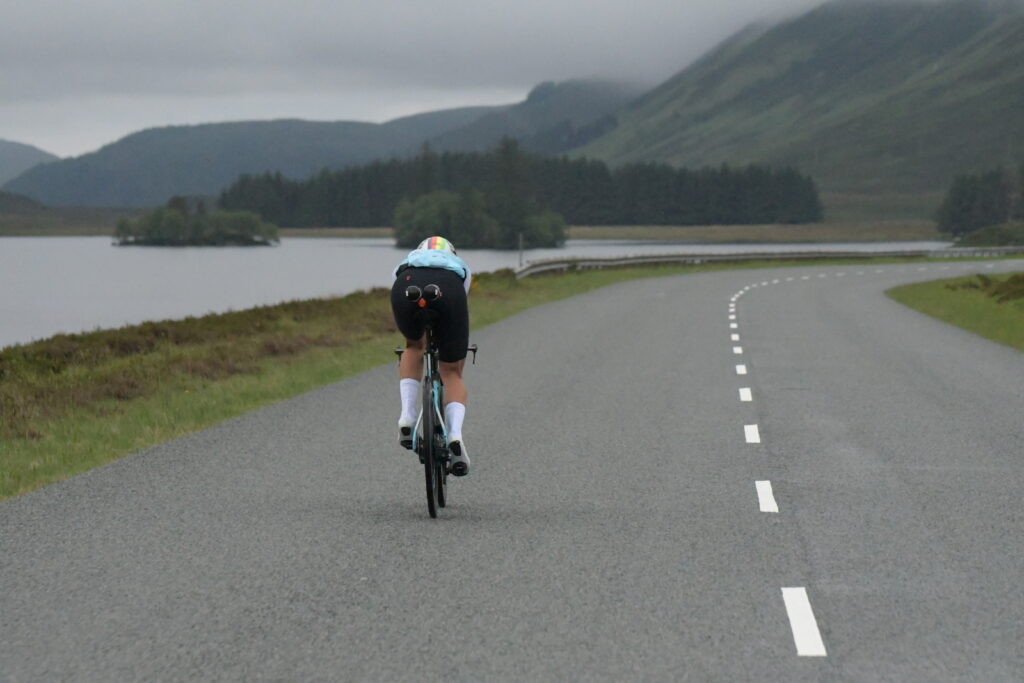
“I’m not saying it wasn’t hard and I didn’t have pain. Of course, it was uncomfortable. Of course, I had pain. Of course, there were times where mentally I had to refocus. But I didn’t have a single time where I was like, I just want to get off the bike and stop.
“There were so many things, so many moments on that ride where I look back and I think, yeah, I was just really happy.
“I mean, that is one of the lovely things about cycling, isn’t it? You just feel so much more connected to the landscape that you’re riding through. It’s totally different from doing it in a car. It’s the smells, it’s the temperature, the feeling of the rain or the sun or whatever on your skin.
“And you see a lot more at that speed, don’t you? It’s one of the things I love about Scotland. I saw a deer, there was a beautiful white owl that flew across the line of sight at night and hedgehogs. And just lovely people stopping out on the route, cheering me on who didn’t know me.
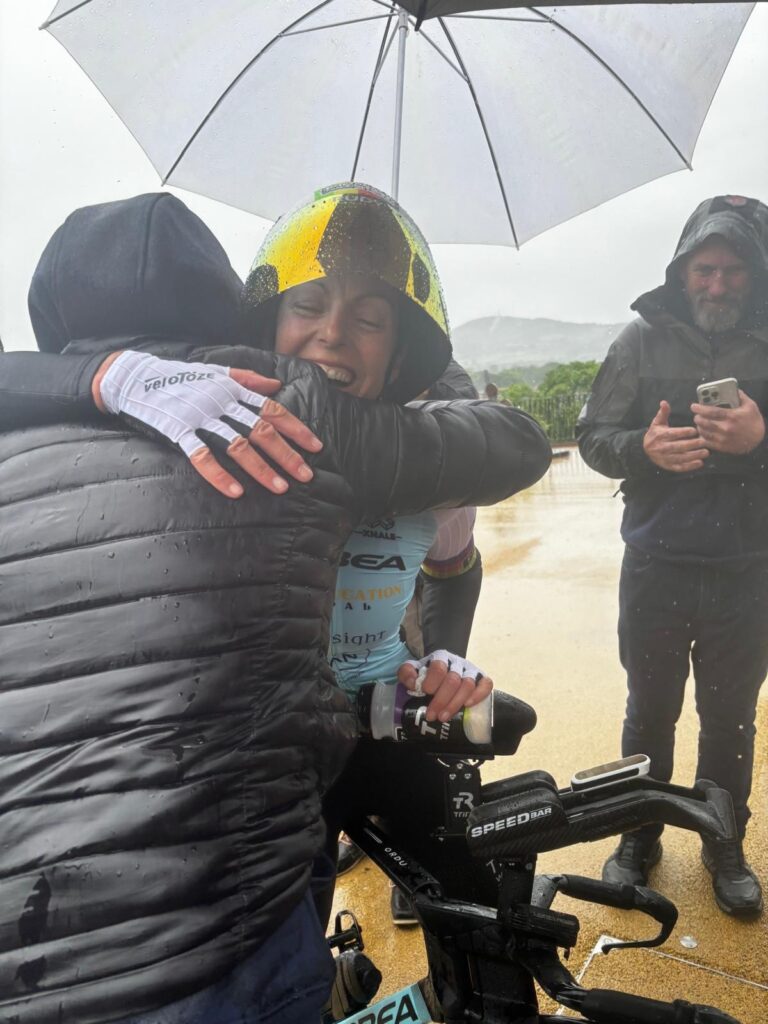
“There was this lovely moment where I went through some temporary roadworks and the crew had managed to get the guys to shut it. So I had a green light basically to go through because it was long and if I’d got the wrong side of the green light, it would have been like a 15-minute wait or something.
“And all the construction workers just stopped and were clapping me as I went past. One of them handed a tenner to the crew for the fundraising that we were doing. It was just this lovely moment, I just felt like the queen.
“Who wouldn’t want to go out for a bike ride and get cheered on as they’re riding, you know?”
The road.cc Podcast is available on Apple Podcasts, Spotify, and Amazon Music, and if you have an Alexa you can tell it to play the road.cc Podcast. It’s also embedded above, so you can just press play.







7 thoughts on ““My husband said I made it look too easy. But I was having a great time”: North Coast 500 record breaker Caroline Livesey on Scottish downpours, rescue rice puddings, and the joy of cycling”
Very pleasant to read such a positive article. A rare treat here.
Not to be a negative Nelly but is swapping between a Road and TT bike in the spirit of this ride?
The spirit of this ride is that a superhuman rider pedals every bit of the route. She did that.
You don’t have to be a superhuman to ride it (although, of course, as with any ride, it helps).
@mdavidford You don’t have to be a superhuman to ride it
Riding up there, where there’s generally only one road, as a tourist is going to be a massive-campervan-horrorshow since the whole route has been TikTok-ed. Unless you go in January.
Maybe so, but I’m not clear how that leads to being a superhuman being part of the ‘spirit of the ride’.
@Secret_squirrel You are Henri Desgrange and I claim my £5…seriously, the route has only existed for 11 years so it’s not exactly laden with precedent and historical tradition. Certainly there is a place for an unsupported bikepacking record (I think Mark Beaumont still holds this?) but the outright speed record is effectively a 500 mile time trial and in that context I’d say using every tactic and piece of technology legally available is absolutely fair enough.