



The latest Ostro VAM aero road bike is described by Factor as “unbeatable” . It’s certainly a very fast bike, but around 80% of your total drag contribution comes from your body rather than a fancy frame. So, is a modern aero bike enough to offset an un-aerodynamic position? We’ve been out testing to find out…
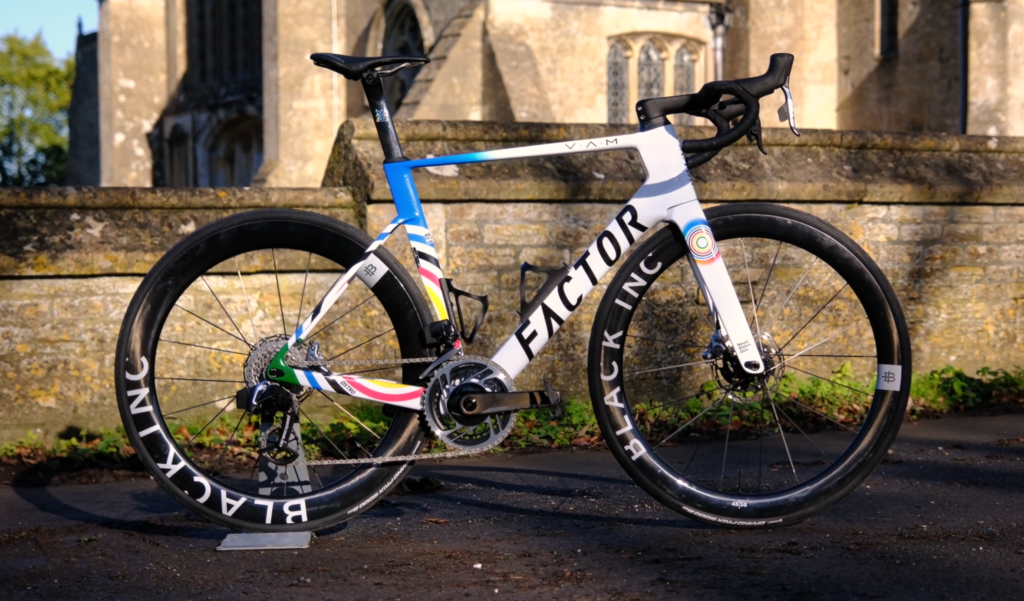
If we rewind to just before Christmas, I was very excited when the Ostro VAM arrived at the office. Why was I excited? Well, because it’s been independently tested to be one of the very fastest bikes on the market, and I’m a simple man. I like fast bikes!
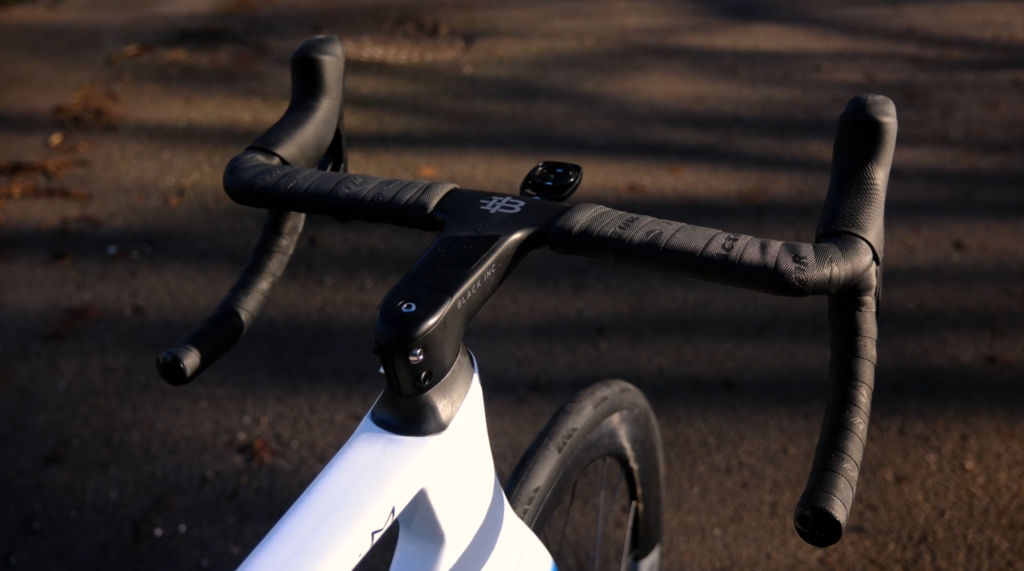
Unfortunately, the bike managed to annoy me before I even finished building it, because as I mounted the integrated bar and stem I noticed that it is incredibly – almost ridiculously – wide*.
> The things I learnt from a professional bike fit that could make you faster
Instead of the 38cm handlebar which I use on my own bike, this particular Factor shipped to us for a review with a 42cm handlebar. And it doesn’t stop there… the integrated Black Inc integrated bar also has flare, the result being a measurement of 45cm at its widest point. That’s wider than my gravel bike!
* Factor does allow regular customers to spec which width of bars they would like, as well as crank length and stem length, and I’ve since found out that our reviewer actually asked for the bike with 42cm bars (not for me, but each to their own). In fact, the brand offers more customisation than many of its competitors, which should enable you to get a more aerodynamic position out the box. The observations in this feature are in no way criticisms of Factor or the Ostro VAM itself, we’re talking about the effects of body position and equipment choices here.

Another disclaimer: I am not one of those people who thinks we should all be wobbling around on super narrow 32cm bars, but after riding this Factor on my local testing loop I was starting to wonder if this bike was very fast at all.
It got me wondering:
- Is this a fast bike being ruined by overly wide bars?
- Is the Ostro VAM simply not as fast as Factor says it is?
- Is it fast, but just doesn’t feel it because of the more relaxed position this cockpit puts me in?
The test
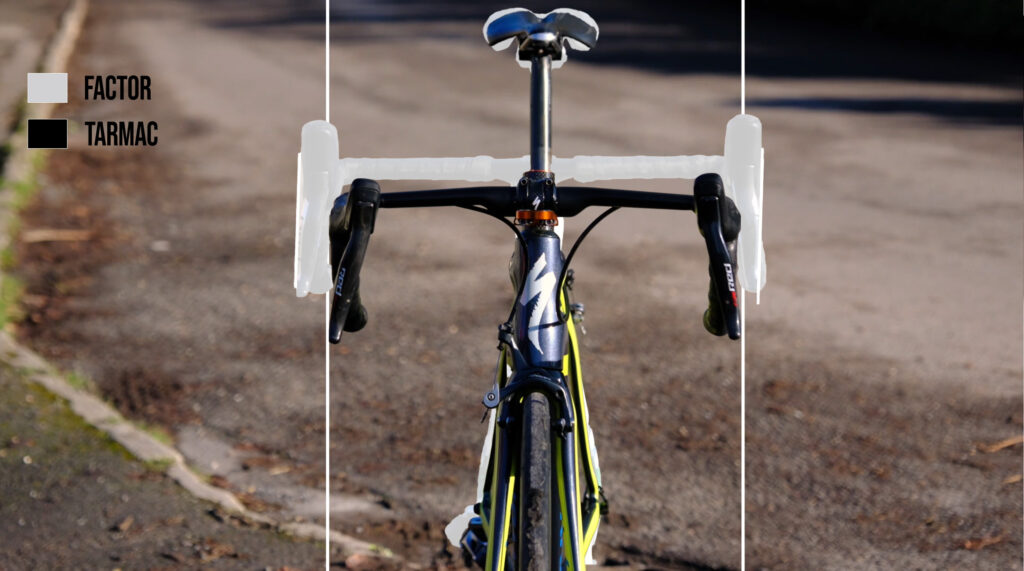
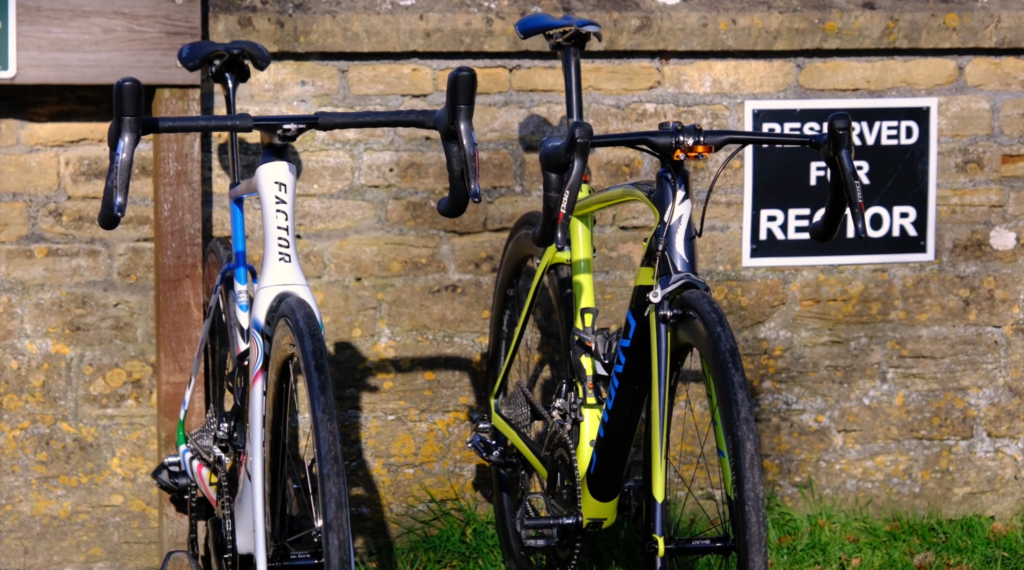
To determine the effect of handlebar width and body position on the speed that you can ride at, we decided to put our top-tier modern superbike up against a climbing bike from just over a decade ago.
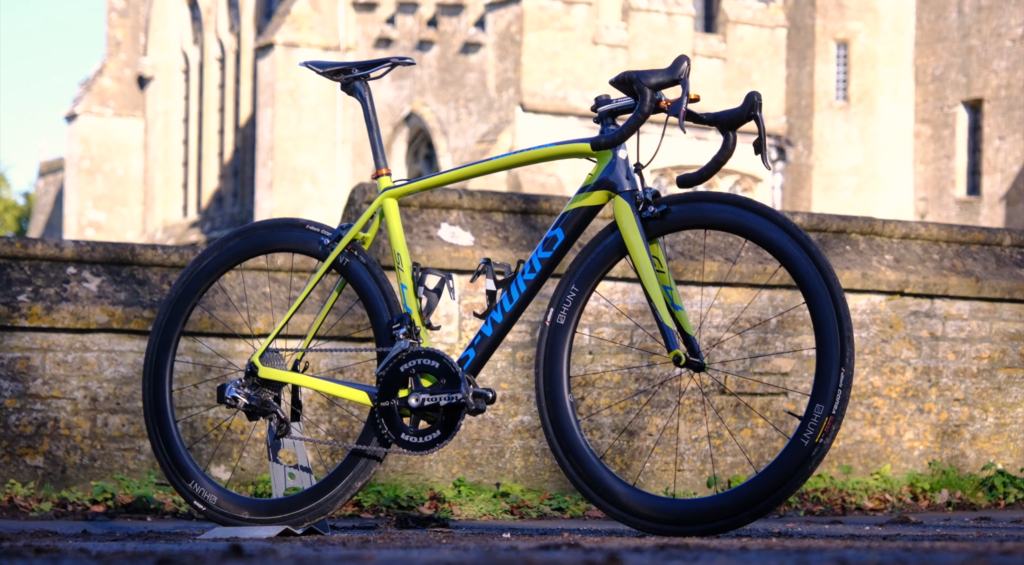
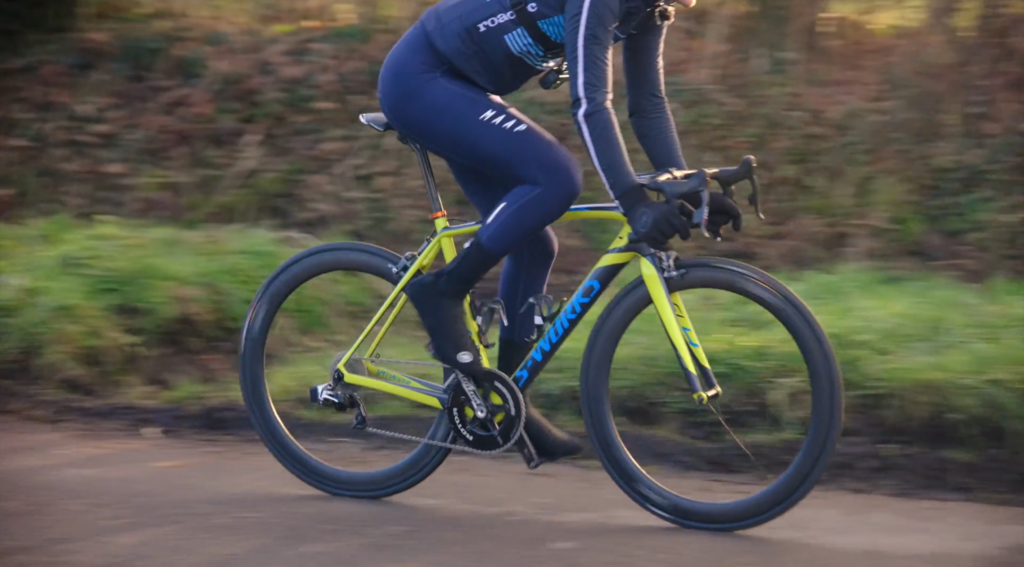
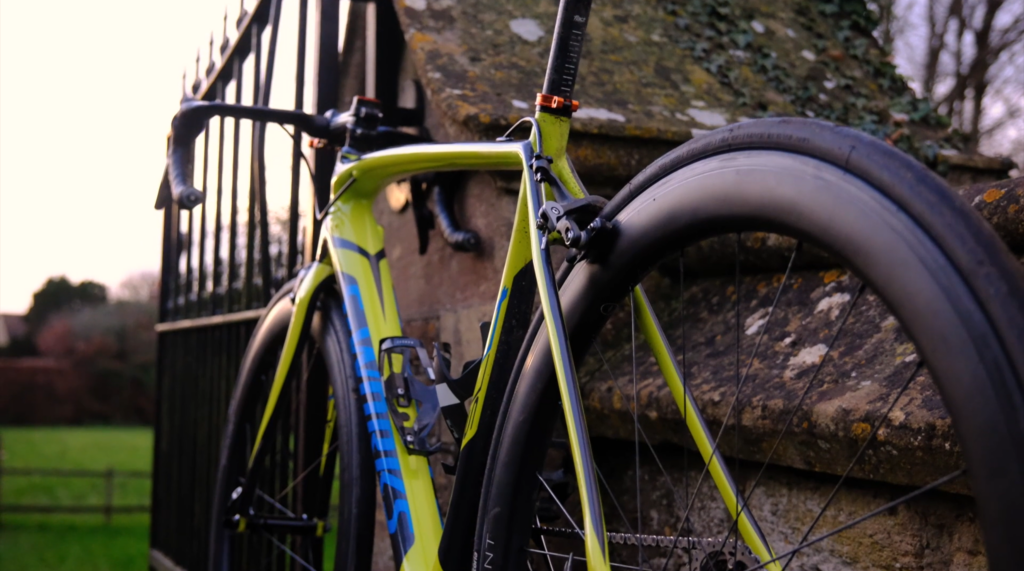
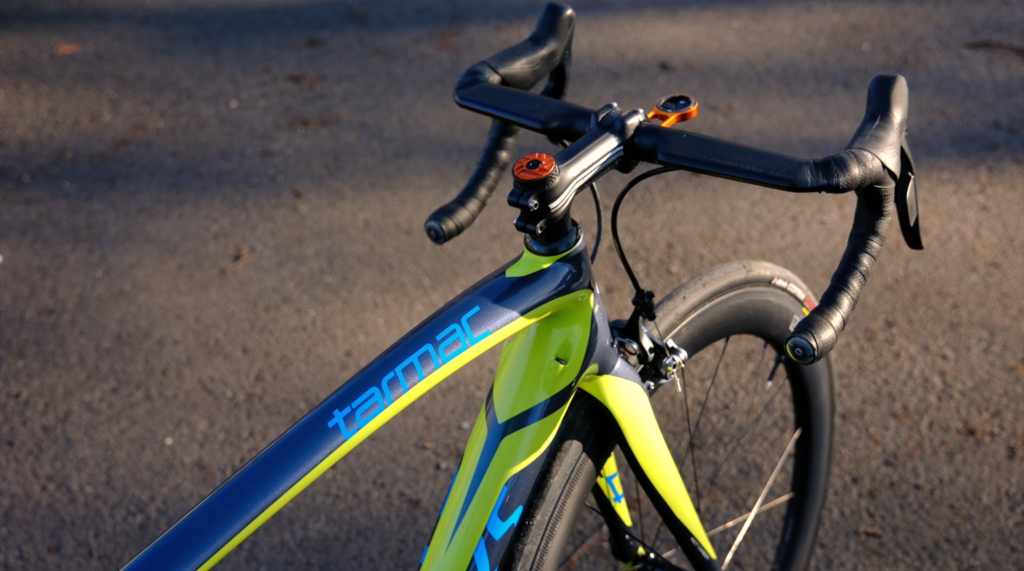
This is a 2014 Specialized S-Works Tarmac SL4. It doesn’t have a fully integrated front end, a super deep headtube, disc brakes or even the bladed forks; but what it does have is some good old fashioned round profile tube shapes, a set of deep section wheels and, crucially, a slammed stem and 38cm bars, which should put me in a more aero position.
We chose this bike because it represents the pinnacle of performance before aerodynamics and integration took over racing bike frame design. It’s also the type of bike that many riders who are currently thinking of modernising to one of these latest aero bikes might currently use.
> 8 ways you don’t need to copy pro cyclists
The premise is clear then: is a non-aero bike that I doubt even Specialized says will be quicker, be quicker than one of the fastest bikes on the market thanks to one very cost-effective change?
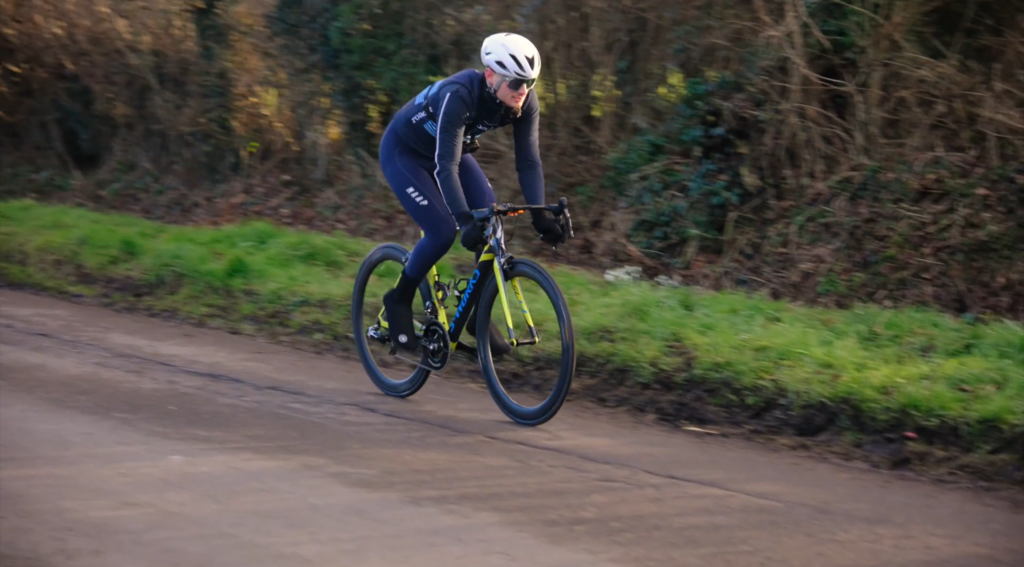
Next, we selected a dry and still day and an 18km flat route that consisted of only left turns so we wouldn’t have to slow for traffic. We decided that I’d ride at a constant 260 watts while riding in the drops for the entirety of the efforts. I wore the same clothing throughout the day, and recorded all runs using a set of power meter pedals calibrated each time.

Each bike would get two runs over the 18km course.
Results
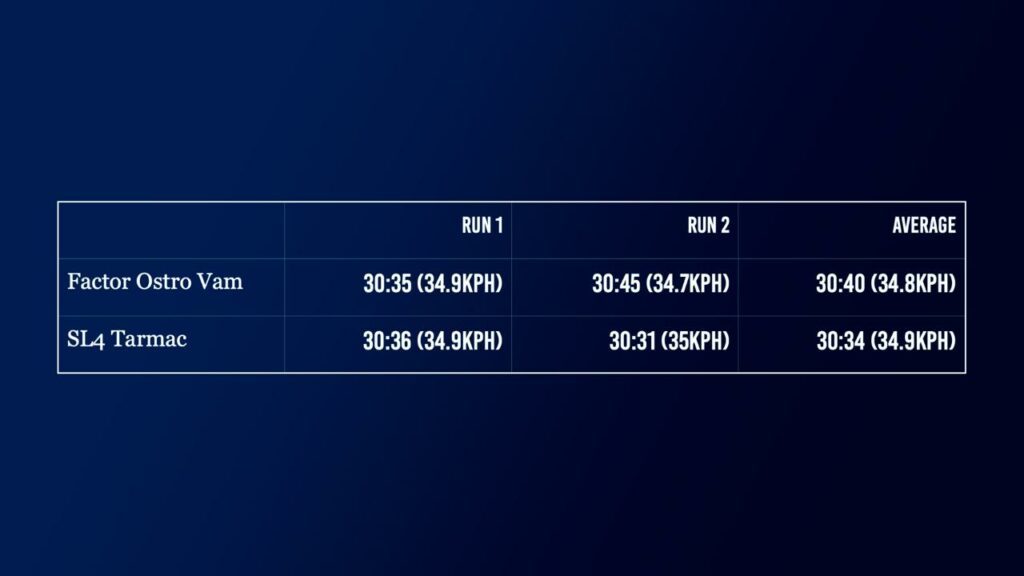
What happened? Well, the Factor Ostro VAM went first and completed our 17.8km loop in a time of 30 minutes and 35 seconds. That works out to be an average speed of 34.9kph.
The SL4 went next, completing our test route in a freakishly similar 30:37. That too works out to be 34.9kph (or about 21.7mph for those of you who prefer imperial measurements).
> Are expensive carbon wheels worth it?
It was all down to the second runs then, and the Factor failed to go faster. This time it clocked a time of 30:45, or around 0.2kph slower than it had done earlier in the day. The older SL4 clearly just needed a warm-up, setting the quickest time of the day at 30:31, making it the only bike to crack the 35kph barrier.
If we take an average of these runs, that does mean the SL4 was quicker overall but only by about 6 seconds. This is admittedly less than the margin of error of this test.
Conclusion
Was this whole thing a waste of time then? Well no, I don’t think so. The Factor Ostro VAM is a bike that we know should be quicker, and yet in our real world testing it wasn’t, whichever way you spin the data. While you should always take real world testing results with a pinch of salt, I think that we can conclude that on this course, on this day, a more aero position was faster than a slower position on a more aero bike.
Since doing this test I’ve been doing plenty of research to see whether the results are consistent with what other people have found, because it does seem wild to think that a decade old, non-integrated, skinny-tubed climbing bike could possibly be faster, or even as fast as one of the latest and greatest all-rounders.
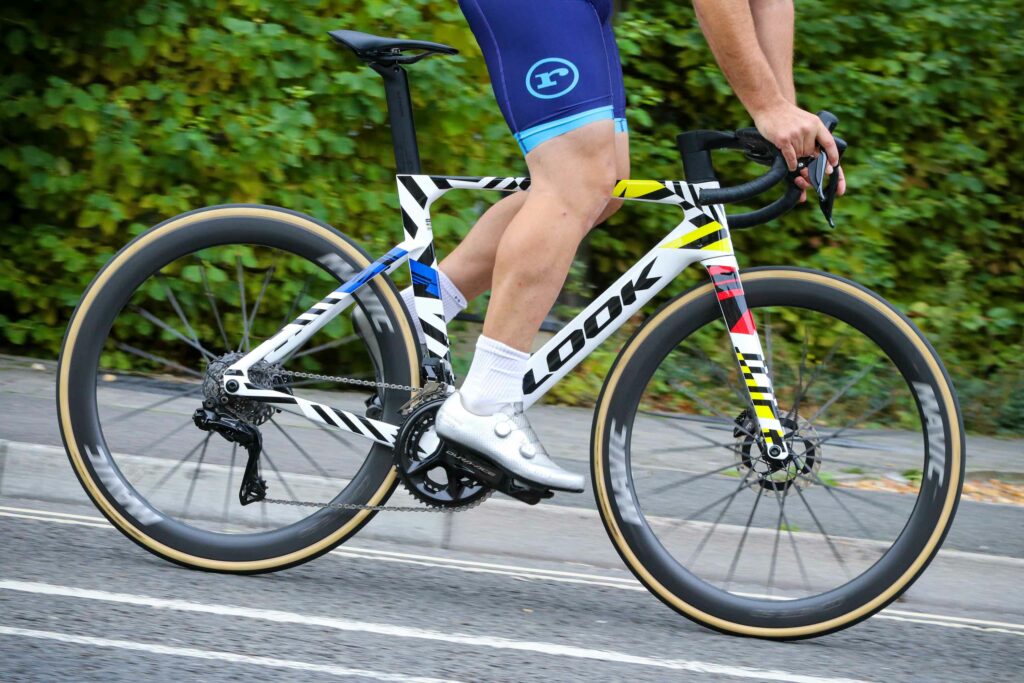
> How much faster is an expensive road bike?
You see, despite there not being much wind tunnel data for anyone riding at speeds of less than 40kph, we can extrapolate data when they’ve provided CdA values. Of all the tests I’ve looked at, I think that you can expect to save between about five and fifteen watts when riding at 35kph on the flat if you were to upgrade a decent, but not very aerodynamic bike (with deep wheels) to one of these latest, everything-integrated superbikes.
With said wattage saving, we would have expected to see the Factor being around 15-25 seconds faster on our testing loop, which clearly wasn’t the case.
> The most common bike fit mistakes and how to avoid them
So, will going narrower make you faster? In my case, it clearly has, but it’s fair to say that we made a pretty big jump. The Factor measures 45cm at the drops and the Tarmac just 38cm, around 16% less. I’ve looked at all kinds of data for narrower bars making you faster, and while nearly everyone agrees they are faster, it’s up for debate on exactly how much, as everyone is different. For example, you might have wider shoulders than me or stick your elbows out more.
I thought long and hard about how I could hammer home just how important body position is to the speed that you can ride at, and came across this reel from clothing manufacturer Rule28.
Yes, these tests are at 45kph, but we’re not talking about a few watts like there is between the top end road bikes. This is where the biggest gains are to be had, and they might not cost you a penny. We also found during our own day at the wind tunnel way back in 2019 that dropping to a narrower handlebar and tucking your arms and elbows in can lead to very significant savings – a whole 50 watts fewer, in Dave’s case, to hold 45km/h.
Like many amateur cyclists, my local team is full of riders who want to go faster, and many of them believe that the easiest way to do this is to buy a “faster” bike. It’s little wonder when manufacturers come out with claims like this:
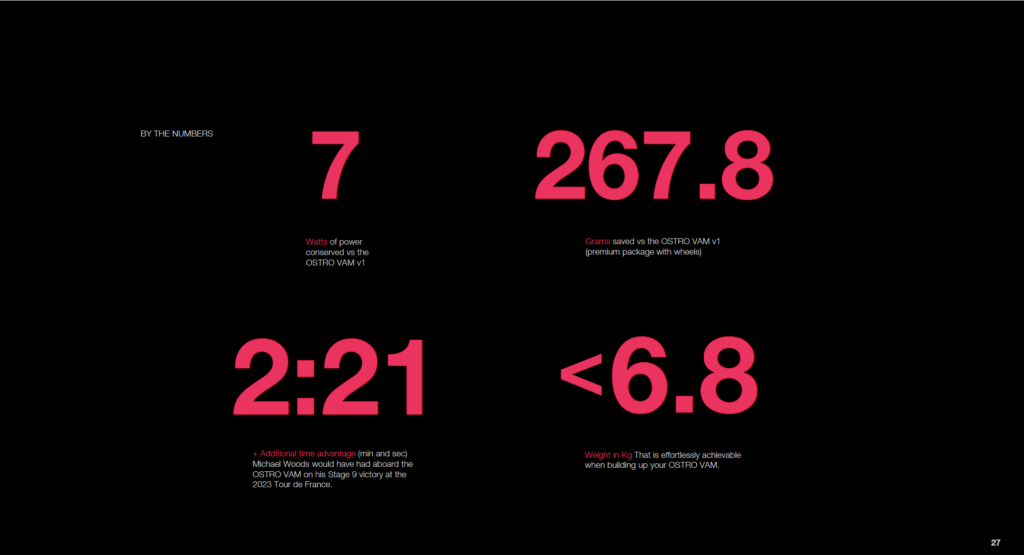
A 2:21 saving!? Maybe reasonable if Michael Woods had ridden the 183km stage at 42kph solo…but the key bit of information that Factor overlooked here, is that he didn’t!
In reality a different bike would never save that much, because he was sat in a group for the majority of the day. If he wasn’t, then he wouldn’t be travelling at that speed. Us amateurs also ride a lot slower, so we can again expect the difference to be smaller again.
I love aero bikes, but the marketing that surrounds them is often a little over the top. By all means, go and spend money on a fancy new bike (like I have), but if you want to go faster then starting with your body position is going to be more beneficial.
Did you expect these results? Let us know in the comments below.









18 thoughts on “Aero bike vs aero position — why spending thousands on a new bike might be slower than sticking with your old one”
It would be interesting to
It would be interesting to repeat the test with 38cm bars and the same body position on the Factor to show (a) how much faster an aero bike is over round tubes and (b) how much difference position makes.
Some of s are unable to get
Some of s are unable to get into these aero positions, or stay there for any length of time
stonechat wrote:
And? If thats the case a fractionally more aero bike or wheels isnt going to help much either. You’ll just have to go a fraction slower.
I don’t think narrow bars are
I don’t think narrow bars are meant to be any less comfortable, which is why they are so popular nowadays versus slamming your stem. They just take a bit of getting used to with the handling.
stonechat wrote:
Well, there are always recumbents!
Note: you almost certainly will be slower for some time until you’ve adapted to the different position. Even then you may be slightly slower on average over a hilly route anyway (faster downhill, on flat or slight incline, slower on higher gradients). And you will be poorer *. And not UCI-compliant.
On the other hand you may find the position a lot more comfortable (there are a very wide range of designs to choose from) – especially over longer distances, and that it’s like riding an adult go-cart. And while you’re now even more of a weirdo there are lots of others also (who also tour, audax, race, build their own contraptions etc.).
* Although you can spend any amount of money on a fast road bike, a recumbent in a similar “performance bracket” will be more expensive e.g. see here.
It’s depressing how little
It’s depressing how little recumbents have progressed. The models available now are essentially the same as those 20 years ago.
I guess it depends what you
I guess it depends what you’re hoping for in terms of “progress”?
The speed record on the flat is unchanged in about a decade I think if that’s important. Not even 90mph!
Recumbents are a niche niche (velomobiles even more niche). That perhaps allows flexibility of people “giving it a go” but resources for R&D are essentially “one person, one shed” unlike “mainstream bikes”. So … far fewer people exploring the possibility space, with much money.
You could say “It’s depressing how little bicycles have progressed”. The basic design is unchanged for a century – in fact, more!
And in fact many of the “forms” of cycle have been around for a very long time – because the best ones are rather simple (the general form of my current one existed in the 90s, true). In general it’s been more “consolidation and tweaks” rather than leaps forward.
The components, materials and what is considered “possible” or even “normal” have come on though and that applies to recumbents as well as “bikes”. Weights of frames and components have come down (alloys, titanium, carbon fibre) and things like shifting and braking ergnomics improved etc. All of which are probably a bigger deal in the recumbent world.
But … certainly the “feel” and practicality (and lightness) has improved e.g. sure there have been 4-wheelers before but pretty clunky, now that’s a more “mainstream” option (for a tiny niche…)
I’m not a lifetime enthusiast (though I’ve been aware of them for a few decades) and don’t have much knowledge – but I do think things have advanced – notably – compared to the 90s / early 2000s.
It’s maybe interesting to see the longer view e.g. see 4 part(!) video series on the history from BicycleMan – which I think only gets to the 90’s.
This is a pretty known value.
This is a pretty known value. In general any aero bike will be around 20W faster over round tubed bike in the wind tunnel at 40 km/h.
But as the test showed, a lot depends on some components. Mainly those that are hit by the wind first. Cockpit, front wheel, helmet and of course body position.
I’d be interested to know
I’d be interested to know what the power difference is at a more reasonable 30km/h between the hoods and the drops, 38 and 42 bars.
The only time I’m doing 45km/h is down hill…
I wish you could test Tarmac
I wish you could test Tarmac SL6, best rim brake bike IMO, against one of the newest superbikes. But with a handlebar like Enve SES Aero. My son who is racing has been using 37/42 version first. Once he broke it, we asked Enve to send 35/40 and he’s very happy with it.
I’ve been messing with DeepSeek to calculate aero differences. Based on Tour Magazine published tests and some other data available publicly. According to DS calculations I run, the difference between SL6 and SL7 is around 2W at 45 km/h.
Thanks for this article.
Thanks for this article.
This is what the cycling community needs; journalists who take a step back from all the hype now and then to look at things with a more critical, real world view.
I don’t have a power meter
I don’t have a power meter but I have tried to gauge the effect of different positions on my bike for the same effort. I seem to get a fairly consistent increase of 0.5mph moving from straight arm tops/ hood position to bent arm hoods/ on the drops whilst trying to keep perceived effort the same.
I am the absolute definition of a non-aero body shape so I guess I gain more from tucking in, but thanks for confirming that an aero bike won’t help much.
Good article. The fact
Good article. The fact remains that for 99% of Road.cc readers the way to go faster is to add a set of tribars/clip ons. Even if you have some flexibility issues a high tri bar position will likely beat a low “in the drops” position for both sustained speed and comfort. Clip ons will also give you a much, much narrower front profile than even the narrowest of replacements bars. Mine are 12cm wide vs my bars at 42cm.
Jack_PL’s post below is a good guide to the order of things.
Clip ons are the cheapest way – probably followed by front wheel.
While I agree that you are
While I agree that you are completely right in theory, I find that in real life roads that I can stay in a good position safely with my 36cm bars and hoods a bit turned in for hours at end and end up faster overall than on my bike with aerobars because, though faster on well surfaced and empty roads, the narrowness of the bars and distance from brakes make it a bit dodgy and I have to keep losing the best position.
Actually you basically prove
Actually you basically prove that the new bike is a lot faster. You more or less have the same times with both bikes but you riding like a weather vane on a aero bike. Actually the praying mantis position is pretty much optimal whateve shoulder width you have. So sizing down a lot on the bars and having a position closer to the praying mantis position has a huge result. So the new factor is way faster then your old bike given that they you have a far worse position and still set around the same time 😉
Wow what a joke this article
Wow what a joke this article and test is.Should we be surprised a bike with slimmer handlebars can keep up with a modern bike with wide bars and higher stack?
If we would all be after a bang for buck bike and price would be the only factor of course nobody would buy a factor ostro vam thats north of 10.0000 in any currency.
Bikes have become not only more comfortable, safer and simply better engineered (aero and light) but most importantly modern bikes cost the money they cost because its a bloody status symbol and there is nothing wrong with that. If you dont buy it there are great options direct to consumer from china.
BTW: “modern aero bikes” mostly make their aero claims at speeds of 40kmh or more. Not once did you even get close to these speeds nor a configuration and setup an actual elite racer would hold on his own bike. And thats coming from someone who still is deeply in love with his rim brake bike.
seriously…this publishing house is becoming more and more of a joke. No wonder your traffic is declining in 2024 and 2025….
Rian_constant wrote:
£10.0000 seems like a bargain to me, even for just the saddle, never mind the rest of it. Not sure anyone’s pricing bikes in hundredths of a penny though.
Rian_constant wrote:
— Rian_constantIs that you, Nige?
Other websites are available. No-one is compelling you to visit this one or read the content you dislike so much. Better still, borrow a couple of bikes and write a proper article comparing them. Go on, I dare you.
This comparison adds to the many articles out there that suggest that a modern aero bike does not provide a huge difference in speed in the real world for more mortals riding at ~30 km/h.
If someone wishes to buy one (and I admit, I’d really love to try one in a club TT) that’s perfectly fine. And most of us are happy to admire a nice bling piece of kit, having one in my garage/shed may be added incentive to go out for a ride. But an aero frame is generally one of the least effective (and certainly poorest value) options if you simply want to ride faster. Since the rider creates 80% or more of the aero drag, clothing and position are by far the most important places to look for aero gains.