


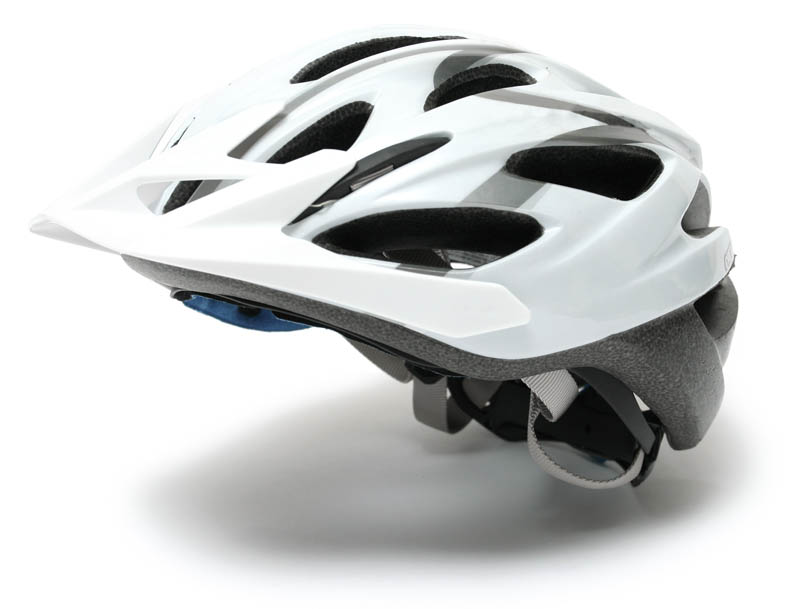

According to researchers from the University of Arizona, helmeted cyclists have a 58 per cent reduced likelihood of suffering severe traumatic brain injury following a crash. These findings and others relating to cycle helmet use were recently presented at the 2015 Clinical Congress of the American College of Surgeons.
Earlier this week, Britain’s cycling minister, Robert Goodwill, reignited the forever smouldering helmet debate by saying that cyclists should be free to decide whether or not to wear one. Ireland’s Minister for Transport, Paschal Donohoe, echoed those sentiments later in the week. Both argue that mandatory helmet use would discourage people from cycling and thus have a broader adverse impact on public health.
The University of Arizona researchers see things differently however, advocating stricter laws for helmet use.
– German government uses Darth Vader to promote bike helmet use
According to Medical Xpress, analysis was carried out on the 2012 National Trauma Data Bank (NTDB) of the American College of Surgeons and involved the records of 6,267 patients who had suffered a traumatic brain injury following a bicycle related incident. Of those people, just over a quarter had been wearing helmets.
The researchers found that among this group of patients, the ones wearing helmets had a 58 per cent reduced likelihood of suffering severe traumatic brain injury and a 59 per cent reduced chance of being killed.
The use of a helmet was also said to reduce the odds of having to undergo a craniotomy (an operation to remove part of the bone from the skull to expose the brain) by 61 per cent and the odds of suffering a facial fracture by 26 per cent.
"If you are severely injured and you were wearing a helmet, you are going to fare better than if you were not," said Bellal Joseph, the lead study author. "When you hone in on that severe group of people who actually developed a brain injury, and then look at how they did, the helmet really made a difference."
The authors said that efforts should be made to manufacture improved helmets.
"That's where future efforts need to focus in on—making helmets that really make a difference. Ultimately, the important message is patient care and how we can make our patients safer and more protected. We need to take this data and take it to the next level and move forward with policy and injury prevention, especially for the younger age groups."










58 thoughts on “Cycle helmets dramatically reduce the chances of suffering severe brain trauma according to new study”
INCOMING!
INCOMING!
…it’s not going to end
…it’s not going to end well, is it ? :S
Derail it fast!
Derail it fast!
crikey wrote:Derail it
New research has finally revealed that piglets that wear wellies are less likely to get their totters wet than those that don’t !
Oh, go on then….
More
Oh, go on then….
More fodder for the helmet police, but it misses the point. I think most (but not all) would not dispute that if you are wearing a helmet that absorbs impact when you hit your head you will usually reduce the risk of injury, be that falling off a bike, tripping over a curb, having a rock fall on your head etc. But, the most persuasive arguments against helmet enforcement are nothing to do with this – they are that helmet compulsion reduces cycling rates and this is a bigger cost to society than any potential benefit from reducing (relatively rare) head injuries. There are other reasons, well covered elsewhere.
The problem is doctors, and health and safety people in general are programmed to look at the immediate individual risks and not the broader consequences.
Jaywalking is illegal. Does
Jaywalking is illegal. Does that discourage people from walking? Not that I’m for helmet enforcement, but I think legislation will increase lawbreakers, not decrease number of cyclists. To educate on the risk of injury is the way to go and people will make the right choice.
arnorbarkar wrote:Jaywalking
Well? Does it?
arnorbarkar wrote:Jaywalking
Its only illegal in [parts of] the US, and, yes, I suspect it does.
It was introduced as a law due to lobbying from the car manufacturers, after all, who were keen to shift legal responsibility away from drivers.
Anyway, android is clearly better than iphone and there is no God.
Jaywalking is illegal…. in
Jaywalking is illegal…. in (parts of?) the USA. Also one of the most car-sick countries in the world. I’ve *tried* walking in the USA and found that often there simply is *no footpath* – in *urban* areas. (E.g. try walking from Sun Microsystems, now Facebook, building in Menlo Park to el Camino Real – no footpath in a few places, despite it all being built up with office complexes and houses).
So, yeah, countries/regions that make jaywalking illegal also seem to be countries/regions which discourage walking in other ways, and which have problems with inactivity amongst people, and a dependency on cars.
(No subject)

crikey wrote:
Probably fully
Probably fully compliant with BSEN1078 =D>
.
.
Well, eating five portions of
Well, eating five portions of fruit and veg a day is also supposed to reduce your risk of stuff. But should we enforce that? By law? Looking both ways before crossing the road – do we legislate for that? There is a big gap between compulsion and recommendation.
Not sure if there are many testers on this forum, but I was recently at a CTT district AGM where the majority voted for mandatory helmets and rear lights for all CTT events. Yes, including hillclimbs. Hopefully it will be thrown out at the national level.
(BTW I usually wear a helmet but if it’s a hot day and I’m riding with people I know and trust then it’s such a nice feeling to do without)
But does the study say the
But does the study say the helmets themselves reduced the brain injuries, or just that people who like to wear helmets are less prone to them, perhaps because of other aspects of their behaviour ?
Flying Scot wrote:But does
One aspect of behaviour might be if they had drunk alcohol. This has been mentioned on the cyclehelmets.org website. Drunk cyclists are less likely to be wearing a helmet, so it is possible that the effect reported is due to alcohol consumption, not lack of helmets.
It seems there’s no paper we can read about this study. It was a presentation at a conference. These results should be treated as preliminary, since they have not been published in a peer reviewed journal.
“Well, eating five portions
“Well, eating five portions of fruit and veg a day is also supposed to reduce your risk of stuff. But should we enforce that? By law?”
Please don’t. I hate vegetables :”( .
guyrwood wrote:”Well, eating
I had an awful problem hitting five a day before I realised that beer is made from vegetables and wine is made from fruit.
Come on guys, we can derail this if we really try. 🙂
FrankH wrote:guyrwood
I had an awful problem hitting five a day before I realised that beer is made from vegetables and wine is made from fruit.
Come on guys, we can derail this if we really try. 🙂— guyrwood
Derailments often result in head injuries. Hope you are wearing a helmet…
Without getting into the
Without getting into the validity of the study itself, assuming we except the outcomes at face value and setting aside the greater societal impact of mass helmet use, a study like this is only relevant when put into context. If not then it is positively unhelpful if the aim is to save lives.
There have been 8 cycling deaths (I think) in London this year, each one attracting headlines. I believe there have been 62 pedestrian deaths.
If you believe everyone needs to wear a helmet for cycling, then you must -if claiming a logic stance- also campaign for wearing one in the car, walking, in the shower or climbing ladders, all head injury risks, on a par with or greater than cycling.
If anyone wants to campaign for mandatory helmet use for all of the above as well as cycling, I could at least respect that. If not then it’s hypocritical and for those that want real safety, a distraction.
helmet use in the Netherlands is some of the lowest in the world at ~0.5% whilst also having the lowest incidence of cycling head injury in the world…
Chris B
It should be a matter of
It should be a matter of choice. Why should a load of car drivers sitting in armchairs tell those of us who ride whatever the weather what to stick in our heads :W
Helmets prevent reduce the
Helmets prevent reduce the chance of head injuries….shock!!
But who are these people supposedly advocating making them compulsory?
“If you believe everyone
“If you believe everyone needs to wear a helmet for cycling, then you must -if claiming a logic stance- also campaign for wearing one in the car, walking, in the shower or climbing ladders, all head injury risks, on a par with or greater than cycling.”
Not sure that’s entirely logical Chris. One would need to take into account the proportion of accidents with each of those activities that resulted in head injury, compared with cycling.
It should be optional. That
It should be optional. That way, by default, the number of non helmet wearers will reduce by natural selection.
I had Thai Green Curry for
I had Thai Green Curry for dinner.
The Netherlands, US, and
The Netherlands, US, and Australia all have about the same rate of head injuries, approximately 33 per 100 cyclist fatalities. The US should be lower and OZ massively lower if helmets are effective? (or conversely, all those helmetless Dutch should be dead). Why aren’t helmets reducing deaths from TBI?
Quote:It should be optional.
Shhh.
Not only do you not understand the debate, you also don’t understand how natural selection works…
Now that cabinet maker from the Wirral (MBE) has joined in, this could get very long indeed. :H 😉
I crashed at 47mph last
I crashed at 47mph last Sunday after hitting a pothole, on a steep descent and slid about 20ft my first point of contact with the road was my head. My helmet is smashed to bits but no head injury, just serious road rash all down my right side, ankle, knee, hip and shoulder, yes I probably would have been seriously injured had I not been wearing it, will it make me wear one going to the shops/pub? No! Just very glad it was on whilst out on a run. Personal choice every time B-)
scottharkins1971 wrote:I
You fucking eejit.
Hey Scott, do you swim in it
Hey Scott, do you swim in it as well?
Do you?
Do you?
(No subject)

SO FAREWELL THEN, REASONED
SO FAREWELL THEN, REASONED DEBATE.
LARGE HELMETS,
BIG FLANGES,
CARRY ON CYCLING.
E.J. Thribb, age 17½
Mac/PC/Linux…
Mac/PC/Linux… Jesus/Allah/YHWH/Krishna/Eris… Helmets/caps/cool-haircuts… 😉
We almost had this level of
We almost had this level of antagonism over in the cycling news clinic forums whenever Armstrong was mentioned a few years back!
Everybody has a right to
Everybody has a right to freedom of choice to wear a helmet or not
but surely commonsense prevails.
There isn’t any mention of
There isn’t any mention of whether the types of impacts between the helmet wearers or non helmet wearers were taken into account. Also little mention that the study only considered those who has suffered a traumatic brain injury that completely ignores any possibility of helmet wearing influencing behaviour of either the wearer or other and it doesn’t mention the type of cycling being undertaken when the injuries were sustained. Those could all be highly relevant.
Finally I am flummoxed by the statement that wearing helmets “Reduced the odds of a facial fracture by 26%” – impressive for a piece of polystyrene on the top of the head isn’t it – or were they considering full face helmets?
Maybe the study was more scientific than the report makes it look, but if not it isn’t exactly reliable its it?
This figure is consistent
This figure is consistent with other studies.
Remember though, head injuries are rare. A big reduction in a rare injury needn’t make much difference to the overall injury and death rate.
Also, note that collisions resulting in serious head injury are likely to cause other serious injuries too – vehicle collisions particularly. A modicum of reduction in risk to the head need not make much difference if most cyclists are dying are of traumatic injury to other parts of the body.
The real-world evidence is that the benefit of helmets to head injuries doesn’t do much to make cycling in less-safe environments safe. Further relying on and culturally pushing helmets may also have *negative* effects on risk taking by cyclists and motorists, and on participation by the wider population.
The real-world evidence is that safety strategies that focus on making the environment are *MUCH* more successful at reducing *ALL* injuries to cyclists, AND can increase participation.
In short, the Netherlands is the safest for cycling, because they do NOT focus on helmets.
it is obviously a matter of
it is obviously a matter of choice. the research should help people make the right one
Applying traditional
Applying traditional epidemiological analysis to road crash casualty data is always dubious. The method doesn’t take any account of behavioural adaptation/risk compensation by (in this case) people using helmets.
Such analysis does not allow for changes in the behaviour (of a very small kind) by people due to their wearing helmets, although even such small changes in risk taking can cancel out the benefits of wearing a helmet because crashes involving head impact don’t happen every day.
I doubt that this was considered.
Then there’s the “Why don’t you wear one in a car on long journeys ?” question…
If nothing else, this thread
If nothing else, this thread demonstrates that someone with tech fu should post a ‘ how to add a picture with your comment’ comment.
Thanks in advance.
The image you want to post
The image you want to post must be hosted on the web somewhere, flickr or Picasa or just in google images.
So find the image, click on it to display it on your screen, then copy the address;
http://www.biathlon-online.de/wp-content/uploads/2007/03/hitzer_head.jpg
then enclose the address in image tags;
But don’t leave any space between the tag and the address;
There is no suggestion in
There is no suggestion in this report that wearing cycling helmets should be made compulsory. So what’s all the fuss about !
Batchy wrote:There is no
The author suggests “… injury prevention programs should focus on increasing the practice of helmet use.”
cat1commuter wrote:Batchy
The word compulsory was not mentioned. So what’s all the fuss. Personally I always wear a helmet as I believe that it makes sense . Though others may beg to differ .
“There is no suggestion in
“There is no suggestion in this report that wearing cycling helmets should be made compulsory. So what’s all the fuss about !”
The average IQ of the road.cc reader seems to be in a downwards spiral – or maybe some just cant read….
“the next step is to create injury prevention programs to increase helmet use among bicyclists, to manufacture better helmets, and to develop and enforce STRICTER LAWS for helmet use. “
sfichele wrote:”There is no
Still not able to see the word Compulsory ! ?
If these helmets are so
If these helmets are so affective at reducing injury, why aren’t they promoted for use in motor vehicles? The risk of head injury is far greater per Km travel when travelling in a motor vehicle than when cycling, but there are never big advertising campaigns for motoring helmets, why not?
Instead of taking note of another over hyped study from the USA, why not learn from the Dutch who have the lowest levels of pedestrian and cyclist head injury (and very low level of helmet wearing).
It is also worth remembering that there is a history of overestimation of the effectiveness of the bicycle helmet by the use of odds ratios. One should never take these studies at face value.
Hmmm. Road.cc has not
Hmmm. 😕 Road.cc has not covered itself in glory with its report of this story.
For a start the summary from the ACS actually says ” 58 percent reduced odds of severe traumatic brain injury and a 59 percent reduced odds of death”, not the likelihood as reported by road.cc. This is relevant because odds ratios are one of several ways to measure likelihoods and come with their own set of peculiarites depending on whether the correlated effect is large or small. They are notoriously difficult to intuit. It would probably be a mistake to take this story at face value and road.cc should solicit input from a statistician.
Following on from that, and related to it, is the fact that it what is reported is a relative reduction in the odds, without a mention of what the actual odds were a the start. Were they 1/100,000,000 reducing to 1/200,000,000?
And that leads to the fact that the link supplied by road.cc is to a summary/report not to the actual research, which would be more informative than a press release.
All that said, I think that anyone not wearing a helmet in the shower is foolish. I always wear mine when bungie jumping, but not when I’m watching TV. Unlike some posters in this thread I believe in personal choice and am not advocating mandatory helmet use at all times, so please don’t shoot me down for my opinion. Thank you.
I nearly forgot (re natural selection), but helmet wearers have been observed to have a reduced likelihood of reproduction due to selection against their secondary sexual characteristics. I tested this hypothesis in a population of 10, by glueing Kask Protons to a randomly selected population captured on Cycling Superhighway 2 and then measuring their number of offspring produced in the next year.
If you are expecting to get
If you are expecting to get shot, I think some kind of protective jacket might be of more value. I’m not suggesting that it should be mandatory mind you…. 😉
Someone confused correlation
Someone confused correlation with causation. Shark attack numbers go up with ice cream sale numbers, ice cream has very little to do with shark attacks though.
What the study doesn’t say is that most of those involved in accidents not wearing a helmet were under the influence. Seen this before, it’s not really news.
[[[[[ I banged me noggin 3
[[[[[ I banged me noggin 3 times, on the beams in the attic, so thereafter donned me Cinelli banana hat whenever I went “aloft”. (see wot I did there?). However, I never did bang the bonce again. There you are—helmets do work. Case statistically solved, squire!
Looking forward to their
Looking forward to their upcoming study supporting safety advantages of better cycling infrastructure.
More research by people who
More research by people who are already convinced that cycle helmets are effective and set out to prove it. Move over Thompson, Rivara and Thompson, there are new kids on the block.
Such a shame that all the reliable evidence from over twenty years of helmet laws and mass helmet wearing in Australia and New Zealand has shown that helmet wearing is not associated with reduced risk, and if anything the opposite is true.
cyclehelmets.org
burtthebike wrote:More
Lol so you link to the website which aims to prove helmets are ineffective and so selects the evidence accordingly!
I’m not sure whether or not this study is biased or has an agenda – but that website sure does!
I’m suspicious of anyone arguing for compulsion too strongly, of the evangelist helmet-supporter and also of the helmet-hater. Both in full evidence on here!
Logically then, helmet use
Logically then, helmet use should be compulsory for everyone 24 hours a day
Isn’t the usual corollary of
Isn’t the usual corollary of reduced head injuries increased neck injuries? Did they find that? Also there’s suspicion that helmet users crash more: did they find that or were they only interested in what happens after someone crashes?
The most conclusive evidence
The most conclusive evidence in favour of helmet-usage is a quick perusal of the dizzyingly stupid guff people who don’t like helmets post on these discussions.
Extravagantly stupid, all of you. Brain trauma would probably lead you to make more sense.
Conclusion from DoT focus on
Conclusion from DoT focus on pedal cyclists report 2013.
‘Pedal cyclists have a higher rate of being killed in comparison to car occupants, however it is still far less risky than being a motorcyclist. The rate also appears to be the same for a pedestrian as it is for a cyclist.’