

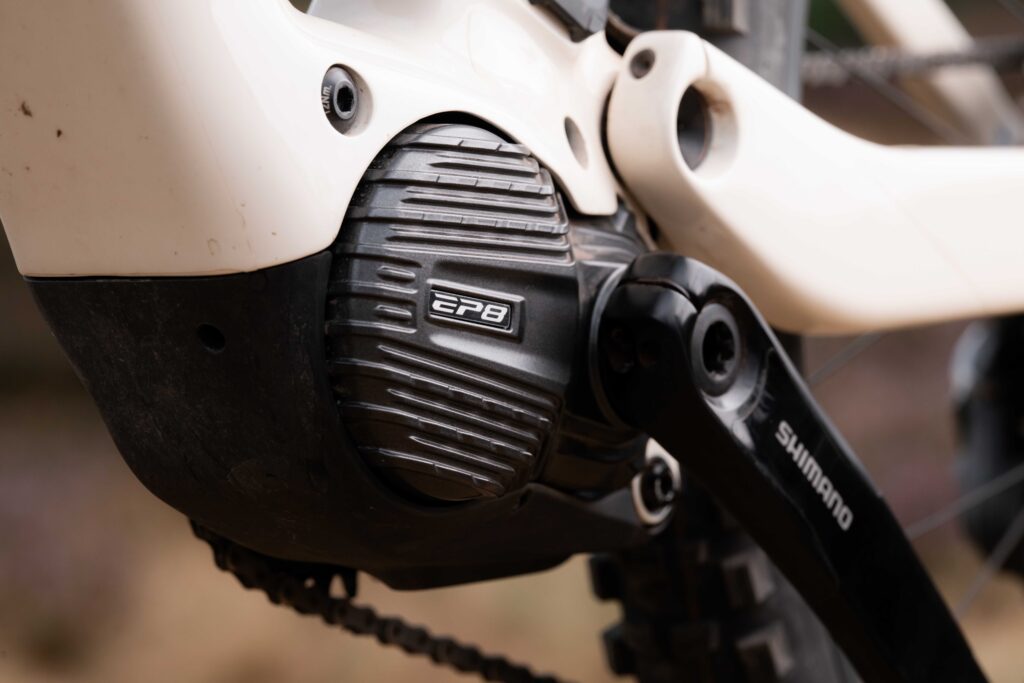

A new motor from Shimano has been an incredibly long time coming. Much like its truly wireless Di2 drivetrains, the brand’s biggest competitors have stolen its attention and absolutely run with it. And by looking at the EP810’s main figures, it feels like a case of too little, too late.
What is good, though, is that Shimano has made itself somewhat relevant in the motor market again, depending on how you perceive the word ‘relevant’. Where its competitors have developed higher torque and higher power alternatives, leaving the EP801’s relatively meagre 85Nm out to dry; the EP810’s 100Nm is somewhat competitive against other players, take Specialized’s 3.1 motor’s 105Nm, for example. And well, myself, Honda, Orbea, and I’m sure a bunch of other folk are once again talking about Shimano’s presence in the e-bike motor game. That hasn’t happened for a while. It’s also great to see a brand that made my favourite motor (at the time) come back with something fresh.
However, apart from the odd thing here or there, there’s not much about Shimano’s motor that’s actually new. Yes, there are things that are new for Shimano’s e-bike drive systems, but Assist Remain and Carry Over can be found on Bosch motors in the form of hill start, where the bike won’t roll backward when activated, and, well, overrun… most motors come with that now. That said, Assist Remain keeps the bike from rolling downhill when it’s put into walk mode, whereas Hill Start keeps the bike still before putting the power down mid-ascent.
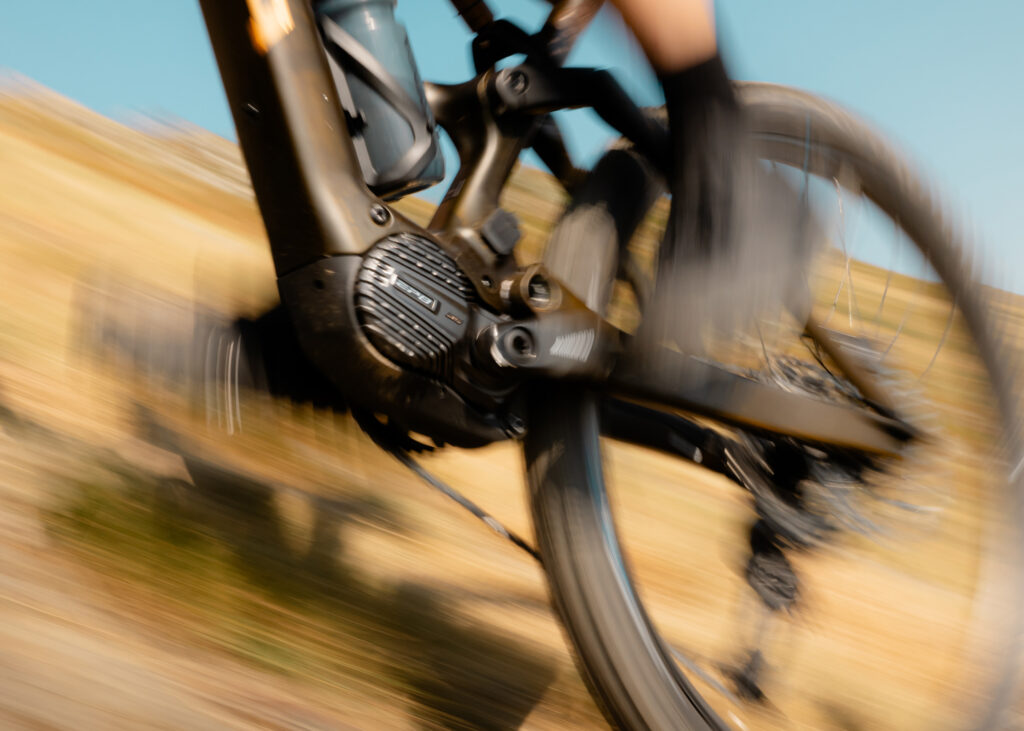
Lift & Shift, the EP810’s ability to shift itself with the rear wheel lifted (in walk mode), is a thing on even Avinox’s M1 motor. It’s all handy stuff, for sure, but what Shimano has created isn’t exactly reinventing the wheel, on paper at least.
But what Shimano’s new motor brings to the market that we’ve not yet seen is its weight. The brand claims it tips the scale at 2.3kg, which is 300g lighter than Avinox’s M2S. Whether there’s much benefit to that relatively small weight saving is yet to be found, however. That said, its 720Wh battery weighs a claimed 4.1kg, whereas Avinox’s FP700, its 700Wh offering, is set to weigh 3.18kg.
We can discuss features ‘til the cows come home, but after years of silence, Shimano has made itself relevant again, to the point where a fairly large brand, like Orbea, is speccing the EP810 on the new Rise. Granted, that’s with Orbea’s own RS tune thrown in.
The motor also comes at a time when a bike brand’s choice of drive system is vital to an e-bike’s success. When designing bikes, brands commit to a motor early in the development stages, and that could be years before its release. During that period of time between the brand’s decision and the bike’s release, a new, all-singing, all-dancing motor could hit the market, stealing all of the attention, rendering that bike obsolete before it’s even launched. What I’m trying to say here is that brands need to be incredibly careful when choosing what motor their new bike is going to run, and when big numbers are often fairly attractive in the eyes of the consumer, choosing the EP810 may lead to a launch in front of an uninterested crowd. And no interest means no sales.
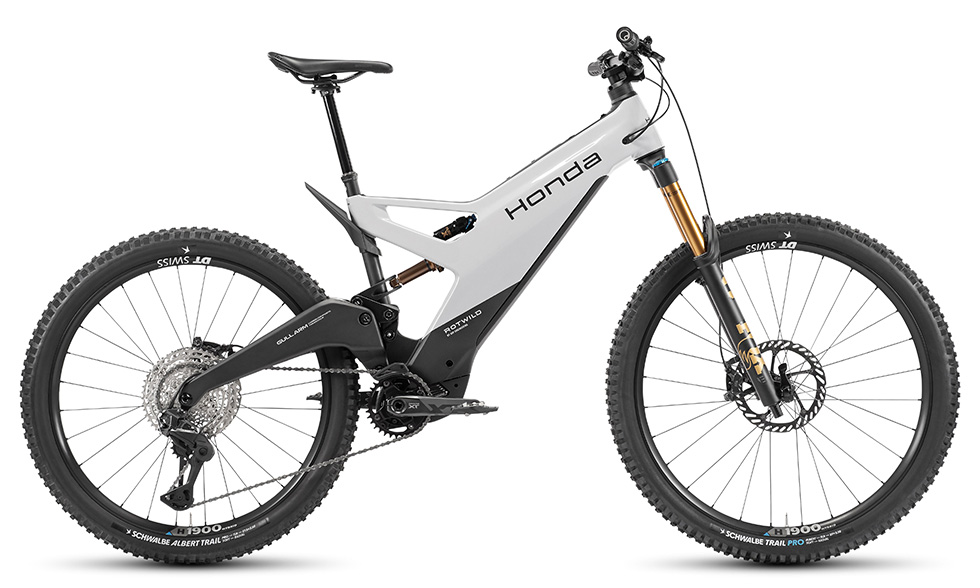
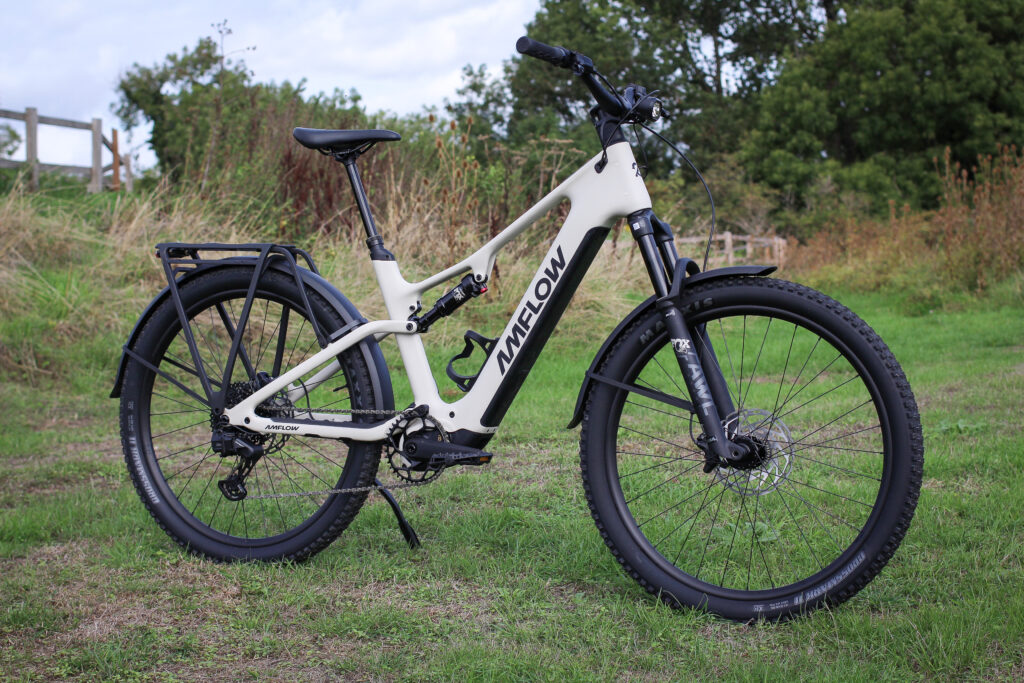
If it’s not power figures that make a motor exciting, keen pricing certainly will, and with the EP810, Orbea has kind of done that. Its Rise SL H30 will set you back £4,199, which isn’t horrifically spendy. However, Amflow’s Avinox-equipped PR Carbon is £3,999. Its build is fairly similar, but you get a punchier motor and a bit of a financial saving. That said, there’s nothing to say that we won’t see an even more affordable EP810 bike in the future.
Although large numbers (in the right places, of course) are what historically have made new motors very attractive, like the 150Nm Avinox M2S, there is a lot more to a motor than the numbers it’s adorned with. What’s honestly, and humbly, the most important with any drive system is its ride quality. Yeah, big numbers look good, but the proof is 100% in how the motor delivers its power, and the EP801 had a very natural feel that, at the time, made it my favourite motor on the market. Of course, times have changed, and the e-bike motor space has developed exponentially. So where the numbers and features may not do the EP810 any favours, the ride quality will have to speak for itself.
There’s also the range. At the moment, we don’t have much information about how efficient that motor is with its 720Wh battery. Perhaps it could knock out loads of kilometres on a single charge and lead the class in that category. But is efficiency alone enough?
I’ve not ridden the motor yet, so I can’t deliver a real verdict, but hopefully, we’ll get an EP810-equipped bike in for a test, so I may well end up eating my words, and it could be the best thing ever, so watch this space. But has Shimano done enough to make its new motor exciting? Let me know in the comments.