

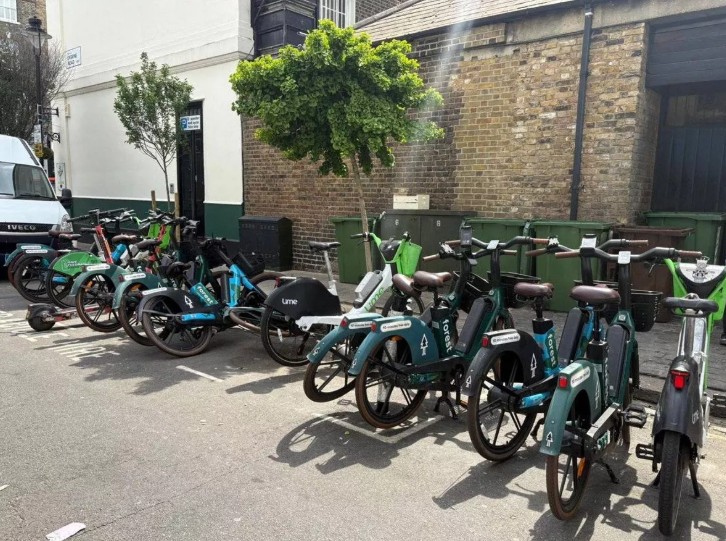

The prime minister says that e-bikes “can be a real frustration” when used irresponsibly or parked obstructively on the pavement, as the government announces the terms of its public consultation on introducing standardised licensing for dockless e-bike hire operators.
We first reported on the planned consultation seven weeks ago, and the delay it would cause to the Mayor of London’s efforts to end the ‘patchwork’ approach to e-bike regulations. Sadiq Khan subsequently likened the situation to the “Wild West”.
The English Devolution Act gives the Mayor of London and other ‘strategic authorities’ the power to determine the licensing and regulation of e-bikes across the city. However, the relevant powers to introduce city-wide licences are reliant on the Department for Transport (DfT) separately setting out additional regulations. The department has now launched its public consultation set to examine what the scope of those regulations should be.
In the foreword to the launched public consultation, Roads Minister Justin Madders – who is responsible for micromobility policy (concerning ‘e-cycles’, ‘cargo cycles’, ‘e-scooters’ and ‘pavement robots’) but not active travel – said e-bikes can play “a significant role” in achieving the government’s aim of delivering economic prosperity across the UK.

“Improving local transport connectivity and increasing transport choice through new and expanded shared cycle schemes in the right places can help to facilitate economic growth and break down barriers to opportunity. Encouraging the use of lightweight, greener vehicles can help us reduce carbon emissions and accelerate to net zero.”
> Plans for London-wide e-bike hire licences delayed by impending public consultation
However, Madders added: “The current situation is not working for local people or for scheme operators. There is too much uncertainty and inconsistency for responsible shared cycle operators to confidently invest and expand their offerings and too few powers for local authorities to tackle issues arising from these schemes. All of this also contributes to a suboptimal user experience.”
The consultation, which only applies to England and is open until 1st January, asks for feedback on government proposals to enable combined authorities and the Mayor of London to award and manage licences for e-bike hire companies to operate. At present, the capital has a borough-by-borough system where e-bike operators have variable standards and agreements to adhere to, though many of these agreements are not bound by law and are open to misuse.
> Voi refuses to take bikes out of Ealing, Forest losing patience with Sadiq Khan
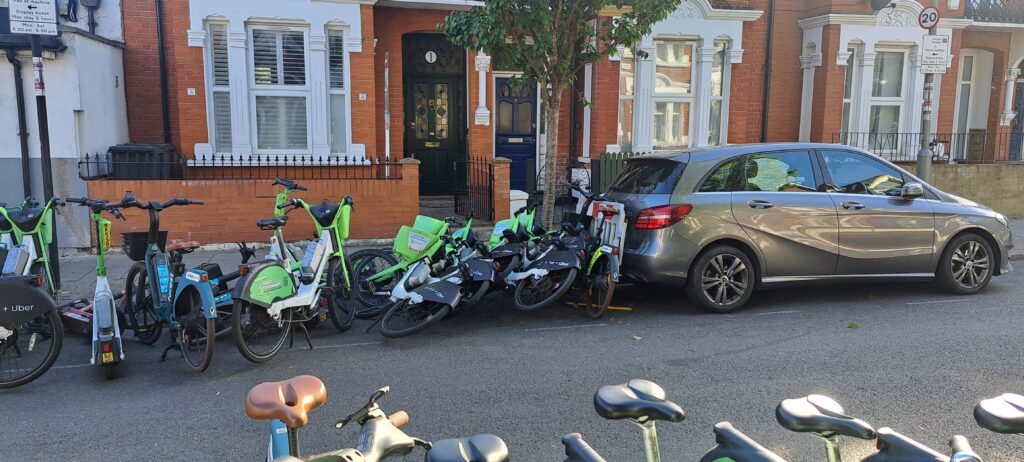
In addition to these devolved powers, the government also wishes to create “mandatory national requirements” to “ensure safety and establish common expectations regardless of where a scheme operates, making it easier for operators to plan growth and investment while giving local leaders confidence that schemes will always be sufficiently safe.”
Among the proposed requirements of e-bike hire companies to operate are plans for local parking and tackling anti-social behaviour, clear plans to manage and maintain their fleet, and data sharing with the local authority issuing the licence. The government also indicated it was undecided on whether to mandate insurance as part of each licence, whilst authorities will also be able to add bespoke conditions “that reflect local needs and priorities”.
E-bike hire schemes operated directly by a local authority, such as the docked Santander Cycles in London or Greater Manchester’s Starling Bikes, would not be subject to these standards, whilst the government is also considering exemptions for bikes stored within physical, non-obstructive infrastructure, such as Brompton lockers. Though e-scooters are currently banned on public roads except in certain pilot areas, the government is also open to legalising them separately.
The consultation is 100 questions long, with people asked of their own experience with e-bike hire schemes, their accessibility, as well as any physical difficulties such as a poor sense of balance or hearing difficulties, that impact their perception of e-bikes. Participants are also asked about their preferred pricing model for e-bikes (such as time or distance-based systems) as well as their thoughts on the degree of punishment they believe should be imposed for anti-social behaviour.
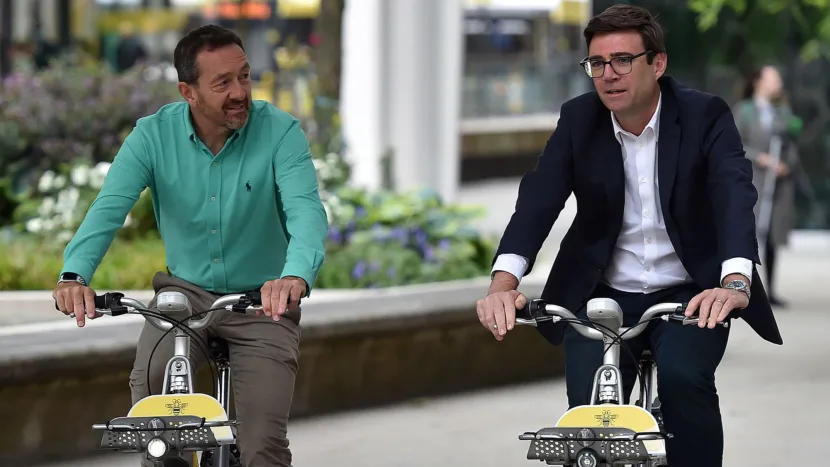
Prime Minister Andy Burnham has welcomed the consultation as the latest of one of the government’s “small but important everyday fixes to make our streets safer.
“E-bikes can make getting around that bit easier, but when they block pavements or are used irresponsibly, they can be a real frustration. I want to sort that by giving communities more control over where they are parked and making sure companies and riders play by the rules.”
With e-bike hire operators Lime, Voi, Beryl, Dott, Forest and Bolt all name-checked and quoted in the government’s statement announcing the consultation, the major companies have also welcomed the consultation. The proposed standardisation of rules and larger licensing areas are likely to enable each operator to significantly expand their operations to more customers.
The government also published quotes from disability charities, with the dangers and obstruction of e-bikes regularly held up as a reason to oppose e-bike expansion.
Eleanor Briggs, Head of Policy, Public Affairs and Campaigns at Guide Dogs, said: “For people with sight loss, badly parked rental e-bikes are a barrier to independent travel, blocking pavements, creating unexpected obstacles and making it harder to navigate safely. We look forward to engaging with the consultation and working with government, local authorities and operators to ensure rental schemes are safe, accessible and work for everyone, including people with sight loss.”
Mike Wordingham, Head of Policy for the Royal National Institute for Blind people, said: “Dockless e-bikes are heavy, fast, silent and unpredictable. An astonishing 92% of blind and partially sighted people tell us they have had to walk into the road due to street obstacles such as e-bikes.
“Tackling rider behaviour will be difficult, and it’s vital the desire for local flexibility doesn’t lead to a patchwork of regulations and inconsistency in implementing them. Everyone deserves to feel safe. We urge the government to listen to blind and partially sighted people and work closely with operators and local authorities to make sure regulations successfully reduce the risk these bikes pose to people with sight loss.”
National Active Travel Commissioner Chris Boardman echoed such sentiments saying “blocked pavements are unacceptable, particularly when they prevent disabled people from getting around safely. We absolutely need to sort this out.
“But we shouldn’t lose sight of the bigger picture. Shared bike use is booming, and that’s exactly what we want to see – affordable, healthy, low-carbon transport, available when you need it. Shared bikes offer predictable journey times and another option when other transport is disrupted.
“The demand is clearly there. Now we need to manage that success properly, keeping pavements clear while enabling even more people to enjoy the benefits.”