


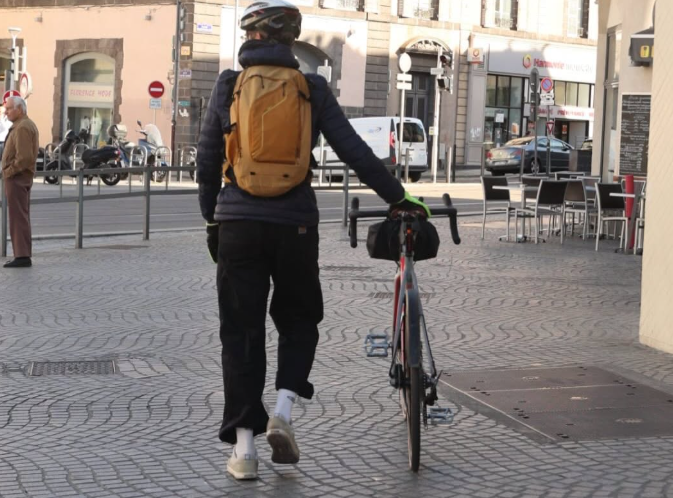

Next summer, the Tour de France Femmes peloton could end up being the only cyclists permitted to ride their bikes on certain streets in Clermont-Ferrand, after the city became the latest French locale to ban cycling in pedestrianised zones.
During Thursday’s Tour de France route presentation ceremony in Paris, it was revealed that Clermont-Ferrand will host both the finish of stage eight of the 2027 women’s race and the start of its ninth and final stage, which will conclude atop the iconic Puy-de-Dôme.
The news of the Tour Femmes’ impending arrival in Clermont-Ferrand, a university city located in the Massif Central in the centre of France, comes amid tensions been the local authority and its cycling community, just ten days after cyclists were banned from five city centre streets.
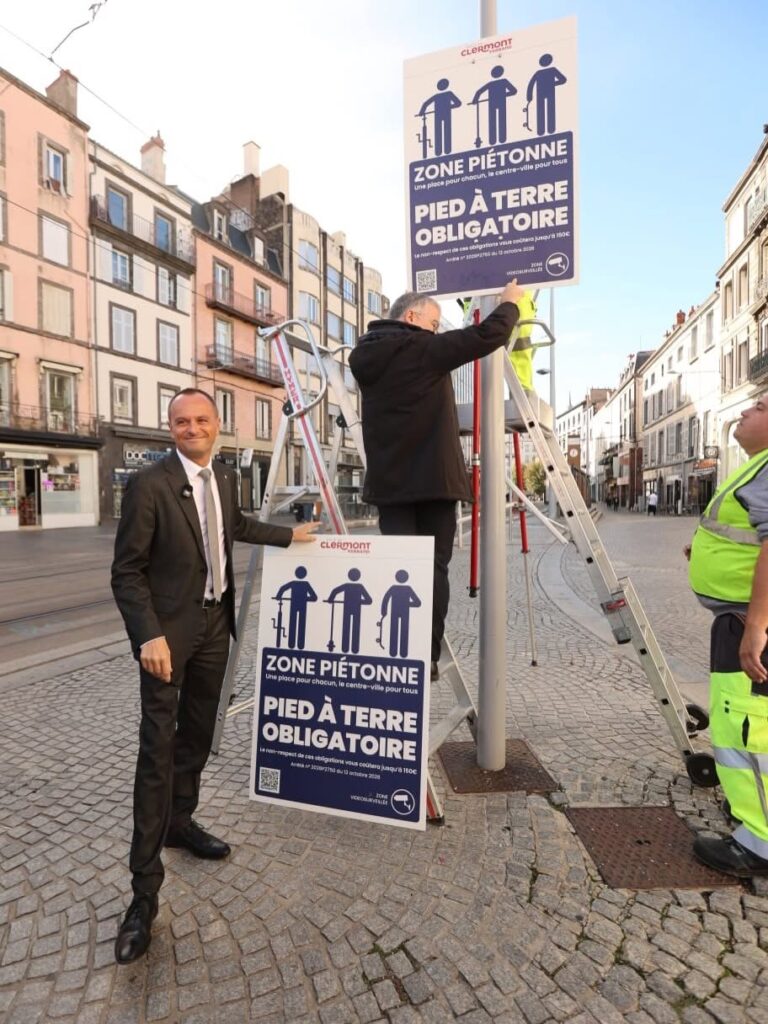
The official order, titled ‘Pied à terre’ (foot on the ground), came into effect on 12 October and means cyclists, scooter riders, and other users of personal mobility vehicles are now forced to get off their vehicles once they enter the five specified pedestrianised areas within the city centre.
Following a brief ‘awareness’ period, enabling residents to learn about the new rules, any cyclist caught riding their bike in a prohibited zone will be fined. Certain groups will be exempt from the ban, including police officers, emergency services, healthcare workers, postal and delivery workers, people with disabilities, and children under the age of eight.
The ban, which affects both standard and electric bikes, as well as scooters, unicycles, hoverboards, Segways, and certain mopeds, follows similar clampdowns on cycling in pedestrianised zones in Lille, Tours, La Rochelle, and Agen and was described by Clermont-Ferrand’s mayor as “common sense”.
“These pedestrian streets already exist. I want to sanctify them,” mayor Julien Bony, who attended this morning’s Tour de France route presentation, said in a social media post.

“The streets there are narrow, there are numerous outdoor cafes, the crowds are dense, and vehicles are travelling at a brisk pace in the middle of pedestrians. Local residents and shopkeepers have been warning us for a long time.
“This measure protects those who walk, starting with the most vulnerable among us. I am particularly thinking of the elderly, children, people with disabilities, and families. Everyone should be able to walk peacefully in the city centre. In a pedestrianised street, pedestrians have priority. It’s common sense!”
According to Bony, cyclists will still be able to make their way across the city centre using alternative routes.
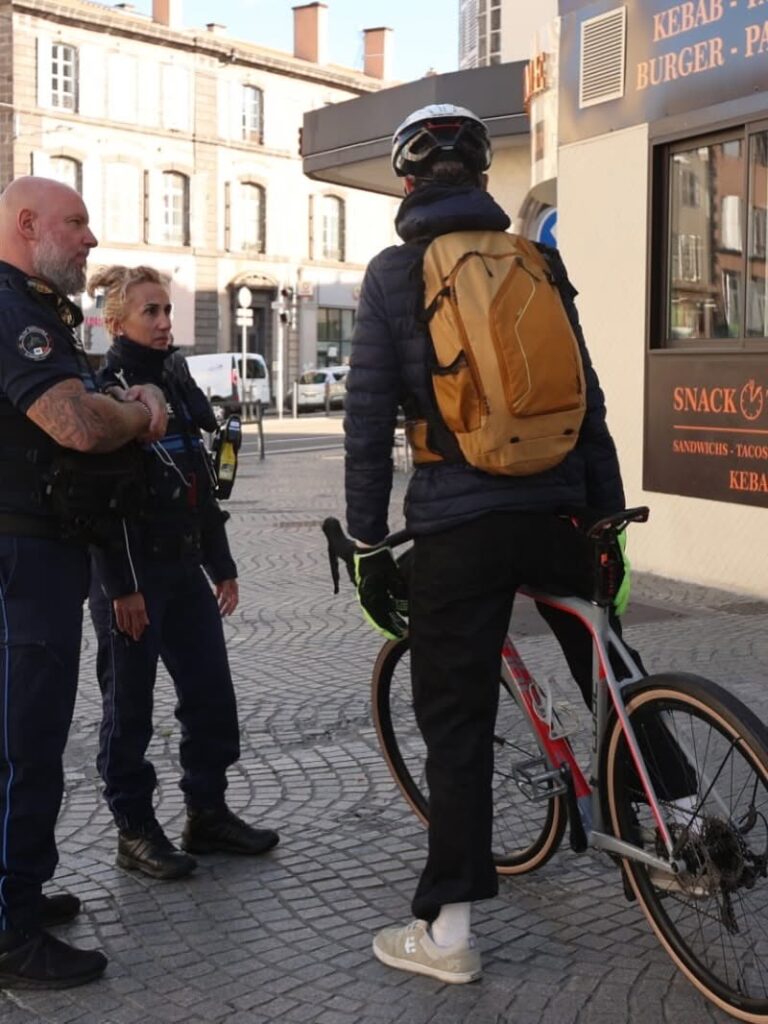
However, local cycling campaigners have warned that the ban will push cyclists towards dangerous roads, discouraging people from riding their bikes. Connexion reports that campaign group Vélo-Cité 63 have launched a petition against the order, which has attracted over 5,000 signatures.
“At a time when towns and cities are seeking to reduce pollution and create quieter town centres, Clermont-Ferrand is discouraging those who choose a mode of transport that is inexpensive, clean, quiet and good for their health,” the group said.
“Forcing cyclists to push their bikes discourages them from making the journey in the first place.”
The group also warned that the measure “forces cyclists to take detours via roads that are unsuitable and inadequately safe”, with some being “particularly accident-prone”.
According to recent road casualty statistics, cycling fatalities are on the rise in France. The National Interministerial Road Safety Observatory reported that 256 people have been killed while riding their bikes over the past year, a 37 per cent rise compared to 2019.
In 2025, 503 pedestrians were killed in France, with just one of those fatalities involving a cyclist.
Vélo-Cité 63’s complaints about Clermont-Ferrand’s bike ban echo the scathing criticism directed by cyclists at Lille city council when it voted to prohibit cyclists from riding in the centre of the northern French city in 2023.
Pierre Posmyk, the city councillor in charge of active mobility, claimed at the time that the ban only affected “very few streets,” and said that “we have had too much of an influx of bicycles.”
However, one local campaigner pointed out that telling cyclists to dismount “is easier than saying, we’re going to make a cycle track for them”.
“There are no alternative routes. The measure is too restrictive and is putting the brakes on using bikes in town,” Michel Anceau of the cycling campaign group Droit au Vélo (Right to Bike) said.
The following year, Tours banned cyclists from riding on Rue Nationale, its main high street, in a bid to “ensure the safety of all those who use the street”.