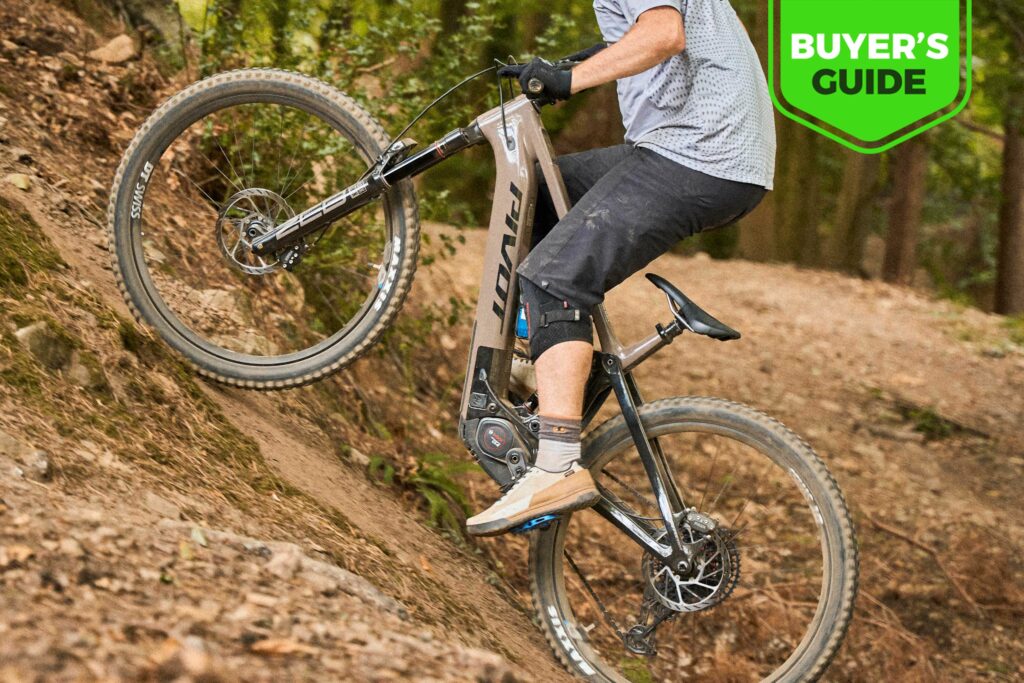


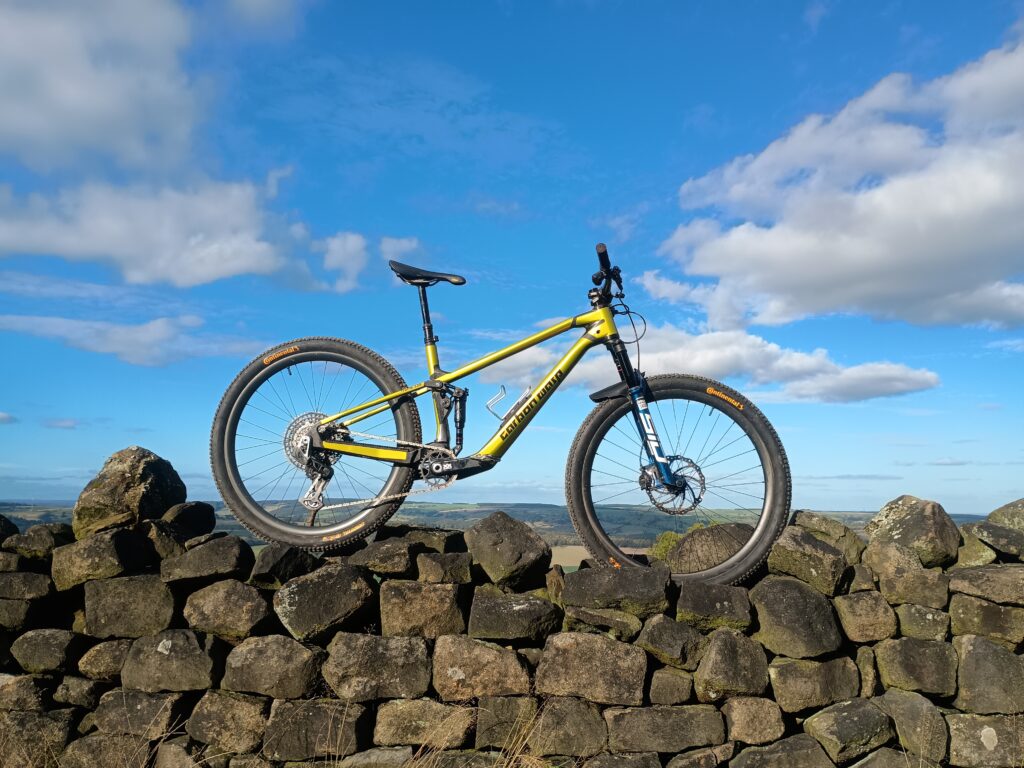

Home-baked carbon afficionado Carbon Wasp is a brand that rarely stops tinkering with its bikes, with changes and tweaks gracing its range fairly regularly. However, focusing on the Truffle-120, its downcountry/trail machine, the brand has introduced recycled carbon fibre into the mix while throwing in other materials to build its frame.
Laid up by hand in Leeds, the Carbon Wasp Truffle-120 is a bike that showed the brand’s true potential. With excellent geometry and well tuned suspension, it’s primed for all kinds of trail riding, although I found it a little rough around the edges. But the latter seems set to change, as the brand has re-released the bike with some pretty interesting tricks up its sleeve.
Firstly, the brand has introduced recycled carbon to the bike’s frame. The quest for recycled goodness isn’t an easy one. Admitting that recycled carbon isn’t anything new, the brand says that its fibres can be reclaimed by dissolving or burning off the resin, before those carbon strands are cut and formed into a fresh mat. As a result, these fibres tend to be rather short and randomly aligned, so really, carbon recycled in this way isn’t terribly strong.
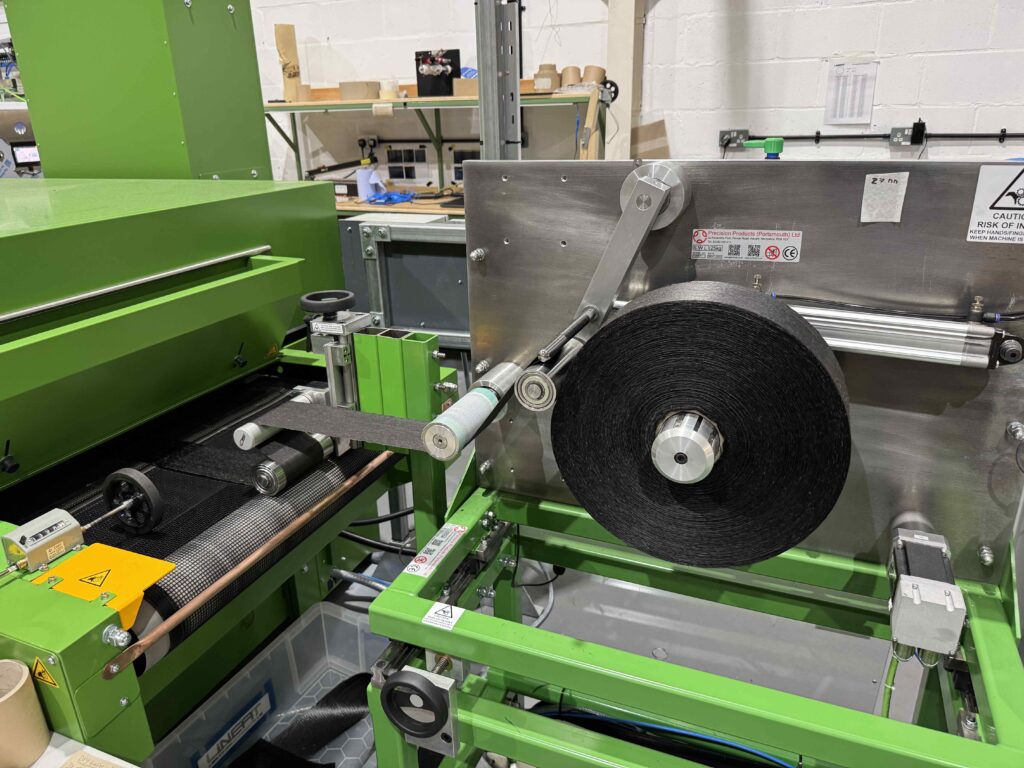
But Carbon Wasp has joined forces with Lineat Composites, another UK-based company that has developed a way of aligning those short-strand carbon fibres to achieve 80% of the strength of brand new, continuous fibres. This recycled fibre is sourced from industrial waste in the form of dry offcuts (mostly). With that, Carbon Wasp has chosen to use these because there are a lot of them around, they’re easy to process, and they’re cost-effective. So recycled carbon fibre produced by Lineat Composites can be found across Carbon Wasp’s range of bikes and components.
The duo is also working to reclaim carbon fibre from end-of-life parts, like frames, to be turned into pre-impregnated carbon fibre tape.
As for the Truffle-120, 10% of its frame layup uses recycled carbon fibre across the entire frame. Apparently, the overall weight of the frame hasn’t changed all that much, nor has the strength or stiffness. But this is just the start for Carbon Wasp and Lineat Composites, as the team aims to increase the amount of recycled materials over time, and they’re working with other suppliers to introduce bio-based resins into the mix.
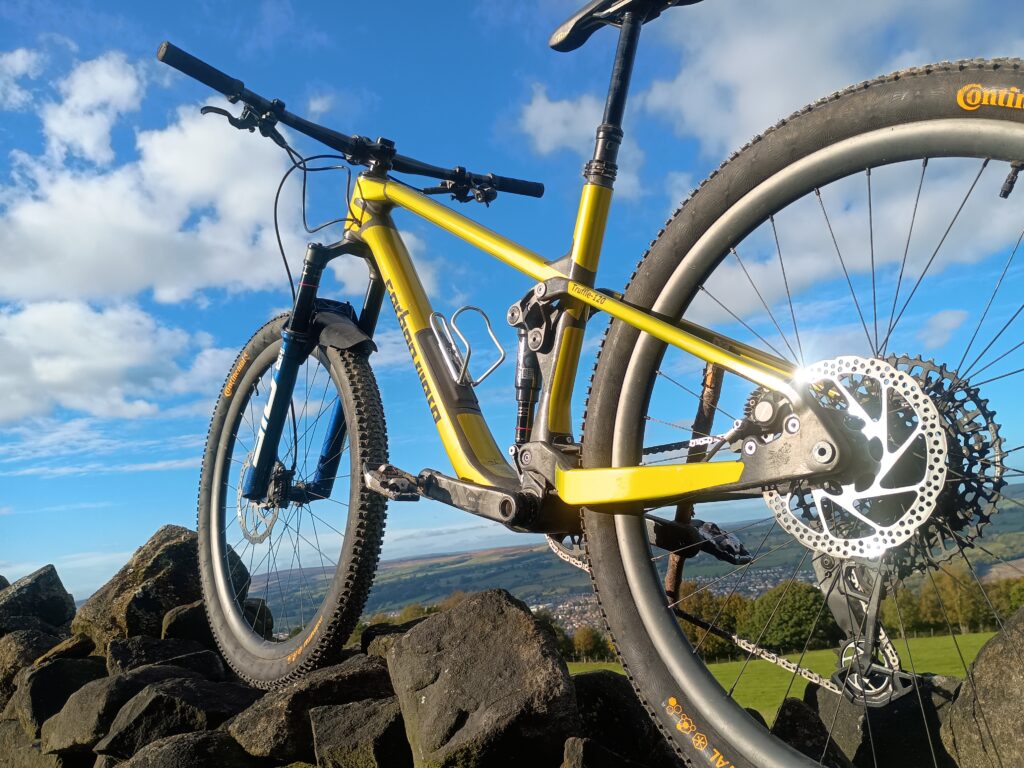
But that’s not all that’s changed for the Truffle-120, as the carbon linkage has been swapped for aluminium plates at both ends of the shock. This move has been made to make manufacturing the linkage simpler, as it’s easier to CNC-machine the components, rather than mould them from carbon, and bond aluminium bearing housings in place. It also helps the brand keep up with orders and reduce lead times.
As for the bike’s features, not all that much has changed, which certainly isn’t a bad thing. It still features downtube storage, internal cable routing, ISCG mounts, a threaded BB, Boost hub spacing, and UDH compatibility. The geometry of the old model has also been retained, and Carbon Wasp offers six chainstay length options, but rather than adjustable flip-chips, they’re available as an optional purchase of a new rear end. Speaking of the chainstay, it is proportional to the frame size, while the brand offers options for those who prefer longer or shorter chainstays.
Then, Carbon Wasp doesn’t do paint. Instead, it offers colours through pre-applied wraps. As standard, they’re available in single colours, but if you’re looking to get extra fancy, custom designs can be ordered for a bit of extra money.
Available as a frame only, the Truffle-120 offers 120mm of rear wheel travel, driven by a flex-stay and single pivot platform. A frame without a shock will set you back £2,700. If you would like a frame with a Cane Creek DB Inline shock, that’ll be £3,050.