



Transport secretary Heidi Alexander has pledged to go “hell for leather on active travel”, as the government announced that it will invest £104 million in the National Cycle Network (NCN) over the next four years.
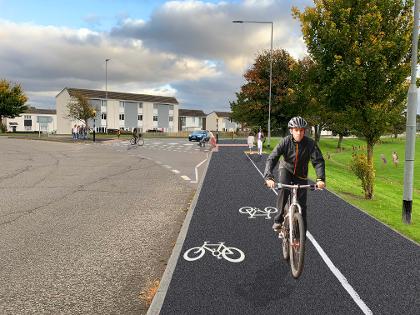
The funding, described by Active Travel England as a “record investment” in the NCN (the 12,000-mile-long UK-wide network of signed paths and routes for cycling, walking, and wheeling), will be used to support hundreds of new projects, including traffic-free routes, safer crossings, and resurfacing work.
The Walk Wheel Cycle Trust (formerly Sustrans), the charity responsible for maintaining and improving the network, will also be tasked with removing barriers that restrict access for wheelchair or adapted cycle users, as well carrying out repairs to bridges, tunnels, and former railway infrastructure along the routes.
Routes will also be made safer for women and girls, thanks to improved lighting, signage, and road markings. One of the major projects covered by the funding includes the English portion of the Avenue Verte, the NCN route linking London and Paris, along with new routes created by the HS2 corridor.
Work is also underway to establish England’s first walking, wheeling, and cycling wayfinding system, complete with standardised signage, route marking, and guidance on network planning and connectivity provided by Active Travel England and the Department for Transport.

According to Labour, the £104m investment builds on the government’s commitment to “establish the foundations of a national active travel network by 2030”. This ambition was first outlined in the government’s Cycling and Walking Investment Strategy, unveiled earlier this summer, which called for local active travel plans to be “consolidated into a single national digital platform”.
“This record investment gives us the long-term certainty required to improve and expand the National Cycle Network, creating safer and better-connected routes that make it easier to choose walking, wheeling and cycling for everyday journeys,” Active Travel Commissioner Chris Boardman said in a statement today.
“It’s another important step towards building an active travel network that works for everyone.”
However, while the government says the NCN’s purportedly first ever multi-year funding package will “provide the certainty needed to plan and deliver larger, more ambitious improvements”, some cycling campaigners familiar with the network aren’t so sure.
On social media, respected active travel journalist Laura Laker, the author of Potholes and Pavements: A Bumpy Ride on Britain’s National Cycle Network, wrote: “While long-term funding is key to the National Cycle Network’s success, £104m over four years is £26m a year… the equivalent of upgrading a single A-road junction.
“I’m not convinced this is the first long-term funding ever for the NCN… I’ve certainly heard this phrase before. There was long-term announced in the early 2020s, under Boris Johnson’s government, but subsequent years were then slashed, which I guess counts that one out.”
And here’s what else you get for £25m, which National Highways’ route manager describes as “not a lot of money for this type of engineering” – though it does have a ‘segregated footway/cycleway’ on one corner www.salisburyjournal.co.uk/news/2614939…
— Laura Laker (@lauralaker.bsky.social) September 22, 2026 at 12:15 PM
Pointing to a National Highways’ plans for a improvements to the A36 in Salisbury, Laker continued: “And here’s what else you get for £25m, which National Highways’ route manager describes as ‘not a lot of money for this type of engineering’ – though it does have a ‘segregated footway/cycleway’ on one corner.”
“The days of active travel being an afterthought, or a bolt-on, must end”
Nevertheless, speaking at Active Travel England’s Making Active Places conference in Manchester on Tuesday, transport secretary Heidi Alexander insisted that the current Labour government is committed to prioritising cycling and active travel.
Pointing to her work delivering cycling infrastructure while deputy mayor of London, Alexander told the conference: “My determination to deliver on active travel hasn’t left me. And as Transport Secretary, I’m really serious about building that integrated transport network. I’m really serious about increasing the use of public transport.
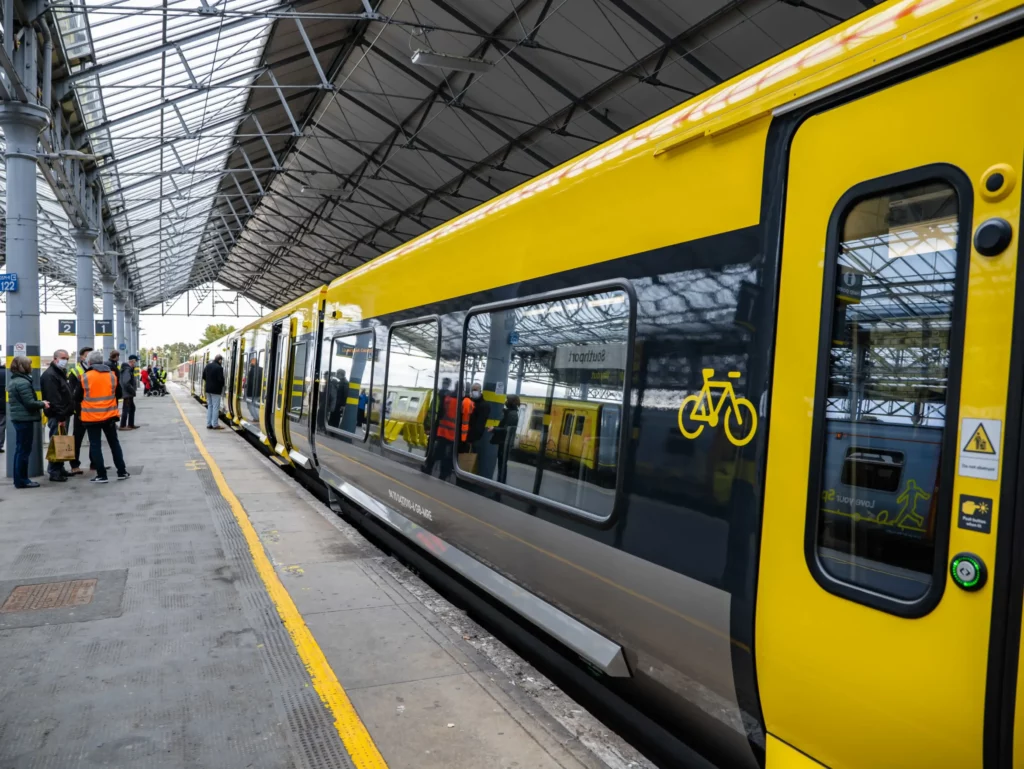
“And if we’re serious about giving people the choice and the tools to get out and get on, then the days of active travel being an afterthought, or a bolt-on, must end. Instead, I think we need to see walking, wheeling, and cycling for what they are. Essential parts of everyday journeys. That walk to the bus stop. Wheeling along a station platform. The cycle to work, to school, or to the shops.”
She continued: “It’s not about pitting one mode of travel against another. No one is declaring war on this or that. And you definitely won’t find me leading a charge of the Lycra brigade.
“I simply want to give people greater choice in their lives. I want a coherent transport system where each stage of a journey complements the next.
“Where accessibility is baked in. Where signage is clear and simple. Where all of us – from Olympians like Chris [Boardman] to fair-weather cyclists like me – feel confident and safe to choose the more active option.”
Referring to the government’s funding plans, Alexander said: “The vision is simple: safe, easy, accessible choices for more people in more places. Taken together, billions will be invested in active travel by 2030. Most of that will be devolved to local government, meaning record multi-year funding to make good on their long-term plans.
“And we must be ambitious. At least 60 per cent of children should be walking and cycling to school by 2035 – building on the landmark agreement we’ve signed with mayors to deliver 3,500 miles of footways, safer crossings, and cycle lanes.
“It’s why we are supporting local pilots, including for wayfinding, as we move towards a consistent national Active Travel Network.
“And finally, it’s why, today, I can announce £104 million to transform the National Cycle Network. That means maintaining and expanding the 12,000-mile network. Fixing bridges and updating signage. As well as developing new routes around the High Speed Two (HS2) line.
“I can think of few better ways to deliver on the Prime Minister’s vision than by going hell for leather on active travel.”











3 thoughts on ““The equivalent of upgrading a single A-road junction”: National Cycle Network set for £104m investment as transport secretary promises to go “hell for leather on active travel” – but campaigners are unimpressed”
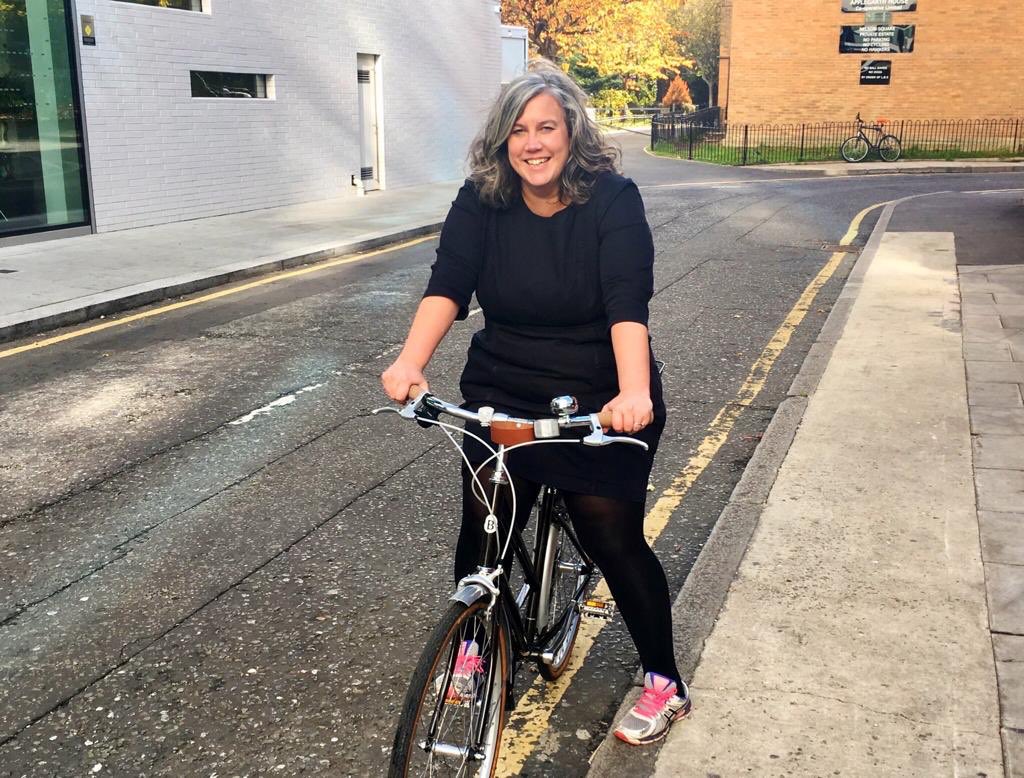
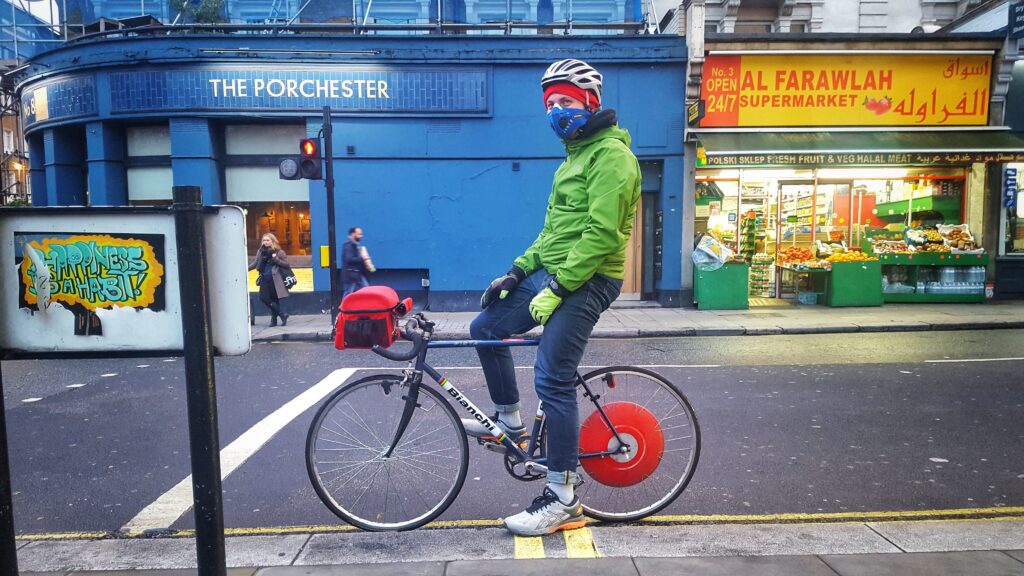
I love that picture of Heidi Alexander – a cyclist, on a ‘normal’ bike, in normal clothes. That’s what everyday cycling should look like.
I despise the Notional [sic] Cycle Network with an absolute passion. It’s just a jumble of blue signs, rather than meaningful connected infrastructure that facilitates the kind of everyday cycling embodied in that picture. There are sections near me that go along muddy fields, that have stairs in it, that go along unlit canal towpaths with plenty of hiding places for rapists and muggers.
Don’t give a single penny to the NCN, unless it commits to being the kind of infrastructure which can be easily used by an old lady on a ‘normal’ bike or 11 year old kid on a rainy Tuesday evening in February.
@the little onion I often go past the signs that literally feel like they are a joke pointing at a hedge.
I do hope the new routes around HS2 do go ahead. Would be an ideal opportunity to create a very good cycling corridor along the haul roads that have been created during construction.
I fear that this won’t happen as a cost saving exercise when the reality is that it’ll cost more to put the land back to how it was before! They’ve already done some of that near us rather than leaving the Greenway connected as it was for a short time in Berkswell