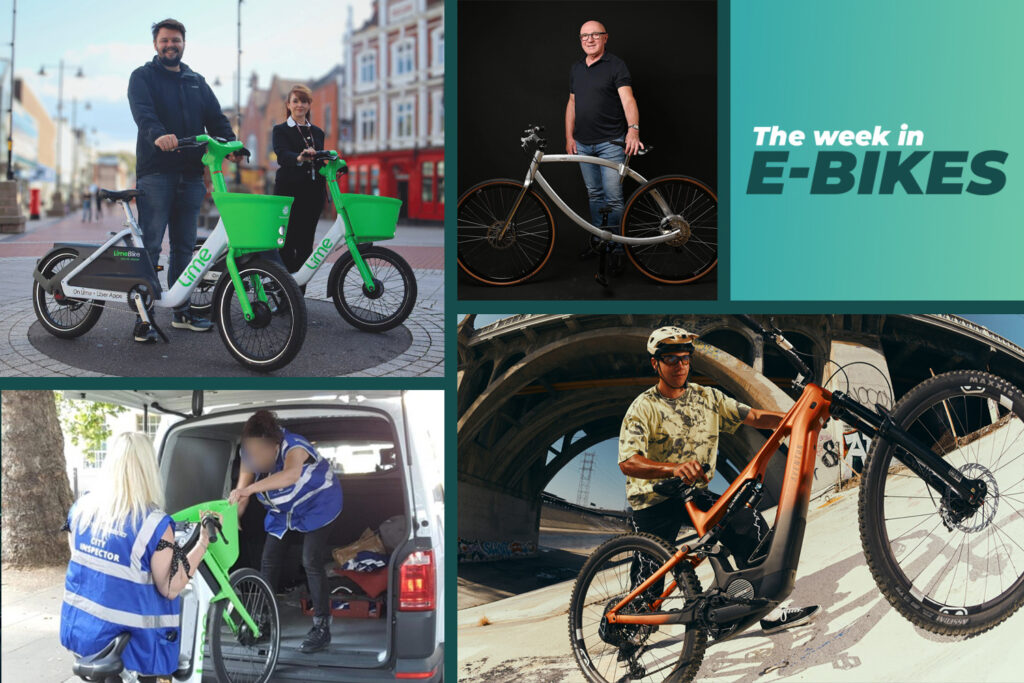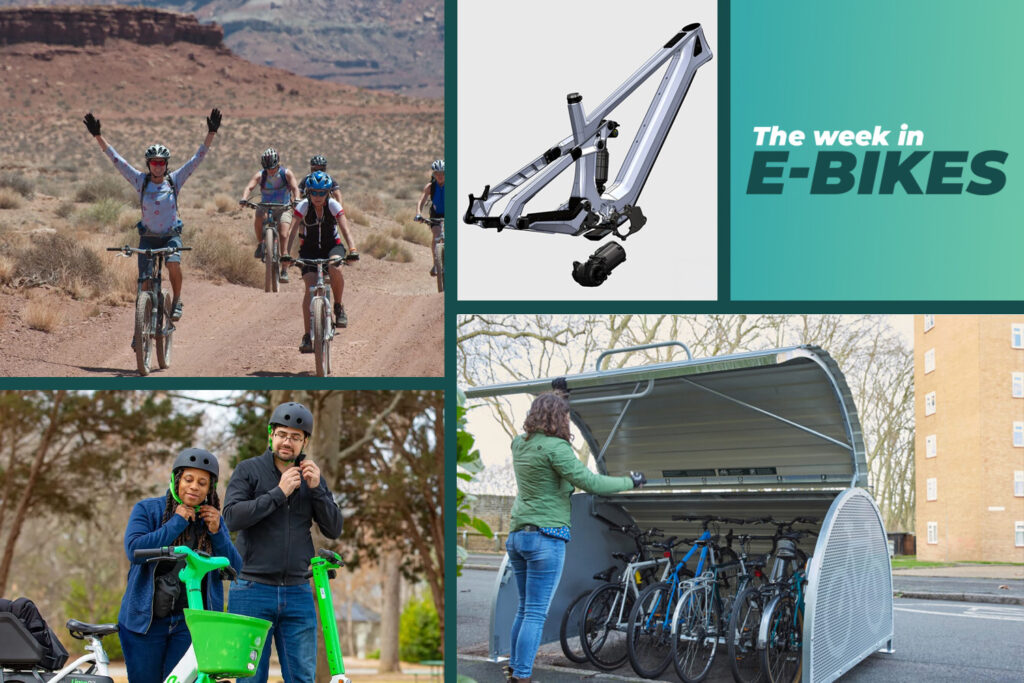

It’s time to round off the week with our complete guide to all the goings-on in the world of e-bikes. In this edition: a two-in-one concept from CNC specialist Actofive, big news from the West Midlands, US national parks aim to make things easier, and how e-bike storage is a barrier to e-bike ownership. Now, to the pub!
Could this two-in-one eMTB be heading to a trail near you?
View this post on Instagram
Innovative German CNC manufacturer Actofive Cycles has revealed its dream for a bike that can convert from leg-powered enduro to battery-powered e-MTB. The concept frame, revealed on the company’s Instagram account, features modular drive mounts and adjustable travel kinematics, so it can integrate a lightweight Maxon Air S motor or Pinion’s Smart.Shift electronic gearbox.
The customisability doesn’t stop there: with Modular Pivot Technology, the frame will accept a variety of wheels from 27.5 inch to 32 inch, plus travel configurations of 150/170 mm or 170/180 mm. A nice touch is that the battery compartment becomes downtube storage for a couple of water bottles when it’s in manual mode. No word on when or if the concept will see the light of day, but the idea of having a single bike that pulls double-duty is sure to appeal to mountain bikers in cramped apartments.
Lime hits one million rides in West Midlands
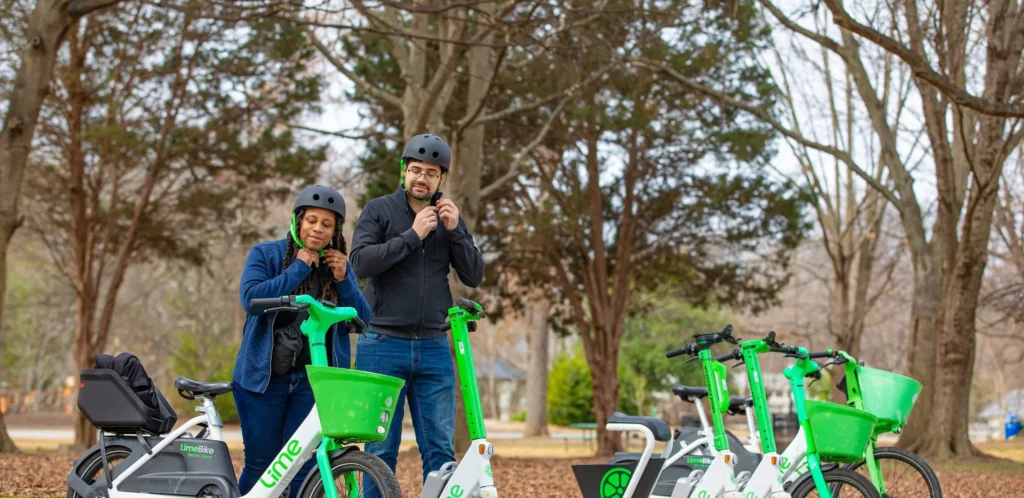
Lime West Midlands (Image Credit: Lime)
Hot on the heels of the West of England’s 16 million trips since 2020, Lime has hit one million rides in the West Midlands in the space of six months, according to Birmingham Live. In April, the e-bike and e-scooter operator launched in Birmingham, Coventry, and Solihull, before expanding to Sandwell and Wolverhampton in June. Apparently, 45 per cent of first-time riders used them again within a week, and one Lime addict has already clocked up 530 trips.
West Midlands Mayor Richard Parker told Birmingham Live: “Lime is making active travel an easy choice for short trips like going to work, meeting up with friends, or connecting to our wider bus, tram, and train network. This milestone shows there’s a huge appetite among residents and visitors for cleaner, greener, and more convenient ways to travel” .
US National Parks could open to e-bikes

Across the pond, the US National Park Service is proposing a rule to simplify e-bike regulations. As it stands, opening an existing horse or hiking trail to bikes and e-bikes requires the park superintendent to complete a multi-step process that involves assessing soil suitability and user conflict. The proposal, which is in line with President Donald J. Trump’s Executive Order 14314 (Making America Beautiful Again by Improving Our National Parks) will remove this red tape if it works as claimed.
“America’s national parks should be easy to access and enjoy,” said Jessica Bowron, exercising the delegated authority of the Director of the National Park Service. “This proposal would create a simpler, more consistent approach to bicycle and e-bike access across the national park system, making it easier for visitors to access the incredible landscapes, history, and recreation opportunities our parks have to offer while also allowing parks to manage their resources more efficiently.”
Forgive us if we don’t go and order ourselves a pile of MAGA hats, but credit where credit is due Mr President…
Residential parking highlighted as barrier to e-bike adoption

Cyclehoop cycle hangar (Image Credit: Cyclehoop)
A study published in Transportation Research Part A (it’s been an exciting week!) has revealed that residential storage concerns are a major barrier to e-bike adoption. Over 10,000 respondents took part in the Swiss survey, which highlighted how suburban areas, flats, and homes with limited transportation access lacked adequate bike parking. Thanks to their weight, bulk, batteries and higher costs, e-bikes exacerbate these problems, but the report recommends locked rooms in buildings as the ideal solution.
“Current housing stock is ill-equipped for parking of e-bicycles, especially in areas where regular cycling is historically low,” say the report’s authors. “While existing standards can help shape new housing stock, retrofitting existing residential buildings is an important policy challenge.”