


The Welsh transport minister says “there’s been a weaponisation of active travel” by political opponents, whilst previous government policy towards encouraging more people to walk and cycle has lacked strategy.
Speaking exclusively to road.cc, Deputy Minister Mark Hooper said the Welsh Government’s active travel policies would be more “strategic” and said progress was “not about how many miles of cycle path we lay” but on who uses it.
Last year, the Active Travel in Wales Annual Report found the Welsh Government had failed to meet any of the previous year’s recommendations and led to a warning that funding changes risked damaging the efficacy of long-term walking and cycle investment.
Since then, Welsh Labour lost re-election in Wales for the first time in the Senedd’s (Welsh Parliament) history. The Welsh Government is now led for the first time by Plaid Cymru, governing as a minority administration reliant on the support of other parties.
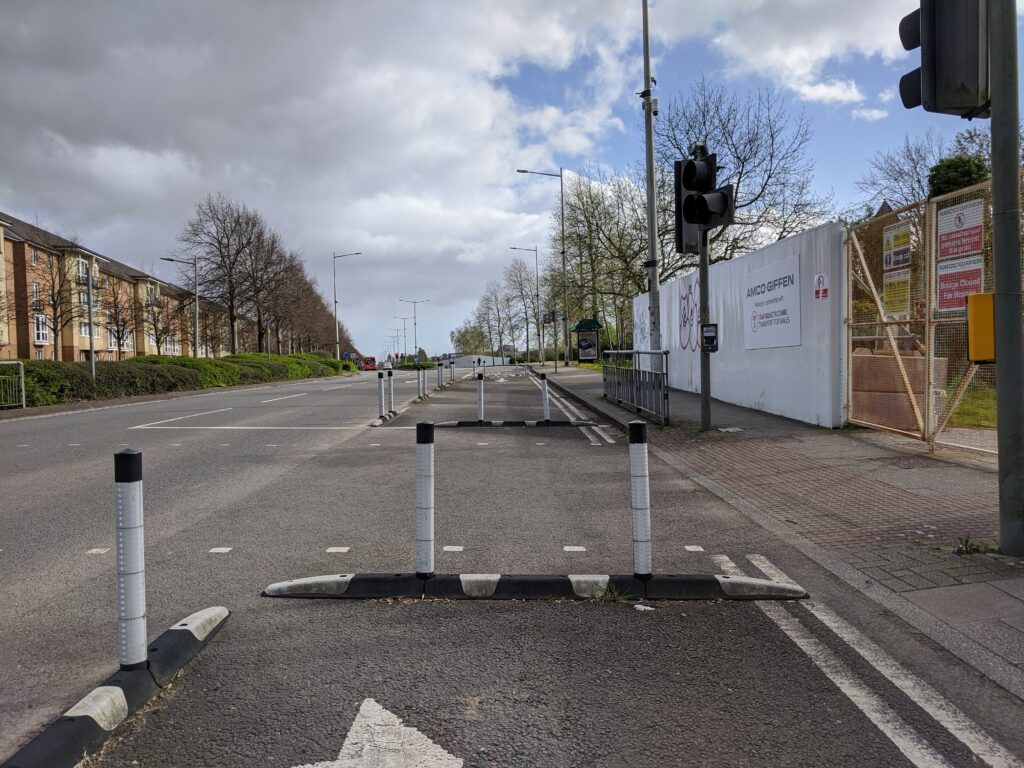
In the party’s first Programme for Government published last month, the government pledged to “Put active travel at the heart of Wales’s transport system, making it a practical, safe and inclusive choice for more everyday journeys.” Asked what that meant in practice, Hooper said it was focused on “making sure that the infrastructure we’re putting down now is connected to each other.
“Connected routes between places, whether that’s a train station, hospital, school or place of work, making those connections work is the critical thing.”
“It’s also being a bit more strategic than under previous administrations. I think [previous Labour governments] started from a point where we recognised that something needed to change, they recognised that we were a car-centric nation, and we needed to have that conversation and come to a conclusion that things needed to change. That’s a good thing to happen.
“Then I think there was a focus on making sure we need to go and invest, to show that we match that ambition. There was infrastructure that was part of a local council plan that didn’t necessarily link into other parts of what was going on in that council.”
Having confirmed that Plaid Cymru would maintain Welsh Labour’s recent policy of not ringfencing specific funds for active travel projects, Hooper denied that the narrower focus on connecting existing infrastructure was a result of the cost of infrastructure, insisting the government was focused on “being pragmatic and seeing solutions”.
“It’s about being focused on the end goal rather than just saying ‘I’ve laid down X, Y and Z.’ That’s the wrong way round. The change we’re looking for is deeper. The [previous] criticism of being unstrategic [sic] is about linking things up. There’s been some important things done in the active travel realm but the next stage isn’t about finding more schemes, it’s about keeping them connected.”
Whilst devolution in England has seen the creation of new combined authorities and elected politicians taking responsibly for regional transport policy, Wales has not seen the same development. Instead, Welsh councils cooperate as part of Corporate Joint Committees, seeking to drum up investment and to formulate their own integrated transport networks using both their respective council funds, and grants from the Welsh Government.
The committees are not directly elected, though Hooper confirmed the Welsh Government will soon be reissuing guidance for the committees to embed active travel into their regional transport designs.
“About half of the money we’re putting forward there is for active travel-related projects so it can make a real difference to communities. Money’s still flowing, but we’re asking Corporate Joint Committees to make the decision on a more strategic level, [so that] active travel is a thread that runs through [transport policy], rather than a pot dealt with in its own way.
“All of the wider transport aims have to be cognisant of active travel as part of the solution. Rather than it being a pot here or there it’s embedded across the network. We’ve got bus franchising on the way so making sure as we develop those routes, making those active travel connections work seamlessly is also key. I think it’s a better-connected approach than previously.”
Hooper added he “would be up for” the committees creating their own active travel commissioners, as seen in English regions, but added “I’m keen for them to sort out their own governance arrangements.” He added the Welsh Government’s job was to “interrogate” local active travel reports, “to make sure they’re following guidelines as they should be”.
Prior to Hooper’s ministerial appointment, Welsh transport policy gained attention for the roll-out of 20mph speed limits on the majority of roads in urban and residential areas from September 2023. Despite severe criticism of the proposal from some motorists and politicians, data published last year found lower speed limits had reduced the number of cyclists killed or seriously injured by 28 percent.
However despite the policy’s success Hooper, who worked as a government advisor whilst the policy was being devised, said the experience had impacted his approach to the job and to active travel.

“I’m a big supporter of 20mph and it’s one of those things where it’s made a real difference to safety on our roads for pedestrians and cyclists alike. But the way it was put across… I don’t think we spent enough time talking about the benefits with the people of Wales, we didn’t socialise the policy. We delivered the policy then tried to socialise it after.
“It’s a really good indication for how we should go about things in the future. I’m really keen to do some work on pavement parking for example, and to do that requires us to think about things in a different way than we would have done with the knowledge we’ve got from the 20mph experience.
> Reducing speed limits to 20mph protects cyclists and doesn’t delay traffic, new research finds
“I think there are big lessons learned from it, and how we talk about it. There’s been a weaponisation of active travel in some quarters who are in our Senedd and I don’t expect that to change. But I think there’s common ground to be found generally about being more active and it’s something that should be pursued.
“We’re the first Welsh government to have a minister for preventative health, which talks directly to the active travel agenda. So I think it’s just about recharacterising why active travel is important for multiple reasons.”
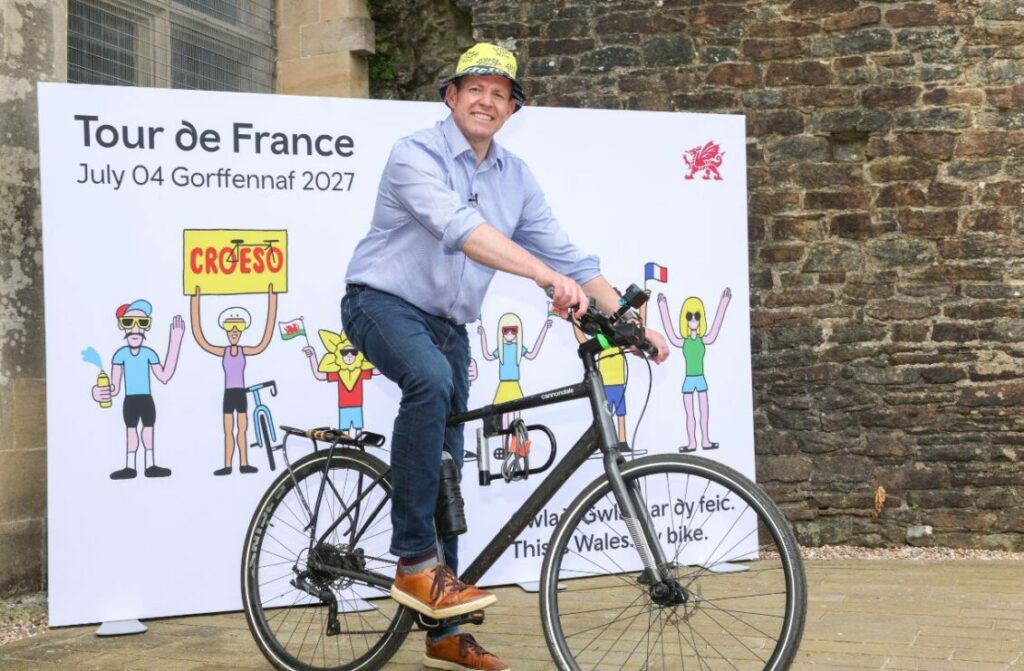
Similarly re-characterised is the Grand Départ for next year’s Tour de France, with stage three of the men’s race taking place entirely within Wales, from Welshpool to Cardiff. Whilst Hooper stressed the event would be “fantastic”, he said he wanted the event to leave behind “the feeling that cycling is for everybody.
“The opportunity isn’t just about getting more people my age into lycra on high-speed bikes. It’s about getting everyone feeling like cycling is for them. Most of us cycled as children but lose the habit. This is about how we get back in the habit and make people feel safer on the roads.”
Hooper added he would be attending a ‘glow ride’ later in the week, organised by Cycling UK and calling for politicians, including in the Welsh government, to invest in infrastructure that makes cycling safer for women and children.