


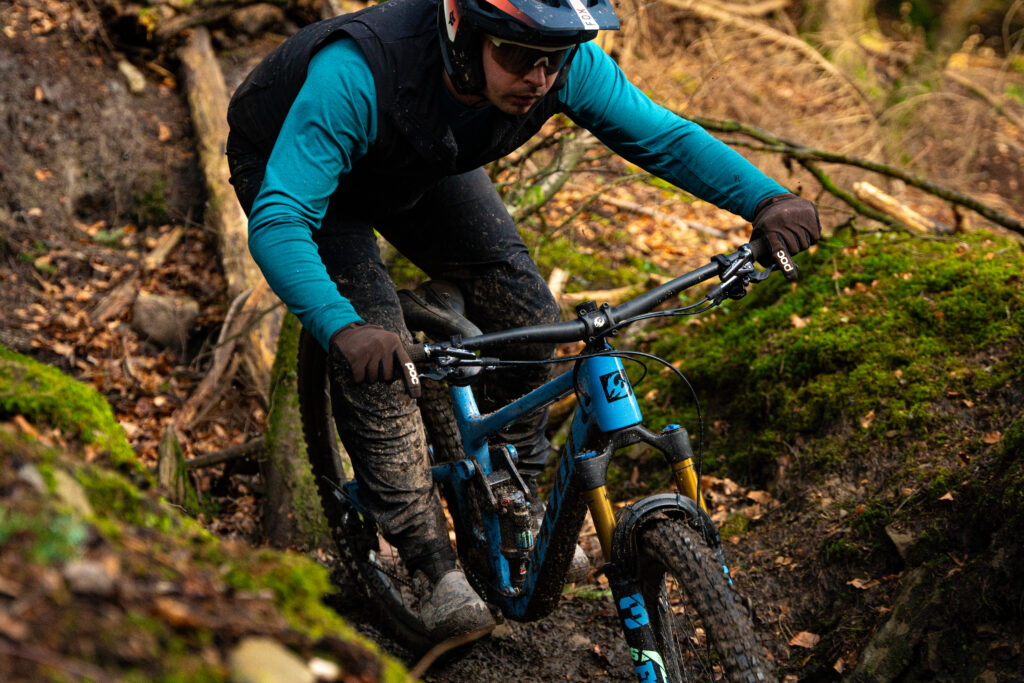

Depending on where you live, you’ll have a plethora of locations to head out with your mountain bike. But not everywhere is rife with mountain bike trails, and let’s face it, many of the tracks found within the perimeters of a trail centre may not have the challenge or thrill that more advanced riders are looking for. That’s when we all head towards those ‘hidden gem’ trails that aren’t actually legal. A study led by Paul’s Cycles suggests that the lack of legal but more challenging trails is the root cause of illegal or ‘off-route’ riding in England.
In the study, Paul’s Cycles reckons that infrastructure limitations could push riders to head for illegal trails, as they hunt for tracks that suit their skill. The company has gone as far as to rank counties across the country for their ‘trail richness’, based on how many trails they contain that are labelled as ‘hard’ using AllTrails.
It has found that the 12 counties (including Tyne and Wear, Herefordshire and Bedfordshire) that have the fewest trails account for 18.8% of England’s land area, while containing 3.4% of the country’s ‘hard’ trails. To compare, the top-ranking counties hold over 60% of the trails, while only being 9% larger in land area. It adds that 78% of England’s Right of Way network is inaccessible to cyclists at the moment.

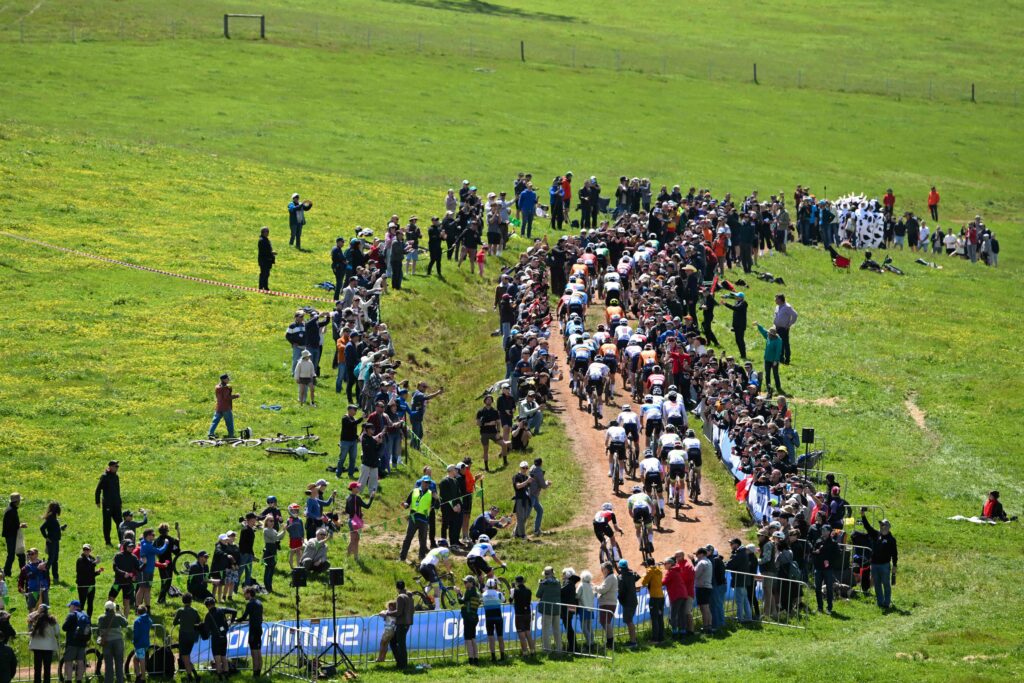
As such, the study has found that 98% of mountain bikers have ridden illegal trails, with 74% of them heading to off-piste tracks during most rides.
“Illegal mountain biking isn’t driven by bad behaviour; it’s driven by a lack of suitable infrastructure. Riders aren’t actively looking to break rules; they’re looking for progression, challenge and flow. In many parts of the country, that simply doesn’t exist within official trail networks.” Paul’s Cycles’ Managing Director, Tom Thornley, states.
James Allsop, who runs Peak and Moor Mountain Bike Guiding, adds, “As a professional, I don’t promote or condone riding unsanctioned trails, but I do offer guidance. The current rights-of-way system is archaic and broken, as exclusion is often based on historical usage rather than modern suitability.
“In the Peak District, we see many suitable, sustainable natural trails that are illegal to ride, while some legal trails are often eroded or overcrowded. We need a system that spreads this impact more fairly.”
He continues, “Naturally, that leads to the creation and use of unofficial trails. If we want to reduce off-route riding, the solution isn’t enforcement; it’s investment. Build better, more progressive trail systems locally, and riders will use them.”
Do you usually head for unsanctioned, illegal, or off-route trails on the regular? Let us know why in the comments.
















9 thoughts on “98% of mountain bikers have ridden illegal trails because official ones aren’t challenging enough, claims new study”
It’s far less about finding challenging trails, it’s about finding trails full stop. Only around 22% of paths in UK are bridleways and thus legal to ride. Here in Sheffield/Peak District, only 11% of paths are bike legal. So you either ride footpaths or ride on road. Seeing that the biggest benefit of off road riding is no dangerous drivers, roads are often not a real option.
Plus, most of the distinctions as to what is a footpath and what is a bridleway is purely arbitrary. Particularly as most paths to most places would have been used by by folk on horseback.
@imajez Most people would have walked, but we take your point.
I’ve never had a problem with riding on stoned tracks, designated as footpaths, but I’m not ripping up the surface on downhill footpaths. 0:-)
Is that riding with The Jimi Hendrix Experience and The Grateful Dead on the headphones?
There I was, trying to be serious! I was trying to differentiate between soft footpaths & gravel or surfaced tracks.
And no, I have never ridden wearing headphones/buds. I did try ear buds once when walking the dog & didn’t like the loss of awareness.
For the pedants; I don’t have a moral problem with riding on isolated ‘surfaced’ footpaths nor have I ever encountered any problems with other users when riding on said footpaths.
@ChrisA serious…
@ChrisA the surface make up of a path bears zero relationship to it being a footpath/suitable. I once got lectured on why I shouldn’t be riding a footpath by a driver of a Range Rover on a lovely tarmacked road. Another time I was lectured by someone blocking my way on a singletrack path that was built by cyclists, who said I should only be on large wide paths. The parallel wide path was a footpath. But these are very rare exceptions. I ride sensibly and most folk are usually entertained by my polite presence.
Also most footpaths would have been paths used by horses in ye olde days, they often conveniently got mislabeled/demoted by rich landowners who failed to get path denied altogether when rights of way were being drawn up.
@imajez Not sure I follow your argument.
My point was that I personally do not use dirt tracks, designated as a footpath, where I am going to rip up the surface. I am less concerned with riding on hard pack tracks and surfaced roads that are designated as footpaths.
That said, I do ride sedately and for several years accompanied by my small children.
The horse thing is a bit of a red herring. In the old days the rich landowners would have been among the few that rode. Most people would have walked.
Maybe the problem is the bikes are too good to make the trails challenging. Hence the growth of trail centres. Most MTBs are ludicrously competent now, particularly e-MTBs. Want a challenge? Change the bikes to something less competent.
@SecretSam Hence the rise of gravel bikes, which are just less capable drop barred bikes.