



The Irish government’s decision to introduce a mandatory helmet and hi-vis law for e-scooter users has sparked concerns from active travel campaigners that “nanny state” interventions may only serve to discourage active travel, amid growing calls for a crackdown on high-powered, illegal e-bikes.
This week, the Irish government signed off on new regulations which will raise the legal age for riding an e-scooter from 16 to 18 next month, while making it a legal requirement for e-scooter users to wear helmets and hi-vis clothing.
Speaking at a press conference on Wednesday, transport minister Darragh O’Brien told parents that they “should not be buying these e-scooters for kids right now”, following “a concerning pattern of serious and life-changing injuries” caused by the vehicles.
-1024x683.jpg)
According to health minister Jennifer Carroll MacNeill, 64 per cent of paediatric head injuries treated in Irish hospitals are a result of crashes involving e-scooters, while 93 per cent of children involved in those incidents were not wearing helmets.
Meanwhile, Sean Canney, the minister for road safety, announced that legislation will be drafted later this year to introduce a licence and registration requirement for e-scooters, and that the government will look into proposals to introduce mandatory insurance for the increasingly popular mode of transport.
Canney said his department will work with the Road Safety Authority to ensure such requirements do not make it “overly burdensome” for people who use e-scooters appropriately.
The new e-scooter legislation, which will effectively reclassify the vehicles as mopeds, has been enacted in the wake of a confusing few months for the Irish government and its stance on active travel.
Back in February, the Department for Transport was forced into an abrupt legislative U-turn after it announced that plans to introduce mandatory helmet and hi-vis rules would also include bicycles of all kinds, even those without a motor – only for that official government announcement to be almost immediately contradicted by Tánaiste Simon Harris.
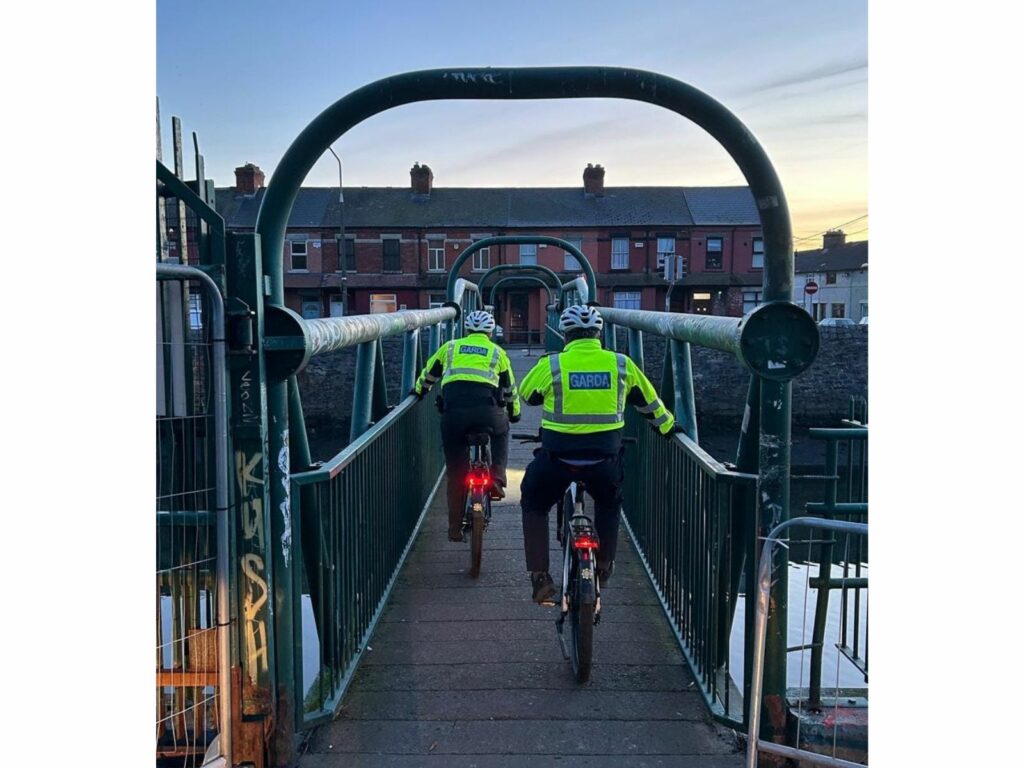
According to the government’s initial statement, the proposals, though focused on e-scooter and e-bike users, would also see cyclists not wearing protective gear or reflecting clothing fined by the police – making Ireland the only EU member state to implement such a measure.
“Requirements for mandatory helmets and high-visibility equipment are currently being considered for e-scooters, bicycles, and e-bikes,” the department said at the time, when asked about the scope of the proposals first revealed in January, seemingly in a bid to tackle concerns about the growing number of collisions involving e-scooter users.
However, speaking in the Dáil, Harris, Ireland’s deputy prime minister, insisted that there were “no plans” to change the law to make helmets mandatory for cyclists riding non-motorised bikes, contradicting the message sent out by one of his government departments just hours beforehand.
Things took another twist last week, when road safety minister Canney appeared to resurrect the suggestion that the crackdown on e-scooters could also potentially apply to those riding e-bikes, as well as non-motorised bikes.
“We will look and see how we will progress with scooters, what effect it will have. If it’s a benefit, then of course we will look at helmets and hi-vis on cyclists as well,” he said.

Canney’s comments were criticised by the president of Cycling Ireland, and former government minister, Ciarán Cannon, who responded to the minister’s suggestion by arguing that “presenting mandatory helmets and hi-vis as a serious road safety intervention is misleading”.
“It is performative policy-making that diverts attention from real risks and risks making our streets less safe, not more,” he said.
“The greatest danger to people cycling or using scooters does not come from their clothing or headwear. It comes from motor traffic speed, volume and road design. Helmets do not prevent collisions. High-visibility clothing does not slow vehicles, fix junctions, or address dangerous overtaking.
“Fewer people cycling or scooting does not make roads safer. It makes them more car-dominated, and more dangerous overall.”
Cannon’s position was echoed in letters to the government, published this week through a Freedom of Information request submitted by the Irish Independent.
According to the records obtained by the newspaper, 124 items of correspondence and parliamentary questions concerning e-scooters, e-bikes, and scramblers were submitted in the first three months of this year, compared to just 14 on the same subjects during the entirety of 2025.
One letter claimed that high-powered electric ‘e-bikes’ were “essentially motorbikes” in disguise, with many being used without lights, helmets, or any hi-vis clothing.
Another member of the public claimed that youths riding modified fat-wheeled electric bikes were causing “havoc and accidents” in a local park, while one Cork resident said delivery riders on e-bikes were “ignoring the rules” by constantly riding on pavements.
However, some claimed a widespread “safety crackdown” on e-scooters, e-bikes, and cycling in general would only discourage active travel.
“International evidence shows such mandates reduce uptake of active and shared transport, pushing trips back into cars and directly undermining Vision Zero, public health and climate goals,” one letter-writer said, while another told the government their plans represented “a complete overreach and pure nanny-state behaviour”.







25 thoughts on ““Nanny state” hi-vis and helmet laws will discourage active travel, campaigners warn as Irish government signs off on new e-scooter rules amid claims illegal e-bikes causing “havoc””
They should concentrate on the road users who do most of the killing and injuring: car drivers.
The latest moral panic.
“From August, the legal age to ride an e-scooter in Ireland will rise from 16 to 18”
But, in Ireland you can still drive a:
– moped from the age of 16
– 125 cc motorbike from the age of 17
– 3.5 tonne car from the age of 17
So that makes complete sense.
@Benthic A125 motorbike can be ridden by a 17 year old can do about 75MPH; a legal e-bike that a 17-year-old cannot use can do about 15MPH.
@kingleo They’re only imposing the 18+ age limit, raised from 16, on escooters, not legal ebikes. There is no minimum age for riding an EPAC in Ireland.
“… following “a concerning pattern of serious and life-changing injuries” caused by the vehicles.”
…
Seriously…
“… caused by the vehicles.”
Come on @Ryan Mallon
Do better.
@mitsky
@Ryan Mallon is quoting transport minister Darragh O’Brien, so that’s who you need to direct your ‘Do better’ at.
[Edit] My mistake – the quote ends before the ’caused by’ bit – as you were.
Although, since we don’t actually know what patterns or incidents he’s referring to, it’s possible* that they were indeed caused by the vehicles – they could have malfunctioned or fallen apart, resulting in the injuries.
[* if unlikely]
Surely its entirely sensible to mandate the wearing of helmets if 64 per cent of paediatric head injuries treated in Irish hospitals are a result of crashes involving e-scooters and 93 per cent of children involved in those incidents were not wearing helmets.
We can gnash our teeth about the part that cars and other vehicles are playing in these issues but I don’t know how anyone can argue that helmets would not be a very good requirement.
Those numbers (even if taken at face value, and they’re often not actually what they seem) don’t tell us anything about whether helmets are a good idea, since we don’t know the base rate of helmet use. If only 7% of users are wearing helmets to start with, then they’re not actually making any difference.
There are more total head injuries suffered by those in cars than those riding e-scooters in Ireland; same in the UK.
If, for some reason, you are concerned about one particular body part being injured whilst using transportation in Ireland, and really wanted to get those numbers down, would you also advocate mandating helmets for drivers and their passengers?
@mctrials23 Hmm;
Citing data that google suggests is from a single hospital…
A hospital that looks to be in the middle of a city so will have a massively disproportionate chunk of said injuries and doesn’t get the biggest cause of traumatic head injury (car crashes) because there are far easier to get to A&E departments…
(Though will note that the data probably does support investigation, at least into mandatory helmets for children given high rate of beginners etc.
Plausibly also supports offering training in schools and building better facilities)
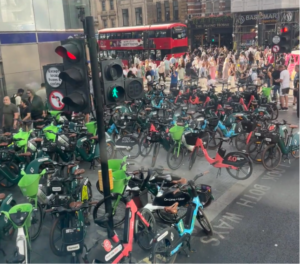
What’s going on with the scooter photo in the article? – that person appears to be attempting to ride two scooters at once. No wonder there are lots of accidents if that’s how people are using them.
@mdavidford, AI slop.
Don’t think it is AI, actually – it turns out Wolt (on the rider’s jacket) is a company that runs scooter schemes in some cities, so I think this is an employee collecting/redistributing the scooters in a very H&S-non-approved manner.
They’re unlikely to be contributing to Irish injury stats, though, because it looks like they’re in Israel.
@mdavidford, yes, you’re right.
@mdavidford Plus the police in Israel have bigger things to worry about …
… Giants dressed as bears.
(And possibly what British bobbies are doing in Israel…)
They have highly relevant skills in chant detection and suppression.
(The bobbies, not the bears.)
@mdavidford I can see that might be of interest, although the bears claim they were just having a picnic.
@chrisonabike Not a claim that would bear scrutiny if they’d paws to think about it – the slogan wasn’t just being chanted, it was ursine too.
In any case, they’re bang to rights on the public defecation charges.
@mdavidford while some may be grizzly about land issues and others there on a black bear lives matter protest most had come for the spectacled.
@chrisonabike These are polarising issues – anyone attending would have known there was trouble bruin.
@chrisonabike Will you two please stop panda-ing to one another?
@mdavidford, skillz, innit
I am moderately OK with a bit of a push away from non-EAPC / mobility vehicle “e-things”.
(Though if they’re going there a bit of work on the supply side seems a sensible addition).
But are they also going to mandate hi-vis for motorcyclists and if not, why not? If it’s “for their own safety” then surely that should also apply to normal cyclists, pedestrians, horses and other animals on the roads… ?
This couldn’t just be a knee-jerk reaction to a perceived “serious issue”, shurely…?
Typical Irish government “is there anything to be said for more legislation?” to channel Father Ted.
There were laws in place already to govern this – U16s not allowed to use them, one person per scooter, lights required, 20km/h limit (weirdly at odds with the EU 25km/h limit) – which pretty much aren’t enforced so the solution is to knee-jerk introduce a licensing regime that hasn’t been thought out and will at best prove unwieldy and at worst unworkable, then have clueless gombeens like Canney start talking about scope creep?
As is usual in this country, the minor party in government (usually unjustly) gets the blame at the next election and so it was with the Greens who had advanced the active travel agenda in fits and starts. Now the government is propped up by a heap of single issue independents – Canney included – whose main priority is usually more roads. They’ve also passed a “critical infrastructure bill” designed to circumvent the normal planning process the first element of which was a ring road for the same Galway that had an utter toddler like meltdown when a cycle lane was proposed a few years ago. It also includes watering down environmental concerns about these which will attract huge fines from the EU in 10 years time as they’re there on foot of EU directives, but sure that’s all right cause the other lot will have to handle it then
/rant
This is a strange reactionary knee jerk overall.
But what is this “are essentially motorbikes in disguise” waffle?
“One letter claimed that high-powered electric ‘e-bikes’ were “essentially motorbikes” in disguise, with many being used without lights, helmets, or any hi-vis clothing.”
Surely, they simply ARE motorbikes?