



Spend any amount of time following the bicycle industry recently, and you could be forgiven for thinking that Chinese-made bikes are about to take over the world. We have seen what Chinese manufacturers can produce and have been mighty impressed, but more importantly, the pricing is what has been catching Western eyes.
Then there was China Cycle 2026. Plenty of Western media went to Shanghai and came away fascinated by what they saw. Suddenly the conversation wasn’t about whether China could manufacture good bicycles. The conversation was whether Chinese-made bikes could start seriously challenging the established Western bicycle industry, and I had largely bought into that narrative. Then I went to Fulong…
Where are all the Chinese bikes?
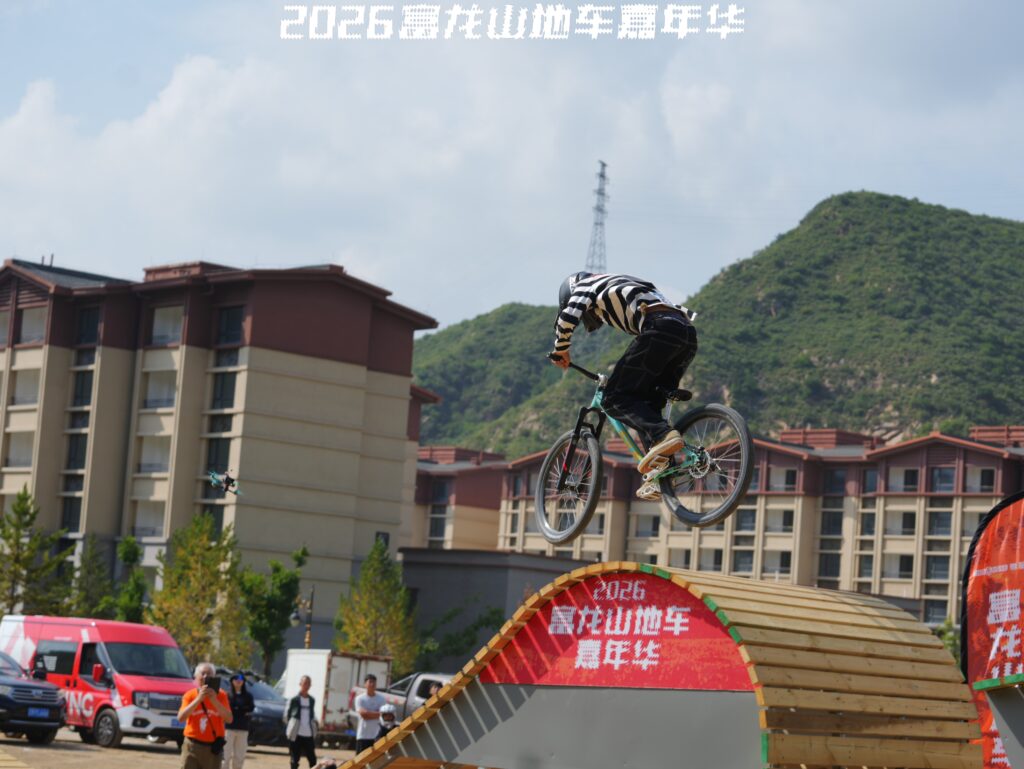
The Fulong Mountain Bike Festival in Chongli is a pretty good place to look at where Chinese mountain biking is heading, mainly because it’s not a trade show, which is an important distinction. I say that because trade shows tell you what companies would like people to buy. But bike parks and bike festivals are attended by people who have researched, chosen, and bought their bikes, which offers a much better idea of what customers are really interested in.
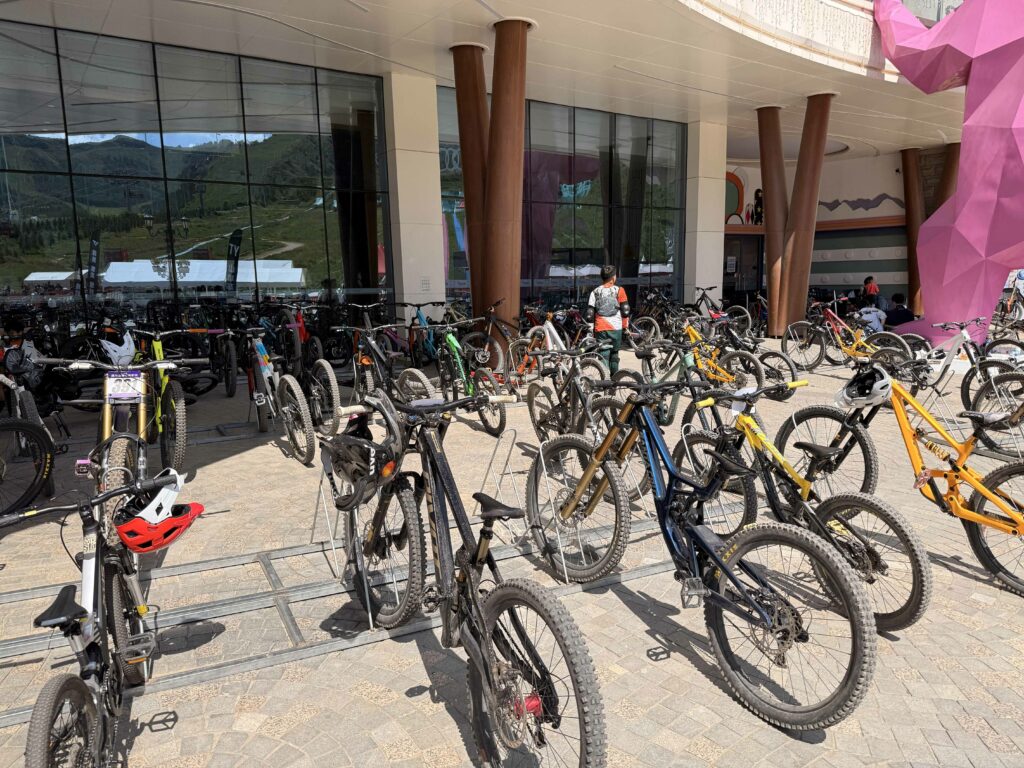
And what struck me almost immediately was just how many young Chinese gravity riders were on bikes from Western brands. It’s not just one brand, either; instead, they’re bikes from all of the Western brands you can think of, but mostly (and interestingly), it was the premium ones.
These weren’t necessarily riders reluctantly buying imported bikes because China couldn’t produce something equivalent – China has more than enough manufacturing capability to produce very good mountain bikes. They appeared to be riding Western bikes because those were the ones they actually wanted.
That got me thinking: if Chinese-made bikes are becoming so desirable to riders in Europe, North America, and elsewhere, why aren’t I seeing the same enthusiasm for them in their country of origin?
Maybe we’ve been looking at this backwards
There is a strange assumption developing in the Western bicycle industry that Chinese-made automatically means the future. I get it, the seriously competitive prices coming from China are compelling in their own right. When riders are presented with two technically impressive bicycles and one costs dramatically less than the other, it isn’t unreasonable for them to start asking some questions.
I’m certainly not suggesting Chinese-made bikes aren’t good; that would be ridiculous. Chinese manufacturers have enormous expertise in carbon manufacturing, aluminium fabrication, electronics, and increasingly complete bicycle development.
The interesting bit isn’t whether China can build good bikes; it’s whether Chinese manufacturers can make the bikes people want.
Bikes aren’t spreadsheets
The bicycle industry occasionally likes to pretend consumers make perfectly rational purchasing decisions, but like myself, they don’t. If buying a mountain bike were simply an engineering exercise, we could put geometry, weight, suspension travel, component specification, and price into a spreadsheet, and let Excel tell us what to ride. Except mountain biking doesn’t really work like that.
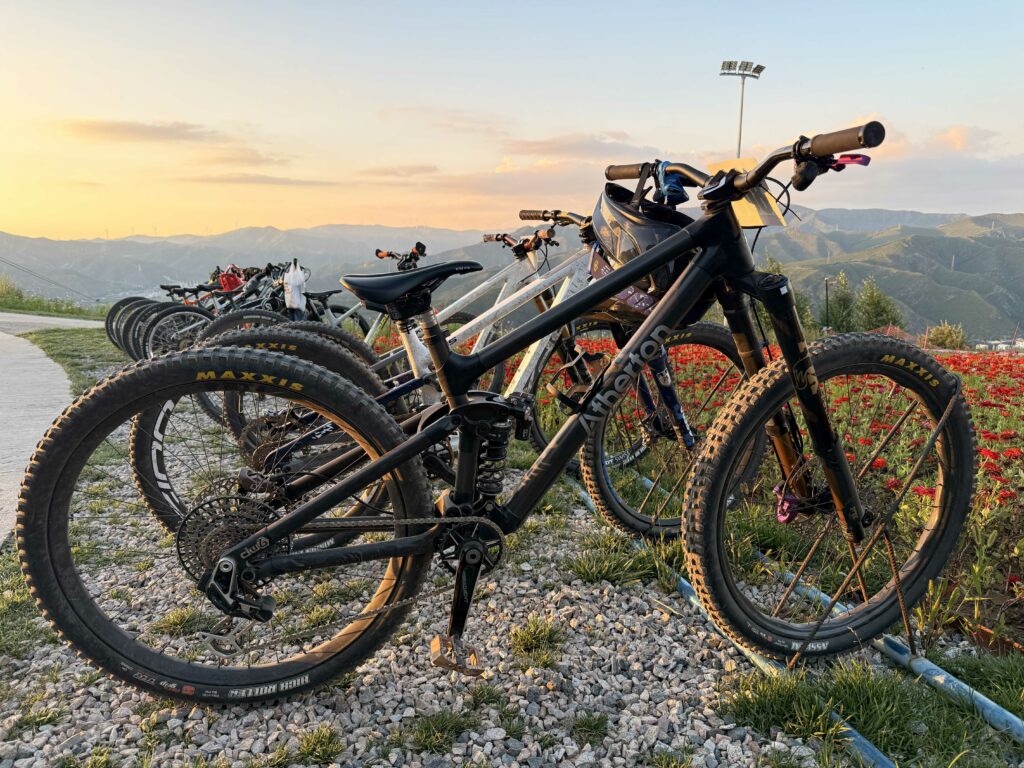
We buy bikes because of the image and influence established brands have cultivated over the years. We’ve seen the likes of Gee Atherton send his A.200 down sketchy lines in the most remote locations. Jackson Goldstone’s multiple wins hold marketing weight, plus bikes covering the pages of magazines all make us think, “yeah, I want one of those”. Steve Peat’s long-standing relationship with Santa Cruz resonates with riders who watched him race, and Fabien Barel’s work with Canyon makes those bikes look solid. What these brands all share is well-nurtured relevance, perhaps aided by top-level racing and plenty of media coverage.
All of that isn’t the easiest to manufacture. So the same could be said for comparatively younger bike companies – you can build a carbon mould relatively quickly, but building twenty or thirty years of cultural relevance takes considerably longer.
Walking around the show in Fulong, I started wondering whether Western mountain bike companies still have more of that cultural value than we sometimes give them credit for.
The bike shop still matters…
Something else struck me at Fulong, and that was the healthy retail market. We’ve spent years talking about direct-to-consumer sales, online purchasing, and whether the traditional bike shop business model is disappearing. Yet around Fulong, shops supporting the riding scene can operate extremely long hours during the green season.
Riders in China, like in many places, rely on them for replacement parts and, occasionally, somebody who can figure out why the thing they broke ten minutes ago is making that horrible noise. Turns out physical bicycle shops are quite useful when people are actually riding bicycles. More importantly, retail creates visibility, which helps build that rapport between rider and brand.
The bicycle isn’t just a product sitting on a webpage. Perhaps that helps explain why established Western brands remain desirable, even inside the country manufacturing so much of the world’s cycling equipment.
…which makes the West even more interesting
This is where things get slightly odd, because Western riders are increasingly interested in Chinese-made bikes. It’s almost becoming a status symbol to have made the smart decision by going direct to China, rather than buying a bike from a Western brand with a frame that has probably – and ironically – been made in China or Taiwan. Chinese riders, from what I saw at Fulong, still appear strongly wedded to Western brands.
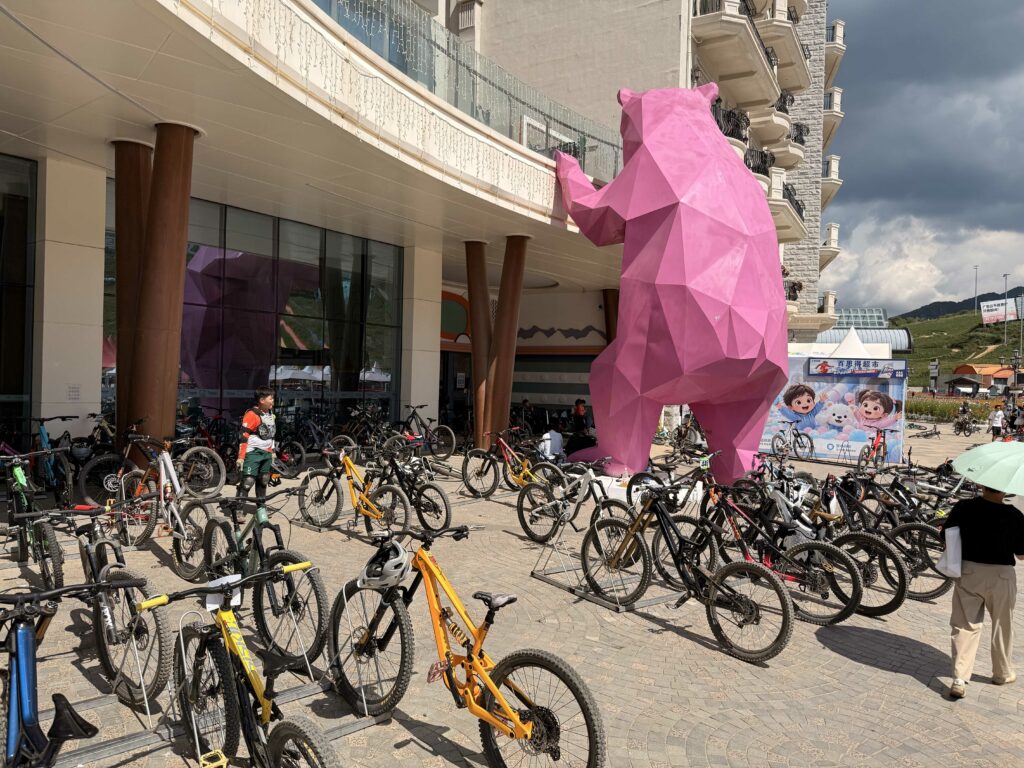
So, who exactly is chasing whom? There’s almost a mirror image developing. For decades, China manufactured products that helped create Western cycling culture. Now parts of China’s younger generation have the spending power to buy into that culture. Meanwhile, Western consumers are increasingly looking directly towards China, and asking whether they really need to pay marked up prices.
I find that fascinating. Perhaps it isn’t really about China versus the West at all. Perhaps it’s about aspiration, and aspiration changes depending on which side of the shop window you’re standing on.
Are Western riders buying what Chinese riders don’t want?
That’s a deliberately provocative but far from simple question, but one worth asking in my opinion.
If Chinese-made mountain bikes offer impressive technology, competitive geometry, and significantly lower prices, why aren’t China’s young gravity riders immediately switching to them?
Maybe they will, eventually, and maybe what I saw at Fulong is simply a snapshot of a market that hasn’t caught up with its manufacturing capability yet. In my experience, there is usually a lag between making a technically credible product and creating a desirable brand, and perhaps that’s exactly where Chinese mountain biking currently sits – the engineering is arriving faster than the culture.
The West, meanwhile, may have the opposite problem. It has decades of mountain-bike culture attached to its brands, but increasingly price-conscious consumers are questioning what that culture is worth. Neither side has necessarily got this wrong. They’re just approaching the same bicycle from completely different directions.
Five years from now, things could look very different
Go back to Fulong in five years, and perhaps the picture could change completely. Maybe Chinese-made bikes will be everywhere.
Chinese manufacturers could have professional race teams, international athletes, dealer networks, more media coverage, and young riders who have grown up watching their bikes being raced. Give it ten years, and the distinction could become even less obvious. Give it twenty, and the lines between what we see as ‘Western’ and ‘Far Eastern’ brands will blur dramatically. That’s because the bike industry is already far more interconnected internationally than the logos printed on the downtubes suggest.

But right now, there is still something happening at Fulong that I wasn’t expecting. China has spent decades proving it can manufacture bicycles for the world, and now it has to prove it can create bicycle brands that its own riders aspire to own – which is where things get rather tricky, because making a very good mountain bike is ultimately an engineering problem, but making somebody dream about owning one isn’t – that’s cultural.
Standing by the side of the mountain at Fulong, surrounded by young Chinese riders enjoying their bikes, I realised the next battle in the bicycle industry probably isn’t going to be decided by who can manufacture the lightest frame, the cleverest suspension system or the cheapest complete bike; instead, it might simply come down to something much harder to quantify.
Who can make the next generation of riders care? Unlike carbon layups, that’s something you can’t simply manufacture overnight.








2 thoughts on “China wants Western mountain bikes, and the West wants Chinese ones. What’s going on?”
So that’s where Ursa ended up!
https://en.wikipedia.org/wiki/Ursa_the_Bear
as your said, you’re mixing bikes, some riders want Chinese road bikes, fine .
But, how many Chinese downhill bikes do you know?