



The Minister for Road Safety in Ireland says the government is “considering” introducing hi-visibility clothing, and helmets for cyclists if the restrictions imposed on e-scooters in the country work.
The government has been looking to tackle the rising use of e-scooters, and is set to introduce measures that treat private e-scooters in the same way as mopeds, which require riders to wear helmets and register their vehicle. It follows what the government say is “a concerning pattern of serious and life-changing injuries caused by e-scooters.”
The proposals on mandatory hi-vis and helmets, coupled with a ban on riding e-scooters by under-18s, is due to be introduced in August, with the ‘moped’ reclassification due to take effect ‘later this year,’ though the government say, “an outright ban will remain on the table.” Unlike in the UK, where several hire providers of e-scooters exist, Extra.ie report that the Irish Government believe “there is ‘no logic’ in banning something that is dangerous but at the same time making exemptions for private firms.”
Speaking on The Last Word radio programme yesterday, Seán Canney said the government “have discussed” applying these laws to cyclists, though he stressed that the legislation would be focused on “the enormity of the problem we have at the moment with the e-scooters. When asked about the implementation of the reclassifying legislation for bicycles, Canney did not address possibly introducing registration plates, but said:
“We will look and see how we will progress with scooters, what effect it will have. If it’s a benefit, then of course we will look at helmets and hi-vis on cyclists as well.”
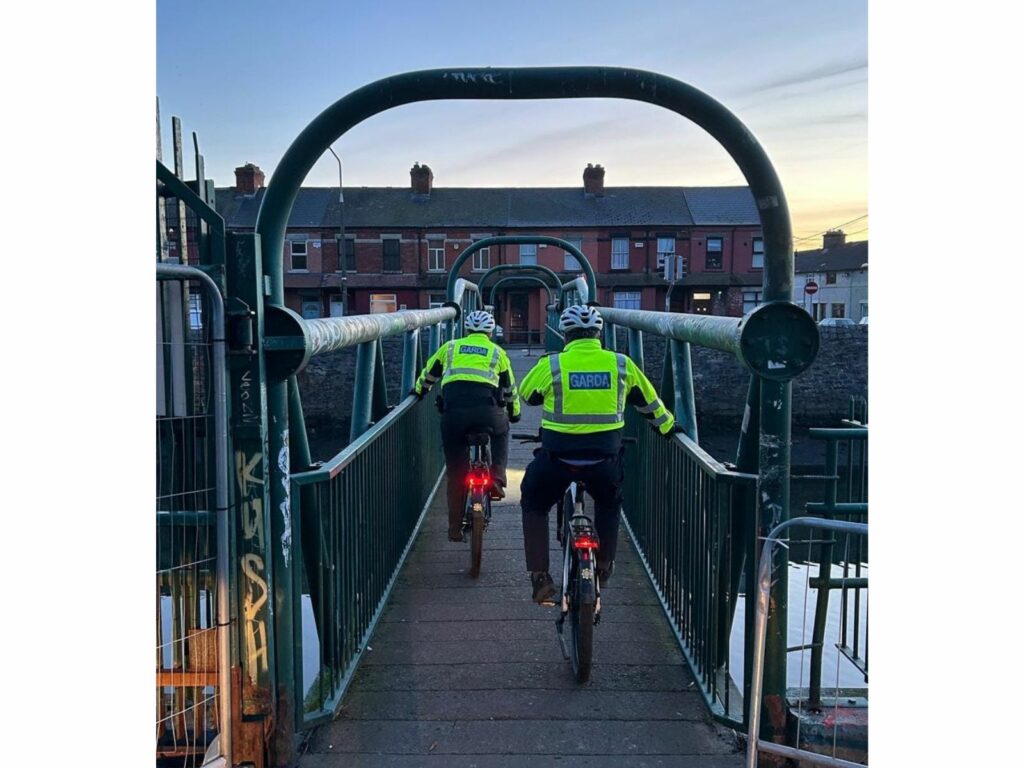
Canney’s comments have been criticised by the President of Cycling Ireland, and former government minister Ciarán Cannon, who told Extra that “presenting mandatory helmets and hi-vis as a serious road safety intervention is misleading. It is performative policy-making that diverts attention from real risks and risks making our streets less safe, not more.
“The greatest danger to people cycling or using scooters does not come from their clothing or headwear. It comes from motor traffic speed, volume and road design. Helmets do not prevent collisions. High-visibility clothing does not slow vehicles, fix junctions or address dangerous overtaking.
“Fewer people cycling or scooting does not make roads safer. It makes them more car-dominated, and more dangerous overall,” Cannon said.
The minister’s comments are the latest in a long-running campaign by politicians in the country to mandate cyclists to wear high visibility clothing. In January, the Department for Transport u-turned on a proposal to give police the power to fine cyclists who did not wear hi-vis whilst riding, following criticism from active travel campaigners.

However, the National Bus and Rail Union told the Oireachtas (Irish Parliament) the following month, saying the requirements would, “make the roads a safer place, as it would make potential hazards easier to spot.”
In April, County Councillors in Tipperary wrote to the Transport Minister requesting mandatory hi-vis be worn by pedestrians as well as cyclists at night, citing the “extreme difficulty” of driving along narrower country roads without daylight. It was unclear from their letter how the proposals would be enforced.





17 thoughts on ““Fewer people cycling or scooting does not make roads safer”: Minister criticised for suggesting Irish Government would consider mandatory hi-vis and helmets for all cyclists”
40% of fatal road incidents (70 deaths p.a.) in Ireland involve excess alcohol. Pass a law mandating compulsory alcohol interlocks for all motor vehicles and see what that does for road safety first.
…….the government was focused on the “enormity of the e-scooter problem”
Just wait until they find out how absolutely effing gigantic the car problem is.
The whole thing is just motornormativity at government level, and while Ciarán Cannon talks sense, Seán Canney is fecking eejit.
the National Bus and Rail Union told the Oireachtas (Irish Parliament) the following month, saying the requirements (making the cyclist scum wear helmets and HiViz) would, “make the roads a safer place, as it would make potential hazards easier to spot.”
Nothing to do with driver behaviour then? Stagecoach is even putting intimidating threats against cyclists on the side of the buses now!
ttps://upride.cc/incident/px60beo_stagecoach41-closepass/
Some of their drivers are feckin dangerous.
And even swung in as they passed 🤦♂️
Police action – warning letter to the company, didn’t even identify the driver. This is in Kent – they seem as bad as Lancs.
@Jakrayan The trouble with that one is that the police can, and will, claim that there’s a cycle lane and the bus is outside it so they ‘can’t do anything’. Do you confirm, and it may have been you who originally stated this, that Kent Police have openly stated that they will take no action (your case above is almost 2 years old) over close passing reports where there has been no collision?
Kent Police confirmed that there are only 3 people working on these, and they get around 900 submissions every month, so they will only prosecute the most serious cases (though they didn’t state collisions).
The officer in charge did give me her email address to send links to private YouTube videos in case of any other incidents like this, however one I sent a couple of months ago of a punishment pass bounced back, so there may well be even fewer people in the department now.
@Jakrayan Thanks. This is a standard police tactic, and is another aspect of victim-blaming: they deliberately segment the manpower into tiny groups and say that the problem is the people reporting offences. The police attitude, and I really despise the b******s for it is: if you can’t be bothered to get yourselves KSI’d, we can’t be bothered to do anything except press the button to send out the routine ‘thoughts and prayers’ when you ARE KSI’d. We have seen in the ‘very stupid police destroy legal EAPC’ topic just how thick they are and how little they understand about cycling. The Stagecoach assaults keep coming, because the drivers know how hostile the police are to cyclists.
@Jakrayan If I have understood correctly they don’t need to prosecute every case. If there is evidence of a close pass they can send an advisory letter as Gloucestershire do, which should be just a press of a button. If there is evidence of an offence (Gloucestershire say a close pass is not an offence unless someone is inconvenienced) then they can send a warning letter or a NIP. Again this shouldn’t take too much time. Once the driver has been identified they have the choice of an education course, a fixed penalty notice or straight to court. This will usually depend on whether or not the driver has previous. The only time a case will go to court otherwise is if the driver contests the fixed penalty notice.
So 900 a month and 3 officers and 30 days means roughly roughly 10 a day. A working day is roughly 8 hours so about 48 mins per report. They ask for a 4 minute segment and they have to read the statement. The offence will be at 2 mins into the video so that should take 5 mins tops. That leaves 40 mins for the paperwork. Of course NFA would take much less leaving more time for other reports.
With regards to the priorities of the authorities…
I requested that my local council and police install red light cameras at a specific junction as I noticed drivers repeatedly jumping them each time I passed through.
The response was basically “We have no record of any KSIs there so will not do so.”
So they are basically waiting for a KSI before doing anything…
I assume that if there is a serious incident there, the victim could sue for lack of action at a known hotspot.
@mitsky With regards to the priorities of the authorities…
The priorities of the authorities- essentially the police as they have regrettably been permitted to choose to enforce the law only against people they don’t like, such as cyclists- are to appease the Right Wing Hyper-Junk Press. Hence the great fanfares about prosecuting RLJ-ing cyclists, while drivers committing the same offence at much greater speeds are supported and encouraged by the despicable police who refuse to act against them.
ttps://upride.cc/incident/sc21zsx_niro_redlightpass/
Isn’t scooting what dogs do when they drag their bottoms along the carpet owing to inflamed itchy glands?
It would be painful to do that on a road surface, as well as wearing out your bib shorts.
@Bungle_52 a close pass isn’t automatically an offence as you say. However, on another occasion someone towing a caravan overtook my wife, who was about 20 metres behind me, on a very short straight forcing 3 oncoming car drivers to brake hard (the third one even came to a complete stop and you could see the brake lights in the video), swung in early and forced her into the gravel at the edge of the road – fortunately no kerb. They then overtook me, close pass and swung back in way too early again.
So significant inconvenience and nearly caused oncoming drivers to crash and nearly put my wife into the hedge or even under the wheels of any cars behind. Pretty significant inconvenience IMHO. Kent plod sent a warning letter, no hint of a prosecution or even a driver education course 🤬
@Jakrayan Sounds like a good one for near miss of the day if you still have the video. I reckon even in Gloucestershire that would have resulted in a NIP but you never can tell nowadays.
Good idea! It’s still here on YouTube:
FF to 2:30 sorry I never got around to editing it down. May still be set to private due to the police ‘investigation’ but you can view it with the link.
Bus one is here, again FF to 2:00:
@Jakrayan Thanks for those. It seems to me that there is enough evidence to take the caravan towing incident further but a front facing camera would have been a slam dunk which is why I always have both.
As for the bus, as wtjs points out the bus never crossed the line which means they never left their lane and this makes it difficult for the police to take action. I know it shouldn’t be that way but with juries made up of drivers seeing nothing wrong they won’t take the risk. I would not have been in the “cycle lane” (I’d call it a filter lane, safe enough with stationary traffic but worse than useless in fast moving traffic.) but I suspect that that would not have prevented a close pass (punishment pass) and I doubt the police would act on it. The advantage is that you have more space to move into.
I now have both as well. Nice for recording descents, especially off road in Thailand!
As for the bus driver, although they didn’t cross the white line they should still give 1.5m of passing space, the same as if there was no separate lane. Disappointing, but not surprising.
Next time I’ll probably make a complaint direct to the company, as I did regarding this Morrisons delivery driver who pulled out from a side road when, to be fair I was a little way away, but then proceeded to bully his way through past parked cars on his side of the road, forcing me to a complete stop. I did actually get a reply stating they had taken action, but not what due to confidentiality. Hoping it was education rather than disciplinary action, even a quiet word and getting him to watch my footage would have been fine!