


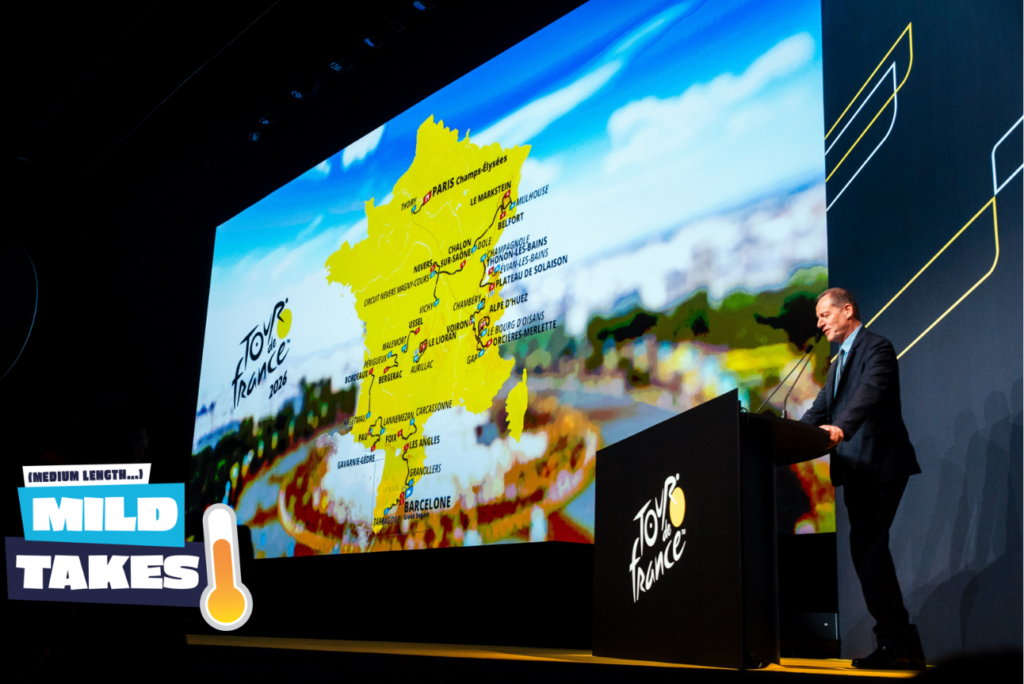

This Medium-length Mild Take is also available to watch on YouTube and Instagram.
Two weeks into a race that has seen the yellow jersey battle wiped out by a roundabout exit, and the race overtaken somewhat by anti-doping alarm clocks it’s tempting to ignore the quality of the actual race route. But I’ve had my doubts for a while, though there are a few reasons that aren’t tied to the racing itself.
Historically, the Tour de France was exactly that, a tour of France tracing the occasionally contested borders of a country emerging from an age of national romanticism and into an age of industry. To that end, early race editions were remarkably constant, sometimes the race unchanging from year to year. Whilst the perils of such a route lie in ignoring ‘Inner France’, France as a whole was raced through.
A lot has changed since then, bikes can now go up mountains, roads have been tarmacked, and towns and cities now bid for the race to visit, with an international Grand Depart costing at least seven figures to win the right to host the race, let alone the cost of then welcoming the world.
> Scottish Tour de France Grand Départ budget trebles to over £10 million
And yet, both the races and stages have continued to shorten. Thanks to the extreme heatwaves earlier in the race, we’re on track for the 4th shortest Tour de France in history.
In this year’s race, the longest stage of the race is 206km, but 10 years ago, five stages were over 200km, including one nearly 240km long. Consequently, the race now visits much less of France, having abandoned the idea of a perfect loop in 1970s, and now frequently avoids certain parts of the country. However this year’s route is on another level.
No North or Western France besides Paris, and that means no cobbles, gravel or a realistic chance of crosswinds and echelons.
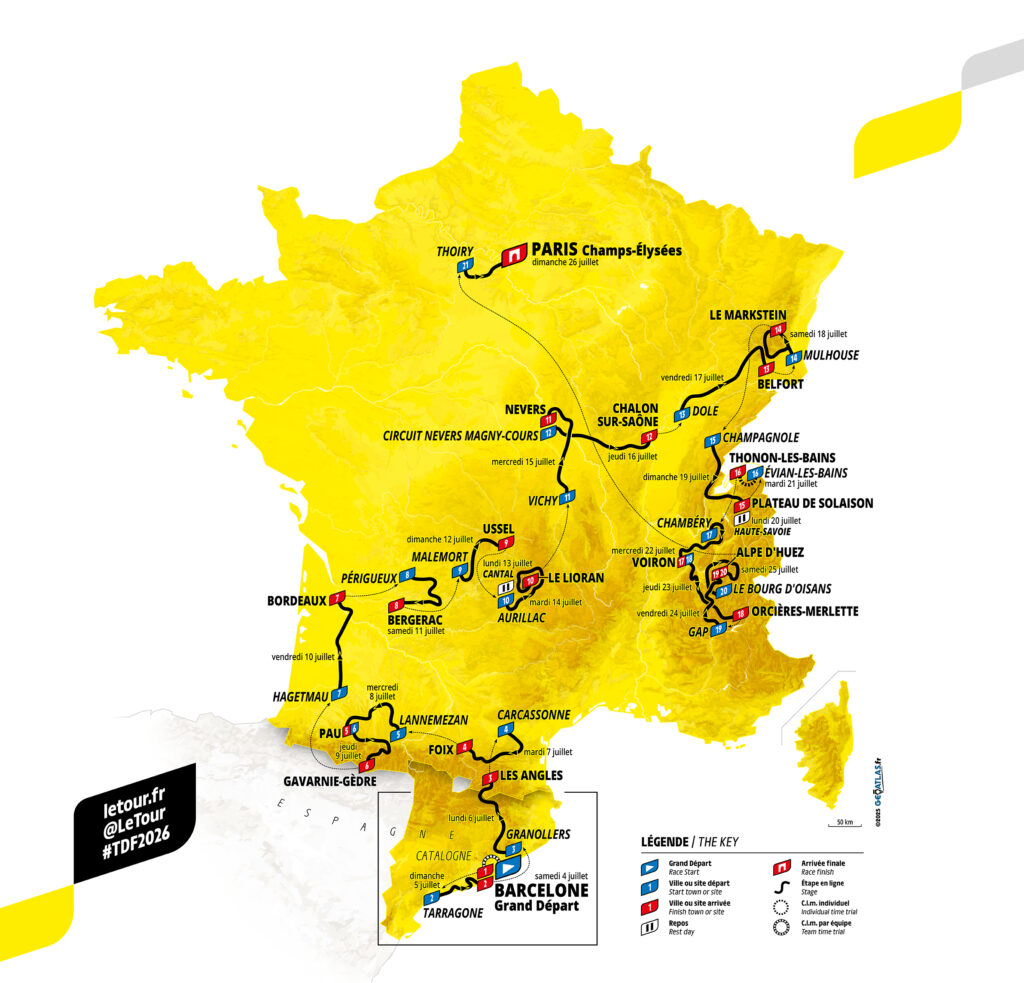
History is history, routes change, and no one wants to sit and watch gravel racing-style 14 hour 400km stages – with apologies to you people who like Unbound. To be honest I would forgive the route organisers for most of this if the route itself was exciting… but it’s not!
This year’s race was designed to keep the race close for as long as possible. To that end, the organisers re-introduced a Team Time Trial with riders timed individually, had only one stage in the Pyrenees with a low gradient on the final climb and saved the first hors categorie summit finish for stage 14, and largely backloaded the race’s climbing for the final weekend. None of it’s worked.
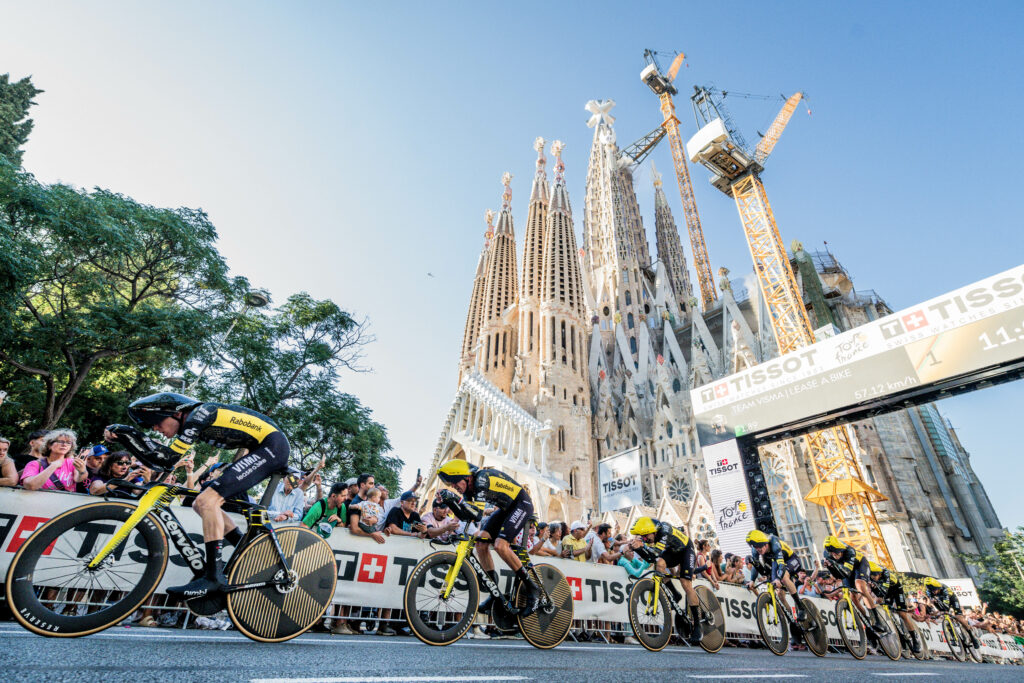
This new TTT format enabled UAE Team Emirates to still bring a climber heavy team, knowing they could all be dropped to enable Tadej Pogačar to go solo on the Montjuic climb to limit his losses to just 12 seconds. If the stages aren’t tough enough to separate the favourites, then Pogačar has the fast finish to go clear in the final metres and mop up bonus seconds, like he did on stage 3.
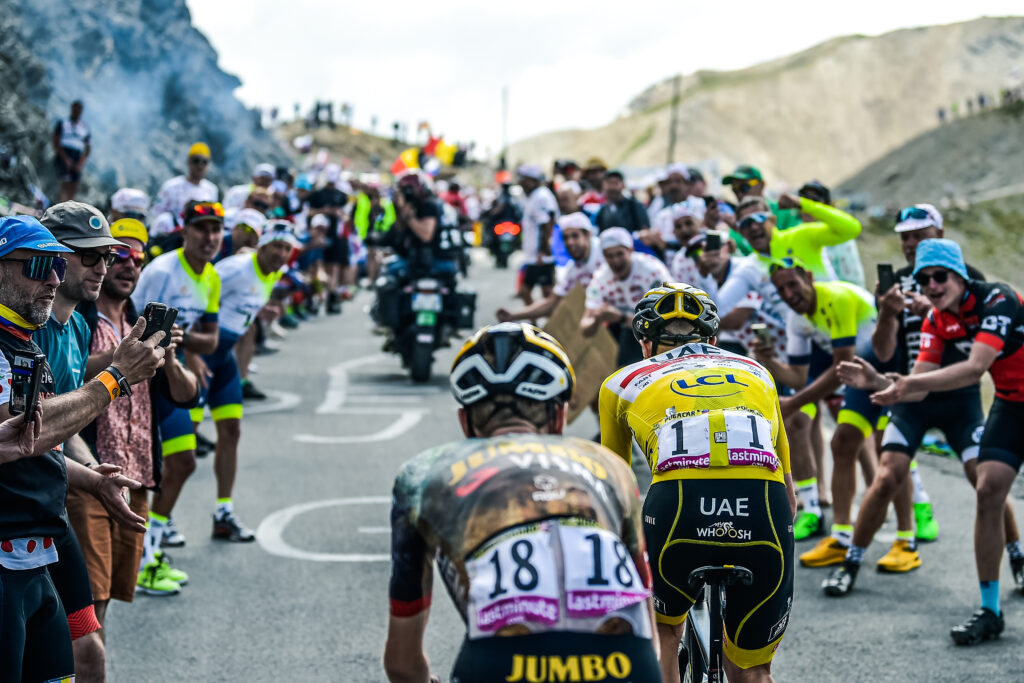
And finally, if you’re saving your hardest part of the stage for some distance from the finish, Pogačar can just attack there! This is a new era of cycling, where long-range attacks over 40km have become commonplace, even if Pogačar’s attack on the Tourmalet was longer than any other move he’s made in a Grand Tour.
The Tour organisers only needed to look at last year’s Giro d’Italia, where one of the greatest days of racing I have ever seen involved all three riders on the podium attacking one another on the penultimate climb of stage 20, or to their own race in 2022, when Jumbo Visma set about grinding down Pogačar from the top of the Col du Telegraphe. You can’t Pog-proof a Tour de France route, and I think the race organisers were foolish trying to do otherwise.
That is unless we go back to a different time. The first week of the Tour de France used to consist of flatter stages that tended to finish in bunch sprints. Admittedly these stages are less exciting than a mountain stage. But at the start of the race, when every rider is on the same time, when an unshaken GC allows for rotation of all the jerseys and several competing narratives, I think we have an exciting race in a completely different way.
The other thing we used to have? Time Trials, not 25km with a hill thrown in, at least 40 or 50k, pan-flat, it gave a decent chance for riders of differing morphologies to compete against one another. Instead we’re trapped in a cycle of thinking only the most powerful riders with the lowest weight can compete. In the last three years, Remco Evenepoel’s Tour preparation has been centred in the media around his June weight loss.
That’s fine, as it was for Pauline Ferrand-Prevot in last year’s Tour de France Femmes. But what’s not exactly fine is the media’s focus on the issue, or a course design that only enables one rider morphology to compete for the win.
“But Callum! I hear your cry, it can’t be the route’s fault that one rider is just stronger than the rest, and the battle for the places behind is so much closer, surely that makes for an exciting race?”

Unfortunately, for a race to be exciting, it needs someone in GC to be unhappy with their position and willing to take risks. In this year’s Giro d’Italia, with Jonas Vingegaard stronger than his rivals from the off. Felix Gall, Jai Hindley, Thymen Arensman and Derek Gee-West were content to let the mountains play out as Visma saw fit, unwilling to take risks because they feared hampering themselves in their quest for a podium behind.
In the 2022 Giro, Hindley and Richard Carapaz were so close to one another in fighting for the victory, neither man took any risks, preferring to wait until stage 20, when Hindley won out and Carapaz was unexpectedly dropped.
Incidentally riders like Carapaz are what’s keeping Grand Tour racing interesting. An immense talent who’s won a Grand Tour, Olympic Gold and finished on the Tour de France podium, finishing seventh or 11th doesn’t make a difference to him so he’s just launching attacks for stages, trying to catch the favourites off guard. Alberto Contador, never content with a lesser step on the podium, was the same. I sense Tom Pidcock is the same as well if he weren’t also trying to find his limits in a GC battle as well.
Anyway, both UAE and Red Bull will be happy to have Evenepoel and Del Toro on the podium behind Pogačar, Paul Seixas is measured and mature but, at 19 and making his Grand Tour debut, any position in the GC would be an immense result. That leaves the Lidl-Trek pair of Juan Ayuso and Mattias Skjelmose, and the strained intra-team relationship between Evenepoel and Florian Lipowitz to shape up the battle for the podium. Or we could see some extreme breakaway artistry on Alpe d’Huez from Lenny Martinez or Tom Pidcock that actually comes off. But with UAE as dominant and hungry as they are, don’t get your hopes up.
Of course, a route can only be defined by the riders who wish to make a race of it, but this race design has presents serious questions of the knowledge and awareness of the race organisers, who had planned a raucous, dramatic final weekend where everything could be upturned. Instead they’ve contrived to put all intrigue and uncertainty about this year’s GC to bed within a week.
Medium-length Mild Takes are a few minutes where I try and offer a considered opinion on something in the world of cycling. I can’t quite guarantee when you can expect to see my face on your screen (lucky you) but the aim of this piece is not just banal content creation, but also something that informs and just maybe entertains.
And because my job title is still that of a news writer, I’ll be laying out my journalistic ‘wisdom’ (note the sceptical quotation marks) in written form as well… here in fact




3 thoughts on “This year’s Tour de France route does the race organisers no favours”
Am I missing something. Pogacar would be firm favourite no matter what you did unless you made it a very flat edition which no one would want. Outside of Pogacar its all up for grabs. You can’t build a good multi-week race with Pogacar in the form he is in. Take Pogacar out and this would be fine.
The main issue is the layout of the stages with the bigger climb first then a shallow finish climb. It means pogacar can get a gap at the top of the big climb and then stretch 10-15 seconds to a minute plus at the finish over smaller riders like Vingegaard. A summit finish on the hardest climb might not lead to the most exciting racing but equally would keep the gaps closer.
I totally agree with the TT kms though, they should have 60+km tts in the grand tours.
Trust me Callum, if you’d grown up watching the Tour in the 1980s, as I did, you would not be hankering after those long flat stages that weren’t even as exciting as watching paint dry, it was more like listening to paint dry. As for the supposed benefits of those long TTs, what did they give us? Indurain winning five Tours in a row without winning a single road stage in any of them. As McT says below, you simply can’t Pogacar-proof a course and we just have to accept, and enjoy, the fact that we are watching the greatest GT cyclist of all time. Anyway I think it has been a great Tour so far, yes no enormous drama about the inevitable winner (though of course Vinegaard and now Lipowitz have shown us that anything can happen) but just about every day has had a fascinating plot and multiple subplots. Some time in the future there will be another Indurain-style winner, playing it cautious, following moves, making incremental gains and winning without ever lighting up the race and we’ll be saying I wish the old days of Pogacar making those spectacular solo breaks were back.