


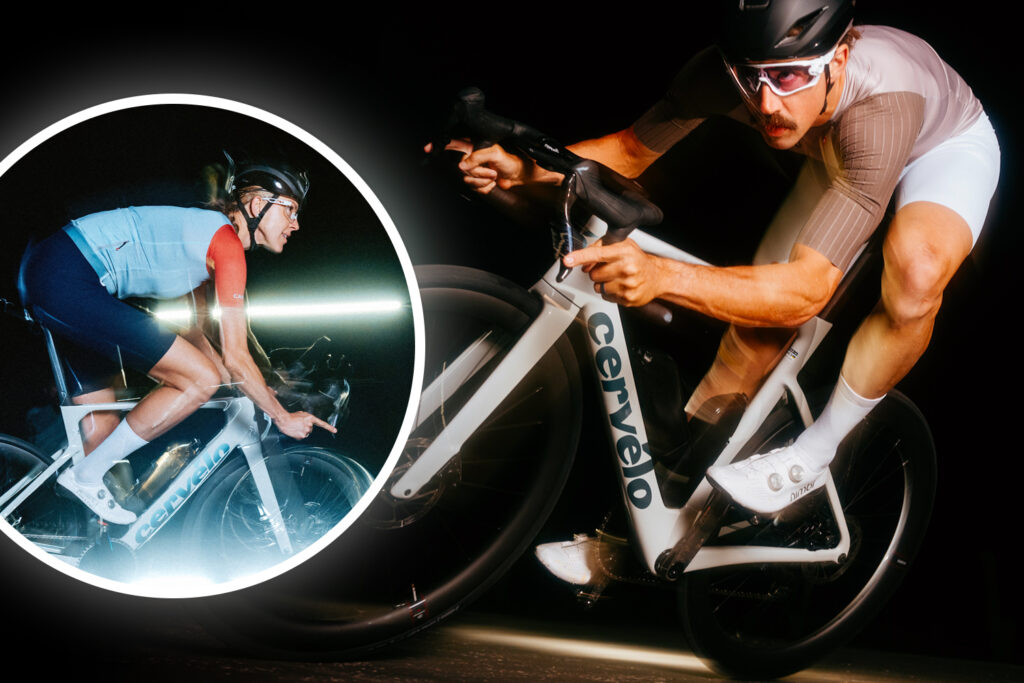

Cervélo has announced a new Soloist road bike that it says is faster and lighter than previously – so no surprises there, then – with off-the-shelf weights starting at 6.85kg. The head tube and fork legs are deeper than before and the bottom bracket area of the frame is said to shield the rear wheel better, resulting in a saving of 8.6 watts against the outgoing Soloist (we asked for the speed at which that claim applies, of course, but Cervélo hasn’t given us an answer), with an additional 4.3 watts on offer if you use the dedicated aero bottles rather than standard round ones.
Jonas Vingegaard and his Visma-Lease a Bike team race on the Cervélo S5 and R5, although Wout van Aert opted for the Soloist at Paris-Roubaix last year. Cervélo hasn’t offered the Soloist built up with top-end groupsets since its reintroduction in 2022, but that changes now with a SRAM Red AXS model. Cervélo sees the Soloist as offering “top-tier performance for serious racers at every level”.
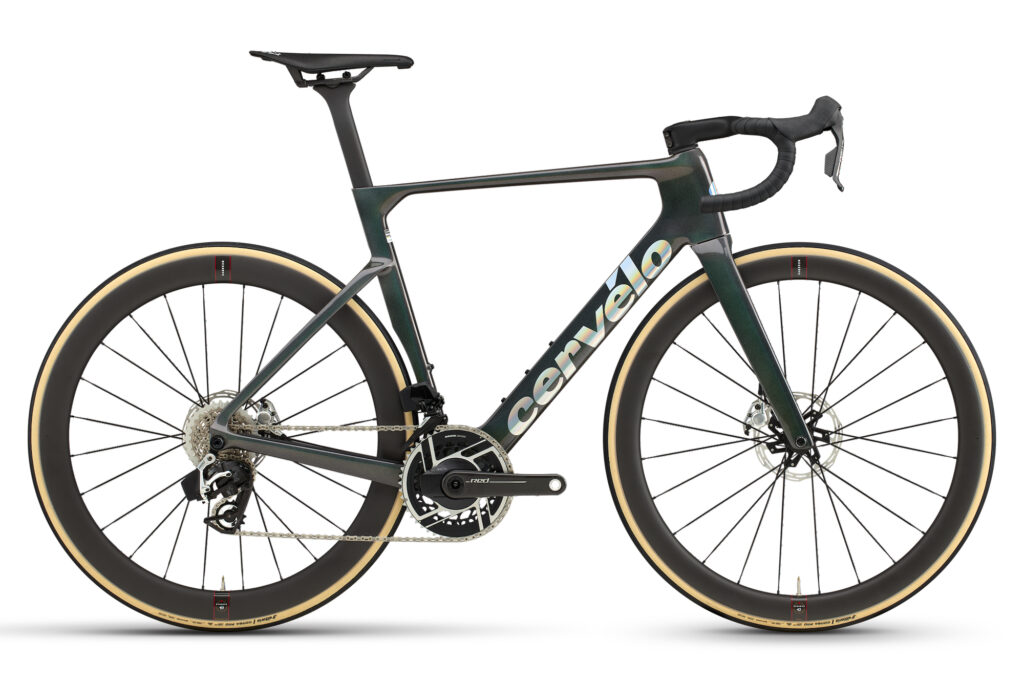
We all know that every new race bike comes with faster and/or lighter claims and, to be fair, there would be little point updating a model to make it slower, would there? Cervélo’s key claims are that you get 8.6 watts of drag savings and a 267g lighter system.
“The frame’s surface area increased by almost 3%, while the fork’s surface area increased by over 8%,” says Cervélo. “But despite these increases, we were able to save weight both on the frame and fork relative to the outgoing Soloist, making a lighter bike that’s much faster. At 6.85kg out of the box, you’re bang on the UCI weight limit.”
To be pedantic, that’s not bang on the 6.8kg limit, and that limit includes pedals whereas Cervélo’s doesn’t, but let’s not get bent out of shape over details.
All Soloists in the range come with carbon wheels, a powermeter, and an integrated handlebar/stem that’s designed to cut weight while improving the aero performance.
The aero claims
Introduced for the 2002 product year, the Soloist is usually regarded as the first modern aero road bike, so it’s no surprise that the design process started with CFD (computational fluid dynamics).
“Increasing surface area makes the bike faster, but it also adds weight,” says Cervélo. “CFD allows us to narrow in on the places we can make air flow more smoothly without a significant weight penalty.”
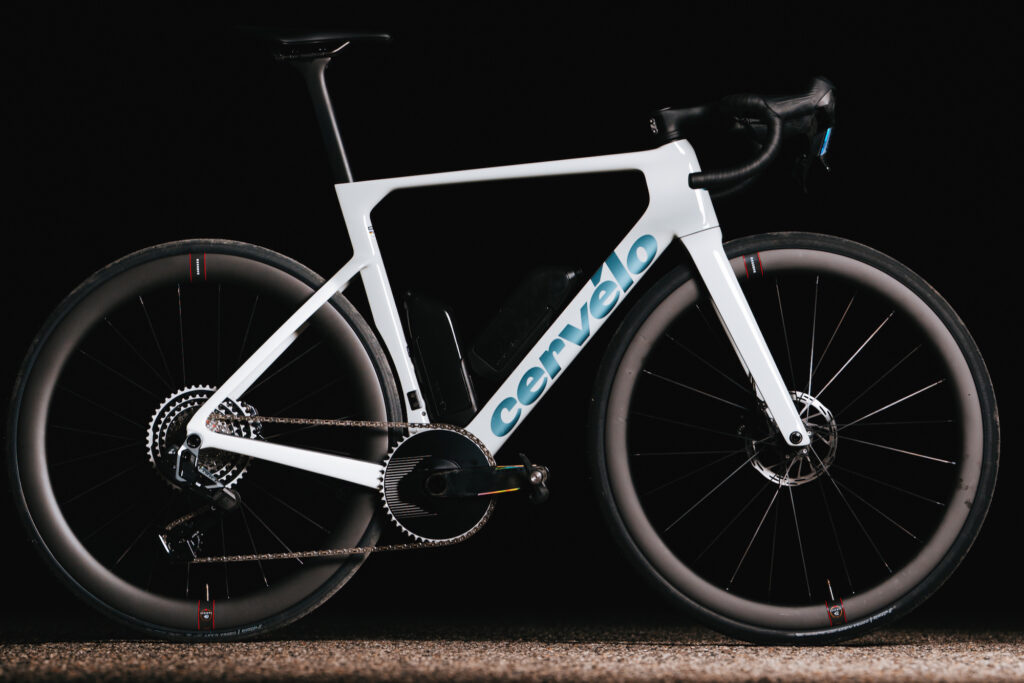
Hence, as mentioned, the deeper head tube and fork legs, and a BB junction that “shields the rear wheel better, allowing it to work more effectively as a system.”
Although the new Soloist isn’t as slippery through the air as Cervélo’s S5, for example, its drag is lower than that of the outgoing model at all yaw angles from 15° to -15°, according to the brand’s testing.
Aero water bottles are an important part of the mix.
Cervélo says, “For all the time we spend smoothing airflow, tailoring tube shapes, and refining layup, we know some of those gains are out the window as soon as you add two water bottles. Water bottles are round, which is not a shape that air likes to pass by smoothly.
“So for the Soloist, we set out to get some of that drag back, in the form of an aero bottle. But we gave the engineering team a couple non-negotiables — the bottles had to stand up on their own, so you can fill them easily and add drink mix without juggling, and the cage had to take a round bottle so you can grab one from an aid station, neutral service, or your buddy on the side of the road. They also had to be easy to grab and easy to replace in the cage, because if they’re not, you don’t want to drink water, and if you don’t drink water, your race won’t go well.
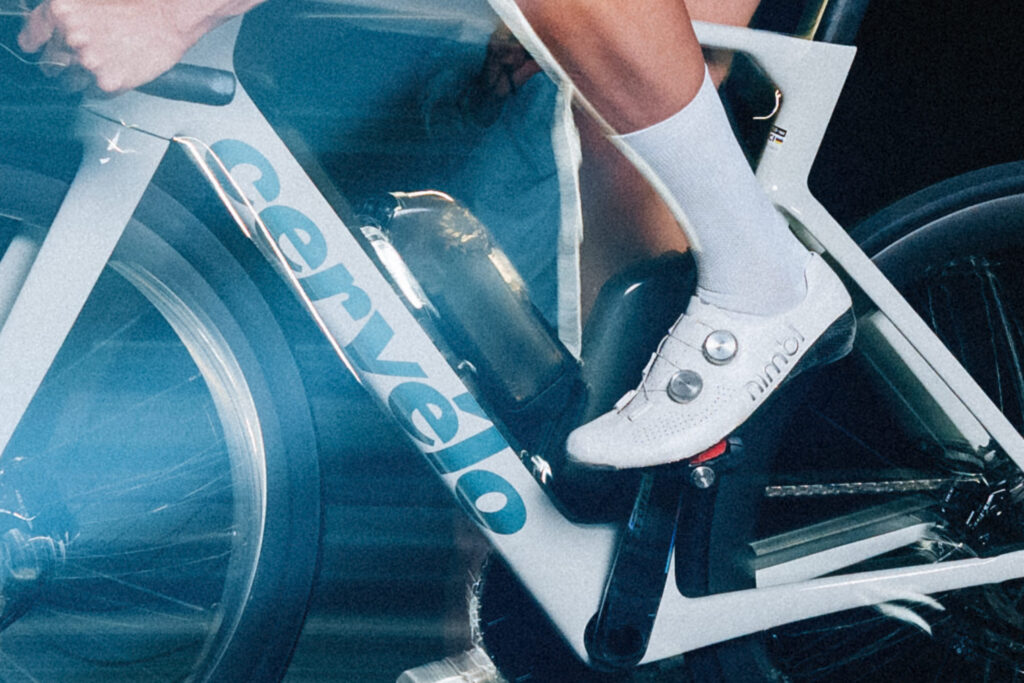
“Round bottles will add 6.3 watts of drag to the bike, and the Soloist aero bottles add 2 watts. They’re not an improvement versus a bare frame, but they’re a massive improvement over the standard.”
Aero bottles have been around for decades, and over the past few years we’ve seen them mounted to frame-specific cages on several new bikes, such as the Trek Madone SLR and Wilier Filante SLR ID2.
> Check out our review of the Wilier Filante SLR ID2 SRAM Red AXS
Other bikes, such as the Giant Propel, come with aero bottle cages but without proprietary aero bottles.
Cervélo’s aero bottles have a 650ml capacity.
Lower overall weight
As Cervélo pointed out earlier, adding to the surface area of the frame and fork usually increases weight, but it says it has been able to make the Soloist lighter than previously. It claims the frame loses 28g, the fork is down 16g, the HB18 handlebar/stem is 134g lighter than the HB13 model on the previous generation, and the overall system weight has been lowered by 267g.
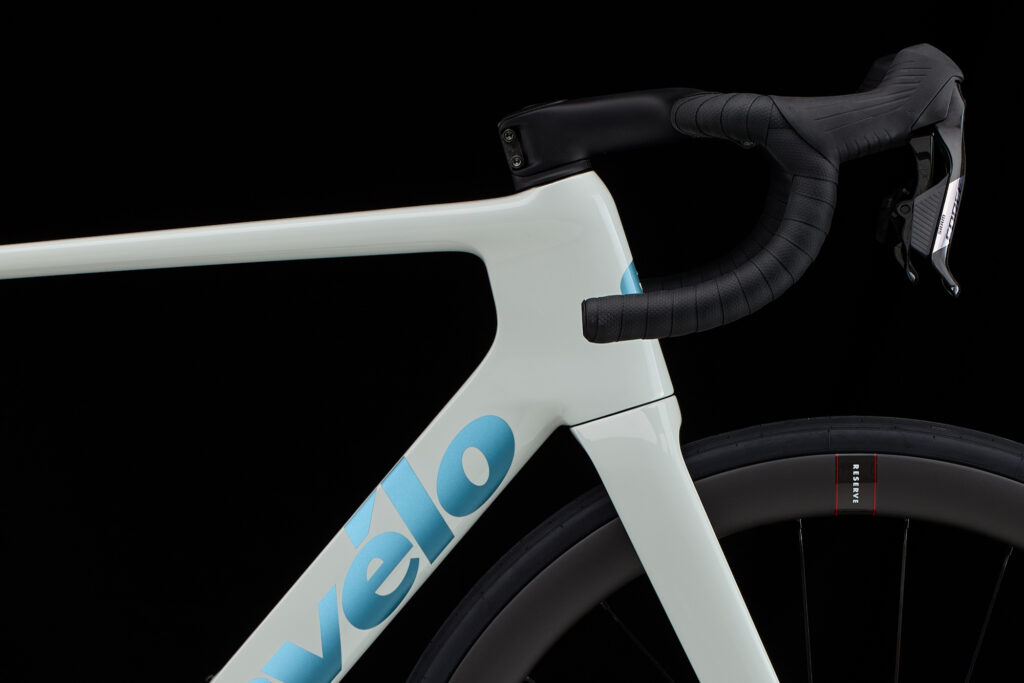
Has stiffness been affected? Cervélo says that the head tube is slightly stiffer than previously (112 Nm/degree versus 103 Nm/degree) while the bottom bracket area is slightly more flexible (223 N/mm versus 230N/mm).
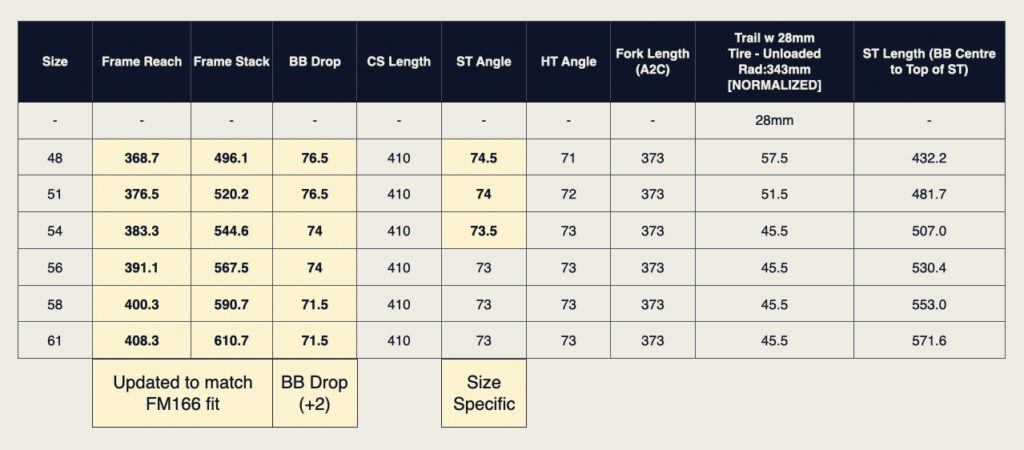
Geometry tweaks
Cervélo has tweaked the Soloist’s geometry, but not massively.
The bottom bracket drop has been increased by 2mm to take account of the larger tyre sizes that most people are using these days.
Seat angles are size-specific, as they are on the R5.
Cervélo Soloist models and prices
All complete Soloists come with carbon wheels, a powermeter, and an integrated handlebar/stem. They’re compatible only with 160mm front brake rotors. You get clearance for tyres up to 36mm (measured).
The Soloist is UDH compatible and can be used only with electronic drivetrains.
> What is UDH and is it the future of all bikes? SRAM’s Universal Derailleur Hanger explained
If you’re worried that an integrated handlebar/stem won’t offer you the adjustability you want, Cervélo reckons it has you covered.
It says, “We know that achieving a perfect fit is a critical component to not just speed, but comfort on the bike. As part of our development of the new bikes, we made a number of additional stem length/bar width combinations to make sure all riders can get as close to their ideal fit as possible.
“Any rider that purchases a new Soloist will be able to request an additional bar/stem in a different size at no extra charge. This request must be made via the authorised Cervélo retailer where the bike was purchased, and must be made within the first 60 days of ownership. Cervélo will ship the handlebar to the retailer, and the retailer will complete the installation on your new bike.”
Seems fair enough.
The new Soloist is available in the following builds, all fitted with Cervélo’s HB18 handlebar/stem (the groupsets are given in the model names).
Soloist Red AXS £9,000
Wheels Reserve 42|49 Turbulent Aero, DT Swiss 240 DICUT hubs
Power meter Quarq
Weight 6.85kg
Soloist Force XPLR AXS £7,000
Wheels Reserve 42|49 Turbulent Aero, DT Swiss 350 hubs
Power meter Quarq
Weight 7.09kg
Soloist Force AXS £7,000
Wheels Reserve 42|49 Turbulent Aero, DT Swiss 350 hubs
Power meter Quarq
Weight 7.07kg
Soloist Ultegra Di2 £7,000
Wheels Reserve 42|49 Turbulent Aero, DT Swiss 350 hubs
Power meter 4iiii Gen3+
Weight 7.13kg
Soloist Rival AXS £5,500
Wheels Reserve 40|44, 4LD hubs
Power meter Quarq spindle
Weight 7.41kg
The Cervélo Soloist frameset with a claimed weight of 1.45kg is priced at £3,500.
“Race-ready performance without the pro price tag” – that’s the claim from Cervélo. Paying nine grand on a bike might not sit well with you, but the reality is that most (non-discounted) pro-level bikes equipped with a SRAM Red AXS groupset are considerably more expensive these days. Cervélo’s S5 in a SRAM Red AXS build is £12,750, for example, while the Shimano Ultegra Di2 model is £9,450.





6 thoughts on ““Race-ready performance without the pro price tag”: Cervélo unveils new Soloist”
I had the last version of the soloist and I loved it. I cant see many changes to the design, and I would go so far as to say unless you knew the old one very well, you would struggle to see any real difference.
The move to having models with a fully integrated bar/stem and top end groupsets is a bit of a direction change from Cervelo who stated previously they were not available as standard because ‘thats not who this bike is aimed at’. They would still prefer you bought an S5/R5, so to see these items shows that they have gone back on their original mindset for who this bike is actually for.
With all that in mind, I dont think this is much of an upgrade , a bit like going from an SL8 to an SL9 Tarmac. The changes are too subtle and vague
£7000 for Ultegra Di2 is a ‘pro price tag’ in most people’s books. X-LAB at half the price is looking better value every day for 90% of cyclists. It goes to show that Cervélo bling is now aimed squarely at the fashionistas.
Something left unclear, is this a carbon or an aluminium frame?
@Paul J The X-LAB? It’s aluminium with a carbon fork.
@ Paul J Apologies, I saw your comment and thought it was asking a question on another article. To actually answer your question, it’s carbon, the Soloist stopped being aluminium in the mid-2000s, I believe.
It is a nice bike. It would be perfect for me and my abilities. The problem is they barely changed some non-significant things and they priced way too high for any conscious amateur. An Ultegra (2021 tech…) cannot be priced over 4.5/5K€ (and I’m still “large” on my considerations). And the Force too is way overpriced.
After two years research, for me it is clear there is no way I’ll buy a west-world brand.