


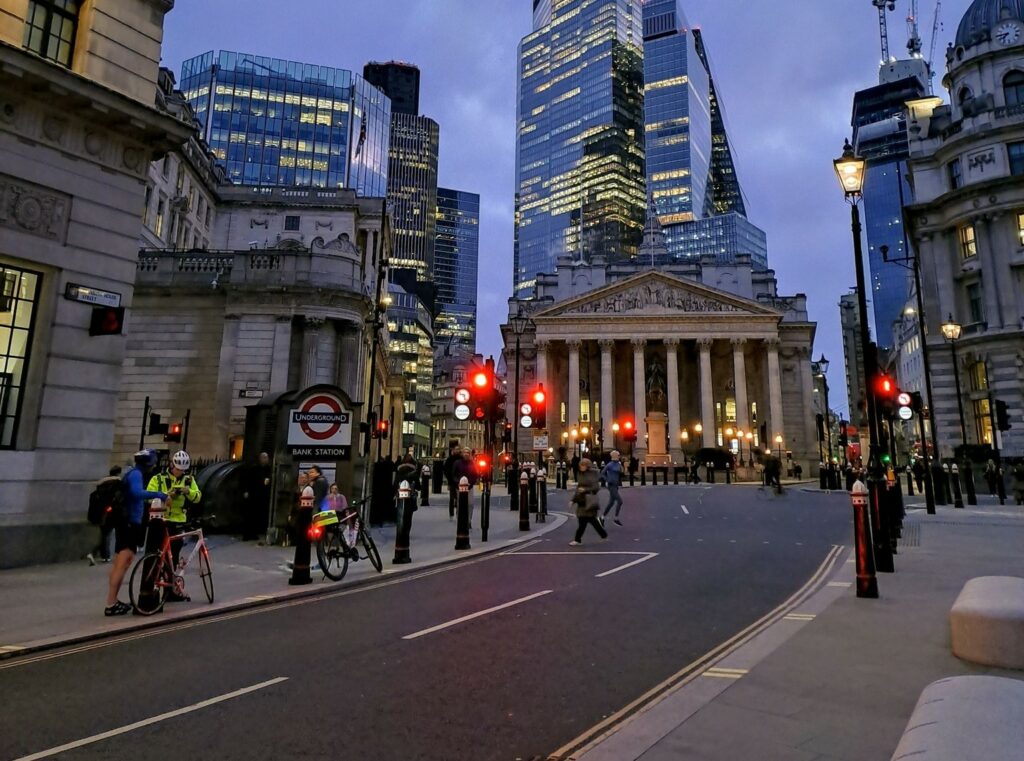

The number of bikes in the City of London has overtaken the number of motor vehicles for the first time, the latest local authority data shows.
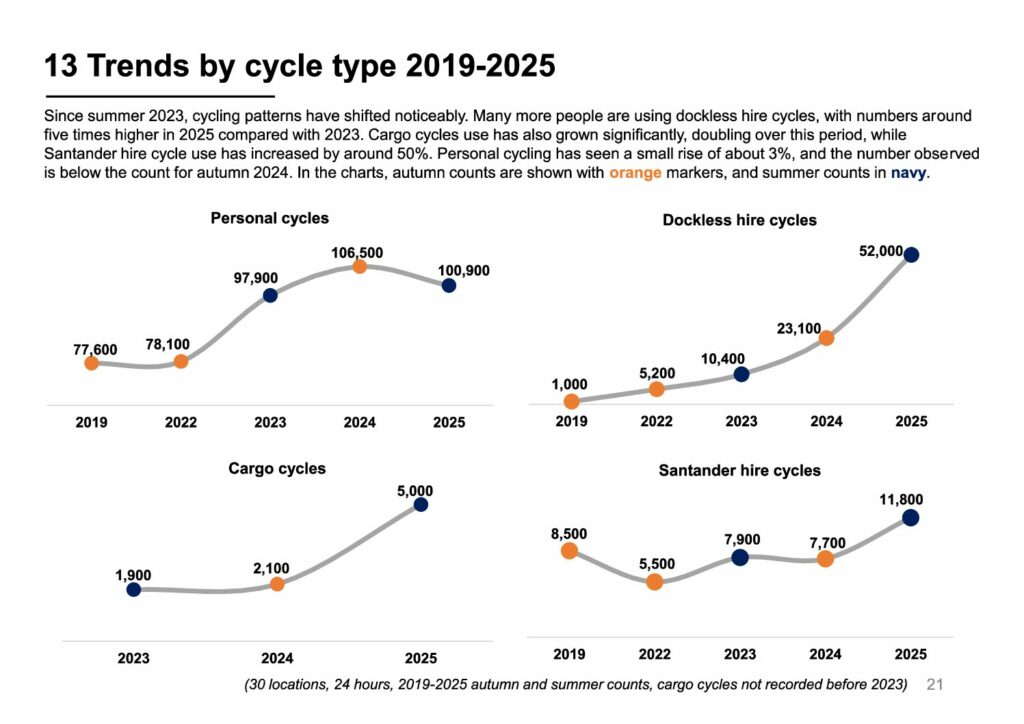
The increase is due to a staggering surge in the popularity of dockless electric hire bikes – such as Lime and Forest, whilst TfL’s own Santander Cycles, along with cargo bikes have also grown in popularity whilst personal cycle numbers have declined. Meanwhile, the numbers of people using motor vehicles, including buses and taxis as well as private cars, has steadily declined since emerging from the Covid-19 pandemic in 2022.
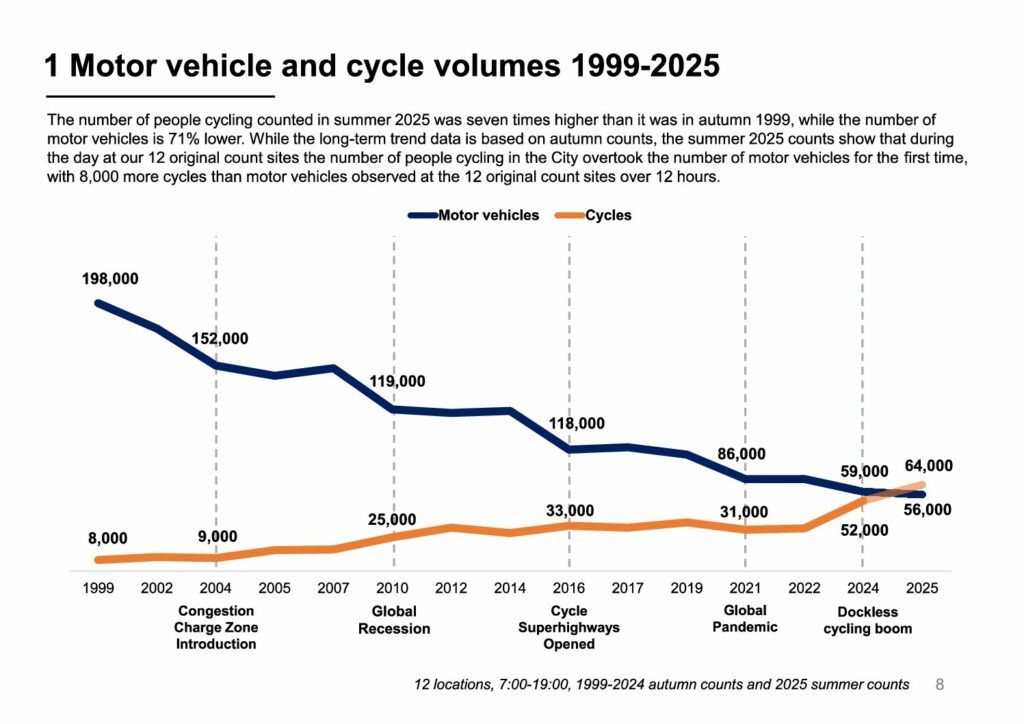
The data was published ahead of next week’s meeting of the City’s Planning and Transportation Committee. The committee is due to also evaluate the latest report of its Transport Strategy, which shows 44 percent more people cycling and 22 percent more people walking and wheeling compared to in 2023. Since 1999, motor vehicle numbers have fallen by more than 70 percent, whilst cycling volumes rose more than sevenfold. “Notably the summer 2025 counts now show that the number of people cycling has overtaken motor vehicle volumes during the daytime.
“Overall, growth in cycling has been sustained over time, with notable increases in recent years, while motor vehicle volumes have continued to trend downward. By summer 2025, cycling volumes slightly exceeded motor vehicle volumes at these sites, indicating a significant shift towards active travel.”
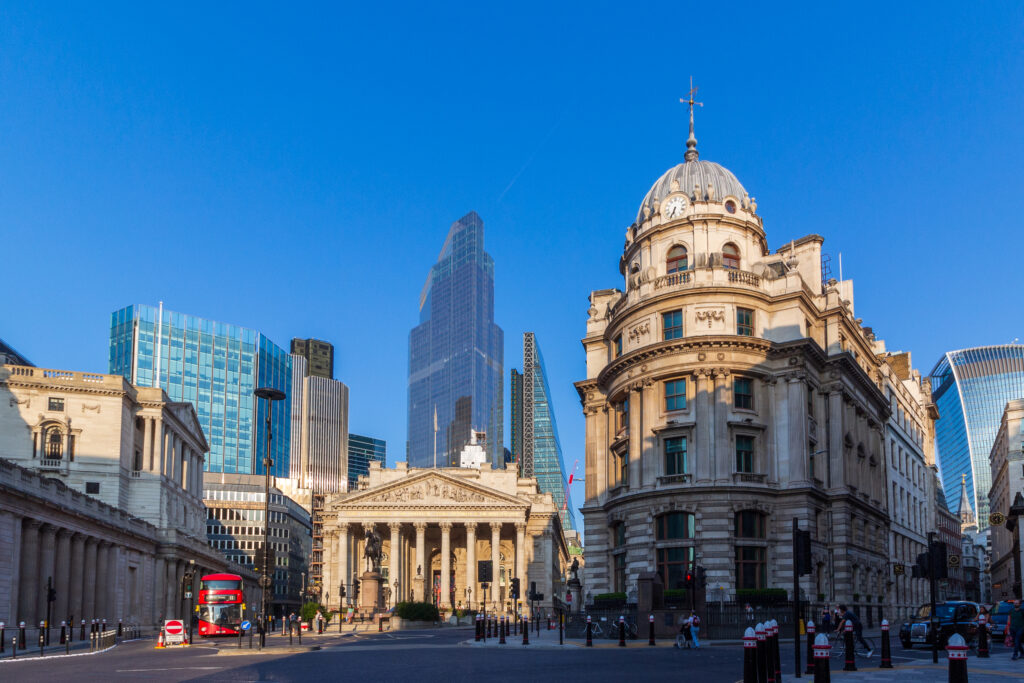
The corporation’s strategy includes a 50 percent drop in motor vehicles compared with 2017, and zero road deaths in the corporation by 2044. In 2024, 58 people were killed or seriously injured within the borough, compared to 54 in 2017. There are also provisional plans to expand the City Cycle Network, centred around the Bank Tube station. The project would cost £2-4 million and be funded by Transport for London.
In addition to bikes overtaking vehicles in daytime popularity, what the corporation describes as “a clear shift in composition” also reflects changing attitudes to cycling. Data shows that whilst “personal cycles” have increased by 36 percent and make
up 60% of the total increase in cycling since 2022, there were four times as many dockless cycles in
2024 compared to 2022, making up 17 percent of all bikes recorded.
The committee has also touted the benefits of a Zero Emissions Network partnership that has seen cargo bikes granted to businesses within the Square Mile, and a cargo bike that is maintained by a local pub and can be booked out by members of the public.
The surge in cycling’s popularity coincides with some of the strictest policing of cyclists anywhere in the country. In April, City of London Police announced more than 1,300 cyclists had been issued with Fixed Penalty Notices for jumping red lights, more than double than the previous year, and only around half the average rate of the Metropolitan Police, which is responsible for law enforcement in the rest of the capital.

In their report, the City said they observed “people on hire bikes were slightly more likely to disobey traffic signals compared to people riding their own bikes.” Local police have previously been reported to be considering stronger Community Protection Warnings to tackle serious or repeat offenders.
Meanwhile, the latest data also shows that motor vehicle numbers in the City surge after 6pm, coinciding with the tail-end of the evening rush hour and the lifting of the Congestion Charge before eventually peaking at 11pm. Reacting to the data, active travel blogger Still last wrote, “that looks like a policy failure to me.”
Correction: An earlier version of this article claimed there had been a slight decrease in privately-owned bicycles in the City, with the caveat that the data showing the decline is taken from two different times of year. The same caveat can be applied to dockless e-bike hires which have seen an exponential growth between Autumn 2024 and Summer 2025. The article has now been updated to reflect the more reliable data showing long-term growth in use of personal cycles.











5 thoughts on “Bikes overtake motor vehicles in City of London for the first time thanks to surge in dockless hire e-bikes”
Shurely “bikes undertake motor vehicles in the city of London, cutting through the static motor traffic and getting there faster than honest motorists, they don’t even pay road tax the blighters…” 😉
I was thinking the headline is wrong.
Cyclists have long overtaken drivers when they’ve been stuck in queues of motor traffic…
Time for these few motor vehicles that remain to be crowded into narrow lanes that stop at every side junction while the majority of traffic has a clear run!
@chrisonabike Personally I don’t think these dockless bikes should be allowed to surge like that – it’s dangerous to other road users – something should be done to reduce their power.
There’s a bigger picture that hasn’t been commented on; the decline in overall traffic volumes of all types. Cycles plus motors now are less than motors alone in 1999. The graph suggests this was happening several years before the introduction of congestion charging, so it’s maybe it’s down to increasing automation in finance reducing City headcounts, or crazy land prices meaning more jobs get shifted to other locations, or general economic factors… ?
Also, the congestion charge doesn’t apply after 6pm?! That’s really stupid!