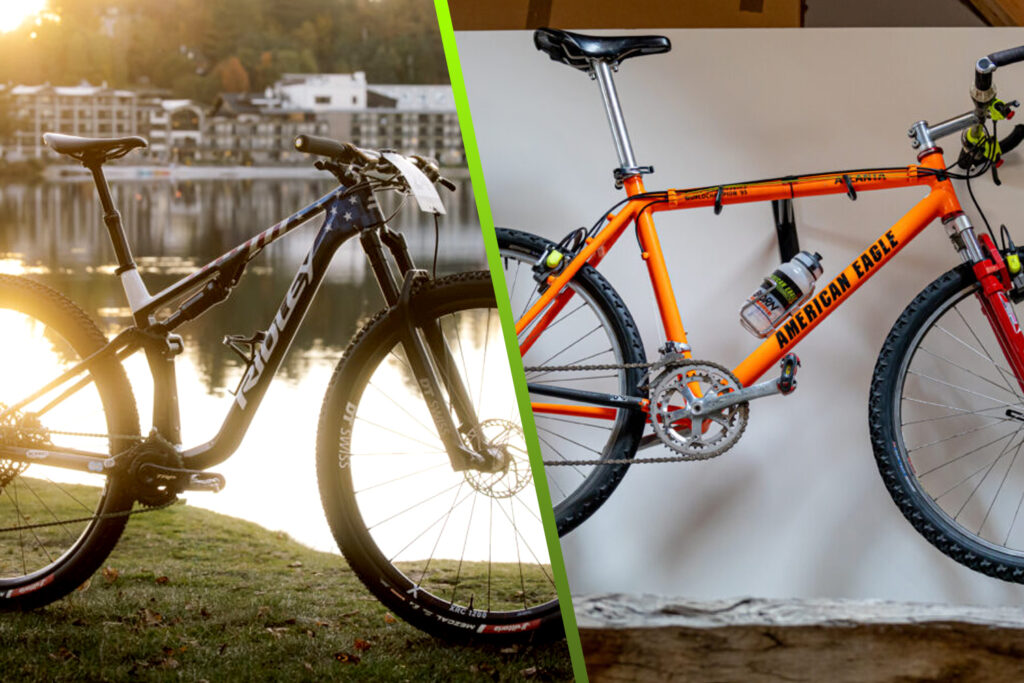

American Eagle is a bike brand few younger riders will have heard of, and yet back in the early 1990s heyday of mountain bike racing, these Dutch-reared American Eagles soared high and mighty, with Bart Brentjens riding an American Eagle to the historic first-ever Olympic Mountain Bike XCO title in Conyers, Atlanta.
- From Olympic gold to winning the 2025 UCI XCO World Champs: Jenny Rissveds reveals all on winning huge events at a young age and success at a new team
- “I think from the moment riders win World Cups on them, everybody will be on them”: Olympic gold medallist Bart Brentjens on 32″ wheels and heading Nukeproof’s new XC team
With a world title and countless other medals, World Cups, a Cape Epic, as well as his Olympic title and a knighthood, Bart is a legend of mountain biking. These days, he’s mostly to be found managing his own KMC Nukeproof MTB Racing Team. We caught up with Bart for a sketchy and patchy ride back to the 1990s.
off.road.cc: Can you tell us a bit about your bright orange 1996 Olympic-winning American Eagle bike?
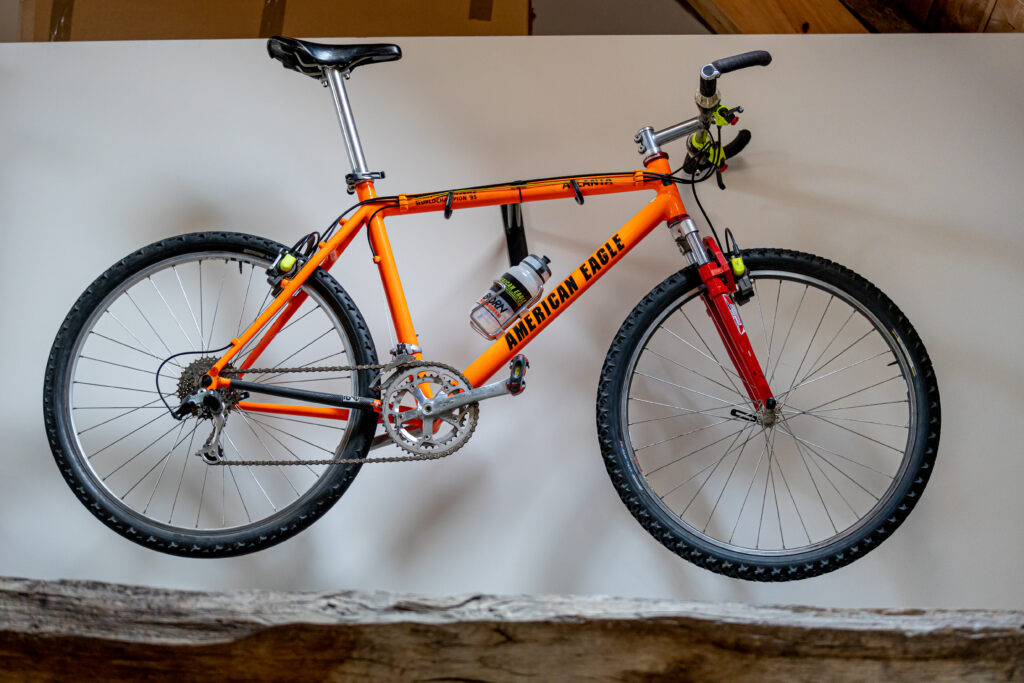
Bart Brentjens: It was an aluminium hardtail. I had two front chainrings: 36 and 46t, I think, and I think the cassette was eight speed, or maybe nine speed. I had Magura HS22 (I think) hydraulic rim brakes, a Rond WP fork with 40mm suspension, and very narrow 50cm wide handlebars with bar ends. I also had Grip Shift (twist action) shifters.
It’s like a gravel bike these days, but with flat bars and bar ends.
ORCC: Was American Eagle ever a big and mainstream brand?
BB: They sold some bikes in the USA, and that was a good market for them, and of course, throughout Europe.
ORCC: You had a part ownership of American Eagle a few years back. Is that still going?
BB: Yes, it’s still going, but we’re not doing any business with it anymore. I’m still 50% owner of the brand. It needs to have a lot of investment to make it any bigger; new models and new moulds, and a lot of stock – so we decided not to do that.
It’s still within my heart, as I won the Olympic title with it. We also won the World Cup in 2017 on American Eagle with Yana Belomoyna riding the Atlanta 2.0. If someone is interested in buying the brand, it’s for sale, but we’re not looking for a buyer or to do anything with it.
ORCC: Do you still own that Atlanta 96 bike?
BB: Yes, it’s on the wall at home. It’s still rideable, and once in a while it comes off for a photoshoot, with me riding it a little bit on the road in front of the house, or in the garden (laughing). It feels weird to ride, and it’s hard to believe that it could go that fast.
ORCC: What happened to your famous cut-off sleeve jersey?
BB: Actually, it wasn’t allowed at the Olympics. Thomas Frischknecht got a fine for wearing one; something like 800CHF. It was quite common to wear them in the early days – I really liked it. It wasn’t allowed by the UCI from around 1995.
The other Olympic bikes
ORCC: You raced four Olympics; can you tell us about the other Olympic bikes and how they changed over time?
BB: In Sydney 2000, it was a Specialized, and I’m still a bit pissed that I sold that bike. I was so angry after that race, as my performance wasn’t as I’d expected. I still finished 12th, and that’s not a good result if you’re an Olympic Champion, but still, it’s not a bad result.
I was so pissed that I sold the bike immediately after the season, and I’ve never seen it again. I heard from someone that it broke, and that they shredded it or something; I don’t know, but it’s not alive anymore.
It was a hardtail, I don’t know the model, M4 (metal matrix), I think. Not so oversized tubing, quite narrow. I think I had 80mm suspension, but I can’t remember anything else about it. It’s a shame that I don’t have that bike anymore.
In Athens 2004, it was a hardtail Giant. I can’t remember the model name, but that bike is still alive and in a bike shop in the Netherlands, and the owner still shows it in the shop. It was in pink T-Mobile team colours. I think it was all Shimano and had Shimano dual control shifters and disc brakes – but I’m not sure, as that (bike spec) changed when I went to Giant Global.
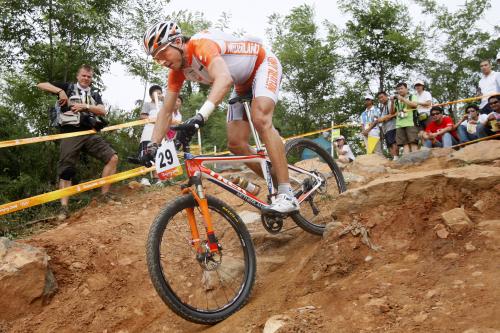
In Beijing 2008, I was on a hardtail Trek. I still have the bike, but it’s stashed away somewhere. I think it was carbon fibre, but I can’t remember the suspension setup.
Getting sussed
ORCC: When did you first switch to full-suspension?
BB: I was already on full suspension mid 90s with Specialized; the FSR, and we did all of the NORBA races on that. Also, with Giant, we had a very good full-suspension bike, but most of the time the courses weren’t that difficult, and we were able to ride them on a hardtail bike. I wouldn’t say that gravel is like old school mountain biking, or that mountain biking back then was like gravel now, but there are definitely some similarities.
Lord of the Flies
ORCC: Is the bike you ride now the same as the team Nukeproof Hyperfly bikes?
BB: Yes, the same bike. I also test a lot and need to know what the riders and mechanics are talking about, so it’s the same bike, though I’m with 100mm suspension, while they’re all on 120 – that’s the biggest difference.
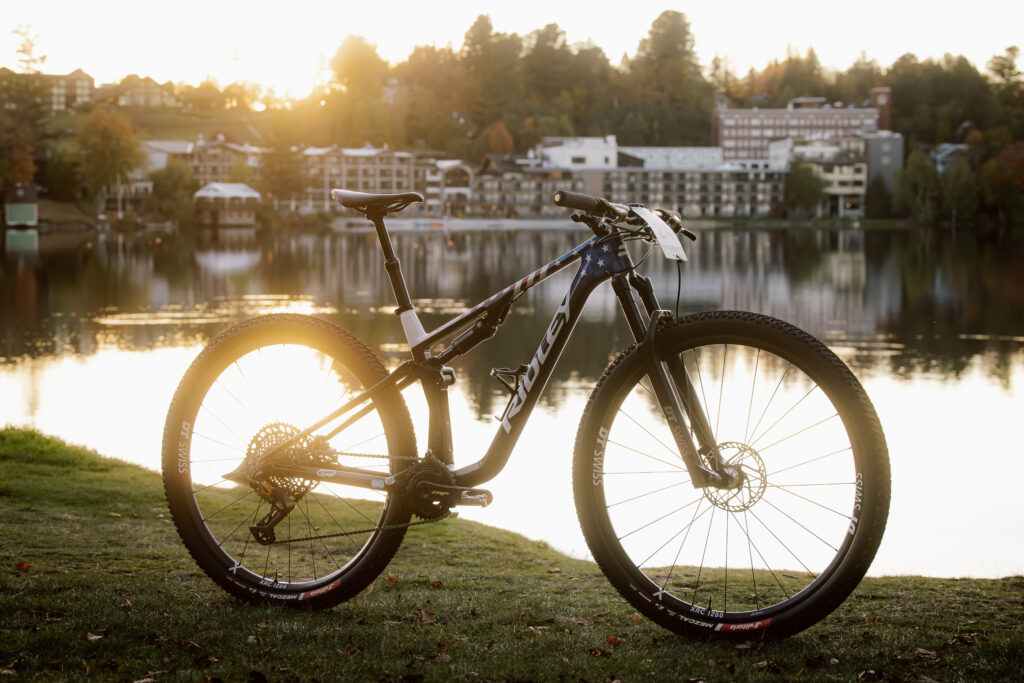
ORCC: When you travel to World Cups now, do you ride the courses?
BB: No, not any more. Now it’s very strict, and you’re only allowed to ride the course on training days at training times. Most of the time it’s very busy – and I wouldn’t like to disrupt the riders by being too slow. We have a technical trainer who goes around with the riders now, and most of the time I’m next to the course trying to help them with lines and inform them how other riders are doing things.
I’m definitely able to ride them, and I did the European Champs course last year, where the rules are not as strict. I ride with the mechanic on the mornings of World Cups, and we tried to go on course a couple of times and almost got fined and disqualified by WBD – they don’t like to see riders on the course outside of training times.
ORCC: If you could have your time again, would you rather be on the bikes and courses now, or those of the 90s?
BB: I like how the courses are now, it’s just that I’m older and more careful. I don’t do the high drops and double jumps anymore, and you definitely have to jump and be very technical on the bike these days.
Changing pressures and returns
ORCC: Would you say there’s more pressure on the riders than there was for you in the ’90s?
BB: I don’t know. There’s definitely some pressure for the riders, especially if they have to get a new contract. For some, I’d say there is no pressure at all; they know how strong they are, how good they are, and how they can perform, so they know they don’t have to worry about getting a new contract.
In general, with WBD on board (World Series), and with the new team rankings, where only four riders count, you see the teams getting a bit smaller than before.
The salaries of the top riders are really good, and they don’t have to worry about anything. From 50th to 100th in the rankings, that’s less interesting for the teams. These riders have to be strong in some things, or to have a lot of followers on Instagram or social media, or to win one of the races – and not to constantly be around 20th position.
It’s different now. Back in the day, we were very reliant on the media. Now teams and riders also have to create their own content and media.
You might also like:
- The bike that won Olympic gold – Tom Pidcock’s BMX Fourstroke
- “Once you’ve won the World Championship, those rainbow bands stay with you forever”: Alan Hatherly on two World Championship wins and an Olympic Bronze, raining between road and MTB and mid-race line-choice
-
MTB enduro racing for beginners: Get prepared for a successful day between the tapes