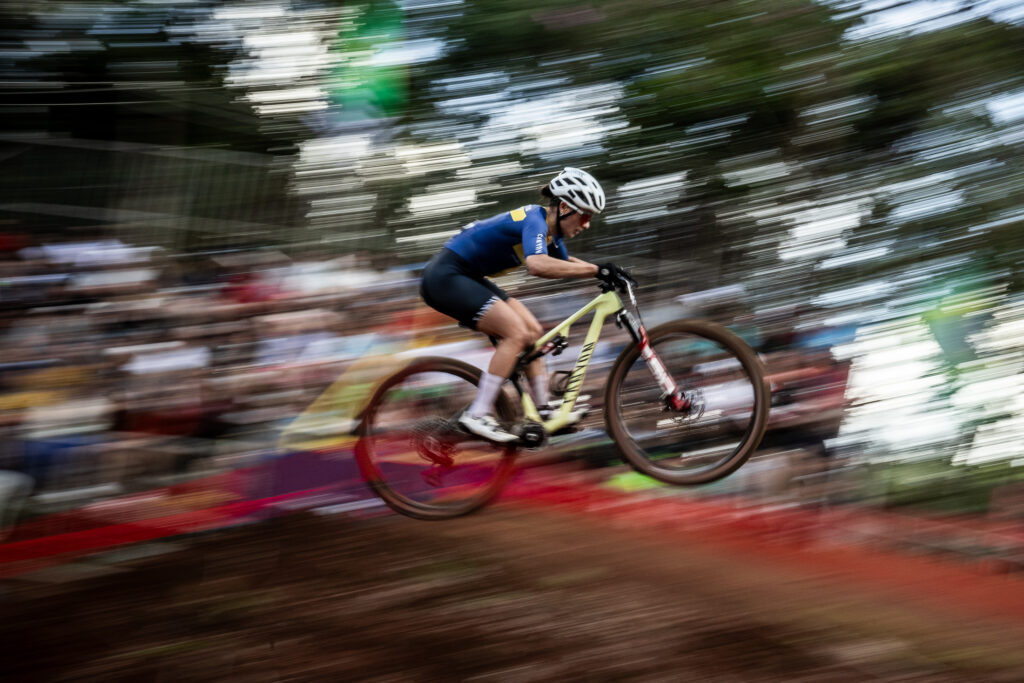

[Images provided by Canyon]
With a dominant display of power and determination, Jenny Rissveds scored a resounding victory in this year’s Elite UCI World Championship XCO/cross country title race in Switzerland, her first-ever Elite world title. This was nine years since she became an Olympic Champion in Rio.
- The Charlie Hatton interview – the new King of Downhill
- “Once you’ve won the World Championship, those rainbow bands stay with you forever”: Alan Hatherly on two World Championships wins and an Olympic Bronze, training between road and MTB and mid-race line choice
- Rising from the Dust – the Lachlan Morton interview
Following personal issues, Jenny left racing behind for a while after Rio to rebuild herself and get back her love for simply riding a bike. When she returned to racing, she did so on her own terms, including with her own team structure.
The results soon followed, and this year she took another step forward when she decided to re-enter the world of factory racing, when she signed with Canyon Factory Racing. This year must rank as a standout one for her, having won four XCO (cross-country) and four XCC (short track) World Cup rounds, the European and World XCC titles, and snaring a whole score of other podiums and medals too.
We caught up with Jenny to learn more about the bumpy road back to the top, and to find out what underpinned such an amazing season.
ORCC: You were quite young (22) when you won the 2016 Rio XCO Olympic title; was it a shock to win, and how did it affect you?
Jenny Rissveds: For me, it was just another race that I won, and I wasn’t surprised because I knew I could do it. I wasn’t thinking about it as being a special thing; that all came from the outside, and that brought a lot of pressure.
The Olympics is a big thing for people, but not for me – not at that time. At some point, I figured that, as this is a big thing for the rest of the world that I had to fit into this narrative. That was really hard, because I felt I wasn’t being true to myself. Looking back, I’m really thankful for that experience. And with the time I took off after it, I’ve learned so much about myself as a person, not as a cyclist, which I’m really happy about today.
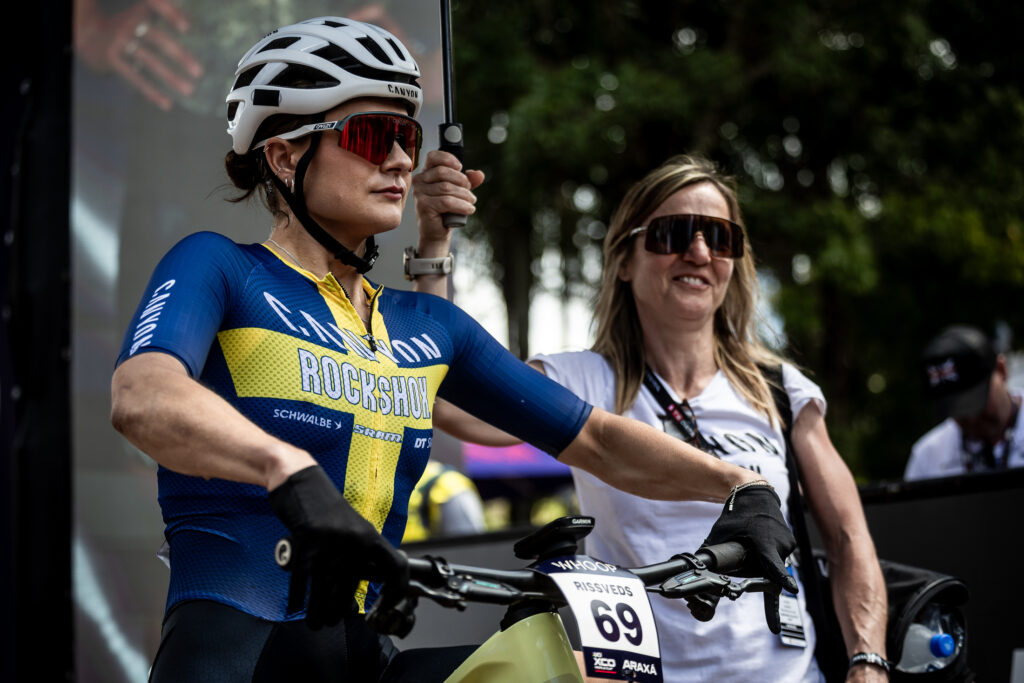
I’m happy that it happened at a young age, because I carry that with me for the rest of my career. For example, since I won the world’s, the same thing is happening again, and now I have so much experience in how to handle it – thanks to winning the Olympics.
ORCC: 2025 has been a huge year for you. What was behind you stepping up to this level?
JR: I would say it’s all of the changes I’ve made this year and the new team environment. I also moved from Sweden (to Andorra) and have a new coach, and all of this created a new motivation and a new love for bike racing. Though I’d say mainly it’s the understanding and learning about myself as a racer, which is coming from my new coach.
I’ve learned how to race, and I always have a plan. Before, I used to have a lot of questions but no answers, and now I feel like I get the answers through him. I should also give a lot of credit to my husband (top pro mountain biker Simon Andreassen), who is also helping me a lot with everything in bike racing and life in general.
ORCC: It always seems like you like to race and control from the front. What’s your approach and reason here?
JR: People say that a lot, that I attack from the front, but it’s never been about attacking or about the others. It’s not about whether I’m able to leave the others from the start, or if I’m able to go in the second half of the race, or when I get the gap.
It’s only about doing my own race. I plan, and I know exactly how hard I want to go up this climb, how fast down this downhill, and I’ve just been doing that.
ORCC: In the 2025 XCC World Championships, you looked to be in full control and heading for the win, but Allesandra Keller came past you in the final. How did that play out, and how did you recover from it to then win the XCO race?
JR: In the short track (XCC), I felt strong and thought I had a chance to win. Unfortunately, I was losing a lot of time every lap (10 meters or so) in the rock garden before the start and finish, and I had to close it every time. In the end, that adds up, and it wasn’t possible for me to keep up with Allessandra in the end. I’m happy with the performance, because I did what I could on that day.
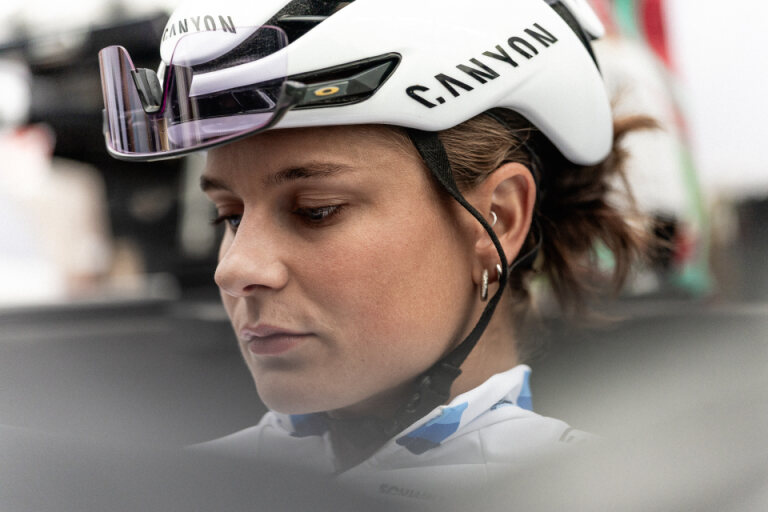
That was one race, and I didn’t have any expectations based on the XCC result for the cross country; they’re two separate races. I just try to live day by day, and the cross country was a new day, and I just raced my own race.
ORCC: How different was winning the world championship from the Olympics for you, and how differently have you handled it?
JR: I’ve gained a lot of experience since the 2016 Olympics. Back then, I was identifying by my results, which I don’t do these days. So, I’ve been able to separate myself from the world championship title. I’m very proud of my performance and what I’ve learned about myself this year as a racer, and how to race a bike fast this year.
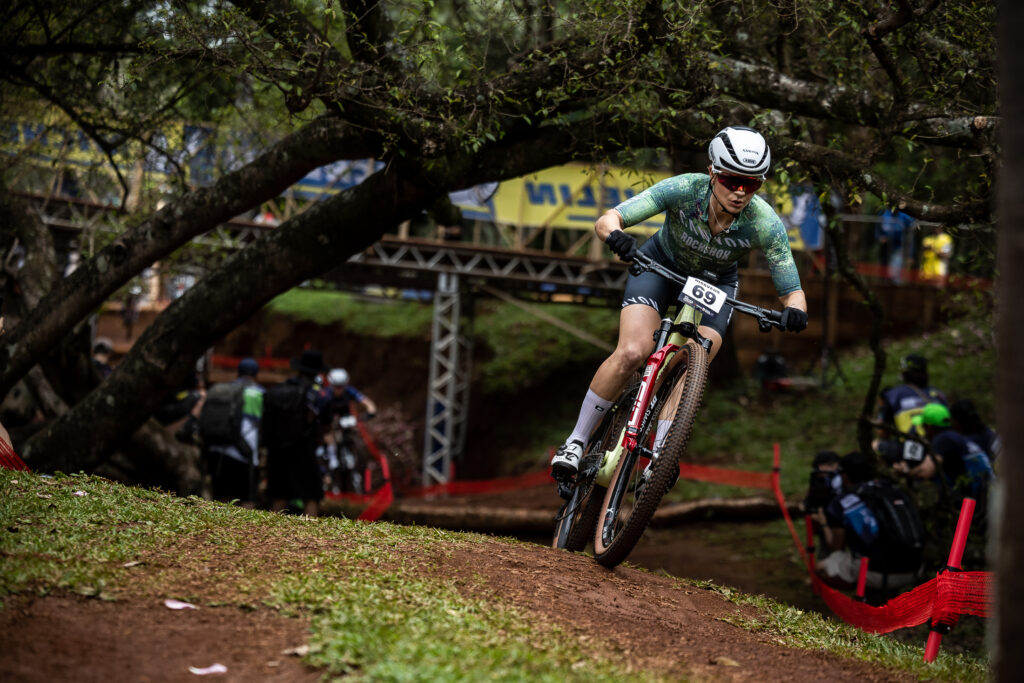
I won the worlds, which is nice, and then I won races after that too, but I’m just proud in general of this season and what I’ve learned, how I’ve adapted to everything.
ORCC: With moving from your own team to the Canyon Factory Racing team and with full back up, do you have any input or choice on what you ride, how things are set up, and any input on development?
JR: I try to give feedback and think Canyon as a brand is really open and listens, which I really appreciate. For sure, they can’t do everything I want and instantly, but I think feedback is key. It’s better that I give my feedback and that they’re aware of what I think, and then they can do whatever they want with the information.
ORCC: Do you have any specific bike setup and equipment choices?
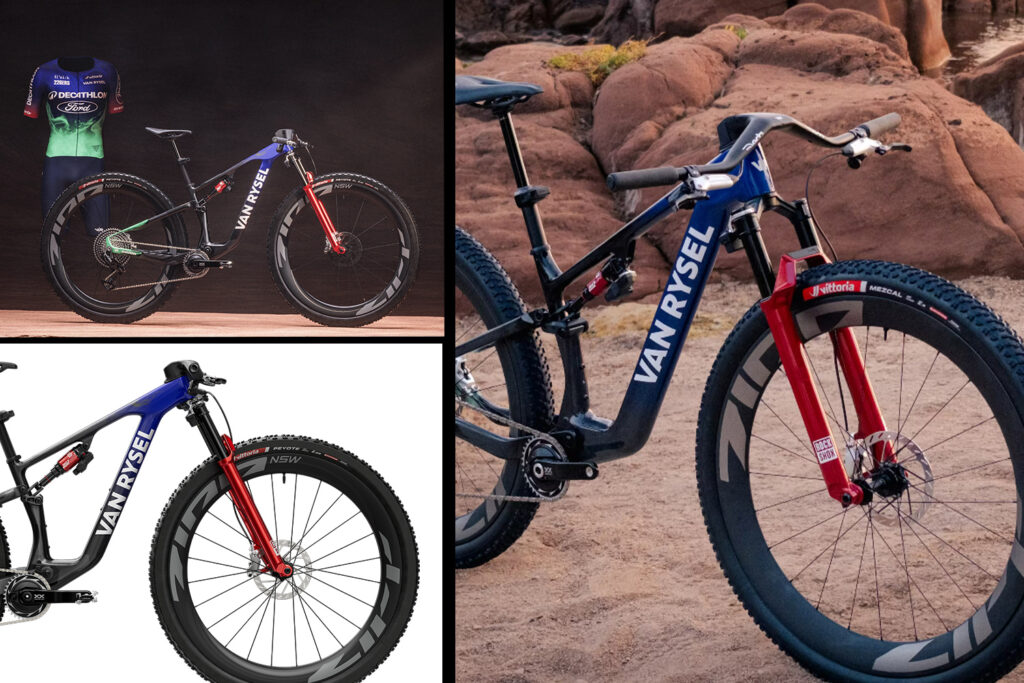
JR: Up until now, it’s been mainly tyre choices and suspension setups. It’s still a process for me, and I haven’t gotten 100% comfortable on the bike yet. It’s been such a big change, I changed everything, coming from a Shimano focus to RockShox/SRAM, a new bike brand, new tyres, everything changed, and it’s not going to happen just like that, it’s a process of getting used to it.
I’ve been using the races this year as proper testing sessions for the bike and equipment, to find what I like, and what I think can improve. I think we’re on a good path, but we can keep on working on it.