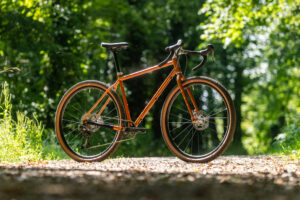
The Sonder Camino Ti GRX1 Di2 is a very well-considered titanium gravel bike that’s solidly specced and nicely made, and it’s fun to ride on a range of surfaces whether you’re carrying gear or not.
Sonder Camino GRX1 Di2: the ride
Sonder says it’s developed the Camino Ti, “to give you the perfect mix of speed and confidence. Light, zippy titanium with a slack head angle and longer wheelbase, Camino excels both loaded and unloaded, absorbing imperfections in surfaces you ride.”
In reality I’d say it tips more towards confidence than speed, but I found it a very enjoyable bike to ride over a mix of surfaces.
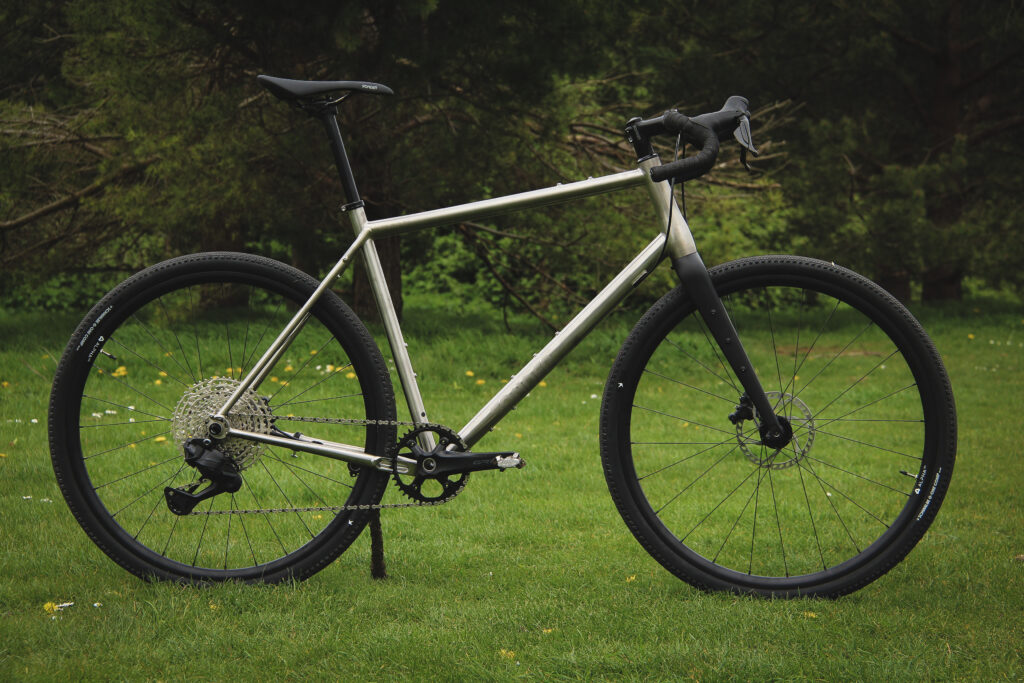
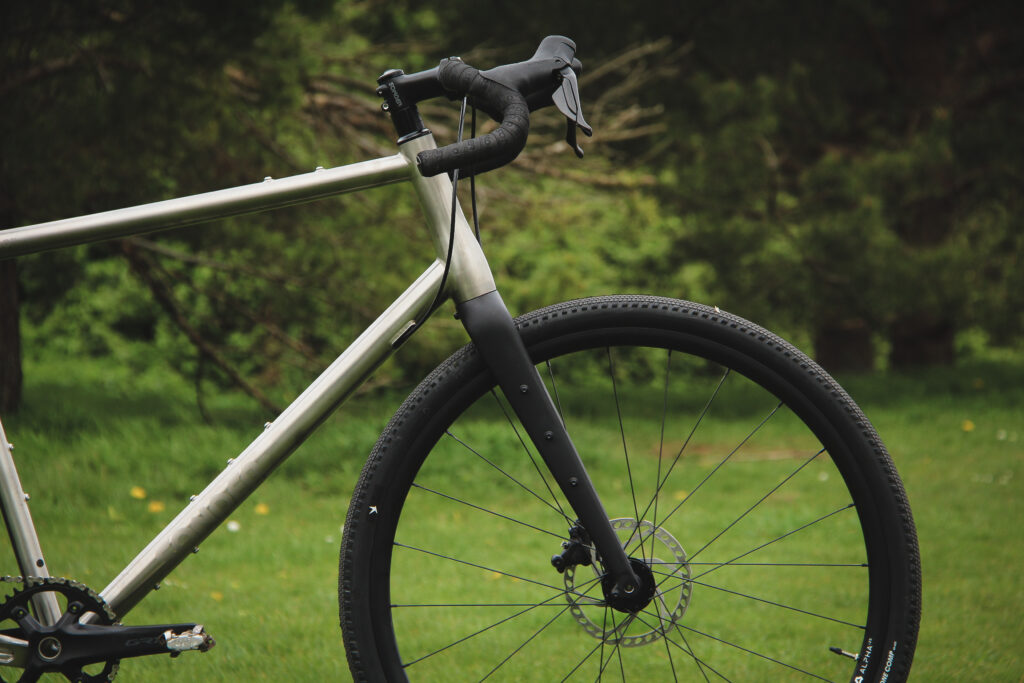
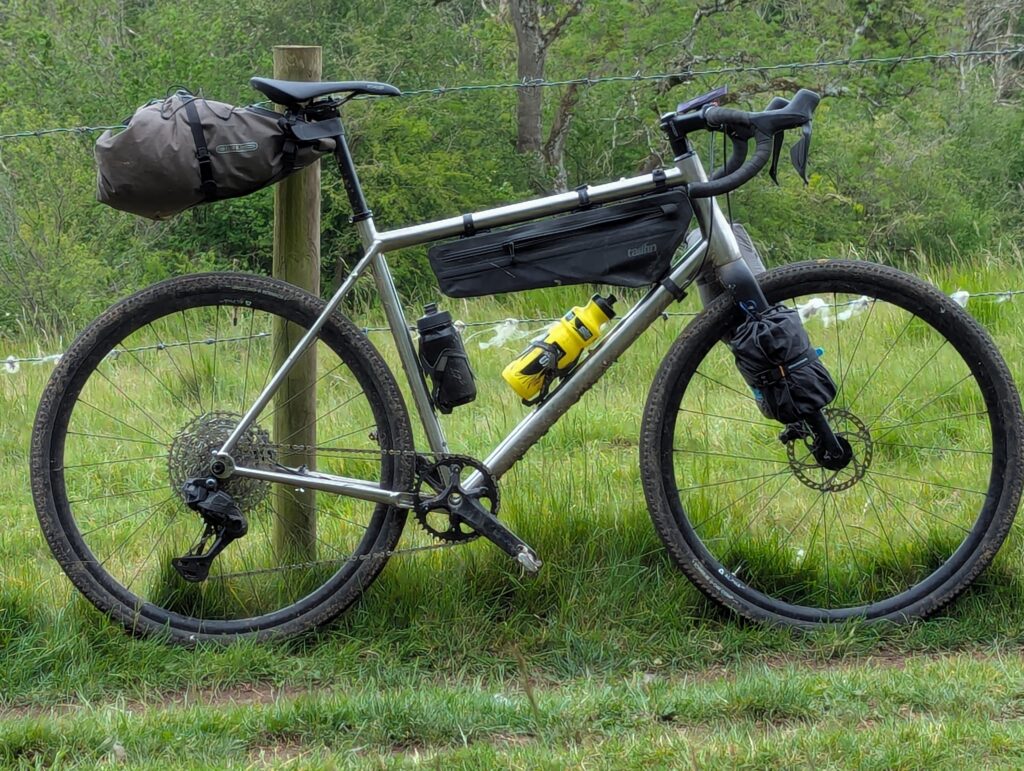
The slack 69° head tube angle and 50mm offset fork gave our test bike a 1131mm wheelbase, and it’s a lovely stable thing out on the trails. It’s not a bike to be hurried off line, and on the flatter and smoother sections it’s a great platform for cruising with minimum rider input. It’s the kind of bike you could ride no-handed on gravel. You definitely shouldn’t do that. But you could.
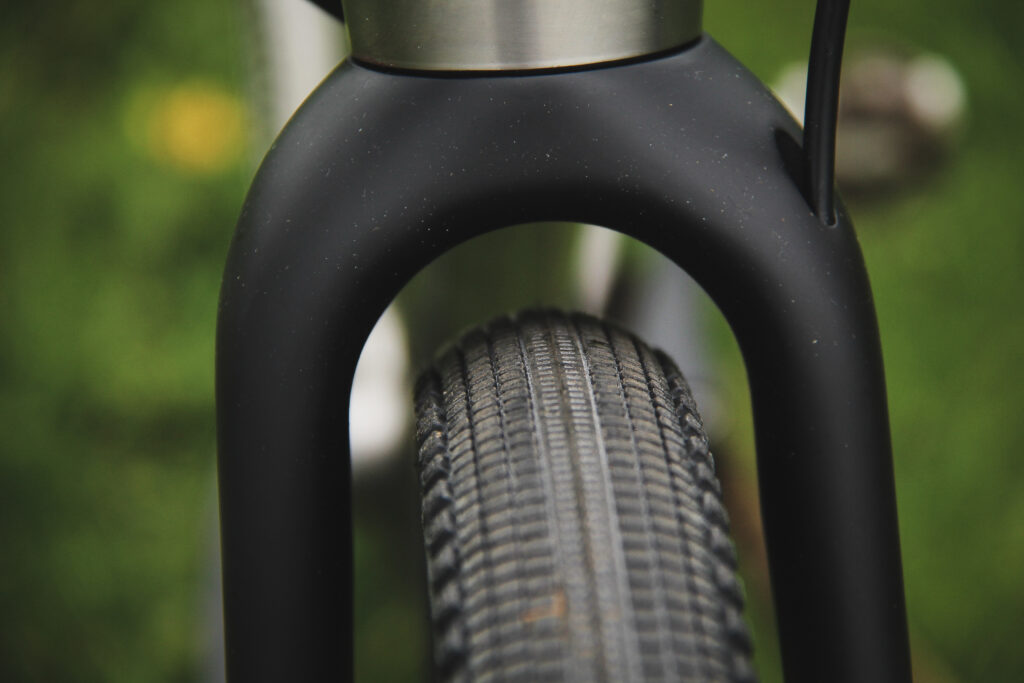
Once things start to get a bit more chunky, there’s a lot to like about the position and the control you get. It’s not at its best on really tight and twisty stuff, but it’s great over rocks and roots and on tricky descents. The limiting factor is generally how much the tyres will take, rather than the ride or the position, and with the Camino Ti able to run a 650b wheel with a tyre up to 2.2in, you can spec it for some fairly serious terrain.
Once you’ve reached the foot of the descent and you’re on the inevitable winch back up the other side, the Camino Ti is a decent climber. At 10.4kg it’s not a lightweight by any means, but it makes easy progress, and even on steep stuff you don’t feel like you’re fighting to stay on line. The long wheelbase and the fairly steep seat tube (compared to the head tube) keep your weight well centred.
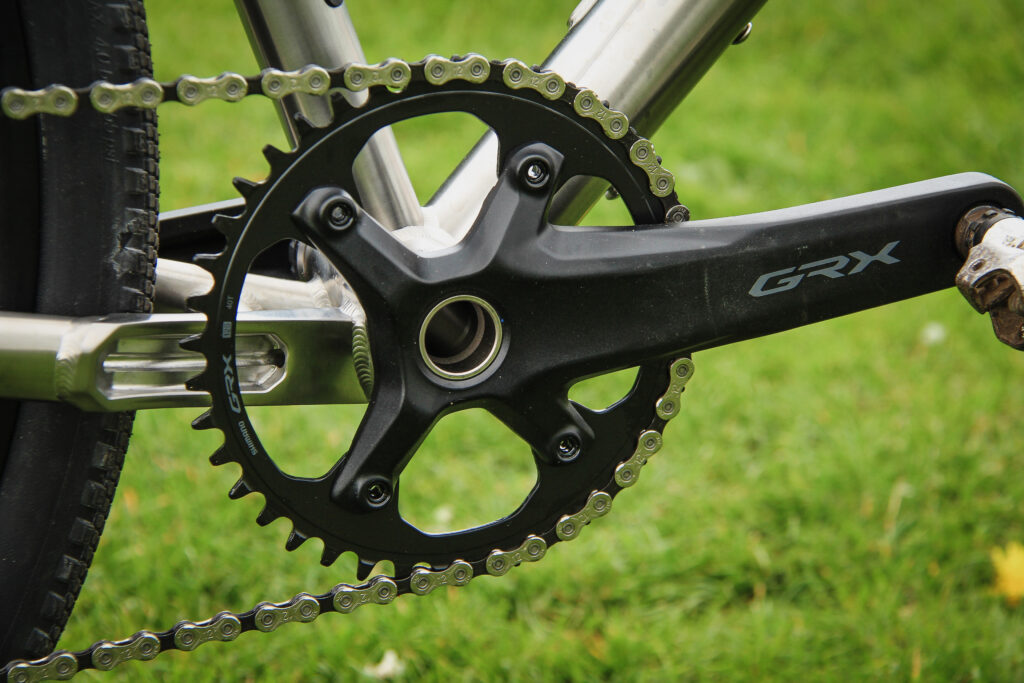
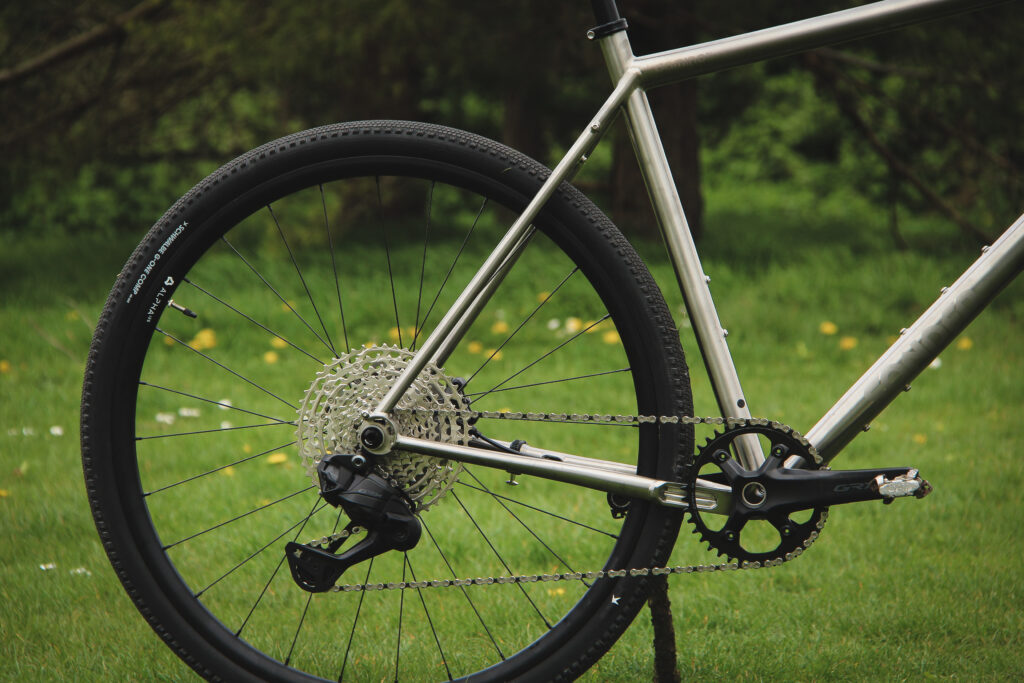
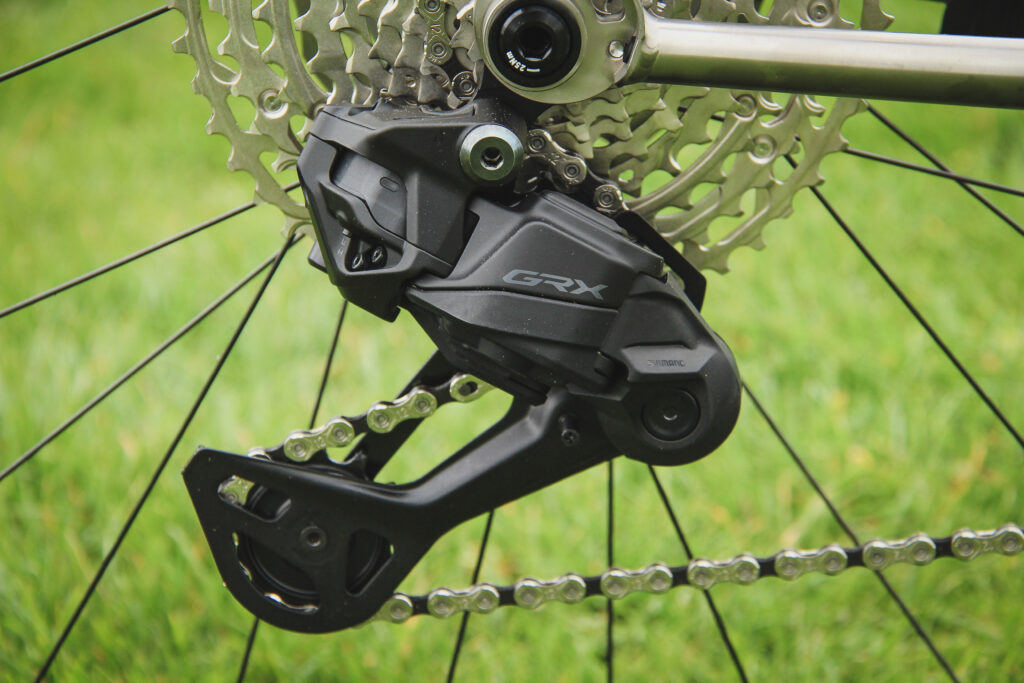
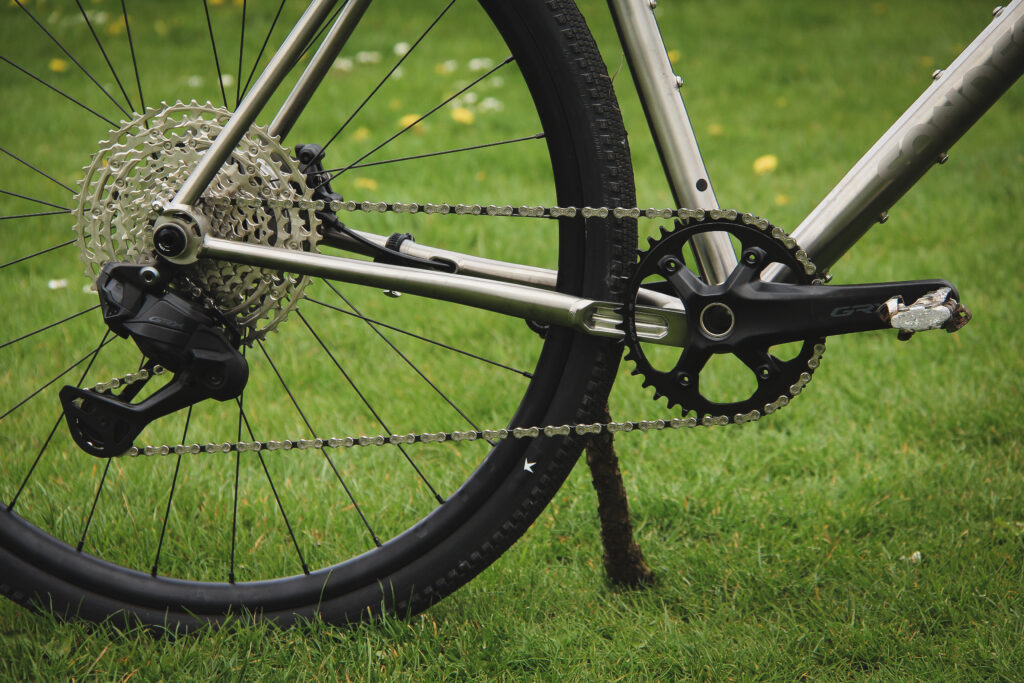
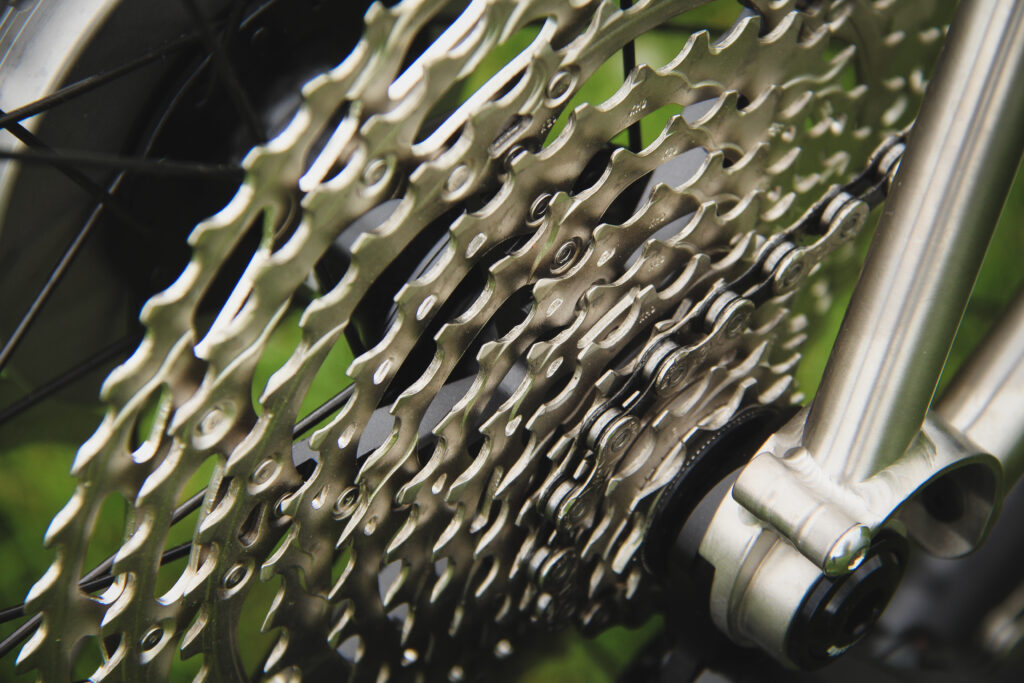
Shimano’s latest GRX Di2 groupset is a great companion to this frame. You can spec this bike with either a 2x or a 1x system, but with 12 speeds and some big old cassettes, there’s little need for 2x on a bike like this where you’re not looking for top-end speed or worrying about gear jumps. Our test bike had a 40T single-ring setup with a huge 10-51 cassette at the rear giving a 510 per cent gear range from top to bottom. That’s a range that’s great for general gravel riding and was even okay when loaded.
If you’re really heading into the wilds with full bikepacking gear then it would be easy to gear down with a smaller chainring. 34T is (I think) the lowest you can go with the GRX chainset, which would give you a 0.67 smallest ratio – enough for dragging yourself up most things, even with plenty of cargo.
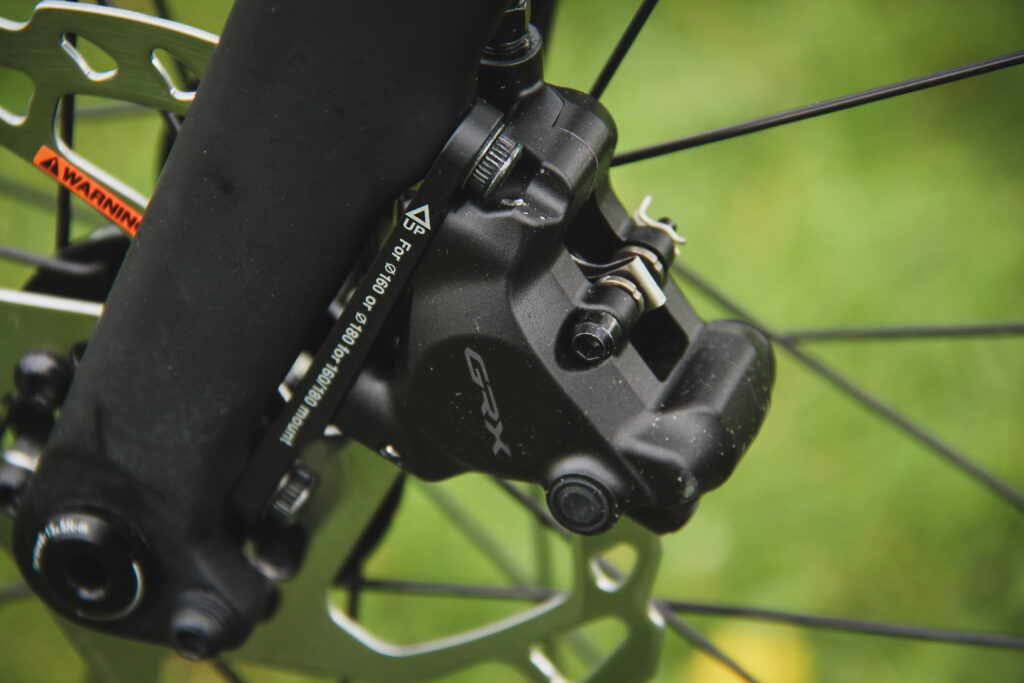
Functionally, GRX Di2 is hard to fault. Shifting is precise and quick, battery life is good and it’s easy to set up. Braking is excellent too, and I found the lever shape plenty comfortable.
How about the fabled ride qualities of titanium; its bump-soaking springiness? To be honest, any bike that’s sporting big-chamber tyres run soft on shallow rims is going to feel fairly comfy. I suspect that with over 2kg of metal in the XL frame (around 300g more than you might find in an allroad bike), it’s more built for reliability than a supple feel. It feels solid rather than springy when you’re putting down the power. It’s not uncomfortable though by any means. I was happy on short and long rides, on all surfaces. The 27.2mm seatpost adds a bit of give at the rear too.
This is a bike that’s designed to be loaded up, and so it’s important that adding baggage to the bike doesn’t negatively impact the handling. I stuck an overnighter’s worth of kit on the bike – tent, stove, sleeping bag, mat, down jacket – to test the loaded performance and I was impressed. Of course you don’t make such quick progress, but the Camino Ti was very neutral when loaded and the extra weight didn’t expose any idiosyncrasies in the ride. You still get the confident feel, and it’s well balanced and easy to like.
Sonder Camino GRX1 Di2: frame and fork
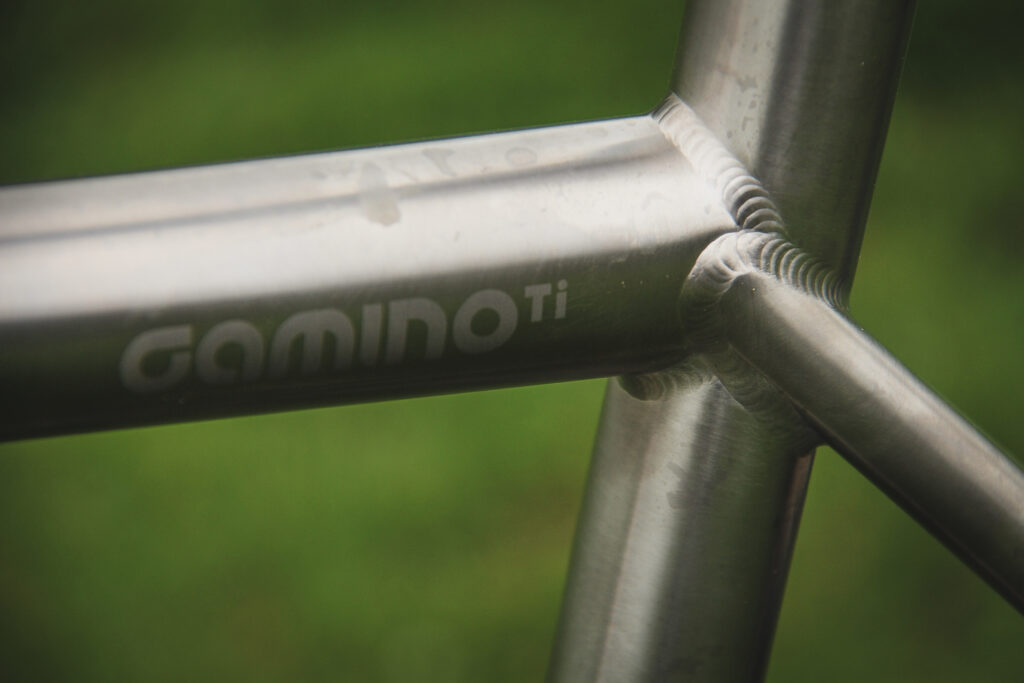
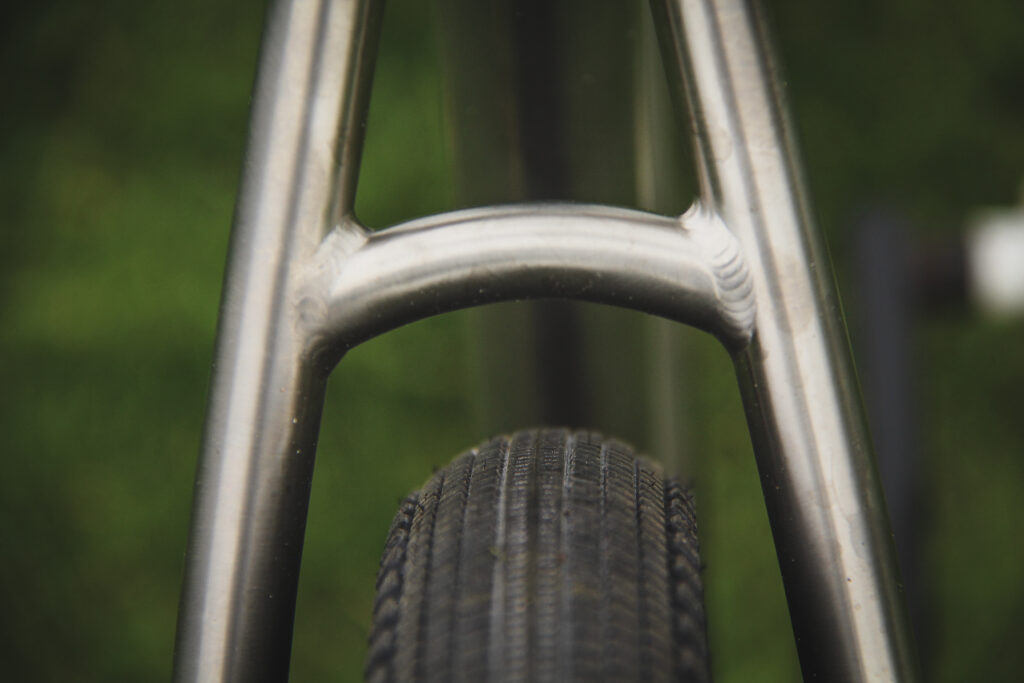
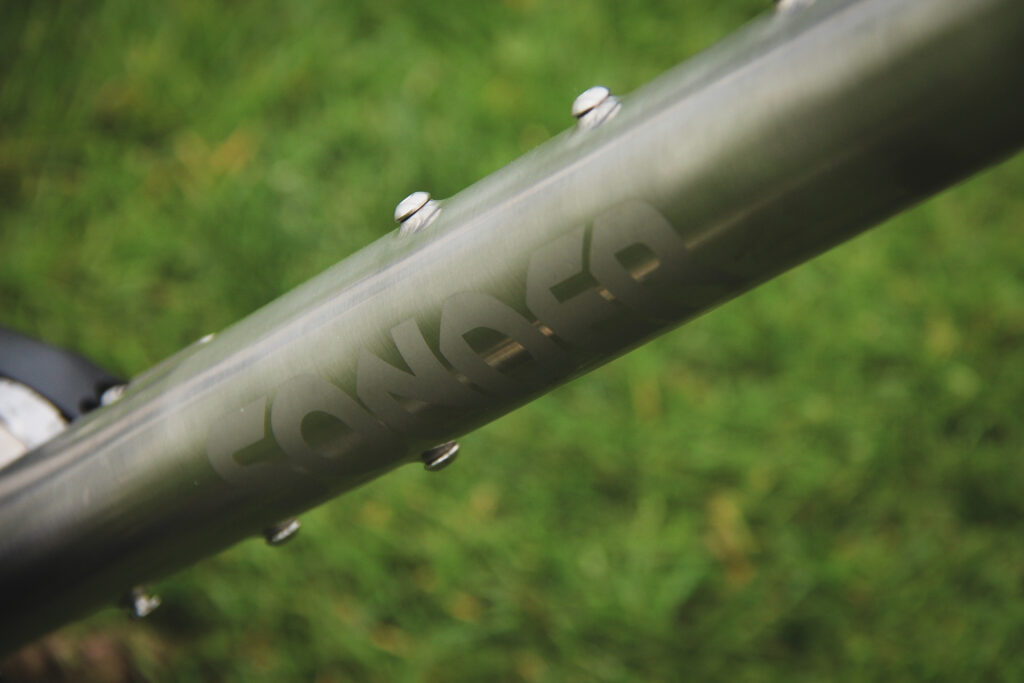
The frame itself is constructed from “aeronautical-grade” titanium, which in the absence of any information to the contrary I’ll assume is 3Al/2.5V alloy, since that’s what practically all titanium tubes are made from.
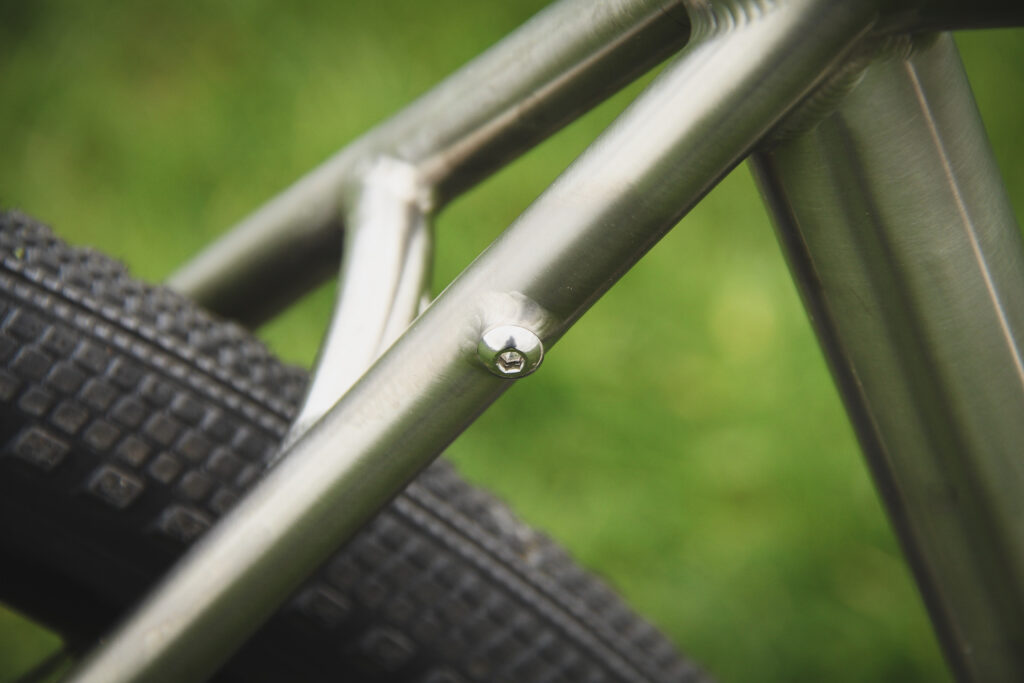
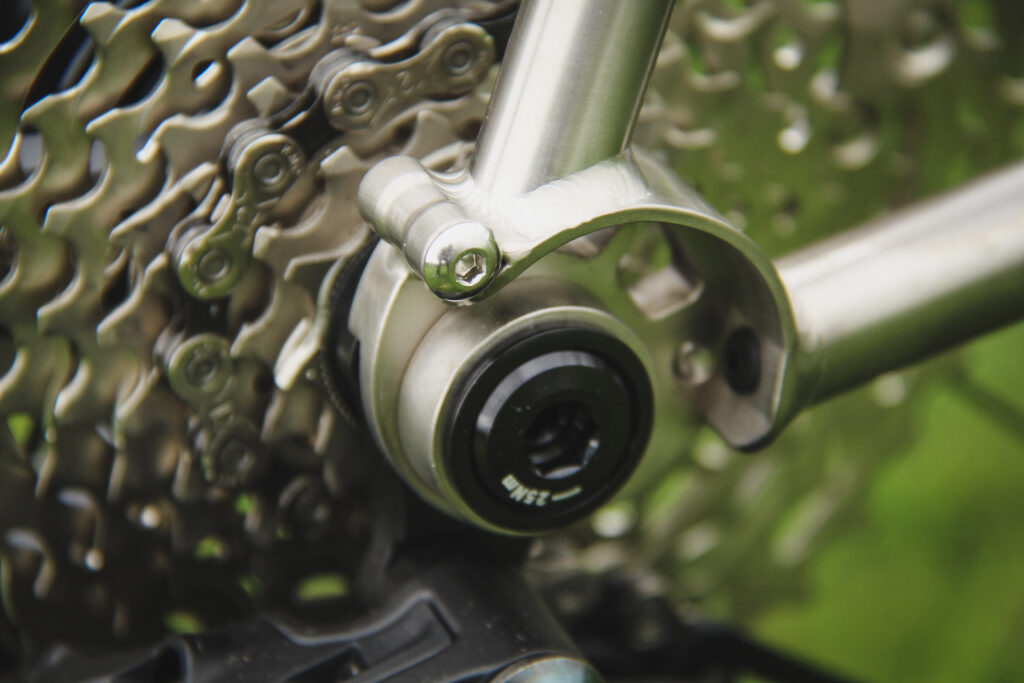
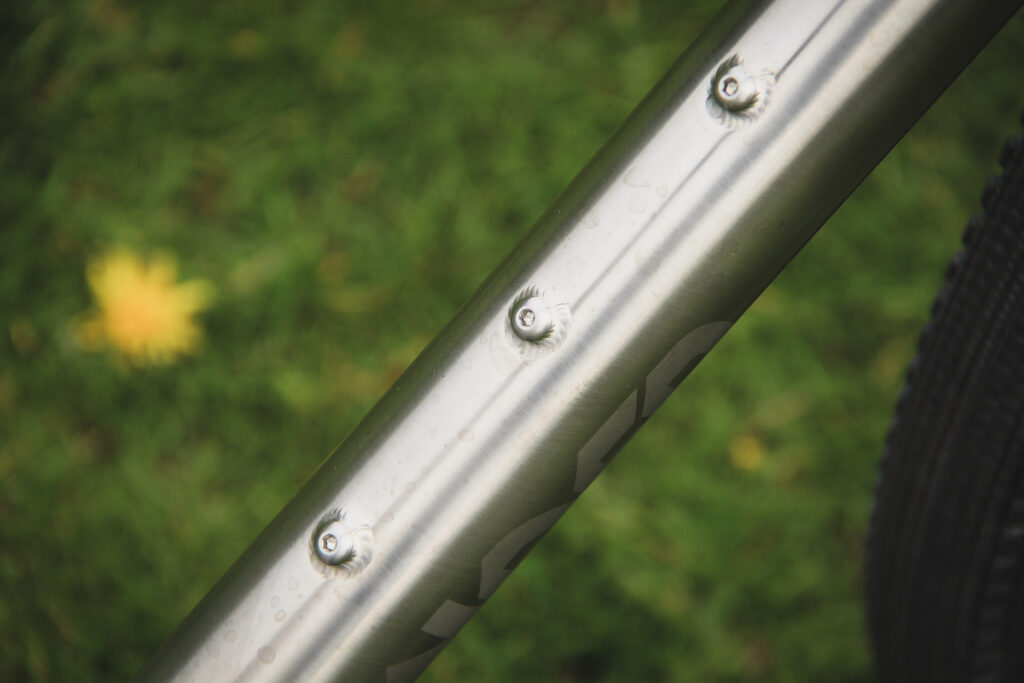
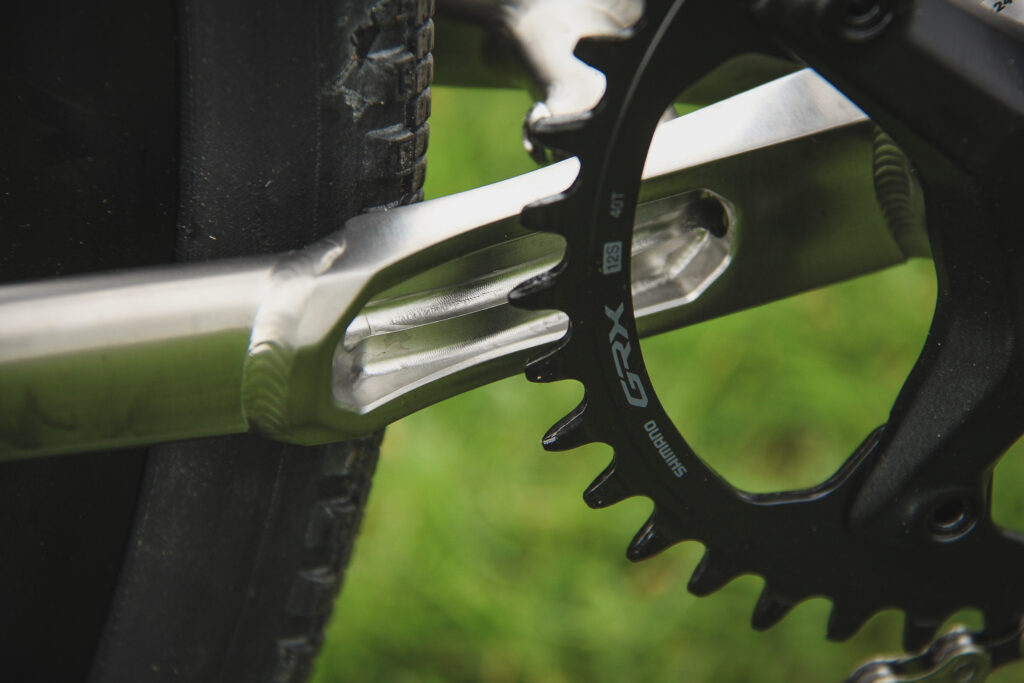
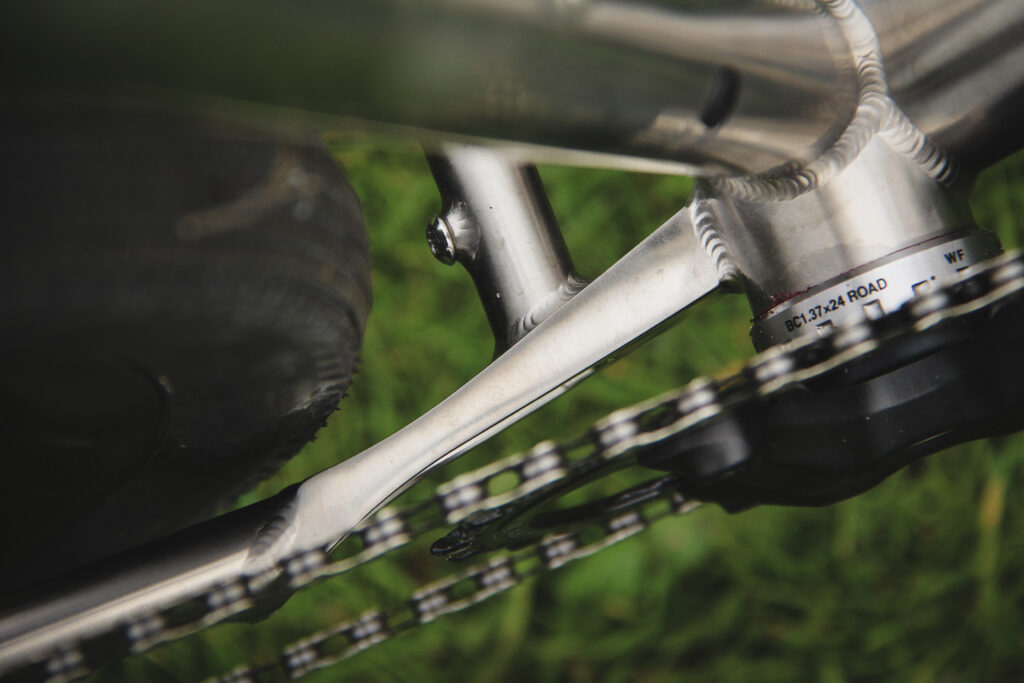
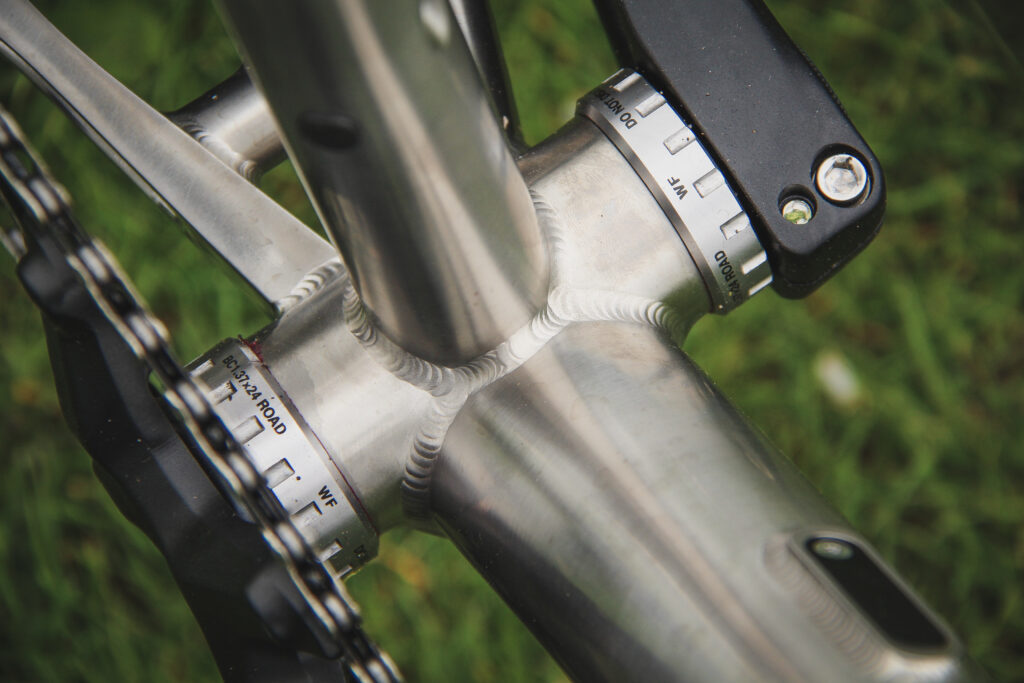
It’s nicely put together. The welds aren’t the absolute neatest that I’ve seen, but they’re well-executed with no signs of any undercutting or other defects. The only non-tubular sections are the chainstay behind the chainring, and the rear dropouts. The dropouts are quite heavily cowled, which sometimes makes for issues when fitting things like a Tailfin or some other rack that attaches to an extended through-axle, but I didn’t have anything I could check during testing.
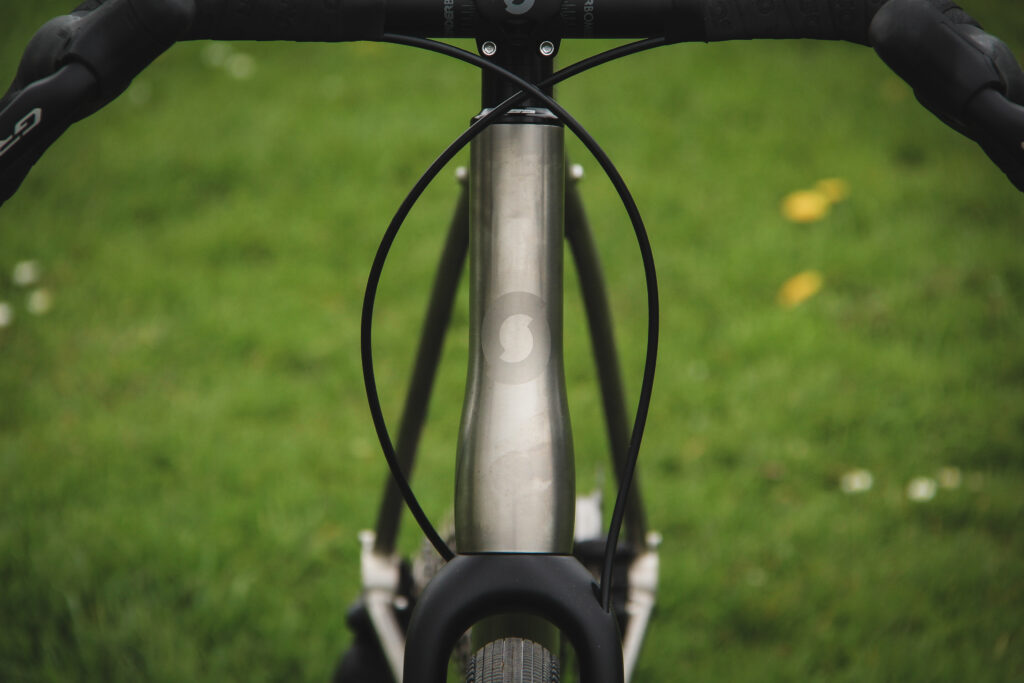
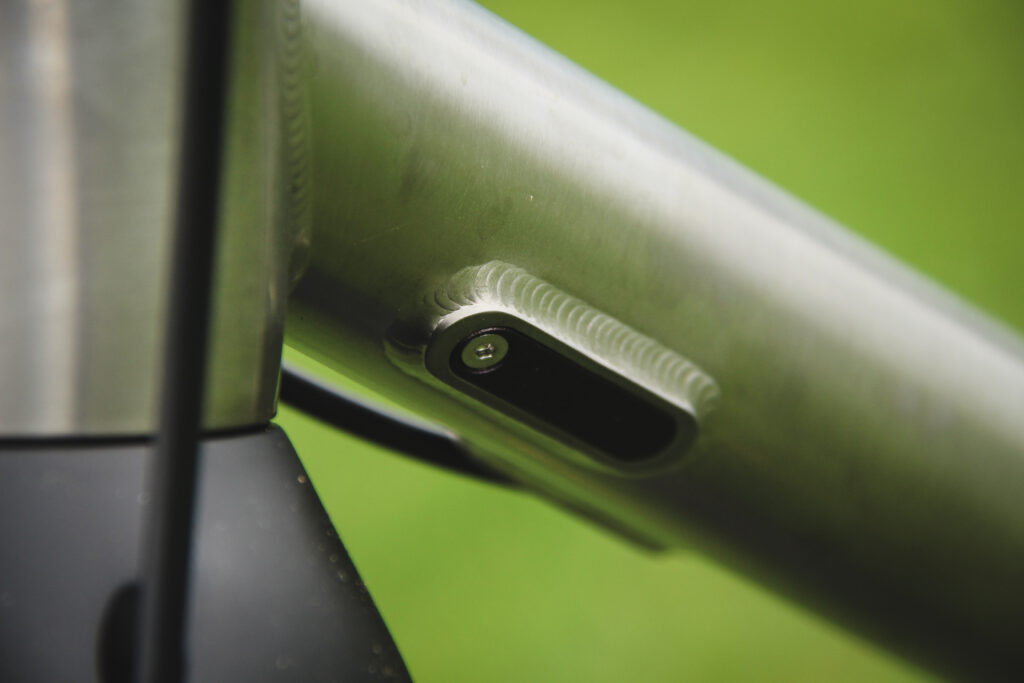
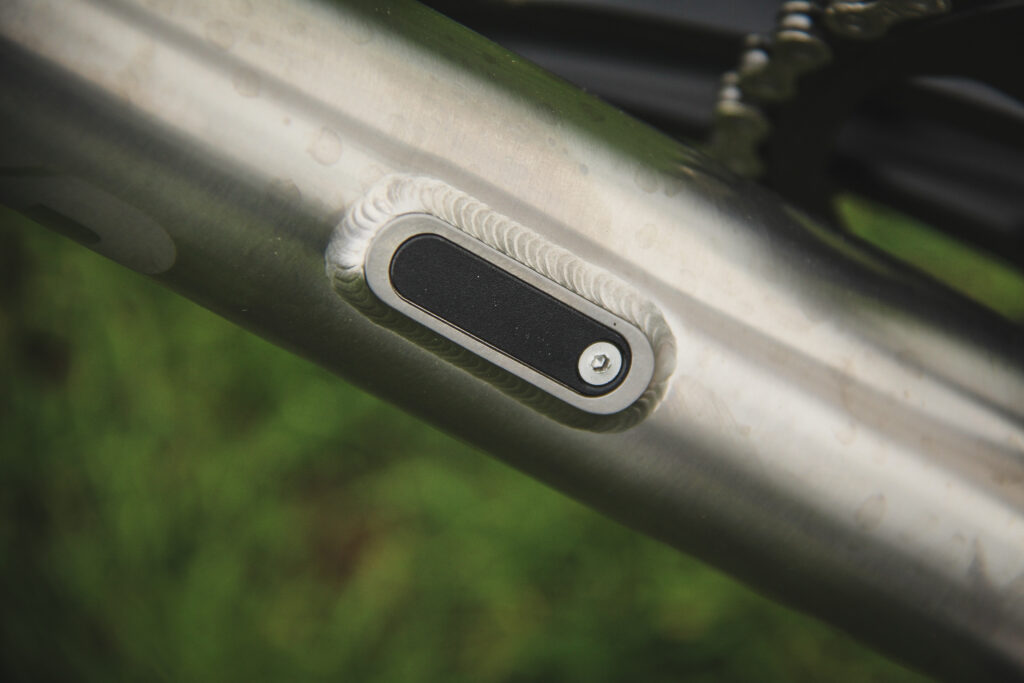
Cable and hose routing is sensible. There’s no internal headset routing, and the bike is set up with configurable hose and cable ports that will handle more or less any setup. The CNC chainstay section has been drilled to accept a cable to the rear mech, if a cable’s the way you wanted to go, and wired Di2 is also catered for. It’s not as easy to work with as full external routing, which you’ll see on other titanium and steel bikes and makes wilderness fixes a lot simpler. But it’s a sensible middle ground. For this build, your only concern is the brake hoses, but cheaper mechanical builds are available.
The fork is carbon, with fairly deep legs front to back and clearance for big tyres. Both front and rear wheels use a 12mm through axle. I found the fork plenty stiff enough to guard against any fore-aft chatter under braking, even on steep and technical stuff, and I didn’t feel that the bike was unduly stiff or uncomfortable at the front – although again the tyre/wheel combo is doing a fair bit of the heavy lifting there.
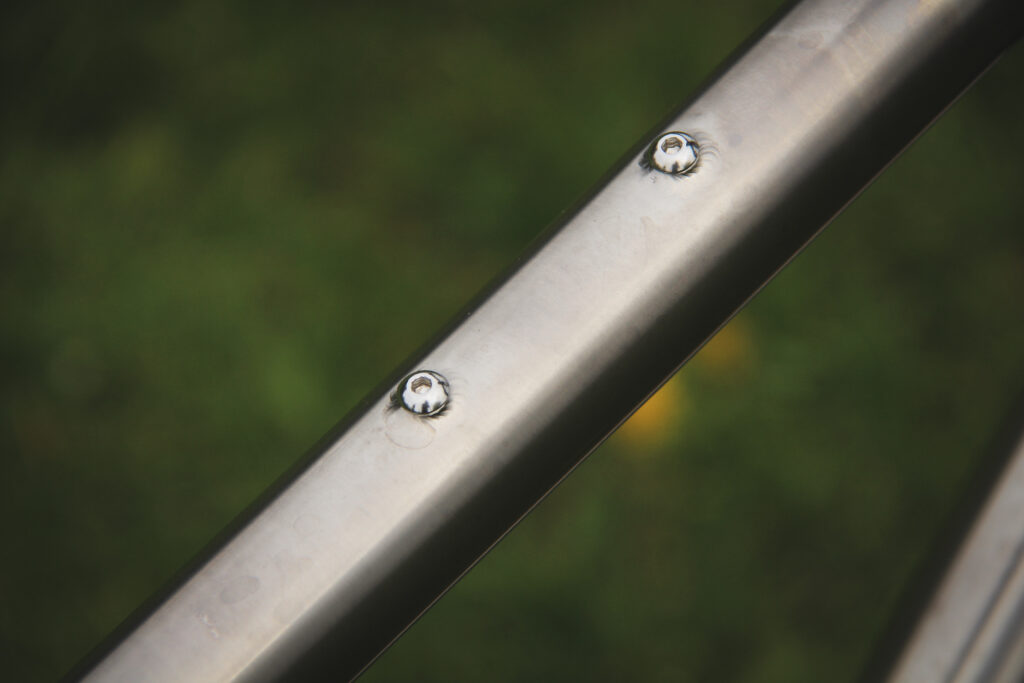
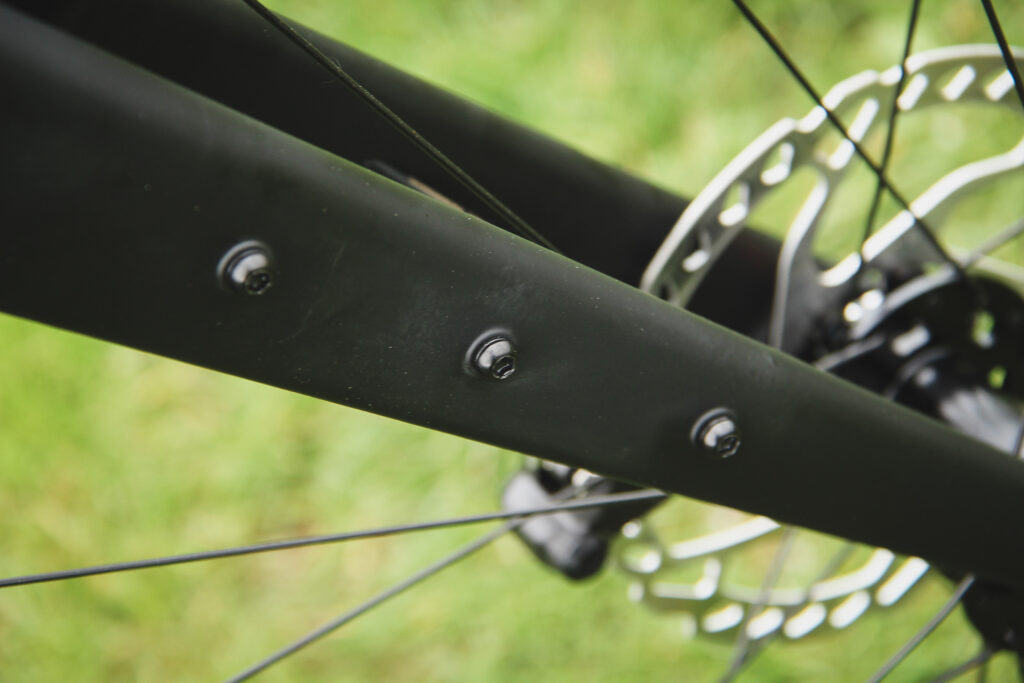
Both fork legs have 3-bolt mounts for various cages, and there are mudguard mounts too. The frame also has mudguard mounts, as well as rack mounts, three sets of bottle bosses and a bento box mount on the top of the top tube. The main downtube bottle bosses are dual position, so you can fit a bottle low down to accommodate a frame bag, or you can fit a multicage for carrying something bigger there.
Sonder Camino GRX1 Di2: geometry and build
I’m riding the XL frame as I’m a big lad. I could have also ridden the Large but I prefer a bit of extra room for a bike that’s going off-road.
The XL geometry is more aggressive on paper than you might imagine. With a 440mm reach and a 615mm stack you get a stack-to-reach ratio of 1.39, which is maybe more what you’d expect from an endurance road bike than a bikepacking bike. The ratio gets bigger as you move down the sizes, with the smallest frame at 1.47, the same as the excellent Merida Silex 400 we tested last year. Even that’s not particularly upright: Something like the Genesis Vagabond is up over 1.5 in the smaller sizes.
It’s not unusual for bikes to get more aggressive (on paper) in the bigger sizes, and also it’s designed to be used with a 70mm stem, so it probably reports as being a bit longer and lower than it actually feels if you’re thinking of it in road bike terms.
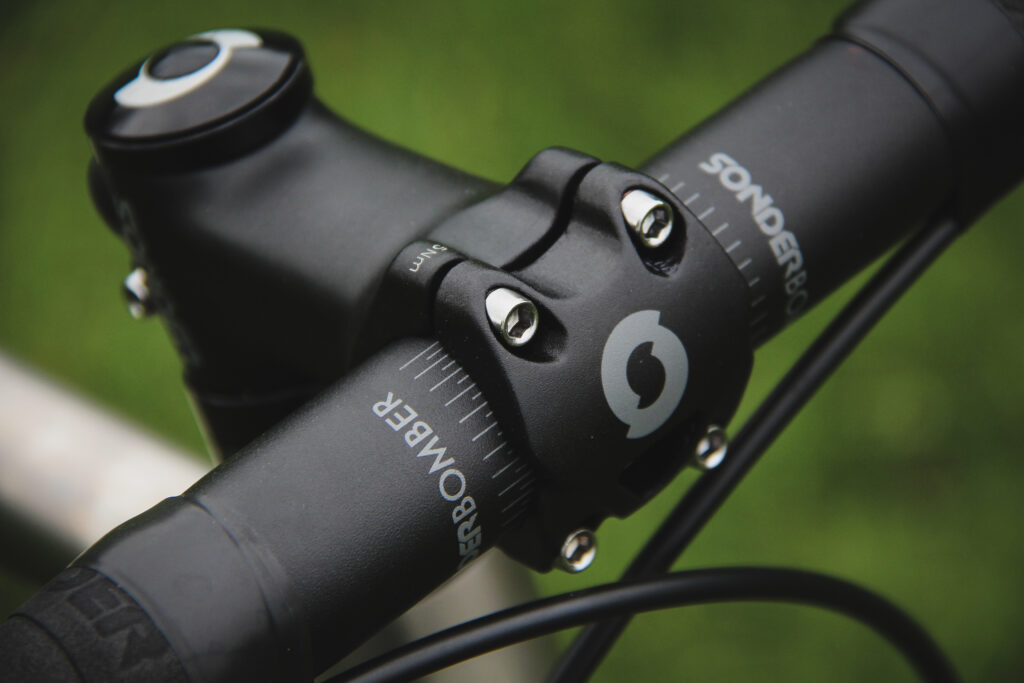
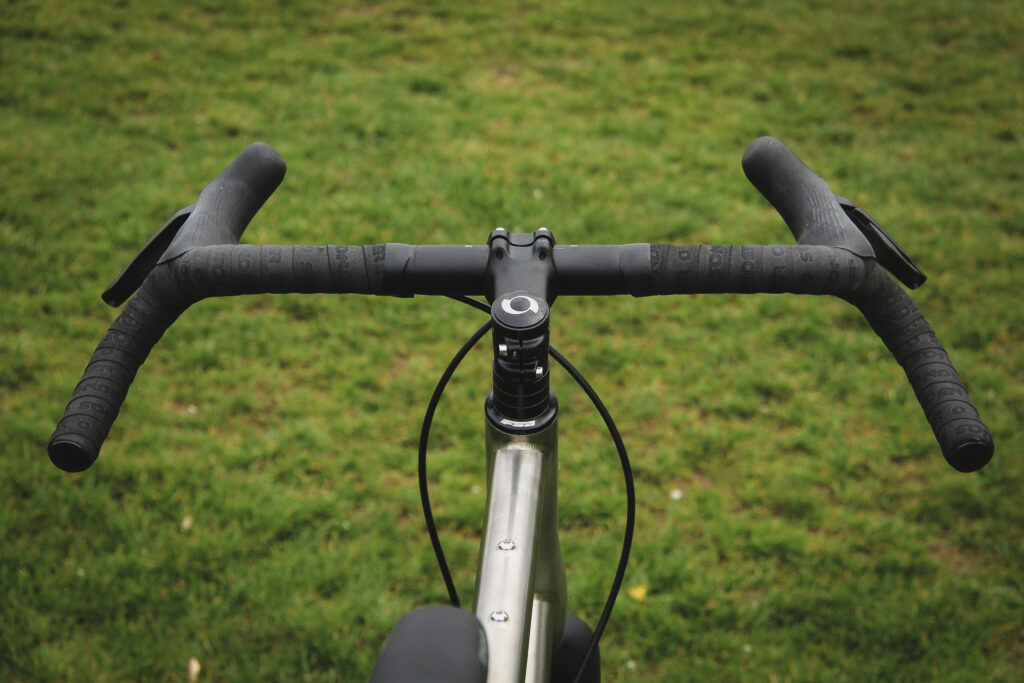
Our review bike came with a sensible 30mm of spacers below the stem and I found the position very comfortable – well, after I swapped the handlebar. It came with Sonder’s Bomber bars, and those are a hard no from me. They have almost no shoulder on the tops and I struggled to hold the hood comfortably. I swapped them out for some no-name 12°-flared gravel bars from the parts bin, but you can spec the Camino Ti with one of a dozen different options, so there should be something that’ll suit you. Bear in mind that the Bomber is the default though.
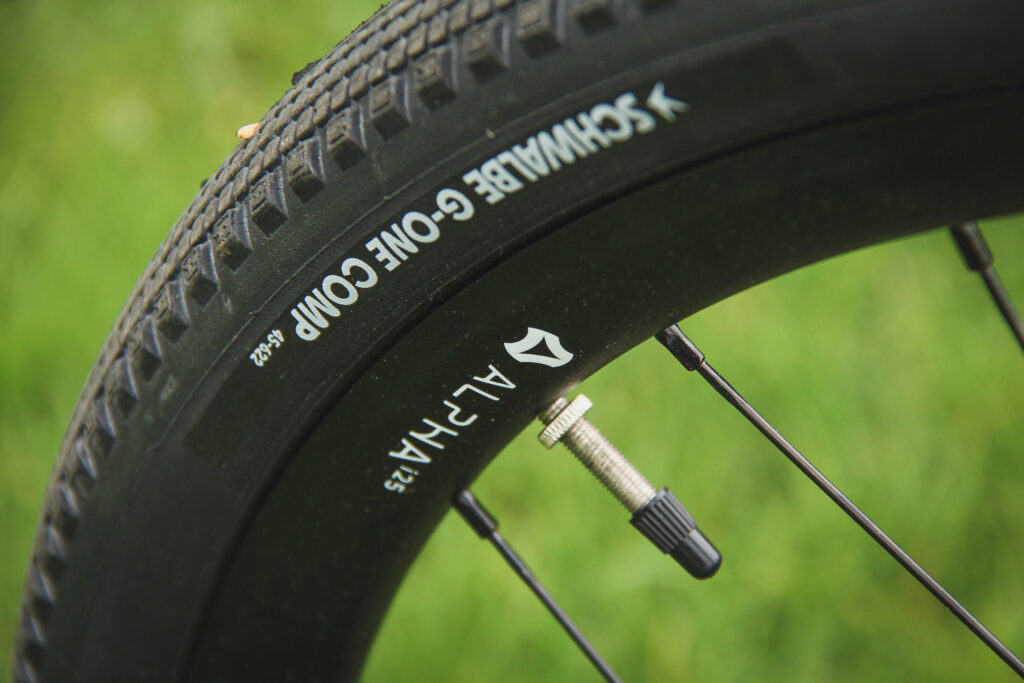
There are masses of other customisation options: stems, dropper posts, suspension seatposts, wheels, pedals, racks, lights – even a Skarper e-bike kit, which we had fitted to this bike and will be reviewing separately. Aside from that, our review bike is the stock build: a 1×12 Shimano GRX 827 Di2 electronic drivetrain, Sonder Alpha I25 Gravel wheels, a Carbon monocoque fork, 45mm Schwalbe G-One Performance TLE tyres and Sonder finishing kit. Our full build weighed in at 10.4kg without pedals, which is pretty decent given the type of bike and the finishing kit. The frame in an XL size weighs just over 2kg, with another 500g for the fork.
Sonder Camino GRX1 Di2: value and overall
The Camino Ti costs £3,499 in this build, which represents good value. You’re getting a nice frame, an excellent groupset and solid wheels and kit for your money.
The frame and fork retail for £1,899, which is above some of the other options (Gloria’s All-Gravel is £1,499 – we haven’t yet tested it but we’ve liked their other bikes), but cheaper than a Tripster ATR v3 (£2,400) or a Ribble Gravel Ti (£2,000).
The quality of the build you get for your extra £1,600 on top of the frame price is good. GRX Di2 is hard to beat, and the Sonder Alpha wheels, while not flashy, have proven to be excellent. The Sonder finishing kit is all fine – okay I didn’t like the bars, but that’s a personal thing, and you can spec from a range.
This is a bike that you could do a wide range of riding on, from a quick gravel smash to a continent-spanning adventure (although I’d probably recommend a mechanical groupset build for that), and for the money I think you’re getting a very well-considered bike with a good spec that’s fun to ride.
> Best gravel bikes — off-road and adventure-ready steeds to take you from tarmac to trail
Test Report
What does the manufacturer say about this product?:
Titanium Camino frame and carbon blade fork for multi-day expeditions, built with fully wireless Shimano GRX1 Di2 groupset and class-leading components for round-the-world travel.
Tell us some more about the technical aspects of this product:
Fully wireless Shimano GRX 827 Di2 1x 12-speed groupset
Camino Carbon fork
Sonder Alpha 700c UK made wheelset
Hand welded aeronautical-grade titanium frame
We’ve developed the Camino to give you the perfect mix of speed and confidence. Light, zippy titanium with a slack head angle and longer wheelbase, Camino excels both loaded and unloaded, absorbing imperfections in surfaces you ride.
Responsive and exhilarating even when loaded up with luggage; rack, bottle cage and mud guard mounts give you the option to pack up and pedal off on a self-supported ride whenever the feeling takes you. Triple cage mount on the top of the downtube allows for 2 different mounting positions for the bottle cage for extra bag clearance or to fit a Lug-Kage.
Electronic Di2 Wireless 1x 12 gearing, with an eye watering 10 – 51t cassette, offers a gear range that is wide enough to cope with any terrain, not quite brick walls. But equally small enough to cruise and race at the top end.
Optimise your comfort with button optimisation to enable gear changes, and control tech from differing positions.
Gravel geometry
Tuned for long days with trail capabilty at its heart. The long wheelbase and 69° head angle make for a stable and confident ride, even over rough trails. Every size has been tuned for a 50-70mm stem so every rider gets direct and responsive steering.
Wide open tyre clearance
The Camino swallows huge tyres. Ride 700c x 50mm or 650b x 2.1”.
Carbon monocoque fork
Lightweight, stiff and responsive. The Camino’s full carbon fork gives direct steering and smooth braking. It’s completely adventure ready with mudguard and rack mounts.
Full rack, guard and expedition mounts
Take anything anywhere. The Camino has mounts for everything you need – panniers, guards and extra mounts for adding cages to the forks. The downtube has triple cage mounts so you can set your bottle to be at a height for easy reach or lower to accommodate larger frame bags.
Internal cable routing
Revised internal cable routing with a removable port under the bottom bracket shell making cabling easy and dropping frame weight.
BSA Bottom Bracket
Stiff, secure and avoids that dreaded bottom bracket creak.
How does the price compare to that of similar products in the market, including ones recently tested?:
For the build, it’s about as good as you’ll find.
List the components used to build up the bike:
Frameset
Frame: Camino Ti Frame
Weight: S: 1.92 kg; M: 2.0 kg; L: 2.05 kg; XL: 2.16 kg (Plus fork: 0.5kg)
Aeronautical grade titanium
One piece carbon monocoque fork (Cage mounts on carbon fork designed for 2kg maximum load)
Seatpost diameter: 27.2mm
Seat tube OD: 31.8mm
Headset: IS42/28.6 | IS52/40
Disc brake only
Mudguard and pannier rack mounts
700 x 50mm or 650b x 2.2” tyre clearance.
12mm bolt through axles at both ends.
Hub spacing: 100x12mm front, 142x12mm rear
Fork: Monocoque Carbon Gravel | Matte Black
Headset: FSA Orbit C-40-ACB
Groupset
Shifters: Shimano GRX 825 Di2 | 12-speed
Brakes: Shimano GRX 820 | Hydraulic | Flat mount
Rotors: Shimano RT66 | 160mm (front), 160mm (rear) | 6-bolt
Rear derailleur: Shimano GRX 827 Di2 | 12-speed
Chainset: Shimano GRX 820 Chainset | 12-speed
Cassette: Shimano CS-M7100 | 10-51t | 12-speed
Chain: KMC X12 Silver – Black | 12-speed
Bottom bracket: Shimano RS501 | BSA
Wheelset
Wheels: Sonder Alpha I25 Gravel UK Made
Tyres: Schwalbe G-One Performance TLE | 700-45 | Bronze
Tubes: WTB | 700c x 38-45mm
Finishing kit
Handlebars: Sonder Bomber | 56cm
Stem: Sonder Storc
Seatpost: Sonder Seatpost | 27.2mm
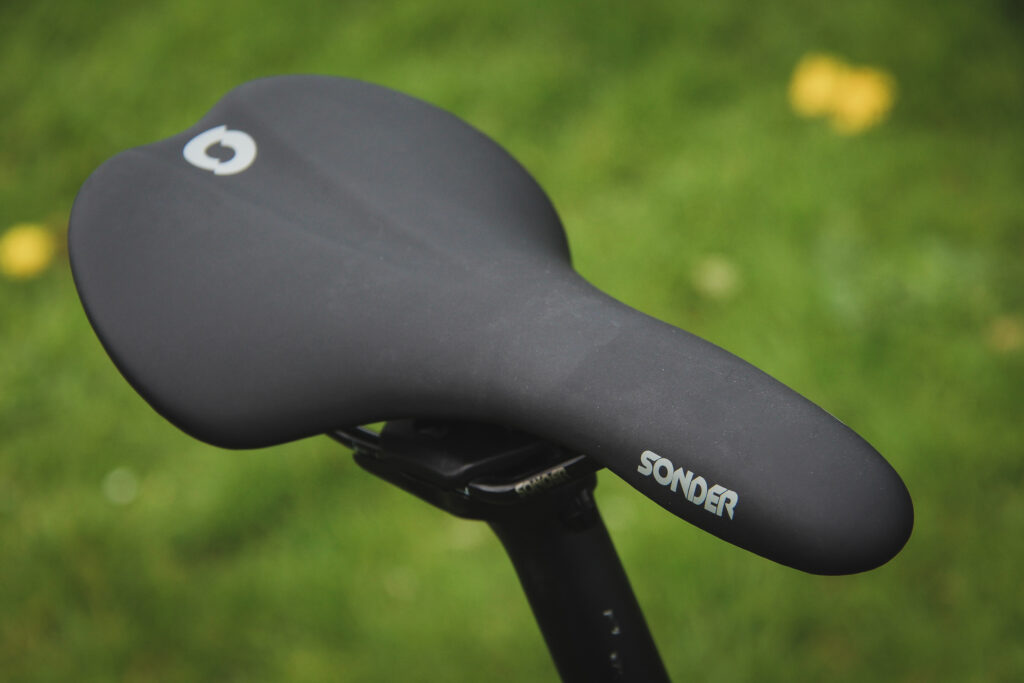
Saddle: Sonder Abode
Tape: Sonder Reels | Black
Weight
Frame: XS: 1.75kg; S: 1.85kg; M: 1.95kg; L: 2kg; XL: 2.05kg; (Plus fork: 0.5kg)
Build: XS: TBC S: TBC M: TBC L: TBC XL: TBC
Pedals not included with full builds
Tell us what the bike is for and who it’s aimed at. What do the manufacturers say about it?:
Sonder says: “We’ve developed the Camino to give you the perfect mix of speed and confidence. Light, zippy titanium with a slack head angle and longer wheelbase, Camino excels both loaded and unloaded, absorbing imperfections in surfaces you ride.”
Where does this model sit in the range? Tell us briefly about the cheaper options and the more expensive options:
The Ti is the most expensive frame, and the GRX Di2 build is the second-most expensive (after SRAM Force AXS)
Tell us about the build quality and finish of the frame and fork:
Nicely built, good quality welds that could be neater but functionally they’re fine
Tell us about the materials used in the frame and fork:
3Al/2.5V Titanium frame/Carbon fork
Tell us about the geometry of the frame and fork:
69° head angle, 73° sest angle, 1131mm wheelbase, 440mm reach, 615mm stack
See https://alpkit.com/products/sonder-camino-titanium-gravel-bike-shimano-grx1-di2 for full geo
How was the bike in terms of stack and reach? How did it compare to other bikes of the same stated size?:
Not as long and low as it looks on paper because of the spacers and the 70mm stem
Was the bike comfortable to ride? Tell us how you felt about the ride quality:
Yes, it’s comfortable. Plenty of that comes from the tyres and wheels but a Ti frame isn’t going to hurt
Did the bike feel stiff in the right places? Did any part of the bike feel too stiff or too flexible?:
No issues
Was there any toe overlap with the front wheel? If so, was it a problem?:
No issues
How would you describe the steering? Was it lively, neutral or unresponsive?:
Neutral
Tell us some more about the handling. How did the bike feel overall? Did it do particular things well or badly?:
It’s pretty laid back at the front. It’s not lazy to steer though. It works loaded and unloaded
Which components had the most effect (good or bad) on the bike’s performance? Would you recommend any changes?:
I didn’t like the bars but you can spec others
Any issues with drivetrain durability?:
No issues
Tell us some more about the drivetrain. Anything you particularly did or didn’t like? Any components which didn’t work well together?:
GRX Di2 is hard to fault, functionally
Any comments on wheel performance?:
The Alpha alloy wheels are a good match for the frame
Any issues with wheel durability?:
No, they’re solid
Any comments on wheel weight?:
Like I said, they’re solid
Tell us some more about the wheels. Did they work well in the conditions you encountered? Would you change the wheels? If so, what for?:
They’re more or less ideal unless you’re looking for speed, and if you are, you probably wouldn’t be buying this bike
Any comments on tyre performance?:
Good all-rounders although I prefer something a bit more aggressive for UK riding
Any comments on tyre durability? How much did the tyres wear during testing?:
No significant wear or punctures
Tell us some more about the tyres. Did they work well in the conditions you encountered? Would you change the tyres? If so, what for?:
Good in the dry, not the best in the wet
Any comments on brake performance?:
Excellent power and feel
Any issues with brake durability?:
No
Any comments on controls comfort?:
Discounting the bars here because I wouldn’t have picked them
Did you enjoy using the product? Yes
Would you consider buying the product? Yes
Would you recommend the product to a friend? Yes
Use this box to explain your overall score
Very good. A fun ride that works loaded and unloaded, and a solid spec for reasonable money
About the tester
Age: 53Height: 189cmWeight: 104kg
I usually ride: whatever I’m testing…My best bike is: Dward Design Custom Audax, Lauf Úthald, Cannondale Topstone
I’ve been riding for: Over 20 yearsI ride: Every dayI would class myself as: Expert
I regularly do the following types of riding: Road racing, Gravel riding, Indoor riding, Indoor racing, Bikepacking, Commuting, Touring, Club riding, Audax, Fitness riding, Leisure riding