



“It’s something we will all carry with us for the rest of our lives.”
Reg Marshall, a 79-year-old cyclist whose wife of 57 years was hit and killed by a new motorist “driving too fast for the road”, believes that the driver responsible being sentenced to community service instead of a custodial sentence “sends a wrong message out to young drivers”.
Last month, we reported that Aly Albosati, 27, had been ordered to complete 180 hours of unpaid work and received a 20-month driving ban when he was sentenced at Dundee Sheriff Court, having admitted causing Patricia Marshall’s death by careless driving.
The collision happened back in June 2023 when Reg and Pat Marshall were on a cycling holiday in Scotland. During their 57-year marriage they had toured Britain and Europe by bike over many decades, but were hit by Albosati just a month after the new driver had passed his test.
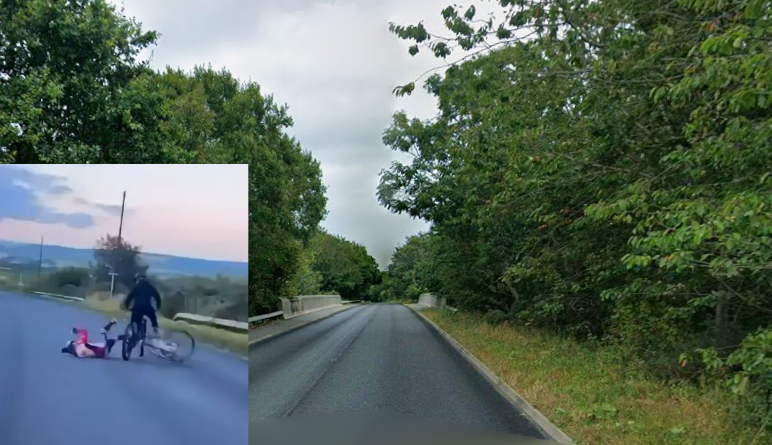
Albosati’s lawyer accepted that his client was “driving too fast for the road”, even if he was legally within the speed limit. The new driver was said to have “misjudged” a right-hand bend [pictured in the direction of travel in the image illustrating this article], mounted the verge and lost control of his vehicle. The Marshalls were travelling in the opposite direction and were hit, Reg suffering “extensive bruising” while, tragically, Pat was airlifted to hospital and died a few hours later.
While the judge, Paul Ralph, told the court he was aware of the “devastating effect” of the fatal collision, he opted against a custodial sentence, instead ordering Albosati to undertake 180 hours of community service. The 27-year-old was also banned from driving for a period of 20 months.
A few weeks on from the sentencing, Reg Marshall has told the BBC he believes Albosati was treated too leniently and that the sentence “sends a wrong message out to young drivers”.
The widower suggested his wife’s death should act as a warning to drivers and appealed to people to remember “it doesn’t take much of a mistake to make a disaster”.
“It’s something we will all carry with us for the rest of our lives,” he said.
A student at the time of the collision, last month’s sentencing hearing heard how Albosati had only passed his driving test a month earlier, but had also been fined £300 for a road traffic offence six months before the fatal crash, at a time when he was still a learner driver.
Albosati’s lawyer accepted that his client was “driving too fast for the road”. The court also heard that the new driver “misjudged” a right-hand bend, prosecutor Paula Wedlock explaining how he had “mounted the verge” and lost control of his vehicle.
“He has applied excess bearing to the right,” she said. “Excess steering caused his Ford Fiesta to rotate in a clockwise direction and cross the carriageway in a south-west direction. Whilst rotating and out of control, the front corner collided firstly with the bike ridden by Mr Marshall, then the bike ridden by the deceased, causing both to be knocked off.”
The sentencing hearing came just two weeks after the government unveiled plans to consult on introducing a three or six-month minimum learning period for new drivers. The Department for Transport said it would “give learner drivers more time to develop their skills in varied conditions such as night driving, adverse weather, and heavy traffic”. Drivers aged 17-24 represent just six per cent of licence holders but are involved in 24 per cent of fatal and serious collisions.









21 thoughts on ““My wife’s death should act as warning to drivers”: Widower of cyclist killed by new motorist “driving too fast” a month after passing his test insists lack of prison sentence “sends wrong message””
The thing is, how often are
The thing is, how often are people doing this sort of thing and simply getting away with it. Thats the fundamental problem. I’m sure that every single time one of us goes out on our bikes we have cars doing things that could result in another cyclists injury or death (or our own) if a bit of bad luck happens.
When I am riding on the country lanes around here I might get 5-10 overtakes every ride that could easily kill another cyclist if they happen to be coming around the corner/over the hill at the wrong moment. They get away with them. Occasionally they don’t. Most of the time this would just be a young lad who crashed his car and his insurance premiums go up.
There needs to be harsher punishments and there needs to be a massive push to impress upon drivers that bad driving will be punished severely and you will lose the priviledge to drive for a long time if you get banned. Not a 20 month driving ban. A 20 month driving ban should be for someone banned from totting up points. Someone who kills another human from their dangerous driving should be banned for a minimum of 10 years.
“… we have cars doing
“… we have cars doing things that could result in another cyclists injury or death…”?
or
“… we have DRIVERS doing things that could result in another cyclists injury or death…”?
Agreed. We really need to
Agreed. We really need to stop removing the person from culpability. Cars don’t do these things by themselves. Something needs to happen to make drivers painfully aware that losing control has consequences that will affect them personally in ways that will make their lives miserable, as that seems to be the only deterrent left. Part of that will have to be delivering those consequences. If guilt were enough, banned drivers wouldn’t keep driving. Closing the extreme hardship loophole would be a start.
I am not sure deterrent works
I am not sure deterrent works well in the situation of mass motoring. We’ve normalised or even trivialised the activity, put lots of pressures on people to do it (“I have to drive”) and the speed and mass of motor vehicles both reduces people’s margin for error and hugely amplifies the consequences of some mistakes.
I don’t have figures but I suspect the majority – perhaps much so – of all the damage is more the effect of lots of “fallible humans” (didn’t mean to…) driving every day than the “don’t care about others” or even the actively malicious.
Ultimately I think a lot fewer of us should be driving. I think the sweet spot for “benefit vs potential harms” is about the level of operating a bike! That should both motivate people to look out for themselves and mitigate the damage to others their mistakes or poor decisions cause.
I read somewhere (chatgpt
I read somewhere (chatgpt agrees, but then it usually does…) that the existence of severe sentences does little to deter crime of any sort. What matters is high enforcement/conviction rates. Motor crime seems a ideal place to try this out. There are a good few drivers just in my street that deserve points and (if persisting) bans.
Oh, I’m sure that’s part of
Oh, I’m sure that’s part of it, but I just see logical issues with expecting to deter people who weren’t expecting to commit / don’t think they are committing crimes.
If somehow people’s attitude to driving could completely changed eg. I’m going to be doing a risky activity which demands skill and my entire concentration, I have to be current on all the rules and errors will not just have serious consequences but are likely to get me barred from driving … perhaps?
I’m just not sure we can ever square that with mass motoring as we know it. Thus I think the Dutch approach is the way eg “Sustainable Safety” (working with the humans we have to minimise harm) but also having a consistent push away from so much driving and pull towards better alternatives.
Psychologically speaking, in
Psychologically speaking, in theory it is a relatively simple equation…
a is the maximum punishment
b is the chance of getting caught
c is the chance of the maximum punishment being applied (exceptionally rare, we know)
“a x b x c” is what the potentially dangerous driver considers.
Even if the punishment is severe, if the likelyhood of getting caught AND recieving the max sentence is very low then the potentially dangerous driver won’t care.
Where as, if the punishment is moderate (enough to at least sting) but the chance of getting caught and sentenced is far higher (ideally 100%) then that should be the greater deterrent.
mitsky wrote:
Whereas in practice they actually consider d—z
Because psychology is annoyingly complex.
there needs to be a massive
there needs to be a massive push to impress upon drivers that bad driving will be punished severely and you will lose the privilege to drive for a long time if you get banned But there won’t be, because of the police attitude to cycling and cyclists. They’re quite prepared to press a button and bash out the monumentally insincere Thoughts and Prayers, but not at all prepared to lift a finger to prevent cyclist KSIs by acting against the severest of close passing offences. We know this not only because of the expected lack of response by the bastards at Lancashire police to the incident below, but because nobody on here has recently been able, in response my persistent prompting, to produce a case with online video and a verified deterrent punishment to such a close passing offence. The reason for that is that there aren’t any such deterrent punishments https://upride.cc/incident/po19utj_maxdacx5_closepass/
“”A student at the time of
“A student at the time of the collision, last month’s sentencing hearing heard how Albosati had only passed his driving test a month earlier, but had also been fined £300 for a road traffic offence six months before the fatal crash, at a time when he was still a learner driver.”
If you get caught for an offence while a learner driver, you really should not be allowed to take your test so soon after.
I can understand the lack of
I can understand the lack of jail time bearing in mind the state of our prisons but I would like to be protected from this person’s driving for longer than 20 months and I suspect a great many other vulnerable road users would too.
I wonder what the homicide
I wonder what the homicide rate would be if all homicides – and not just those involving motor vehicles – resulted in these sorts of sentences? I’ve known a boss or two I might have thought of strangling if the punishment was 180 hours of unpaid work.
Once more your life as a
Once more your life as a cyclist is worthless or at least worth 180 hours.
There were many mitigating
There were many mitigating factors in this case which would have made a custodial sentence innapropriate. For a start he was driving within the speed limit, recognised his contribution to the accident, remained at the scene and helped etc. He also has to live with a deep sense of remorse.
Fundamentally there is such a thing as an accident and we as cyclists, drivers and pedestrians should always remember that.
Which PBU are you ?
Which PBU are you ?
Driving within the speed
Driving within the speed limit isn’t a mitigating factor – it’s a minimum requirement. Beyond that, there’s a duty to drive at a speed which is safe for the road and the conditions, which may be significantly lower than the posted speed limit. Driving above the speed limit would be an aggravating factor.
I don’t think you understand speed limits.
I think it’s the same idiot from here – just a new username.
https://road.cc/content/news/ridelondon-organiser-resigns-after-injuring-cyclist-316985
and here
https://road.cc/content/news/driver-cleared-causing-death-careless-driving-317189
Where is the edit button ?
Without even looking at your link I know the PITA you’re talking about, yes it does certainly bear his trademark “no driver should go to prison even if they kill somebody if they weren’t speeding [that’s as in not exceeding the speed limit, nothing to do with appropriate speed for the conditions/situation] and didn’t test positive for drink or drugs” idiocy.
An “accident” would be something unpredictable like a falling tree hitting you.
Losing control due to lack of experience (i.e. new driver) and excessive speed is predictable and not an accident. Calling it an “accident” is an attempt to trivialise the tragedy caused by this driver and is showing utter disrespect to his friends and family.