


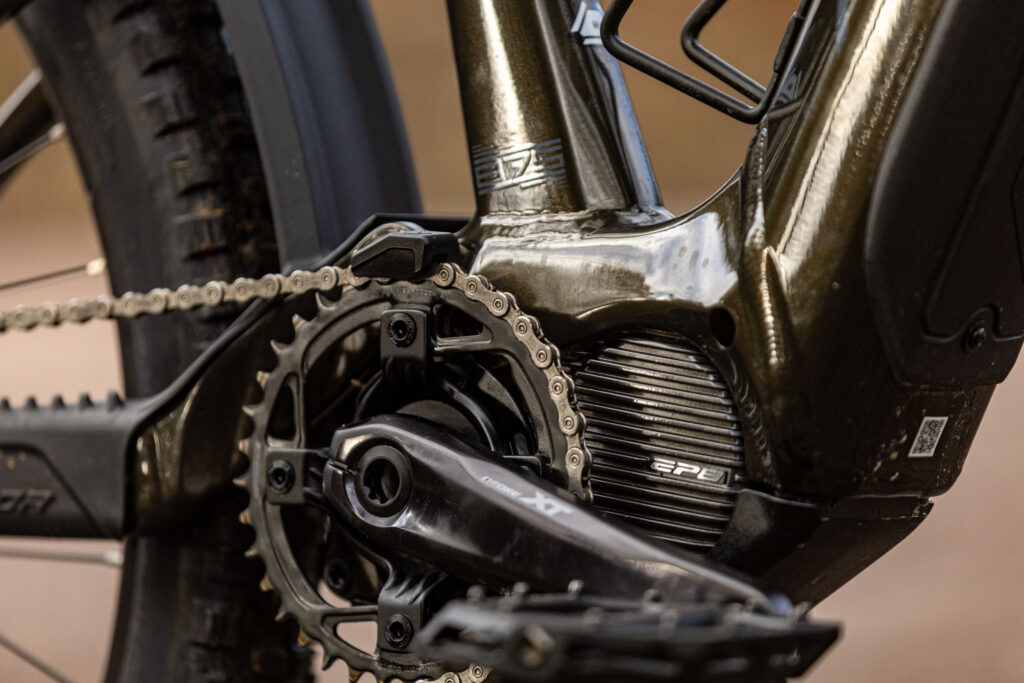

Any e-bike motor plays a crucial role in how a bike rides. It’s not just about the figures behind the motor either, as each one provides different characteristics in its power delivery, and every motor offers a range of differing features. Because of this, they pose yet another important buying decision before dropping the cash on a motor-clad machine, but in recent years, we’ve seen motor choice become the primary factor when buying an e-bike, and I’m not sure that this is the best way forward.
- Has Amflow leaked its next gen PL e-MTB?
- New firmware boosts DJI’s Avinox motor to 1000W of max power
- DJI’s super powerful Avinox motor looks set to dominate, and 32in MTB wheels are officially a thing: all the best tech from Europe’s biggest bike show
Buying a bike, even before a motor and battery come into the cloud the decision, is never an easy process. There’s already a huge number of factors to consider, like tyre clearance, geometry, suspension travel, and wheel size. All of these factors dictate what kind of bike you’re getting, what type of riding it’s capable of, and before considering those points, you need to decide what kind of riding you want to do.

With e-mountain bikes and even e-gravel bikes, the motor shakes things up once again. Are you looking for a more natural-feeling bike with a lower output that complements your pedalling input? Then that’s a lightweight e-MTB with a TQ, Bosch SX, Fazua, or Shimano EP5 motor. If it’s a full-power motor you’re after for seemingly infinite party laps, that’s a Bosch CX, Avinox, Shimano EP8, Specialized, SRAM, and that’s without diving into the lesser-known offerings from Mahle and the like.
Now, that’s a lot of choice above the usual suspects, but motor specification can become limiting, which can come in handy when there’s such a plethora of machines on the market. If you want a Bosch-driven bike, for example, that narrows down the selection of bikes to choose from. But there’s one key motor at the moment that’s made waves in the market and narrowed selections further, DJI’s Avinox.
Unveiled at 2024’s Eurobike, the Avinox got every e-biker’s mouth watering for high torque and power figures combined with a low overall weight. At the time, and even now, the Avinox was the talk of the town as it offers something that many systems don’t. Again, that’s the as then unfathomable power-to-weight ratio, and Amflow’s PL was the only bike to run the system.
This made bike choice super simple. If you wanted all of the power on a bike that doesn’t weigh all that much in comparison to similarly powered bikes from other brands, you buy an Amflow. The fact that it’s reasonably priced helps too.

Now, this is where my problem arises. The PL is a great bike that’s sold so well that it’s saved many a local bike shop. But there are better riding bikes around if you look away from the Avinox system (although there are a few brands adopting the motor that are well worth looking into). Whyte’s E-Lyte Evo and Yeti’s recent LTe are both bikes I still think of incredibly fondly, and outshine the PL in terms of ride performance. But they don’t have the draw of the Avinox system, and I’ll admit, the Yeti is rather spendy. Yet, because of the big numbers and low weight, we’re seeing tonnes of Amflows out on the trails.
Then, what happened to the Shimano EP801? Shimano has been rather quiet with the motor as it launched the new Di2 drivetrains, but it’s now seen as old-tech and has kind of fallen off the planet. With this motor deemed old hat, despite being updated this time last year, would the hypothetical best-riding bike in the world still be appealing if it ran the 85Nm EP801?
I guess the problem here is that people can see torque, power, and weight figures on a screen or a bit of paper. It’s a lot tougher to discern a bike’s ride without trawling reviews and trying for yourself, which takes a lot more effort. The latter can be personal, too.
This raises another problem with modern e-bikes and the cycling space in general, which Steve touched on last week. e-Bike tech moves incredibly quickly, and if brands don’t stay on top of things, certain motors will quickly be deemed obsolete. This then compounds onto brands where they invest in a system way before a bike is released.
Picture it, if you’ve just ordered a shipment of 100-odd bikes (often way more), equipped with Shimano EP8s, and DJI releases its Avinox out of the blue before your shiny new stock of bikes arrives. Without at least updates to lift its output to match modern motors, why would people buy systems that are now considered outdated? And with brands often keeping their cards close to their chest, there’s not much that can be done to predict such a game-ending (for the Shimano-investing brands) release. It goes without saying that this can leave brands with a bunch of money invested in stock that customers don’t want. That’s not a cool situation to find yourself in.
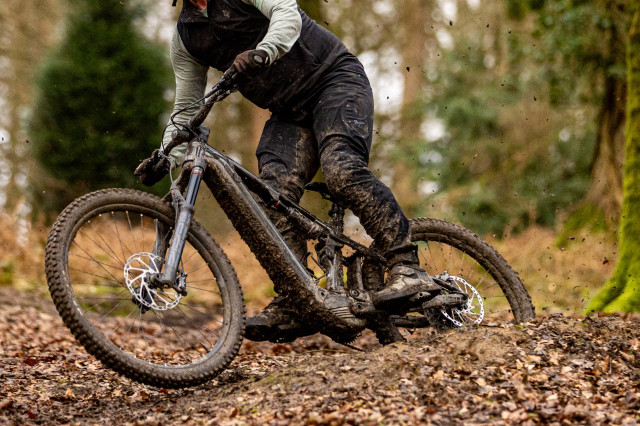
Just because a bike comes with an outdated motor doesn’t mean that it’s bad, though, and you won’t be doing yourself a disservice by buying a Merida eOne-Sixty or Privateer e161. But when numbers on paper mean more than the bikes themselves, I reckon that we’ve spiralled into a place of serious difficulty for brands and a place where you may not be investing in the very best bike for yourself.
I won’t dive too much into the subject of Specialized’s Turbo Levo 4, as that’s a fairly touchy one, but Spesh is a brand that’s taking full advantage of the more = better rhetoric. As standard, the bike knocks out 101Nm and 666W at peak power, which is more than enough for any rider. However, if you want to unlock the bike’s full 111Nm and 720W, you’ll have to buy the S-Works Levo 4 for £12,500, which poses a £1,700 premium against the Levo 4 Pro. Sure, more is certainly appealing, but is it really worth that much more in terms of ride experience? I’d argue that it doesn’t at all, especially when an e-mountain bike’s performance is so much more than the motor its equipped with.
Maybe Bosch is right to suggest regulations and standards for motor output, which could promote a fairer, more level marketplace. But that’ll surely stifle innovation.




















3 thoughts on “e-Bike motors have become more important than the bikes they’re bolted to and that’s not a good thing”
I agree. This is how we ended up with motor cars. It’s dangerous territory for the bike industry to be getting into.
Dangerous … but lucrative for some.
Difficult for companies to ignore requests which may be trouble long term when the customers are asking, with money in their hands. Which could go elsewhere.
Isn’t this just symptomatic of an immature market? Likely before too long most of the main players will all catch up to each other to the point that the differences are marginal, and attention will then shift back to the other aspects of the bike they’re attached to.