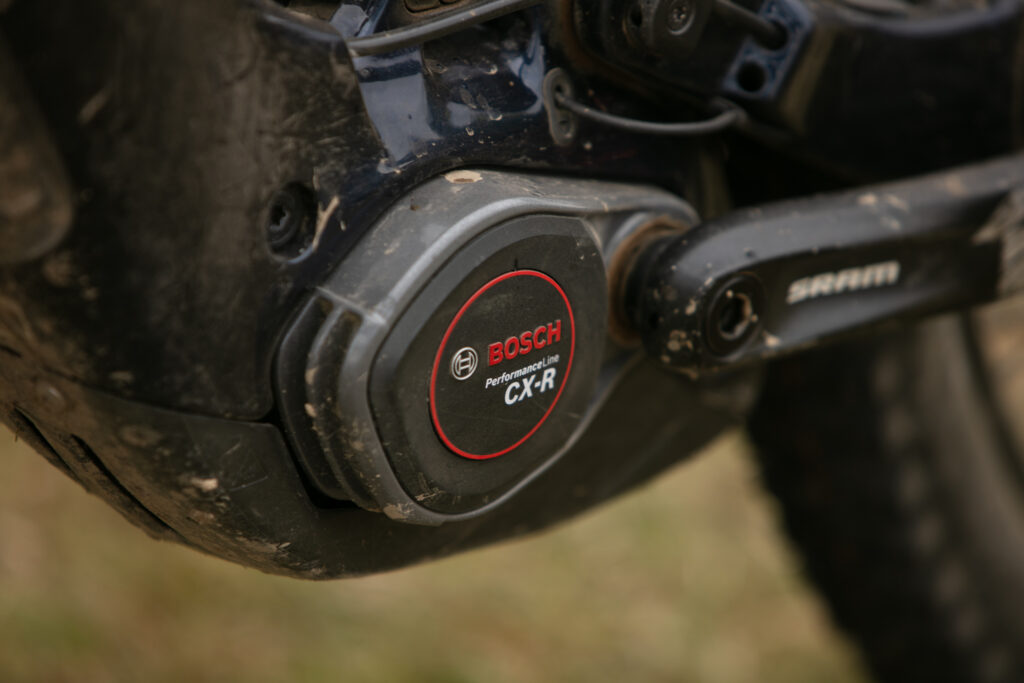

Mid-power or full-power, not every e-mountain bike is the same, especially when brands are constantly pushing the boundaries when it comes to torque and maximum output. That alone presents a serious problem for e-MTB racing, and today, the UCI has introduced a new approval process to keep e-bike racing fair.
- New firmware boosts DJI’s Avinox motor to 1000W of max power
- Amflow PL Carbon Pro e-MTB review
- Best e-MTBs 2025 – top-performing e-mountain bikes for every situation
Is standardising motor output good for e-MTBs?
While standardising e-mountain bike motors is certainly a good move from the UCI in terms of racing, which should lead to fairer competition, it does mean that it’s unlikely we’ll see the likes of DJI’s Avinox, or other more exotic motors being ridden between the tapes.
And with e-mountain bikes still developing incredibly quickly, if brands begin to focus on building race-focussed drive systems, could the UCI’s new process stifle innovation in designing lighter motors with higher outputs? Although any details on what the UCI is looking for are fairly slim, I expect that it may follow a similar route to what Bosch’s proposed 750W restriction is looking to achieve. Either way, standardising a technology that’s still in its infancy could slow down e-MTB development.
The new EPAC approval process
Being implemented for the first time at the 2025 UCI Mountain Bike World Championships in Valais, Switzerland, the UCI is rolling out a new approval process for EPAC (Electrically Power Assisted Cycle) drive units.
Approved by the UCI Management Committee on the 10th- 12th of June, this new process will be applied to all UCI-sanctioned e-MTB events from 2026 and it’s designed to “safeguard integrity and ensure fair competition at all levels of racing while allowing scope for future developments of e-mountain bikes”.
The UCI isn’t holding back in its testing either, as not only is the organisation asking for images of the non-driveside, the driveside, and any labelling, but any submitted drive systems will be lab tested to analyse and benchmark their maximum power output curve depending on their cadence and cut-off speed. Any software will also be tested.
But one thing is for sure, the e-MTB race circuit is set to be more of a level playing field and becoming more about rider skill and fitness, rather than what their bikes’ motors can do.