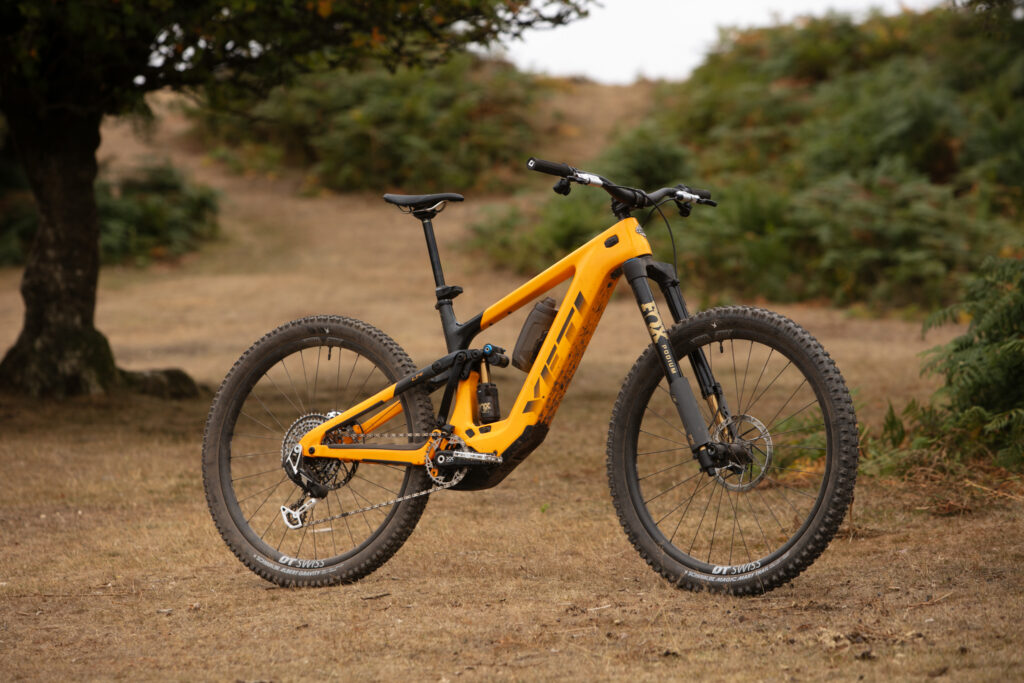

It took a little while for Yeti to jump on the e-mountain bike bandwagon, but back in 2021, the brand unveiled its entry into that very market, the 160E. Now with a lightweight, mid-power bike in the lineup, the brand has brought long-awaited updates to its e-enduro bruiser as well as a neat name change. Introducing the LTe, the brand aims to perfect its full-fat enduro e-MTB formula with the help of Bosch’s Performance Line CX-R motor.
- Yeti ASR T3 first ride review
- Yeti SB135 LR T3 first ride review
- Want a bike that can win the EDR World Series? Yeti celebrates its 40th Anniversary with limited edition SB160… and it’ll cost you £12,500
Yeti LTe T4 Race
Yeti LTe: technical details
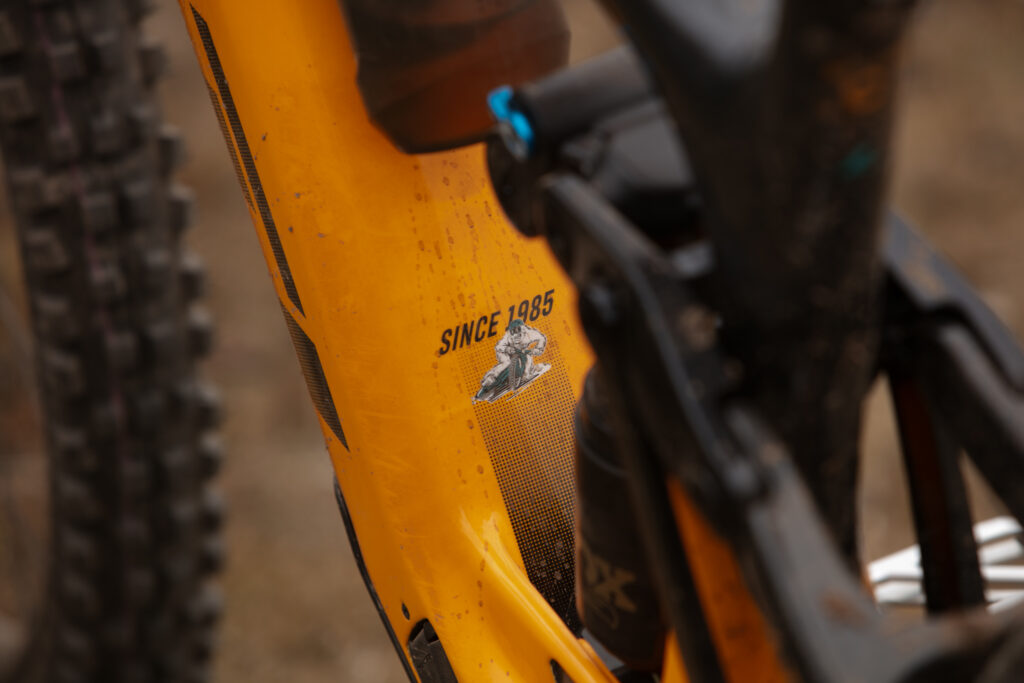
From first glance, aside from a fresh lick of paint, there’s not all that much that sets the new LTe apart from the outgoing 160E. It follows a strikingly similar silhouette, and many of its features are identical to the bike of old. Though it was such a strong addition to the market, Yeti has taken an approach of refinement, rather than one of total overhaul.
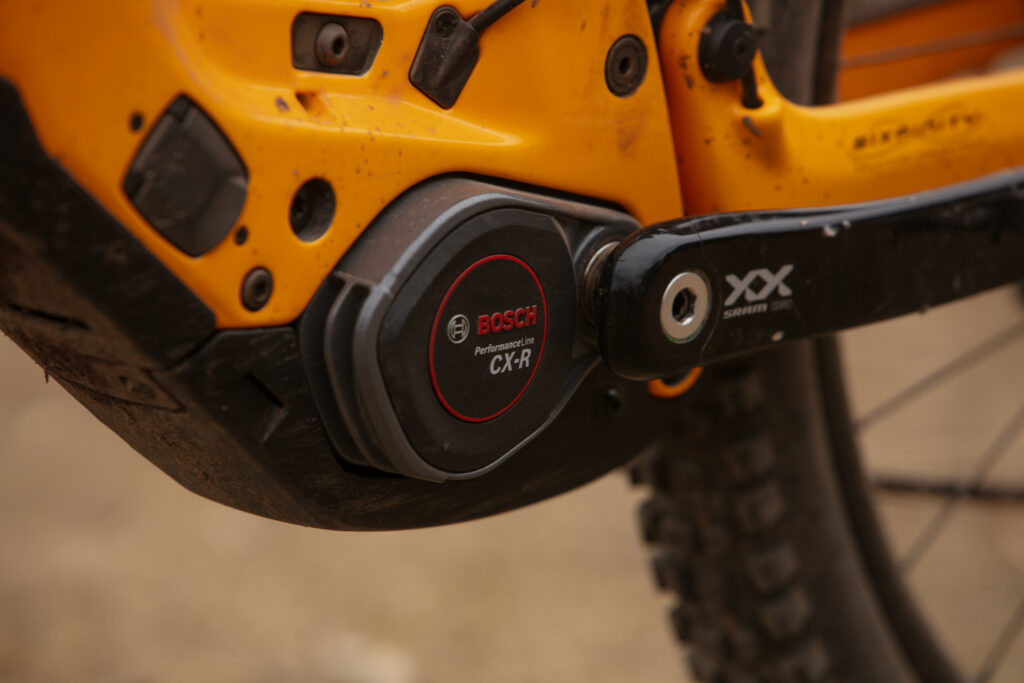
Perhaps the biggest departure from the old bike is that Yeti has chosen Bosch’s CX and CX-R drive systems, instead of Shimano’s offering. That grants the three-bike range with 100Nm of torque and 750 Watts at peak power. All models are able to run Bosch’s PowerMore range extender, while there are options to equip the bike with either an 800Wh battery or a 600Wh alternative, allowing riders to pick between a lighter bike overall or one that delivers more range. On top of that, each model uses Bosch’s latest Kiox display.
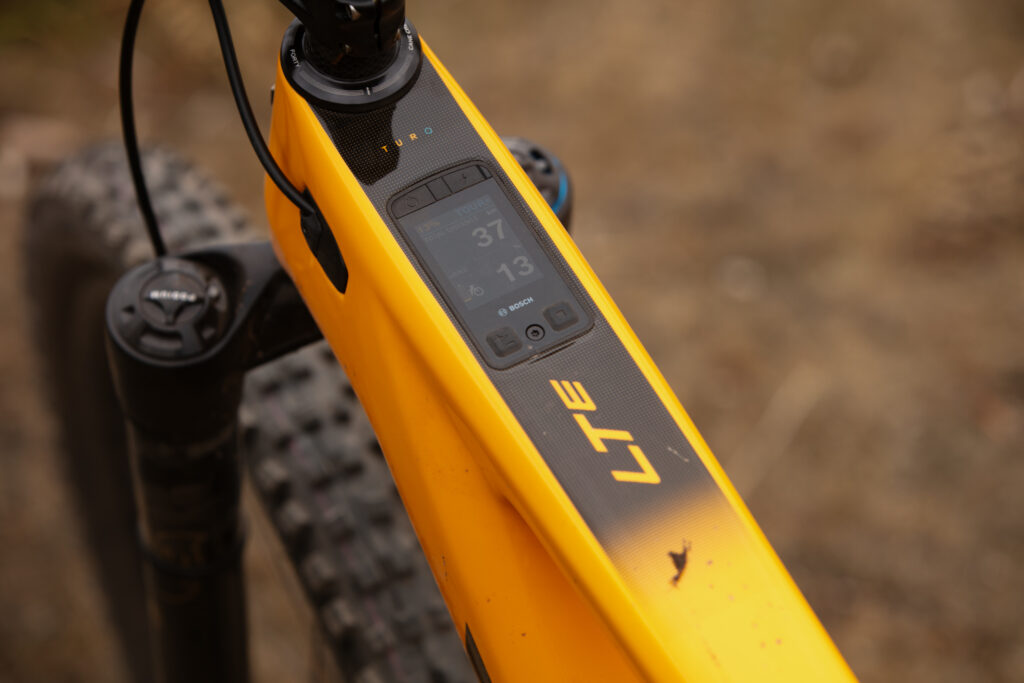
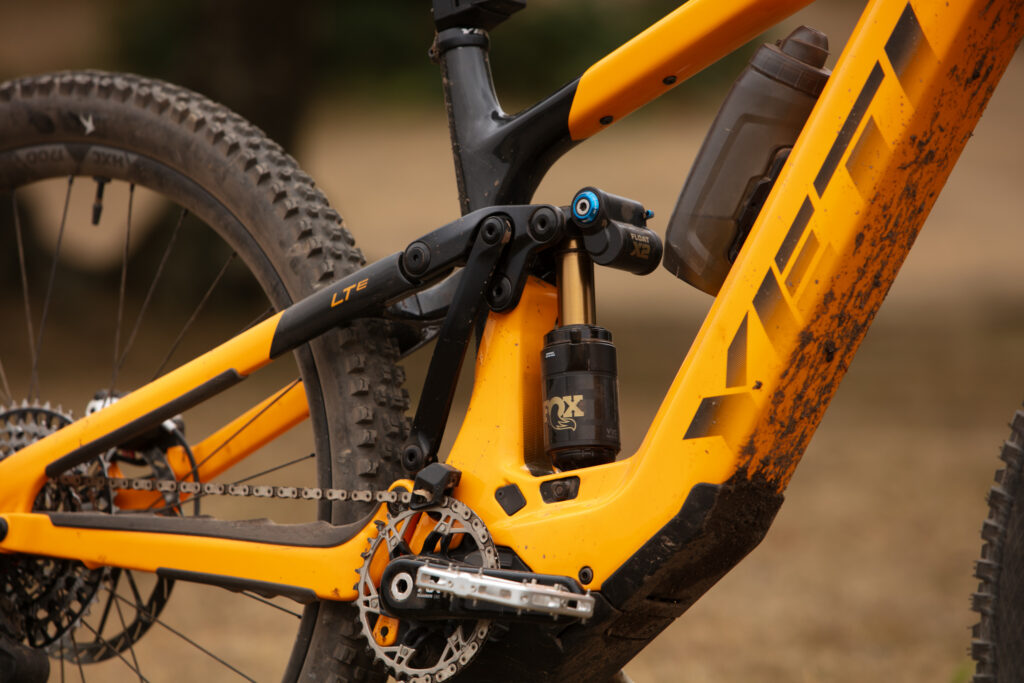
With that extra 100Nm of torque, the brand has had to tweak the bike’s Sixfinity suspension platform a little. Its anti-squat has been scaled lower than any other Yeti bike to help it cope with the boost in acceleration. Then, as the link moves through its suspension, we’re told that the anti-squat drops for better performance on the descents.
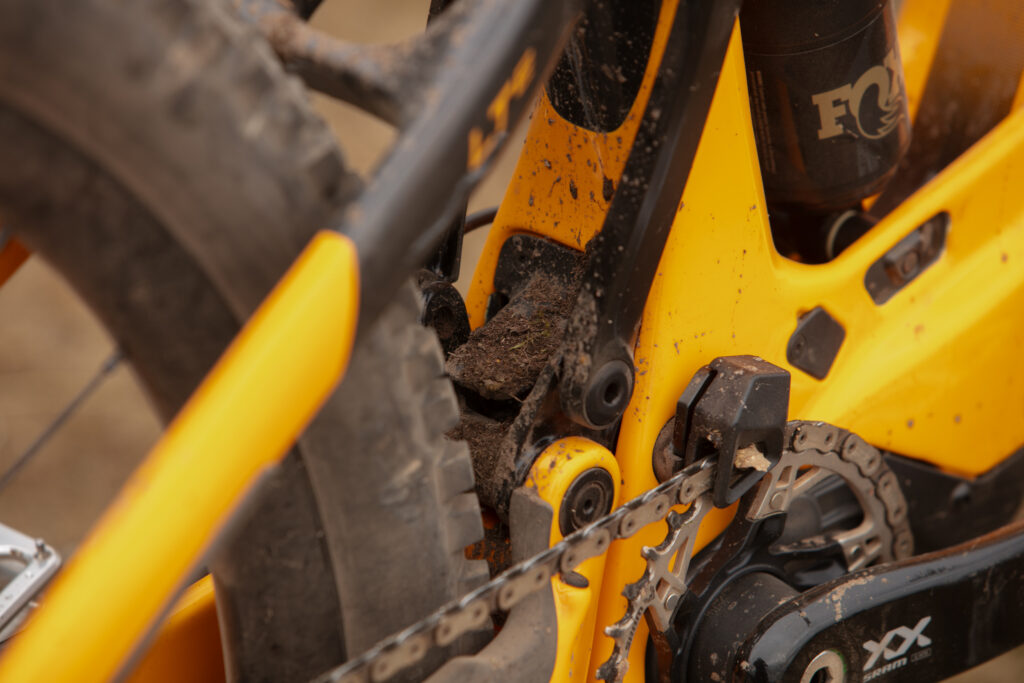
As seen on the 160E, the LTe boasts tunable leverage. That’s found at a replaceable chip that sits at the lower shock mount. Offering three settings, it allows riders to choose from linear, balanced, and progressive kinematics. This is ideal for racers who ride different venues weekend in, weekend out, and a great touch for those who like to really dial their rides to their preferences.
Moving on to the bike’s geometry, there have been a couple of changes. Those are found at the stack and the reach, where the former gets taller and the latter gets 5mm longer per size. Elsewhere, there’s a 64-degree head angle, a 78-degree effective seat tube angle, and a 449mm chainstay. For those who like mullet wheels, they can be fitted on this bike, and thanks to a flip chip, the bike can retain that geometry with the smaller wheel in place
As for the frame, it’s carbon, of course, but the LTe takes bits found on Yeti’s downhill bike, ridden by its World Cup athletes. Those bits are Vectran plies, which we’re told is a little like Kevlar. These plies are found at the chainstay, seat stay, top tube, and downtube to boost the frame’s strength. There’s then internal cable routing, a whole bunch of frame protection, and an accessory mount found underneath the top tube.
Yeti LTe T4 Race: componentry
Yeti is bringing three models of the LTe into the UK, with the C2 Factory kicking off the range at £9,500. The LTe T3 comes in at £11,000, and the bike I rode, the LTe T4 Race, costs £13,000. For the UK market, the C2 bike comes fitted with Fox suspension as standard. Something to note is that all bikes but the T4 Race run the standard Bosch Performance Line CX motor, whereas the range topper uses the CX-R.
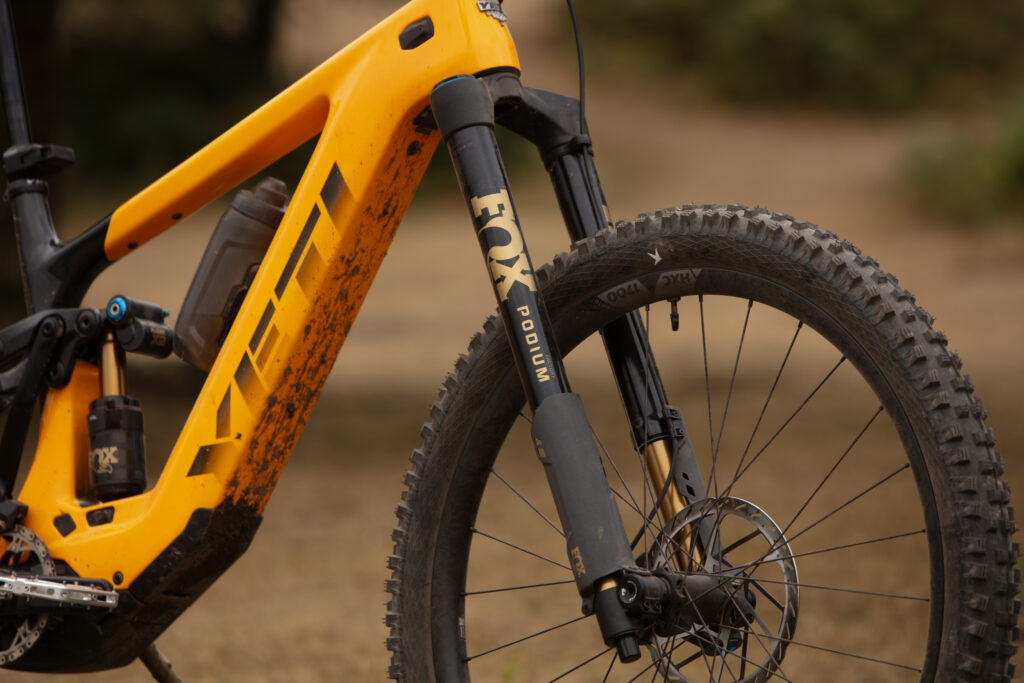
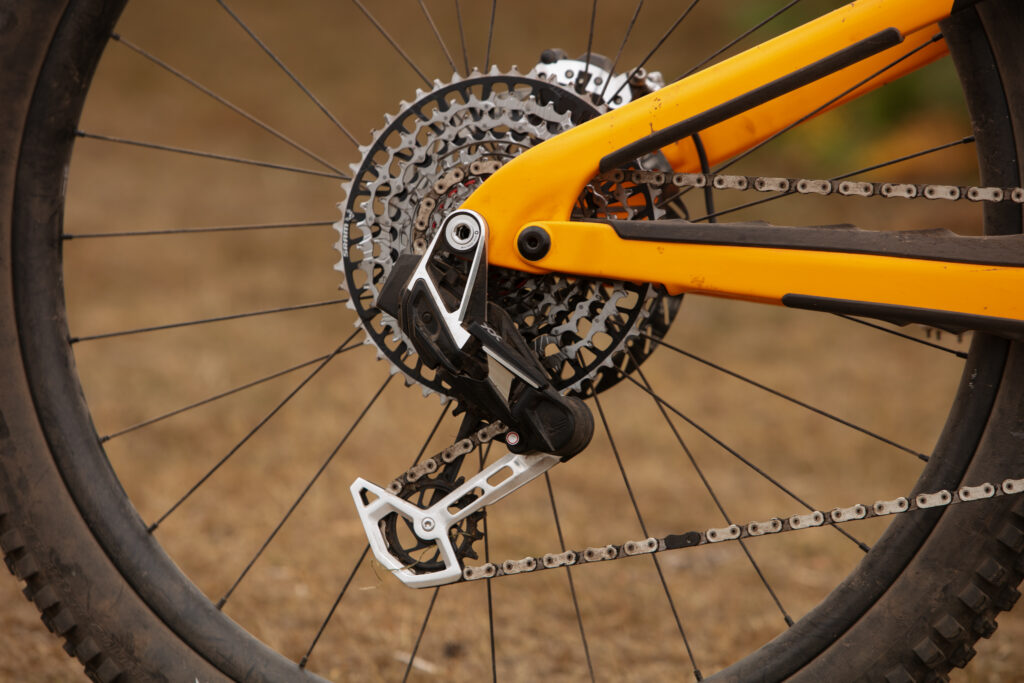
For your £13,000, Yeti is bringing a lot to the table, as you would hope. Fox’s Podium inverted fork handles 170mm of suspension up front while Fox’s Factory Float X2 damps the 165mm of squish at the rear. There’s an 800Wh battery as standard, and shifting is provided by SRAM’s XX Eagle AXS Transmission drivetrain.
SRAM also sorts the stopping thanks to a pair of Maven Ultimate brakes paired with 200mm HS2 rotors.
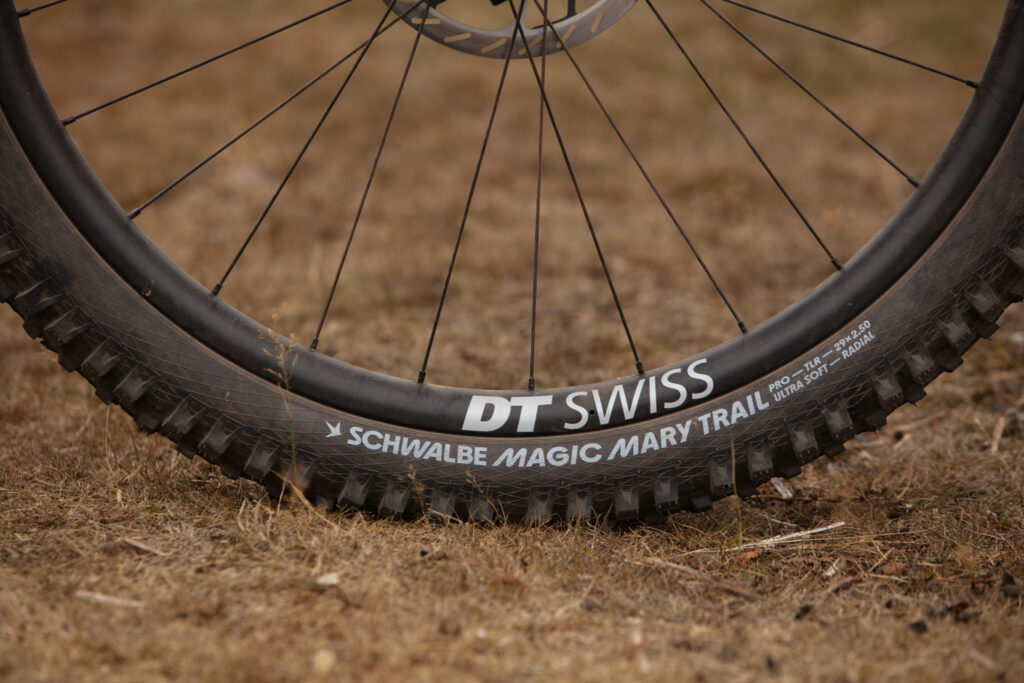
As with the MTe, Yeti has gone for Schwalbe’s Radial cased Magic Mary up front with an Albert tyre at the rear, both of which are inflated on DT Swiss’s HXC1700 wheels.
Another move first made on the MTe is the specification of RockShox’s newest Reverb dropper post.
Yeti LTe T4 Race: first ride impressions
Having spent some time on the LTe’s littler sibling, the MTe, and the outgoing 160E, thoroughly enjoying both, I was very excited to see what Yeti has cooked up with its update to its enduro going e-MTB, and once again, the brand has nailed the enduro e-MTB formula.
To my surprise, and despite the fact that it comes with 170mm and 165mm of suspension at the front and rear respectively, the LTe doesn’t ride exactly how I expected of a burly enduro-focussed machine. Don’t get me wrong, it does what it’s built to do, but it brings a relatively light and somewhat lively character to the game.
Another caveat to be mentioned is that this thing weighs a little south of 25 kilos, so it’s by no means light, compared to the current crop of spendy e-mountain bikes. That does work in its favour, however, as when combined with the excellent Sixfinity suspension platform, it makes incredibly light work of seriously chunky terrain. While rattling through the rough stuff, the LTe brings welcome composure as its overall stiffness, aided by the Podium fork and the poise of the suspension linkage, keeps the bike tracking ultimately straight through terrain that’ll usually be throwing its wheels sideways.
Granted, owing to its weight and mass of suspension, it’s not the easiest bike to get airborne without the help of a root or a lip. It’s a planted machine that’s all about delivering utmost confidence, and that it does.
With a 485mm reach, it’s a little longer than the lighter and more trail-focussed MTe, and equipped with 29in hoops at both ends, the LTe is an absolute speed machine. Thanks to the sensitivity of its suspension and the fork, the bike mutes the sting and low-level vibrations, which boosts control and encourages the rider to ease off the brakes wherever possible. In fact, I felt able to roll through almost anything faster, as the bike provided a much needed get out of jail free card.
And that card comes in the shape of traction. In fact, the grip that the LTe produces is enormous. Again, that is delivered as a result of its suspension design and the fork, but Yeti’s choice of Schwalbe rubber also aids the cause. Even over looser and less certain patches of trail, the LTe manages to seek traction, which again, massages confidence, making the bike easier to ride faster.
All of that can be part and parcel of a big travel pedal assist ripper, but impressively, that’s not what this bike is all about. While it does an impressive job of smoothing terrain, it doesn’t completely swallow up the trail. What few big-travel enduro bruisers struggle to do is keep that ride engaging and rich with feedback, both things that the LTe manages. Although hefty and equipped with big wheels, it’s still surprisingly maneuverable as it snaked through even the twistiest of trails I rode on it, without feeling like the huge bike that it is.
Again, it’s not a bike for jibs and general larking about, but it never became cumbersome or a handful in any way. When needed, it employs its travel to navigate rougher terrain but without becoming unmanageable when a hint of agility is needed.
Uphill, the bike is a force to be reckoned with. Admittedly, the front end did get a little light when cranking up steeper stuff, but getting my chest to the handlebar kept it well in check. However, this is where the eMTB+ mode on its motor plays its ace. It provides a hint of traction control where the motor dials back its output should it feel the rear wheel slip. This alone makes trickier climbs a much simpler affair, leaving the rider with less to think about, but again, as the bike is capable of delivering a lot of traction, flinging the bike up a hill is super easy.
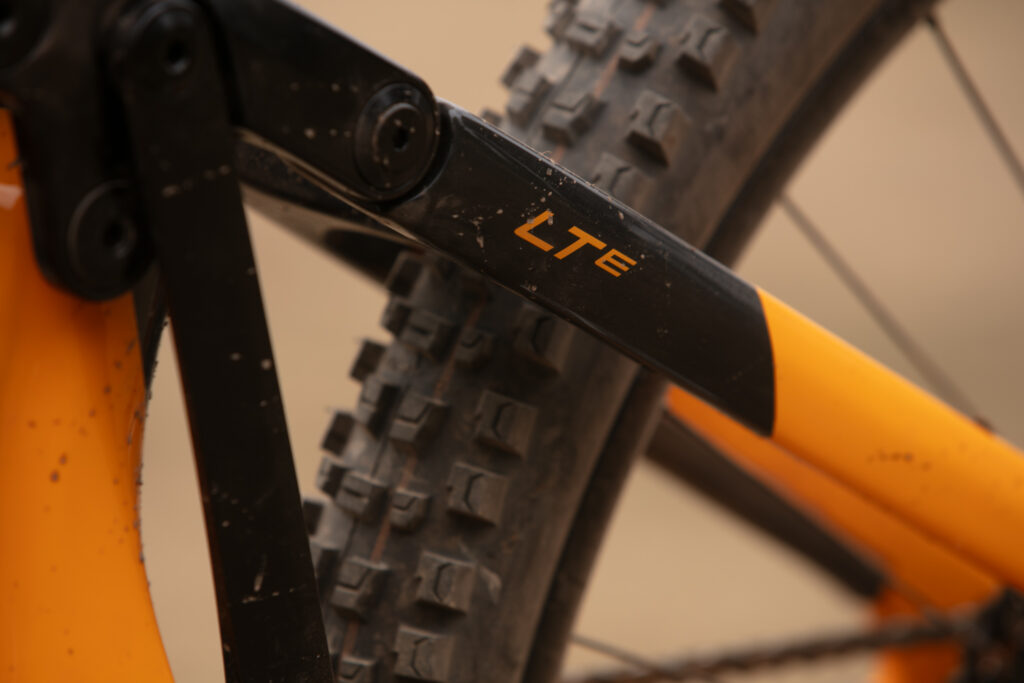
As for the battery life, there’s plenty. At first, I found that the LTe sucked the juice out of the battery rather quickly during a very winch and plummet portion of the ride, but I ended the day with around 10% battery remaining, having completed 34.6km and 1,430m of climbing.
I could gush about my time with the LTe, but it comes with one rather serious trade-off – its price. At £13,000, there’s quite a barrier to entry. But compare that with the likes of Specialized’s S-Works Levo 4 at £12,500, you are getting more for your money, namely, the Fox Podium fork.
Yeti LTe T4 Race: early verdict
With its latest e-mountain bike, Yeti has confidently realised its big travel, full-fat, enduro e-MTB intentions, having created a machine that brings just as much composure as it does traction. While the terrain it’s built for is anything but, it’s easy to ride and stiff in all of the right places, while, once again, the Sixfinity linkage has proven to be nothing short of excellent.