



A taxi driver who drove through a red light and struck a cyclist, leaving him paralysed, has avoided a prison sentence, after a judge concluded that the motorist “did not intend to cause harm”, with a court hearing that his decision to jump the red light was “spurred by the pressure of a busy junction”.
Khalid Mohammad, formerly Haroon Malik, pleaded guilty to causing serious injury by careless driving and was handed a 19-week sentence, suspended for 12 months, following the collision last September, which left the cyclist unable to walk and forced to spend months in hospital.
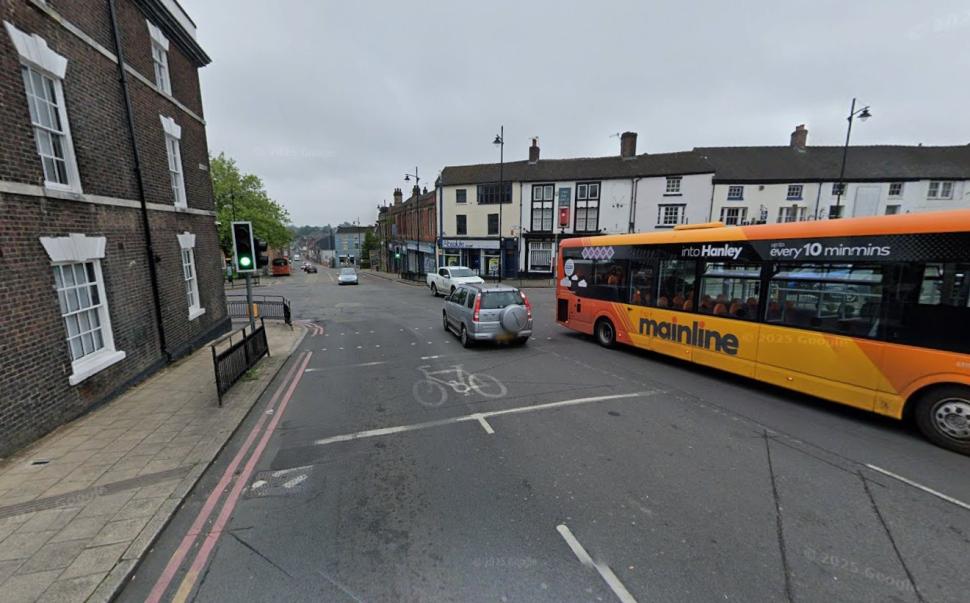
On 16 September 2024, 66-year-old taxi driver Mohammed was stopped at a junction in Burslem, Stoke-on-Trent, for 11 seconds when he began driving through a red light and hit a 53-year-old cyclist, who was approaching from the right on Wedgewood Street, where the lights were green, StokeonTrentLive reports.
Describing the horrific incident in Stoke-on-Trent Court last week, prosecutor Barry White said the cyclist is “now completely paralysed”, with White arguing that Mohammed “should have been paying more due care and attention”.
“He was riding his bike up Wedgwood Street when Mr Mohammad was approaching the junction from Moorland Road in his Toyota Prius,” White told the court.
“Mr Mohammad entered the junction and waited for an opportunity to turn. It was busy, so he didn’t get a chance to turn while the light was green.
“But, after the light had been on red for 11 seconds, he made a risky manoeuvre and turned. The lights had gone green for the cyclist, so he had begun travelling across the junction. As he passed in front of Mr Mohammad, the defendant turned and hit him.”
One witness also said that they saw the cyclist cross through the junction, which was particularly busy at the time, before a driver pulled out at “around 5mph”, causing the rider to collide with the side of the vehicle.
In a victim impact statement written last year, the cyclist told the court that on the day of the crash, “my life changed forever”.
“Unlike the driver, who simply had his car repaired and began enjoying meals with his family again in a matter of weeks, I spent weeks suffering delusions while recovering,” the 53-year-old’s statement read.
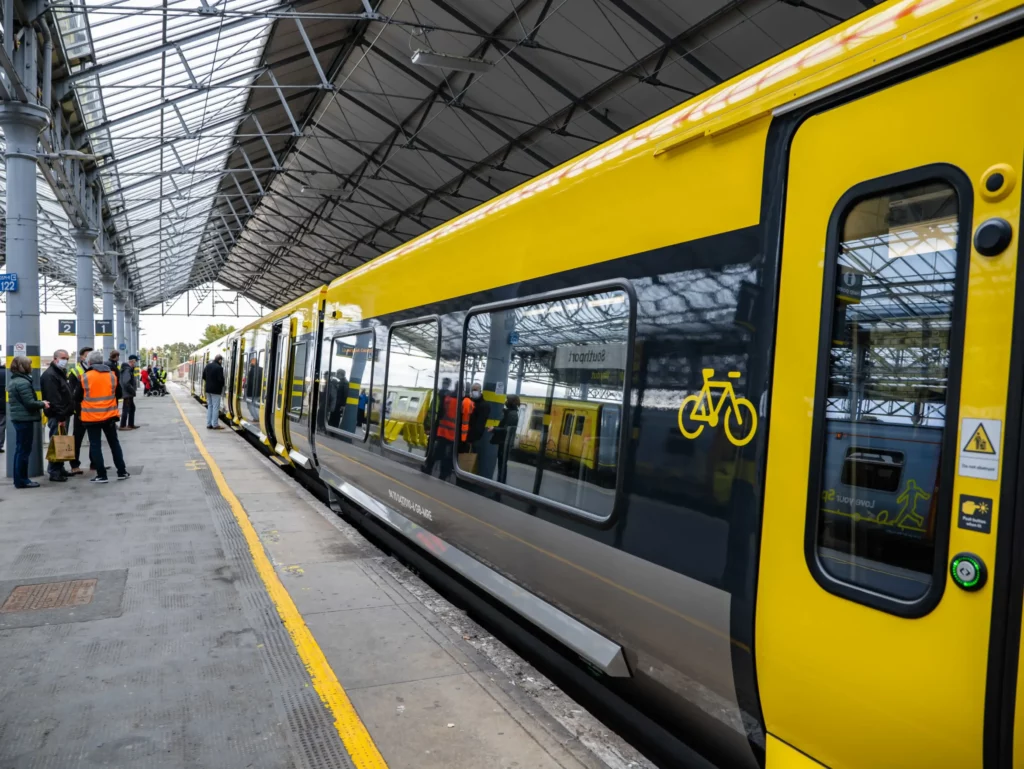
“After waking, I could only communicate through facial movements or clicks. I only became able to eat after being transferred to Southport Spinal Facility. While the driver spends every day with his family, I spend my most of my time in hospital alone.
“I miss my family. I miss my wife. I miss my son. I’m now missing Christmas, his last year of high school, and his prom.”
Mitigating, Matthew Ness claimed that the crash, and Mohammad’s decision to drive through a red light, was a horrific stain on “an otherwise perfect driving record”, one which has also led to him losing his job as a taxi driver.
“This is a genuinely tragic case,” Ness said in court. “There is nothing I can say that alters the reality or alleviates the suffering of the cyclist and his family. Mr Mohammad acknowledges that his lapse of judgement, however momentary, has caused such devastation. He will be filled with guilt for the rest of his life.
“He came to the UK in 2000, before getting a driving licence in 2005. He worked as a chef before eventually becoming a taxi driver 12 years ago. His driving record has been unblemished and he is of previous good character.
“This was a poorly executed manoeuvre, spurred by the pressure of a busy junction. The severest punishment he will ever face is having to live with the guilt of what he has done. He has lost his employment, and he will not be able to become a taxi driver again, which is the only employment he can find thanks to his health conditions.”
Mohammad was sentenced to 19 weeks in prison, suspended for a year, and banned from driving for 12 months. He has also been ordered to pay £500 in costs.
Sentencing the 66-year-old, recorder Robert Smith told him: “In the police interview, you made immediate admissions and expressed remorse. I accept you are sorry for what you did.
“You are described as a hard-working family man. You were setting about your normal workday. You did not intend to cause harm that day. But the consequence of the collision – short of the cyclist dying – couldn’t have been any worse. The impact on his family has been immense and their statements to the court were highly moving.
“You are the culprit behind a world of pain. But you didn’t intend to cause this. I accept that prison would also have a negative impact on the care you provide for your disabled son. The truth is, no sentence could alleviate the cyclist’s suffering. And sentencing is not about retribution.”













33 thoughts on “Taxi driver who left cyclist paralysed after jumping red light avoids jail”
So a dangerous driver gets
So a dangerous driver gets off pretty much with zero consquence to the quality of his own life while leaving his victim with a life changing disability.
I wonder if the driver’s motor insurer is paying the victim significant damages or if he can sue.
It says that he is unable to
It says that he is unable to drive a taxi, but he is free to take up other types of work. I agree, claims that the driver is full of remorse etc, should not be a mitigating fact.
My argument against this type of sentence, is it sets a precedent and provides no deterrent message. I also wonder if the sentence outcome would have been harsher had the collision been with a car, causing the same injuries
I agree. There is a place for
I agree. There is a place for some leniency (I believe) when a driver – or indeed a cyclist – makes a simple error of judgement such as we all make from time to time and are usually fortunate enough to get away with, misjudging speed or angles etc. In a case like this where the driver has deliberately and consciously decided to break the law by driving through a red light after waiting there with it on red for eleven seconds there are no grounds that I can see for mitigation (beyond the colour-by-numbers “he’s ever so upset” plea). Even without the proposed new cycle offences laws, I’d be prepared to bet a very substantial sum that a cyclist who rode through a light that had been red for that length of time and paralysed a pedestrian would have been jailed.
Looking at the harm caused,
Looking at the harm caused, that’s a straight no for leniency. Similarly however sorry he claims to be the life changing injuries massively outweigh sorry.
Sadly the Judiciary have no obligation to study the harms, and visit trauma injury patients in hospital or long term care..
lonpfrb wrote:
Not a lawyer, but I suspect “it may depend”.
Certainly there are some cases where your view would seem to hold eg. “eggshell skull”-type precedents (you must take your victims how you find them). Think those apply more in “I had intent but not to cause that much harm” cases – so not here.
Someone will no doubt be along with the definition and the sentencing guidelines and we’ll either be shocked at the leniency, or shocked at the low average range / maximum sentence, or all…
The harm can only be an
The harm can only be an aggravating factor in sentences. Medical reports and victims statements are both objective and subjective respectively. So a lot of weight there. Damage to riders property unlikely to get much weight.
The appology and blameless record are weak mitigation attempts by the defense that I would expect any judge to give little weight other than diligence by that defense lawyer.
chrisonabike wrote:
https://sentencingcouncil.org.uk/guidelines/causing-serious-injury-by-careless-or-inconsiderate-driving/
The maximum sentence is 2 years, the starting point for the most serious category is 1 year. So if you start at a year, factor in the third off for the guilty plea and take in to account the mitigating factors I don’t believe 19 weeks is an unreasonable sentence for the judge to pass. Short jail sentences are usually suspended.
I think the fundamental issue is that he has been convicted of causing serious injury by careless driving, when it would seem to most of us that his driving was actually dangerous.
Tom_77 wrote:
Completely agree with the disappointement that the CPS chose to accept careless, but then it nearly always is when the victim is a cyclist.
Also from the site :
So the judge has given the absolute minimum. I can accept the lack of prison time but the length of the ban is an insult in my opinion.
It beggars belief. The judge
It beggars belief. The judge should face a perfromance management review for being incompetent (that’s the polite way of putting it). I sincerely hope the poor victim is getting signnificant compensation from the driver’s insurers.
If this happened to me, I would be looking into every option available to get the sentence reviewed.
And apologising can never be mitigation,
It beggars belief
It beggars belief
Unfortunately, for regular readers of this site and of traffic news in the UK, it doesn’t!
It buggers belief. In the
It buggers belief. In the judicial system. As do so many sentencing decisions for appalling driving.
Just one note – on the
Just one note – on the defence’s:
I assume that is simply because he’s saying the chap is genuinely horrified by the outcome of his dreadful error / choice (human bizarre error or bad choice with no observation, it’s not clear)? Because AFAICS there is nothing else stopping him (and indeed we’ve read of firms that either didn’t do their due diligence when employing drivers or who seemed not to care).
in theory theyd be refused
in theory theyd be refused when they renewed or applied for a taxi license from the local council, as its the local council who do the checks, not the company they work for (though youd hope any decent company would do it anyway)
so its unlikely, though not cast iron guaranteed, they would be able work anymore as a taxi driver.
stonojnr wrote:
Though one big issue is taxi licencing is done independantly by pretty much every council in the country. So all they need to do is find a council that is more lax on checks to get a new permit (as they can also work pretty much anywhere; IIRC there are huge regions where basically all taxi’s are registered in one town because the council charges less for taxi licences…)
Matthew Ness “It was busy, so
Matthew Ness “It was busy, so he didn’t get a chance to turn while the light was green.”
That’s not how it works. He could Only turn on Green, when clear. Seriously incompetent Judge not to reject that nonsense!
Oh fuck the fuck off. He
Oh fuck the fuck off. He drove through a red light at a busy junction after sitting at said red light for 11s. It was a conscious decision. Of course he didn’t mean to hurt the cyclist. There are a vanishingly small number of drivers who hurt others who intend to do so. The cunt doing 90 through a 30 while high on drugs doesn’t mean to hurt anyone. Whats that got to do with anything.
The mind absolutely boggles.
Oh and anyone who drives into a busy junction through a red light they have been sat at for any amount of time is a shit driver. I don’t care if they have done every driving course under the sun and haven’t so much as a point on their record and volunteer at the local orphanage.
Astonishingly lenient sentencing and again reiterates that doing stupid and dangerous things behind the wheel isn’t considered serious. Fucking hell.
At last! The Holy Grail for
At last! The Holy Grail for Shyster Lawyers defending obviously guilty motorised vehicle offenders: Judicial Support for ‘he didn’t mean to do it’!!
“Sentencing is not about
“Sentencing is not about retribution….” Wrong. It is often about retribution in that the threat of retribution works to deter others who might commit similar crimes. The judge showed little interest in deterrence here. I wonder if it would have been different if Mr. Mohammed had appeared for sentencing before a wheelchair-bound jurist.
What I would love to know is
What I would love to know is how much the severity of punishment actually dissuades people from breaking the rules….if they thought they would be caught. The reason so many people in front of the courts for dangerous driving are “normal” people speaks volumes about how normalised and accepted bad and dangerous driving is.
How many people are in front of the courts for breaking and entering or theft who do not have a history of anti-social behaviour?
The average driver in this country would follow the rules very strictly if they felt like they would be caught and lose their license if they drove dangerously. By that I mean actually felt that way rather than the performative “war on motorists innit. Well yes I was going 45 in a 30 but cyclists don’t get caught for stuff…”
“spurred by the pressure of a
“spurred by the pressure of a busy junction”. Surely this shows that he is psychologically unsuited to driving and should never have been behind the wheel
I’m as speechless as anyone
I’m as speechless as anyone at the lenience of the sentencing.
I can’t say any more that hasn’t already been mentioned in the comments so far on that, but an aspect I haven’t seen discussed:
It should not be taken as any form of absolution for the offender in question, but should a portion of blame not [B]also[/B] lie with whoever is responsible for the design of that junction?
Take this event as a warning, but if another life changing injury occurs at this location then someone is liable for not fixing a road layout which clearly emboldens illegal and dangerous behaviour.
Do the yellow boxes need painting/repainting? Does the light sequence need adjusting to allow standing traffic to clear? Does that lane need to be separatly controlled to stop people moving into the junction if the exit is not clear? Should certain movements be prohibited at that junction and rerouted to avoid dangerously blind angles?
None of these questions are mitigation for the driver, he shouldn’t have been there when he was, and he certainly shouldn’t have moved more when he did, but what can be done to prevent idiots being his situation where they can make stupid decisions which endanger the lives of others?
Careful, you’ll be calling
Careful, you’ll be calling for Sustainable Safety next rather than focusing on stringing up the perpetrator (or the judge)! Not in keeping with the UK’s sometimes legalistic “rare, unique individual cases” approach to road safety! *
Of course “it’s both”. Guiding human behaviour is hard as beliefs and society are always in the equation. So we need to continuously juggle making it simple and easy in the moment for road users to do the right thing, while not trivialising what will always be a dangerous activity (driving). Paradoxically this may get harder as we *do* succeed in making the roads safer.
The existence of a deeply embedded series of industries promoting and relying on motoring adds pressure against any change…
* The infra and rules are basically fine, can’t understand why these humans keep doing the wrong thing, we just need to punish / police it better…
I think if I ever got magical
I think if I ever got magical powers, one of the first things I would probably do is seek out judges like this and force them to endure the condition of the victims they have so hideously let-down for at least a year. See how sympathetic you are towards the poor ickle motowist once YOU have to spend 12 months unable to feed, wash, or clothe yourself and have to spend 90% of your time alone staring at a wall.
That is a good point. When I
That is a good point. When I was working, we got lots of health and safety training. Most of this focussed on accident prevention.
One of the most powerful and memorable training sessions was a 10 minute video of a day in the life of a guy who had fallen 6 feet from a ladder and been paralysed as a result.
Mr Blackbird wrote:
This was not an accident, it was an entirely preventable collision.
My main point was the
My main point was the powerful message from focussing on the aftermath effects on people.
Most industrial accidents aren’t really accidents either. They are also preventable by determining and implementing the correct procedures. (As opposed to deliberate acts of harm).
Thanks for the reply. If they
Thanks for the reply. If they are not accidents then don’t call them accidents. Unintended outcome is one alternative phrase.
I believe it is the use of the term accident which has led, at least in part, to judgements and sentences like this, where the magistrate thinks that this was an accident and who can blame the taxi driver for an accident.
As far as designing roads to reduce the likelihood of collisions, it’s certainly worth a try. It’s the mind set of prioritising speed of the journey over safety which needs to change though and the use of the term accident, and this lenient sentence, won’t help that.
It wouldn’t even take that
It wouldn’t even take that much —- Just put them on a bicycle, or even an ebike for a month!
I say it every time ,if you
I say it every time ,if you want to seriously hurt someone ,do it in a car there is never any punishment .
This article doesn’t add up.
This article doesn’t add up. It says he entered the junction on a green light and the light changed to red, at which point he would be in a give way situation and can’t “jump” the light.
Did he jump the light or did he fail to give way?
Failure to give way is much more plausible accidental than deliberately running a red light, which may go some way to accounting for the leniancy in sentencing.
Do you mean the one in the
EDIT – I see the source of the confusion – “entered the junction”. Which does appear to conflict with the article summary.
I wouldn’t say that’s much better though – if that was the case he was sat somewhere he shouldn’t be and he then actively made a manoever without observation ( being in an unusual position should have prompted additional care).
If a cyclist ran the red, hit
If a cyclist ran the red, hit a pedestrian and paralysed them, do you think they’d get a custodial? of course they would. A Car Driver, Taxi driver, called Mohammad, new sentencing guidelines for those of foriegn origin, all played factors here. Another joke Judge. There really aren’t any judges left who aren’t clowns.
“…..after a judge concluded
“…..after a judge concluded that the motorist “did not intend to cause harm”
Great. So that means that in 99.99% of collisions, the driver won’t be jailed, because very, very few drivers set out to cause harm. But that isn’t really the question is it?
The question is “Would a competent driver have done that?” And if the answer is no, then they should face the full force of the law, not be excused because they didn’t mean to injure anyone.
Unless I’ve gone into that parallel universe thing again.