


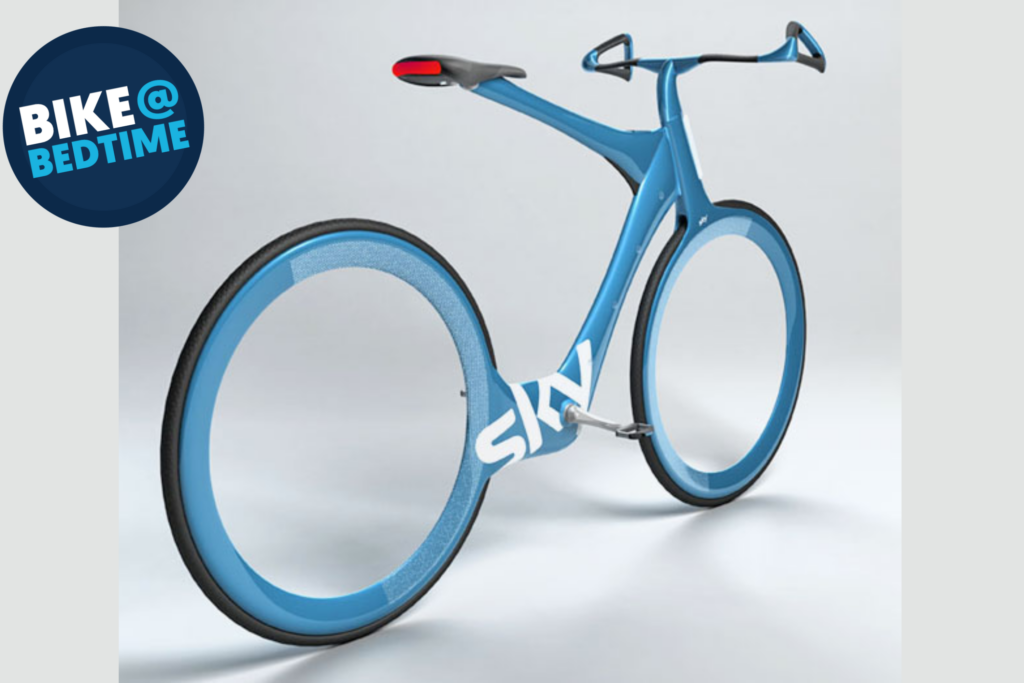

Fifteen years ago, British Olympic cyclist Chris Boardman introduced a very futuristic-looking concept bike to the public: an “intelligent” bicycle, equipped with advanced features aimed at revolutionising urban cycling. The concept boasted computer-like intelligence, an ‘unbreakable locking device’, puncture-proof self-inflating tyres, and a host of other futuristic elements. 15 years later, is the concept, or any of the ideas attached to it, closer to hitting full production?
The first thing to get started on this analysis, of course, was to ask Mr Boardman himself if he thinks the concept is still feasible, and he duly replied with some fascinating and detailed answers.
“‘Bike’ covers such a diverse range of activity, from exploring off trail, to riding alpine passes, or just going to the shops with kids in tow. Such is the wonderfully diverse nature of the machine”, said Boardman.
“I’d design something very different now I think, and certainly tuned to a specified application.”
> Weird, wild, whacky & cool: The maddest, worst and best concept bikes we’ve ever seen
As Boardman admits, the concept he created in ’09 is a lot to put into one bike. Nevertheless, the fact that his idea is for an urban bike of the future marked the beginning of the former Hour Record holder becoming more prominent as an advocate for cycling and walking. Of course, Boardman is now the Commissioner for Active Travel England, and regularly pops up in our news coverage when cycling hits the headlines.
We’ve taken a closer look at all the features that Boardman, then 40 years old, envisioned for the bike, and what progress we’ve seen in each aspect as the years have passed.
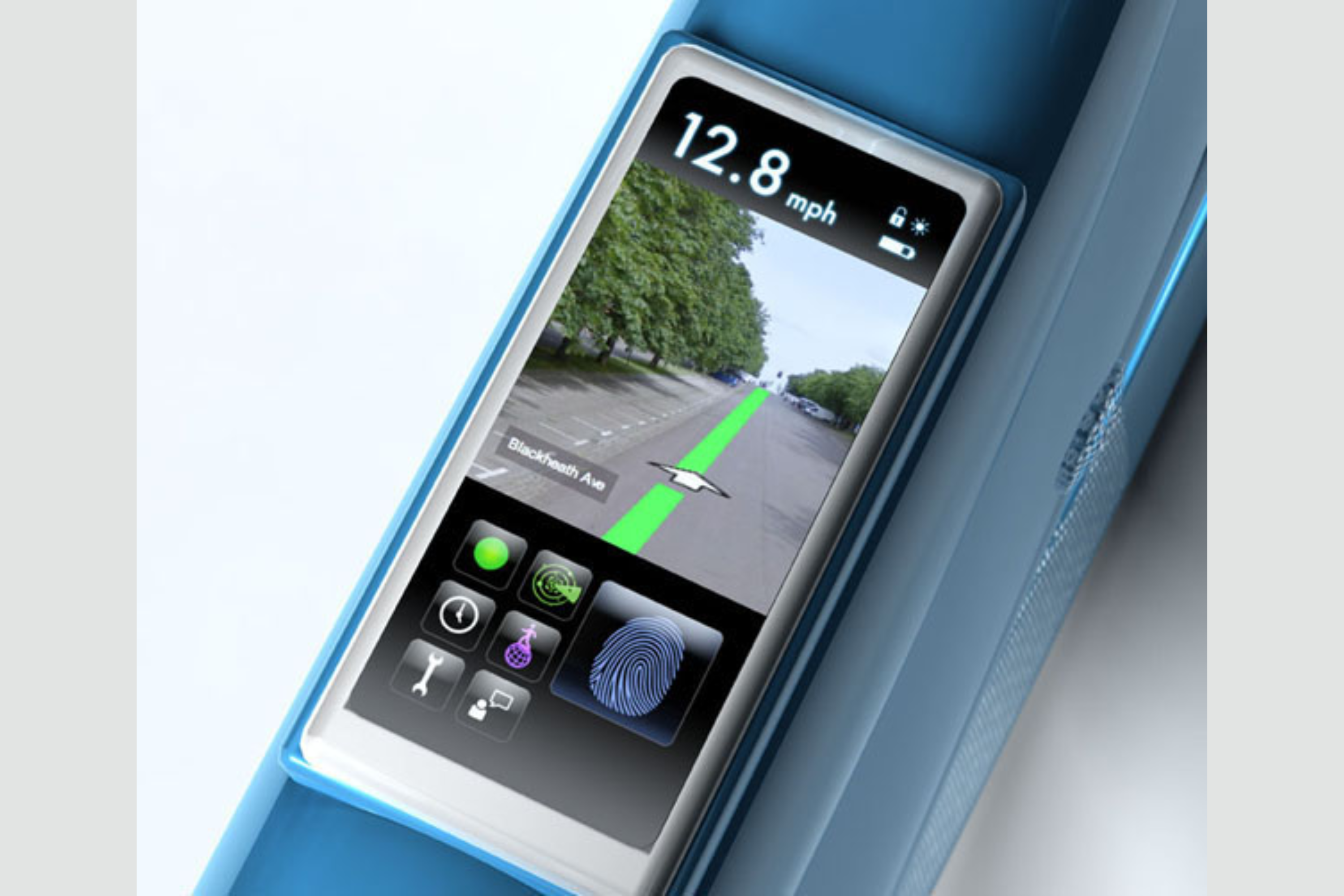
Fingerprint recognition lock
This seemingly unbreakable locking mechanism that could only be opened by the owner’s fingerprint has definitely become more prevalent in the last 15 years, though not a standard feature on most bikes yet. Companies like LINKA and BitLock have introduced fingerprint locks using a smartphone connection, but something integrated into a bike… that’s not really a reality yet.
Other designs to make bikes more secure against thefts have popped up, though – for example, this Yerka ‘unstealable bike’
The bike, which was launched by Chilean inventors in 2017, seems to have been a success, as it’s still available in two models that retail for about $800 (£705).
Puncture-proof, self-inflating tyres
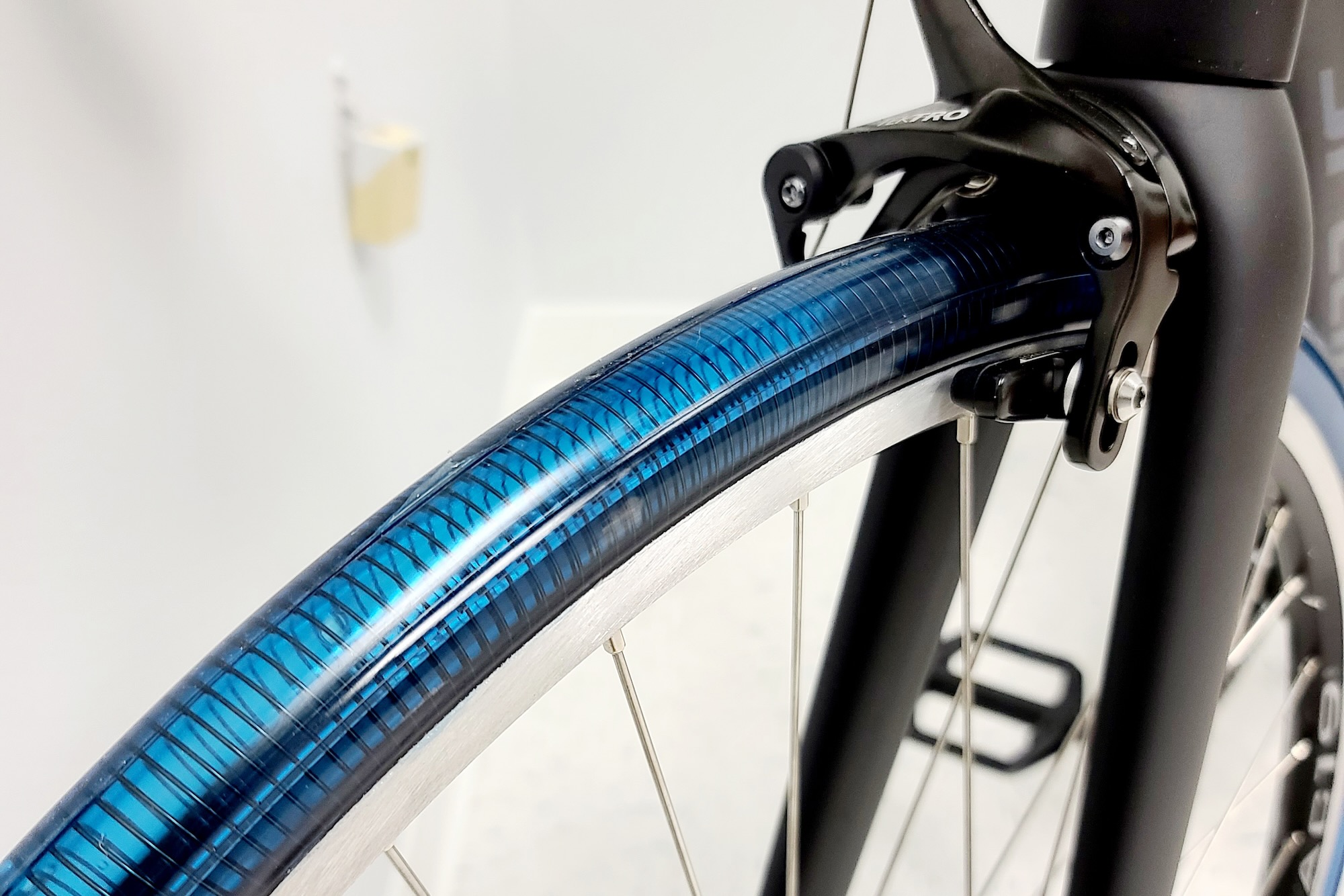
The next thing Boardman envisioned for the concept bike is a very practical one, eliminating the common hassle of flat tyres. Though we’re yet to see self-inflating tyres make the mainstream, there are already products such as the Gravaa KAPS system that allow on-the-fly tyre pressure changes, and the £2,700 Scope Atmoz hubs that do a similar thing.
> Team DSM set to use on-the-fly tyre pressure adjustment at Paris-Roubaix
Puncture-proofness is an idea that has taken off more, and one of the most prominent names on that front is The SMART Tire Company which reached its funding goal for the Airless Metl tyres in a mere 15 minutes last year.
> SMART Tire Company unveils new second-generation prototype of ‘space-age’ metal tyres
The Metl tyres feature a shape-memory alloy (SMA) called Nitinol, an alloy of nickel and titanium, that’s coiled up inside like a stretched-out Slinky spring. The idea is that the Nitinol allows the tyre to deform and then recover its shape perfectly. The metal in contact with the ground wouldn’t work in terms of traction though, so a “special poly-rubber material” is used over the top.
There are also brands like Tannus and Schwalbe that offer airless tyres, but it goes almost without saying that in their current design, most of these come with trade-offs in ride feel and performance.
“If this was an off-road or around-town machine, who wouldn’t want puncture-proof tyres? This technology is still immature but would be a game changer if the hysteresis issues of non-pneumatic options can be overcome,” Boardman said when revising his original design.
Mini computer
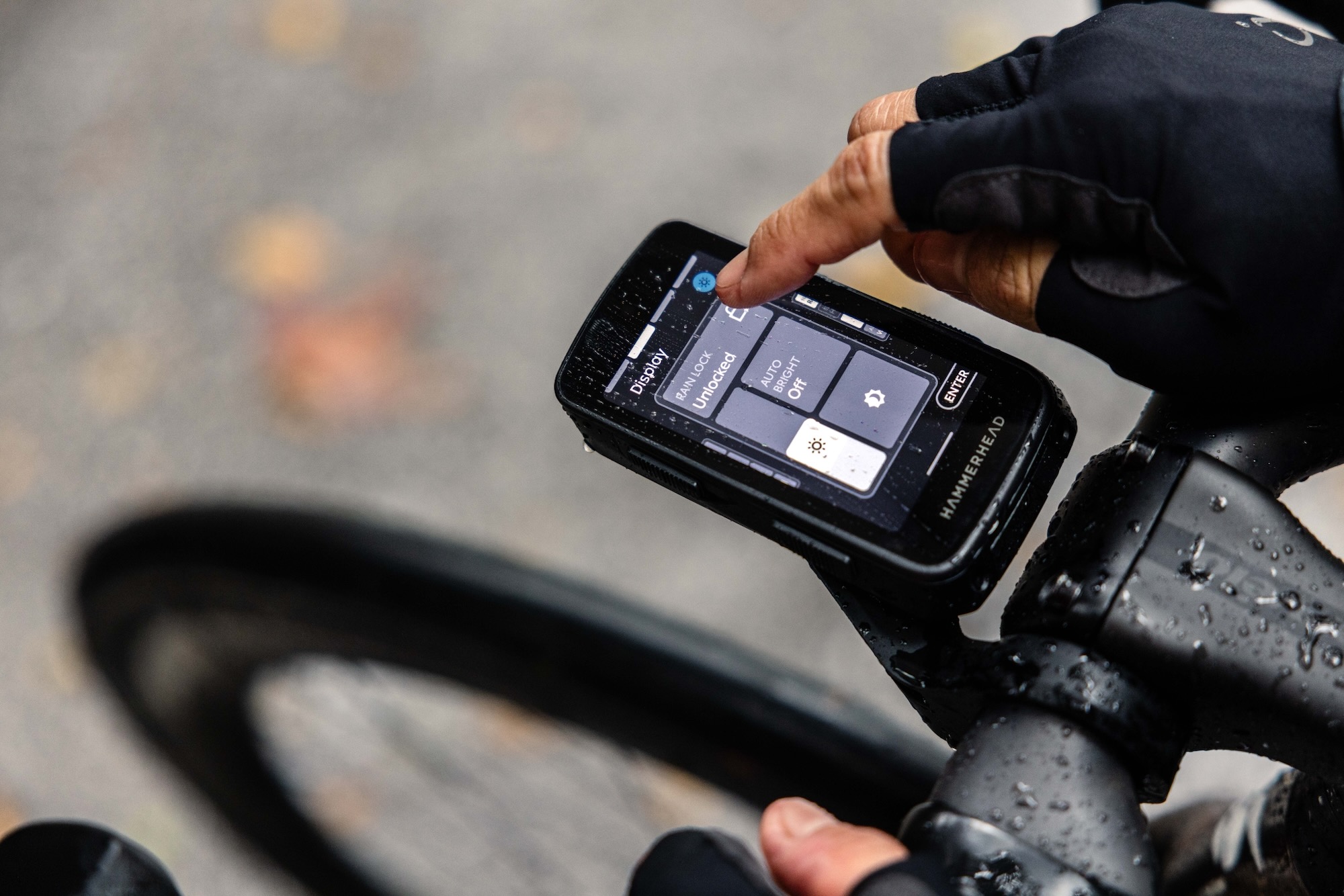
For Boardman, he said to the Telegraph back in 2009 that this would be useful for “tracking calories burned”. Most of us probably now cycle with cycling computers which measure not only that but a plethora of other ride metrics too. In 2009, GPS computers were only just starting to become commonplace.
On modern e-bikes, computers are commonly integrated into the bike’s cockpit or frame, and we have seen some push bikes introduce integrated computer and light technology, too – just take a look at this SpeedX Leopard Pro Dave reviewed in 2016.
That bike has a computer that’s part of the stem design, drawing power from a battery in the seatpost, which also incorporates an LED rear light that’s motion-activated. Cadence and speed sensors are also wired in, as well as Bluetooth and ANT+ connectivity. Whether the tech was really well done when we tested it, well, you’ll need to read Dave’s review to find out (spoiler: not so good).
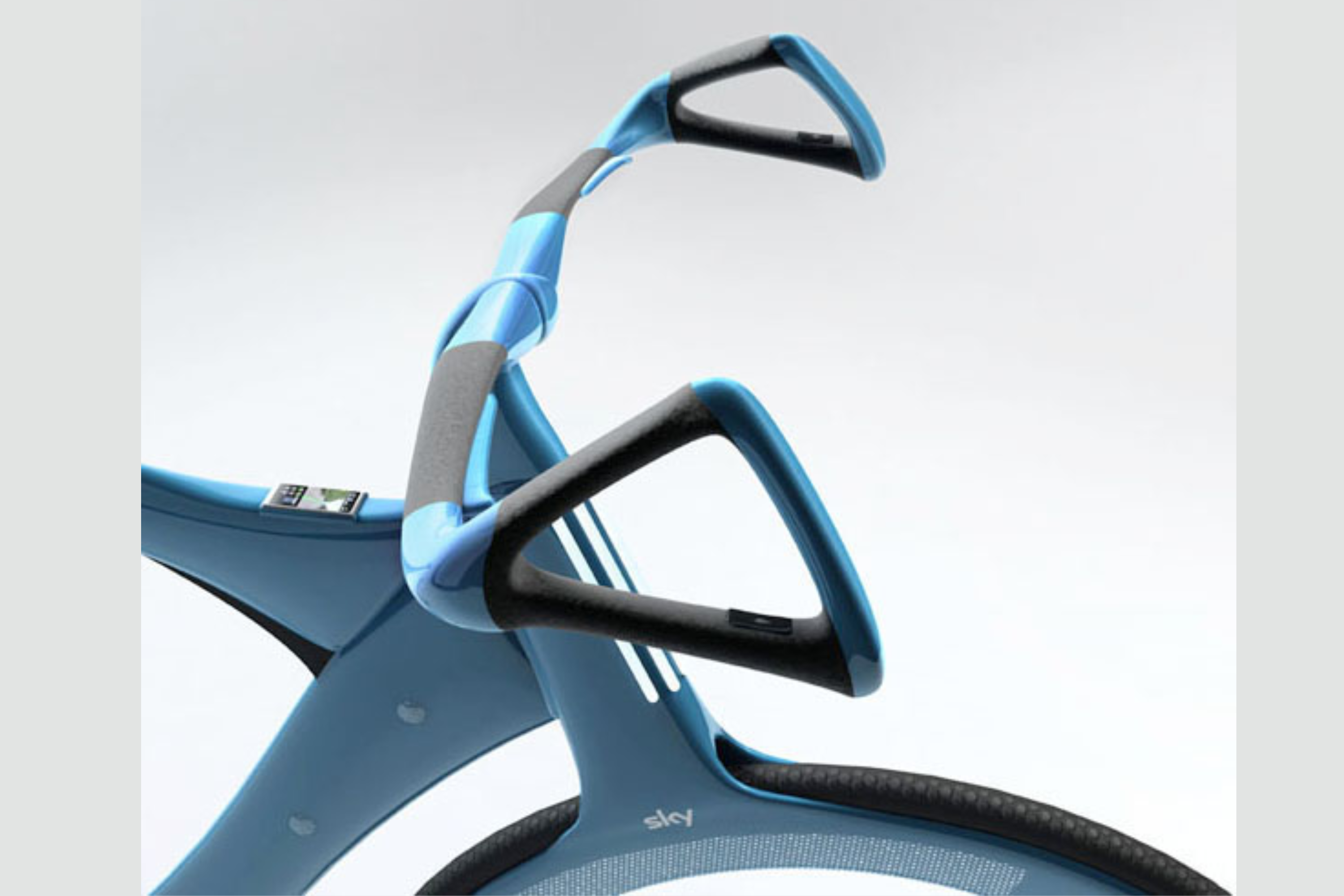
Spokeless wheels and lightweight carbon fibre frame
Carbon fibre frames, as they were in 2009, are now mainstream in high-end bicycles, and we’ve seen some huge leaps in brands reducing weight and enhancing performance. Spokeless wheels, on the other hand, have hardly seen daylight. They’re still expensive and more complicated to make, not to mention their inherent lack of repairability as you can’t just replace a spoke, but need to replace the whole wheel.
> How green is your carbon bike?
When we asked about revisions for the design, Boardman mentioned 3D printing and sustainable materials in his concept.
“3D printing isn’t a feature per-say but it’s a method of instruction that allows wholly new thinking. It should certainly allow manufacturers to utilise all those cavities inherent in frames for things like inboard fluid storage.
“I’d want my future bike to fully capitalise on all that unused space for secure storage, aero and aesthetics reasons.

“Eco-friendly materials are something I wouldn’t have thought about 15 years ago, but I, like many others, am very conscious of this now.
“There’s no reason a bike can’t be made of fully recycled and recyclable material. This one is definitely coming and the first mass manufacturer to nail it will set a precedent for everyone else.”
Boardman didn’t comment on the ‘beam’ frame shape, and there’s little we can find referencing this in the original round of interviews 15 years ago. We’d speculate that it was assumed improvements in carbon fibre manufacturing would make the design a feasible option to save weight without sacrificing strength by 2029.
While beam-style frames such as the Zipp 2001 have existed since the 1990s, they were heavy and lacked stiffness; however, seat tube-less frames had a brief resurgence in the 2010s with triathlon bikes such as the Cervelo P5X, that was said to have a much more ‘normal’ ride feel. We’re yet to see such designs being applied to urban or utility bikes, though.
Solar-rechargeable lights and battery-assisted motor

While e-bikes have been around for quite some time, their popularity has exploded in the last few years, especially since 2020. Modern, high-end e-bikes barely look like they have a motor and battery inside, and their ranges are ever-increasing as battery technologies are advancing. A lot of the e-bike settings are controlled with advanced technology, too, and that’s something that Boardman said has come a long way since his initial visions.
“Electronics, AI and most of all phone tech have really come on since my 2009 design”, he told us.
“Tons of this could be directly applied to a future bike, either directly or indirectly, simply starting with properly linking bike app to bike for a host of custom settings.”
Boardman also added: “Front and rear cameras, tiny, high-res is standard now, even in doorbells, why not build in a front and rear lens for security and ride recording, accessible wirelessly by phone?”
Again, those are something that does exist already, but not necessarily all that integrated into a bike as Boardman envisions.
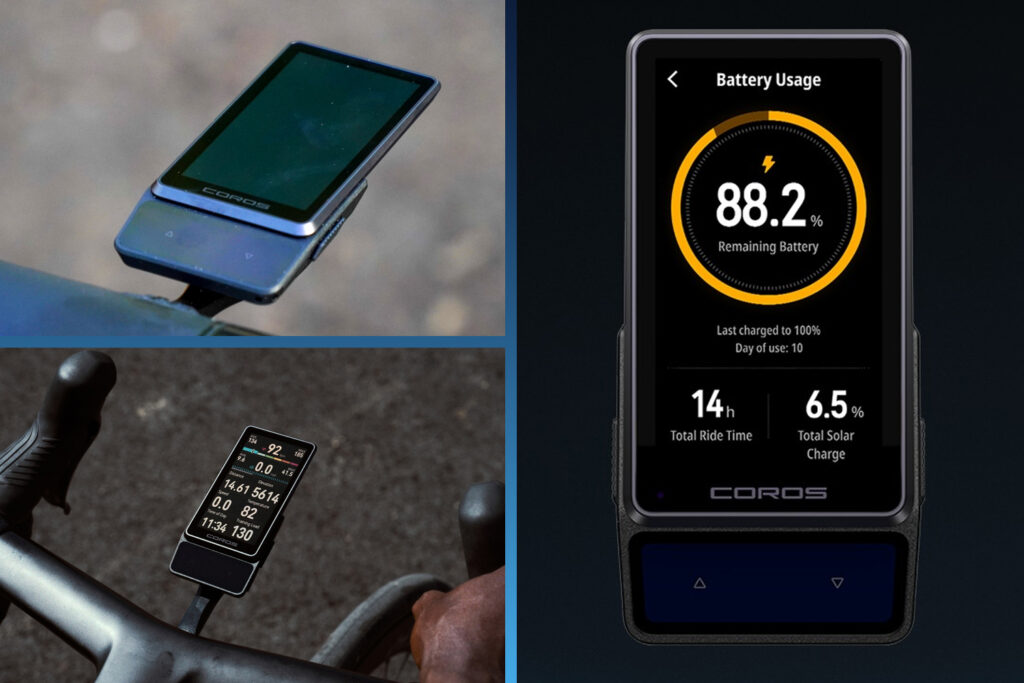
What about solar charging then? It’s a technology increasingly creeping into cycling tech – you can already get solar-powered lights and cycling computers, and earlier this year we reported on SRAM’s patent on solar-charged shifting.
The gist of that patent was that your bike would feature solar panels that charge a spare battery for a derailleur, power meter, or dropper seatpost. If the battery supplying power to one of these components runs out of juice, that’s not a problem: you just switch it for the one that you’ve been charging up as you ride.
Integrated music system
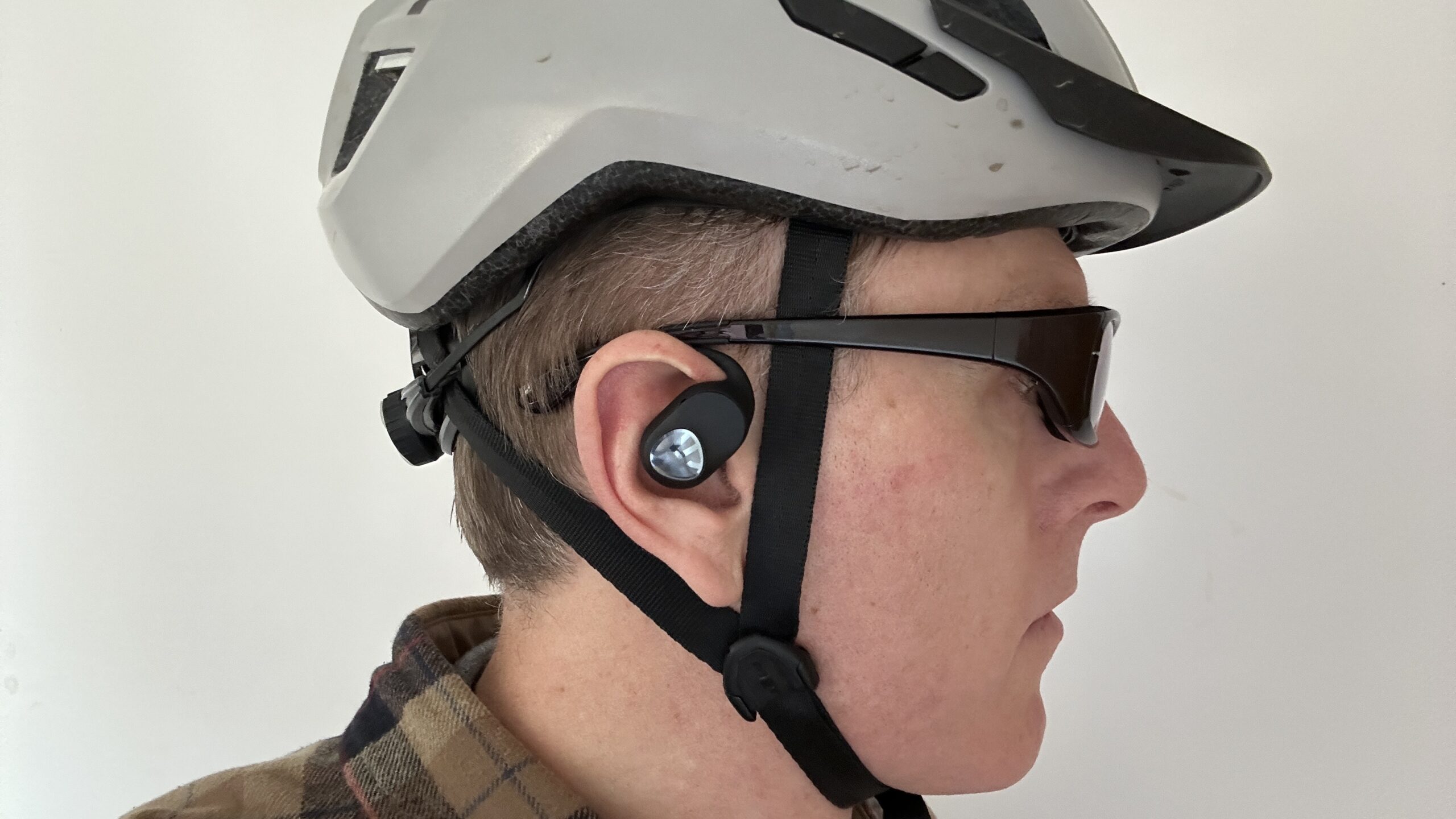
Boardman envisioned that the bike of 2029 would have a little entertainment added to the ride – perhaps in the form of music. Though that’s not seemingly a technology that is utilised much (yet), things like portable Bluetooth speakers seem to be popular among cyclists wanting to share their tunes with everyone around them, and bone-conduction headphones are popular among cyclists who rather keep their music tastes private.
What about the price?
Boardman believed these components already existed, claiming that with proper funding, the bike could be market-ready within 20 years – that would be the year 2029.
Boardman estimated the initial prototype of this bike would cost around £500,000, but mass production could reduce the price to about £2,000. At the time of its launch, Tom Bogdanowicz, campaign manager at London Cycling Campaign, told the Evening Standard: “Some of the ideas behind this bike are clearly things cyclists want. But it really needs to be affordable.”
Would this kind of bike be a reality in five years’ time? Let us know your thoughts in the comments below. And as usual, don’t forget to give some love to our other Bike at Bedtime features too.
A special thanks to Chris Boardman for coming back to us with such detailed answers so promptly. Chapeau!







15 thoughts on ““I’d design something very different now”: Chris Boardman revisits his ‘intelligent’ bike concept from 2009”
Quote:
For “share their tunes with” read “inflict their tunes on”.
Rendel Harris wrote:
For “share their tunes with” read “inflict their tunes on”.
The invention of headphones does seem to have passed a lot of people by…
brooksby wrote:
What’s annoying is 99.9% of people (conservative estimate) using Bluetooth speakers aren’t doing it because they love music so much, they are doing it because they want everyone to look at them and say isn’t that guy cool, he loves music so much. Anybody who actually genuinely enjoys music wouldn’t bother listening to it on a tinny Bluetooth speaker with wind rush noise in their ears. There was/is (haven’t seen him for a while) a bloke who used regularly to ride through the City with Ride of the Valkyries blasting out from a crap speaker, was he genuinely a Wagner devotee or someone who just wanted everyone to look at him?
Rendel Harris wrote:
Maybe he loved the smell of tarmac in the morning?
A case of “useless Wagner”?
A case of “useless Wagner”?
He wants everyone to look at
He wants everyone to look at him, but maybe not for the reason you imply. In an area with lots of pedestrians, using a Bluetooth speaker is useful from a safety perspective. I used one for a while when commuting on the Regent’s Canal, as it let people know I was coming without dinging my bell every 5 seconds.
AidanR wrote:
Sorry, I don’t regard blasting out noise pollution that everyone has to suffer in order to tell people to get out of your way as in any way appropriate. A better way of making people hate cyclists I couldn’t imagine. I ride along the Regent’s Canal towpath occasionally, and I sometimes walk there too, as you know it’s narrow and often very busy; if I’m riding I go slowly, cautiously and politely call out “may I just come through on your left?” as necessary. It’s a lovely place to walk and cycle (slowly) and I’m afraid I would regard someone riding along there blasting music to tell people they’re coming (subtext get out of my way) as the height of bad manners.
Rendel Harris wrote:
But https://youtu.be/lwRHkS912ks?feature=shared
For another take on an urban
For another take on an urban-use bike design from someone also coming from the field of performance machines here’s the late Mike Burrows’ “Gordon”:
https://www.cyclinguk.org/sites/default/files/document/migrated/publication/ctc201601034.pdf
Of course it was Mike who designed Chris Boardman’s iconic Lotus bike.
I think the similarities and differences are interesting.
To me these come over as “my ultimate commuter” rather than “improved design for the masses” so there are personal quirks – weird wheels (spokeless or single-side hub) and CF frames. (That, I really don’t see that as sustainable or even likely for mass production.) However maybe notable that otherwise it looks like just tweaks to the form factor of a design of over 100 years’ vintage. Even with Burrows’ extensive experience in other quite different bike designs e.g. recumbents.
Meanwhile the design sweet spot for affordable, practical urban transport is *really* similar to how it always was:
http://www.aviewfromthecyclepath.com/2009/01/anatomy-of-reliable-everyday-bicycle.html
Even with increasing “add a computer and motor” plus “more brakes” (unnecessary ABS next, perhaps?). Of course ever-increasing consumption of more complex artifacts is the human trend.
As much as I love Tron, are
As much as I love Tron, are there actually any practical advantages to spokeless wheels?
Starfleet obviously thought
Starfleet obviously thought so…
Tom_77 wrote:
They look cool and they’re more aerodynamic
hawkinspeter wrote:
But there is a big mechanical disadvantage due to significant increased drag/friction from the large diameter bearing, which will likely outweigh areo gains. Plus my guess is that large bearing and bearing seat would also mean the wheel is heavier than one with spokes and two or more smaller bearings.
In general, you want the smallest bearing that’s able to take the likely loads/forces in order to minimise friction/drag from the bearing.
joules1975 wrote:
That’s probably why the good old spoked wheel is still the best design. Maybe a super high-tech spokeless wheel using magnets or some kind of monorail could workaround the bearing friction issues.
That’s not *quite* right, the
That’s not *quite* right, the big disadvantages to large bearings are 1) weight which compounds with 2) inertial moment and 3) mechanical accuracy; the tolerance required to keep the races true is more difficult to maintain over a larger part so it needs to be stronger and bulkier and heavier which feeds back into 1)
Increased friction is a factor, but it’s miniscule in context