



In the early 1980s comedian and keen cyclist Alexei Sayle gave an interview to Bicycle magazine in which he talked about the way bike shops guard their knowledge with language. “You ask for a hub,” he said, “and they reply ‘cross-threaded or off-flange?’ and then they’ve got you!”
It’s been 40 years since then, and the passage of time has only brought heaps and piles of more gibberish and nonsense. What’s a Zwifter (not to be confused with a Swiftie)? What’s your FTP? Have you got any KOMs? Should you get electronic shifters? What the hell is a wheelsucker?
Cycling’s technical jargon, the double-Dutch, if you will, is one of the biggest hurdles when you’re starting out, so here’s a glossary of all terms to help you out.
Anything we’ve missed? Let us know in the comments so we can make this listing as comprehensive as possible.
Alloy: A mixture of one or more metals and other elements. Alloying changes the physical properties of the main metal. For example, the common 6061 aluminium alloy used for bike frames contains magnesium and silicon and has a yield strength roughly thirty times higher than pure aluminium.

Alpe du Zwift: A fictitious climb of 1,036 metres in Watopia, with 21 hairpins and constantly changing terrain, modelled after the iconic Alpe d’Huez in the department of Isère in France.
Aluminium: Low-density metal used in various alloys for bike frames and components.
Anti-seize: Grease containing very fine metal particles, used to stop threaded parts from corroding together.
Bead seat diameter: Diameter of the tyre bead.
Bead seat: The part of the rim where the tyre bead sits. The diameter of the bead seat is the basis of rim and tyre size standards. For example the standard road bike wheel and tyre size, 700C, has a bead seat diameter of 622mm

Bearing: Any mechanism that reduces friction to allow parts to move easily against each other. Most common bicycle bearings use steel balls to allow parts to turn easily. Plain bearings, also known as bushings, have low-friction surfaces that slide against each other and are found in some components such as pedals and jockey wheels.
Belt drive: Bike transmission using a reinforced, toothed rubber belt instead of a chain.
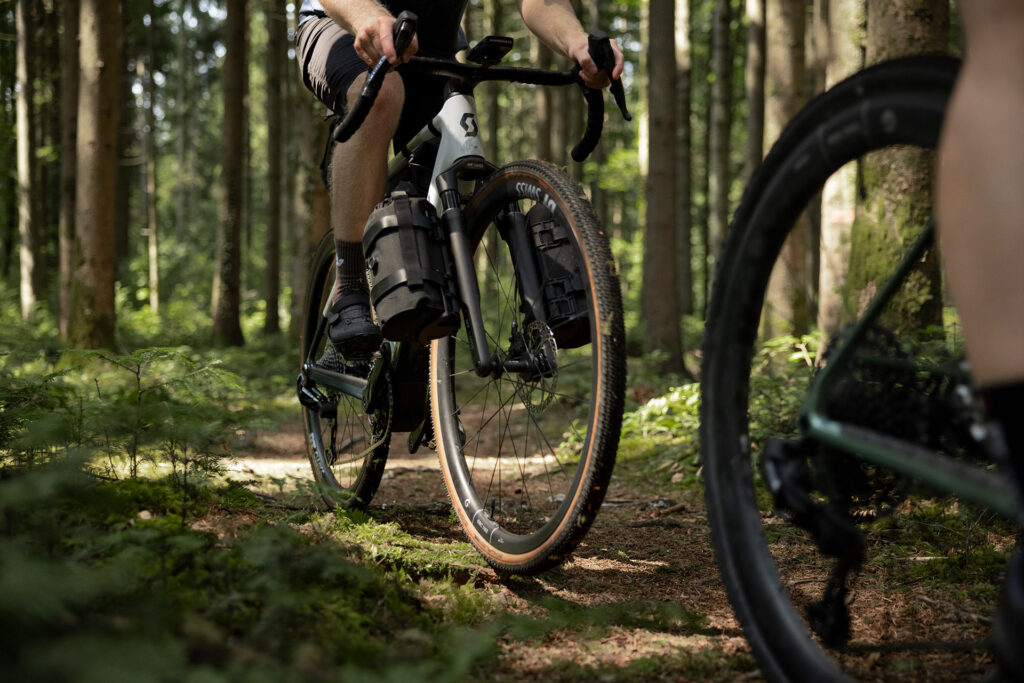
Bikepacking: Like backpacking, but with a bike. We’d count any bike ride that takes place over multiple days and where you’re self-sufficient (i.e carrying all your stuff on the bike, preferably with specific bikepacking bags) as bikepacking; and although that might sound exactly the same as cycle touring, the thing that makes a true bikepacker would be carrying sleeping gear too, in the form of a tent or bivvy for the proper nomadic cycling experience. That doesn’t mean touring is any less gnarly, if the youth hostels we’ve stopped at on cycle tours are anything to go by…
Bimetallic corrosion: Aka galvanic corrosion; this is corrosion damage caused by a chemical reaction between two dissimilar metal surfaces and salt water. The most common example is aluminium seat posts corroding in place in steel frames because of the constant washing in salt water this area gets in a British winter.
Bolt circle diameter: The distance across an imaginary circle drawn through the centres of a crank’s chainring bolts. Indicative of chainring compatibility, as long as the ring and cranks have the same number of bolts and the same bolt circle diameter, though Shimano’s recent dalliance with asymmetrical crank arms made things complicated.
Bottom bracket shell: The frame tube in which the bottom bracket mounts. May be threaded to accept a screw-in bottom bracket or smooth to take press-fit bearings.

Bottom bracket: The bearing on which the cranks turn, mounted in the bottom bracket shell at the lowest part of the frame.
Brifter: The integrated brake and gear shifter unit on road bikes with drop handlebars. Different manufacturers have varying mechanisms, but the basics stay the same: You pull the main lever towards you to brake, and push either the brake lever itself or a separate gear paddle(s) inwards to upshift or downshift. Unless you use a Campagnolo brifter, which has a thumb-push paddle inside the hoods to downshift.
Cable end cap: Metal cover used to prevent the end of a cable from fraying.
Cantilever brake: Brake that attaches to the frame tubes either side of the rim and has two separate pivots; used on hybrids and on older cyclocross and mountain bikes.

Carbon fibre: Composite material comprising very high strength carbon strands embedded in a resin matrix. Can have an extremely high strength-to-weight ratio and is therefore widely used for high-end bike frames and components.
Carcass: The body or casing of a bike tyre.
Cartridge bottom bracket: A crank bearing assembly in a single unit which cannot be serviced.
Casing: The body or carcass of a bike tyre.

Cassette: aka cluster, the collection of sprockets on the rear wheel.
Chain: An articulating assembly of links and pins used to transmit pedalling force from the chainrings to the sprockets
Chain stays: The two thin frame tubes that run out from the bottom bracket to the rear wheel.
Chainguard: A protective cover around the chain.

Chainrings: The sprockets on the cranks, driven by the pedals that in turn act on the chain to turn the rear wheel.
Chainset: The cranks, chainrings and bottom bracket.
Chromoly: Very widely used class of steel alloys containing chromium and molybdenum to improve the steel’s strength.

Cleat: Special stud in the sole of a shoe that engages with a clipless pedal.
Clincher: The most common type of bike tyre, featuring a wire bead that holds the tyre in place on the rim.

Clipless pedal: Pedal with a mechanism that engages a cleat in the sole of the shoe to provide a firm attachment for the rider’s foot. So called because some pedals have metal or plastic cages — clips — to keep the foot in place on the pedal, usually with a strap around the foot.
Close-ratio gears: Gears with small gaps between one and the next, allowing the rider to maintain the same pedalling rate.
Cockpit: Term for the handlebar and stem, and sometimes the saddle and seatpost too, used by pretentious cycling writers who feel the strange need to give the impression they’re flying a fighter plane rather than riding a bike.
Cog: A toothed wheel that engages with another toothed wheel. Not to be confused with a sprocket.
Cottered cranks: Usually made from steel, cottered cranks are held on to the bottom bracket axle by a shaped bolt — a cotter pin — that passes through the crank.
Cranks: The levers that connect the pedals and the chainrings. Cranks mount on the bottom bracket axle and are usually made from aluminium alloy or carbon fibre.

Derailleur: A mechanism that changes gear by moving the chain between sprockets or chainrings. Unless you’re riding a fixie, you’ll have one at the rear, and if you have more than one chainring, you’ll have one at the front too.
Diamond frame: Frame with a high top tube; ‘man’s frame’.

Disc brakes: Braking mechanism that acts on a specific braking surface attached to the wheel hub.
Double butted: Thicker at both ends than in the middle. In spokes, the spoke width changes, in frame tubes the thickness of the tube wall changes.
Down tube: The lower frame tube that runs from the headset to the bottom bracket.
Drafting: Sitting behind the rider in front of you, so you stay protected from the wind and can keep going at the same pace without burning as much energy.
Drive side: The right-hand side of the bike, where the chain and gears are.

Drop handlebar: The curved handlebar shape almost universally used on road-racing bikes and bikes that follow race bike styling such as touring bikes and gravel bikes.
Dropout: Also called fork end or frame end, it’s the slot to which the axle of the wheel is attached.

Dropper post: A seatpost that includes a spring-loaded telescopic height-adjustment mechanism. Common on mountain bikes and sometimes seen on drop-handlebar gravel bikes.
Dropping: When you leave your mate behind because he couldn’t keep up with your pro rider watts.
Electronic shifters: Instead of using mechanical wires to shift the derailleurs, these groupsets use either electric wires or wireless communication along with a rechargeable battery to shift gears when you press the shifting paddles.
Fat tyre bikes: Any bike with wide tyres; mountain bikes and budget, mountain bike-style bikes.
Ferrule: Cylindrical metal end-cap for a cable outer, with a hole for the inner to pass through
First gear: The lowest (easiest) gear.

Fixie: A fixed-gear bike, or a fixie, is a bike with no gears.
Flange: The part of the hub shell into which the spokes fit.
Fork crown race: The part of the headset which fits on to the fork at the bottom of the steerer tube.

Fork: The two frame tubes that hold the front wheel, and by turning in the frame, allow the bike to be steered.
Frame size: The size of the frame, measured from the bottom bracket to the insertion of the seat post; determines what size of person the frame will fit.
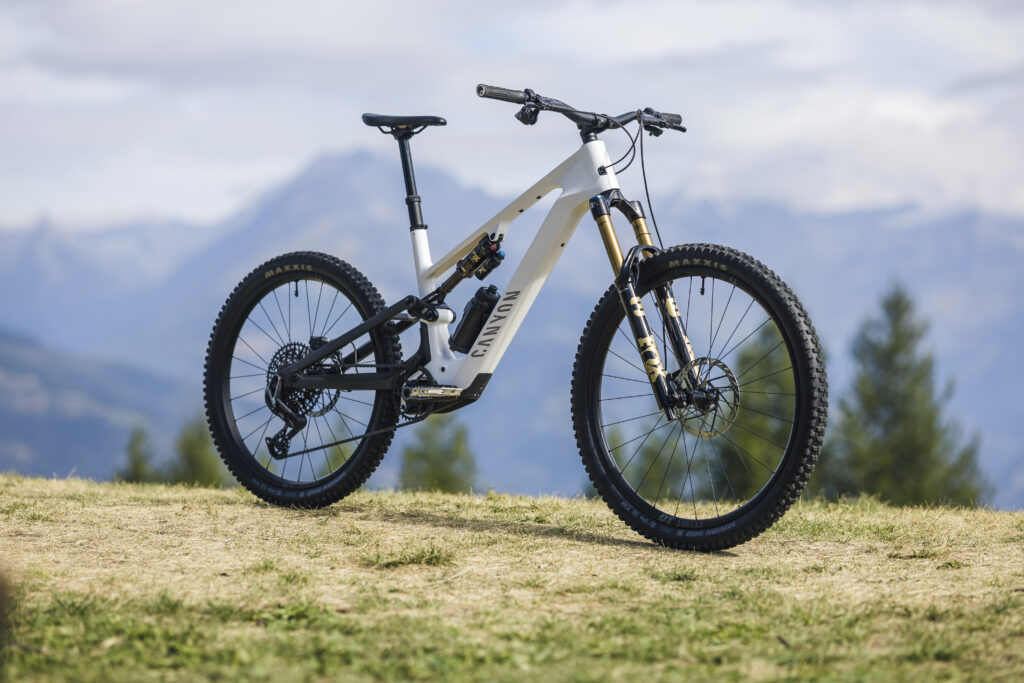
Frame: The main structure of a bike. Determines the handling, supports the rider and mounts all the components.

Freehub: Rear hub which includes the freewheel mechanism in its structure. The sprockets slide on to the freewheel and are held in place with a lockring. Has largely replaced the previous standard of a separate freewheel that screwed on to the rear hub.
Freewheel mechanism: Ratchet and pawl mechanism which allows the sprockets to spin freely in one direction and drive the hub in the other.
Fridge suck: The most powerful force in the cycling universe is the attraction between any small object dropped while working on a bike and the most inaccessible point under a nearby large object, such as the exact centre of the space under the fridge. This force increases with the level of groddiness of the crud under the fridge. It can be cancelled out for steel parts by the ownership of a magnetic pick-up tool.

Front mech: The gear mechanism or derailleur which moves the chain across the chainrings.
FTP: Functional threshold power, it’s the highest average power that you can sustain for an hour, measured in watts. If you want to get really good, best turn your attention to this key training metric.
Gear hanger: The part of the frame the rear mech is attached to. Usually part of the right hand side rear drop-out. On aluminium and carbon fibre frames, the gear hanger is removable so that a crash that damages it doesn’t write off the whole frame.
Gear range: The difference between highest and lowest gears.
Gear ratio: A measurement of gearing.
Gnarmac: Like tarmac, but gnarlier! This term was coined to describe a bike genre (and the places where you’re riding it) that falls in between road, cyclocross and mountain biking. Admittedly gravel kind of covers it, but if you want to impress connoisseurs of obscure cycling jargon then it’s gnarmac all the way…
Gravel bike: And that brings us on nicely to gravel bikes. While it might be obvious that a gravel bike is a bike that is ridden primarily on gravel, what that involves might not be so obvious to novices. Compared to a road bike, expect wider tyres (and tyre clearance), lower gearing, plusher bar tape and perhaps even flared handlebars, mounts to carry your gear and more relaxed geometry. Unless it’s a gravel race bike, in which case the geometry might still be quite aggressive, but that’s a whole other can of worms.
Groupset: All the components making up the drivetrain of your bike, and is responsible for essentially transferring the power from your legs to the wheels. It mainly consists of the crankset, the bottom bracket, derailleurs, chain, cassette, brake levers and the brakes.
Hairsine ratio: The ratio between the weight saved by fitting a lightweight component and its cost. Named for Jon Hairsine, a rider prominent on the early British mountain bike racing scene. When asked how much he’d cut off a new carbon fibre handlebar to trim its size and weight, Jon replied: “About five quid!”

Head tube: The short frame tube at the front of the bike between the top tube and down tube. The headset sits in the head tube and allows the fork to turn.
Headset: The steering bearing assembly.
High gear: High gears on a bike come from the combination of a large chainring and small rear sprocket. That results in multiple turns of the rear wheel for each turn of the pedals, allowing high speeds.
Higher/lower gear range: Road bikes tend to have higher gears overall, hence they are referred to as having a high gear range, while the lower top and bottom gears of a mountain bike mean that it has a lower gear range.
Hoods: The rubber grip to which the brifters are attached on road bikes, and where you’ll be keeping your hands most of the time when riding.

Hub gears: Gear system in which the mechanism is completely enclosed in the rear hub.
Hub shell: The outer part of the hub.
Hub: The central part of the wheel. The hub contains the bearings the wheels turn on, and the spokes attach to the hub flanges.
Hybrid: Bike with mountain bike gears and controls, and road bike size wheels.
Jockey wheels: The two small plastic wheels in the rear derailleur.
Knobblies: Deep-treaded tyres for riding off road.
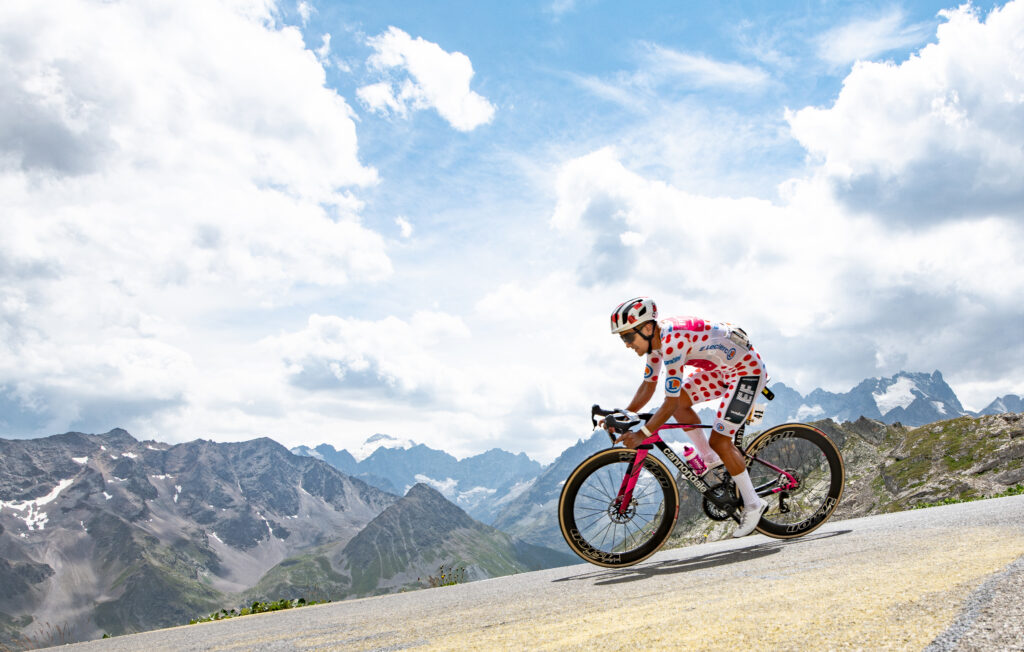
KOM: An acronym for the ‘King of the Mountain’. Originally this was the term for the winner of the Tour de France’s polka dot climber’s jersey, but it’s more commonly-used second meaning nowadays is Strava‘s use of the term to refer to the top performer on any of its many millions of segments. See also: QOM.
Labyrinth seal: Seal made up of close- fitting steel collars which, filled with oil or grease, create a labyrinth which is difficult for dirt to penetrate.
Lacing: The initial stage of wheel building. Also, the way in which spokes are arranged so that they go under and over each other.

Locking compound: Liquid used to ‘lock’ threads together. Loctite is the most common and comes in various grades according to the size of threads being joined and how permanent the attachment needs to be. Also known as threadlock.
Lockring: Large nut used to hold a part in place. Most commonly, the special nut that holds a cassette in place.
Low gear: Low gears on a bike come from the combination of a small chainring and large rear sprocket. That results in fewer turns of the rear wheel for each turn of the pedals, allowing low speeds for climbing hills.
Low riders: Front pannier rack that holds the panniers low, next to the front wheel hub.
Lube: General term for any lubricant such as oil or grease.
Lumen: Put simply, how much light you’ll get out of a bulb. The more the lumens, the brighter your light.
Lux: It indicates the brightness of your light over a given area. You can use Lux to compare the beam patterns of multiple lights, but you don’t really need to if it’s got enough lumens.

Lycra: General term for stretch fabrics used for cycling and other sports clothing. The name comes from the elastic fibre that’s woven in with another yarn such as nylon or polyester usually in a mix that’s about 18% Lycra and 82% nylon. While the term has become generic, Lycra is a DuPont trademark; other manufacturers refer to it as spandex and elastane.

Micro-adjusting seat post: Post that provides fine adjustment of saddle angle.
Neoprene: Waterproof, insulating synthetic rubber originally used for wetsuits; common in winter cycling overshoes.
Non-drive side: The left-hand side of the bike, away from the chain and gears.
Nylok: Nuts with nylon inserts to prevent them from shaking loose.
Open frame: A frame with a dropped top tube, often referred to as a woman’s frame.

Overshoes: Shoe covers for winter cycling that help keep your feet drier and warmer.
Power meter: An electronic device that uses gauges to measure pedalling force and from that calculate the amount of power the rider is generating as she rides. Typically built into the cranks, pedals or bottom bracket axle, sometimes in the rear hub or chainrings.
PR: Personal record, or your best attempt on a Strava segment, possibly well behind the crème de la crème KOM/QOM numbers.
Press-fit: Components that stay together because they have been forced, usually one inside the other, are said to be press-fit. The most common examples are bottom brackets and headsets.

Presta: Thinner valve usually found on road bikes and higher-end mountain bikes.
QOM: The ‘Queen of the mountains’. Either the top climber in a female professional race or, in the world of Strava, the top female performer on any given Strava segment.

Quick release: A mechanism in the hub which allows the wheel to be easily removed and fitted without tools. A rod passes through a hollow axle and is tightened with a cam lever that clamps the drop-outs.
Quill stem: Handlebar stem that inserts into the fork steerer, rather than clamping around it. Usually used in conjunction with a steerer and headset that adjust by means of threads on the outside of the steerer.
Q-factor: The width of a pair of cranks, measured at the pedal eyes; the distance between the outer surfaces of the cranks at that point. Some riders, especially shorter people, find they are more comfortable with a smaller Q-factor. Also used to designate the distance between the outboard end of the pedal thread and the centre of the pedal mechanism.

Rake: The distance the front hub is offset from the steering axis (also called fork offset).

Rear mech: The gear mechanism or derailleur which moves the chain across the sprockets on the rear hub.

Rim brake: Braking mechanism that acts on the side of the rim. Variants include side-pulls, cantilever brakes and V-brakes.
Rim well: The recess inside a rim where the spokes fit.
Rim: The outside of the wheel, on which the tyre is mounted.
Rollers: The bane of many, even some of the most experienced cyclists. It’s usually made up of three cylindrical rollers attached to a rectangular frame. The front wheel rests on one roller, while the rear sits on the two behind. It’s another way to train indoors, that is if you can manage to keep your balance.
Schrader: The type of valve usually found on car tyres. Used on some bikes, particularly cheaper mountain bikes, kids’ bikes and BMXes.
Scotty: The mascot of Zwift, looks like an arboreal rodent often encountered while riding (see: squirrel).
Screw-on freewheel: Separate freewheel mechanism that screws on to the hub body rather than being part of the hub structure.
Seal: Any part intended to protect a bearing or other fragile part from the ingress of water or dirt. Usually comprising a tight-fitting rubber ring, but see also labyrinth seal.

Seat post: The component that supports the saddle. Usually held into the frame by a clamp at the top of the seat tube, though some high-end frames have the seat post integrated into the frame as an extension of the seat tube.
Seat stays: The two thin frame tubes that run down from the seat-post to the rear wheel.
Seat tube: The vertical frame tube that runs from seat post to bottom bracket.
Shifters: The levers or other mechanism which activate the derailleurs.
Side-pull brakes: Brakes that attach to the frame above the tyre and are actuated by a cable at the side of the mechanism. Probably the most common brake design on road bikes, but increasingly supplanted by disc brakes on new bikes over around £1,000.
Sidewall: The sides of a tyre.
Sipes/siping: Grooves in the tread of a tyre intended to disperse water. Arguably unnecessary on bicycle tyres.

Slick/semi slick tyres: Tyres with completely or partially smooth tread for road riding.

Smart trainer: Also called turbo trainers, they are the same as an old-school trainer, but with added mechanics that emulate real-world conditions such as climbs, headwinds, and drafting. See also: Trainer.
Spoke nipple: The special nut that holds the spoke into the rim.
Spokes: Shaped rods that connect the hub and rim of the wheel. The tension in the spokes gives the wheel its strength and ability to support loads far in excess of its own weight. Spokes are most commonly made from stainless steel, but may also be made from titanium, carbon fibre and aluminium.
Spoking pattern: The arrangement of the spokes within the wheel, usually referred to by the number of times a spoke is crossed by other spokes.

Sprocket: A toothed wheel that meshes with a chain or toothed belt to transmit power from one part of the bike to another. Usually used to refer to those on the rear wheel; sprockets on the crank are called chainrings. Not to be confused with cogs, which mesh with each other.
Square taper: A design of bottom bracket and crank. The left and right cranks are separate from the bottom bracket axle. The ends of the axle are square in shape and tapered. Cranks mount via matching holes and are pulled into place with bolts. A tool called a crank puller is necessary to remove a square tape crank.
Squirrel: Arboreal rodent often encountered while riding. (Happy now, hawkinspeter?)
Stack and reach: The vertical and horizontal measurements from the centre of the bottom bracket to the top of the head tube. The most accurate indicator of how a bike will fit, but still only gradually coming into widespread use.
Steel: An alloy of iron and carbon, often with other elements added to tailor its properties. There are many varieties of steel, from simple carbon steel, composed of just iron and carbon, to alloy steels used for bike frames which usually have chromium, molybdenum and manganese alloying elements.
Steerer tube: The upper tube of the fork. Sits inside the head tube and is held in place by the headset bearings which allow it to turn. The handlebar stem attaches at the top of the steerer, clamping inside or around it depending on the design

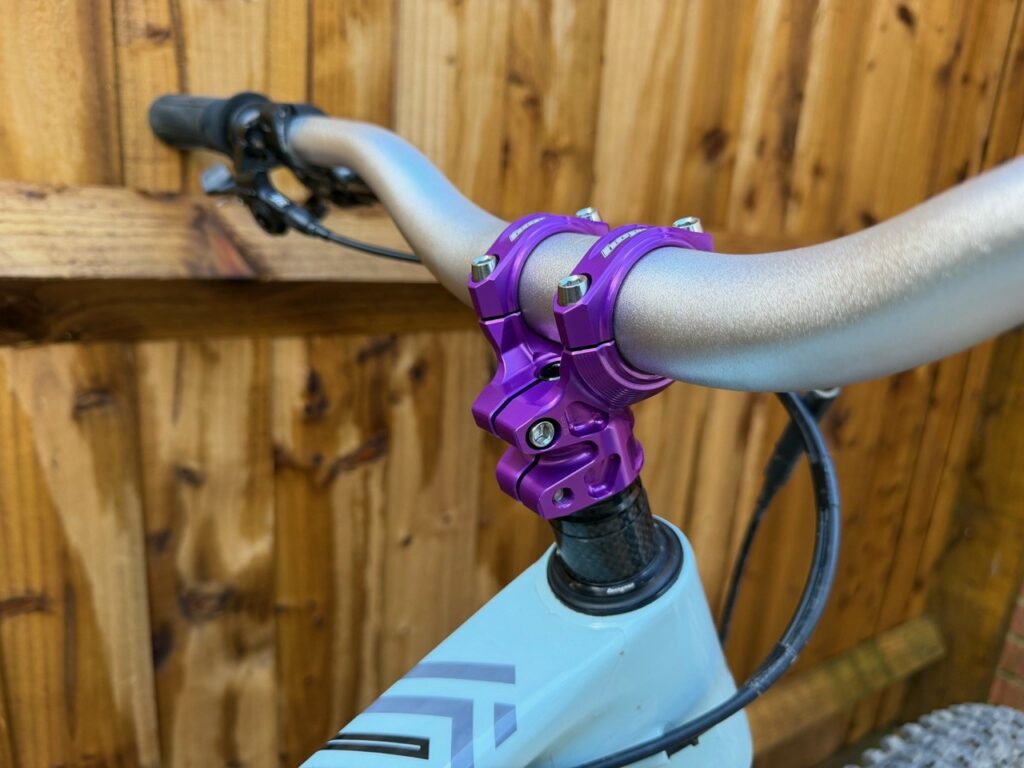
Stem: The component that joins the handlebar to the fork, aka handlebar stem. Old-style handlebar stems fitted inside the steerer; modern stems clamp around it.
Teflon: Very slippery polymer, also known as polytetrafluoroethylene (PTFE). Often used as very fine particles in bike lubes, it’s the same stuff used to coat non-stick pans.
Threads: The helical grooves in a screw or hole that a screw fits into.
Thru axle: A thru axle goes in between the dropouts, which are crucially closed instead of being open, providing more secure wheels. They usually have a built-in lever which allows you to swap a wheel without needing any tools.
Titanium: High strength to weight ratio metal used for bike frames and parts.
Toe overlap: A toe overlap is when you turn your handle too much on one side and the wheel ends up touching your toe on the other side. Don’t worry too much about it — if you’ve got a well-fitted bike, it will only annoy you when you’re almost at a standstill pace, say when turning your bike to get going again. You should never face toe overlap at higher speeds because you wouldn’t be turning so sharply then, but if you do, you’re most probably on a size too small for you and need to get another bike.
Top tube: The horizontal frame tube that runs from handlebar stem to seat post.
Track pump: Floor-standing tyre pump.

Trail: The horizontal distance from where the front wheel touches the ground to where the steering axis intersects the ground, as shown in the above diagram. Trail affects handling; more trail makes a bike more stable at speed.
Trainer: They allow you to, well, train from the confines of whatever place you set it up. Just pop out the rear wheel of your bike and attach it to the stationary device, and you’re good to pump in those crazy numbers without worrying about the weather outside. (If you don’t like watching the paint dry on your walls while cycling, see Zwift and smart trainer).
Transmission: The complete gear system; chainset, derailleurs, sprockets and chain.
Tread pattern: Any shaping, embossing or grooves in the tread of a tyre.
Tread: The section of a tyre that contacts and grips the road surface.
Tron bike: An imitation of the bikes with neon glowing wheels from the legendary sci-fi movies in Zwift. Only the best Zwift climbers get to show off their cool rides.
Tubeless: Tyres that have no inner tube but retain air because they fit very tightly on the rim, the rim is sealed by a special rim strip and the tyre either has an internal rubber coating or contains a liquid sealant that both coats the tyre and seals small punctures.

Tubular: Tyre that has the tyre casing sewn around the inner tube and is held on a special rim with glue.
Tyre bead: The wire round the inside of a tyre. As well as supporting the tyre shape, the bead hold the tyre in place on the rim. In most tyres the bead is made of steel; in lightweight tyres Kevlar is used to save weight, which also makes the tyre easy to fold for storage.
Tyre seat: The part of the rim where the tyre bead sits. A properly fitted tyre is therefore correctly ‘seated’.

U-lock/D-lock/Shackle lock: The highest-security bike lock design. An enlarged padlock with a locking mechanism in a hollow cylinder that engages the ends of a solid U-shaped bar.
VAM: Velocità ascensionale media, or Italian for average ascent speed, is used to measure how quickly you’re going uphill. Usually noted in metres per hour.

V-brake: A rim brake with vertical arms, actuated by a cable that pulls across the top of the arms. Fits on the same mounts as a cantilever brake.
Watopia: A mythical, apocryphal island with dinosaurs, volcanoes and a counterfeit Alpe d’Huez. It’s always there for you to go out for a spin when you switch your Zwift on.
Wheel dish: The offset from the hub flanges necessary to centre the rim in the frame.
Wheelbase: The distance between the centres of the front and rear wheel. A longer wheelbase makes the bike stable and you’ll find it on most urban or mountain bikes. A shorter wheelbase creates stiffness and makes the bike more twitchy and responsive to steering inputs. You’ll most likely see this in road race bikes.
Wheelsucker: A rider who enjoys drafting, or sitting behind the wheel of a rider, but doesn’t switch places to take the winds and do his bit in a group ride. Don’t be a wheelsucker, because they mostly suck.
Woods valve: Tyre valve with a removable mechanism held in place by an external collar. The top thread is the same as that of a presta valve, so threaded pump adapters can be used, but it’s usually too short for a press-fit or clamp-on pump head such as those usually found on track pumps. Also known as a Dunlop valve or English valve, though they’re now very rare on anything but utility bikes intended for the Netherlands market.

Zwift: An online multiplayer game which allows you to train indoors without getting bored to death. It’s a virtual landscape which mimics real-world geography with the help of a smart trainer. Other virtual cycling apps are available, such as Rouvy, MyWhoosh and TrainerRoad.
Zwifter: Someone who trains on Zwift. In other words, Zwifts.







27 thoughts on “A-Z of cycling jargon: Find out what over 150 strange terms really mean”
Friction or downtube shifter
Friction or downtube shifter – cool retro gear selector that will outlive any brifter (qv) around today
butt (butted tubing) see also steel – practice of making a frame tube thicker at either end; original and best material for building bike frames that will still be going long after most CF frames have been retired
(Non aero) brake lever – cool and retro; see also cheap
cyclo (bag loop) – clamp-on to saddle rails to support Carradice saddle bags
ssssst (onomatopoeia) – (1) sound of air escaping from a tyre or inner tube (2) rider reaction to cost new disc brake pads
gravel (prefix) item will be 25% more expensive
Nice glossary, needs some
Nice glossary, needs some reading.
Stopped at brifters to write this comment, as Sensah brifters are also a different kind, no seperate paddle, no buttons, just the main lever, push it slightly to release cable, push it more to pull cable, pefect for thick gloves.
Now components prices have gone a little crazy, it is kind embarrasing that Road.cc doesn’t review cheaper alternatives in drivetrains that make almost half the cost of the bicycle.
cyclisto wrote:
Reporting is at least a start…
https://road.cc/content/tech-news/budget-groupset-going-take-over-shimano-di2-300065
It is a good start indeed but
It is a good start indeed but electronic is still expensive for the commuter who just wants to start cycling to work. I see though some crazy prices on L-Twoo, for more basic mechanical groupsets that could really bring down the cost of entry level commuter bikes, it would be very interesting to start both report them and review them.
Surely clipless pedals
Surely clipless pedals referred to the clip that was on the shoe? The pedals were fairly standard, other than a slot for the shoe clip to clip into?
ICBW I guess…
The clip referred to the
The clip referred to the metal bit atached to the pedal going over the toe of the shoe. The cleat was a slotted leather and metal bit nailed to the shoe. All brought together by the toe strap around the ball of the foot. You could also get half clips without provision for a toe strap for use with street shoes. They stopped the foot slipping off the front of the pedal. The greatest advance of clipless pedals was no hands release. Not much more embarrassing than forgetting to release the toe strap before stopping at a busy intersection and slowly falling over unable to put a foot on the ground.
Paul J wrote:
Clipless as in no toe clips. To my mind one of the greatest innovations of cycling in my 40 odd years riding road bikes, I would sooner go back to friction shifting and give up indexed gears than go back to toe clips.
Edit: sorry I answered this before I saw it was already answered!
I’d say that a fixed gear
I’d say that a fixed gear bike, or fixie, is a bike with only one gear and no freewheel, as opposed to a single speed bike, which still has only one gear but does have a freewheel. Fixies are popular urban bikes because of their simplicity.
A flip-flop rear wheel has a fixed sprocket on one side and a free-wheel sprocket on the other. Changing from one to other requires removal of the wheel and refitting the other way around. In the early days of bike racing, fixed sprockets of different sizes were fitted on each side of a wheel, providing a lower gear for long hills.
Horizontal drop-out – a drop-out that is not necessarily horizontal but allows the fore and aft position of the rear wheel to be adjusted to tension the chain on a fixed or single gear bike
Quote:
No it isn’t, a bike with “no gears” (in fact one gear) is a single speed bike, it can be fixed or freewheel. A fixed gear bike is one where the gear cog is fixed to the wheel and cannot spin independently of it; when freewheels were first invented they still only had a single cog. It’s also possible to have a fixed gear bike with more than one gear, for example with the Sturmey Archer ASC fixed wheel three speed hub gear.
Rendel Harris wrote:
Sprocket, apparently.
OnYerBike wrote:
Well…a cog is a word for a tooth on a sprocket but it can also be short for cogwheel, a toothed wheel that engages with another toothed wheel or a chain to transmit motion…but apparently it’s more American and the manufacturers say sprocket so I accept the correction!
“Cockpit: Term for the
“Cockpit: Term for the handlebar and stem, and sometimes the saddle and seatpost too, used by pretentious cycling writers who feel the strange need to give the impression they’re flying a fighter plane rather than riding a bike.”
Hee hee hee. I now feel that you should define “weapon of choice”, “slammed” and “pulled the trigger” . Then there’s “revealed”, “breaks cover” and “teased”. Don’t hold back on the withering sarcasm, mind! I wouldnae. 🙂
“Squirrel: Arboreal rodent often encountered while riding”.
This is incorrect, as its shorthand for , “To squirrel away” as in stuffing another N+1 into the bike shed with the rather large collection of N; or another now-redundant gubbins that worked perfectly well but has been replaced by a different and more expensive one that may not work so well but has the current bling on it.
Like the squirrel’s nuts (not those nuts) these items often move slowly to the bottom of the heap at the back o’ the shed then moulder and rot. Sometimes the squirrel rediscovers one before it rots away then extracts and polishes it with a glad cry of, “Its retro & cool!”, casting aside the rather better one designed and made 30 years later.
I nearly ran a squirrel over
I nearly ran a squirrel over on Sunday when it scuttled across the road and then for some reason turned back towards my path but I swered. Not the first time that’s happened
They have gone mad for the
They have gone mad for the past couple of weeks. Throwing themselves at my wheels…
ktache wrote:
Look at this; accident blackspot? These aren’t accidents, they’re throwing themselves into the road! Throwing themselves into the road gladly to escape all this hideousness.
[Heckles squirrel] Throw yourself into the road, darling, you haven’t got a chance!
Surreyrider wrote:
They’re not as bad as the sheep+lamb, that do the same only with more vigour & vim (and mass). Sometimes a small flock of the buggers do it, in various directions that are not predictable.
The worst are the ones hiding in the roadside ditch as they leap out when you’re only 4 feet away. Even at 5mph they can get you!
There’s also the hedge-to-hedge swooping blackbirds. I’ve often had one in the lap. They give you a fright and you might wobble on to the verge or into the hedge. They sit briefly in your lap looking up with an evil and beady eye before flapping off in an ungainly way.
Quote:
Diamond frame: Frame design which – like New York City to its inhabitants – seems like the entire universe and where all the most exciting inventions happen, but from an external perspective is just one small place in design space and where 99% of the developments had taken shape around a century ago.
chrisonatrike wrote:
Diamond frame: Frame design which – like New York City to its inhabitants – seems like the entire universe and where all the most exciting inventions happen, but from an external perspective is just one small place in design space and where 99% of the developments had taken shape around a century ago.
I did happen across an interactive website a while back that explores the simplest possible bike frame design and lets you play around with the strength/flexibility of them with different tube widths. It then adds in the additional strengthening tubes and you end up with the diamond frame being the strongest and stiffest for the lightest total weight, so there’s a good reason that design is ubiquitous.
Unfortunately, I haven’t found that website again.
Edit: Found it: https://ciechanow.ski/bicycle/
It goes into a lot more detail than just the frame.
Edit: edit: hadn’t spotted that I was namechecked in the article. Yes, that’ll do nicely.
Yep – the double (or triple)
Yep – the double (or triple) triangle design’s just great. (As is that site – I think you’d shared it before). Indeed, so good was the whole system decades back that I’d say the real brilliance in the bike industry is in marketing – selling for premiums things with imperceptible differences, or that are only fractionally “better” than the basic ones…
Frame size: The size of the
Frame size: The size of the frame, measured from the bottom bracket to the insertion of the seat post; determines what size of person the frame will fit.
May have done once upon a time, now more likely to refer to virtual top tube length of a road bike but you just don’t know without seeing the geometry chart…
I just took the reader survey
I just took the reader survey and it asked me if I had ever been bike packing and I must admit I wasn’t sure. I have been touring quite a bit but never quite sure what counts as bike packing. I think this probably means I am old.
Came here to check what definition road.cc uses and it’s missing 🙁
You forgot to say “sponsored
You forgot to say “sponsored by Zwift.”
Zwift isn’t cycling jargon in any way, shape or form.
Surreyrider wrote:
Zwift isn’t even cycling – no balancing, steering, braking or going anywhere for example. Where are the car loons to test one’s abilities to jig, dance and cavort about the road so as to avoid their prang potential and purple prose?
No squirrels, sheep or blackbirds to deal with either. Not even a prattle gizmo-gazing kamikaze pedestrian.
Daft. Yes, daft.
Half-wheeler
Half-wheeler
Weight weenie
Aero weenie
N+1
Dive bomber/bombing
Chamois
Chopper
Nodder
MAMIL
Sponsored by Zwift
Dork Disc is missing
Dork Disc is missing
KDee wrote:
Well, if they’re missing (and they are on every bike I see these days) no need to list them in an A-Z, innit.
Spokey dokeys?
Spokey dokeys?