Gee Atherton already has two rainbow jerseys hanging in his house, scored from his two world downhill titles, and there’s a whole lot more racing bling stashed in there too, such has been his illustrious gravity-defying racing career. However, he’s recently become better known for his riding films, where he attempts lines that we mere mortals shudder at the thought of. We sat down with him to learn about his most recent film, Ridgeline VII Nepal: The Last Kingdom, and others in his portfolio.
- Dan Brown – the Man Behind the Atherton Project
- Video: Gee Atherton rides insane ridgeline in the Dolomites
- Red Bull Hardline track preview with Gee Atherton
Stashed away in dark corners of his memory box are a list of absolutely evil crash records; the kind of stuff that would kill most mortals. Most of us have seen these crashes online, and they’re truly scary stuff.
Despite these, Gee gets back up, time and again, and over the past few years, he has embarked on a filmmaking project, where he tackles some of the gnarliest remote terrain on earth. We spoke with him to learn more.
off.road.cc: How much of a learning curve has the big mountains project been for you personally, with going from being a downhill racer to big and open mountains, pushing outside of your comfort zone?
Gee Atherton: Absolutely; it’s been quite a learning curve, and very much a learn on the job scenario. We’ve progressed quite a lot with each project. After each one, it’s “okay, we’ve got through that, let’s push somewhere a bit further and a bit harder”.
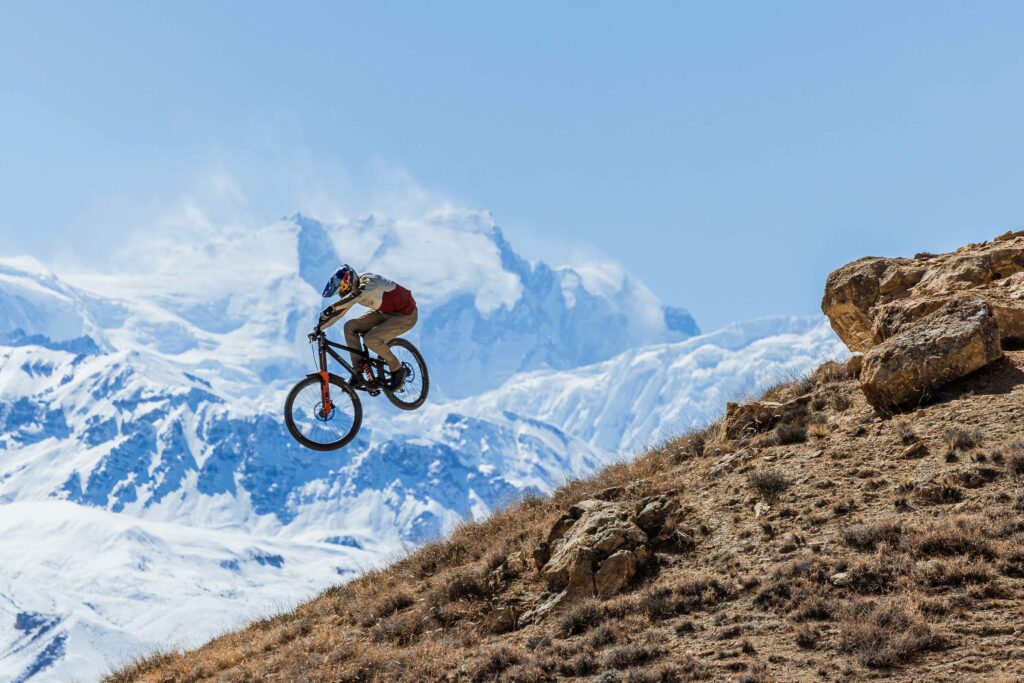
When you jump up to altitude or go more remote, it comes with a whole host of new problems. That’s tricky, because you’re learning whilst you’re filming and riding, which is quite intense. None of it is stuff I’ve done before, like the last trip (secret recce) was crampons and oxygen at very high altitude. You just have to adapt as you go, figure out the problems as you go and take it all in your stride.
The search for eastern promise
ORCC: How do you find the locations? With regional regulations, etc., do you call in local help too?
GA: That’s tricky. Early on, we were doing scouting trips and spending a week hiking and searching, which is okay when it’s the UK and Europe. But once you get further afield, like with the recent Nepal trip. We were travelling three to four days just to get there, so a scouting trip was out of the question.
Finding someone local on the ground makes such a difference. With Nepal, we were so lucky in finding a guy called Subodh who operated a trail company. He and his guys were really great and knew the area really well. They knew what we wanted and did numerous scouting trips, which made things so much easier.
ORCC: In many countries, filming, especially with drones, is very restricted, often to nationals only – how do you work around this stuff?
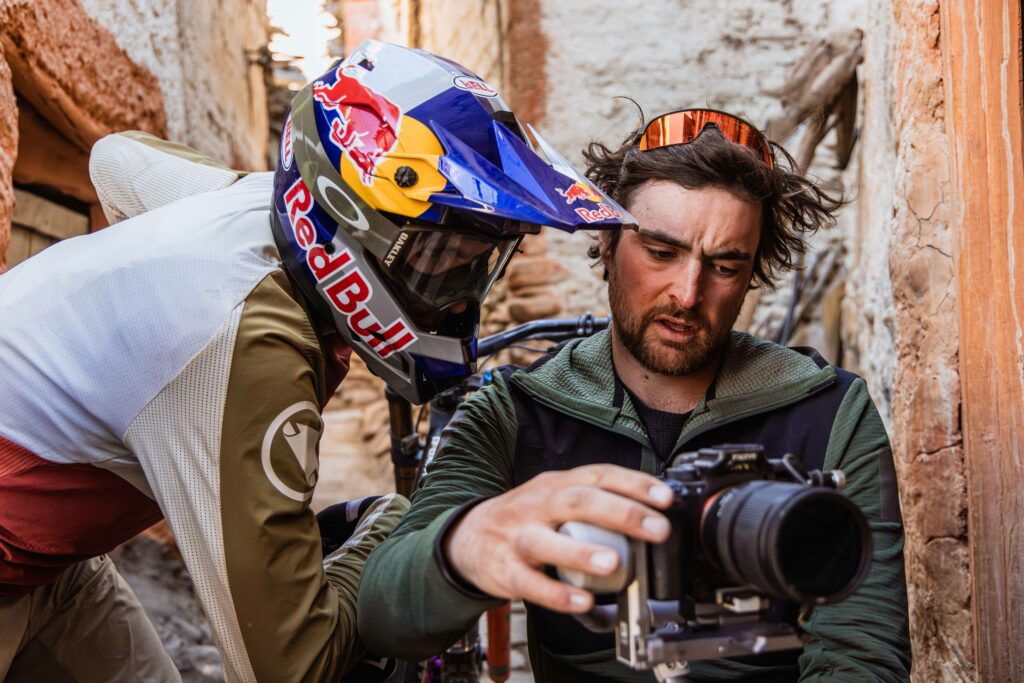
GA: In Nepal, Subodh and some of his crew were filming and flying drones, which made it a bit different. We would treat each location as a new project and would go to the local villages, where Subodh had great contacts and would meet the people in charge and local characters, go to their houses and have dinner with them. It was very important to get those local connections and get a bit involved with the communities, not to give the impression that we were just bowling into town, filming and moving on.
This was very valuable, and I think they appreciated – which gave us the permissions to film in spots we might have otherwise been able to get to.
ORCC: Where did you go and what did you do in Nepal?
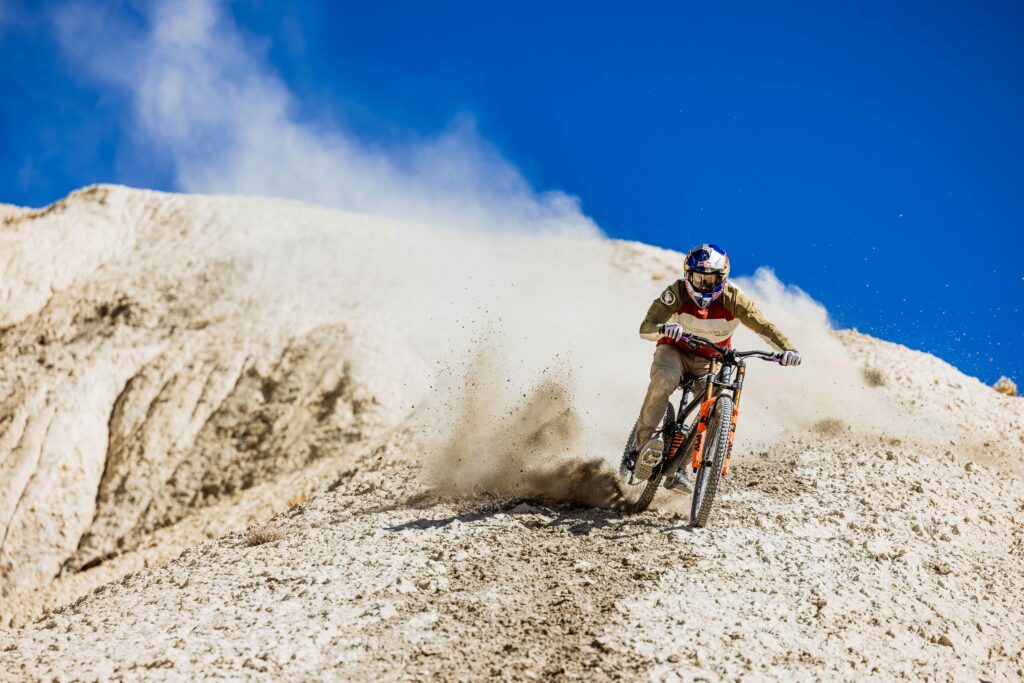
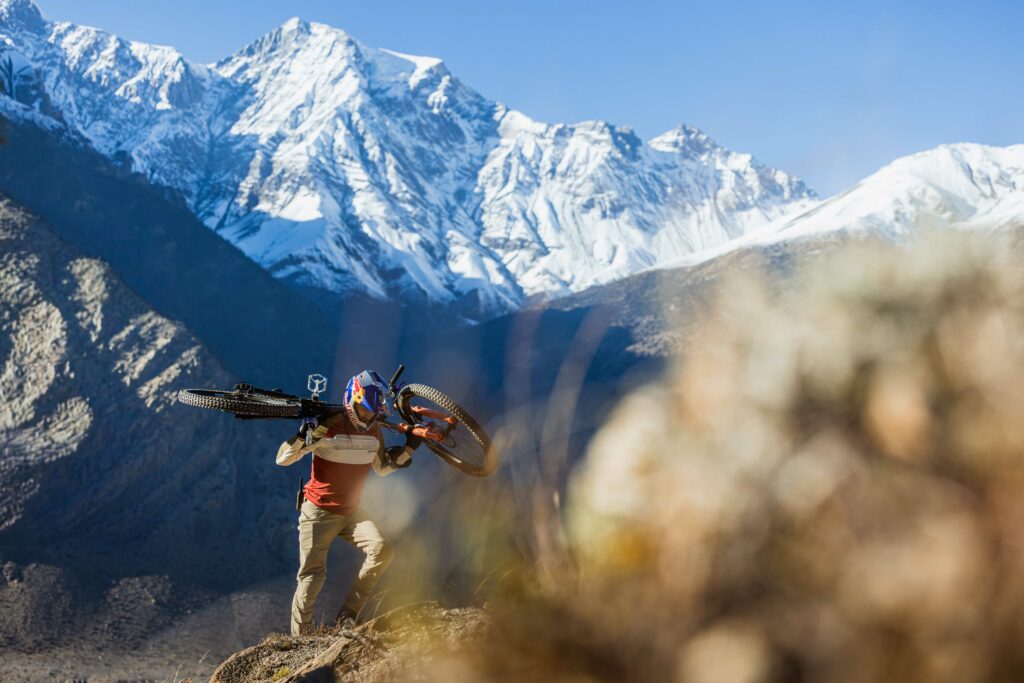
GA: We landed in Kathmandu and headed up to Pokhara and then up to Jomsom (Lower Mustang). From there, we drove north to Upper Mustang, so we were really deep into Nepal at this point, only 30-40km from China/Tibet.
ORCC: With location, restricted and expensive permits and group regulations, Upper Mustang is an expensive and unusual place to visit. What do these trips bring to you from a learning and cultural point?
GA: We had to get the permits and access – and they are strict with it – with a checkpoint checking people in and out (of the region). That’s what Subodh and his company do, so they linked us up with the right people and pointed us towards the right permits, etc.
It was quite expensive, but worth every penny. It is harder and more hassle going to these places, but it felt like we were somewhere not too many people had been, and we didn’t see anyone else on a mountain bike for the entire trip. That’s what we want to do with these projects, to go to places where people don’t really expect to see us.
The more remote you are, the more problems that come with it, but it was probably one of the most beautiful places I’ve been to. It felt like we were in a little corner of the world that had almost been forgotten about in some respects.
ORCC: Was the trip all at high altitude?
GA: We travelled around a lot, and it was around 4-4,500 meters above sea level. We were okay with that, just had headaches and tried not to rush around too much. We were up in Lo Manthang and beyond. We travelled around a huge amount, and at the end of the trip, we still had a few days left, so we drove around the entire base of Annapurna just to ride these rock slopes we’d seen, which was around 25-26 hours of driving.
Where eagles dare
ORCC: Your Kazakhstan ride was a bit of a wild one – how did you come up with that idea?
GA: We’d seen a couple of locations that looked incredible, which caught my attention and drew me to it. We were just trying to explore more areas of this kind of mad little corner of Kazakhstan we’d found on a scouting trip (which was important for that one).
We landed in Almaty and headed off into the desert for seven to eight days, just driving around and looking at crazy locations. It felt like we’d been dropped into a world completely different to the one we were used to. It was an amazing experience. While scouting around, we thought it was going to be really remote to try and do a riding edit in, because it was hours and hours between any villages or towns. It was probably one of the trips I enjoyed the most, in the end.
The Italian job
ORCC: The Dolomites film was pretty unnerving to watch, and it looked like one clip of the bars would mean game over for you. With having had some very bad accidents in the past, how do you risk assess things? Are there any safety nets (so to speak)?
GA: The Dolomites was definitely one of the more dangerous trips. It didn’t take long to realise that it was quite black and white; if you did make a mistake or crash, there were no injuries or warning shots. It was a dangerous place to film a project.
We tried not to re-do shots or do things to death. We tried to be quite efficient with it and not chase those fractional and slightly better shots by taking massive risks.
I enjoyed the Dolomites; it was a stunning place to ride and film in, and it was quite efficient to film in because there were so many places to shoot. We ticked it off and did a really good job, but it did feel risky, and I wouldn’t go back and keep doing it.
Crash and learn
ORCC: With having had some very serious accidents, how do you manage to get up and do things again – and do you approach things differently now?
GA: I definitely do. I think with all of those crashes and even the near misses, you have to learn from them. I would be stupid just to ignore them and carry on as before. The crashes are never good, and there’s never a good side to them. But if you can take something from them and learn a bit…
Some of those bigger crashes, perhaps, were important because with the big mountain project, they showed me that there’s almost no ceiling to the scale of the crashes you (potentially) could have.
Once you leave those relatively safe race track environments and go into the back country and bigger mountains, you do have to be more careful, take fewer risks, and try not to push yourself to the very edge of what you’re capable of. Because when things go wrong, they do tend to be on a bigger scale there.