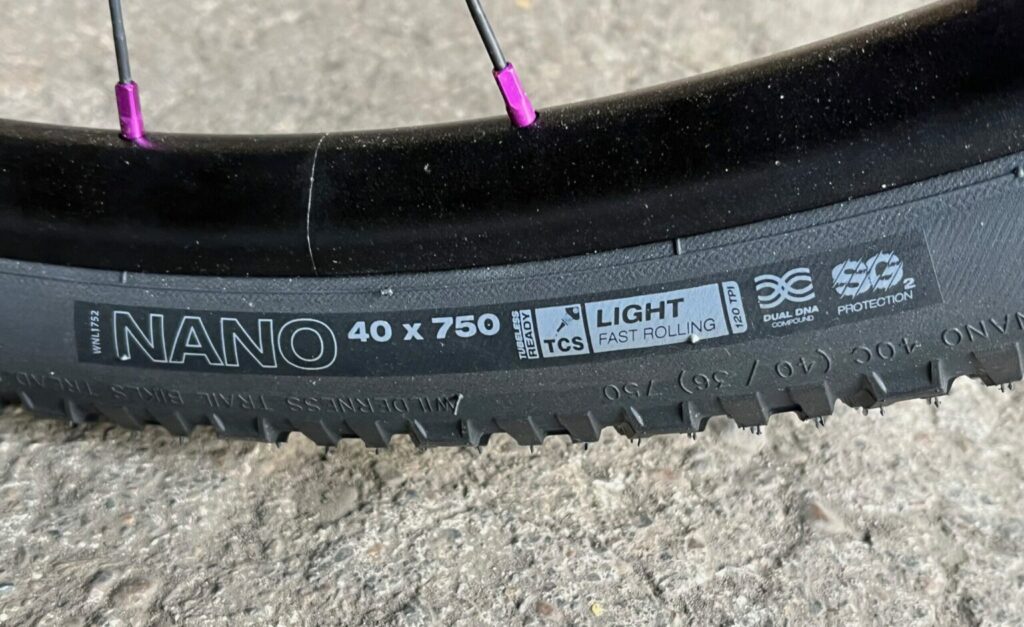

At this year’s SBT GRVL, Moots and WTB took centre stage by showcasing an innovative prototype gravel bike with a fresh wheel standard – the 750d – that’s poised to redefine the gravel biking experience – if it ever makes it into mass production.
- 27.5 vs. 29-inch wheels – understanding the differences
- How 26″ wheels are still turning out the fun
- Best gravel wheelsets 2023 – fast and furious off-road wheels
The cycling industry is no stranger to wheel-size revolutions and the Moots titanium Routt CRDD gravel model rolling with custom 750d WTB KOM Light i25 rims and Nano Raptor tyres has left the community divided. But before you grab a pack of paracetamol, let us unpack what exactly the 700d signifies.
What is the 700d wheel size?
Gravel riders have become well-acquainted with the most common gravel wheel size classifications like 650b and 700c, which borrow their naming from the French sizing convention. In simple terms, the numeric component corresponds to the approximate wheel diameter alongside the installed tyre.
For instance, a standard 650b or 27.5-inch rim in reality measures 584mm in diameter from bead to bead. In comparison, the conventional 700c rim registers at 622mm. The experimental 750d wheels oust these measurements, boasting a bead-to-bead diameter of 660mm – and some also refer to it as the “30-inch”.
The existing 700c and 29-inch tyre sizes share the same rim diameter. However, the overall wheel and tyre combination size in a mountain bike configuration is larger due to mountain bike tyres being wider – which is why they often would not fit narrower 700c wheels. The 750d wheel wrapped in gravel tyres would sit in between these, offering an overall diameter mirroring that of a 29-inch mountain bike wheel.
So what sets the 750d standard apart then is obviously its pronounced diameter, and consequently, the potential advantages that brings.

What are the benefits?
Much like 29-inch mountain bike wheels, the larger-diameter gravel hoops should navigate rugged terrains with greater ease thanks to an expanded contact patch and heightened momentum.
The larger wheel size could also be a valuable option for taller riders, an idea that has already been advocated by some custom bike builders. Similarly, 750d is bound to not be the best choice for small frame sizes no matter how significant the rolling advantages are.
Whether the 750d standard will flourish into a full-fledged industry standard remains to be seen, but its debut undoubtedly adds another chapter to the ever-rolling story of wheel innovations.