



Shimano has seen its profits more than halve despite a small increase in net sales, as the company continues to be buffeted by the global downturn in the bike industry.
In 2025, Shimano recorded net sales of ¥466 billion (£2.23bn), an increase of ¥15bn on 2024. However, when historical currency exchange rates are applied into pounds sterling, those figures represents a year-on-year sales decrease of £30 million. Net income has meanwhile shrunk by 55 percent from ¥76bn (£360m) to ¥34bn (£160m).

Presenting the financial accounts, which also includes the company’s fishing tackle division, Shimano described the economic year as “cautious due to trade policies around the world and rising geopolitical risks”, identifying “prolonged international conflicts that created a sense of uncertainty in the current economic conditions.” They went on to detail the United States’ “economic standstill due to rising prices caused by tariff policies and a slowdown in the labor market”, and China’s “prolonged recession in the real estate sector and a slump in personal consumption” as reasons for the company’s tough year.
And whilst the bicycle industry remained “strong”, an “adjustments of market inventories” among retailers were cited as reasons for the more moderate increase in bicycle component sales of 2.7 percent.
Shimano’s profit decrease was not unexpected after the company downgraded its economic forecast lust summer, and its accounts published last quarter pointed towards weaker profit margins and persistent inventory challenges.
The full-year accounts are also the first full year following the reputational damage caused by the recall of its Hollowtech II crank. Last year’s accounts showed a recall and inspection operation cost £70m.
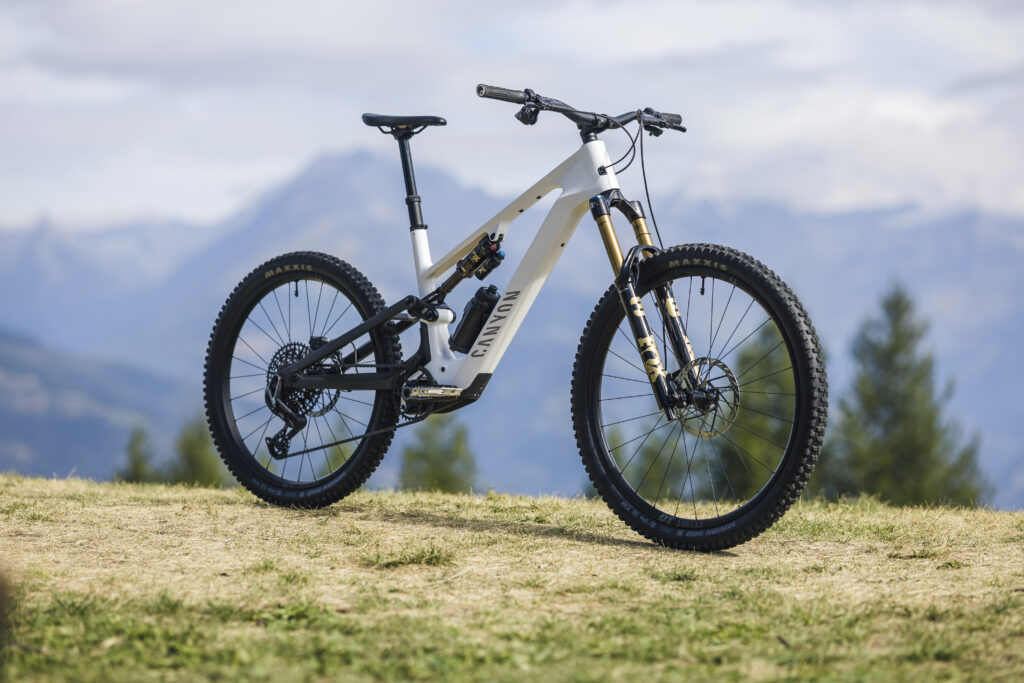
Shimano are not the only brand to have blamed tariffs and geopolitical tensions for their financial difficulties. Alpkit, owner of Sonder Bikes, briefly entered administration last month before being bought out by bought out by new owners who retained the existing management structure. Canyon also announced it was axing 320 jobs as part of “efficiency measures” since returning to its original ownership and have slashed the company’s valuation.
And the Japanese manufacturer aren’t predicting calmer waters for 2026, continuing to warn of “geopolitical risks amid global instability”, and a “sense of economic uncertainty” in the USA. The business are preliminarily forecasting an 0.2 percent increase in net sales to ¥467bn, of which ¥350bn (£1.68bn) will come from the bicycle components division.
> “The cycling industry needed a good shake-up”: Can bike brands finally breathe again in 2026?










2 thoughts on “Shimano profits slashed in half despite slight sales rise as company blames “weak demand” and rising geopolitical risks”
I would be so curious to see Shimano’s profit breakdown by groupset. It feels like they’ve completely abandoned the low end of the market by pricing it up to mid-range. Can you even get cues bikes now at the same price point of claris and sora ones from a few years back? I haven’t seen any.
Shimano don’t help themselves by constantly changing groupsets, making earlier groupsets obsolete and charging crazy prices for some components. People don’t have bottomless pockets, most cyclists will buy a bike and use it until components wear out, then replace the worn part. Most haven’t got the luxury of being able to chuck a wad of cash at the new groupset/ wheels etc.
I have a couple of good sets of handbuilt wheels in the shed, their only issue is the Shimano sealed free hub has sticking pawls. They cannot be stripped and replacement free hubs are obsolete. I am not going to have new rear hubs built into them so they’re in the shed, such a waste.
The cycle industry seems full of companies which completely change their products every year. Why not keep a successful groupset running for a number of years instead of months, and why do clothing companies such as Assos need to reinvent their jersey styles every year? And expect people to part with £175-£200 for a short sleeve jersey? And so it goes on.