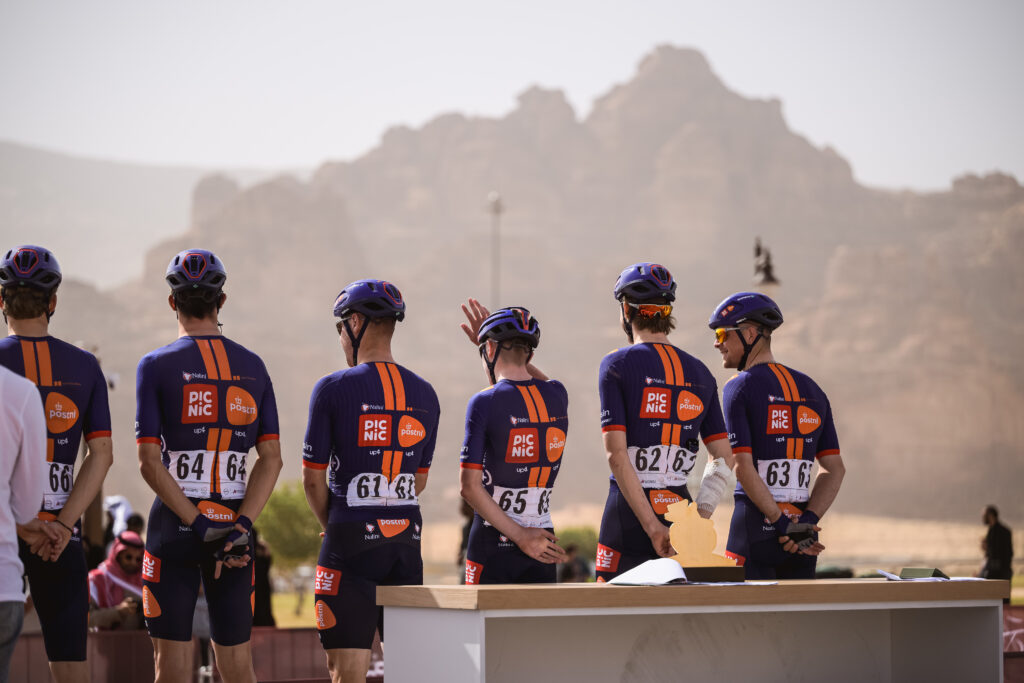

This week’s explosive investigation into an alleged “culture of fear” at Picnic PostNL has been criticised by one of the WorldTour squad’s sports directors, who claims the accusations are “unfair and unjustified” and potentially based on personal grievances.
On Thursday, Dutch broadcaster NOS and podcast In De Waaier published an intensive investigation into the working environment at Picnic PostNL, based on “confidential conversations” with 71 past and present riders and staff.
Those conversations revealed allegations of a “toxic” and “oppressive” culture and “unsafe working situation” at the Dutch team, which left employees feeling “traumatised” and “anxious”, and one rider, former pro Martijn Tusveld, admitting he contemplated self-harm.
Following the report’s publication, Picnic PostNL announced that it will commission an independent investigation into the team’s culture, while insisting that it does not “recognise” itself in the “overall picture” presented by NOS and In De Waaier.
> Team Picnic PostNL deny “toxic” allegations, announce independent commision
Formerly known as Skil-Shimano, Giant-Alpecin, Sunweb, DSM, and a host of other monikers, Picnic PostNL, in its various guises, has been a constant presence in the peloton for almost two decades. In the mid-2010s, the team became a dominant force in the sprints courtesy of Marcel Kittel, before pivoting to grand tour success, winning the 2017 Giro d’Italia with Tom Dumoulin.
The investigation comes following a turbulent season for the Dutch squad, owned by Iwan Spekenbrink and run by Rudi Kemna, after its men’s WorldTour team managed just three victories and its women’s team failed to win at all.
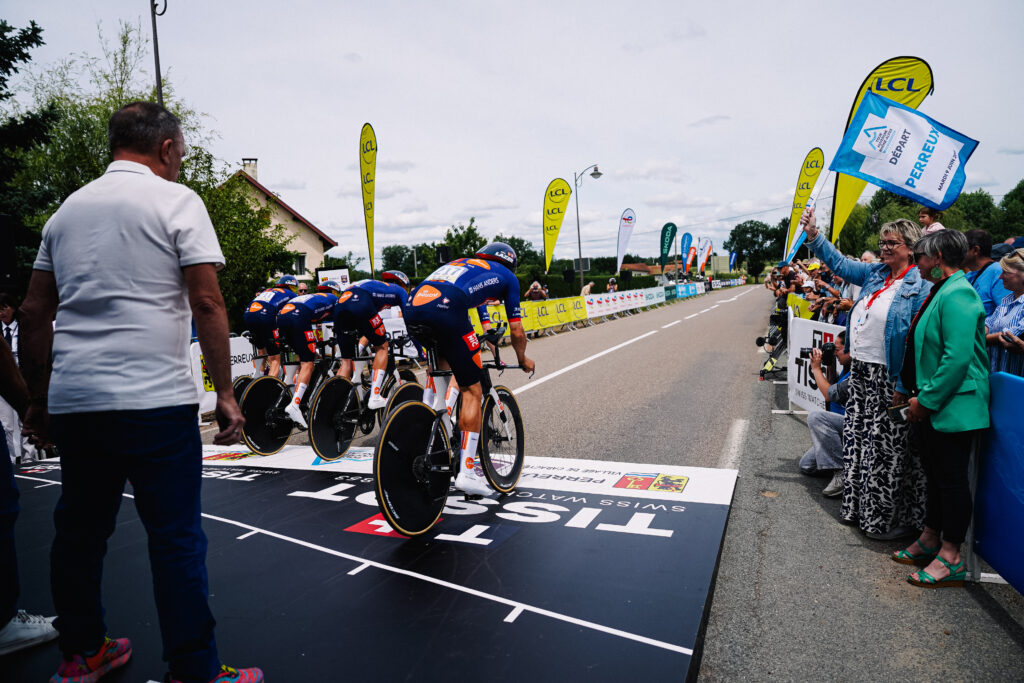
Speaking to NOS, 33-year-old Martijn Tusveld, who raced for the team between 2018 and 2024 before retiring at the end of the last year, claimed he was told by management that he was creating a “negative atmosphere” after he criticised the squad’s tactics at the 2020 Giro d’Italia. Tusveld said he was then sidelined from races, making him feel “powerless”.
“I became anxious,” he told the Dutch broadcaster. “I thought: I’ll keep my mouth shut and say yes and amen. And I did that for the rest of the years with this team. I also thought about harming myself.”
The report also alleged that other riders left the team – known for its strict protocols – feeling “traumatised” by a “stifling” culture of fear. One former rider told NOS that, after admitting he wanted to speak to a psychologist after struggling mentally, was told by Kemna: “I don’t believe in psychologists”.
Other former employees complained of a lack of appreciation of burnout, little trust between staff and riders, and a fear of losing and paranoia that crept in following the success of Kittel and Dumoulin.
There were also claims that communication channels were deliberately cut between riders and their trainers, and that employees were treated as “robots” and were not allowed to express individuality by a top-down “tyrannical” leadership described by Dumoulin’s former coach Adriaan Helmantel as a “dictatorship”.
However, speaking to road.cc, sports director Callum Ferguson criticised the investigation carried out by the Dutch publications, saying he completely disagrees with its characterisation of the squad’s approach.
“I can’t speak for the 120 or 130 employees we have within the team, but I know that speaking to the riders and other sports directors frequently, I never got approached and all of the other people that I have also spoken to didn’t get approached. I think they’ve only gone to ex-riders and staff,” Ferguson told road.cc.
The 30-year-old Brit has been with Picnic since 2023 and oversees the women’s squad, while also occasionally serving as a DS for the men’s team at certain races.
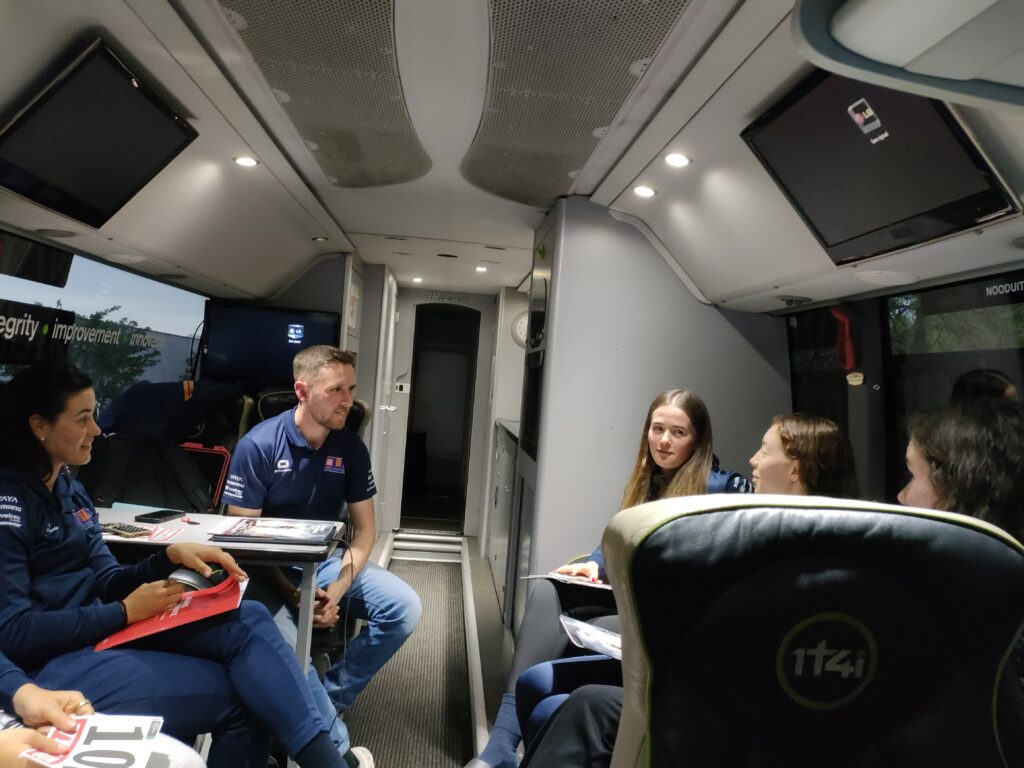
“And when we wanted to give our side back, there was no response from NOS. Then they came back a couple of days before publishing, which was unfair. They’ve been doing this for months. We had numerous people who reached out to NOS and we couldn’t find any person that wanted to speak to us,” he says.
“And then two or three days before we get a message or a phone call or whatever it was to say, yeah, we want to do something. It leaves us a little bit shortchanged, you know?”
Following the report’s publication, In De Waaier’s Thijs Zonneveld said he had emailed 23 questions to Picnic on Monday before meeting with staff at the team’s service course on Wednesday. According to Zonneveld, the meeting became tense, with one staff member even attempting to take one of the journalists’ phones.
“We walked into a kind of an ambush, where we had 25 people around us in the central hall of the service course. People were shouting things at us. Marloes Poelman, one of the managers, tried to take a phone away,” Zonneveld told WielerFlits. The team dispute his account.
A culture of fear?
In any case, Ferguson is adamant that the investigation’s assertion that a ‘culture of fear’ exists at Picnic is “completely unfair”.
“A lot of the riders who were named are from the period before I was at the team, so it’s unfair for me to comment on something that was in the past,” the 30-year-old says.
“But when you look at the headlines and they’re saying Picnic has a culture of fear, I don’t recognise that and I completely disagree with it. I’ve never felt like that at all.
“And I think that it also speaks volumes that over the years I’ve been within the team, I’ve had lots of private conversations with both riders and also staff, sports directors, whether it be at races or phone calls, saying what’s on their mind. And it can be, ‘I’ve chipped my toenail’, or it can be a family thing, and people feel comfortable to bring that to me.
“To say there’s a culture of fear is completely unfair and unjustified. I would say it’s the complete opposite.”
> British Cycling still suffering from “toxic” culture, new rider and staff survey reveals
The British sports director also insists that there have never been any discussions within the team, among riders or staff, about any need to change the team’s culture or working environment.
“We’ve never had a conversation where we’ve said we need to change how we did it in the past. So that makes me think this is the culture the team has had,” he says.
“I think when we talk about culture, and NOS talk about culture, it’s two different things. NOS looks like they’re only trying to get the negatives. And when we talk about internally about culture, we’re always striving to be better.
“I mean, what is culture? If you ask your next-door neighbour and Sir Alex Ferguson about culture, you’d get very different answers. And within elite sport, we’re always striving for the best culture. We discuss it a lot, how do we improve it, how do we get better?
“Because you’ve always got new riders, new staff coming in, and you have to talk to them about how they’ll fit in the culture. But I’ve never once heard anyone say the culture is bad, we need to get it out.
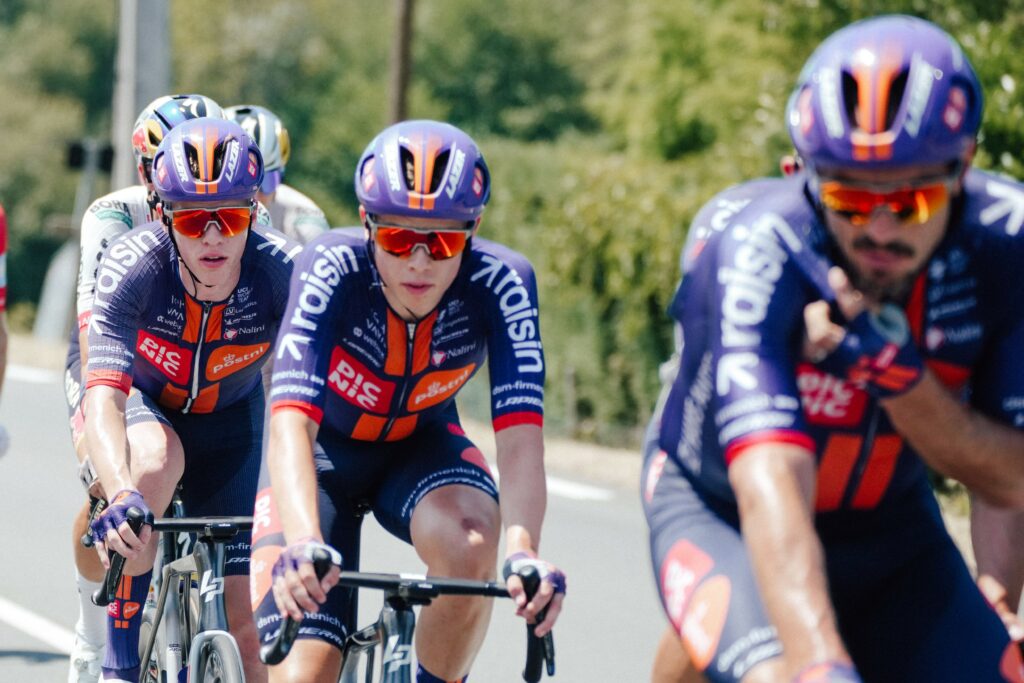
“You have to keep striving for the next level in top sport. You look at UAE, when they win 60 races a year, they probably sit down and think, how do we win 70 next year? That’s the mentality you have to have, and unfortunately people struggle with that.
“Mabe it can come across like we push too hard, or we don’t push hard enough. But the ‘culture of fear’ thing, that’s not something I recognise at all.
“You have to push yourself to improve everything, the training, the bikes. But I’ve never come across anyone say they’re scared of the culture here. Of course, everyone has their own opinion. But when I read all of these articles and they’re saying there’s a culture of fear, is it a fear of getting better or improving?”
Communication breakdown
In the wake of NOS and In De Waaier’s explosive investigation, a number of current riders and staff have voiced their support for the team. Speaking at the Eneco Tour this week, Frank van den Broek said he was “shocked” by the tone of the report, while Tim Naberman told reporters that he has “never felt unsafe within the team”.
On Instagram, bike fitter and strength specialist Jacob Wijnstra described Picnic as “one of the best and chill employers to work for”, a statement which attracted public displays of support from several riders within the women’s team. None of the allegations featured in the NOS story appear to involve the women’s squad.
However, retired pro Nicolas Roche has since spoken about his own ill-fated spell at the team between 2019 and 2021, criticising Kemna and the squad’s management for “pushing me towards the exit” and for accusing him of having too much influence over the younger riders.
The Irishman told NOS that things came to a head at a training camp in 2021, when he extended his training ride by an hour, allegedly angering Kemna and the team’s head of science.
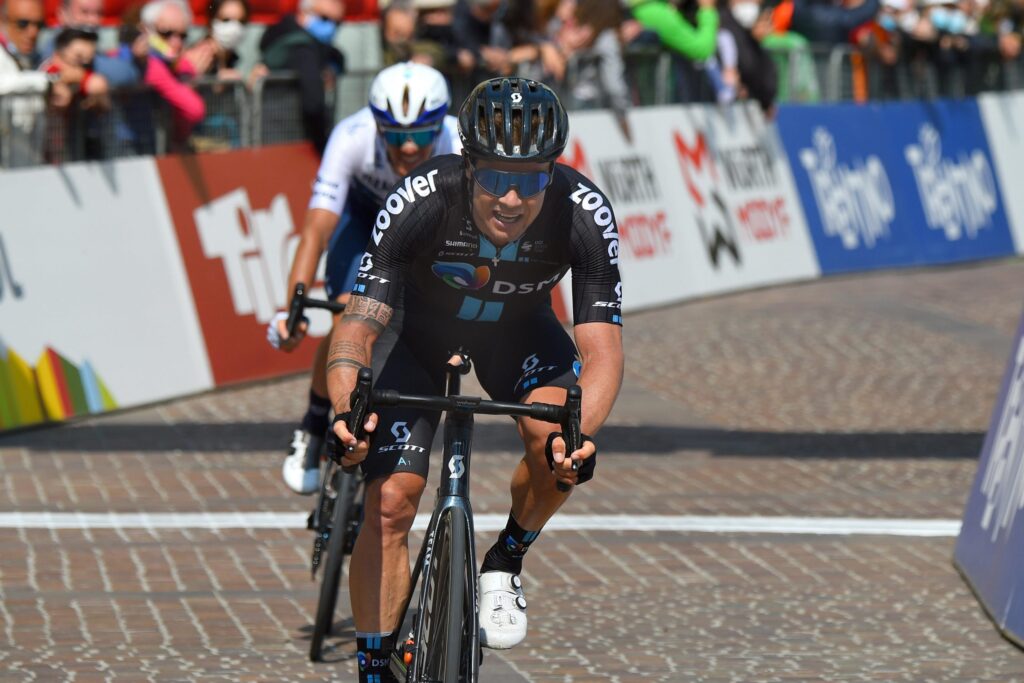
“They literally said: ‘We don’t care whether you do more or less, but you do what you are told.’ ‘Er, sorry?’ I said. ‘Am I getting a warning now because I trained for an hour longer? What the fuck?’ That was when I realised it was going to be a tough year,” Roche said.
“We went from one conflict to another. My problems were mainly with management. If I gave my opinion, it became a problem because it went against their protocol and their plans. I don’t think this management is suited to cycling.”
Ferguson, however, insists that despite Roche’s claims riders are free to bring their own methods to the table and that the retired Irishman’s problems with the team’s management could have been resolved by simply talking it out.
“We’re always looking for new ways and methods, of pushing our riders to bring any ideas they might have to the nutrition experts or their trainers. And since I’ve been with the team, it’s always been a case of, if you’ve got something, bring it,” he tells road.cc.
“If riders think they should be doing one and a half hours training instead of one, or whatever, I say, ‘have you spoken to the trainer?’ There’s always been a culture of everyone having the opportunity to speak. In the coach group, we want people to speak, it’s not: ‘this is the plan and this is how we do it’.
“Maybe some of the ex-riders and staff who made the comments – it’s not that they didn’t get their way, but we’re in professional sports and sometimes someone needs to make a decision. We can’t have 10 ideas and every idea goes, because then it’s a complete mess. But the way I coach is that we always have a discussion.”
When asked specifically about Roche’s complaints, Ferguson said: “I think it comes down to the situation that you have, in this sort of relationship between the trainer and the rider, there are two people, you’ve got the rider and you’ve got the trainer. The trainer’s job is to make the plan but ultimately the rider makes the decision, whether they do five hours or one hour.
“I always say to the women’s group, if you think your training is too hard or not hard enough, just speak to the trainer. It’s not like the trainer is there purposely prescribing training for the rider to be shit. That’s not the case. But what we push for is people speaking to each other and coming to a good path.
“I think from what Nico is saying, it sounds a little bit like he also wanted to be his own trainer. But we have the model where we have an expert group. And it’s not true that we say, right, this is what you do, and you do it. It’s a case of just to talk, and I think some riders get it a little bit twisted in their mind, thinking they cannot talk to your trainer. It’s completely not like that.
“It sounds like Nico thought we wanted him to be a robot, but maybe he didn’t understand what that relationship should be like. Of course, maybe you don’t have an easy relationship with your trainer. But don’t stay quiet, just talk.”
That encouragement to ‘just talk’ stands in stark contrast to the picture painted by NOS of the team’s communication structure, one in which direct lines of contact between rider and trainer (and doctors, mechanics, nutritionists, and so on) are allegedly cut off, and where riders are told to direct every query towards management, who would then pass it on to the corresponding expert.
But that’s not how Ferguson sees it.
“Because we have this expert group, maybe it can be confusing,” he tells road.cc. “The more experienced people know what direction they need to go. If they’ve got a sore throat, they go to the doctor. If they want to talk about material, they go to the R&D expert, or if it’s about finance they go to the finance people. Every door is open.
“And we’re not saying people aren’t allowed to talk to certain people, I’ve never come across a moment where someone’s been told they’re not allowed to contact this person. There’s no-one in the team who would say, ‘why the fuck would you call me?’ You’re not going to get banned or fined a month’s salary if you contact the wrong person for the wrong thing.
“But it’s about making sure you contact the right person and keeping the process as streamlined as possible.”
“Do they feel like we’ve done them an injustice?”
Speaking to Ferguson, and reading the comments made by riders and staff at the Eneco Tour this week, it quickly becomes apparent that Picnic’s leadership is most disappointed by the tone of the NOS investigation and what they regard as a lack of balance in the Dutch publication’s reporting.
“What do they want to get out of this? Of the 70-odd people who were part of this, a lot of them came to the team to say they’d done that [spoke to NOS]. Which shows that they’re not putting in the positive things,” says Ferguson.
The British sports director also questioned the motivations of some of the ex-riders and staff who contributed to the investigation. And while he recognises the seriousness of Tusveld’s admission that he suffered mentally while at the team, Ferguson cautions against treating all the claims made in the report at “face value”.
“Are these people who have left the team because they wanted to?” he asks. “Or have we said, right, you’re not working at a high enough standard? Like in any professional sport, if you’re not at a high enough standard, we need someone who could potentially be better.
“Are these people who really feel like this? Or do they feel like we’ve done them an injustice by not extending their contracts? And they’re coming at us like that. Why? I can’t give you an answer.”
He continues: “Would this rider be saying this now if they were still in the WorldTour? I don’t know. And how Martijn feels shouldn’t be discarded because he’s not in the professional peloton, that’s also unfair.
“However, I think we need to go back and ask some questions, and look at the timeline of when these things happened. When he talks about self-harm, did that happen after he’d retired, was it recently, or was it when he was in the team?
“It’s a serious thing. But is it because we hadn’t extended his contract? Or was it during his first one or two years [with the team]? That also changes the dynamic. If a professional footballer said something like this, half the world would say it’s because you haven’t got your new contract.”
According to Tusveld’s account, he first experienced depression during the 2021 season. Tusveld also claimed he was due to be let go by the team at the end of that year, but stayed on after two riders unexpectedly terminated their contracts.
At the Eneco Tour, Tim Naberman, a former teammate of Tusveld’s, expressed his shock at the 33-year-old’s admission of mental struggles, but also pointed out that he renewed his contract with Picnic multiple times after 2021.
“Martijn is somewhat the figurehead of the story, but why would you want to stay with the team for all those years if it has been going on for so long? I don’t understand that myself,” Naberman said.
“But at the same time, if that was one of my riders now, I’d be 99 per cent sure they’d come to me and say, ‘I’m feeling like this’,” Ferguson continues.
“We’ve had a lot of injuries this year and a lot of people have been, I won’t say in a dark place, but upset or disappointed that they’re not racing. And I’ve spent hours and hours over the course of the year on the phone with these people discussing.
“And I would also say that’s the same with the men’s programme. If they’ve got something on their mind, they’re free to speak it.”
Under pressure
The timing of this week’s investigation couldn’t have come at a worse time for Picnic PostNL. Both the men’s and women’s teams have had horrid seasons, with just one WorldTour victory among the two squads, achieved this week at the Tour of Guangxi, to show for their efforts.
There have also been reports in recent weeks that the team is considering relinquishing its WorldTour status for 2027, a move which would lighten the logistical and financial burden of a packed calendar, though this has been denied.
The Dutch team has long been known for developing and then losing star talent once they reach the top, with Tour stage-winning phenom Marcel Kittel arguably the first homegrown superstar to jump ship, back in the mid-2010s.
> Big Mac recons, broken radios, and never giving up: Inside Picnic PostNL’s classics campaign
The exodus continues this winter, with Pfeiffer Georgi – one of the women’s team’s stalwart figures for the past eight seasons – leaving to join UAE Team L’Imad. Last year, another British talent, Oscar Onley, made the move to Ineos after finishing fourth at the Tour de France with Picnic.
Ferguson believes, however, that none of these riders have left the team because they’re dissatisfied with its culture and way of working. In fact, he points to Georgi continuing to regularly race for the team after her move was announced as evidence of a harmonious atmosphere.
“I’ve never come across a rider who says thy want to leave just because, ‘I think the team is rubbish, or they don’t give me what I want, or I am not happy with the training’. Maybe they say it behind my back, that’s possible,” he says.
“But I think everyone who’s left who’s been at the team for a considerable about of time has maybe, not outgrown the team, but just wants a fresh start. Or it could be financial.”
The 30-year-old also tells road.cc that the strain of a difficult 2026 has not soured relationships within the squad or resulted in increased pressure from the top to achieve results.
“I feel the pressure from myself, but never from above,” he says. “In four years, I’ve never sat in a meeting and been told we don’t win enough. We’ve never spoken about results. It’s about the process and buying into it, doing everything a good way, and the results are a product of that.
“And yeah, it’s not been an easy year, but we always focus on the process, how do we develop the next step? It’s never, ‘we need to win now’.”
What’s next?
In the immediate aftermath of the NOS report being published, Picnic shared a lengthy statement in both English and Dutch revealing that it has commissioned its own independent investigation into the team’s culture.
“The accounts shared by current and former riders and staff members affect us. At the same time, we do not recognise ourselves in the overall picture presented in the publications,” the statement said.
“The fact that experiences differ does not diminish the seriousness of the accounts that have now come to light. We will therefore commission an independent investigation into how our team culture is experienced in practice and to what extent it reflects the culture we strive for.”
It continued: “Since the team was founded in 2008, three promises have formed the foundation of our approach to professional cycling: fair, healthy and responsible sport, safe collaboration based on shared values, continuity and job security.
“We have made a commitment to do everything we can to secure the future of the team and, in doing so, preserve jobs within professional cycling.
“Every year, several teams disappear, with the associated loss of jobs. This has become almost normal, even though it should never be the case in a sport of this scale. That is why we have been working to secure the future of the team since 2008. Over the years, we have provided employment for hundreds of people.
“In a performance-driven environment such as professional sport, things can go wrong. That is why there are several ways for people within our team to raise problems and concerns. If people have felt unsafe within our organisation or have felt they lacked sufficient opportunity to raise concerns, we want to understand how that could have happened.
“We will therefore commission an independent, professional investigation into our team culture. We will take its findings seriously and implement any improvements that may be needed, out of respect for everyone who is, or has been, part of Team Picnic PostNL.”
For Ferguson, Picnic’s willingness to address the issue underlines its commitment to both creating a safe environment and – there’s that word again – talking.
“The best way to deal with these things is, I think, is to be open and talk about it,” he says. “I think that speaks volumes. Because if we had our backs against the wall and were running a culture of fear, we would keep it hush-hush.
“We’ve been open and said we want to speak to NOS. We have an openness to speak to riders and staff. That’s why I don’t recognise the culture of fear stuff. It’s not that I disagree with what people are saying, because if that’s how some of the feel, it’s not fair for me to disagree.
“But it’s just the comments about the team I disagree with. When people want to speak about it, we speak about it.”