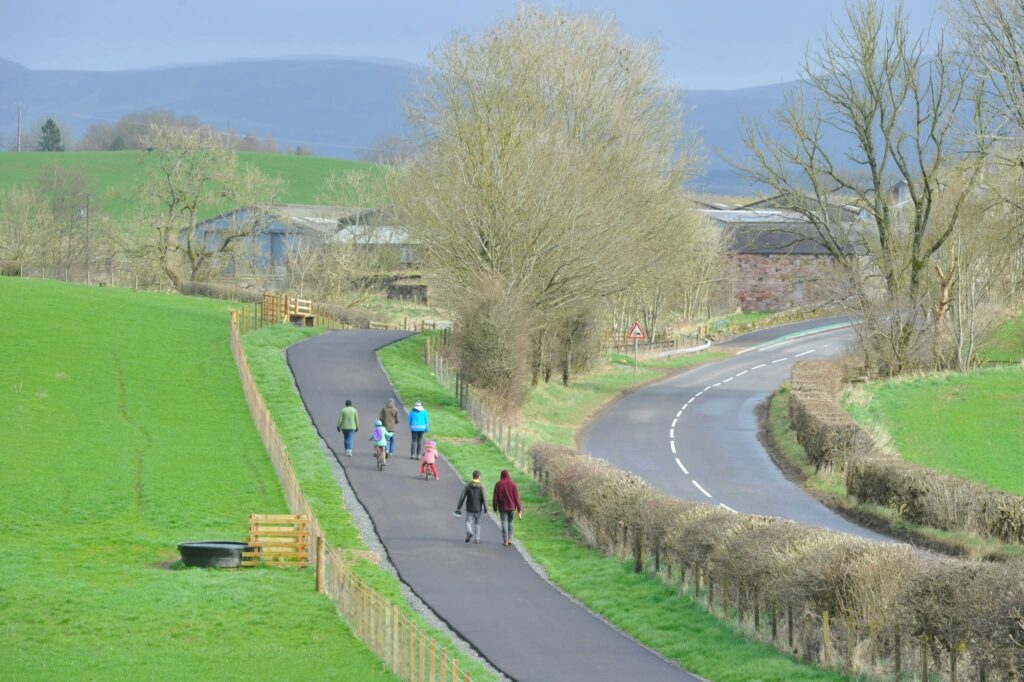

A development trust in Scotland has been forced to remind locals not to drive on a cycle and pedestrian path, after residents were forced to challenge motorists using the infrastructure as a “shortcut” during roadworks.
A section of the A702 at Penpont, a village just west of Thornhill in Dumfriesshire, is currently closed as works are carried out for essential road reconstruction and drainage improvements, with diversion signs and an alternative route via the B729 and A76 put in place.
However, the Kier, Penpont, and Tynron Development Trust (KPTDT) says it has witnessed a “small minority” of drivers availing of the active travel path, which runs adjacent to the road between Penpont and Thornhill, in order to bypass the diversion.
In a social media post, the development trust – while admitting that the roadworks are a “major headache” and “incredibly frustrating” – warned these shortcut-seeking motorists that they were putting “vulnerable pedestrians, children, and cyclists at serious risk”.
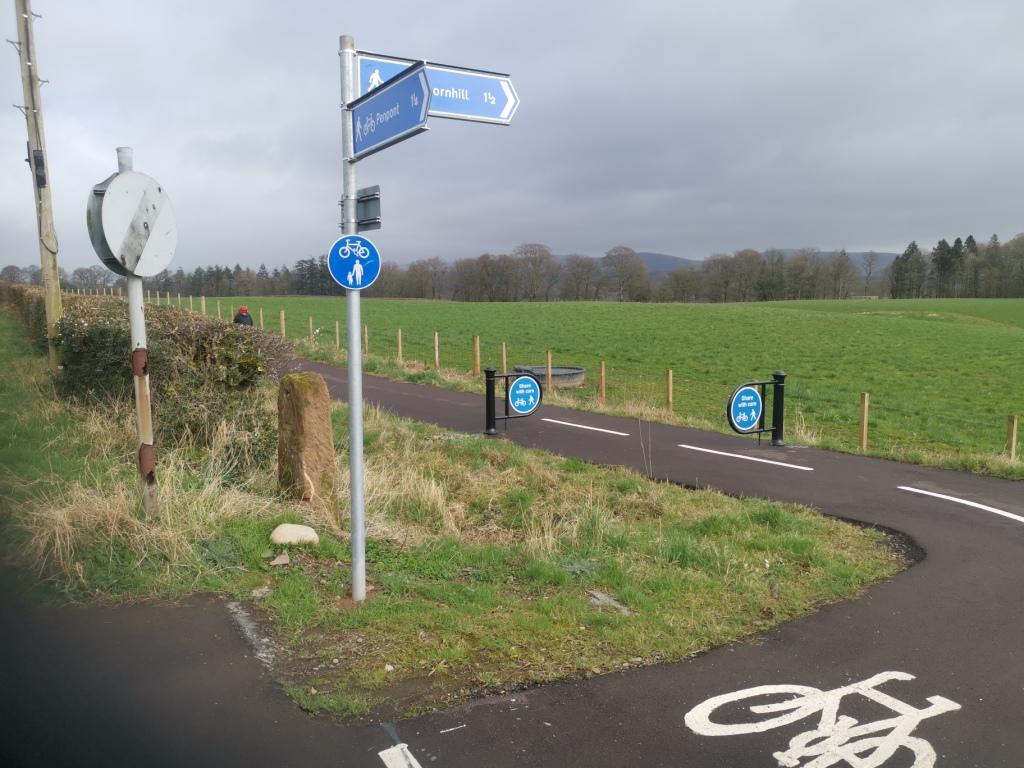
The £2.3m path was opened in March 2024 and built to provide a traffic-free 2.5-mile route connecting Penpont and Thornhill. It can be accessed from the road through a small entrance but is otherwise separated from motor traffic by a large grass verge, fences, and hedges.
“Reminder to all drivers: We know the ongoing roadworks and detour on the A702 at Penpont are a major headache and adding time to your journeys,” the trust said in a statement earlier this week.
“However, we are seeing motor vehicles attempting to use the Active Travel Path as a shortcut to bypass the diversion. Please remember: The Active Travel Path is NOT a road. Who it is for: It is designed exclusively for active travel – walking, cycling, and ‘wheeling’ (mobility scooters, wheelchairs, and prams).
“Who it is NOT for: All motorised vehicles are strictly prohibited. The only exceptions are emergency services on duty and authorised maintenance vehicles.”
The trust continued: “Using this path as a detour puts vulnerable pedestrians, children, and cyclists at serious risk. It is physically separated from the main road precisely to keep people safe.
“Please follow the signed diversion routes, drive safely, and let’s keep our community paths safe for everyone. Thank you for your patience and cooperation!”
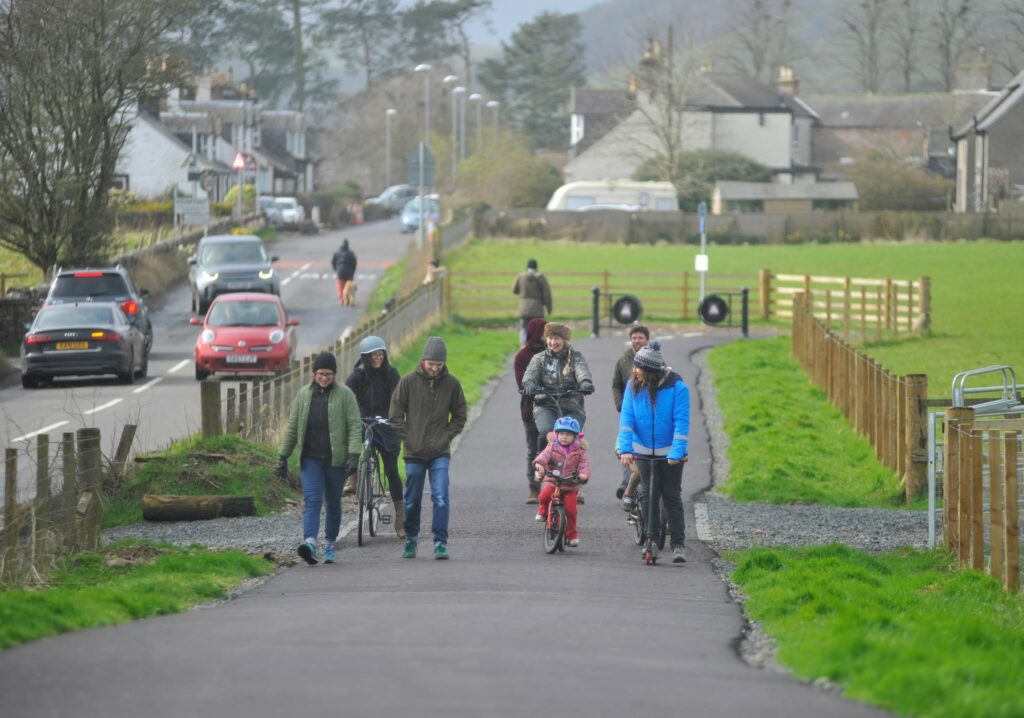
A few days later, the trust reiterated its warning, issuing a second statement telling drivers: “We know the A702 diversion via the B729 and A76 is incredibly frustrating, but please remember that the Penpont to Thornhill cycle path is strictly an active travel route.”
The revelation that motorists are using a seemingly protected active travel route as a shortcut to avoid a lengthy diversion has left many locals baffled and angry.
“I would say unbelievable. But nothing is a surprise anymore,” Barry Shelby wrote in the comments under the trust’s post.
“I wish this was a joke post,” added Kerry Thomson. “I’d report them to the police if I saw any. How thick can you get?”
Speaking to the BBC, KPTDT development officer Michelle Johnston reinforced the message that the path is “strictly reserved” for pedestrians, cyclists, and wheelers.
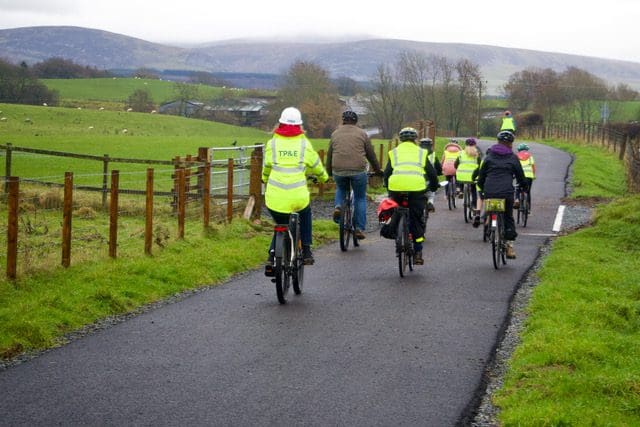
“Driving any unauthorised motorised vehicle along the path is strictly prohibited by law,” she said.
“While we recognise this involves only a small minority of drivers seeking shortcuts during the current roadworks, this restriction is essential to ensure the safety of walkers, cyclists, families, and local wildlife.”
She noted that the trust is “incredibly grateful” to the path users to challenged drivers trying to use the infrastructure. Johnston also said that civil engineers have since put extra safety precautions in place to prevent any future rat runs.
“We thank the community for working together to keep this a safe, welcoming space for everyone,” she said.


-300x199.jpg "“He wants bikes in traffic lanes. Give him what he wants”: Cyclists urged to “slow every street down to bicycle speed” and ride in middle of lane amid premier’s war on cycle paths + more on the live blog")