



British one-two in Tour Down Under prologue
Close enough, welcome back Chris Boardman.
After taking victory in the Tour de Romandie at only a day’s notice last year, British National Champion Sam Watson seems to be establishing himself as the new “Mr Prologue” after winning today’s opening effort of the Tour Down Under.
Starting in the Adelaide evening, allowing us Europeans to watch it over our sultana bran, Watson was the 11th rider off the start ramp and (I’ll admit) had finished the 3.6km course before I woke up. All that remained was for Watson to wait and see who could knock him off the hot seat. In the end, his compatriot and fellow punchy sprinter Ethan Vernon came within six tenths of victory, whilst last man off the start ramp and home favourite Jay Vine could only finish fourth, four seconds behind.
To be honest, there’s not much to write about any time trial, let alone a prologue as short as this. Instead, the evening/morning’s highlight was the delightful mongrel of TT and road bike equipment.
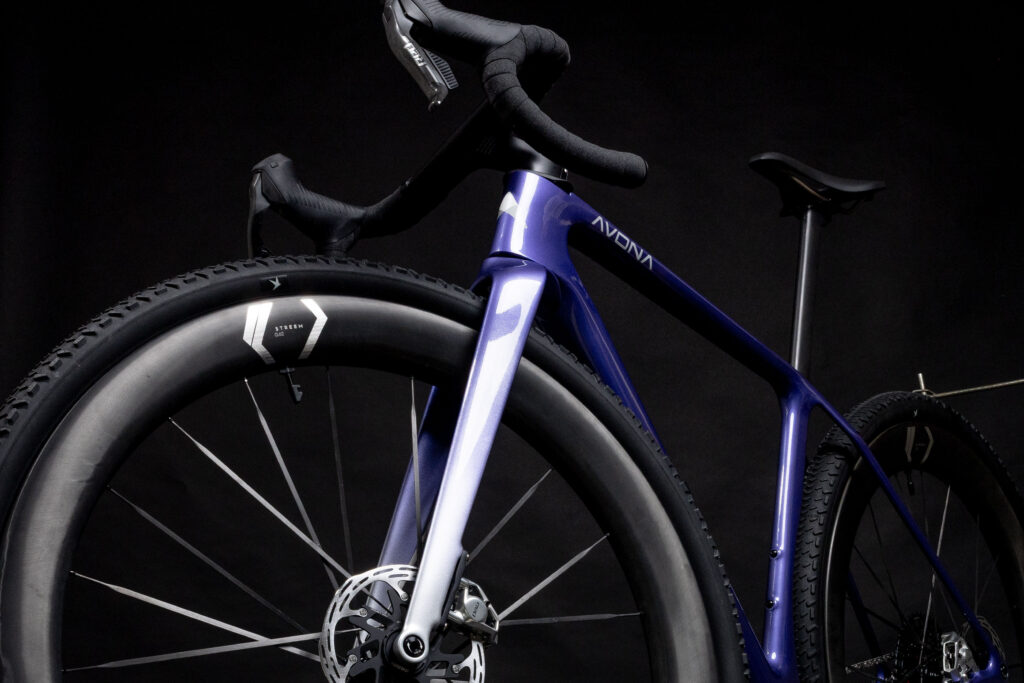
As is increasingly the style, road organisers are prone to banning time trial bikes for their shorter stage races when the logistics of smaller teams bringing another set of bikes becomes too impractical. What you get though is all manner of handlebar and wheelset combinations…
A ???? ????? to our cycling season in Adelaide. ☀️ pic.twitter.com/rl9hnQBphO
— Team Visma | Lease a Bike (@vismaleaseabike) January 20, 2026
Even Visma couldn’t decide on a uniform approach to their equipment…
Pushing till the very end. ⚡️ pic.twitter.com/eHtNFeIfU7
— Team Visma | Lease a Bike (@vismaleaseabike) January 20, 2026
Watson for his part rode his TT in rogue black shorts rather than the manufacturer-approved white…
Today’s Mismatch Miss or Match Moment?
?Stream the race now on 7plus: https://t.co/k2Exq3GblT
South Australia Prologue | @mismatchbrewing @SantosLtd #TourDownUnder pic.twitter.com/hyUhkCiMSr
— Santos Tour Down Under ??♀️ (@tourdownunder) January 20, 2026
Requiring him to change his bib shorts ahead of the jersey presentation (swipe to compare and contrast).
Ah cycling, never change…
Update: Regular contributor mdavidford wonders if the black shorts are part of a TT skinsuit. Cue quite a lot of trawling for photos of other Ineos riders out on the course. Based on their social media tags it seems like Watson and Sam Welsford wore black shorts whilst Lucas Hamilton, Ben Swift and Michal Kwiatkowski wore white. As British champion, Watson’s regular road kit would come with black shorts, maybe the team weren’t prepared for him needing TT kit? Welsford has no excuse, however (beyond obvious reasons of fashion).
It gets better though. It seems as though Swift seemed to complete his effort in his regular road kit, judging by the partly rolled-up british national championship bands on his sleeve. If remaining Ineos riders Embret Svestad-Bardseng or Jack Haig wish to add to this debate their contributions are welcome. I might need a lie down after this rabbit hole…
"Town Hall cycling ultras at it again": residents upset as "semi-permanent" pavement removed for town centre cycle lane
There’s been something of a Sheffield theme to our output in the last 18 hours or so. First we covered the state of Snake Pass, the iconic climb that could feature on Stage Two of the Tour de France Femmes en route to the Steel City but faces council concerns of landslip damage. Dan has the full write-up here:

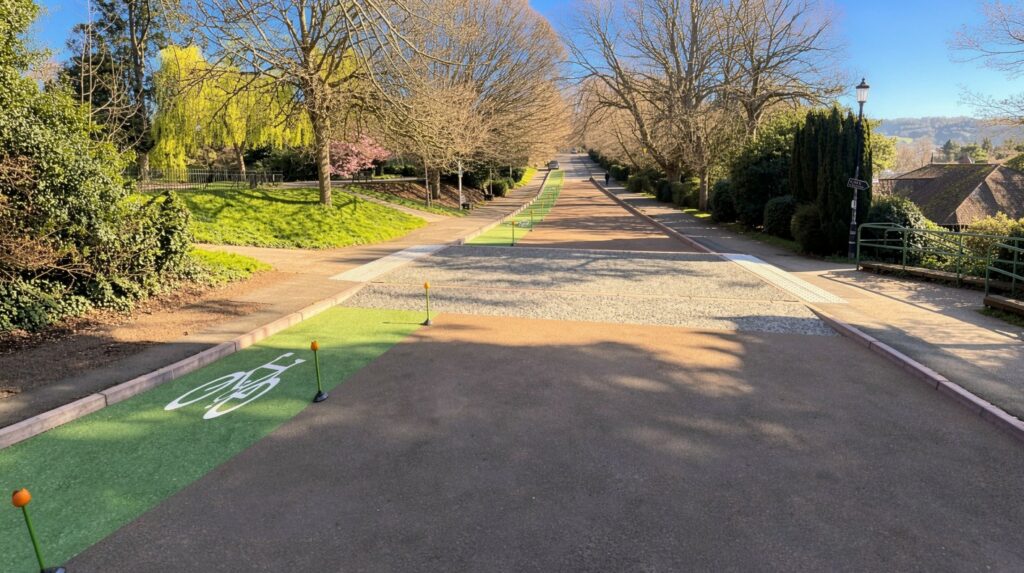
Today’s fulfilment of our Sheffield quota comes from the city itself, where work has begun on the construction of a new cycle lane through the city centre. So far so good. The downside? It’s replacing an pavement that was only installed in 2020.
The council say the move is part of the Connecting Sheffield project that will incorporate a segregated network across the city. A cycle “super route” is also set to be installed at Arundel Gate, as reported by The Sheffield Star. The council say the move will “encourage cycling”, adding that “Motor traffic will still be allowed, but only in a northbound direction. Extra greening and new trees will change the environment to create a more pleasant, less traffic dominant area.”
But the choice to remove pavement on a busy shopping street, coupled with the council choosing to devote any resources to cycle infrastructure, has left the algorithm reeling…
“This counci [sic] love laying payments the diging [sic] it up after few months” says Malcolm.
“As someone who cycles and walks there I’d very much prefer it if Sheffield CC built cycle facilities away from main shopping streets. It creates too much conflict between pedestrians and cyclists” says Chris.
“More cycle lanes! there will be no where for people to walk soon” complains Tracy.
“Oh that’s what it’s for… Don’t they cycle on the pavements anyway???”
That’s quite enough of that, though my personal favourite comment is from Bill Stewardson who simply writes “Town Hall cycling ultras at it again.” If you need to find me, I’ll be preparing some chants on the terraces…
Why do cycle lanes get so much stick online?
As you might have seen, cycle lanes are a rich source of blog content, not least for the stick they seem to get online. Now, some very intelligent people at Cardiff University have come up with some answers as to > Why cycle lanes get so much stick online?

Lime bikes take over West Midlands cycle hire scheme
A little bit of hire bike news to bring you this lunchtime. Lime will take over from Beryl as providers of hire bikes in the West Midlands. From April, the provider, which already operates in London and several other English cities, will also cater for another 6.1 million people across Birmingham, Coventry, Dudley, Sandwell, Solihull, Walsall, and Wolverhampton.

Part of the reasoning for the change is that Lime will operate the scheme at no cost to the taxpayer, saving the West Midlands Combined Authority around £1.4 million yearly. And the region’s Mayor Richard Parker says he has achieved an agreement with Lime to freeze bike hire prices until 2028. “By bringing in a brand-new fleet of bikes and scooters and freezing prices for the next two years, we’re making sure there’s a practical and affordable green alternative for shorter journeys – helping to tackle traffic congestion and improve the air we breathe.
“And by securing a partnership that operates at no cost to the taxpayer, we are saving the public purse more than £1 million a year. This is money we can now reinvest back into our regional transport, delivering better journeys for everyone.” Parker added.
It’s not clear at this stage what the ratio of bikes to e-bikes will be. The scheme will also include hireable e-scooters in Birmingham and the University of Warwick campus.
"Wild West" bikejackings could be tackled with £1 million investment
You know it’s never a good thing when cyclists say they feel safer “between buses and cars” than on a segregated cycle lane…

"There's loss of identity" says Williamson as she announces retirement
In case you missed it, yesterday BBC Look East published an interview with track cyclist Vicky Williamson as she announced her retirement from elite sport.

It’s proving to be one of their most popular articles online, with Williamson opening up on the immense struggles of battling back from serious injury and missing out on selection for the Olympic Games.
All set for Rio 2016, Williamson crashed in January of that year, fracturing her neck and back, and dislocating her pelvis. She was in hospital for four weeks.
“Now it’s 10 years on, so it’s a good time for me to reflect back on the highs and lows of everything I went through.” the 32-year-old told the BBC.
“It was a journey, with definite low points, from when I realised that the Rio Olympics was no longer on the cards, and then great highs as I made my way back into sport, and achieving things I never thought were going to be possible again.
“Any athletes that have been injured will understand; it’s your identity, it’s taken away from you, and in the blink of an eye anything can change, obviously my accident was particularly bad and was life-changing.”
Not only did Williamson eventually recover, competing in the Track World Championships in 2019, she also switched sports to Bobsleigh, racing several World Cup events before switching back to the track in a final attempt to make the squad for the Paris Olympics in 2024.
Despite retiring from elite competition, Williamson will stay in the fitness world as a coach and pilates teacher.
“Obviously I’m not competing on a day to day, so I don’t have that, but it still gives me a sense of purpose and enjoyment, which is the most important thing.
“Health and fitness has been such a key part of my career – the injury, coming back from the injury – that is the industry I need to be in.”
More than just a roadie: Pidcock takes his Dogma F off-road
Fabio Christen has been quite good at posting on Instagram if you want to check-out more of Pinarello-Q36.5’s antics in Chile. In the meantime, we’ll leave this road wheel-wincer of a clip with you…
"Ill-judged" judge finds support from one 'unfiltered' writer
I didn’t expect to find people agreeing with the Irish judge who labelled cyclists a “nightmare”. In fact, Dan has just written a good article summing up recent comments made by the Irish Transport Minister calling the judge’s comments “ill-judged”.
A tremendous headline, no notes required. Unfortunately, we have stumbled across one corner of the internet that has decided now is the time to come out in defence of the judge, James O’Donohue.
On the website Gript, which describes itself as “delivering news & analysis without the liberal filter”, Maria Maynes has written a lengthy piece titled “Why can’t we admit: Sometimes, cyclists are a nightmare”. The piece, which we won’t be repeating in its entirety, begins “One unfortunate judge is being burned at the stake this week.”

Maynes’ piece is a broad sweep of cycling in its entirety, criticising “hugely controversial and eye-wateringly expensive swathe of cycle lanes, […] leading to claims from locals that they are wiping out jobs and businesses in the process.” It repeatedly circles back to “the poor old judge […] in my thoughts this week for the total bombardment he’s suffered in the media and in the Dáil.”
And there are comments reserved for the “formidable lobby” of cyclists, “one you are simply not allowed to cross, unless you want to be hung out to dry.” “Why can’t we say that yes, we should respect cyclists and we absolutely must be uber-aware of them, as we were all taught in our driving theories and lessons, but that cyclists should also be extremely careful of motorists in return.”
To my knowledge, no-one is saying you can’t say that. But one wonders what is the relevance and purpose of attempting to “both sides” an issue of road safety that data shows is overwhelmingly an issue caused by vehicle users. It’s difficult not to read Maynes’ article and wonder why she wishes to deflect attention and responsibility from drivers and perpetuate an antagonistic relationship that relegates non-car users from the road.
Anyway, that’s enough earnest-ness from the live blogger for today, I’m sure I’ll find something nicer to write about this afternoon.
Near death experience for British cyclists
Thankfully most of the Near Miss of the Day submissions we receive are at a low speed and involve at least one party braking. Well brace yourself for this, when riders from the Aero Collective Racing team, out on a training ride on Tenerife, had a terrifying close call from some motorbikes.
You would have liked to think that there would be some solidarity between two-wheeled movers but seemingly not. You can hear from the audio that the motorbikes were accelerating as they moved closer to the cyclists and that there was no oncoming traffic. It’s absurd behaviour that has caught the internet’s attention.
“Absolutely insane!” wrote Cycling coach/social media personality Zack Morris.
“But cyclists are the problem (sarcasm heavily implied)” added former African team pursuit champion Carl Bonthuys.
It’s a shocking, watch, and a morbid reminder of how fragile life can be…












7 thoughts on ““Disgusting behaviour”: Cyclists narrowly avoid major crash with motorbikes racing past; “Town Hall cycling ultras at it again”: residents upset as pavement removed for cycle lane; British one-two in Tour Down Under prologue + more on the live blog”
Quote:
Isn’t that a skinsuit, rather than separate shorts? In which case it must be as designed – weirdly not matching the shorts and jersey combo.
Those motorcyclists were
Those motorcyclists were cvnts, and I hope they encounter a tree/wall at that speed. That was intentional, and I bet those bikes are toys they get out to play with only on dry weekends. The rest of the week they drive like cvnts in SUV’s.
Lime freezing prices for a
Lime freezing prices for a couple of years sounds like generosity but really it’s about getting customers to build a dependency before the price gets hiked.
They are in this business to
They are in this business to make money, aren’t they?
From venture capital and/or
From venture capital and/or sometimes advertising. I believe it’s generally about “cornering a market” / growing market share. Not sure what is supposed to happen after that…
AFAIK large public cycle hire schemes never make most of their income from riders, the costs of maintaining, replacing and relocating the bikes translate to a higher price than people are willing to pay for a casual bike ride.
That doesn’t mean they can’t be successful but it’s where that extra cash comes from. The best ones seem to be either funded by an institution (NL’s OV Fiets) or local government in partnership with companies who maybe also get money from advertising (Santander cycles?)
INEOS black bibs make the
INEOS black bibs make the white-orangey jersey look sharp and crisp. Will Watson be fined by the cycling fashion police?
“… when riders from the
“… when riders from the Aero Collective Racing team, out on a training ride on Tenerife, had a terrifying close call from some motorbikes.”
shouldn’t that be from “motorCYCLISTS”?