



A cyclist who struck and killed a great-grandfather while riding his e-bike on the pavement has been handed a suspended prison sentence, in what has been described as a British legal first.
50-year-old Clifford Cage, from Kent, received the 15-month jail term, suspended for two years, this week after pleading guilty to manslaughter following the death of 91-year-old Jim Blackwood in July 2023.
Following the sentencing, Mr Blackwood’s daughter said she hopes the landmark decision means cyclists can no longer “decide that they can leave the road and ride on our pavements, endangering pedestrians with impunity”.
Christine White also called for the minimum age required to ride e-bikes to be raised from 14 to 16, claiming that electric bikes gave made walking in towns and public spaces “dangerous to the point of becoming a lottery”.

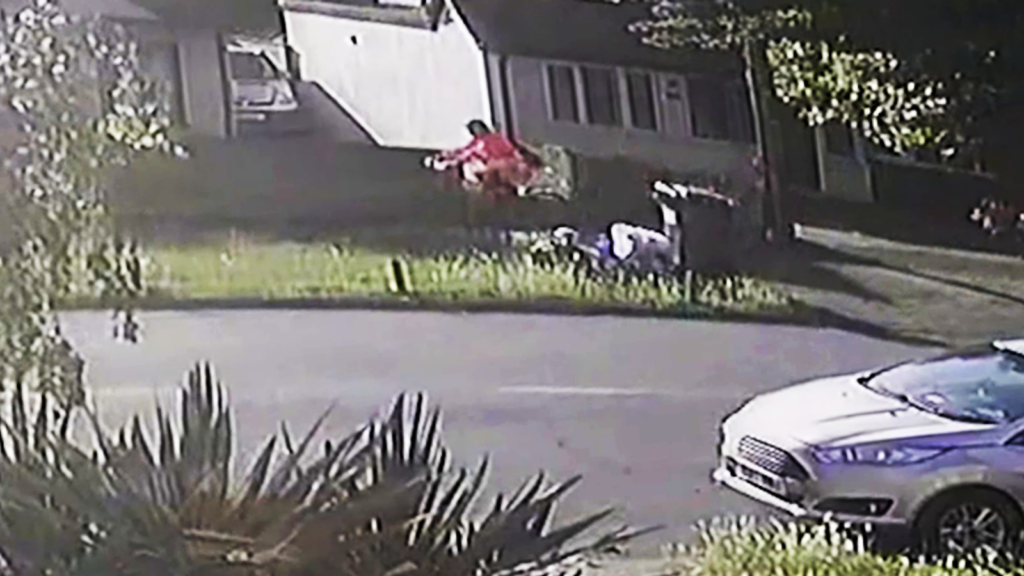
Maidstone Crown Court heard this week that agency worker Cage was riding on the pavement on City Way in Rochester on 6 July 2023 when he struck Mr Blackwood, who was taking the bins out at the time.
Cage called the emergency services following the collision and attempted to assist the 91-year-old, a former Royal Engineer in the British Army, who served in Northern Ireland and Malaya.
Mr Blackwood was then taken to hospital, where his health deteriorated. He died three months later, on 13 October, after “suffering significantly”, Judge Julian Smith told the court.
The cyclist was charged with manslaughter, as well as causing bodily harm by wanton or furious driving, originally pleading not guilty to both charges.
However, on 28 October 2025, he changed his plea and accepted responsibility for the great-grandfather’s death, admitting to the more serious manslaughter charge. This week, Cage was handed a 15-month suspended sentence and ordered to carry out 180 hours of unpaid work and 15 days of rehabilitative activity. The charge of causing bodily harm by wanton or furious driving was left on the court file.
According to the Crown Prosecution Service, the case is the first time a cyclist has been convicted of manslaughter in relation to a fatal collision on a pavement, and the first time a manslaughter charge was sought concerning an e-bike crash.
During the sentencing on Wednesday, the court heard that Cage had been riding on the footpath following two near misses with motorists on the road earlier that day. The cyclist claimed that he was not “pedalling mad” before the crash, and that Mr Blackwood had stepped out from behind a bush, giving him no time to stop.
It was also pointed out in the court that a tree on the path was overgrown and had obstructed Cage’s view of Mr Blackwood, who was described by the judge as “elderly and frail”.
“Mr Blackwood was on the footpath outside his own home. Mr Cage was in reflective gear and was travelling at some speed, but not in any elaborate or unusual way, when the collision took place,” the judge told the court.
“There is no doubt an aspect of this case is the path was obscured by an overgrown tree. It is a feature to which the defendant should have responded and should have made more cautious in his riding.”
Smith noted that the sentencing was “complicated and distressing”, and while acknowledging the “catastrophic impact” the fatal crash has had on the victim’s family, accepted that Cage was remorseful and had stopped to assist Mr Blackwood.
“He made a choice to ride on a path which is illegal. There are reasons it is illegal. He ignored these risks,” the judge concluded.
In a statement read following the sentencing, Mr Blackwood’s daughter, Christine White, said: “It is a historic judgement, for the first time in British legal history a cyclist has been convicted of manslaughter for killing another human being.
“Every day we make decisions and those decisions have an impact on our lives. When Mr Cage decided for whatever reason, to ride his bicycle on the pavement, he made a decision to break the law.
“He must now live with and deal with the consequences of that decision for the rest of his life as sadly must we.”
White added that she hopes the judgement will lead to wider changes concerning how the law treats cyclists who endanger pedestrians, while also calling for reform of e-bike laws.
“No longer can cyclists decide that they can leave the road and ride on our pavements, endangering pedestrians with impunity,” the 68-year-old said.
“The message needs to get out there and enter the public consciousness, everyone has to realise it’s illegal to go off-road and that illegality will be punished.”
Since her father’s death, she says she feels “uncomfortable and agitated” when walking in pedestrian areas.
Following Cage’s guilty plea, Ms White told KentOnline: “I hope this case illustrates the need for those cyclists who show scant regard for the rules of the road to think again.”
Defending, Danny Moore KC told the court this week that Cage was a “decent human being” who stayed at the scene and “did what he could to help”.
“The knowledge his actions have caused the death of another human being is something he will carry with him for the rest of his life,” he said.
“He has reflected deeply on the consequences of his actions. He knows a moment of careless riding has resulted in tragedy.”
> Remove conflict between cyclists and pedestrians, urge campaigners in wake of manslaughter case
In a statement, Joe Pullen, a senior crown prosecutor, said: “This case, which is a legal first, tragically highlights how exceptionally dangerous it can be to cycle on the pavement and the reason it is illegal.
“James Blackwood went from being fully mobile before the collision to being bedbound and immobile afterwards, eventually resulting in his death.
“Clifford Cage has made it clear that he never intended to cause the victim any harm, but the risk he took in cycling on an e-bike on the pavement should have been obvious to him.
“Instead, Cage admitted he had never thought about the danger he could pose to others. It was that simple lack of thought that led to James’ death.
“We hope today’s sentencing brings some comfort to James’ family and sends a strong message to everyone about stopping this potentially deadly practice on our footpaths.”













59 thoughts on ““No longer can cyclists endanger pedestrians with impunity”: British legal ‘first’ as e-bike rider handed suspended sentence for killing 91-year-old while cycling on pavement due to near misses with drivers”
“No longer can cyclists endanger pedestrians with impunity”
No, that privilege is reserved for motorists.
If I wanted to take it a step further and *hurt* someone with impunity I’d simply run them over in my car whilst the sun was in my eyes and tell the judge I need my car because despite being extremely wealthy, I can’t afford to get a taxi to take me to work every day.
I am not going to comment on the sentence
The use of a manslaughter charge is interesting, and got some massive repercussions that will follow him around for the rest of hiis life.
I wonder what made them go for that charge, it wasn’t mentioned in the copy but was the e bike a legal e bike or an overpowered machine that comes into category of unregistered motorcycle, if it is the latter then it would be interesting to see if unlicensed or uninsured drivers were to face manslaughter charges in the future. Or even a driver who mounts the pavement and hits a pedestrian.
It was a legal ebike, BBC article mentions it was not powerful enough to be considered a motor vehicle – https://www.bbc.co.uk/news/articles/cg7em14ez01o
Surprised he pleaded guilty to manslaughter rather than the lesser charge, but it probably made very little difference to the sentence.
Hopefully there will be some legal commentary on this case.
Thanks Tom, I hadn’t read any further but I was stunned that there was a manslaughter charge. I wonder if his plea would have been different representation.
Some legal commentary here :
https://www.cps.gov.uk/south-east/news/first-time-e-bike-rider-has-been-sentenced-manslaughter-after-crashing-elderly
Doesn’t fully explain the manslaughter charge though as far as I can see.
Manslaughter by an unlawful and dangerous act:
https://en.wikipedia.org/wiki/Manslaughter_in_English_law#Manslaughter_by_an_unlawful_and_dangerous_act
There are 4 parts to this:
1&2 – an intentional and unlawful act
3 – some other person is at risk of physical harm
4 – a death was caused
1,2 and 4 seem clear. Cycling on the pavement is an intentional and unlawful act and unfortunately in this case death resulted. 3 seems much less clear – how dangerous does an act have to be for this?
The Sentencing Council guidelines on manslaughter make that rather more clear, for Culpability D offences (the lowest level for manslaughter) it can still be manslaughter even “where there was no intention by the offender to cause any harm and no obvious risk of anything more than minor harm”. I think we can all accept that riding on the pavement there is always a risk of minor harm in terms of accidentally bumping a pedestrian, and that’s enough to make it manslaughter if tragic consequences ensue.
In fact it appears that the fact it was an ebike was of little or no relevance at all – it could just as well have been an unassisted bike.
Just around the corner from where this incident occurred, a bus driver killed someone by running them over. That was also a manslaughter charge:
http://news.bbc.co.uk/1/hi/england/kent/8549852.stm
Interesting, but with the sgnificant difference that there was intent.
I thought that might point to some kind of equivalence between charges for the cyclist and the bus driver, but no.
The cyclist accidentally hit a man he didn’t see, albeit he shouldn’t have been on the pavement to hit him. The elderly man tragically died 3 months later, which a court has agreed was linked to the collision.
The bus driver deliberately drove his bus at a man, and dragged him 400m to his death. I’m surprised that he wasn’t charged with murder.
Yep, quite surprising the prosecution wasn’t for murder. I guess it was obviously not premeditated, maybe that was the reason for the lesser manslaughter charge?
There is a difference in the sentencing though, with this bus driver getting a 7.5 year custodial, compared to the 15 month suspended handed to the cyclist.
https://www.independent.co.uk/news/uk/crime/man-jailed-for-fatal-bus-attack-1916515.html
I wonder if Ms White drives up onto the pavement to park her vehicle like what appears to be 70% of other drivers do?
Manslaughter charge would never, ever be considered for the driver of a car, bus, lorry, van etc as for several decades we have been making exceptions for them, and we continue to do so.
Maybe she doesn’t. Maybe she doesn’t drive. Who knows. What we do know is that she lost her beloved father because he was killed by someone cycling on the pavement; none of her comments are unreasonable, she’s basically saying she hopes people will stop doing the thing that killed her father. She also seems a decent sort of person who hugged the defendant in court after the verdict. No need for the “oh but does she…” business here, not appropriate.
Mrs White lost her father so it’s fair to give her some latitude, but I think some of her comments are a bit wide of the mark.
Mr Cage was acting illegally when he killed Mr Blackwood; Mr Cage was charged and admitted manslaughter. It seems to me that the law, as it currently stands, has worked.
Mrs White’s comments about “No longer can cyclists endanger pedestrians with impunity” and “It is a historic judgement, for the first time in British legal history a cyclist has been convicted of manslaughter for killing another human being” seem imply that an historic injustice has been righted, and that this is some kind of important legal precedent. Well no – it’s a first simply by virtue of the fact that fatal pedestrian-cyclist collisions are very rare, and of those rarer still that the cyclist is found to be criminally culpable. Manslaughter has always been an option, and has been brought before – Charlie Alliston was charged with it but acquitted (although he got a harsher sentence than Mr Cage, despite the “lesser” conviction of causing bodily harm by wanton and furious driving).
Mrs White’s calls “for the minimum age required to ride e-bikes to be raised from 14 to 16” seem to be misplaced. Mr Cage is 50. Furthermore, he was reportedly travelling at 10-12mph, a speed which most people can comfortably achieve without electrical assistance.
Mrs White also said “she hopes the judgement will lead to wider changes concerning how the law treats cyclists who endanger pedestrians, while also calling for reform of e-bike laws.” It’s unclear specifically what changes she wants to see, but I guess that is relevant to my point. The seems no basis for these calls beyond a general malaise towards cyclists. The law, as it already stands, seems to have worked. Mr Cage was acting illegally and has been convicted. What changes does she want to see and why? And as regards to “reform of e-bike laws”, it is again unclear if that refers to anything other than her age restriction agenda, but if so, again, why? As far as the reporting indicates, Mr Cage was riding a lawful EAPC, and (as I have said) at a speed that can be easily achieved without any electrical assistance. There’s no rationale that I can see that any reform to e-bike laws would have had any bearing on the outcome of this tragic incident.
It’s possible that Mrs White’s views are reasonably formed by her own experiences beyond the context of this incident, but I do find it somewhat objectionable that she is using death of her father as a platform to espouse her views that come across as basically anti-cyclist and have essentially no relevance to the case at hand.
If she’d just said she was glad that justice has been done, and hoped that the case serves as a reminder for every road user to obey the law, and the tragic consequences of failing to do so, then that would have been perfectly reasonable.
I think it illustrates again people have no idea how slow the average person goes. They envisage TdF speeds or higher. This gives rise to the absurd 52mph in the telegraph and the odd troll in here claiming 38mph on the flat in their 70s.
I can also go faster on my normal bike than my ebike.
If it is weight that people think of, then this time last year, the combined mass of me and the normal bike was more than the current me and ebike.
This is why I don’t use shared paths.
You’ve made a lot really pertinent observations here which I agree with. On Charlie Alliston, the reason why he was put in the clink was probably a result of his reaction and subsequent behaviour at the time of the collision, what lawyers call “aggravating factors”. It seems as if the e-cyclist here did everything he could to help the victim of the accident and this presumably allowed him- rightly in my view- to avoid being thrown into jail. PS I’m not endorsing Charlie Alliston’s punishment here.
I think the key mistake Alliston made was not making all reasonable efforts to prevent a collision. He initially braked, but then thought he could just go through a gap and stopped braking. That was when she stepped backwards into his path.
There’s also the fact that he was riding a track bike without a front brake in the first place.
@quiff – yes that was definitely a factor, but going from the judge’s remarks, it was his decision to stop braking that led to the excessive prison sentence.
Of course, the lack of a front brake may have led to Alliston’s choice, but I suspect that if he’d tried his utmost to slow down and avoid her then he’d likely have received a lesser sentence. I suspect that anti-cyclist politics played a large part in the sentencing too (i.e. the media coverage).
I think some of her comments aren’t accurate. This is useful reading about why:
https://www.cyclinguk.org/article/whats-legal-and-whats-not-your-bike
But my sympathies go to her for the loss of her father.
Yup. Cyclists and pedestrians both get a shit deal but someone added cyclists and e-scooters to the list of things with the potential to maim pedestrians.
Pavements used to be largely safe spaces, they aren’t any longer.
We shouldn’t let the fact motorists still get away with wrists slapped stop us from calling out bad cyclists.
Indeed, you’re right. What this case also demonstrates is that the law as it stands is able to deal with the odd cyclists errant behaviour and doesn’t need changing despite the the shrill voices babying for change.
…or even ‘baying for change’. Oh, how I miss the edit function.
Maybe not so far off the mark the first time, in many cases.
“I wonder if Ms White drives up onto the pavement to park her vehicle like what appears to be 70% of other drivers do?”
That’s a strange thing to wonder, given it has nothing to do with the case whatsoever. Would her being a below-average driver make it inappropriate for her to give an opinion on what happened and how it was dealt with by the court?
As for manslaughter charges and drivers… there’s a very good reason – actually two very good reasons – manslaughter wouldn’t be brought against a driver: there are specific driving-related charges that are brought instead (causing death by careless or dangerous driving). Two equivalent charges for cyclists are due to be brought in soon, but until they are, the appropriate charges are either manslaughter or the ‘wanton and furious cycling’ one.
Given that, it’s not really true to say that ‘we’ (or the justice system) have been making exceptions for drivers for decades. More true, I think, to say that the dangerous driving charge is under-used (or is dropped too readily when a plea deal is made), and that the sentences for either charge are all-too-often infuriatingly lenient.
On which subject… if a driver had killed a pedestrian (or cyclist) and received a suspended sentence (and a fine and some hours of forced inconvenience) like this cyclist did, I think we’d probably all feel the sentence was too lenient.
The death by dangerous and careless driving charges /are/ exceptions made for drivers, precisely because of the persistent difficulty of being able to convince people to try and convict them on manslaughter charges, when there would be no difficulty doing so in equivalent circumstances in any other area of activity (except maybe soldiering/policing).
Fair point. Maybe I misconstrued the OP’s comment. I took it to be a whinge that the justice system has, for decades, failed to charge drivers with manslaughter despite them having no qualms about charging this cyclist with the same. My point was that there are other charges for drivers who kill, whereas – for now at least – there aren’t for cyclists.
I have some sympathy for the cyclist, but it’s interesting that the mitigating comments from the defence about the pedestrian coming out of nowhere and the poor visibility are strikingly similar to those used by motorists who’ve just flattened a cyclist.
Speed isn’t mentioned, neither is width of pavement.
Even if the bike was going at 10-15kph that’s still 3-4x faster than anything you’d normally expect to be watching for on a residential pavement, so much more likely to be missed, you’re just looking much, much, closer.
BBC said 10 -12 mph.
A bit concerned about the comments on ebike legislation. Clearly a lot of people have no idea of the speeds a normal bike can be ridden at nor the importance of the mass of the rider.
Speeds in excess of 50mph I’ve heard!
52mph I believe.
10-12mph??? Much too fast then. Particularly as he says he had no clue what was in front of him.
To summarise: riding his bike too fast in adverse conditions, where he was legally not permitted to be, and he kills someone. Suspended sentence? Extremely lucky IMO.
Put in to car terms, the equivalent of mixing 30mph and 120mph traffic in the same lane… The speed disparity is just too great.
I’m not a fan of shared use paths…
Shared use paths are perfectly fine when used appropriately, ie leisure amenities where cycle volumes are expected to be low and in areas of very low pedestrial volumes. Let’s not throw the baby out with the bathwater, there are loads of rural roads and industrial streets all over the country that could be made safe for cycling tomorrow with a simple redesignation of their pavements as shared use paths.
The issue is when Councils try to cheap out or refuse to reallocate roadspace from drivers in busy areas and you end up with shared use paths with high volumes of both peds and cycles or they redesignate unsuitable pavements.
The devil is in “appropriate”!
“redesignate unsuitable pavements” is very commonly where we end up in the UK. Or the cycle path does – with choice of “busy road” or “fight over scraps with people on foot”.
In the push to make space for motoring many footways are now narrow enough to be unsuitable for accessible pedestrian use, never mind accommodating anything else.
Additionally we’ve “made them safe” by moving them away from the direct route (now given to motoring / parking). That means bridges / underpasses with steps, sharp corners with poor sight lines. And everywhere frequent narrowing of the space.
In the UK we have complications of “cycling is unusual / cyclists are not expected”. So pedestrians will simply use all the space and some become unhappy with cyclists “in our space”.
Cycling is not considered “transport” so providing alternatives isn’t seen as important (eg. if there’s an event on, or works to the route, or eg. yes have come down). And there’s usually no “network” so that cyclists can re-route themselves.
In Northwest Edinburgh the shared use (former railway) paths are usually “good enough”. Albeit lacking social safety, and if they’re out of commission for any reason there isn’t usually a nearby alternative.
And noting that in NL they may *only* build cycle paths, not footways in the countryside. (Specifically where there are few cyclists and likely even fewer pedestrians.)
Of course in most places we’re at the stage where the few cyclists there are are “cyclists” and so will use roads / work round things / sometimes care about the “image of cyclists in general”. Without making it a LOT more pleasant and convenient to cycle most people will continue not doing so *, and indeed when walking pedestrians will likely complain about cyclists “on the pavement”… (and probably complain about them NOT being off the roads when driving also!)
* Of course there are a whole suite of things needed to change that…
Having looked at the streetview for this location, it’s the sort of road that’s so wide, it makes you wonder why there isn’t segregated cycling infrastructure.
https://maps.app.goo.gl/YMXuoobapWCMuprCA
Wow, yes, you could actually fit cycle lanes in just by removing the hatching in the middle of the road. Oh no, silly me, that would mean that occasionally a few drivers might have to wait for a few seconds behind somebody wishing to turn right, that would never do. As you were.
Firstly my condolences to Mrs White on the loss of her father in such tragic circumstances when he had reached such a grand age.
Now, on to the comment itself. It appears from the blue sign on the lamp post a little bit further along that this road forms part of two cycle routes (no’s 1 and 17). No visible cycle lane, not even a shared use pathway and from the Google maps street view clearly no parking restrictions. It doesn’t make it right, but it also isn’t surprising that an unconfident cyclist who for whatever reason has already had two incidents that day would elect to ride on the pavement.
Looking up and down the road on Streetview it’s a great shame for all concerned that Mr Cage didn’t choose the opposite pavement, which for a long way in both directions runs along a blank wall and then a park space, no danger to him from emerging cars and no real danger to pedestrians, it’s quite surprising that stretch isn’t a shared path.
My thoughts and deepest sympathies go out to the family and friends of Jim Blackwood.
Likewise.
This tragic incident should really be used to highlight the importance of separated infrastructure.
Hmm, perhaps. Anyone who cycles on the pavement at speed is usually someone who doesn’t care about others and does whatever they want for conveniences sake.
If I ever ride on the pavement for any reason I make sure I go very slowly, especially when there is potential for something to “appear from nowhere”.
There are plenty of people around my way who fly about on the pavement on bikes, ebikes and electric scooters. They simply don’t worry about other people and they would do exactly the same thing whenever they needed to.
Fundamentally the fix is people, not infrastructure. We won’t get separate infrastructure for cycles etc everywhere or even most places in the UK, its simply not feasible. It doesn’t bother me when people ride bikes or scooters on the pavement honestly as long as they do it safely and sensibly. Unfortunately there seems to be a very high crossover between people who ride on pavements and those who don’t give a crap about anyone else on said pavements.
In this specific incident, Mr Cage appears to be truly remorseful and stated that he was only on the pavement due to a couple of close passes that he’d received on the road. He also remained to render assistance – that doesn’t sound to me like someone who only cares about their own convenience.
With the victim stepping out from overgrown bushes, there wasn’t time to react, so it may well be that Mr Cage was cycling with appropriate caution, but obviously not quite enough. I don’t intend to make apologies for him, but this seems far more like an infrastructure issue than a people issue.
@mctrials23:
RE: “There are plenty of people around my way who fly about on the pavement on bikes, ebikes and electric scooters. They simply don’t worry about other people and they would do exactly the same thing whenever they needed to.
Fundamentally the fix is people, not infrastructure. We won’t get separate infrastructure for cycles etc everywhere or even most places in the UK, its simply not feasible. It doesn’t bother me when people ride bikes or scooters on the pavement honestly as long as they do it safely and sensibly.”
Well, in the UK we’re certainly rushing towards rolling out infra for non-motorised users at the speed of molluscs. Or rather on the order of centuries…
I’m not sure the “but we need infra everywhere ergo it’ll never happen” argument holds water.
First – they *have* managed … in in NL – and are making progress on many other places.
In fact the vast majority of space used by cyclists in NL isn’t “separate cycle infra”. Of course “it’s a bit more complex” because they’ve effectively untangled the main through routes for cycling and driving (and sometimes walking also).
https://m.youtube.com/watch?v=csHdwHTteOw?t=180
Then they’ve done a serious job of effectively making LTNs in a lot of places.
Little physical constraints or cash shortage stopping us doing that here could certainly get some of that in the UK. Political will / convincing people is something else…
@mctrials23
As for the “it’s people” – this is obviously true but in fact this is not helpful. People have been pointing out that we could live in utopia if only somehow we could make people better people through history.
As you point out – we haven’t fixed people much (not even with driving tests, knowing the Highway Code or apparently “throwing the book at” bad drivers…). Indeed some people are rather hard to fix.
Harm minimisation – for several reasons getting them out of cars is a good idea, and if they cycle / scoot antisocially making more space where they don’t have to mix with pedestrians sounds like a good idea.
There are definitely some people who are very bothered by sharing space with people on bikes. And indeed those cycling / scooting etc can be frustrated by waiting for pedestrians, or dodging dogs.
Where there is space that cyclists feel safe in and is convenient to make progress through – be that a clearly marked separate cycle path or a mostly- motor-traffic-free street – the simple fact of “taking the easiest route” does much of the heavy lifting of keeping people doing what they should.
(Of course – that’s after the system has stabilised – and when it’s widespread. Sticking a handful of cycle paths in somewhere in the UK will likely initially at least lead to people walking in them and then arguing with cyclists, and some cyclists treating this as cyclocross.)
I see the same two arguments popping up in these comments:
1) if the road is too dangerous a cyclist should be able to use the pavement.
2) a motorist would have gotten away with it.
And I agree with both in principle, but in this instance the law worked. If we try and excuse this we’re bullying pedestrians off the pavement, just as motorists bully everyone else off the road. The pavement is the one place a pedestrian is supposed to be safe from vehicles.
This case illustrates why cyclists need safe separate infrastructure, not why they’re justified in taking it from pedestrians.
But my sympathies go to her for the loss of her father.
Cars parked on the pavement is evidence beyond reasonable doubt that they were driven on the pavement. Let the prosecutions begin.
But they might have pushed their two tonne plus vanity behemoth onto the pavement…
Gust of wind, wasn’t it?
I blame all these speed detectors everywhere. The more you try to measure them, the higher the probability they’ll suddenly jump through space onto the pavement. Or something like that.
Where I am In Wales we have loads of cycle tracks that are literally”the pavement”shared with walking public. Very often I see and hear ppl arguing over “look where your goin” and to be honest most of the culprits are the ppl with the extending dog leads allowing their dogs out on the full length of the lead and ppl with little kids on their bance bikes, EVERYBODY SHOULD TAKE RESPONSIBILITY FOR THEIR ACTIONS WHILE OUT RIDING, WALKING ETC.For those who know the Wales area of Swansea we all know how dangerous it is riding the front from Swansea all the way up to The Mumbles Pier with all the idiots on bikes scooters and those pedestrians with dogs that actually “own the road”. Everybody can see the amount of ppl and small children, elderly etc yet they still seem to think they are on a race track”that includes the bike riders, scooter riders and even the runners.If you hit some one then you should be responsible for your actions,. I know someone that lost their job because they got hit by a guy on a mountain bike that jumped back on his bike and raced off leaving him on the floor in agony.Couple of days in hospital and 4 screws and plates in his leg and a perminant limp.The guy that hit the elderly man should have realised if he was riding on a pavement there is a damn good chance he is goin to come across a human being sooner or later but by the sounds of it he didn’t give it much thought so now he has to live with what he has done.All cyclist should have insurance if they are using the roads just like every other driver of any kind of transport
Thank you for that contribution, would you now please pull the chain and wash your hands.
I don’t think you’ll make manslaughter stick unless there’s a body under the wheels.
Hi, this is my first post here.
I am a keen cyclist, road, off road, leisure and work, I also own a folding ebike. I get the near misses from motorists, the pedestrians on phones who jaywalk, the pedestrians who see a bike and think its ok to just walk out in front of us…
That said, I do support the sentence.
When I am working, I stop at lights and delivery ‘cyclists’ sail past me. I see them weaving through pedestrians at all sorts of places. This case, both the sentence and the effect on Mr Cage who is probably a decent person as acknowledged, will make me much more careful on the shared pathways, of which there are many – too many I think: segregation is needed.
I hope these working cyclists take note – don’t let the pressure of work lead you to a tragedy.
Another point is, I agree that ‘proper’ road bikes are usually faster than ebikes, although I understand it is trivially easy to remove the 15.5 mph restriction on e bike powering. However, the ebikes have introduced cycling as a transport method to people who didn’t consider that their fitness would allow routine use of a cycle for a working day, particularly as, although an e bike does not make you faster, it takes away all the work of starting and accelerating to riding speed. So the risk to pedestrians has increased exponentially.
@philip alan aston Welcome below the line! (Alas – just after the comments facility has been damaged in a crash when updating the site).
I think I was with you until “the risk to pedestrians has increased exponentially”.
Exponentially? As in something like “if we have twice the number of people cycling as currently, we may find as many people being killed as are currently killed by motor vehicles”? (Or even as many people killed as are by motor vehicles on the footway?)
I don’t think so.
I would agree that recent changes have changed the *perceived* risk. And there may well be some slight actual increase in risks (both pedestrians and cyclists).
“Encouraging cycling” while just cramming cyclists and pedestrians into the same space doesn’t help. The mostly malevolent influence of the recent food delivery businesses, and the “intense relaxation” of the authorities around the sale and policing of “e-things” don’t help.
There is also likely to be some increased risk while (if…) we are actually making a transition to cycling/ wheeling being a normal mainstream mode of transport. Because everyone is “learning by experience” and “working out how it now works”.
But as the stats from eg. NL show you can have an *order of magnitude* more people cycling than here (including far more of the very young and old) … and if anything it’s safer for pedestrians (and great for cyclists).
I think you may be (“literally”) taking things a little too literally there. I suspect that was the loose use of ‘exponentially’, meaning ‘significantly’.
(@ philip alan aston – one thing you’ll quickly discover if you stick around here is that literally everyone here is a pedant. ;o) )