


Forum Replies Created
-
AuthorReplies
-
HoarseMann
zoomed in…
zoomed in…
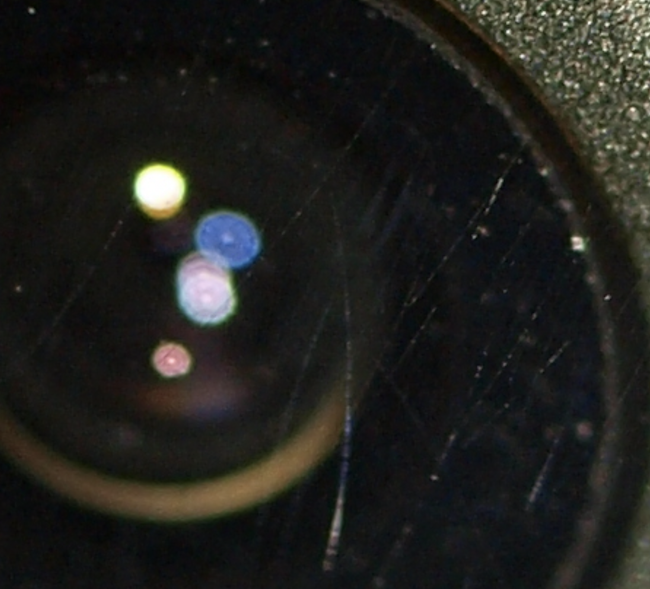
Googled camera lens scratch
Googled camera lens scratch removal and quite a few recommended brasso.
Used a bit of damp kitchen towel, 5p sized splodge of brasso and swirl motion. Starting off quite firm pressure, 20 mins of furious rubbing ensued! Re-applied the brasso a few times, using less and lighter pressure towards the end. Removed residue with a wet cloth and buffed dry with the sleeve of my cheap polyester fleece!
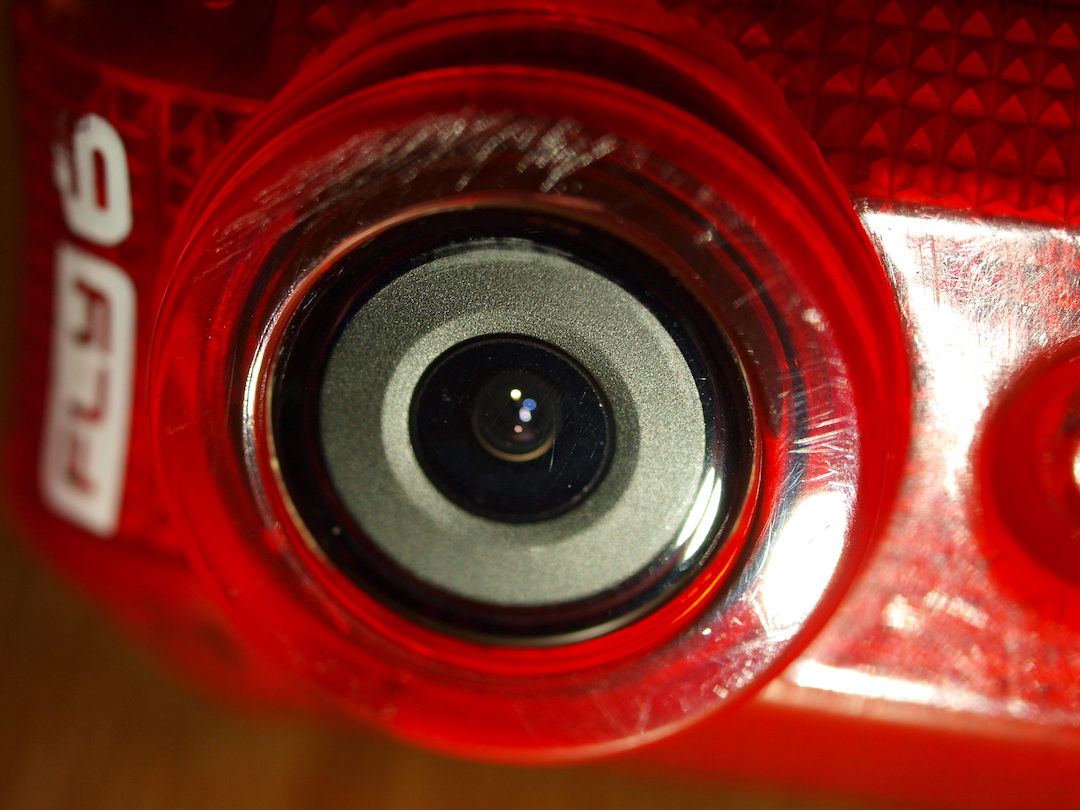
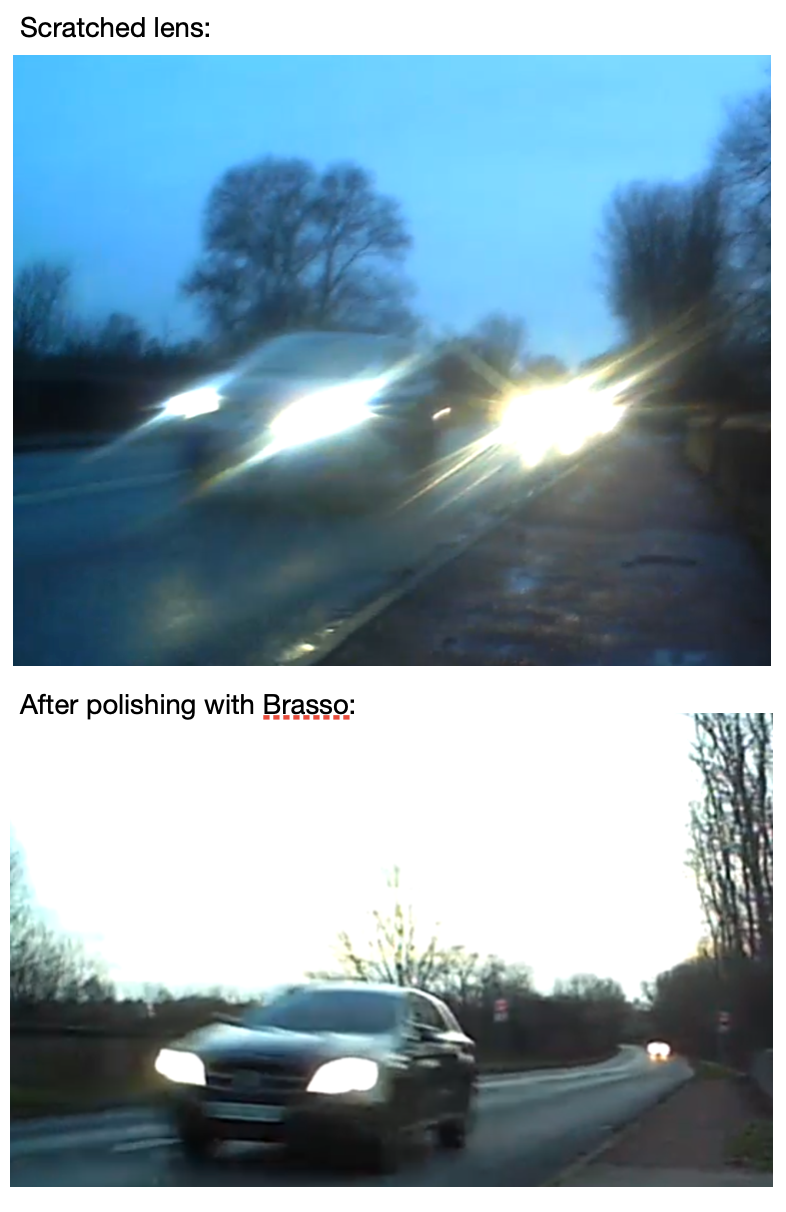
I didn’t take a ‘before’ photo of the scratches unfortunately, but you can see how scuffed the plastic around the lens is. The lens wasn’t that bad, but you could see scratches on it. Now it looks clear to the naked eye, although there are still some very fine marks there when you zoom in.
Good plan. Hopefully it is
Good plan. Hopefully it is the jockey wheels or derailleur pivot.
Sorry, that was a bit of a
Sorry, that was a bit of a rambling brain dump!
I don’t think you can rule out the freehub body. It does sound like that could be the problem.
That sounds about right. When
That sounds about right. When you pedal backwards, you are tensioning the chain the other way,
so it won’t sag.– actually this depends how much friction there is. Thinking back, I was able to turn the pedals backwards initially, but as it got worse, the freehub drag was more than the derailleur spring could handle and pedalling backwards just caused the hanger to move fully forward, with the chain still slopped all over the chain stay.The reason it only happens in the smaller cassette cogs is due to leverage. If the freehub is only dragging a little bit, then there’s not enough force to cause the chain to sag when it’s on the larger cogs.
If it only happens when you
If it only happens when you stop pedalling, it could be a sticky freehub. I had this. Unfortunately, my freehub was shimano, which needs a massive hex key to remove, there are lots of different versions and servicing is not really possible as it’s full of tiny ball bearings. As I was at the point of possibly getting a new rear wheel, I just sprayed a load of GT85 into it and that, so far, has worked. Done another 3k miles.
before and after the Brasso
before and after the Brasso treatment…
 January 9, 2022 at 12:06 pm in reply to: The perfect front and rear cycle camera !! Can you help.. #987733
Sriracha wrote:
Sriracha wrote:However the same approach could be used to improve the video – effectively it is passive OIS.I’ve been mulling over the passive stabilisation idea. I think you could be onto something here. I’m a bit sceptical about damped phone mounts, as the phone/camera is quite light and you do need a bit of mass in your sprung object. So I got onto thinking about passive gimbals like this…
The downside to these is the extra weight added to a camera system. But what if you designed your camera to be shaped like a passive gimbal, with the heavy batteries low down and the lighter camera up top, the mounting point providing the articulation? It’s a bit of a wacky idea and might not work too well on a platform that’s moving a lot. It could just end up flapping all over the place, but maybe worth a look.
January 4, 2022 at 11:37 am in reply to: The perfect front and rear cycle camera !! Can you help.. #987731Spot on. Your example 1 is
Spot on. Your example 1 is digital stabilisation. Example 2 optical stabilistation.
Optical can be done by moving just the lens/sensor (better for small amplitude and fast vibrations, as the lens has low mass/inertia so can react fast), and/or by moving the entire camera on a gimbal (better for larger amplitude and slower movements).
OIS can remove vibration blur from a longer exposure. The problem is when the object you wish to image is also moving, you need an exposure time that is short enough to capture that moving object without blur too.
Some testing is needed, but it’s possible that an exposure time short enough to capture a car numberplate passing at 60mph without blur, is fast enough to deal with any vibration blur from mounting directly to a bike. With active illumination at night, my hunch is OIS will not be needed to get a clear image.
January 4, 2022 at 11:13 am in reply to: The perfect front and rear cycle camera !! Can you help.. #987727@siracha Yes, you could embed
@siracha Yes, you could embed the accelerometer data in the video file to enable post-processing digital image stabilisation. Capturing this data is very low power and an accelerometer/gyro would be running anyway to do the crash detection function. This approach would also retain the entire captured image data from the sensor.
I think a shock absorbing mount is a good idea. But if your
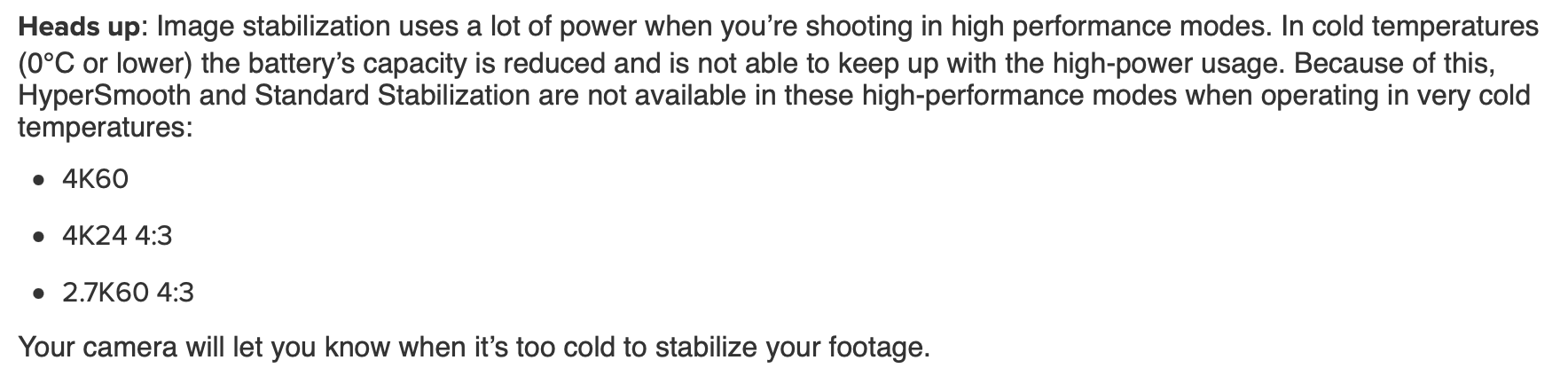
frame rateexposure is fast enough and you are using a global shutter image sensor, then it should not be needed for clear imaging – just to make viewing less vomit inducing!lonpfrb I’ve not done any testing, but image stabilisation does consume quite a lot of power. So much so, that GoPro’s won’t do it when the battery is cold! The only benefit of digital stabilisation is to make the footage nicer to watch. For a camera that’s focused on evidence capture, that is a lower priority.
I had a Fly6 battery fail
I had a Fly6 battery fail after a year of hard use. I took it apart and put a samsung 18650 in. That was 4 years ago and it’s still giving me a good 5 hours (although not been used as heavily as that first year).
It’s possible it’s just wear and tear, but also possible there was a bad batch of batteries. I found this support thread and they seem quite keen to get the customer to call support with the camera serial number.
I’d get in touch with them, it could be a known problem and worth a shot, as they might replace it with a refurbished unit. A polite moan about the disappointing longevity of the product should at least produce a discount code for a new purchase!
New battery time – but it
New battery time – but it looks a right faff https://youtu.be/X7FhyDlljA0
You could expect 300 charge cycles from it, but using in cold weather (or charging when cold), or regularly using until the battery is totally depleted can reduce this. If you’re charging every day, then failure just after a year could be expected.
I’d contact GoPro support. They might replace it if the battery has prematurely failed, even if just out of warranty. There might be a diagnostic mode where it can tell them how many charge cycles and min/max temperature extremes etc. to confirm this.
January 3, 2022 at 12:37 pm in reply to: The perfect front and rear cycle camera !! Can you help.. #987719Back again with a thought on
Back again with a thought on image stabilisation: don’t bother with it.
Only optical image stabilisation is capable of improving the clarity of the image, but it requires moving parts and is quite complicated to implement in a way that will survive the vibrations when mounted to a bicycle.
Digital stabilisation that uses an accelerometer to compensate for motion, is done to make the footage more pleasant to watch. It does this by using a wide angle lens, but then throwing away imaging data in the extremities in order to smooth out motion. This takes quite a bit of power consumption to do on the device. The reduction in image data and battery life is not worth it to me.
December 29, 2021 at 5:44 pm in reply to: The perfect front and rear cycle camera !! Can you help.. #987715Back here with an imaging
Back here with an imaging sensor suggestion:
This looks to be perfect for a bicycle camera:
– Global Shutter: no wibbly, wobbly, jellyvision artefacts
– B&W, supports IR at 850 & 940nm, with strobe sync: crisp licence plate capture in the dark with active infrared led illumination.Available as a board camera for RaspberryPi, useful for prototyping.
December 19, 2021 at 12:55 pm in reply to: The perfect front and rear cycle camera !! Can you help.. #987685Yep, it’s also easier to
Yep, it’s also easier to remember the colour of a car than the numberplate and only one of those is enough evidence to uniquely identify it!
In low light conditions, especially under the old sodium streetlamps, colour reproduction can be way off anyway. So of little value. A B&W sensor in the daytime would enable a faster shutter speed for less motion blur, which is more important to me than colour information.
An IR LED and a B&W CMOS camera would get the job done for a low cost.
-
AuthorReplies