


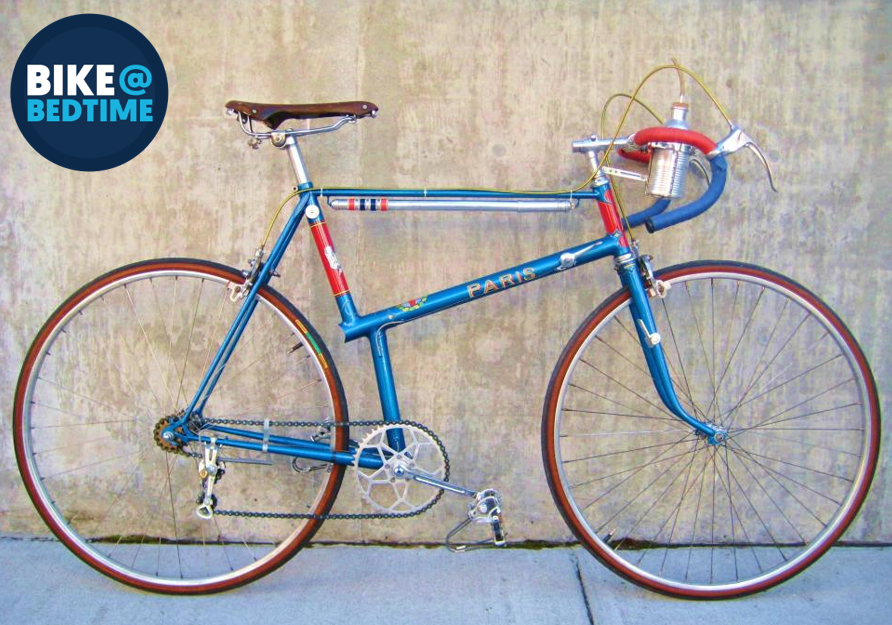

The unusual looks and design features that set this bike apart in 1947 are still present in 2026, as you can still buy it as a brand new bike almost 80 years later! There can’t be many designs that have lasted so long without any significant changes to the design or build.
Harry Rensch, a London-based frame builder, changed his brand name from Rensch Cycles to Paris in the early 1940s, due to possible problems from having a German surname in a post-Blitz London. At the time, the British looked across the Channel to France and Italy, where bike racing was much admired. Choosing the name Paris was a nod to this Continental scene.
Rensch released the Galibier model in 1947. It was unusual at the time as it used a lugless construction method to build the frame. Lugs are the ‘sockets’ that the main tubes sit in, when building a traditional steel frame. By fillet brazing you can create a stronger frame, albeit at the expense of the extra time and skill needed to fabricate it.
Originally offered with either Accles and Pollock’s Kromo tubes, or Reynolds 531 steel tubing for the frame and forks, the modern counterpart uses Columbus steel tubes.
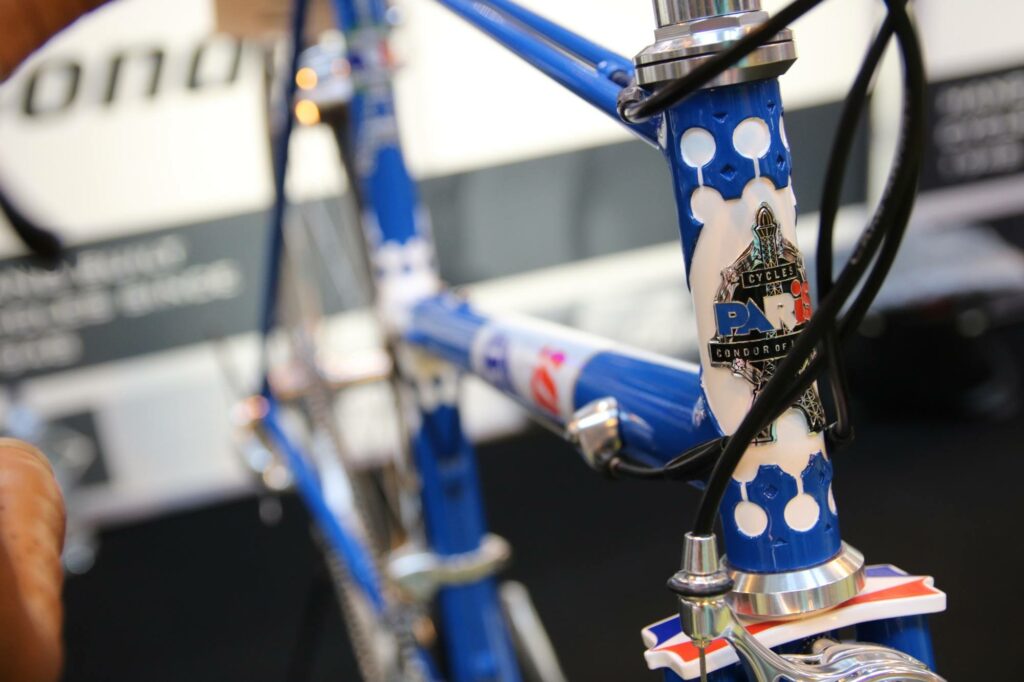
The head tube design was created using a bi-lamination, or two-layer construction, rather than a hand-cut lug. This adds strength for the headset cups, as well as some old-fashioned decoration! Above is Condor Cycles’ contemporary take on this detailing.
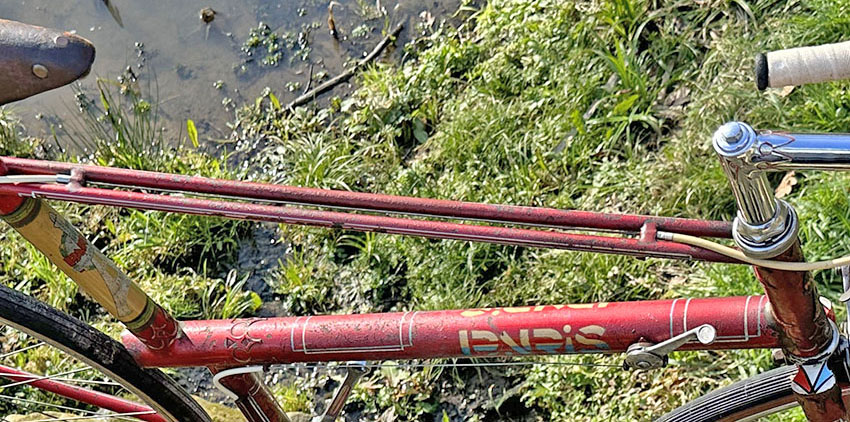
The frame design incorporated a down tube with a larger diameter than was usual at the time, along with twin small diameter top tubes to create a smaller front triangle. This was to create a stiffer frame with less ‘whip’ or twisting than was found at the time.
By breaking up the seat tube, the rear wheel can be tucked in closer to the bottom bracket area, allowing a shorter wheelbase for quicker, more agile handling. Note the tight bend that the white cable housing has. There is a second one down at the bottom bracket! This convoluted cable routing to the rear derailleur is born from the design constraints.
Another positive factor for those producing unusual looking frames was the fact that British cycle racing had a ban on advertising in the 1940s and ’50s, which extended to not being allowed to have a makers’ name on the frame. So, if you could produce a distinctive looking frame and fork, it could be recognised on the road or in race report photos. The Hetchins with its curly seat stays and the Bates with a Diadrant fork (double curve), as well as the Paris were easily identifiable when featured in the cycling press.
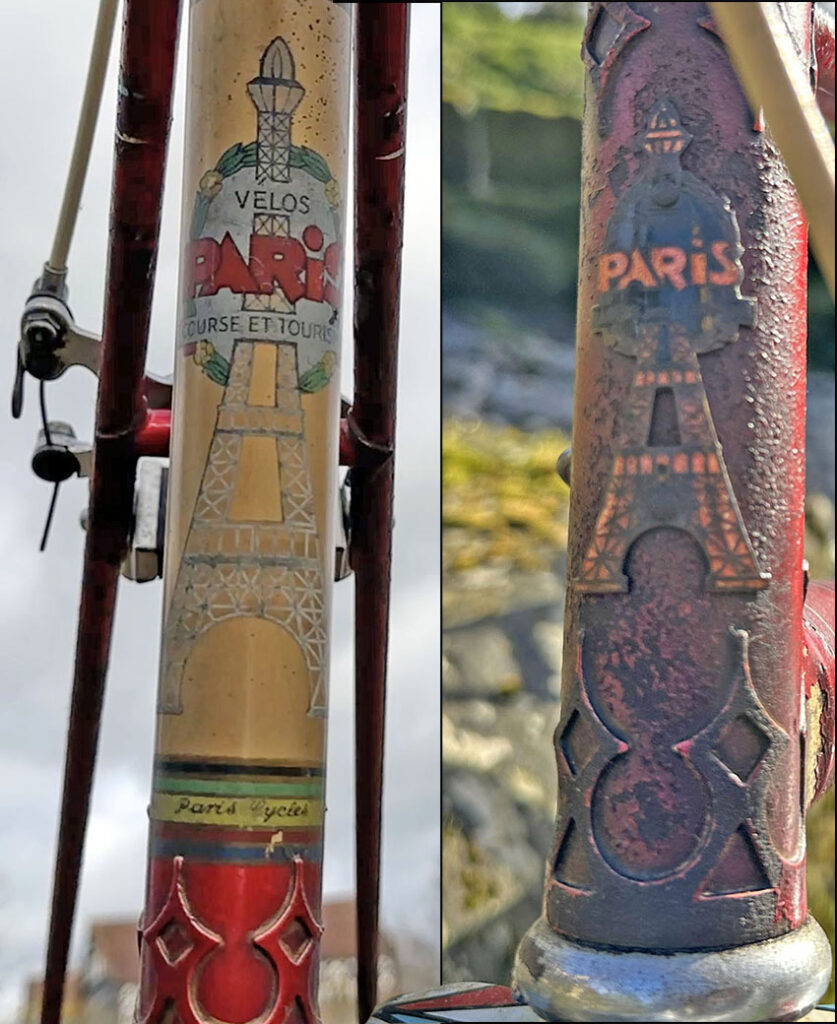
The seatpost badge says ‘Velos Paris – Course et Tourismes’, which translates as ‘Paris Cycles – Racing and Touring’. The 1950 example above also shows some intricate bi-laminate work. To this author’s eye, it is an approximation of the Eiffel Tower featured in the firm’s logo. There are a few variations of this hand-cut bi-lam detailing. Possibly, as each frame was custom made, the purchaser had a say in these embellishments. Certainly they could choose custom enamel colours, according to the contemporary sales brochure.
Although Rensch ran into financial difficulties – closing the doors of his Stoke Newington shop in 1953 – his friend, Monty Young of Condor Cycles, revived the brand in 1981. The design, dormant for nearly 30 years, was once again available.
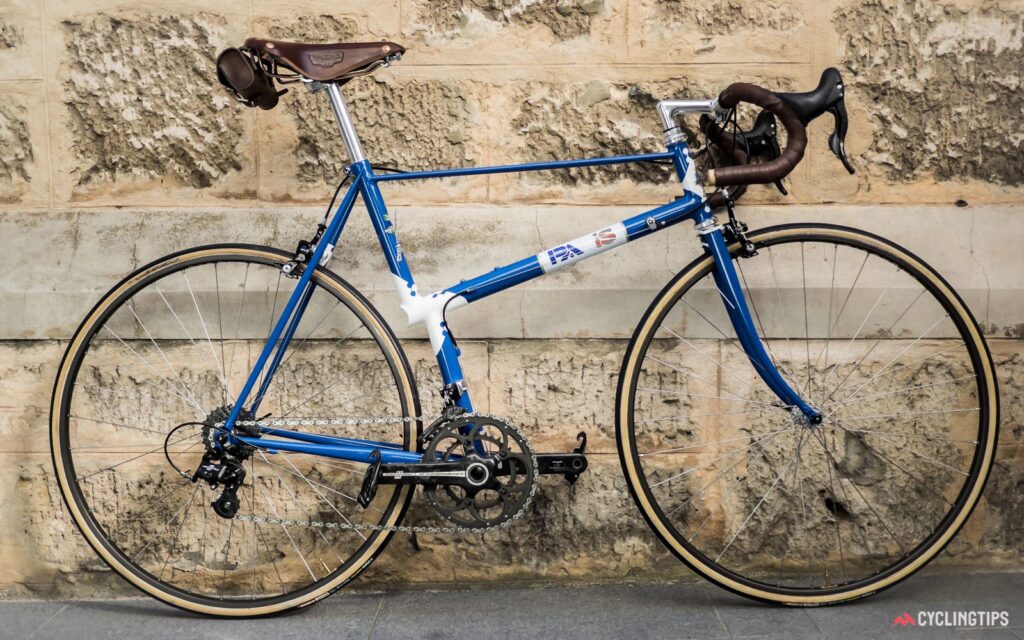
In 2026 the Galibier still available to buy new from Condor Cycles, although Columbus tubing is now chosen rather than the Reynolds 531 of the original design. The detailing is faithful to the original 1947 model, even if the rear dropouts are vertical rather than horizonal these days!
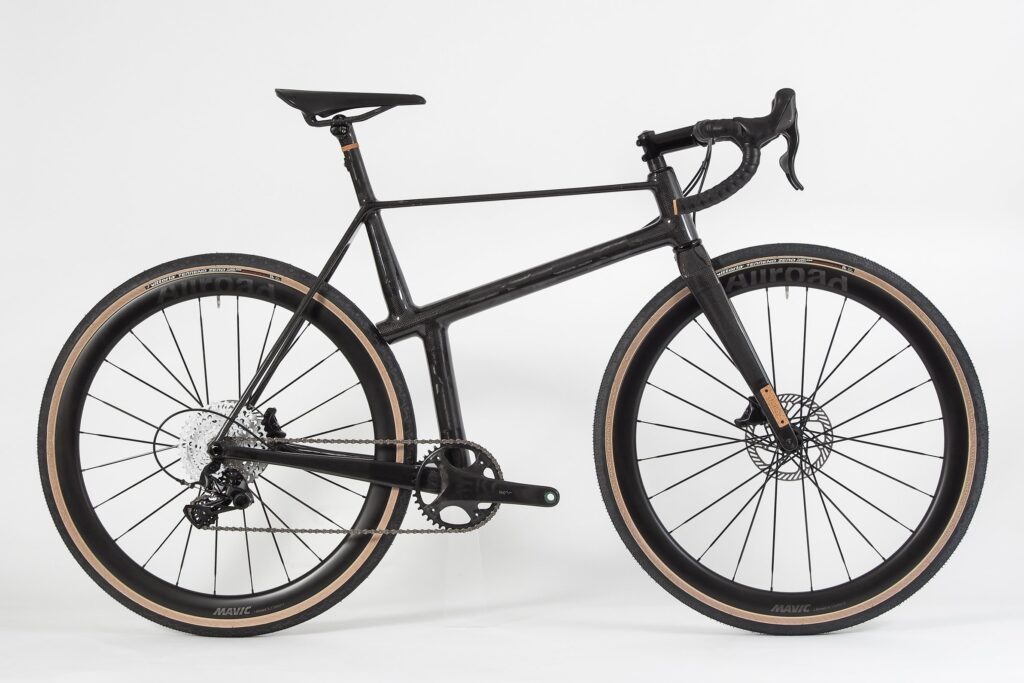
Such is the admiration for the design that there was a one-off tribute bike made for the Sea Otter Classic event by July Bicycles. However instead of using steel tubes, Ben Jurgensen of July Bicycles used carbon fibre. He retained the classic silhouette, but the carbon fibre gives it a modern twist. The ‘twin-skinny’ top tube feature was retained, but sadly the ornate head and seat tube detailing is lost.
It is remarkable that this design still appeals to riders, and that it is still produced nearly 80 years after it first appeared. Although it won’t be for everyone, it does keep cycling interesting and varied. Beauty certainly is in the eye of the beholder and all.
“Vive la différence!” as our Parisien cousins might say…
For more cool bikes and cycling nostalgia, don’t forget to check out our Bike at Bedtime archive.










2 thoughts on “The unconventional classic that’s hardly changed since the 1940s: an ode to the Paris Galibier”
Really cool bike, and I’d
Really cool bike, and I’d love one, but I have to wonder just how much closer to the bottom bracket this design is allowing the wheel to move.
Exactly my thoughts.
Exactly my thoughts.
Doesn’t make any difference to the wheelbase, although it would be a tad stiffer.